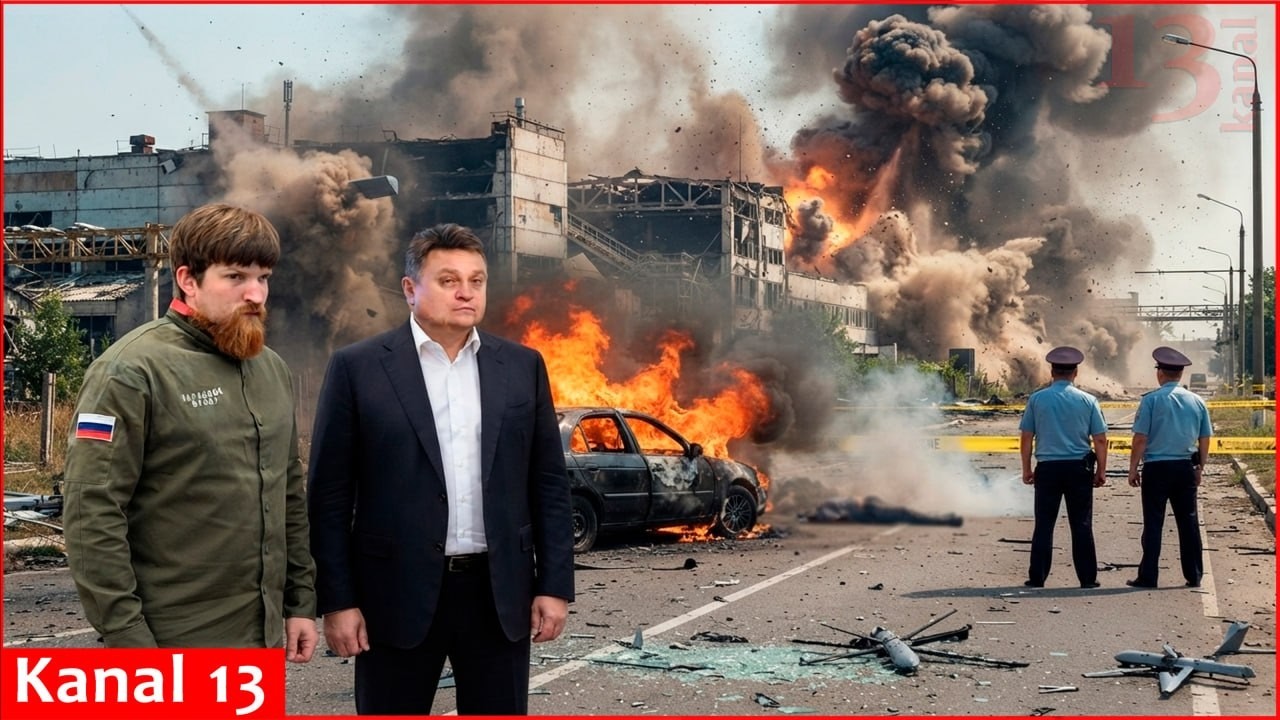
The war is spreading beyond the battlefield: Ukraine and Russia are hunting each other's engineers
Watch on YouTubeVideo summary
Ukraine and Russia are increasingly targeting executives and key engineers within companies that produce enemy drones, marking a significant shift in the nature of modern warfare beyond traditional battlefields. Recent incidents highlight this trend, including an August 4th car bombing near Ekaterinburg that may have injured Vladimir Kuchuk, head of the Russian drone manufacturer Ural Drone Plant, and earlier gunshot wounds sustained by Andrey Cherezov at another Russian facility. Experts like Cameron Chell, CEO of Dragonfly, attribute this escalation to the critical role new technology plays in current conflicts; when it becomes impossible to destroy entire distributed infrastructure networks, leadership within these high-tech sectors naturally emerges as a primary target for both sides.
The strategic importance of drone manufacturers is further amplified by their rapid technological evolution, where significant updates can occur every ten to thirty days. Consequently, an attack on a single key engineer or founder can cause immediate operational disruption and slow down vital weapons programs that supply the front lines. This vulnerability extends beyond Russia and Ukraine into Europe as well; German law enforcement recently detained two individuals suspected of spying for Russian interests against a Bavarian drone manufacturer, following an assassination attempt on the CEO of Rheinmetall. As artificial intelligence and autonomous systems advance over the next eighteen months, engineers developing these technologies are expected to become even more strategic targets for global intelligence agencies.
While both nations possess technological advantages that drive such attacks, their operational approaches differ significantly due to their distinct circumstances. Ukraine, facing an existential threat, employs direct tactics such as car bombs or corridor assaults and is prepared for any measure necessary. In contrast, Russia utilizes a highly organized state-level strategy rooted in Cold War-era intelligence infrastructure dating back to World War II, relying on extensive reconnaissance, surveillance, infiltration of neutral countries like Germany, and low-level contacts. Despite the lack of clear tactical superiority for either side, these operations exert considerable psychological pressure on Russian forces while Ukraine adapts its methods to counter specific threats effectively.
The conflict's scope has also expanded into deceptive tactics aimed at undermining morale through personal relationships rather than just physical destruction. Since early 2026, Ukrainian intelligence services have reported thwarting over fifty attempts by Russia to assassinate soldiers using so-called honey traps involving fake romantic dates with women. This evolution in asymmetric warfare underscores a broader rift within the Russian security apparatus, where the military has requested protection from the FSB against such attacks but faces reluctance regarding responsibility sharing. Ultimately, as drone technology and AI autonomy continue to reshape the battlefield, the hunt for engineers and executives represents a new frontier of conflict that blurs the lines between state actors and private industry in unprecedented ways.
Read the full video transcript
Ukraine and Russia are increasing
attacks on executives and key engineers
of companies involved in the production
of enemy drones, according to Fox News.
In particular, journalists recall the
August 4th car bombing near
Ekaterinburg, which may have injured
Vladimir Kuchuk, the head of the Russian
drone manufacturer Ural Drone Plant. A
few days earlier, Andrey Cherezov, the
head of another Russian drone
manufacturer, suffered three gunshot
wounds in Tula. As Cameron Chell, CEO of
drone company Dragonfly noted, the
increase in attacks on manufacturers is
due to the changing nature of warfare.
As both countries compete in UV
production, this makes manufacturers of
new technologies an increasingly
important target. When it's impossible
to destroy the entire distributed
infrastructure, leadership in drone
production becomes a primary target.
These attacks in Russia, Ukraine, and
Germany [music] against the founders,
executives, and engineers of defense
companies and drone companies in
particular are precisely because drones
and these companies themselves wield
such significant influence. Because
drone technology evolves rapidly, with
significant updates often occurring
every 10 to 30 days, an attack on a key
engineer, founder, or product leader
creates immediate operational disruption
on the battlefield, Chell said. He added
that even one engineer or manager could
slow down a vital weapons program for a
long time and interrupt supplies to the
front lines. Journalists note that
German law enforcement recently detained
two individuals suspected of spying on a
Bavarian drone manufacturer for Russia.
They were reportedly planning an attack,
specifically on the head of one of these
companies. This follows the
assassination attempt on the CEO of the
German company Rheinmetall.
According to Chell, as artificial
intelligence and UV autonomy advance,
engineers developing these technologies
will become an even more strategic
target for intelligence agencies.
Artificial intelligence and full
autonomy are the key innovations of the
next 18 months. [music]
So, a potential reason we could see more
targeted attacks against senior
officials is that the Ukrainians possess
this technological advantage. Attacking
small drone companies is a relatively
simple operation compared to attacks on
individuals working in state-run weapons
programs, he added. At the same time, he
noted that Ukraine and Russia approach
such operations differently. In his
opinion, neither side has a tactical
advantage. At the same time, such
operations exert greater psychological
pressure on Russia. Ukraine faces an
existential threat, so they're prepared
for anything. Their tactics tend to be
much more direct, a direct attack down a
corridor or a car bomb. Russian tactics
tend to be much more organized at the
state level, using old Cold War tactics,
low-level contacts, extensive
reconnaissance and surveillance in
advance, and infiltration of other
countries like Germany. The Russians
have a long-standing, well-established
intelligence infrastructure dating back
to World War II and the Cold War, Chell
noted. As a reminder,
Fox News previously reported that the
assassination of generals in Russia
exposes a growing rift within Putin's
security apparatus. It dot IT was noted
that the military wants the FSB to
provide personal protection against
Ukrainian attacks. While the security
service is unwilling to accept
responsibility for the military. At the
same time, the SBU [music]
previously reported that Russia had also
begun to escalate operations against
Ukrainian soldiers using so-called honey
traps. Since the beginning of 2026
alone, the SBU has reportedly thwarted
over 50 Russian [music] attempts to
assassinate Ukrainian soldiers using
fake dates with women.
>> [music]