Video summary
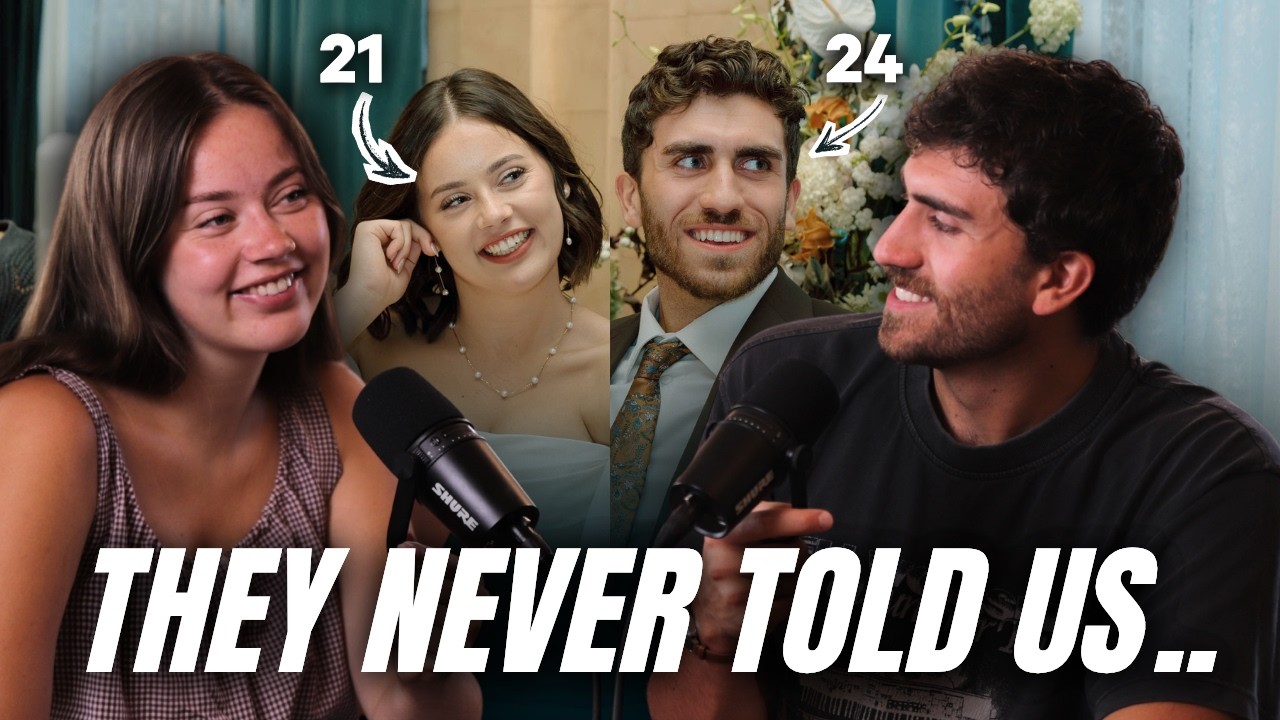
As a Christian couple who married relatively quickly after dating and engagement, the speakers share eight key insights gained from nearly three years of marriage, emphasizing that while external challenges exist, the core relationship itself is wonderful. They argue against the common stereotype that marriage is inherently difficult, suggesting instead that struggles often stem from outside stressors like financial issues or differing upbringings rather than the union itself. The video highlights that marriage requires intentional communication that differs significantly from dating; once living together, couples can no longer ignore small misunderstandings, and addressing them quickly prevents lingering resentment. Furthermore, they note that while some may claim their first year was hard, this often reflects a lack of willingness to be sanctified by the circumstances or an unwillingness to change one's own perspective to align with their spouse.
A major theme in their discussion is the necessity of vulnerability and the rejection of hiding behind emotional walls, which they describe as a natural instinct but one that marriage makes impossible. They strongly advocate for setting clear boundaries, such as requiring a spouse to accompany them on business trips or social media interactions, not because the marriage is weak, but to honor its preciousness and protect it from potential pitfalls. The speakers also challenge the idea that a healthy marriage must look like those of others, warning against comparing one's life to social media stereotypes or traditional archetypes that emerged after World War II. They believe that couples should focus on what works for them within biblical principles rather than adhering to rigid roles regarding household chores or career dynamics, prioritizing mutual service and self-sacrifice over performative traditions.
Finally, the couple advises against relying solely on external sources like books or podcasts to understand a spouse, noting that while these resources are safe and helpful, they lack the nuance of personal interaction. They explain that seeking answers outside the relationship can sometimes lead to defensiveness or a false sense of having "figured it out" without actually engaging in vulnerable conversation with one's partner. The most effective way to solve problems and grow is to tackle challenges as a team, finding excitement and connection in problem-solving rather than fear. Ultimately, they conclude that humility is essential; admitting that one does not know everything and needing to ask their spouse for guidance is far more beneficial than trying to apply generic advice, fostering a deeper, more authentic connection that honors both partners and God.
Read the full video transcript
As a Christian engaged couple, we heard
all the clichés that you can imagine
about what marriage was going to be,
what we were going to experience, and
you can take people's word for it, but
until you're in the moment, until you're
actually married, and we've been married
now for almost 3 years. Um now you've
actually like experienced what it's
like. And in today's video, I'm here
with my wife Kezia, and we're going to
share with you eight of the things that
we have learned. Just to give you guys a
little bit of insight into our story, we
dated for, I think it was three or four
months, and then we were engaged for two
months, we got married, that's pretty
quick for a lot of people.
>> I was not someone who was like, yes, I
need to be married
in like 6 months. Like I was I was not
that. I when we started dating, I was
like, no, I want to be dating for a
year.
>> It's not just like, oh yeah, we did it
because that's what all the cool
Christian kids are doing, or they're
getting married in like 2 weeks. But no,
it's like
>> to be that way.
>> happened to be like, oh yeah, we're
we're on the same page. No, we align on
all the major core things, we really
love each other, and we want to get
married, and then we'll sort through the
rest as we're as we're married. So,
anyway, what's your first What's your
first thing that you learned
in marriage?
>> My first one is, communication changes
{slash} is even more needed. And then I
put a sentence in quotation marks that
says, you'll be surprised how much you
need to intentionally communicate. When
you're dating, there's this level of you
can
kind of leave conversations open-ended,
and just get to leave and sleep at your
own places, and you don't really have to
pick up that conversation. But when
you're married and you're living
together, you cannot ignore those
things, regardless if they if they don't
feel big in the moment, they are so
important to just bring up. And as much
as you like maybe don't want to like
stir the pot at all, it'll be over in 10
minutes, you'll talk, you'll
communicate, you'll be like, oh, I
didn't even realize you thought that, or
oh, you interpreted that differently
than I did, and
super easy now, but getting over that
hump of like, oh man, we need to talk,
It was pretty overwhelming.
>> No, I know for me, just being
comfortable with verbalizing those
things earlier on than, you know, in
probably our first year it would have
taken hours or days to begin to
communicate some of those lingering
feelings about something, but now it's
it is quicker, but I know as we progress
on it's going to become I feel like that
much more natural to just like, "Okay,
like let's just talk about this now."
Because it is so much better than
delaying these conversations, even if
it's not a big thing. So, my first thing
that I've learned through marriage is
that marriage is not the hard part. And
I think, I don't know, I think we got a
skewed perspective of like marriage in
general from maybe some people that were
speaking into our life, like talking
about how difficult and challenging
marriage is.
And maybe, you know, you guys online,
you've been on Instagram or TikTok long
enough to see like couples that are
just talking about how difficult
marriage is, and I think there's a
stereotype of like the Christian couple
that's married 1 year and they're like,
"It was so tough. It was so hard." And
and yeah, like sure, there have been
some absolutely difficult stretches of
like, um, of our life being married, but
I think the most important thing that
I've learned is there's a distinction
between marriage being hard versus, uh,
the things in your life that are going
on that are difficult and challenging
and hard. As much as you can eliminate
some of those like outside forces or
even decisions that you're making that
put outside stress on your marriage.
Because your marriage is is chill, it's
awesome, it's it's great, it's so fun.
But even something like living within
your means, not spending more than you
make. Money issues are one of the
biggest things that, you know, couples
fight over, they argue about. And we've
had our fair share of like conversations
about navigating our different
relationships with money, but that's one
of the priorities is like, okay, how can
we manage this in such a way where it's
not an outside stressor because marriage
itself is awesome, but when you add all
these other things that are, you know,
putting tension in your relationship.
>> think that people do get correct when
they do say it is that marriage is
sanctifying? So, I think in those
scenarios where that young couple is
married and they're like, our first year
was really really hard. You both have
your own experiences how you are raised.
>> You only have you have your each your
stuff, your stuff that you're bringing
in, right?
>> Yeah, and if you are unwilling to change
and be sanctified by the life
circumstances that you both are placed
in,
it's going to be really hard if you're
going to be stuck and adamant about
being correct and unwilling to change.
That's going to be really hard.
>> What's your second?
>> My second one is that you cannot hide
anymore.
>> Mhm.
>> I have some subpoints. Um, there is a
level of separation that occurs over
dating and engagement, which is really
good. That's by God's design that you're
not one flesh, you're not together. You
can have a wall up while you're dating
still. And I am really good at having a
wall up. I have been in the past very
very good at having a wall up. It's my
natural
instinct to to go to. I'm just like, I
don't want to deal with that. That's
going to cause me sadness, anger,
upsetness, any any emotion. Okay, wall
up. It's easier to just not deal with
it.
>> just not an option because marriage is
very vulnerable. You see every side and
you cannot hide.
>> So, my second one is strong boundaries
aren't just for weak marriages. I think
there's this general perspective that
the more boundaries that you put in
place illustrate
maybe how weak your marriage is. Like,
oh, I'm really nervous about him
cheating. So, I you know, his location
is always on. Or I'm very anxious about,
you know, his faithfulness to me. So, he
can't talk to any women or follow any
any women on social media whatsoever. I
think and I think what we've learned is
the blessing of just being careful and
setting up what what we would consider
is pretty like common sense boundaries,
but maybe other people wouldn't see it
that way.
>> I am such a big fan of boundaries,
especially in a healthy marriage. Um my
favorite thing is when um an older
pastor will talk about the boundaries in
his marriage and talk about um
especially if he does travel for any
speaking engagements. Um when I hear
that, I just like get like almost giddy
cuz I'm just like, yes, like that that
is exactly right. Where he's like, I
don't travel without my wife or like I
don't go certain places and and it he's
like, nothing's ever happened, but this
is just like the rules we set up. And
we've kind of fallen into that. Like I
think especially in like the work
context, like
Isaac will get asked to speak at certain
places and he'll be like, okay, well, my
wife has to come.
>> Yeah, I mean, that's just like part of
it, right?
>> that's like an automatic where it's like
my wife is coming.
Um and sometimes that doesn't work out
then because
>> They can't pay for two flights or
whatever, [clears throat] you know.
>> reasons, but
um if that's the case, that's the case
and we go together.
>> on, yeah. I think it's really apparent
especially in those older couples that
you're talking about. For me, it's so
clear that they don't do that because
they have a weak marriage. No, so many
these like strong Christian couples.
They have a very strong marriage, but
what it amplifies for me is the
preciousness of their marriage and their
relationship. You can see it. Like, I
cherish this so much. Okay, what's your
third one?
>> Your marriage does not have to look like
the ones around you to be good.
>> Ooh, that's good. That's good.
>> Okay, it's what works for you regardless
of opinions or stereotypes. And then I
put in quotation marks, it's okay if
people don't get it.
>> Oh, that's tough.
>> Um, it's between you, your spouse, and
God.
>> Yeah.
>> And if you're setting up rules,
traditions, and expectations based on
others people's marriages, you will feel
lost and potentially lonely.
>> So, you're hitting on some like really
cool um fear like wanting to compare,
um maybe people-pleasing, you know, like
okay, what are other people going to
think about our marriage?
Um our different expectations or just
the way that we orient our life, people
might not understand that.
>> Yeah, I think like um especially if
you're in a relationship that you want
to like make all the right decisions and
you want to follow all the rules all the
rules. Like yes, there are some rules
for sure in marriage like God ordained
>> Biblical rules, moral rules.
>> Absolutely, but all the other stuff is
gravy.
>> Um we love to travel. That's something
that we had had made a priority in our
life and we've traveled all over the
world and it's because we've been very
focused and and in in our goals and what
matters to us, right? And some people
might look at that and be like, well,
that's not how you do it. That's not
what you're supposed to do. That's a
waste of time. But and maybe to them
that's true.
>> What's your number three?
>> My number three is trad doesn't mean
godly.
>> Trad as in traditional?
>> As in traditional. So, I'm talking like
trad wife, trad husband.
>> I feel like that kind of spins off of my
last one a little bit.
>> true. Yeah, because it's it's a lot of
comparison especially on social media. I
mean, there's so much push towards the
trad wife lifestyle and it almost feels
like a cosplay thing, you know, it's
like I'm going to get the the long
dresses and the farmhouse table. I'm
going to make bread and I'm going to
post it on Instagram.
>> And in terms of the husband, you're
going to work and that's it. You're
going to be the breadwinner.
>> to be a breadwinner and I'm going to be
manly and I'm not going to talk about my
emotions and like you know, I'm going to
be rough and tough and ain't no
man here. And that's kind of like the
archetypes, the stereotypes that you
know, in some ways a lot of Christians I
feel like young Christians are given to
fall into.
>> You really hold to that, yeah.
>> But I don't think that well, number one,
there's there's a lot to this where that
kind of very specific structure has only
existed and only existed, you know,
after the World Wars. And they were
there was this place, this moment in
time where men were going to work and
women were still at home and they were
cooking and they were cleaning and they
were doing all these things. But before
that, there was something that we can
could recognize as like a productive
household. You have this business that's
happening within your own house. You're
both working together collaboratively.
The kids are working on your farm or
your or your you know, bakery or
whatever, right? You like they're doing
you're working together in this.
And so I just don't think that we need
to hold ourselves and we don't hold
ourselves to these very black and white
Oh man, there's dishes in the dish in
the sink.
>> That's King's job. I'm not going to
touch them.
>> Even though it would be really honoring
to do that and helpful and and and just
like you'd appreciate it.
>> Yeah.
>> I'm not going to do that cuz that's not
my job.
But I am going to do that because I'm
not holding myself to kind of like some
standard that social media has put out
there as like the right way
>> Yeah.
>> to do it, right? And I think our goal is
to compare ourselves to what is a
standard that God actually lays out for
a man and a woman in the Bible. Like a
man should lay his life down for his
wife as Christ has laid his life down
for the church. And that dying to self
daily, part of that
could be doing the dishes. Could be
sweeping the floor even though oh man,
maybe that was something you said you
were going to do. I'm going to sweep the
floor anyway, right? And you do so many
of those things for me as well, but I I
think it's this kind of like imaging
Christ and honoring each other that is
priority over these very specific rules.
>> Mhm. My last one is the most straight to
the point. It's actually really good.
>> Wow, really? It is?
>> It is. It's really good.
I think back to when we were engaged and
most of the advice that they might call
it
was that it's really hard and you're
going to have to work really hard and
you know, like make sure that you have
people on the outside that you can talk
to about it cuz it's going to be really
hard and you're going to want to vent.
Is it actually going to be that bad? We
were like, surely not because like it's
been good up until this point. So like
what's going to change?
>> Well, and I think to the to your point
it's like there is a distinction between
something that you know, at times can be
challenging, but does that mean that
it's bad, right? Like there are so many
things in life that are that challenge
us, that push us to grow, that push us
to change, uh but are immensely
enjoyable.
>> Yeah. Yeah, well, I think I say pretty
often that my favorite time together is
when we have to problem solve. And
generally when you're problem solving
that doesn't mean that something went
well. It means
something on the outside went wrong,
right? But then we get to like conquer
it as a team and it feels so connecting
and like exciting and it's like, well,
we're going to like figure out all
these, do all these do all this research
about these different things and like
get to just like make the best decision
and like just go at it together and it's
my favorite because you just like brings
you together. But then in that sense
like maybe other couples are like, oh
no, this big bad thing is happening and
we don't know how to
get through this and like, oh, but it's
like there's obviously nuances to that.
Like there's some really difficult
things that you have to go through. This
is more like
our car broke down again.
>> Or or air conditioner's broken and we're
literally sweating in a million degrees
heat right now.
>> 120-year-old building.
>> Yeah, exactly. 30 degrees Celsius for
our American viewers.
>> What is your last one?
>> So, my last one is don't look to outside
sources for to understand your wife or
understand your spouse. That is
something that I've learned because I
have always been very reliant on books
particularly and podcasts. I love books
and podcasts. I'm always trying to
learn. There's a tendency of mine to to
want to like find the solution outside
and to like find a podcast that talks
about this or find a uh book that talks
about this. And while that might be
helpful in some ways, I found that the
most helpful thing is to actually just
like talk to you because
those books and podcasts are trying to
speak for you. Meanwhile, like you're
here.
>> [snorts]
>> I think it's really funny to me when you
do read or listen to something and
you're like and you're telling me about
it and then we'll talk and be like
"But do you actually think that I would
think that?" And then you're like, "Hm,
actually not at all."
>> Yeah, exactly. Like when you have advice
is kind of bad or generalizing and it's
like actually not true.
>> that actually doesn't work for us.
>> So, uh the Here's the thing is that
reading a book or listening to a podcast
is a lot safer.
>> Right.
>> It's a lot easier and it's um it's like
great and and it's kind of like my
desire to like solve a problem.
>> Mhm.
>> Versus when I talk with you, it's like
actually truly like developing a
relationship. And there's vulnerability
to that because if I'm asking you about
something or even how our marriage is
going, there's there could be a desire
and like a thing in me that comes up of
like defensiveness. Meanwhile, like I I
would love to like, "Oh, I just don't
want to like ask you about this and I
just want to know the answer from a
different source so then I can be like
>> Like let me put you under.
>> Yeah, it's like I've I found it out. I
figured it out. I know what's going on.
Like we don't even need to talk about
it. I'll fix I'll fix it right here.
[laughter] But that's not how it works.
>> No, it just takes a like speed bump of
like, "Okay, like I'm going to humble
myself because I don't know the answer
right now and I don't know what you need
and I have to ask and it's kind of
embarrassing because you're my husband.
We've been married for 3 years.
And I would love to say that I just know
everything.
>> Yeah.
>> And I know how to solve everything.
>> Yeah, I listened to the Christian Girls
podcast and they told me exactly what
you needed to tell me. [laughter] It's
just like, well, okay, that's great, but
like, you know, it's yeah.
>> Yeah, exactly.
>> We're interested to hear from you guys
in the comments below which one of our
lessons that we've learned stood out to
you the most. Let us know if you're
single, dating, engaged, or married.
Would love to hear from you. Thanks for
watching and subscribing as always.
Really appreciate you guys support on
Patreon. And let me know if you guys
want to see Kezia on more often because
maybe I'll coach her to make more
appearances.
>> This is my annual appearance. So,
[laughter] see you next year.
>> Yeah, no. Thanks so much guys for
watching and until next time, God bless.