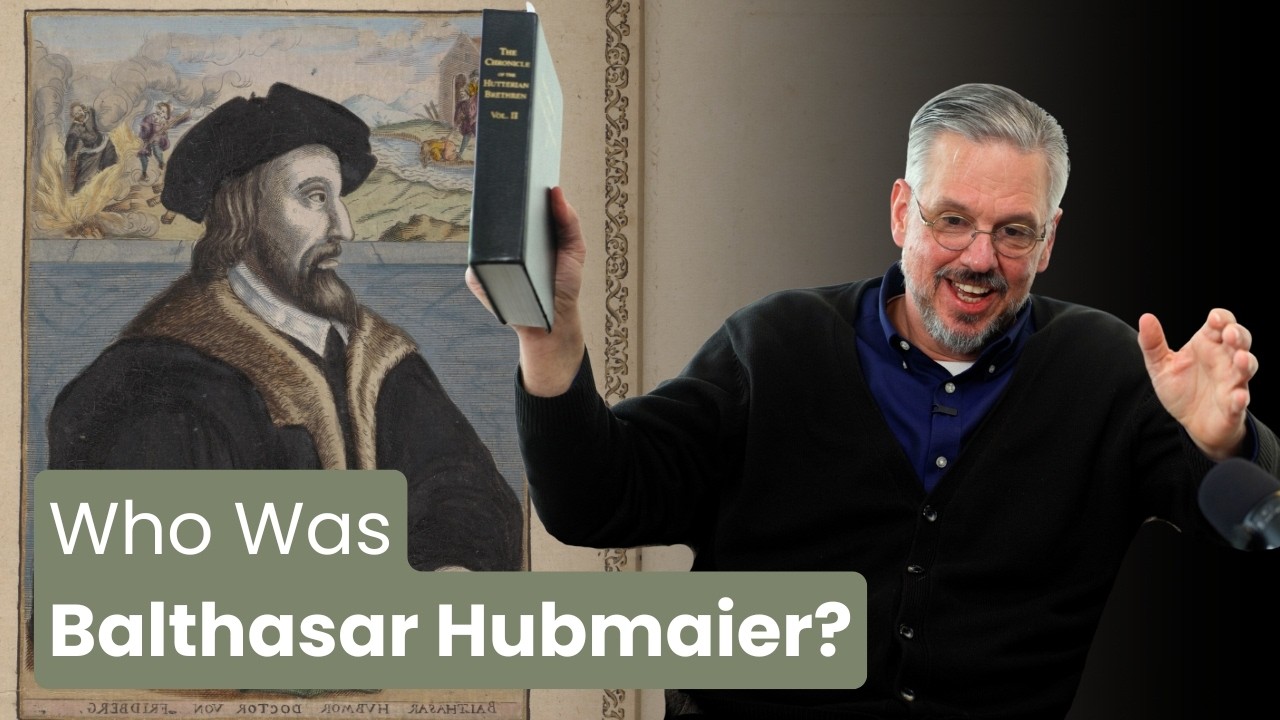
The Theologian of Early Anabaptism Who Died for Politics - Dean Taylor
Watch on YouTubeVideo summary
Hubmaier stands as a unique and highly educated figure in the history of early Anabaptism, distinguished as the only member of the movement to earn a formal doctorate of theology under the Catholic Johann Eck. Often referred to by Erasmus as the "doctor of Anabaptism," Hubmaier was a formidable intellectual who engaged deeply with Church Fathers like Augustine and Jerome, frequently using texts from Zwingli's own library to argue against infant baptism. His theological legacy is complex; while he championed the core Anabaptist belief that faith must precede sacraments for them to be valid, his views on violence set him apart from later pacifist traditions. Before his death, he supported the use of the sword in certain contexts, a stance articulated in his 1527 treatise *On the Sword*, which contrasted sharply with the absolute pacifism adopted by groups like the Hutterites who refused to bear arms against threats such as the Ottomans.
Hubmaier's life was marked by intense political and religious turmoil, beginning with his involvement in the 1525 Peasant Revolt and the historic mass believer's baptism in Waldshut, where he baptized approximately 300 people on Easter Sunday. Following the revolt's collapse and the massacre at Frankenhausen, he fled to Zurich, where he publicly challenged Zwingli by citing the reformer's own earlier objections to infant baptism, an act that led to his arrest. Although Bullinger later admitted Hubmaier was imprisoned because he was considered too dangerous due to his high regard among fellow believers, Hubmaier endured a gruesome period of torture and forced recantations in 1526. Upon gaining freedom shortly after, he publicly renounced these coerced statements and escaped to Moravia, where he found protection under Lord Leonard von Liechtenstein for two years. During this time, he published over 600 pages of theological works and was associated with roughly 6,000 baptisms, continuing his prolific output despite the dangers surrounding him.
Ultimately, Hubmaier's controversial political entanglements led to his arrest in summer 1527 not primarily for religious reasons but due to alleged involvement with peasant revolts. While imprisoned at Krottendorf Castle near Vienna, he maintained his core convictions regarding believer's baptism and free will, expressing regret over his opposition to Hans Hut and wishing for unity if Hut were present. His martyrdom came on March 10, 1528, when he was burned at the stake in Vienna alongside his wife Elizabeth, who tragically drowned after being thrown into a river following their execution. Although his works remained largely unavailable in English until the late 20th century, contributing to his relative obscurity compared to figures like Conrad Grebel or Felix Manz, Hubmaier's legacy remains profound, defined by both his significant contributions to Anabaptist theology on sacraments and church discipline and the tragic political circumstances that led to his execution.
Read the full video transcript
The council of Trent actually names
Hubmire as one of the chief heretics. Uh
this is where actually Luther, Zwingley
and Calvin are mentioned in the council
of Trent and Hubmier. He he goes up
there and he starts defending believers
baptism right there in front of the
church and the very people he's supposed
to be apologizing to. So he's a he's a
gutsy guy, very fascinating character.
And you know, even just going through
his his works and everything, oh, I find
myself so many times going, "Oh, that's
excellent." Oh, that's terrible.
[laughter] That's excellent, you know.
>> Well, Dean, [music] welcome back to the
podcast.
>> Thank you. So, we're going to hit on a
topic that I I had never heard of until
recently before, but in the founding
years of antibaptism, those first first
few years, you know, 1525, the the
famous story, we we hear names like
Conrad Grebble and Michael Satler and
Felix Mons and and so forth. And those
are considered, you know, the the first
figures like the the really important
figures for what results for us today,
you know, 500 years later. But there's
another key person in that story that I
had never heard of before. We very
rarely hear his name and that's
>> Hubmire.
>> And who who is Hubmire? Uh so I was
doing a little digging on this and
realized you know he's a pretty
important figure in this story. Um in
fact Arasmus wrote and about him and
called him the doctor of Anabaptism.
Yeah.
>> Which is really interesting. Uh so tell
me about who he was and what were his
contributions to the Anabaptist movement
in those first few years.
>> It's a great uh it's a great topic and
you know he's u he's a mixed bag for
sure and it's kind of like here's the
question I always ask what's Anabaptist.
So, on one hand, I think it's good for
us to own our mistakes, you know, the
the same thing we had when we were doing
Monster, you know, um and and it's a
fair question to push back and say he's
not an Anabaptist because truthfully,
what you could say from all Anabaptists
today, um both from a progressive side
and a conservative side is that Hubmer's
theology wouldn't fit in that
particularly because of pacifism. And
so, the monster is the same way. So the
question you have to ask yourself about
Anabaptist in general is
>> is everybody who was baptized as an
adult an Anabaptist?
>> And if I could flip the question and if
I could flip the question is everybody
that was an infant baptizer a Catholic?
>> Well no we know not. You had Lutherans,
you had reformed, you had all these
different people and somehow they get to
have different camps within infant
baptism. But if anybody even thought
about baptizing an adult, you know,
they're called an Anabaptist. So I think
it's fair to say to give a little bit of
question mark on this. And you know,
even on his
>> this this book, right?
>> Yeah. On his sources, you know, the
theologian of Anabaptism,
>> it's literally the subtitle of the book,
right? Certainly if you were to go on
the street and ask them,
>> you know, in the time period from you're
talking to uh Bullinger or you know all
these people who who is it he would
certainly have been uh put on there
>> again Arasmus saying he's a doctor and
I'll get to some of the ones that
mention him too. So yeah, so it's fair
but that's to those who would say wait
that's not what we would claim man of
baptism. Fair enough. It's true. he
would not fit into our world today
because we hold the two kingdoms and the
teachings of Christ in a very real way.
Very important. I mean, both the
progressives and the conservative is
something that all of us would share.
>> I mean, it's a little embarrassing on
maybe some of the theological points
would be willing to give up, but we're
not going to give up our view of
non-resistance, you know, and it's a
core value, and I and I recognize it's a
core value for me, and so I appreciate
that. But he did represent a different
group uh that the sword and the
different parts of of what he
represented with that was certainly a
difference from the beginning. So who is
he? Uh I made notes for this to go
through just to make sure it keeps me
honest. But uh very fascinating
character and you know even just going
through his his works and everything.
Oh, I find myself so many times going ah
that's excellent. Oh that's terrible.
>> [laughter]
>> It's like you know and it is a mixed
bag. Um and again you got to think of
the time period he's writing in. He is
one of the first people pushing back
against you know uh exop operado meaning
you know that just the act of the
sacrament is going to create this
without an act of faith. He was a hero
that it must have faith for the
sacraments to be valid and and these
kind of a things. So
>> that's it. So who is he? So born in 1480
in the uh Black Forest area. So as you
brought up I think already or or going
to here he was a doctorate. He own the
only one who actually had a doctor
degree. Now we have other educated
Anabaptist.
>> Yeah. No but that that surprised me like
he Yeah. He's the only one of the early
Anabaptists that has like what we would
call a PhD or or you know a theology a
doctorate of theology degree and did a
lot of I guess academic work. I mean
wasn't he a professor or a teacher for a
while?
um you don't really have Yeah, you do
have the other founders being very, you
know, educated and so forth, but
>> not to that level. And which is again
why I'm guessing Arasmus is like he's
the doctor of
>> Anabaptism. Exactly. And we'll get to
his his comment on that on one of your
questions coming up here. But so he got
his doctor degree under the Catholic the
Catholic defender of the faith Johan Ek.
And this is the guy who debated Luther
on the Catholics versus Lutheran, you
know, at English dot. And this is this
was a big guy. I mean that was his I
don't know if they had the same kind of
thing the doctoral adviser that kind of
a thing
>> he was a cathedral preacher and then his
assignment that he got uh or where he
ended up being settling in was in Valdut
Vald in 1521 and that's an important
thing and we're going to get into his
meeting Zwingi early on about 1523
before the Anabaptists are really
getting kicked in too much he's already
having these interesting talks with with
Zwingi
>> so he he would have been living
preaching in a cathedral close to Zurich
then because Zwingley is in Zurich and
then for maybe some context too like
Zwingley is like essentially the person
who starts the Protestant Reformation in
Switzerland.
>> Yeah, exactly. Right.
>> Remember when we were driving around um
this is more that Black Forest area.
It's on the Switzerland side of that.
Okay.
>> So all these areas were borders between
Hopsburg and France and all this but it
was on the northern side of Zurich. I
mean, nowadays it wouldn't take us that
long, but
>> yeah.
>> An hour drive or something. I don't
know. I'd have to
>> I can't remember when we did it. So, so
yeah, we're referring to the documentary
series that that you and I helped make,
which people can go watch. And actually,
the Black Forest area, what is where
Michael Satler is from originally,
right? There is the prior of that of the
monastery, which again we we got to film
there. It was really cooling that that's
a whole another story that we won't get
into. So, Hummer's from there. He's
having some interaction with Wingley
fairly early on. sounding like I mean
this is kind of like Conrad Grebble
level interaction with with Wingley then
because like like Grebble was involved
with with Wingley right at the
beginning.
>> Exactly. Right. He comes to that circle
not that direct circle but there's a a
particular circle with
>> Hubmire
>> that we have to understand from the
beginning
>> and this this was always a group that
was more involved with the peasant
revolts than the rest of them. And it
brings in a figure that we should kind
of bring in to wrap into understanding
Hubmer's circle and that is Wilham
Rubin. So Wilham Rubin um was one of the
original guys there in Zurich. As a
matter of fact on January 17th 1525 the
big uh disputation where you know 21st
is when they had the baptism. The 17th
remember that 1525 he was there. He's
recorded to be there. And so the the
council there they argued for believers
baptism. The council ruled against them.
Grebble, MZ, and Rubin were there and
were given 8 days to leave the canton.
So 4 days later, January 21st is
considered now the beginning of man of
baptism. We don't have him recorded
either in the chronicles or an actual
that he's in that baptism, but it's
possible he was there. It was there
Rubin I'm talking about here. Yeah.
Yeah. Okay. Yeah.
>> So within days though, Rublin and
Johannes Broley is headed north to Hala.
Again, this is again northern areas
there in the black forest in the ca in
the canton of um Schaffenhausen.
And this is where the story gets
politically charged story. So this
bellge allow um was in firmament from
the peasant revolt and they were
refusing to send their tithes to the
different district administrators and
they wanted to also choose their pastors
and keep the resources local which was
part of the 12 articles of the of the
peasant revolts and is all that. So they
were right in the vein of that. So
Rublin and Johannes Broley preached and
nearly the entire village got baptized.
So this is like an early ver this is you
know just now months after that first
baptism um or days after that. So then
get this now this is an important thing.
So when Schaffenhausen council sent
troops against them
>> the villagers these Anabaptist villagers
so-called protected their Anabaptist
preachers with weapons.
>> Oh
>> so from this is now a circle. We're not
quite hubar yet but we're about to be
just this the next step. So this is now
this now uh this is important that in
the beginning there's this where do we
put the peasant revolt guys that happen
to be baptizing adults are they with the
Michael Satler and the and the you know
and the and the different ones there.
>> I when I was reading or I was studying
the Dutch history I never forget this
one of the books that I read in one of
the 18 uh an early 19th century source
talking about what do you do with
Hoffman and Minnow and and they're so
close together and he had a great
analogy. He said it's like they were two
trees, two fruit trees that were so
close together that when you're looking
at it, you can hardly tell the
difference. And the way you finally tell
the difference is of that tree is you
look at the fruits and the fruits then
lets us know that ah that was a stream
that's completely different than this
dream. And a lot of these guys are
certainly going around, but the fruit of
their life kind of makes it what's last.
Okay, so let's get to Hoffman though. So
that's going on. You know, you got
troops coming against them and all that.
So now we get to uh Vault Hood which is
where Hoffman's at. So from Hal Rubin
made his way south to Vault Hood, a
little town on the Ryan right on the
border between the Hopsburggs land and
Switzerland. And like that it was
similar in the situation a town in
revolt aligning itself with the
insurgent peasant groups. The leading
preacher of this town was built as our
hublier and he's in this place now.
Early in his days he was very part of
Jewish persecution. He later says he was
wrong. He should be kind to the Jews.
But some pretty ugly stuff that he was
involved with and part of these
different things that was there. But of
course he had his doctorate degree. He
was very educated. So he'd been moving
towards believers baptism since he
meeting in 1523 with Swinging. We'll get
to that later. But picture the scene
now. This is what happens. Get this
scene. It's great.
>> It's Easter Saturday, the day before,
you know, Easter. April 15, 1525.
So in the parish church of of Voltzhood,
Rublin, the fugitive from Zurich and
Hala baptizes Hubmire now for the first
time and 60 others publicly from the
pulpit. So they're having like this
little revival. Hubmire gets, you know,
baptized, the rest of them get baptized.
The next day, Easter Sunday, Hubmire
begins baptizing his own congregates.
And within days he baptized about 300
people. Total revival breaking out in
this town. The majority of vald citizens
including city council members are all
getting converted. And now we have the
first mass believers baptism in the
reformation. Didn't happen in Zurich.
Didn't happen. This is the first mass
baptism right there.
>> And this is Hubar doing it.
>> And this is Hubar doing it in Valsa.
>> Okay. See, now that's that it seems like
this is a figure we should be hearing
more about, right? Like, okay, so we all
hear about Conor Greer and Felix Monson,
these guys, but then you have Hubmire
doing the first massive mass baptism,
you know, he's early right there at the
very beginning. He's he's at some of the
disputations in in Zurich. He's meeting
Zwingley, etc., etc. He has the the PhD,
so to speak.
>> Yeah.
>> Which I guess we'll get into some of why
that isn't the case, why I haven't heard
of him. But again, you're framing this
is not a minor figure. It's not a matter
of figure.
>> This is very significant.
>> But I'm also, I think, framing
>> the the blurry lines between the peasant
revolt and the Anabaptist. Um, which
stays, what's the name of his book? The
uh peasant revolts and the
communitarianism. Um, excellent book. I
have it here at the listing at the end.
>> Yeah, we should we'll put that in the
description.
>> Excellent book that kind of shows some
of the people. Uh, Rubin was certainly
part of that. And I would say the
evidence would say that Hubmire and
we'll keep coming back to this was part
of this more peasant revolt group than
than the uh than the other ones
certainly were. All right. So let's
let's keep following that out though.
But it's it's April 1525. Okay. Right
after baptism as well.
>> So he does this. What happens next?
Well, after Easter is now in Anabaptist
city. The majority of the citizens and
councils have been baptized, but the
town is kind of in a very vulnerable
state. Its only protection is alliance
with the peasant insurgents across
Germany. And these insurgents are being
slaughtered. And then this is April.
It's May of uh May 15th of uh a very
famous slaughter happened. Thomas
Müster's peasant army is destroyed.
>> Oh. So they had kind of a protection you
know and all this and now suddenly
Thomas Muter goes out in flames and
anyone who was in the uh you know
peasant revolt world is is destroyed
which again we we talk about this a good
bit in the documentary series if people
want to know a lot more of that context
but
>> that's essentially that's the end of the
peasant revolt when his army and he gets
massacred there May 15th 1525 right okay
>> so it's the summer 1525 the peasant war
collapses and without the alliance uh
vault is no shield against Ferdinand.
Ferdinand's district is this district.
>> Who's Ferdinand?
>> Ferdinand is Charles V's brother
um and later becomes
a a an Holy Roman Empire later I
believe. U but he's actually the brother
and and and governing this this side of
the
>> like think like the local dictator or
something. Yeah. You know local emperor
>> even more. in Hapsburg. He's in the, you
know, he's he's in all this.
>> So, meanwhile, Rubin has already moved
on and now he's there in this town. Uh,
interesting. Real quick, Rubin travels
to Strawburg and from there he meets
Michael Satler
>> and they start talking. They divide the
territory and and Rubin takes the south
uh in uh Roenberg. Satler takes the
north and this makes then where Satler
starts the Schlheim confession
>> where they hammer out I think one of the
best
descriptions of two kingdoms I think in
one of the best in church history
>> it's amazing and it and it comes out but
um and people should go read it and
let's not get sidetracked on the Schlim
confession but wow that that could be a
whole thing again we did a whole
documentary on the Schlheim confession
and actually um Mr. Russell does a
reading of it. So if people don't have a
copy, you can go on YouTube and listen
to it because it's it's really profound
stuff which the reason why I kind of
want to peg on that is
>> you'll see some differences later on
where Hmire
>> um diverges from things in Schlleheim.
>> Exactly. And and Rubin I guess maybe was
going back and forth. I don't know. So
then from there of course the uh uh the
trial of Satler and then the execution.
It's actually Rubin who writes that
scene and sends it out. the whole
courtroom scene that we read about and
makes it go viral. And so all that
standoff in the court with Satler and
all that is this little partnership with
>> a fascinating account and I guess I
didn't realize he wrote that. Okay.
>> Yeah. So now back in Vol in December 5th
uh 1525 the city is surrounded
>> by the Hapsburg troops. The Austrian
government um they have they have no
resistance against them. Uh and so
Hubmire flees in tattered garments and
makes a faithful decision. He's going to
Zurich and we'll pick what happens at
Zurich up later. But so just from the
beginning um interesting character um
already way before I mean when does
Greel I can't even remember when does
Grebble start leaving Paris and coming
into the circle with Zwingley
>> 1523
>> 23 I thought it was two. So you have
right around that time you've already
got this doctrate trained
>> guy going to Zwingley and talking about
hey what about infant baptism
>> well like it's it's right here like
which again if people want to learn more
about hubmire they um plow uh from the
brut republished this and so it's easy
to get your hands on the writings of
hubmire now and it's this massive volume
of you know 600 pages or whatever um so
this just came out a couple years ago
excellent stuff but one of the first
things in here is from October 1523
where he's meeting with Zwingley and and
making you know making a you know
talking at one of the disputations about
him reminding him hey you said this bro
>> yeah yeah exactly and this is that would
have been right around the time when
you're starting seeing stuff from Greel
from man some of these guys saying some
similar things but this guy's right
there in that scene too it's literally
how this book starts with with him which
surprised me why have I never heard I've
never heard of this guy I've heard about
all these other guys over there and I
this guy was there too right
>> he was and you again like the tree with
Hoffman and uh you know and the monsters
you know the some of those guys that
were in monster at the beginning at
least the first phase
>> were close the second phase got a little
more wacky. quick just for context again
for people you know that's a whole
another story again we we did we did
stuff you can go check it out but um the
monster thing is basically where
Anabaptists went into open revolt and
left behind so many of the teachings
that Anabaptism would hold to and they
turned violent and they took over a city
that's up in Germany it's a crazy story
and again we we'll leave that bunny
trail people can go look that up we've
done stuff on that um but you're right
where you have things that may have
started out closely aligned
>> but then diverge off into wild. I mean,
monster is clearly a case of that
totally wild.
>> And I don't think it's fair to just say
adult baptism is the line of anybody who
baptizes an adult, you know, he's in
there. You know, Thomas Munster didn't
even ever get baptized as an adult, but
he's called an anabaptist because he
talked about adult baptism.
>> The guy who led the peasant revolt,
you're saying, right, that guy? Yeah.
Oh, that's a good point.
>> So, he and he never we had no record of
him either baptizing adult or getting
baptized an adult as himself. Yet, he's
called, "Oh, look at the Anabaptist."
And of course that was maybe buller did
that as well trying
>> that's bizarre. So so but back to this
>> um hubmire meetings wingley um it's
early like this is before antibaptism
technically even starts. The first
baptisms haven't happened yet.
>> We're setting some stage there. Where
were we going with that before we got uh
so it's interesting when Arasmus calls
him the the the doctor of uh you know
anabaptism
he's doing it as an insult.
Uh he's he's doing it like because in
his list he's also mentioning Luther,
Zwingley and Calvin as chief heretics.
Exc not uh people like this as heretics
and and people who are educated and
hurting people. That's how so don't
think of it as Arasmus as a as a oh he
was open-minded and it was a compliment.
No, Arasmus was writing it as a
>> and he's a Catholic right
very open-minded. I like Arasmus, a very
open-minded Catholic, but nevertheless
don't think that he was liking Hubmire
by saying that. But what's interesting
is the Council of Trent
um actually names Hubmire as one of the
chief heretics. Uh this is where
actually Luther, Zwingley, and Calvin
are mentioned in the council and
Hubmire. And so yeah, so if you're
asking the guy on the street, now things
are different centuries later, but if
you're asking the guys at the street,
particularly the Catholics, um they saw
this as a as a big risk.
>> So for a little more context then like
what was the council of Trent? Like when
was that eter? Give us some little more
background.
>> So around 1545 to 1560s 563 perhaps.
This is the um the Catholics reformation
sometimes called the counter
counterreformation. But you had the
reformers making a reformation drawing
lines. In my personal opinion, I regret
the lines that all the different sides
drew in the reformation period. Some of
the things that the reformers drew lines
and some of the place then the
counterreformation or the Catholic
reformation drew lines put some dogma in
place that I think are are cages to
theological discussion to this day. It's
another whole topic. But in that they
are it's the dogmatic statements
ecumenical council from a Roman Catholic
perspective on against the reformers and
they set all these things straight on
salvation by faith which scripture we're
using all these different things mainly
against Luther and they mention arc
heretics and hubmire is one of those it
says a lot this is what 64 so we're
talking a life generation later
>> but he was like the person they chose
and it seems surprising to me that it
wasn't like Rebel or you know me. Yeah.
Or you know Felix Monz.
>> I'd have to go back and look to see if
there was anybody else but I read
somewhere that he did he was at least
mentioned but I don't know if he if
there was others mentioned uh on
>> the point being like at the time a very
important person because I mean he's
coming the council of Trent. I mean you
know you're not just like a like you
you've clearly done something that riled
them up. Um and I'm guessing it's
because
>> he wrote so much stuff. I mean, look at
the chunk. I mean, this is a chunk of
writings that we have from him from that
time. So, maybe that's why he was known.
>> It's something to push back on at least.
>> Whereas someone like Conrad Grebble died
so soon after the first baptisms, he
leaves some letters, but nothing,
>> you know, not not that much actually.
>> So, it's true. So, why is he forgotten?
Um, the uh, you know, from the
Anabaptist perspective, he's out of
leadership in three years. Done, dead.
And then from [clears throat] there,
Nichollsburg changes hands and all this
type of thing. So there's there's not
much there. His position on the sword um
as Anabaptism
came into being and who they were um he
uh was obviously very clearly against
that and um and always was. And so and
and then just in our own understanding
his works, you know, the the Bruterhoff
published this, but it I imagine it's
hard to keep the thing in print. you
know, not a lot of people read out in
print for a while. It wasn't until the
Bruterhoff got a hold of this and
actually reprinted it. I think this
originally came out.
>> No, there there was something in there
where they basically said like if you
wanted to get his writings
>> That's right. Yeah.
>> They just weren't they just weren't
available until this translation.
>> Herald Bender, of course, he he was the
uh the gatekeeper, you know, in this
whole historical age when it was coming
out in the ' 50s and the
>> 40s. Okay. So, no, I found it here then.
Um because there's a so this is the new
edition that came out in 2019. And they
were basically saying like why they're
bringing it back. Okay. Okay. And he
said until this volume's publication in
1989. So when it was first printed.
Okay.
>> There was no widely available English
translation of the major works of
Hubmire. You just couldn't get it. So
it's just kind of one of those things.
This is
>> Yeah.
>> It's in an archive somewhere, but
>> good luck trying to read it until 1989,
which is crazy. So anyways, but continue
not to derail
>> again. Uh and then with uh Bender, you
know, it didn't obviously he was really
pushing pacifism in his day. And so
yeah, it just became part of the it
didn't become part of our, you know,
stuff that we studied a lot. Mhm.
>> Um yet
>> well one person that did interestingly
enough the take you get from the
Hitarian Chronicles
um is the most positive thing on them
which is interesting because Hubmar has
a direct showdown with the Hutterites
but the Hutterites uh I'll quote when we
get Oops. when we get to that
>> he they they talk about him and they
mention this that from him it says here
in the chronicles two hymns are still in
our brotherhood
>> which this beltar hubmire composed.
There are also other writings by him
from which one learns how he had so
forcefully argued the right baptism and
how infant baptism is altogether wrong.
All this proved from the holy
scriptures. Likewise, he brought to
light the truth um of the Lord's supper
and refuted the idol idolatrous
sacraments. And so this is remarkable.
This is from the the Hitarian Chronicles
um still to this day and how they they
you know spoke of him. And I have a
extra interesting quote here I'll read
later about from them the Hutterites as
well. So but still all that said you're
right. He vanishes into uh a little bit
of obscurity with us. Yeah.
>> This is someone we're not as familiar
with. So give me a a basic overview then
of like what were the things that were
important to him? Obviously he wrote a
lot. What were the things that he talked
about um significant contributions he
would have made to early Anabaptism etc.
Well, you know, one of his biggest
contributions is writing a document on
baptism and against infant baptism and
and you have to I mean appreciate the
times
>> just his insistence and this is very
important in my opinion
>> that faith faith must be there first for
sacraments to be valid. M
>> I think that when you read the early
fathers, when you when you look at this,
this is something that we lost around
250 or so, but it's incredibly important
to this to the Bible that this the
apostles and the early church. And he is
one of the first ones to truly write
about this in a practical way. Luther of
course talked a lot about faith but
still if you can take a baby and baptize
them and that baptism be effectual um
then where's the necessity necessity of
faith and so Hubmer I think very does a
very good job of bringing out the
absolute necessity of faith being the
thing that takes us first and then into
baptism. Um, and then he talks about
some other things, but just this this
one point about infant baptism was huge.
I I had some notes here on it that
that's an interesting story and
[clears throat] I we were alluding to it
earlier. Hub Meer is traveling around.
He's trying to figure out the
reformation and the things he's reading
and he wants to meet with Zwingley. They
meet near the old molt wall near the
encircled uh that encircled the city
less than a block from Zwingley's
residence. It's an office where Zwingley
kept his personal library. And this is
the interesting thing. Both men were
questioning infant baptism at the time
and Hubmyer brought a prepared list of
questions to Zwingley and he's talking
them out and apparently he has because
he says in here when he's writing about
it, I have in your own hand your
objection to um to infant baptism. And
so Zwingley was struggling with this and
but but Zwingley had something that
Hubmyer did not have.
>> Shelves full of the latest editions of
the church fathers fresh off the Basil
Press. They had origin there and Basil
and Tertullan and Jerome and Augustine
all in critical editions there in this
library. There's a fascinating uh PhD
dissertation by Andrew Clagger from the
University of uh Glasgow that tracks the
folio numbers of Hubmer to Zwingley's
copy and is pretty much proven that his
petristic sources that he's quoting and
many of his writings are from notes from
these times of studying with Wingley.
>> So it's fascinating. Here they are
together looking through the Petristic
fathers, checking this out, wrestling
through this, and he's doing that with
uh with with with Zwingley.
>> Wow. Okay. Because Zwingley famously and
and so forth changes his view on this
and says, "Oh, we should do infant
baptism." And that's where Conor Gable
and these guys like, "Wait a second.
>> You said that."
>> And so for for Hubmire to be like, "I
have in your own hand. You're right."
you know.
>> Yeah. Oh, and I wonder if if this gave
them if that moment I I've pondered, you
know, where you see a guy as as big
profile as Zwingley pondering it and
you're kind of thinking it's going to go
this way really gave some some weight to
it all, you know. But anyway, so it's
it's it's it's fascinating to think
though that his pymics against Zwingley
would have been many times from the
books that he got from Zwingley's
library. And of all, I mean his there's
been uh several different uh master
thesis. I forgot the name of the the man
who wrote that, but this this whole PhD
thesis of people going in and looking at
his Petristic sources, it's impressive.
>> You're saying St. Hubmire's Petristic
sources.
>> Absolutely. And Petristic meaning like
early church father
>> early church fathers. I mean he is
quoting and quoting and quoting through
the the different maturistic fathers
>> and and not just a summaries there are
some summary editions that were out um
but with this PhD proves that he's
looking also at the critical editions
that actually Zwingley had in his
library
>> send me that uh PhD thesis
>> okay yeah we can we can I have it I have
it here at copy
>> um so his push on baptism um is is very
Good. And it's interesting. It's it's I
I read it and I it's again one of these
things you're like h uh uh it's
interesting. He very clearly states that
you're that we're saved by faith and
then and it has an order. The order of
salvation he would look at is first you
know there is the preaching uh or first
there's going and then there's preaching
then those who have to believe and then
they're baptized and then they live a a
Christlike life. And he has this order
of salvation that he brings into that.
So he does make it when you read through
all of there and particularly his work
on the baptism in in general, he makes
the point that if you had the
opportunity to be baptized and you
didn't kind of implies you're not saved.
He says something like the punishment
you you'd have due coming to you.
>> And so it's interesting from the first
guy who really wrote about it. It's in
his necess necessity for being saved.
Um, however, loaded and comes off more
as a uh uh command. Uh, and you do get
him shying away from um his his work on
uh he he was very concerned of course
anything that the reformers and the
Catholics were saying could happen
without faith. And so you see him
pushing back that on the on the the the
Lord's supper and on baptism. Um he
wrote a a book uh a work on free will
another good work on here. He quotes a
lot of origin quotes a lot of the
fathers and just slams here are these
reformers are thinking they're finding
Augustine and he's the the petristic
one. He goes before Augustine and shows
that no actually the fathers had talked
about free will and the reformers of
course hated him for this. Um the other
thing he's important for is the concept
of a church a believer's church. And you
think about it again before him um you
had the state church idea. So how do you
even articulate it? It's so common for
us. This whole free church movement and
this kind of a thing.
>> It's um to have a community
that meets around our common faith, not
the state but the faith is
revolutionary. Literally revolutionary.
And he writes on this. He talks on he
talks on that. talks has a work on uh
church discipline in there. He talks
about the ban. He's one of the first
ones that talks about the ban and
there's a little work on that in there.
Um and then he also has some work on the
the the um the communion. Now his
communion stuff is
is again one of those things that I'm
like wow. And I'm a very high church,
you know, and a Baptist, you know, and
uh there's a one of my favorite articles
on this is a guy Kirk McGregor who wrote
a uh a uh a work on his sacramental
theology of the communion. It was and
got a Harvard Harvard Review uh journal
on it. And he brings out by actually
arguing for some different um
translations
in here of this idea
that not just the wafer itself being
where the real presence is being
manifested which was very much talked
about the argues between Luther and
Zwingley and the Catholics and all that
but saying that that God is Christ is
co-substantiated
in the gathered believers. So it was a
gathered community where we were one
with each other with Christ together and
that's manifested in us. And then
because of that and this is the
important part
>> it works out in works of Christlike
following works. I read that in uh
McGregor's works and I loved it and it's
it's deep. It's rich. I went back and
like read uh I said interesting the
petristics I remembered some things. you
go back with that thought in your mind
and read the statements of Ignatius and
he's talking about the real presence in
there or even in in um Justin Martyr
where we the the translated work in
there is the transmutation and how this
Christ changes like bread like like
bread that changes in into digestion for
for strength and it's this transmutation
of Christ within us. It's the believer
that's transformed and that's powerful.
also his idea. McGregor brings up this
this of looking at John 13:14 156 and 17
as Jesus's communion sermon.
>> Now I'll say this on the other hand he
makes some pretty strong statements
sacramentally that baptism is not that
and it's not and communion is not that.
So um uh McGregor's work there I think
it could be some more stuff on there. He
brings out he has a liturgy a little
liturgy early Anabaptist liturgy where
he talks about receiving the grace of
God uh in this communion statement. So
it didn't have just the ordinance. So
anyway too much on the sacraments but
anyway I I found myself reading through
it I'm like ah I I don't think I would
have caught that without McGregor's
statement and particularly how he saw
some textual differences than the Yodor
translation. Um but nevertheless you
have that him talking about that and one
of the biggest fights all of the
Anabaptists were fighting was this idea
that you could exoper operado that you
could buy by your claim to this apostoic
succession or this claim to having all
the right words said proclaim this thing
no matter the morality of the life of
the person or anything and so they would
push back like uh you know Marc would
push back and say I don't care what you
call This Paul says when you meet
together because of your morality it's
not the Lord's supper. So that's what
the Anabaptists were pushing back
against is what you're doing is not it.
So anyway
>> he talks about religious liberty. He
wrote on the on the her one of his works
>> on heretics and those who burn them.
>> Uh which was one of the first ones to
ask for some sort of tolerance in it.
You still see though even in this work
when you read it he does defend the
right of the of a Christian state to
execute for violence. Um it is in there
and
>> so this is where you started seeing he
doesn't really have the two kingdom
concept like we would
>> ever.
>> Yeah.
>> And I don't I I think I used to say
before I read all his stuff that I
always kind of thought that he changed
his view kind of conveniently when he
got to Nicholsburg.
>> No, I would say it's consistent from the
beginning. Matter of fact, the first
thing when he's in and his uh his
arguments to to Zwingley, he say, "Hey,
people have said I believe in Christian
perfectionism, that I believe against
the state from the beginning, um he he
had the sword." Yeah. And then the last
work that I I mentioned, what was
important to him, you're mentioning, is
his work on the sword,
>> which I think is terrible. It's a
terrible work. It's I could tell you
funny quotes it if we have time in it,
but it's I Anyway, it's my but it's
still interesting to see coming from
him. Well, see, he's a bit of a
complicated figure because there's also
an element in here where he recantss ah,
>> you know, as well. And I I'd like to
hear a little bit about that, too, cuz
like
>> I kind of had this sense, well, maybe
he's kind of a wishy-washy
>> person, which is also where I was like,
well, maybe he just, you know, stops
believing in the two kingdoms and starts
taking up the sword because that was
more convenient. But you're saying he
kind of had that from the start, how you
recant several times and so forth. Tell
me about what happened.
>> It's impressive. Well, you know, we we
it's it's gruesome. Uh and it's an
interesting story and it's a very human,
very real story. And I said the same
thing and I and before I actually read
the accounts and everything, I kind of
thought, look at this guy. He's going
back and forth. Interesting. Like you
got like Zolican um like when the you
know the original guys with Gareel and
Blau Rock were all there like the whole
town gets converted. So Zolakan is a
small village basically at the time
right outside of Zurich outside right
the first antabaptist church gets
started there etc etc the first
community so you get them all converting
almost you know and then like the next
couple days when persecution come they
all recant
>> so it's like you know it's not like he
was the only one people were were
wrangling to this I don't think
necessarily they were it's just I mean I
I I don't want to judge them you know
what I mean it was it was rough and the
torture that the reformers gave him was
rough but let Let me give you the scene.
It's December 20. It's December 1525.
Remember what just happened?
>> Disaster of the peasant revolt. Um
Valhood's alliance on the peasants had
collapsed. The peasant war is over.
Catastrophically over. Now Ferdinand uh
the government is free to turn his
attention to Vault and this troublesome
preacher. So on December 5th, Hubar gets
out of town. He flees with tathered
garments. He's a fugitive. He's running
and he goes, "Okay, where do I go? Where
do I where to go?" Zingley was open.
I'll go to Zurich and I'll talk to
Zwingley. And so he goes there to
hopefully to have someone who can reason
with him. So he goes to Zurich. So
Zwingley instead of talking with him, he
arrests him. Uh and interesting there's
a note from Bullinger that said that
gave the reason why.
>> Bullinger being the uh successor
successor. Yeah. when you're and
Bullinger is interesting. Uh if you look
at the gross spoonster now, he's the
statue that's on the corner there. If
you're looking at the front on the left,
he becomes the successor. Interesting.
He wrote some of the worst stuff against
Anabaptist. Bullinger did. But on the
other hand, he didn't kill anybody.
Zwingley did. I think Zwingley killed
seven Anabaptists. I can't remember the
exact number right now, but Bullinger
was strongly, but at least he didn't
kill. He said Bullinger, his successor,
later admitted the real reason. And he
said, "Hubmire was so highly regarded by
his fellow Anabaptists that he was too
dangerous to to leave free."
>> So Hubmire gets there and you get his
personality. He's brilliant, but doesn't
read the room. [laughter]
I get these guys, you know, they're
brilliant, but their EQ is low. I get
that a little bit with him, you know,
like they're not on your side, bro.
You're And you're And you're thinking
that you're so smart. you're gonna just
it's a win there. So he requests a
public disputation on baptism. So he's
been there he's disagreeing with these
guys and hey let's all meet. So 10 men
are present four of whom Hubmire
requested personally and he's there to
show how brilliant he is in all this or
or to convert them. He really thinks he
did. So but here's what he does in this
meeting. He pulls out Zwingley's own
earlier published statements, the ones
that Zwingley had request uh questioned
infant baptism and quotes it back to him
in front of this assembled audience. And
he throws this cheeky challenge. If you
do not demonstrate infant baptism from
scripture, the vicer will complain that
you have used against him a sword that
you now have laid aside. In other words,
you use the sword of the scriptures
against the Catholics, but now you're
just arguing for church tradition or
something like that or some analogies.
So, obviously,
>> um, Zwingley was furious. It was a is a
disaster
at that moment. I'm sure Hubmire was
feeling pretty proud of himself. It
would go bad. And so, uh, of course, the
council all sided with their hometown
reformer and he goes to jail. and it
gets really tough for him. So, what
happens next is not a single
recantation, but several of them. And
it's a wrenching, heart-wrenching
sequence that plays out. What they used
on him was called the stravado. What
this is, and you've seen, I think, some
of the pictures in the martyr's mirror.
They they put your your hands behind
your back, okay? Mhm.
>> And then they literally have them over
a, you know, a pulley and they can pull
you up, pulling your arms out of your
sockets.
And so torturing him to recant by while
doing this is is the method that that
they use on him. So it's it's, you know,
just unbelievable when you start to try
to think of that. So out of that, he
finally he recants. And so they said,
"Okay, all right. You you're sorry?"
"Yes, I'm sorry." Okay. So, okay, we
want you to go to church and we want you
to publicly say this. So, he goes,
"Okay, all right." So, the next day, um,
he's brought before the congregation at
the FRA monster and I think, isn't that
a right across the the Lamont on the
other side?
Yeah. I think we walked in front of
there. Yeah. And and to read it out
publicly and he gets up there, all
everyone's gathered and he says, "Okay,
let's hear your recantation."
I cannot
and I will not recant.
>> So you're like, okay, that's pretty
bold. You got to throw him a bone for
that. I mean, it's uh
>> you know,
>> that must have made him kind of mad at
him, though. Like they get this big,
[clears throat] all right, you're going
to publicly say you're wrong. He's like,
ha, I'm not going to.
>> Exactly. Oh, and so what that what that
must So he he goes up there and he
starts defending believers baptism right
there in front of the church and the
very people he's supposed to be
apologizing to.
>> So he's a he's a gutsy guy. Okay. So of
course what happens thrown back in
prison. And we don't have as much
details about uh his recantation here,
but there's some details about it that
are it made me wow just kind of peer
into that. This time they used the rack.
So that would mean they tie your feet to
one end of this rack, your hands to the
other, and just and just start
stretching and breaking, and now all of
the bones are being are being uh taken
apart. And the Menite Encyclopedia
article records that while recanting, so
okay, I'll recant recant still then back
and forth. He said, quote, "Again,
establish the two bonds of the Christian
faith, baptism and communion." And a
little later, if th though if through
fear of man and weakness of mind he was
forced to yield those points to by
tyranny, torture, sword, fire, and
water, he then prayed to his father,
"Raise him up again and not permit him
to part from this world without this
precious faith."
>> So, but yet, okay, then he recanted.
They put it on paper. But like even
somehow people are taking the minutes of
this uh I don't know the um was that he
was struggling back and forth and
praying to God and trying to hold on and
saying even if I do then
>> um so it's it's heart-wrenching. I just
and these were the remember these are
the reformers. These aren't the
Catholics. These are the reformers doing
this to me
>> in Zurich.
>> This is Wingley essentially or maybe not
personally but personally.
>> Yeah. So they got the uh extracted the
recantation and Humbar is released in
April of 1526.
Um he left Zurich immediately and at
that moment he was he was free. The very
moment he could he wrote out a
recantation a renounced the recantation
in his short apology in this book. One
of the most as soon as he's free and
he's out of there he's like ah
>> actually Yeah. No.
>> Yeah. Exactly.
>> Oh my goodness. And he said this and
this is one of his most profound
statements.
>> I may heir.
>> I am human.
>> I'm a human being but a heretic
>> I cannot be for I constantly ask
instruction in the word of God. Oh God
pardon me my weakness.
>> Wow.
>> So you know months after that uh he was
in Nickelsburg preaching believers
baptism with more vigor than ever and
the recantation was behind him. So he
goes a long ways away then because
Nicholsburg which is Michelov um in the
Czech Republic I think it took us to
drive then
>> yeah I mean we yeah that was what a six
eight hour drive basically you're you're
in Switzerland you're going way east all
the way to like the Czech Republic
>> so he basically spent a long time
traveling away from Zerg as far away as
you possibly could get like and then
again called Michelov now if you want to
look it up but at the time called
Nicholsburg
>> that would have been a number of
different Anabaptists and stuff ended up
there right was that because there was
freedom there or like so basically he's
I can imagine maybe he comes out of this
he's like well I don't want to go
through that experience again so where's
somewhere I can go that'll be safe where
I won't get tortured again basically or
imprisoned or whatever
>> exactly and it's a great it's a great
question and and I remember being there
so you you come into this castle um
remember how it was when you drive up
it's a kind of a not that big of a town
we're going through these fields and all
of a sudden
>> whoa
>> huge castle up on a rock like in the
middle of town
>> and it's like even now you know, you're
like surprised by this place. So, this
was no backwoods, you know, little lord
here. This was a, you know, further
east, but it's it's something there. And
the particular person that's that's of
note is uh uh Leonard von Likenstein.
And and this is, you know, Moravia has a
little bit more freedom kind of like
Strawber did. They have a little more
freedom. So, he's encouraging all these
people to come. uh not just the
Anabaptist but the Anabaptist
particularly he likes and he ends up
liking um Hubmer and actually um
>> but you're you're saying the the local
Lord saying this what was the name of
the local
>> Likenstein
>> okay Lord Likenstein
>> um and so yeah it's it's so it's
interesting so he's there and actually
you know the Frochower uh or the
Frochower Bible the he likes uh um
Hubmer as well and he follows them he
goes to here as well as a matter of
Fact, you got to understand out of the
first
wave, by the time you get to 1527,
the people who end up in Moravia are
over 12,000
converted Anabaptists.
>> That's like two years.
>> Two years. And just and it says a lot
about early Anabaptist missions. And um
one of the records I saw 12,500 but over
12,000 people left their farms and their
lands and said, "Okay, we're going to go
and we're going to be in Morabia and
we're going to uh do this." Froded them,
started publishing his stuff there and
and all of course so Hubmire goes there
>> and like what happens to Hubmire at that
point? Does he
>> start I don't know. I mean obviously he
has freedom now. So So like what does he
do? What does he do then? So he's
incredibly influential influential
there. And it ends up and Likenstein
himself according to the Tarian
Chronicles gets baptized.
>> That's phenomenal. That'd be like the
president or something getting baptized.
>> Here it is. It's in volume two. Uh the
volume one account of this does not give
this this point. But the volume two on
page seven gets into some of these
details about the work there and how
they they came into
difficulties with the the proto
hutterites. And so speaking of them
being in there and talking about hubmar
he responded by summoning Lord um
Likensstein who lived in Nicholsburg
who had been baptized and was now called
a brother.
>> Wow. to appear before him in Vienna with
his brother Lord Hans's when it comes up
to uh his close to his persecution and
remind me I have a great quote here
about what happens to him with the
Hutterites
>> so so now it doesn't necessarily that
say that Hubmire baptized him baptized
Lord Likenstein right so the implication
is maybe potentially at least
theoretically according to this source
Lord Likenstein had been rebaptized
>> right
>> before Hubmer even gets there and he's
like oh here's a local lord who is on
board with what we're doing is that It's
possible. It's possible. The the the
Midnight Encyclopedia online puts it, he
certainly or something like he certainly
was baptized. And I know when we were
there, we were digging out a source
>> and we couldn't find one. I did find it
in the second volume of the Tarian
Chronicles. Uh I we do not have an exact
record of it. Um, and but I would I'm
just guessing from the influence of of
um Hubmer Meyer being there in that time
in that short amount of time he
published 17 works and six,000
baptisms.
>> How how big a time period are we talking
about?
>> Over less than two years or two years I
somewhere around two years. So the
majority of this 600 page of dense
theological writing comes in less than
two year time.
>> Yeah.
>> While 6,000 and the the disputations
with the hutter the proto hutterites and
all these different things writing all
these things.
>> The man was a force of nature uh writing
in there.
>> So so tell me a little more about that.
So like he he's under the protection now
of a favorable lord who you know who's
not going to persecute him and you know
exile him and things like that. So he's
got some stability and then at some
point you you're mentioning the
hutterite so they're you know the
beginnings of the hutterite movement
start coming out of that same area right
so there's interaction going on there
between hubmire and them there's some
differences there yeah
>> etc maybe we could dig into that um but
then yeah there's some differences but
then ultimately you do see a partying of
ways between hubmire and what the
hutterites
>> and it's a good story
>> doing so yeah you kind of walk me
through that and I don't want to go too
far down the hutterite rabbit hole but
it's as it relates to hmire at least
>> interesting point which uh so Yeah, it's
it's it's it's an interesting story. So,
the key figure there of the people is
Hans Hoot, who you know is much more
apocalyptic, much more um spiritualist
and that kind of a thing. And he's sort
of leading out the what becomes the
Hutterites for a while. [clears throat]
they're debating and this whole
non-resistant level which the Hutterites
had always embraced and this whole
Schlidheim um groups are you know coming
on to here and everything and Hubmer is
trying to make sure this is not done now
it's now coming on to 1527
you see the yeah the disputation with
the protohutterites was in 1527 now keep
in mind the jihad of the of the Turks
Islamic uh had just taken Hungary degree
in 1526.
>> They're now marching up and they're
coming close to this. So, Charles V and
the the Hapsburgs are making rules.
Okay. Everybody's got to be ready to
defend the country at all times. So,
Hubmire, are you with us? Absolutely.
I've always been with you. I've always
said that you defend it. So, everybody
has to be wearing a sword because you
never know when they're going to attack
us. And you've got to be ready. You're
>> Well, and this is Czech Republic. So
that would have been very close to those
borderlands that were contested with the
Ottoman Empire, the the Islamic Empire
at the time.
>> And that and and then it was the
Hutterites uh also were very scrupulous
like we're not even we're not going to
do this. This is a proto Hutterites. Of
course, Jacob Hood wasn't part of him
yet. We're not going to carry the sword.
We'll do a stick, but we won't do a
sword. And so this became to be a a uh a
big uh difference here. And finally, it
came to a disputation. And the
disputation between Hans Hoot and him
was out. Of course, Hans Hoot could not
debate as well. And of course, with all
the people he had on his side, and they
ended up um dividing. It's interesting
of all this first wave of Anabaptists
that came here, the 12,000 now that
finally making 1527,
the protohutterites was only 200
>> that did not take up the sword and they
said, "No, I'm sorry. We're not going to
do it." And they they left. Interesting.
Likenstein tried to beg them back and he
even said I'll I'll send armed guards to
defend your guy. He wanted it. He did um
he did bow to the pressure of what he
was getting from the house and whatever.
Um but this this then when the
Hutterites went out there they threw a
um their cloak on the ground and they
were head by Jacob Oneey Vimemit
apparently had a patch or one eye or
something and Hans Hoot now had had left
and gone on different places where he
ends up in Augsburg where the martyr
cinned guys were there and ends up dying
in a prison from smoke that was a fire
in the prison and that's how Hansuit
ends his life. Jacob weneyed Weiderman
leaves the Hutterites and they go on on
to going on to start the Hutterites
later and Belar Hubmire gets his last
phase um of that.
>> So you're describing something that
sounds like just a lot of politics
almost
>> where it's um the Lord the the Lord is
getting pressure of hey we got this very
serious military threat to our
borderlands. They've already taken
Hungary, you know, the Islamic Empire
and so we need to defend it. And of
course, the Lord's like, "Okay, yep.
Yes, boss." Or whatever to the emperor.
It's like, "Oh, I have a bunch of people
in my city that won't do that."
>> And so,
>> exile essentially. Is that a way of
saying it? But Hummer
>> notably is not in that exile. He would
have been backing the Lord saying,
"Yeah, that's
>> Yeah, if I got my dates right, the
actual leaving of the Nicholsburg, I'd
have to check the dates. I think my
actually after Hubmer was captured, but
I'm not sure exactly on the dates.
around the same time.
>> Right around the same time, we're
talking months here. You know,
>> a lot happens because then you're now
we're starting to get into like 1527
range where you start have, you know,
the Felix Mons is is drowns. Uh you have
the Schlahham confession gets written.
Michael Satler is is burned in 1527
and yeah
>> so it was basically a bunch of
Anabaptists getting together way further
west of where Hmire would have been
saying here's our plan for doing
missions essentially and most of them
end up getting executed you know out of
that. Um there's a lot going on but
Hummire is you can see it humpire is not
really in alignment with some of those
things. It's not. And the you say
politics that I and I used to be more
that way. I have to say to be fair
>> to Hubmire. I don't see him ever I don't
see anything in any of his writings
where he was tempted to to take up the
the the Schlidheim concept of pacifism.
He seems consistently a uh a uh have had
the sword from the beginning.
>> He does not seem to hold to the two
kingdom concepts like you very clearly
see in Schlleheim. Yeah,
>> he just doesn't have that.
>> He does not. And even on his um work on,
you know, those who persecute uh against
those who burn heretics and you know, he
even says there uh a Christian state can
do this.
>> Um
>> wow.
>> And that before even all this was
happening. So I I think it's consistent
with his um his there and Nicholsburg of
course Likenstein would have adopted
that too. So the Anabaptism that
Likensstein would have accepted would
have been a state type of antibaptism.
So it was different. This was a
different thread. So the the
protohutterites and the Swiss brethren
who were closer to the Schlidheim which
become us today.
>> Yeah.
>> We're like, "No, but that was a
minority. It was 200 out of I don't know
at least 12,000."
>> Yeah. I mean, we're talking about a
already a schism or a split within the
movement and we're already you we're
only like two years into this thing and
there's already a a major divide over a
major issue,
>> you know.
>> Yeah. Interesting. We talked about
Wilhan Rubin there at the beginning is
he does show up there at the end. So
when they they leave, Rubin shows up
again. Hans Hud is no longer out. He
sees a vacuum. He comes back into the
Hutterites and starts living with him
now with the Hutterites now. But he
starts complaining about the leadership
and this and the other. Jacob Hutter now
comes and finally Rubin is dismissed
disciplined
>> and William Rubin who was one of the
very first there at the Zurich leaves
and he leaves Anabaptism alto together
>> dies
>> really
>> poor we have one record where he was
begging for money he was limping he got
he was in prison a while in Strawburg
that's then he came to the Hutterites
and then there he got kicked out and
ends up totally abandoning all of it and
dies in obscurity
>> but that's interesting Because Ribblin
would have been a really significant
figure for Hubmire's story.
>> Yeah. And Michael, he was around Michael
Satler. He was without fruit. Wow. He
touched a lot of these guys,
>> but ends up actually leaving it all.
>> Ends up just saying that.
>> But you also see that a little bit with
Hubire like such a significant figure in
early Anabaptism, but also not there's a
misalignment there too. Like pretty
right right
>> from the beginning. And he's consistent
with that. So, as I'm, you know, I was
looking through this prepping for the
interview, you know, you got all these
things that that he's written, um,
right? Like, um, you know, different
things on on heretics and those who burn
them, for example, you know, and stuff
on his recantation, you know, Christian
baptism of believers. But towards the
very end, because I think these are all
in chronological order. Um, you have one
that we should spend a little time on
here. It's called on the sword. So, I
guess this would be where he's putting
down
>> officially like this is where I stand on
the sword.
>> Yeah.
>> Okay. Yeah, tell me about that because
that would have been written
>> towards the end
>> right at the time basically when the
Hutterites are getting kicked out
because they won't take up the sword.
>> That's right. And so he's defending this
position.
>> So was this maybe the Lord licked and
shine being like, "Hey, like we need
some articulation on why the sword is
important, etc."
>> I think so. Now he he's accused like uh
in his early defense uh back in 1525,
he's saying, "You've accused me of being
against the government. You've accused
me of being a perfectionist. Uh you
know, not believing you sin after
baptism." He says, "I have never been
that. I've always accepted the uh and he
makes that that claim. So, I do think
it's something he's he's feeling is is
uh is something troubling him. Now,
>> when you read it, I was hoping a little
more of an Augustine. You do get the uh
city of God concept that we his basic uh
thing is we we all want to be in the
kingdom of uh of God. And he starts off
with like the John 18, my kingdom is if
my kingdom were of this world, then my
servants would fight. And he says and
he's rebuking the he's knowing he's
rebuking the the Anabaptists the
slightim Anabaptists so to speak and
he's saying you're misreading this
because we are stuck here in this world
therefore we have to fight.
>> Oh
>> and it's a it's actually in my opinion
okay I I think it's pathetic. [laughter]
So some of his arguments like okay the
woman cut caught in adultery. So he says
to her and he's bringing this this point
up. He's bringing all these different
points that the non-resistant
Anabaptists are king and he's coming
against them. And to that one he says
like okay notice that Jesus says woman
who has judged you as or who anyone has
judged you and he says notice what he
did. If she would have said such and
such judge he would have left it alone
because he was recognizing the judges
had been a godly judge would have then
given a sentence over her to death.
But since she said no one, he let her
free. But if Well, we could have
Christian judges that are executing
people if this was right. And there's a
lot of stuff like that. Like
>> that's a stretch,
>> bro. That's a stretch. And many of these
he tries to go through um you know, uh
love your enemies. Well, a Christian
government doesn't have enemies. So
therefore, [laughter] it's like,
>> okay, wait, hold on. Lord Likenstein
clearly had enemies though.
>> So I've read good. You know, you read
the city of God, it's it's it's well
done. Even Martin Luther's two kingdoms
is pretty well done. And he divides a
better two kingdom. I think Luther
divides a better two kingdom than Hubmer
did in in Luther's work. Much better
because he has a very clear two
kingdoms. Um this is just uh you almost
hear hear more of a uh a Calvinist um
Geneva you know which would have gone
with his Nichollsburg kind of coming out
of his his pimics in there. I think it's
late. So
>> wow. But okay, but
>> and then and then and then this this uh
I wrote down some of these uh quotes on
who's he says, so you Anabaptist you
slight should I call it that he says he
says accordingly I counsel you
faithfully dear brothers return and
repent. You have stumbled badly and and
produced much trash everywhere against
God and against brotherly love under the
appearance of spirituality and the
pretense of humility. God knows whom I
mean talking to the pacifist there. And
then later uh he he says he says
therefore get behind me you Satan and
stop misleading the simple people under
the appearance of great patience and
spirituality. We recognize you by your
old tricks. So that's the line he's
drawing with the pacifist.
>> Wow. So he's very but let me check. It
probably says when this was written.
>> Well I'll put it this way. Two weeks
after its publication.
>> Get ready. This will this will date it
for you.
>> He's arrested.
>> So it's it's like whoa. Jesus's promise.
He who lives by the sword dies by the
sword two weeks. And it says this the
the Brutov puts this in I think in the
introduction there that just a few weeks
two weeks or just a few weeks after it
actually was published. He's arrested.
He'll spend the rest of his time in jail
till he's burned at the stake.
>> Okay. Because Yeah. Okay. So timeline
wise this is this is some significant
stuff because you have Schlheim in
February.
>> Yeah.
>> Right. He writes this. The publication
date on it is June.
>> Oh, interesting. Okay.
>> So, it's after. So, he probably has
gotten a copyrer and he's like, "Uhuh, I
don't agree with that."
>> So, I need to write this. That's a good
point.
>> That's that's Well, but you also have,
interestingly enough, Felix Monz and
Michael Satler both being executed in
that in that time in between there, too.
Monz would have been I'm trying to
remember what date that was in in 1527
and then Satler would have been in May.
Yeah.
>> So, I'm he would have heard of this. I
think once was in January if I recall.
>> January. Yes. Yes. I think you're right
before Slideheim. And so,
>> but but now here's what's interesting to
me. One of the key points in the trial
of Michael Satler, which again, we bring
this out. We did a whole episode on
Saddler and Schlidheim. And they're
questioning him on on things like the
sword. And he's saying, "I wouldn't
defend against the Turks that are
coming, the the Islamic invasion, you
know, and and so we we can't take up the
sword against them." He's saying that,
you know, a month before Hubmire is
writing about the sword, making the
point that we can't take up the sword
against these guys, right? Am I mean, it
doesn't seem like much of a stretch
because Lord Likenstein is having to
take up the sword against Islamic
>> that was the point. You need a we need a
minute like, you know, imagine American
Minutemen. We need everybody to be ready
with their sword. The jihad's coming,
guys. And it did. It came to Vienna in
2029 or something. Uh and so that was
something that uh they wanted him ready
for.
>> Okay. So this is wild because you have
the same issue being right at the
threshold of Satler being burned at the
stake.
>> Yeah.
>> And the end of Hubmire's life.
>> Yeah.
>> Same issue, totally different responses.
>> And actually even calling out the
passive Anabaptist and his work on the
sword.
>> Boy, how that
>> calling him Satan, get behind me.
>> Wow. And so Satler, he's literally says,
"I won't defend against the invading,
you know, Islamic jihadists." And
they're like, "Okay, then we will we
will burn you." You can read the court,
you know, rip out your burn. Yeah. Like
this. It's not okay. Hubmire takes a
very different approach. Writes this
paper, you know, a month later saying,
"Okay, yeah, we can take up the sword."
And what happens to him then
>> when he writes that paper? Like it's
very quickly he's arrested
>> and thrown into prison. Like what in the
world? You'd think it I don't know. It's
almost confusing. They take different
responses, but they both end up with the
same fate.
>> Yeah, you're right.
>> Hmire and Ser.
>> So, yeah. So, how does it end? So, um so
in the summer of 1527,
um the Hapsburg agents arrested Hubmire
and his wife um
>> Elizabeth. Sounds like Elizabeth.
Elizabeth. And and here is the crucial
detail that people miss often. And
here's something though. And the the
Midnight Encyclopedia online the game uh
gives this quote uh the article states
plainly the arrest was quote not so much
a consequence of his religious work
as of his political activity involving
>> so it's thought that maybe even some of
the peasant papers of the peasant revolt
we don't have his name directly but it's
suspected that this very prolific guy u
was also part of that and so Watford
Ferdinand had and and up there was what
they were upset about and this article
this encyclopedia article brings this
out is his political involvement. So
>> wow
>> you know you think of uh many times you
know uh and you you hear the stories of
the non-resistance stories that it's by
picking up the sword you truly do die by
the sword and there's something in
trusting Christ and that actually you
know brings a different result but
that's what happened.
>> Wow. Um
>> there's so much irony in all that.
>> There's so much irony, you know. U
Ferdan had it out for Hubmire going back
to the peasants war the involvement with
the peasants program the the articles uh
between interesting enough even in his
congregation back in the Black Forest
area. It's recorded that there was a
couple of those um Anabaptist one was
name was Jacob Gross um who refused to
go on some sort of insurrection that
they had. And so you start to see
tension even in his own congregation
back in those days.
>> Um so he's in prison. He's taken to the
um Krookenstein Castle near Vienna um
for interrogation. Humbar hubmire
mounted a spirit a spirited defense def
trying to really show his orthodoxy um
his believing in free will. This would
have been you know the Catholics Mary's
perpetual virginity he makes the
argument for. but he's not going to
change his mind on believers baptism.
And so that seals the deal.
>> Wow.
>> So, and we've been there uh on our tour.
March 10, 1528, Hubmire was burned at
the stake in a public square in Vienna.
Right there, the the walls there. And as
the flames rose, he cried out, "Oh Lord
Jesus, Lord Jesus." His wife was there
encouraging him to stay faithful. Of
course, they worked on her. Um, and then
after, you know, all the intimidation
and all that with her, not much time
later, they took her to a bridge, tied a
a stone around her neck, and threw her
into the river where she drowned to
death. Uh, and I mean, what a life. Uh,
what a uh, you know, thing. But again,
his his
But there's a there's an interesting
though. Actually, I just found this this
morning. I remembered there was some
Hutterite document. I thought it was in
the Chronicles. Uh but maybe it's from
the writings of Peter Ridman. Maybe it
was Jacob Hutter. I can't remember where
it talks about something about him dying
as a knight of God.
Uh and I I looked just this morning and
I ran across this take on
what they considered the um the the what
happened to the end of his life. Now,
some people are critical of the the
Chronicles. Uh but but keep in mind our
our story of the the first baptism and
and um Zurich comes from the first
volume of the Chronicles. Um they did
use some different chronicles that were
written in dur during that time, but
when they have stories that are personal
to them, um not just summaries of of
world history or something, I take it a
little bit more um
more seriously. So they're talking about
this last time and watch this little
detail. Um so King Ferdinand was
informed of it. What's happening? He
responded by summoning Lord uh
Likensstein who lived at Nichollsburg
had been baptized and was called a
brother to appear before him in Vienna
with his brother Lord Hans and all their
preachers. And they complied straightway
both Hubmire and his wife were taken
prisoner and sent from Vienna to
Krookenstein Castle. In prison,
Hubmer remembered, watch this now, this
detail. I hardly see this written
anywhere. In prison, Hubmire remembered
that he had unjustly opposed Hans Hoot
on several points. He realized he was
guilty of giving far too much to worldly
freedom in regard to retaining the
sword.
This moved him to write to Nichollsburg
particularly to his fellow worker Martin
Provos if Kanzit asking him and the
others to change anything that was not
right. He added quote if Hans Hoot were
here now we would soon be united. End
quote. Page 8 volume 2arian Chronicles.
>> Whoa.
>> Yeah. Whoa.
>> What?
>> What? Yeah. So, is do does the Hitarian
Chronicles record a passionate lastminut
change and actually apology to Hans?
They actually have in quotes here,
>> but we we've lost whatever corresponds
was sent.
>> We've lost it. But to be fair to our our
Anabaptist records,
>> guys, the Hootarian Chronicles is one of
the best. I mean, during the Swiss
Brother during this time, we have very
little outside of the the Hootarian
Chronicles. We still have these. I mean,
I've been to the to the and held some of
the originals in my hand. It it's uh
it's a it's a source. So, I I think that
this chapter needs to be at least
considered as we talk about his sword.
At the very end, we would be united.
So, then it talks about the way he was
burned at the stake.
>> This is a complicated fellow, you know,
he kind of leaves us with a lot of
question marks.
>> Yeah.
>> In at the end of his life. And what what
strikes me as phenomenal is like all
this writing and everything we've talked
about all happened in about a three-year
window.
>> No kidding.
>> You know, cuz he dies in the spring of
1528. So they held him in prison for,
you know, quite a few months, you know,
trials and whatever.
>> He dies in 1528 the spring. You know,
the movement only starts in 1525. I
mean, a lot of this is happening in just
a couple years.
>> Yeah.
>> So much happens. There's so many things
we don't know.
>> Yeah. He's a complicated guy.
>> He is. I mean when I I pondered that too
and I thought
>> and I thought okay Dean think of your
last three years. [laughter]
>> Yeah.
>> You know um think of the you know what
you've written and that kind of thing
and and all the resources I have you
know being able to use all of our modern
conveniences and everything and what
even it would have meant to write one
thing. It is just uh it's amazing. Yeah.
>> Yeah. So we come to the end of his life.
What's a what do you think is the piece
listeners can take from him? Like what's
some things we can learn from Hammire?
Obviously, there's major points of
disagreement.
>> Yeah.
>> With him, but there's also some things
he was a huge contributor as well. My
two favorite quotes um is um there's one
that he wrote after his retraction.
I may heir, I am a human being, but a
heretic I cannot be. For I constantly
ask instruction in the word of God.
>> Um, in that one, we can make mistakes.
We can be wrong. Get up and keep
fighting. Get up and still have a
conviction and don't let discouragements
like, you know, it happened to Rubin and
different people who are discouraged. He
was a guy who stuck to his conviction.
And then, of course, his famous one,
truth is immortal. He would sign all
these. You can see it all the way
through here. and truth is immortal. And
I do think that he had a uh a conviction
that he truly walked out what he thought
he believed. Um I think we have a debt
to him about
discussing the petristic the early
Christian understanding of faith
for sacraments to be valid that you it's
you you can have all your your different
sacraments but without faith that's the
initial thing that works within us and
you have to have that and argued for
that he talked about the the church and
understanding that a gathered community
of believers with discipline and and
that type of a thing we have a thanks
for him being able to articulate that
you know we see remnants of that kind of
coming with Peter Ridman later and that
kind of a thing but yeah um he's quite a
guy and all that also says that you know
it gives me
be careful Dean
you know the confidence that we can
sometimes feel um that we have it all
right and we can all look back and say
you know you messed up here you messed
up there and and I just I'm praying even
preparing for this message, Lord, where
am I where am I messing up? You know,
where am I missing that people can look
back and say, "Yeah, Dean, you really
missed it here." And so, um, I think
that's a lesson in there as well. But
very sincere person, definitely
impressive. Um, and what he wrote about
and lived for. Yeah.
>> Yeah. It's a kind of a it's a sobering
end to a story, you know. It really is.
>> Burned at the stake.
>> Yeah. Yeah.
>> And kind of forgotten.
>> Yeah. you know, for as much as he
contributed and as much as he did
>> in the movement.
>> Yeah.
>> But also just clearly missing some
critical pieces too or disagreeing, I
guess. Not not missing but disagreeing.
>> Yeah.
>> On some critical things.
>> It was interesting though because um it
was only very recently that they added a
a plaque now there in Vienna. Yeah. You
know, noting that hey, Hire was
executed. We we don't know the exact
spot. There's still one piece of the old
original city wall that's left. So they
put the plaque there. is, you know,
probably somewhere in that area. So, he
filmed there, you know, for the
documentary, which people can go watch.
But, um, that was kind of neat where
>> that was only recently done. So, maybe
maybe his stuff's being kind of
rediscovered in a way,
>> I think. So, you know, particularly
people who like to dig into the the
sacraments of the early church, the the
way that I mean of the Anabaptists, the
the church order, the the structure, the
believers baptism, and all these types
of things. I found a getting ready for
this lecture, I found a Bible school in
um I think it's Canada, the Beltsar
Hubmire um theology and mission school
and I was like
>> wow. So someone found it
>> and I saw uh I saw a young man on a
YouTube video dressed in like a medieval
thing giving a speech at a Baptist
church talking about how I could imagine
how Baptist would really look to him um
and and seeing that uh you know
>> would would you know correlate a lot
with that. Yeah. M
>> so certainly again you got to think of
the times the hundreds of years that
people didn't talk about these things or
articulate them that well he put it you
know into paper so yeah he's a
significant part of that articulation
process
>> yeah yeah that you know slide you have a
lot of these early documents and you
know even in the points where we
disagree obviously with
>> hmire
>> it's really important from a historical
perspective too just be like these were
the issues in the air these were the
things being discussed and worked out,
you know, kind of trying to reprocess
through stuff that was taken for
granted, you know, at the time.
>> Um,
>> wow.
>> Is there anything else on this podcast
that you would like to cover that that
we didn't talk about?
>> The times were crazy. We kind of
discussed that. I mean, again, 1527,
um, Charles the Fifth troops took over
the Vatican, um, and killed 20 or 30,000
people, um, massacred a orphanage. Um
and and you know the world was falling
apart. Um you know this
>> Islamic jihad is coming.
>> Islamic jihad is coming in. You know the
pope is I mean it's it's you know what's
happening you know. So it was a
>> it was a um it was a time of u the
world's ending type of thing you know.
>> Well Dean I really appreciate um
>> you putting the time and and research
into
Yeah. Like this I think this is
important. You know, we were when we did
the the documentary series, you know, we
had a section on um the Hutterites,
which included a lot of the Hubmire
story, you know, that piece, but a lot
of it ended up not making the final
thing because it's just, you know, it
was it was we wanted to keep core to the
story we're trying to tell. We're like,
man, Hubmire is so fascinating. We got
to sit down and turn, you know, all
those pieces of script that we didn't
film for the documentary sit down and do
this episode
>> and the works are easy accessible now.
This is all
>> Yeah, it's freely. Yeah, you can go
>> Kindle version for not that much. this
whole series. I I bless Is it the
Bruterhoff that's doing all that series
or?
>> Yes. Yeah. Okay. Yeah. Excellent.
>> I really appreciate their input on this
cuz we um been in contact with them and
they they hooked us up with a lot of
stuff and I just I love seeing like
this. Someone put a lot of work into
getting this stuff back out there and
you put a lot of work into studying it
and presenting it today. I
>> they made it available and again and now
I noticed that in Kindle you could hit a
an audio automatically. So I was able to
listen to a lot of this uh just to
refresh myself. It's been, you know,
since even before our trip that I was
read some of it. I wanted to get just
really understand him from the beginning
to the end and it it was it was good.
>> Complicated figure.
>> Yeah, he is.
>> Wow. Yeah.
>> Gives us a lot to think about. Well,
thank you again for what you shared and
the work you put into this.
>> Yeah. Thank you for all you're doing,
too.
>> Thanks for listening to this episode
with Dean on Hubmire. There's another
significant figure of early Anabaptism,
Conrad Rebel. We talked about him a
little bit in this episode, but we did a
whole interview with John Ruth based on
his book that he wrote about Grebble
going into who was he and what were the
things that were important to him. I
think that goes really nicely with some
of the things Dean and I talked about
today. So, you can find that linked in
the description down below. We mentioned
the documentary series as well. That's
Anabaptist Origins. It's his its own
channel, a whole series. It's 10
episodes long where we travel all over
Europe telling that story of the first
hundred years of the Anabaptist
movement. I think you'll really enjoy
it. adds a lot of context to the things
we were talking about in this interview
as well. So, that's all linked in the
description. I encourage you to go check
that out. Thanks so much for listening
and we'll catch you in the next episode.
>> [music]