Video summary
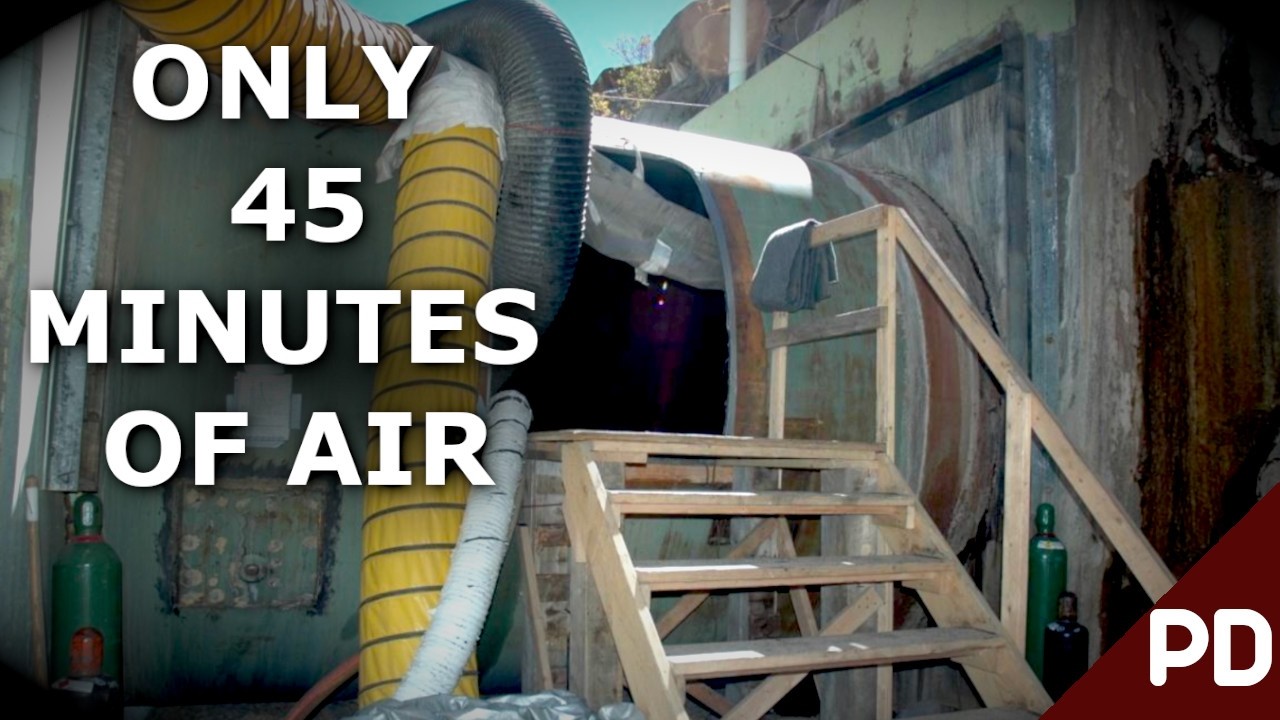
The Cabin Creek Hydroelectric Plant disaster occurred in the mid-2000s near Georgetown, Colorado, inside a deep underground tunnel that was not designed for human occupation but rather served as a water conduit. The facility utilized pumped storage to generate electricity by moving water between upper and lower reservoirs via a long penstock lined with steel and epoxy. In September 2007, repairs were initiated after the lining deteriorated, requiring workers to enter the confined space through a single small access point of only four feet wide. To prepare for applying new epoxy coating, contractors used sandblasting and introduced methyl ethyl ketone (MEK), a highly volatile solvent necessary for cleaning equipment but extremely flammable at room temperature.
The tragedy unfolded on October 2nd, 2007, when the application of fresh epoxy began shortly after lunchtime while only about ten feet of work had been completed before machinery clogging forced an early stoppage. During the cleanup process to remove residual MEK from the sprayer and hoses, approximately ninety liters of this flammable liquid remained inside the tunnel in open buckets and within the equipment itself. Around 1:55 p.m., a flash fire ignited at the base of the spraying machine, erupting with burning solvents that trapped eleven workers between bulkheads and flames. The intense heat generated thick black smoke from burning epoxy and MEK, which choked out oxygen and prevented firefighters from entering to rescue those who had called for help via radio before communications were lost due to asphyxiation.
Following the fire, emergency responders arrived over an hour later but faced significant delays in accessing the site because of the confined nature of the tunnel and the severity of the smoke and flames. Rescue teams eventually entered at 5:45 p.m., finding five bodies who had succumbed to suffocation before they could be saved; autopsies confirmed that asphyxiation was the cause of death for all victims. The subsequent investigation by the Chemical Safety Board revealed severe negligence, noting that both Xcel Energy and the contractor RPI Coating Incorporated knew about the dangers but failed to classify the space as a permit-required confined area or implement necessary safety protocols like continuous air monitoring and emergency plans. Despite knowing better alternatives existed, they proceeded with using MEK in such an unsafe environment, leading to criminal charges where the contractor pleaded guilty while Xcel Energy was ultimately found not guilty by a jury.
Read the full video transcript
Working in confined spaces can be a
terrifying thing. The closest I have to
this is when servicing the old family
chariot. Crawling around under a
15-year-old Honda isn't the most
pleasant experience. But it's a holiday
compared to today's subject. That is
working in a tunnel that was not
designed or intended for human
occupation.
It is of the drained penstock of a
hydroelectric plant. Our story today is
about a fire in a pure horrific
situation in which the victim's final
moments must have been the stuff of
nightmares. It has it all. A tunnel deep
underground, chemicals,
a single point of exit, and of course a
fire.
Now, you'd think that such a disaster
was maybe from 100 years ago.
Well, no. It was from the mid-2000s.
Today, we're looking at the tragic Cabin
Creek Hydroelectric Plant disaster. My
name is John, and welcome to Plainly
Difficult.
This video wouldn't have been possible
if it wasn't for my YouTube,
Kofi, and Patreon members. If you want
to get early access to channel's videos,
then you can from just £1 per month. And
as always, the links for this will be in
the pinned comment below.
In addition to this, the link for the
video's references as well.
Background.
So, our story will begin and ultimately
end here at the Cabin Creek Pumped
Hydroelectric Plant.
It is here in the Rocky Mountains near
Georgetown, Colorado.
It's in a remote area, making use of the
gravity of the mountains for the
generation of electricity, estimated at
a full power output of 324 MW.
The site is at an elevation of greater
than 10,000 ft above sea level, and
distributes the electricity it generates
via transmission lines.
It opened in 1967,
and worked
off a pretty simple concept. That is
water loves to flow downhill.
The plant was made up of four main
parts, an upper reservoir of water, a
lower reservoir, a power plant that
housed the turbines, and a penstock that
linked all these parts together. The
penstock is long at 4,163
ft or 1,269
m long.
This was between the upper reservoir's
intake, which looked like a little
guardhouse known as the mushroom,
to a section of the penstock that splits
into two parts near the powerhouse to
power the two turbines. 3,123
ft of this or 952 m
of the tunnel is big enough to be
traversed by foot, of course sans water.
The final 1,040 ft of the penstock,
however, was rather steep requiring the
assistance of ropes and ladders.
The lining material of the tunnel was
made up of welded steel
with other places using concrete.
In order to stop the steel from rusting
and distorting under the constant flow
of water, it was coated with an epoxy.
The plant was only really intended for
peak demand use as eventually the upper
reservoir would run out of water. This
is where the pumped in the pump storage
comes into play. When not required for
energy generation, the penstock is used
to pump water in the other direction
from the lower reservoir back up to the
upper one ready for another session of
electricity generation.
Now the lining would in the year 2000 be
discovered to have deteriorated enough
to allow parts of the penstock steelwork
to begin rusting.
Although when discovered, it wasn't
enough rust to cause structural issues,
but it still had to be addressed and
repair works were needed.
But it would take 7 years
to get to begin
as the plant's operator put in request
to extend the deadline for the repair
works, but eventually the work had to be
done and Xcel Energy hired a contractor
called RPI Coating Incorporated after a
tendering process. We will get into this
company a bit later on, but works to
remove and reapply epoxy coating will
begin in September 2007, which leads us
on to our next section of the video.
The disaster.
So works for the penstock relining would
begin in September. First by shutting
down the power
station and draining the penstock. In
order to gain access to the tunnel, an
access panel was cut using flame
torches. This would be the sole entry
and egress point for the project. This
entry point was just 4 by 6 ft or 1.2 by
1.8 m. I'm a smidge over 6 ft and that
seems too small for getting into a
tunnel in my books. A wooden ladder was
provided to help with workers getting in
and out.
Once the opening was cut, Xcel and RPI
staff then began removing the standing
water, dead fish, mud, and debris from
the penstock. It was noted by some of
the workers that the build-up of moss on
the surfaces made it a very slippery
task with one worker actually
dislocating their shoulder after
slipping over.
To remove the epoxy that was beginning
to fail, RPI was going to use
sandblasting and to contain the sand
from going further up and down the
penstock,
wooden bulkheads were constructed named
the east and west. In addition to this,
ventilation holes were cut in the steel
lining. These were roughly 2 ft by 2 ft.
In order to keep some semblance of air
flow, two dehumidifiers were employed.
These forced air into the working area
and a dust extractor sucked air out to
collect the sand media.
This gave the workspace an estimated air
replacement rate of 4.4
per hour. The sandblasting
and prep work would take the best part
of September to complete. And hand
sanding and grinding was finished on the
morning of the 2nd of October 2007.
The next stage of the project would now
be able to continue. This was the
application of the two-part epoxy.
A special spraying machine would be used
and had two compartments for the two
parts of the epoxy, i.e. the base and
hardener.
For the respective parts, they needed to
be heated in order to ensure good flow
through the pumps. You see, both parts
are mixed together during the spraying
in a mixing block, and a good flow helps
the application as it has a relatively
short working time before the epoxy
hardens.
I have some experience of working with
epoxy from a model making and installing
strengthening rods in guitar necks, and
the stuff can get very messy very
quickly.
To help with this, solvents were
employed to help clear out the lines.
The solvent chosen for the job was the
highly volatile methyl ethyl ketone,
or MEK.
This stuff can be flammable at room
temperature, so you need to be very
careful with it.
The sprayer was set up on a wheeled
scaffold, which allowed positioning up
and down the penstock when needed. The
hoses were laid out with the sprayer in
between the workers and the egress point
facing towards the west. By late morning
on the 2nd of October, workers began
staging the MEK and epoxy for the
beginning of the application.
Is it just me or does this all seem very
rushed? They had only just finished
removing the old stuff and needed to
begin the new epoxy application straight
away.
Anyways, the sprayer was set to be
flushed out with the MEK. This was done
with 10 US gallons of the stuff brought
in in two 5-gallon plastic bottles.
The remaining and used MEK after
flushing the system was left in open
buckets
in case it was needed again.
There were around eight buckets of epoxy
hardener and MEK placed around the
sprayer on the scaffold. We have another
95 placed along the penstock for when
the coating operations pass by.
The green light was given to start
spraying around 1:00 p.m. And a team of
12, 11 of whom were inside the penstock,
began working. The foreman and the
manager around this time left for lunch.
The work would get bogged down almost
immediately with the sprayer getting
clogged up on multiple occasions
requiring flushing. After four flushes,
the foreman decided it was best to
abandon for the day and to prepare to
remove the sprayer. They had only done
around 10 ft of spraying.
To do this, the MEK had to be thoroughly
circulated around the whole spraying
machine, hoses, wands, and the mixer
block.
The two workers who were manning the
wands made their way back to the sprayer
with their equipment and buckets of MEK
and waste epoxy.
Another member of staff brought more MEK
into the penstock for the cleaning
process. Meaning there was an estimated
of a total of 12 gallons of pure MEK,
roughly around 45 L,
and another 12 gallons of MEK epoxy
waste.
Basically, 90 L of highly flammable
material all in one tiny space.
At around 1:55 p.m., MEK was still being
circulated around the sprayer. A flash
fire ignited from the base of the
sprayer. Burning solvents erupted from
the sprayer, shooting flaming liquid out
into the workers.
Some workers who had left the sprayer to
find more MEK reported seeing flames
rushing out along the penstock. Five
workers were on the other side of the
sprayer and found themselves trapped
between the bulkhead and the inferno.
They shouted for assistance and fire
extinguishers, but none have been staged
or in around the sprayer.
They were trapped with no help to hand.
Workers in the other side ran down the
penstock to get the extinguishers, which
had been placed outside the entrance cut
into the steel.
After retrieving the extinguishers, two
workers ran back down the penstock to
try and
put out the fire.
But more MEK had caught a light. This
mix with burning
epoxy created a thick black smoke, which
prevented an attempt at fight at
fighting the fire.
A worker had run to the cabin Creek
powerhouse to call 911. This was at
around 2:00 p.m. With the first
responders arriving shortly after.
However, the confined nature of the fire
was not communicated.
Upon arriving
and finding out that the fire was
underground in essentially a tunnel,
they requested mutual aid from other
better equipped units. But this was at
closest over an hour travel time away.
Initially four firefighters attempted to
enter the area of the penstock, but
again the smoke and flames resisted
their attempts.
During this time, the trapped workers
were still in communications via radio.
They were told to go to the bulkhead as
far away from the fire as possible.
The comms would continue for roughly 45
minutes after the initial fire, but
eventually silence would awash the radio
waves.
Rescue workers would continue however,
as everyone still clung on to the hope
of survival. Extra rescue workers would
arrive around 3:45 p.m. The ventilation
fans would be reversed to try and draw
some of the smoke away.
Eventually the fire would burn out,
allowing mine rescue workers to enter at
around 5:45 p.m.
And sadly they would find five bodies,
apparently having succumbed to
asphyxiation.
This would later be confirmed at
autopsy. They reckon that it was around
the same time that the radios went
silent.
The disaster would understandably result
in a lot of questions as to how on earth
did five people die in such horrific
circumstances?
We will come to that part shortly. But
the plant will be pressed back into
service and would undergo a massive
overhaul finishing fairly recently.
The investigation.
So the big question of why and how would
come down to the CSB.
The investigation would be hindered at
almost every turn with management from
Excel and RPI refusing to provide
evidence and testimony. With some
managers pleading the fifth when
interviewed.
Later on Excel would even try and block
the release of the CSB report.
The CSB would find some massive issues
with the project. First of all, the
contractor RPI. It had a safety rating
of zero and amassed over $100,000 in
fines from OSHA. This meant that a
company shouldn't have been anywhere
near the job site, let alone bidding on
it.
Both Excel and RPI knew of the chemicals
involved and the confined nature of the
job. This would have required them to
classify it as a permit required
confined space as required by OSHA.
If they had gained the permit, the two
companies would have had to make sure
that the following was followed. Having
a written program, entry permits,
continuous monitoring, and trained
attendants.
The setup used in the fateful day
would have most certainly not met these
requirements and thus
the extra requirements would have cost
time and money.
It was found that during the planning
stage of the project that the dangers of
the single egress and entry point were
known to both Excel and RPI, but nothing
was done to improve the situation for
the workers.
Training was also found to be inadequate
with no proper emergency services action
plan being set out before the work
began.
What was the actual cause of the fire
then? Well, it was pretty clear that the
MEK was the flash point for the fire.
Interestingly, the CSB also found that
there were other less flammable
alternatives open to Excel and RPI, but
for whatever reason, both companies
opted not to use them, instead using
a highly volatile substance in a very
confined space.
As I said before, MEK can self-ignite
even in ambient temperatures,
which means it was a pretty terrible
decision to use it.
Both RPI and Excel would be charged
criminally for the negligence of the
fire.
Move on the 1st of June, 2011, Excel
Energy going to court. However, on the
28th of June, the jury found Excel
Energy not guilty.
RPI on the 19th of December, 2011,
pleaded guilty to workplace safety
violations and paid $1.55 million in a
cash settlement, taking full
responsibility for the deaths of the
five workers.
So, it's scale time. It's going to be a
three. I mean, it's still what I've got
from my root cause analysis card. Do you
agree? Let me know in the comments
below.
This is a Plenty of Foot Production. All
videos in the channel creative commons
attribution share alike licensed. Plenty
of videos produced by me, John, in a
currently in the middle of July
hot and sultry corner of southern
London.
And all I have to say is thank you very
much for watching, and Mr. Music, can
you do me a favor and play us out,
please?