Video summary
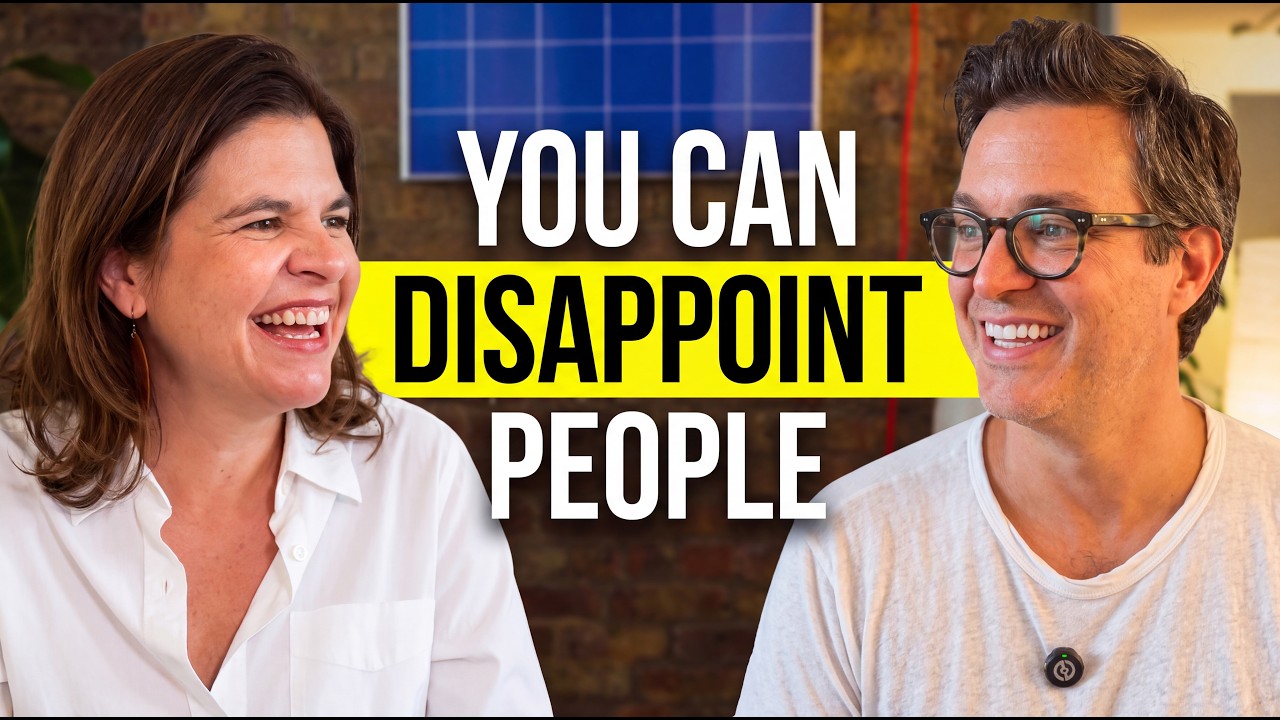
Dr. Jennifer Reid explores the distinction between adaptive guilt, which serves as a useful signal for specific mistakes that need fixing, and maladaptive generalized guilt that stems from flawed thinking patterns. This excessive guilt often arises when individuals conflate caring for others with taking responsibility for their emotions, leading to hyperaccountability where one feels personally liable for everyone else's feelings. Furthermore, relying on self-criticism as a motivator rather than self-compassion creates a cycle of seeking external validation that inevitably leads to emptiness when unmet. Reid points out that social media worsens this condition by presenting idealized, two-dimensional versions of life that ignore the messy reality, causing unfair comparisons regarding parenting, sleep, and career balance that distort our perception of what is normal or achievable.
To understand and manage these feelings, Reid introduces a practical formula where guilt equals expectations minus perceived reality, suggesting that the gap between narrow, rigid expectations and what we actually do generates unnecessary shame. She argues that concepts like "balance" are static illusions because life is inherently dynamic, involving constant trade-offs within a limited circle of control rather than a perfect equilibrium. Instead of striving for an impossible standard of perfection, she advocates broadening the definition of success to include holistic contributions and practicing self-compassion, which involves kindness, recognizing common humanity, and mindfulness. This approach helps individuals recognize their own achievements that analytical minds often overlook, shifting the focus from external approval to intrinsic motivation and accepting human limitations without judgment.
Beyond managing expectations, Reid emphasizes that guilt frequently originates from "covert contracts" or invisible societal rules, such as the belief that a good mother must always prioritize her child above all else. By identifying these internalized stories and questioning their origins—whether they come from societal norms or parental influence—individuals can rewrite them to align with their true values and goals. She also warns against rigid self-labels like "introvert" or outdated ideas of masculinity that restrict behavior and trigger guilt when violated, noting that emotions like anger, resentment, or grief are important signals rather than commands to be suppressed. Suppressing these feelings causes more harm than allowing them to exist, so it is crucial to acknowledge them as data points about one's needs rather than directives to act upon immediately.
Ultimately, the goal is to reclaim agency over one's life by not letting guilt hijack decision-making processes or dictate behavior based on fear of judgment. Reid suggests using self-compassion exercises, such as imagining how one would speak to a friend in a similar situation, to treat oneself with the same understanding offered to others. This practice helps individuals acknowledge intrusive guilty thoughts without being controlled by them, allowing for conscious choices that reflect what they truly desire and value. By recognizing that others have the capacity to handle vulnerability and by focusing on authentic feelings rather than external expectations, people can break free from the cycle of shame and live more guilt-free lives grounded in self-awareness and genuine connection.
Read the full video transcript
setting an identity, maybe one that at
some point in your life was adaptive for
you, was helpful for you, let's say
people pleaser, was helpful for you when
you were younger because it helped you
to calm down a pretty volatile
environment in your home. It's just that
when you pull it forward into the here
and now and try and apply it in every
situation, pulling some old plans for an
old house and bringing them forward to
your new condo and thinking this should
work just as well. Of course, it
doesn't. We can change that. That's
that's not static. That is dynamic.
[music]
>> Well, welcome to the show. It's great to
have you.
>> Thanks for having me. I'm excited to be
here.
>> Likewise. I think many of our audience
members, myself included, have
challenging relationships with guilt.
And I'd love to hear what your
relationship was like when you started
this work and this project and how it's
changed.
>> I was hearing it in my practice as a
psychiatrist a ton um from men and
women. I work with a lot of healthcare
providers so I think they get a really
healthy dose of it um sort of taught to
them along the way. But for me it was my
own guilt as well. It was this sense of
I'm always behind. I'm never quite
measuring up. I I need to be doing more.
if I feel like I need to rest then I'm
missing out on productivity just this
sort of constant churn and I wanted to
figure out you know why is this
happening how can I speak about it with
patients in session in a way that's they
can understand they can apply in their
own life and so that's sort of what
prompted starting to write about it
research it because it was a little
nebulous I didn't find much out there I
always ask about guilt as one of the
core symptoms of major depression but
like there really wasn't much for me to
refer to if they did endorse it All
right. Yeah, I have a ton of guilt. Now
what? I'm not sure.
>> I know for myself, guilt was a tool
often times that my family used to get
me to do things, to get me to act
certain ways, and that of course created
some maladaptive responses in adult life
and not necessarily recognizing its own
role in some of my behaviors. I know for
some of our clients, they argue, well,
guilt is just a sign that I care. Like,
I I care, therefore, I feel guilty.
>> I love that. that I mean you jump right
to the point of of one of the stickiest
aspects of guilt which is that it has
become conflated with care. This idea
that if someone else that I you know
love is struggling I should feel guilty
because that means I care. But what
guilt tells us is that I've done
something wrong. Right? Guilt is
adaptive. It's a healthy and useful
emotion when it tells us we've done
something wrong. When we really have
when there's something maybe we missed
or forgot or said something hurtful. It
tells us, "Look, you got this wrong.
It's uncomfortable." And it pushes us to
try and make up for it, apologize,
repair.
But unfortunately, when we're using it
to show that we care, we're always
telling ourselves we've done something
wrong. And maybe that's not the case.
Maybe it's someone we really we really
love. Something's happened to them. We
care about them, but that doesn't mean
we have to take responsibility for their
experience.
If that's your instinct in these
situations, then it can be something
that is all-consuming. I mean, there's
so many instances where the people in
our life are going through things and if
we take on not only our own guilt, but
their guilt, of course, it's going to
lead to inaction, it's going to lead to
inadequacy. It's going to lead to an
immense amount of self-doubt and
self-criticism.
>> It is because I can't control someone
else's emotions. Even as a psychiatrist
with years of training, I know I cannot
do that, right? So I describe it as sort
of this hyperaccountability expectation.
And if our guilt lives in the space
between our expectations and what we see
that we're actually doing, which are
perceived reality I call it. Meaning it
may not be the actual reality but what
we notice. Then this expectation of
hyperaccountability for other people's
experiences, emotions just keeps us
constantly trapped in guilt, like
drowning in guilt. Oftentimes it shows
up in romantic relationships really
clearly for us where we feel like we
have to be the adult and mother or take
care of the other person in the
situation that they're going through
when in actuality we have no
responsibility or role in in what
they're feeling like life is messy but
it can feel difficult when the people we
really care about are going through
difficult periods challenges
>> it can and guilt can give us this
illusion of control right like oh if
they're going through that, but it's my
responsibility that I'm I can just fix
it. I'll be better. I'll do more. And
so, it does protect us from this feeling
of helplessness. There's almost nothing
worse than someone you care about
hurting and you're helpless to fix it or
to have prevented it in the first place.
But that's the reality of of the
vulnerability of of caring for someone
else.
>> Now, the book is guiltree. What does it
mean to be guiltree? Sounds impossible.
[laughter]
Well, I think it's sort of like if you
compare it with anxiety, right? There
are some situations where anxiety is
warranted. If we really are under
threat, we need to protect ourselves.
And there are situations where guilt is
appropriate, where we have done
something that went against our values
or hurt hurt someone that we care about.
And for us to move toward them and
repair is part of what has allowed us to
really thrive as a species that we've
worked in community. We've collaborated
with each other in this way. So having
absolutely zero adaptive guilt is
actually bad, right? Like it's saying,
"I hurt you. I don't feel anything." You
can see how that would fracture any
relationship, right? The breakups
certainly have happened where it's like
you hurt my feelings and you didn't seem
to care at all. You didn't have any
guilt about that. The guilt-free idea is
how do we remove this sort of overlay,
this maladaptive, constant generalized
guilt that so many of us experience.
certainly see it in caretakers across
the board, whether it's parents,
healthcare providers, maybe you're
caring for an aging parent, right? These
sort of areas, we can have so much guilt
because we're chasing enough and enough
has no clear definition. We just keep
resetting it often further and further
away, right? Moving the goalpost, if you
will, on what it means to do enough. And
I think that's what's keeping us in this
position.
>> In many of those situations, especially
when it's a loved one or someone who
took care of us, raised us, we feel this
debt of gratitude in everything that
they did in service of us, being able to
achieve our goals and put us in places
that allowed us to succeed. And
therefore, we will carry that burden
into, well, I owe this person this
immense amount. And the guilt that comes
with that can be overbearing, can be
really difficult and challenging for us
to handle.
>> It can. I mean, as you pointed out, if
you've been raised in a situation where
guilt was used to manipulate by others,
you're really it pushes you away from
them, right? If someone's using guilt on
you, it's very uncomfortable and you
really don't want to spend more time
with that person. It's it sort of
disconnects us from them. So we really
have to be careful that we're not using
that in our relationships, but also that
we're not using it against ourselves,
right? Saying, you know what, a a good
daughter, for example, if I have aging
parents, a good daughter in order to
show that she's perfectly grateful,
would live near her parents, would visit
them every day, would make sure they're
never feeling lonely. Like all these
expectations you can see that really
aren't reasonable, right? You can be a
very loving and grateful adult child and
not meet all of those sort of perfect
criteria, but we can wrap ourselves up
in not saying I need to do all of these
things. It's either perfection or
failure. And there's so much room in the
middle of that to share gratitude, to
have connection, to show love, and not
feel like you need to ride this line of
perfection in order to show those
things. in that situation where we're
wrestling with this, but the other
person has those expectations, how do we
start to unravel that and have a
conversation to get to a place where we
can actually work through it
meaningfully? Because I know for a lot
of people it's like, yeah, I hear what
you're saying, but also those
expectations are coming from someplace.
like my parents really feel it's
necessary for me to be with them, to be
next to them, to be in their life and
doing all of these things because of all
the things they did for me.
>> Yeah, it's so hard even that's coming
directly from them. Absolutely. This is
where I would talk about boundaries
because I think that rather than
boundaries as a a wall between us and
those we care about, I see it as it's
sort of the protective scaffolding. It
allows us to move toward each other. And
so communication with others and again
we can't control how they respond. But
what we can communicate is a deep love
and gratitude and saying here are the
ways that I can really connect with you.
I want to try and connect with you
because I love you. Here are some
different ways that I can do that.
That's what a boundary says. It says
this is the time and energy that I
really want to devote to our
relationship. And being able to
communicate that gives them the
opportunity to say, "Okay, we we see
that. We want that. We like that. How do
we how do we work together? How do we
facilitate?" If you're in a relationship
where there's very little room for
compromise from that other individual,
that makes it that much harder, right?
People just blow through our boundaries.
Another thing that's important to work
on around guilt is allowing
disappointment
and allowing it in others and knowing
that even if we are a very very loving,
caring person, we still are going to
create disappointment in other people
because we can't be everywhere at once.
Right? I'm talking [clears throat] with
you so I can't be playing chess with my
son as I he told him just before we
started.
>> We create disappointment because we're
human and the only way to not disappoint
others is to have no one in your life.
And we know how damaging that can be. So
practicing the idea that disappointment
is a human emotion. It's a signal like
any other emotion, but it's not
dangerous. It doesn't last forever. It's
not going to fracture a relationship.
Right? These are the things we need to
practice because if we're, you know,
bending over backwards trying not to
ever disappoint anyone else, mostly we
disappoint ourselves and we live in this
constant guilt.
>> A big part of that then is this
self-criticism.
And many high performers will argue,
okay, well, the self-criticism keeps me
sharp. It keeps me motivated. It keeps
me working towards my goals. And they
can have difficulty in seeing where that
self-criticism actually hinders them and
creates blind spots and guilt that
they're struggling to deal with, anxiety
and burnout that they're feeling because
of it. That's another use of guilt that
we all do, which is using it as
motivation, right? This this idea we
tell ourselves, if I don't feel guilty,
I'm just going to crawl under the covers
and I'm never coming out. never going to
the gym again. I'm gonna just only eat
Cheetos for breakfast, lunch, and
dinner. I do like Cheetos.
>> Yeah, sounds good.
>> Yeah, right.
>> But I think that that is a threat that
we do utilize because the idea that only
guilt is motivating is wrong for a
number of reasons. Number one, research
suggests things like self-compassion are
actually more likely to motivate us to
make desired changes, to move toward
goals. Also, when we're using guilt to
motivate, we're forcing ourselves to
sort of start from behind because what
does guilt say? It says you've done
something wrong. So, we're saying I tell
myself I've done something wrong in
order to get myself to do something. So,
I joke that like Nike's motto of just do
it. Is that for a reason? It's not I
can't believe I didn't do that already.
I'm such a piece of whatever. Right.
>> Right.
>> Because that is demoralizing.
It's like a coach yelling things like
this at you doesn't necessarily
motivate. I think that's a pretty old
school version of motivation, but we can
make that change or at least start
pushing back on that change within
ourselves.
>> What are some of the signs that guilt is
running more of our life than it should
or that we might be using it in ways
that hinder us? Well, even just the way
that we I mean when we're paying
attention to our own thoughts, which is
harder than it sounds because we're in
an attention economy and everyone is
paying top dollar for our attention. So
turning it inward toward ourselves as I
would ask someone to do in therapy is
really hard. It takes the courage to say
I deserve this time and I think
something better is on the other side of
it. Right? So, when we're paying
attention to our thoughts, watching for
those really critical thoughts, watching
for hyperbole, always never, I never get
this right, I always do it this way, how
come I can never, etc. Shoulds, you
know, everyone's talking about shoulds
and how they're not good for you. But
really, should is outsourcing that
motivation or that influence because
when you say I should, like according to
who? There's a goldfinch outside my
house. It's bright yellow. It's so
pretty. So when you're outsourcing that
you're giving control to someone else.
So if you really want to be a high
achiever, you really want to be engaged,
you want to make these changes, things
should take that control and it places
over here in whoever I guess it's
crowdsourcing the idea of what makes a
good you know professional, a good
leader, a good innovator, entrepreneur
and I think that is taking the control
away from ourselves needlessly and
keeping us in this place of guilt. What
can trip up a lot of us is that
especially as a high achiever there is a
lot of external validation that comes
from that that sense of accomplishment
that our family shares with us or the
people we care about celebrate us for
and that can also feel very motivating
and but it creates these expectations
then where it's like okay well that's
where the should is coming from I should
be doing this because I know other
people are going to celebrate me for me
they're going to feel better about me
for doing that they're going to share
with their friends and talk about me and
brag about me because of it. Therefore,
I should be doing this to live up to
their expectations.
>> This comes up so often and when I'm
working with someone who that has been
their driving force their entire lives
that I am searching for this external
validation and when I get it, I feel
okay about myself. The trouble is it's
it's really temporary and it's a it's
fairly, you know, it's lacking in that
depth of what is my intrinsic
motivation. When we've done these these
studies, psychological studies, the idea
of extrinic exttrinsic validation or you
know extrinsic motivation from outside
sources is less effective for us. It's
less beneficial, less likely to push us
to engage in things in a meaningful and
productive way than really having it
come from inside. And so often as we go
through our lives reaching midlife, we
may come to a point where I mean I've
experienced this certainly as I was
growing up. It was like how can I do
really well in college to get into the
right medical school, to get into the
right residency, to get the right job,
da da da. Then you get to midlife and
you're like, what is this all for? And
if I don't have that constant validation
of what the next contest is or
competition I could win, I feel really
empty inside. And so I think that's
where it really that investment in
learning what drives you, what motivates
you, what really feels good because
otherwise you just keep again you move
that goalpost. If my goal was I'm going
to publish a book and then I'll be happy
and feel good about myself. Well then I
did and then I felt the same person I
always have, right? And so that's where
we can get into these really difficult
midlife years of, you know, I guess
talked about as midlife crisis or some
of these pivots people talk about, but
you have to have something inside that
sets that core identity.
>> What goes along with that often times
for many of us is achieving those things
does seem to make our loved ones happy.
It does seem to make the people around
us happy. They're celebrating us.
They're elevating us. They're bragging
about us to the people they care about.
And then we feel this responsibility to
keep making them happy, to be
responsible for their happiness. And
that's a huge weight to carry outside of
realizing our own happiness and where
that comes from.
>> It is because again, we can't control
how other people feel about us. So we
might do things that we think would
really impress them or make them proud
and we don't get as much of that
response as we expect or we become
disappointed and really are only doing
it for for that feeling. So again, we
can get caught up in the sense of this
is the only thing that brings me value.
For example, I work with I've worked
with a lot of students coming to, you
know, Ivy League schools and thinking
once they made it there, that was their
identity. They had already made it, they
were already successful. Maybe they were
a student athlete as well and then there
was an injury or they were having more
trouble at school than they thought. if
their entire identity was I'm successful
because of X I'm in the school or I'm in
the sports program
there's what is left when that is is
briefly or you know forever taken away
right because that was their full
identity and I think we have to be so
careful that even though it feels good
in the moment
trying to make other people happy with
our own choices is a recipe for future
resentment and discontent
>> in those scenar scenarios. Often times
it feels good because other people are
selecting us. The the school has
selected us. We competed against others
and we were chosen. And then there comes
a point in life where well there aren't
really as many opportunities to be
chosen. And if you've put all of your
worth and value on being chosen, you can
then feel an immense amount of guilt
when there isn't anything left to be
chosen for.
>> Right? As if maybe I'm doing something
wrong. I need to be better. I need to do
this differently because otherwise I'm a
failure. Right? It's either the sort of
perfect success in an ongoing repeated
way or or failure and then the bottom
kind of falls out in that situation.
I know for a lot of our clients, guilt
comes from consuming social media and
seeing what other people in our life are
doing and then comparing oursel to the
vacations, the purchases, the things
that they're celebrating, publishing a
book and launching something where we
feel inadequate because we're in the
messy middle. We're in the part where we
don't have that achievement to celebrate
and get external validation for. And it
can feel as you consume social media
that everyone is just achieving. And the
messy middle is something that only
we're dealing with,
>> right? We're seeing this two-dimensional
projection of someone's experience. What
truth is in that? It's hard to really
tell. It's an image that they're
projecting, right? And research suggests
we do reach out or seek out comparisons
more often when we're already feeling
insecure or badly about ourselves. So
that's this perfect storm of saying,
"I'm already feeling insecure. I'm going
to seek out comparison because maybe in
our mind like guilt, we see it as
motivating. Oh, wow. That person's doing
this amazing thing that'll motivate me.
I think the trouble though is who we
choose to compare ourselves to.
And that we don't say, "Let me look at
this entire individual." Right? If
you're comparing yourself to a close
friend, for example, you've seen some of
their tougher sides. You've seen some of
their challenges. You know, they're a
rich and full human who's not perfect in
every single way. And so we can say,
"Oh, well, yeah, they've made this
amazing accomplishment at work." And
also, they have these kinds of
struggles. They're human. Like, I I am
able to see that lens as a psychiatrist
because that's what they bring up to me.
>> I think it's important to know that
everyone has that going on behind the
scenes. So when you choose to compare
yourself to some idealized version of
whatever trait you might be feeling
insecure about, you're setting yourself
up for this perpetual feeling of further
insecurity and this sense that everyone
right that hyperbole everyone's doing
better than me, everybody x y and z. So
I really am am cautious about social
media. I do think that it can can create
this idea that the only movement the
only trajectory for life is up up and
even if you're going up in that spiral
you know as people talk about with
progress that I think it makes people
feel guilty when they have difficult
days or when they feel any emotion other
than excitement and engagement and
meaning. Maybe they just feel really sad
or bored or tired. You know, a brand new
mom with a new baby might think, "I'm
only supposed to feel joyful." Well,
you're also exhausted all the time. So,
how can we allow that ambivalence? I
think ambivalence is not something that
we feature on social media. Yeah. Like,
I'm in this job and I guess it's
exciting, but I also kind of miss the
time I had with my co-workers before
because now I'm supposed to be leading
them and I feel a little bit
uncomfortable about that. Right. None of
that nuance. When I've tried to post
things online, I'm like, I can't do it.
I can't do it. It's too like to have any
nuance there. It gets too wordy very
quickly. And I think that's what we're
missing in what we see online.
>> Becoming a dad and and recognizing a
whole new layer to guilt in my
consumption of social media and how I
want to be a great dad, recognizing all
the patterns that I want to change in
the way that I was raised and the way
that I'm raising my daughter. And I
think with that came a whole extra wave
of guilt because exactly what you're
talking about. So much of what you
consume is only one emotion. It could be
a strong emotion of like this is so hard
and challenging or this is so amazing.
This is the best thing ever. But many of
us experience it with both of those
emotions at the same time. And social
media doesn't capture that and it
doesn't allow us to see it in that
manner. So then the guilt can come.
Well, how is it that I could feel this
is such a blessing but at the same time
this is so challenging. I'm not sleeping
and and my partner and I are not
connecting like we were previously.
>> Yeah. Because when you think about those
expectations, I mean, it shapes our
parenting roles so deeply because over
time, the roles as parents that are
expected to carry, the things we're
expected to do, the way we're supposed
to show up with our child, they're
shaped by the culture, the time that we
live in. And I think that we are still
trying to figure out I think men are
trying to figure out what does it mean
to be a good dad today. What are the
images from previous that I want to
bring into my parenting and what are the
ideas and limitations that I don't want
to bring in? And I think it can be very
hard when you're getting so many
messages online like you said lacking
any nuance. this is the way to do it
because we wouldn't have a 100,000
parenting books if there were really
truly one perfect way and if you have a
second child they're totally different
so you think you've written your own
playbook and then you have to throw that
out the window so I think setting
expectations as parents I've heard seen
people write about really trying to set
them very basic very low literally I'm
here I love my children I'm here to
listen to them these are the values I
really want to use and I have to let go
of this idea of perfection in so many
other parts of parenthood.
>> Another big struggle especially around
the parenthood piece is just the nature
nurture component. And I feel like so
much of what we're consuming on social
media and we're reading and parenting
books focuses so much on the nurture and
what we can do and the outsiz impact
that we have. And then we can feel with
the imperfection of how we're showing up
daytoday or how we're struggling with
the changes at work and trying to adapt
that well we're not being the perfect
parent based on the book or the podcast
we listen to. We're we're making
mistakes and we're having moments where
we overreact or we aren't showing up in
the way that we had hoped when we got
the news that we were pregnant and we
were excited to start a family. And the
guilt that can also come then from the
generational differences. So when I talk
to my family, the choices they made are
way different than what the books are
telling me now and the way that I want
to approach it. But that guilt can come
up like, "Oh, I'm I'm not a good parent
in their eyes because I'm not making the
same choices."
>> Part of what I see is this increasing
guilt and this increasing focus on
trying to get everything right as
parents in modern times is that it's a
reaction to sort of increasing levels of
insecurity. And that frankly with our
globalized media, including social
media, but many other sources, we can
see so many different things going on in
this world, including really scary,
really awful, really difficult images.
And I think when we feel that
uncertainty, one way of trying to get
control is to say, okay, in my
parenting, I'm going to get everything
right. Because then that guarantees that
I'm going to have a happy, healthy,
successful child. And I think if we step
away from that guilt and that constant
attempt to do it perfectly, we again
have to accept that we we don't have
control over those things. We can do the
best thing. We can do the best work
possible. We can show up the way we want
to and things may not work out the way
we want. That's true of any relationship
that we're in. And that is a really hard
emotion to sit in, especially as a
parent. I didn't have nearly as much
anxiety until I had child and then I was
like, wait, I have to let this being go
out into the world and I can't control
their every single move. Well, no.
Especially when they're teenagers and
you're like, this is impossible. So, I
think that's part of this this intense
focus on how do I get everything right?
Because we want to control something
that's really out of our hands. In my
experience and working mostly with men
in our coaching and then also in my male
relationships, I think competition also
becomes a part of it that's woven into
our story of how do we measure up and we
do want to be showing up as the perfect
dad, as the one who's prepared, who's
put in all the effort, who's read
everything and made sure that they're
handling not only work but then also
fatherhood. And I think with that comes
this mask that we bring into our
relationships and that lack of
vulnerability that harms us on the guilt
side of things because then we feel
guilty when we aren't showing up as
vulnerable and we're forcing other
people to be more shallow in the way
that they show up to us because they
don't feel comfortable being vulnerable
in their relationship with us and it
could be a really slippery slope. I
think that's really true. And I think
that when we think about society's
expectations for what a man's role might
be or what we believe is okay for men to
feel and express, vulnerability,
fear, uncertainty, a need for
reassurance or or attention, those
aren't necessarily things we allow men
to to need without sort of judgment or
kind of giving them a little side eye.
And I think what that does, like you're
saying, is it forces you as men to show
up in this way that is stoic and I've
got this figured out and then doing it
all right. And I think I remember like a
mommy and me class I went to first early
after having a baby. And all the moms
were just like, "Everything is so
wonderful. Baby latched right away. He's
growing. He's sleeping through the
night." I mean, who knows what they
really were.
>> Sleep. Yeah.
>> Right. But I felt just terrible. And
what I did is I had to find my people
where we could get really real about it.
And I think women maybe are given more
latitude to do that, to have friendships
where we really call and we talk for an
hour about like, "Oh my god, can you
believe this happened? This was awful."
Or this I'm so frustrated or I'm
exhausted.
And men, I think some have friendships
where they allow that. But I think more
often we need to give men the latitude
to express all of these human emotions,
right? It's not that only women have
these and men are just fine. Like men of
course have any of these emotions
including guilt, but they maybe don't
feel as as safe or as able to
authentically express that even if it's
not to everybody blasting on social
media. Maybe it's to a close friend or a
family member that you really trust that
you can be real with because otherwise
you're sort of hiding behind this this
idealized version of yourself and then
shame can come in, right? Because it's
like well I'm not any of those things.
I'm actually inherently this flawed
person and shame can be really toxic.
So, one thing that my wife and I joke
about is, you know, in sleep being one
of them is like, "Oh, we got a different
model." And I think that's also what's
really challenging. Like, two dads can
be great friends and and be really
conscious of wanting to be vulnerable
and share and have a deep relationship
and fatherhood and have two entirely
different experiences on what it's like
to care for their child. And I have
friends who had kids who are amazing
sleepers and we're sleeping through the
night immediately and you know we're a
year and a half in and it's just not
been that situation for us. But I also
feel uh a sense of shame and guilt
around like well I don't want to keep
talking about how I'm not sleeping like
they clearly got through it and they've
moved on or that's a different
experience for them. And that can also
create distance and and that need to not
be as vulnerable. I don't want to sound
like a broken record or I don't want to
make it all about my experience that is
different than your experience in
fatherhood. And I think that range often
times um can be difficult because many
of of us as men we try to like
>> get together in what is that band where
we're all experiencing the same thing.
Maybe it's around an activity or a sport
we love and and share the camaraderie
aspect. And then parenthood is just one
of those situations where we could be on
two entirely different timelines even if
we had kids at exactly the same time and
they're the same age.
>> And I think finding a way to separate
from that. So for example,
[clears throat] I have two boys and they
are vastly different boys. The first one
was a good sleeper and he was a pretty
chill kid and I could take him anywhere
and he would just sort of fall asleep in
his car seat. Well, second boy was not
like that. And I think you recognize how
little control you have over either of
those things. They do come out with
their own temperament. I think so that
can give you that that visibility if
there's a way to extract pull back on
that responsibility because I think our
idea of responsibility as parents as you
know in so many roles expands far out
beyond our control. So our
responsibility is way out here and our
control is really right in here. So if
we can find a way to bring that
responsibility circle in in in in just
say yeah we did get a different model
and we're doing our best that we can as
opposed to absorbing that internalizing
that as a failure right that you and
your wife are on the same team and
trying to manage sleep challenges as
opposed to we're doing something wrong
and then the sleep is not following
right
>> so it's recognizing what is my circle of
control and can I try and match my
responsibility circle, even my own
thinking to sort of match that so I'm
not living in this guilt over failing at
something I don't have control over,
which is a pretty tough place.
I think another triggering word for many
of us is balance and then feeling that
because we lack balance there's
something wrong with us and the guilt
that then comes from it because it can
seem like everyone else has mastered
balance and they've figured out how to
achieve everything that they want
personally, professionally, etc.
>> Yeah. Yeah. Balance is one of those
things that can be sort of weaponized
against us, right? this idea, if you
think about it, right, that we can never
truly know a particle's location and
speed at the same time. And I think the
idea that balance is ever something
that's static
is really putting us in this remarkably
difficult place because there truly is
no absolute balance, right? Like the
example is someone who's in the
workplace is very assertive. They're
leading a team. They're doing things
quickly. They're calling things out. The
team knows that we're just going to get
things done. I'm not going to soft shoe
it very much. This is how we work. This
is the office culture. Boom, boom, boom.
And then they finish work for the day.
And they come home and all of a sudden
they have to just like rewire their
entire personality, right? And so be
like be listening and take time and not
try to fix it right away and and just be
compat. I mean, it's it's expecting I
think absolutely unreasonable amounts of
sort of frame shifting there. And I
think a just recognizing how hard that
is and that it's not going to be a
beautifully smooth course. I have worked
with people who've literally found ways
to kind of take a minute in between when
they can before returning home, right?
How do I take a minute to just like
decompress and not expect myself to be
the perfect perfect person in each of
these very very different environments
asking very different things of me
because that's again setting us up for
this perceived failure as opposed to I'm
just a human being. I can't sort of code
shift that quickly. And so having that
communication maybe with your partner at
home, you know, sometimes one of us, my
husband and I will come home in a
terrible mood. And we'll just be like,
"Oh, we just want to just yell at each
other, but we're like, "No, it's just
been a terrible day. Just give me 10
minutes."
>> Right?
>> That feels a lot different, doesn't it,
than someone coming home and like
telling you off right away because they
don't know where to put that. So, I just
think
balance is a really brutal brutal one
because what would be a better word?
Maybe we can come up today with a better
word than balance. Maybe it's
I don't know, flexibility. Maybe it's a
willingness to try. Right. I mean, just
the idea I think it's balance or having
it all is keeping us trapped.
>> Yeah. I I I think of it almost more like
juggling, right? And and while we're
juggling, something might be in our
hands, something's in the air, and and
we just keep it moving. And I think many
of us when we think about balance, we're
we're looking at it from a 2D
perspective where yes, if we look at it,
it looks like balance, but if we zoom
out to 3D, there's probably something
else. Some other ball that might be
dropping or another ball that's about to
be in the air, but isn't. And I think as
you start to have that perspective and
recognize, okay, well then if that's
what balance really is based on social
media or other people's share, then I
don't have to be so hard on myself and I
can recognize that yeah, those two
things that really matter to me are in
proportion, but there's a third thing
that's just dropping off right now and
that's the chapter I'm in. That's the
phase I'm going through and that's okay,
too.
>> Right? that when you're seeing it on
social media, just like sort of some of
these classic typically it was men, but
men in literature who people saw as just
they just were so prolific in the work
that they were doing, but actually had a
lot of support, whether it was coming
from a financially secure family or
having a partner that helped them,
right? There's these things behind the
scenes and that's still the case in
social media when someone's projecting
balance and they're like, I wake up at
this hour and I do this workout and then
I take this supplement and then I do
this You're like, well, what happens if
like a kid gets sick at school or
daycare? How what happens to your
perfect schedule there? And I think
again, it's that nuance. It's those
aspects that are not in our control that
really make life what it is, the
richness of it, but also, you know, the
difficulty.
I think for many of our audience
members, they're very analytical. They
work in careers that are very cerebral
and their critical thinking, decision
making, weighing different options is
validated through how they're paid, how
they're promoted, what their
compensation structure is. So, I'd love
to give them your guilt equation so we
can start to analyze and and work
through this if we're now recognizing
that guilt has been something that's
been tripping us up.
>> Yeah. Yeah. Yeah, I love the idea of a
guilt equation because I think math is
so wonderful because it's subjective
like 1 plus 1 equals 2. You have an
answer. I could never handle comparative
literature courses because I just
struggled with all the interpretation,
you know. So math so the guilt equation
is just this that guilt equals our
expectations of ourselves in that role
minus our perceived reality. So
expectations minus perceived reality
mean perceived reality is really what am
I noticing that I'm doing right now?
Right? If my expectation is I'm only a
good dad if my one and a half-year-old
is sleeping seven hours a night and
anything short of that if that's not
exactly what's happening that's not
being a good dad right that if you have
this narrow threshold for what is good
but on the perceived reality side also
to continue with the example and I hope
that's okay if you're you're you're
describing what are the different ways
that you are being a good dad even if
your baby's sleeping 6 hours then wakes
up or sleeps two and then wakes up right
you have a safe envir environment for
them. You're taking them to doctor's
appointments. You're giving them
nutritious food du right all the
different things and ways that you're
showing up in that role that we
sometimes will dismiss. And I think
people who are really actionoriented
will very much say what's the problem we
need to solve here because I'm going to
just ignore all the things that are
going right because they're doing great
over here and I'm just going to focus on
that. But I think we do need to put some
attention on the ways that we're
contributing on the things that are
going well because truly where we focus
our attention is what life looks like to
us. That is our life where your
attention is. So I think not giving any
attention to the ways you're doing well
>> and only trying to meet some certain
expectation of what success for example
looks like because success to be defined
in some only singular way like it's
climbing some hierarchy. it's a certain
amount of money. It's a certain title.
Maybe people think it's going to be a
certain feeling and they chase that to
the end of their life and never find it
even though they they end up with
billions of dollars. I think we also
have to be careful about what does
success look like and how can we manage
our guilt moving towards something we
want.
>> And I think that does open the door for
self-compassion.
And I think that really is is kind of
the first opening for many of our high
performers and super analytical people.
They feel like, well, self-compassion is
maybe going easy on myself or or letting
myself off the hook. And that can feel
really difficult like, well, I don't
want to slip. I don't want to lower my
expectations. That doesn't feel good to
me. And I think instead, if we actually
look at, well, we're not lowering
expectations. are taking a more holistic
look at those expectations and
recognizing well there are a lot of
other expectations that I am meeting
like I am showing up in other ways.
Maybe I'm sleepd deprived because of the
lack of sleep or or maybe at work I I
didn't speak up in the meeting but I
prepared the deck and I stayed up all
night to make sure that all the team
members had what they needed. So those
are other expectations that I am meeting
to manage the guilt equation more
effectively.
>> Right. And I think it's also our idea
about what self-compassion means. I
think many people think it means I'm
only going to focus on things I'm doing
well and the opposite of what I just
described, right? But self-compassion
really has three key components. Yes, it
is self-kindness. It's treating oneself
with kindness. That's not saying I can
do whatever I want and I'm not going to
be upset. Like I'm treating myself with
kindness and I'm also I'm part of a
common humanity. I'm part of this
community of people who have similar
feelings, who go through similar
challenges. And lastly, it involves
mindfulness. Really noticing what I'm
feeling in this moment, which again in
distraction, attention economy, that's
really hard. The thing about
self-compassion
is that it allows us to be more honest
with ourselves about things that are
going well and things that aren't going
as well because we're kind of creating a
safe environment where our brain can
say, "Okay, I'm open to hearing it."
Right? Like truly someone who you know
is going to give constructive criticism,
you're much more open to that
conversation than someone who thinks
they're giving it but may they just make
you feel like a you know piece of
whatever because their criticism is just
really harsh. So you're creating sort of
this constructive exploration of your
own feelings and that might say to you I
want to do better at this. I want to
grow in this way. I want to go after
this goal. It isn't that self-compassion
says you're good enough as you are.
don't change. It's saying what actually
is true for me and what do I want?
>> I think for me the first eye opening
part of recognizing expectations was in
one of my first therapy sessions where
my therapist said, "Hm, sounds like some
expectations there that are unmet." And
I didn't even recognize how much
expectation was coming into play in a
lot of the covert contracts. the way I
was showing up people pleasing, the way
I was putting other people's emotions
ahead of my own and then feeling the
guilt around it. How do we start to
untangle expectations if for many of us
listening they're invisible right now?
We haven't really wrestled with them,
>> right? Well, that's why noticing I mean
when a guilty thought shows up, oh, I
can't believe I didn't do X or I should
have done X. We can plug in that guilt
equation because it works across
different contexts and different roles
and we can say what? Let me think about
this is the thought I just had. So if my
guilty thought is I should be playing
chess with my kid right now. I'm not a
good mom. Okay, let's think about that.
Let's explore the expectation. The
expectation is that a good mom would do
what? She would never tell her son she
couldn't play a game with them. She
would never tell him that there's
anything more important than him in that
moment. Well, of course, that's not the
case. There are going to be situations.
We all have to live life. We have to go
to the doctor. We have to use the
bathroom. don't have you. And so I think
it's recognizing
figuring out what that expectation is,
which is really what is the story we're
telling oursel here. That's really all
it is. And then thinking who is the
author of the story,
>> right?
>> Was that shaped by how my own father
showed up or by how I used to think that
this is how I was going to look because
it was the opposite of my own father? Is
it some crowdsourcing from social media
about what a good dad is? What is it?
Who's writing that story? And if it's
not the author we want, we have the
opportunity to rewrite it. Is really
these guilty thoughts can be a rough
draft, right? As I'm sure you learned in
therapy, we are not our thoughts. We're
not our guilty thoughts. We're not our
anxious thoughts. We can rewrite those.
And I think recognizing the story we're
telling oursel gives us a ton of power
because we need to tell a story that
aligns with our values, our goals, like
who we actually want to be, not some
idea of who we should be.
Well, I think the struggle is when those
thoughts have such a strong emotion tied
to them like an anger, a resentment,
something that's goes beyond just a
feeling like I I should be a better
caretaker or I should be a perfect dad.
But the emotion tied to it then can
almost overwhelm us in that moment and
be challenging for us to then start to
dig into, okay, well, what's the
underlying expectation when I'm feeling
this intense emotion triggering it? M
right and I think what we can do is
maybe protect oursel with other
emotions. We can say we can feel guilty
for feeling angry and try and shut it
down. Right. But again any of these
emotions even really strong ones like
all the emotions teenagers have they
really are signals right that something
something is signaling to us this is
creating this feeling. And I think a
healthy curiosity towards oneself
allowing these emotions to just be
present. I think there's a fear that
they will last forever, that they will
totally take us over. I think grief is
one of those that people really try to
avoid because it feels like it's just
going to come and take over my day and
I'm not going to be able to function. I
think realizing that we are more
resilient in the face of difficult
emotions than we think we are, right?
It's when we try to suppress them,
ignore them, hide them, you know, shift
them onto someone else, that's really
when they're causing problems. But when
they're just a feeling we're having,
that's very different than acting on
them. So, how do we begin to just allow
those feelings to to be there for a
minute and not try to usher them away so
quickly?
>> I know we ask a lot of our clients how
they would rate themselves, introvert,
extrovert, ambbervert, and we find a lot
of them will self-label as introvert and
because of that take on this identity
of, well, I can't speak up. I I can't
have great relationships. I can't
connect to many people. I have to do
one-on-one or I I don't perform well in
groups. And unfortunately, that labeling
creates an identity that then can create
expectations that create guilt. And it
can be really challenging to break
through once it's reached the identity
because those expectations now are also
reinforced by the people around us. It's
like, oh yeah, AJ's my introverted
friend. So then I try to be extroverted
or speak up or say something and it's
like it's uncomfortable for other people
because they've also labeled me and put
me in that box, [clears throat]
>> right? And we can carry these labels
from childhood even, right? We were
always seen as X, Y, or Z. And it's
funny, right? Like I love a good
Buzzfeed quiz as much as anyone, but I
think we have this real desire to put
ourselves in a particular slot and say
this is me because we want to feel seen.
We want to understand ourselves. But I
think that, you know, when Carl Jung was
coming up with introversion and
extroversion, this idea that it would be
a singular label for someone that they
would carry with them the rest of their
life in every context, he probably would
have said, "Whoa, whoa, whoa. You know,
hold up a minute. This these are some
ideas I'm coming up with." And so, I
think you're right. I think setting an
identity maybe one that at some point in
your life was adaptive for you was
helpful for you whether or not it's
introversion extroversion but let's say
people pleaser was helpful for you when
you were younger because it helped you
to calm down a pretty volatile
environment in your home. It's just that
when you pull it forward into the here
and now and try and apply it in every
situation. pulling some old plans for an
old house and bringing them forward to
your new condo and thinking this should
work just as well. Of course, it
doesn't. And so that's where we can
start. We can we can change that. That's
that's not static. That is dynamic. Some
of it is just really like exposure
therapy like we might do in social
anxiety, which is experimenting with
speaking up a bit more, experimenting
with saying, "I can tain multitudes."
Like, you wouldn't believe it, guys.
It's like I can do a one-on-one, but
also I can get up on stage and speak to
a hundred people. I think we have to
keep pushing those boundaries within
ourselves and know that it might take
others a little time to catch up, but
that's okay. They don't get to define
us in this particular place.
>> Yeah. Yeah. And I I think a big part of
what we've experienced in in our
coaching with a lot of those
participants you self-labeled as
introvert, you know, different
environment surrounded by other people
who are working on similar goals.
They'll react completely differently
than what they would react in a group
setting at work or maybe how they acted
in college or in middle school when they
were labeled the quiet one or the
introverted one.
>> Yeah. I think it's giving yourself room
to grow, which may seem like, of course,
but I think it can be really hard
because you think, well, this is how
people see me and this is why people
like me. This is why people want to
spend time with me, right? Someone who's
struggling with addiction and is able to
become sober struggles because, well,
who's going to want to spend time with
me? I'm not as fun or I'm not as
engaging or I don't want to do the same
things. Right? So, it's some trust in
yourself and that future you is going to
have aspects that other people will
still love and be interested in and that
you have that space to really push back
on some of those limiting labels
>> when it comes to a lot especially around
work for our clients. a lot of and even
the social media piece we touched on
status signaling trying to showcase
things that allow us to compare
ourselves to others stack up drives a
lot of our behaviors maybe outside of
our character outside of how we actually
want to show up but we that need to
compete can feel overwhelming and then
I've heard even in my own thoughts and
expectations like why did I say that or
or or I'll feel guilty then for for
showing that side of myself and it can
be harder especially in higher stakes
environments, larger group environments
where it feels like well that's the norm
therefore I have to behave that way
>> right that this is when I'm in this
particular culture this is a sign of
leadership this is a sign of someone
who's going to be in the sort of alpha
position which goes way way way back
evolutionarily right that that really is
within us that desire for competition is
so that we can sort of pass along among
our genes, right? That is really at the
absolute core. I think when we're
feeling that way, again, recognizing
when we're feeling most insecure and
those people who are most insecure might
be the most likely to sort of shout from
the rooftops about some of these things,
but inside they may feel very
differently. And again, I see that lens
because I'm a psychiatrist and they come
into my office. But I think the more
we're really in tune with what are the
things that we really value in ourselves
and what is it that you know I often
will think about I compare myself to
like a younger version of myself. What
would she think of what I'm doing here?
Would she be proud of some of these
choices I'm making? And what would a
future self say in these circumstances?
Because I think we get so wrapped up in
being better than what's right next to
us, we lose track of kind of our actual
like life story. How do we want that to
look? Knowing that that pull to
competition, that pull to be better than
as opposed to better with is one that
really can separate us from ourselves
and from those we really care about.
On my own personal journey, I think a
lot of what I believed masculinity was
was downplaying my emotions, hiding my
emotions, especially around other men,
and not allowing them to showcase
behaviors that feel uncomfortable or
could make me seem weak or make me seem
less masculine. And because of that, I
found myself I found myself in a lot of
relationships that were surface level
where I didn't feel comfortable sharing
those emotions or I would only mirror
the emotions that my other friends were
sharing. Like if if they're super happy,
then I can only show up as happy. I
can't show the harder emotions that I'm
feeling. And then with that comes guilt.
And I've started to do men's work and
get in groups and and work around, okay,
getting more in touch with my emotions
and being comfortable sharing those
emotions. Even if everyone else in the
group is having a great time and I'm
struggling or everyone in the group is
struggling and I'm I want to celebrate
something, getting comfortable with
that. But guilt is, I think, a big
driving force for a lot of our male
clients around, well, I feel guilty that
I I'm I'm putting my emotions on someone
else. I'm I'm showing emotions that make
me less masculine or or make me seen as
weak, [clears throat]
>> right? I mean, the expectation about
what is masculine, right, is just going
through such upheaval. I think there's
so much change. I mean, I grew up in the
upper Midwest where the stoicism among
the farmers there was sort of legendary
in that you didn't show any emotion. And
I think that imagining the cost of that,
thinking about the cost of that in not
having the capacity or ability to share
any of that, this comes up a lot. I feel
like when I've worked with people, I
worked in a cancer center and there was
this fear that if I talk about how I'm
feeling, really feeling, which is scared
and physically really uncomfortable and,
you know, angry, that that's going to
burden others and I'm just going to hurt
them. So, I need to just be quiet or
else they would come talk to me about
it, which was good to have that outlet.
But I do think that remembering that it
is the interpersonal dynamic that you're
working with here and you having a time
where you feel comfortable and safe
sharing those emotions even when someone
else might not be in that same place is
creating a culture, a mini culture there
where they could do the same in
response. And one [snorts] way I kind of
like to tap into that there's a
self-compassion exercise which is
basically thinking in this situation the
way I'm talking to myself is here
probably really critical. How would I
talk to a friend who was going through
this experience? So if you had a friend
come into your group, everyone was
having a great time but he was really
struggling.
What would you say to yourself if you
were him, right? Oh, I need to just keep
my mouth shut, not tell I'm going to
make everyone worse. Well, what would
you as a friend say to him? And like as
you can imagine,
it sounds really simple, but it really
is a powerful way to remove some of that
internal baggage of my own identity and
how I'm supposed to think and feel and
just bring up compassion to someone
else. Yeah, buddy. You're having that
kind of day. You've had a really
difficult time. It's understandable
you're feeling this way. Is there
anything we can do to help or would you
rather we did just keep it light?
>> You know what I mean? Right. So knowing
there are other people involved, it's
like in a marriage, right? You know,
there's going to be eb and flows. I am
not a huge fan of the summer. It's hot.
I just feel kind of tired all the time.
I'm not jazzed. My husband loves it. But
in the winter, he's like, "This is the
worst." So we there's es and flows. When
do we need more support? When do we need
less? And that we this is a long journey
that we're going through together with
partners or our friends.
>> Yeah. And I think what goes along with
that is the duality or or just feeling
multitudes of emotions at the same time.
I think it's very easy for us to quickly
label, okay, well AJ's just in a great
mood, so I don't want to burden him
with, you know, what I'm going through.
When in actuality, like even though
outwardly I could have a great mood, I
could also be feeling frustration. I
could also be feeling emotions that you
might label differently. And I think
it's okay. Like that messiness is a big
part of the work that we do with our
clients is recognizing the vulnerability
and then the connection that lives in
that messiness instead of trying to
project or portray a stoicism or only
positive or I'm perfect or I have status
and therefore you should respect me or
feel a certain way about me. That of
course when we act in that we push
people away and we create a lot of space
for that guilt and shame to follow.
Right? And it's it's giving other people
the benefit of of thinking they have the
capacity
to handle what you're feeling that day.
That even if they're in a good mood,
they have the capacity to hear you out
when you talk about something that's
really difficult for you. Right? It's
really putting faith in those other
people that you can be human and they
will stay put and they will still show
up as humans themselves.
>> So, in a moment where we've recognized,
okay, I have these expectations. I've
I've understood the guilt equation.
Guilt is coming up for me. What can we
do in those moments to start to work
backwards and not allow it to overwhelm
us or keep us from our goals, what we
care about, the relationships that
matter.
>> Well, even I was reading this this book
a peer of mine wrote about OCD and
anxiety. And it's not so much that the
thoughts arise, it's how what meaning we
give to them. So in OCD, if you have a
thought that feel like an intrusive
thought that feels very dangerous and
then you're telling yourself that means
that something's wrong with you, right?
That you're somehow flawed. That's what
gives it the power. And I think the same
thing is true of guilty thoughts that
when we have a guilty thought, we can
say to ourselves, there goes that guilty
thought, right? There goes that part of
my brain that has these expectations
that are just unreachable. Like however
we can be able to label that. It's not
so much that we can make it go away or
suppress it, right? The research on
don't think about X. Well, that's
immediately what pops into our head, but
that we don't let it guide our next
steps, right? We can feel it. We can
feel anger. We can feel guilt. We can
feel disappointment.
We have to decide then whether or not
that's going to guide our next decision.
And when we make decisions based on
guilt, that's what leads to things like
resentment or overwhelm. We stretch
ourselves too thin. We do things that
really don't align with what's
meaningful to us. What other things can
we use to make those decisions? Right?
Things that I really want, that I need,
that I desire, that align with my
values, that create the growth I want to
create. That's what we're trying to make
decisions based on. So, it's not that
the guilts ne guilt never shows up or
that we can just hide that guilty
thought right away. In fact, just the
opposite. We acknowledge it. If anyone's
tried to do meditation, I have tried a
million times to do meditation. I find
it very difficult. [laughter]
My brain [clears throat] is just all
over. But that's what we're supposed to
do is recognize and and say, "Hey,
here's this thought. I'm just going to
I'm going to let it pass through. I'm
going to move on to whatever's next in
my day." And I think that is it's so
powerful. It sounds passive, but it's
not actually. It's ability to not let
those guilty thoughts hijack our
decision system that we have other re
other ways to make that decision.
>> It's really well put and I I'm happy
that we are ending on that because I
think the recognition and understanding
the equation now and understand it's
okay. It's what happens after and you
have agency in that. you can create the
space and the reaction thereafter. Once
you start to recognize, okay, guilt is
running this life or this pattern is
coming up again and again in these
situations. Oh, okay, I can unpack where
the guilt's coming from. What's the
expectation I'm putting on myself? And
oh, it's actually not as important of an
expectation as I thought. It was
something someone else put on me and
I've just been carrying. [clears throat]
>> Right. And I can choose whether to
continue to do so. Maybe I won't.
Thank you so much for joining me today.
Where can our audience find out more
about your book and the work you do?
>> They can check out my website. It's just
jenniferreedmd.com
or mindofherone.com. They both will take
you to the same spot.
>> Thank you again.
>> Thanks for having me.
[music]