Video summary
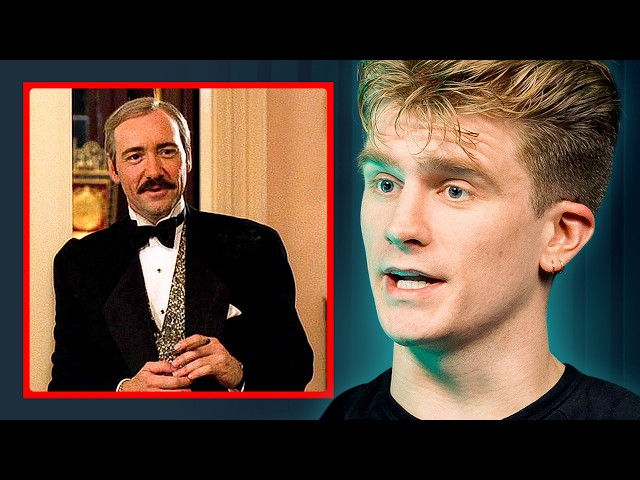
The discussion centers on an informal evolutionary hypothesis known as the "Rich Gay Uncle Hypothesis," which attempts to explain how homosexuality persists despite reducing direct reproductive success for individuals who are exclusively homosexual. The concept was introduced by a Boston University evolutionary biologist, though he remains unnamed in this account. The theory posits that while gay men may not reproduce directly through their own offspring, they can still pass on shared genes indirectly through kin selection. Because siblings share approximately 50% of their DNA and nieces or nephews share about 25%, a homosexual individual could effectively propagate their genetic lineage by supporting the reproduction of close relatives. This mechanism suggests that instead of having one child, an uncle might support two children in his sister's family, thereby ensuring that genes associated with homosexuality are still transmitted to the next generation through these "diagonal" investments in kin. Proponents of this idea initially found some empirical support within specific cultural contexts, particularly among the Fa'afafine of independent Samoa. In Samoan culture, the Fa'afafine is recognized as a third gender consisting of natal males attracted to men who occupy their own social space and present femininely without being transgender. Unlike Western homosexuality which often involves significant paternity loss due to cultural stigma or lack of opportunity for reproduction, the Fa'afafine are statistically more successful in terms of evolutionary fitness within that specific society. They act as helpers rather than competitors, investing heavily in their siblings' offspring much like uncles do in other cultures. This environment appears to provide a unique "cultural scaffolding" where being homosexual is not only socially accepted but potentially adaptive because it allows these individuals to regain lost paternity benefits through the successful reproduction of their kin. However, when applied broadly to Western populations and homosexuality writ large, the hypothesis has largely failed to bear fruit as expected. Studies in the West have not confirmed that gay men are significantly more likely to be uncles or provide substantial financial support compared to straight relatives in a way that compensates for lost direct reproduction. Furthermore, the discussion highlights the "birth order effect," where having older brothers increases the likelihood of homosexuality due to an immune system response involving maternal antibodies against male-specific antigens (the fraternal birth ratio effect). The transcript suggests this mechanism might be adaptive at the level of the mother's reproductive pool rather than a specific adaptation for her son, as reducing competition among siblings could increase overall family fitness. This adds complexity to whether the trait itself is an individual adaptation or a byproduct of maternal immune regulation that inadvertently leads to homosexuality in some males. Ultimately, the speaker concludes with skepticism regarding the universal validity of the Rich Gay Uncle Hypothesis. While acknowledging it as a "pretty cool explanation" and theoretically possible under conditions where genes increase the probability of expressing homosexual behavior rather than causing it directly, he does not believe it explains the persistence of homosexuality in general populations outside of unique cultural niches like Samoa. The speaker admits uncertainty about what truly drives the evolution or maintenance of this trait on a global scale but emphasizes that while the hypothesis is interesting and mechanistically plausible regarding kin selection, current evidence suggests it is likely false as a broad explanation for Western gay men. Instead, he notes that in many cases, individuals with homosexual tendencies still engage in opposite-sex encounters, further complicating simple models based solely on exclusive non-reproduction and indirect genetic transmission.
Read the full video transcript
I also want to learn about what the rich
gay uncle hypothesis is for
homosexuality.
>> Well, I don't know if that's the I don't
know if that's the formal name, but it's
the name that an evolutionary biologist
at uh at Boston University uh who will
remain unnamed inform it's what he
informally called it in one of our
lectures and it was pretty interesting.
So the idea here is that we have this
powerful cultural stereotype in the west
of the rich gay uncle, right? It's like
that it is known that um that gay men
tend to have slightly higher incomes and
the idea is that oh that you know
there's some social investment that
tends to happen um diagonally from them
to the offspring of their closest kin
their siblings.
>> They're also more likely to have older
brothers. So they're more likely to be
an uncle.
>> They're more like birth effect.
>> Yeah, exactly. They're they're more
likely to have the That's exactly right.
They're more likely to have the
opportunity to be ident
[ __ ] [ __ ] into that's Newtonic for
you.
>> I know exactly. Um it's it's hitting me
as well. I feel smarter than ever. Uh so
they tend to be quite successful and
evunular and it that that's interesting
right now. They've tested this in the
west and it has not borne the type of
fruit that you might expect it to. There
doesn't seem the the idea of it as a
hypothesis is basically this. I should
have explained this at the outset
is that it's hard to explain. We know
that there is some heritable component
to homosexuality,
but it is quite difficult to explain how
that heritable Yeah. How does that
persist? Right. That's
>> given that you can't reproduce if you're
truly being gay.
>> Yeah. You're Yeah. You're truly at like
I I know that a high percentage of
homosexual people have some opposite sex
encounters at some point.
>> Unless Unless you've thumbmed it in
enough times to be able to actually have
a kid. Yeah. Like this is this is just
not how Yeah. So so so it's like it's
it's at the very least even if in a
state of nature a lot of homosexual
people would reproduce anyway. Um it's
at the very least reducing their odds
not to feel opposite sex.
>> Yeah. Right. So how does that persist?
And so the idea was is that maybe it
would persist through kin selection. So
one way to win the game of survive and
reproduce is to get your genes into the
next generation by reproducing yourself.
But the other way is to piggyback off
the reproduction of your kin. Such I
mean they share a sibling shares 50% of
your genes.
So, it's entirely possible that you can
have this, you know, um, offspring
adjacent to you that shares 25% of your
genes and you can essentially pass on
your genes by supporting them surviving
and reproducing. And so the idea was
with with this hypothesis, this rich gay
uncle hypothesis that maybe the way
homosexuality pursu persists is by
instead of having one kid, right, you
support two kids,
>> of your your closest Ken,
>> could that be passed on genetically? Is
there a lineage for this to be able to
work?
>> Yes. So that could work. That could
work. Uh mechan if you're asking like is
this is this theoretically possible?
Yes.
>> Yeah. in terms of the mechan I don't
understand how the lineage of the person
who did the thing but wasn't a part of
the promulgation.
>> Yeah. So it would be the case if the
genes for homosexuality and this is how
most behavior genetics works as you know
>> if it wasn't like um if it's more like
genes that increase your probability of
expressing homosexuality rather than
like an individual gene that causes it.
Then if you have some of those genes
enough so if you have enough of those
genes that you exhibit the behavior um
then your your kins still have some of
those genes as well and you're passing
on your
>> genes indirectly through them through
their kids.
>> Yeah. Exactly right.
>> That that's the that's the hypothesis.
It is not well supported in the west. Um
it it it hasn't borne out. It is well
supported um among the fafina of
independent Samoa. So this is a group
where
it's um
it's a it's I don't want to anal because
the culture is so different. I don't
want to analogize it to American and
Western homosexuals
>> which are have their own kind of
cultural phenomenon that we can we can
talk about.
>> This [clears throat] is different. It's
considered a third gender in this space
and they are natal males, right? So that
they're biologically male and they are
attracted to males and they are not
transgender. That's not what's going on.
Um they present in a very feminine way
and they occupy their own space and it's
a similar percentage
>> to what we see with western homosexuals.
Right. So
>> some might say that it is a um it is a
cultural
>> reinforcement of homosexuality
essentially. Yeah. like a cultural space
to that homosexual people can fill. And
in those groups, it does seem that they
are statistically more ofunular, right?
They invest more, they act more as
uncles um than straight uncles do. And
so, it seems to be that there's some
support for this idea that they
>> lose, we talked about losing paternity
and re regaining it else elsewhere. They
lose paternity, but they regain kin
selection benefits by supporting their
sisters and brothers in their
reproduction.
>> It feels to me like the male
provisioning equivalent of alo
parenting.
>> Yeah,
>> it feels a little bit like the
grandmother hypothesis but actually
outside.
>> Yes, it's very analogous to that. That's
a great analogy. Yeah, it's a lot like
the grandmother hypothesis where it's
it's at a certain point if you have 20
brothers, maybe it's better to not to
stay off.
>> If you've got if you've got [ __ ] 20
brothers, you are gay.
>> If you've got 20 if you're brother 21
with 20 brothers,
>> your odds your odds are so low cuz it is
it is a loading effect where one older
brother there's a slight increase. If
you two older brothers are slightly
bigger and then if you're
>> my [ __ ] brother 20. Yeah. It's like
dude, there's no chance.
>> You come back around and become straight
actually.
>> Yeah. It's a horseshoe theory. Well,
that that uh
>> but you get what I'm saying is that it's
like imagine your brother, imagine your
brother seven.
>> Is it optimal for you to get on the same
pitch as them and compete for the same
women
>> or is it better to step off the pitch
and say, "Hey, you guys go get
>> the explanation for the birth order
effect.
>> It's basically it's basically I'm going
to the weather vein lick my finger and
put it in the air to be like how how's
the sex ratio going to be in this local
ecology?" So that's what some people So
I I'm definitely not the first person to
have said this whether it's true or not.
It's kind of touchy because it does seem
to be downstream. The birth order effect
mechanistically seems to be downstream
of an immune response
>> immune system because it works it works
for um abortions and it works for
miscarriages.
>> So now Yeah, exactly. So those things
can be adaptive to be clear like you can
have a mechanism like that and have it
be adaptive.
>> It' be weird that it would go through
the immune system.
>> Yeah, it's a bit quirky. Um, but it
could go it could go like that.
>> What are other explanations for birth
order effect?
>> Um,
>> why would the woman's immune system
react in this way to having a male
inside of it?
>> Yeah. Well, it could be a to be honest,
it could be more of an adaptation on the
part of the mother rather than the
rather than the gay son. Like maybe it's
not the it's not that the gay son gets a
selective benefit from investing. It's
that the mother's total reproductive
pool is increased by not adding another
competitor and instead adding another um
instead yeah a helper. Again, this isn't
a theory that
>> Oh, so the mother could the immune
system thing could be the mother's way
of ensuring the rich gay uncle.
>> Yeah. Yeah. Exactly. So it's not So in
terms of where the adaptation is
actually happening. That's why it would
be quirky. Like the reason that I had
that gut reaction is that it would be
strange for the son's adaptation
>> to mechanistically occur as an immune
system response in the mother.
>> It [clears throat] would probably be
more likely to be adaptive for the
mother in terms of like the the locust.
However, I actually don't think we're
talking about it and it's very
interesting. If you had to say, you
know, Mack and put your chips down. Is
this true or not? I'd say that the rich
gay uncle hypothesis is probably not
true. I would say that the the Fafina
are unique cultural case where they have
a they have a cultural scaffolding that
makes it adaptive in their case. But if
you looked at homosexuality writ large,
I I don't think that that's the
explanation for its persistence. No, I
and I don't know what is. My honest
answer is like cuz people I I do I do
AMAs occasionally.
Every time every single AMA people are
asking explain homosexuality and I
understand it. It's like the first thing
you'd want to ask
>> an evolutionary sexual scientist, right?
And the my honest answer is I'm not sure
what's going on, but this is a pretty
cool explanation.
In other news, you've probably heard me
talk about Element before, and that's
because I am frankly [laughter]
dependent on it. Uh, and it's how I've
started my day every single morning.
This is the best tasting hydration drink
on the market. You might think, why do I
need to be more hydrated? Because proper
hydration is not just about drinking
enough water. It's having sufficient
electrolytes to allow your body to use
those fluids. Each grab-and-go stick
pack is a science-backed electrolyte
ratio of sodium, potassium, and
magnesium. It's got no sugar, coloring,
artificial ingredients, or any other
junk. This plays a critical role in
reducing muscle cramps and fatigue while
optimizing brain health, regulating your
appetite and curbing cravings. This
orange flavor in a cold glass of water
is a sweet, salty, orangey nectar, and
you will genuinely feel a difference
when you take it versus when you don't,
which is why I keep going on about it.
Best of all, there's a no questions
asked refund policy with an unlimited
duration. Buy it, use it all, and if you
don't like it for any reason, they give
you your money back, and you don't even
have to return the box. That's how
confident they are that you'll love it.
Plus, they offer free shipping in the
US. Right now, you can get a free sample
pack of Element's most popular flavors
with your first purchase by going to the
link in the description below, heading
to drinklnt.com/modernwisdom.
That's drinklnt.com/modern
wisdom. Congratulations for making it to
the end of a clip. Your brain has not
been fried by Tik Tok. Uh, watch the
full episode here.