Video summary
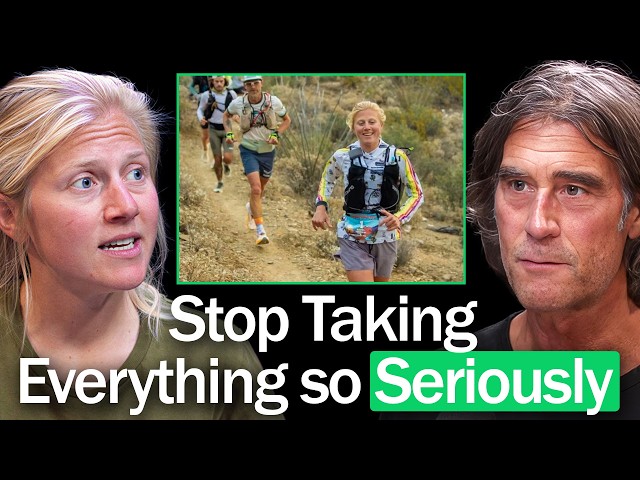
Rachel Entrekin made history as the first woman to win the Cocodona 250 outright in three consecutive years, finishing over an hour ahead of men's champion Killian Jornet with a fresh appearance that went viral globally. Her unprecedented success was not driven by a singular focus on winning or time goals, but rather by prioritizing gratitude and fun, which allowed her to outperform raw speed alone through precise fueling strategies like consuming 60g of carbohydrates per hour alongside real foods. After struggling in her initial attempts due to poor nutrition, pacing errors, salt imbalance, and severe mental fatigue that once left her vomiting for ten hours at half-mile pace, she collaborated with a sports scientist to refine her approach and intentionally manage her crew, shifting from an overtraining mindset caused by winning-at-all-costs pressures to one of process-oriented joy.
The race environment itself became a catalyst for resilience when Entrekin faced extreme hardship during the final climb of Mount Elden, gaining 9,300 feet with only about nineteen minutes of total sleep; despite exhaustion and running alone without pacers after being inspired by a Hopi woman who gifted her cornmeal symbolizing community strength. This experience highlighted how athletes choose their response to adversity rather than simply reacting to it, illustrating that mindset adaptability can overcome unpredictable variables in ultra-distance racing where success depends on rolling with life's uncertainties rather than rigidly chasing limits or comparisons. While Entrekin emphasizes the importance of healthy fueling strategies learned after seeking rehab for anorexia and treating nutrition professionally to sustain her sport long-term, she also notes how society should become more comfortable facing difficult thoughts instead of offloading them onto distractions like social media duties that previously overwhelmed her phone.
In a parallel discussion on performance psychology, Kilian Jornet shared his own record-breaking achievement at the same race where he finished in 56 hours to beat his previous personal best by a significant margin despite injuries and past disqualifications due to hamstring tears and allergies. He attributes this success not merely to training but to "delusional self-belief" driven by curiosity rather than the pursuit of limits, noting that ultra-running serves as a spiritual odyssey for those in recovery who use running to confront uncomfortable thoughts directly while immersed in nature or solitude instead of running away from discomfort like addiction. Although cautioning against untrained participation due to severe risks including death during ultras and fentanyl-related mortality rates compared to eating disorders, both athletes encourage trying "crazy" challenges that force self-discovery over remaining in comfort zones, aiming simply to have a good time while maintaining curiosity about their potential without specific placement expectations. Ultimately, Entrekin's story illustrates how embracing gratitude, community strength, and the ability to find joy even when alone can outperform traditional metrics of endurance, proving that attitude often triumphs where variables are unpredictable and success is defined by one's internal response rather than external validation.
Read the full video transcript
There's 400 people and you're all just
trying to make it to Flagstaff. You're
battling the weather, you're battling
fatigue, wildlife, you're battling all
the uncertainty that comes with going
that far.
>> The one and only Rachel Entrekin, the
first woman ever to win the entire field
at the Cocodona 250.
>> the most absolutely mind-boggling
athletic feats of 2026.
>> Things got really hard, physically. You
can choose the attitude that you want to
have. I did not have a single placement
goal, I did not have a time goal. Those
were my goals, to have a better attitude
at the finish line. If I choose to be
grateful to the experience itself, I'm
going to perform better
no matter what. Why can't I be the one
leading? Why not just take what I've
earned?
>> Hey everybody, real quick before we dive
in here, I wanted to take a quick second
to genuinely thank you for being here.
The fact that you give us your time and
your attention is something I do not
take for granted, ever. And if you're
getting something out of these
conversations and you haven't already, I
want you to consider subscribing to the
channel. It's really the single easiest
way to help us out. It's free, it only
takes a second, and it's actually a huge
part of how we keep growing this show
and bringing on the kinds of guests that
make it worth your while. And according
to our metrics, 67% of you watching
right now aren't subscribed yet. So, if
you're in that group, tap subscribe. It
feels silly to ask, but it really is
very helpful for us, more than you know.
All right, let's get into it.
All right Rachel, it's so good to
finally meet you. I'm so excited to have
you here. For people that don't know, I
just want to set the stage. You just won
this crazy race called Cocodona 250.
It's the third time in a row that you've
won it. But this time you ran 7 hours
faster than last year.
>> Mhm, I guess so. I don't know.
>> 56 hours.
You not only won the women's race, you
won the race outright. You beat all the
men.
I think you beat Killian Jornet by over
an hour, the men's champion, who also
broke the men's record. How did you do
this? How did you pull off this
unbelievable feat?
>> Um well, it has been 3 years in the
making cuz the first year I did
Cocodona, it was
not as easy as this time was.
>> It was easier to go 7 hours faster this
year.
>> I guess it it's all relative, right? Um
but yeah, I you know, my first year I
didn't know how nutrition worked. I
didn't know how to sleep. I didn't know
what the course was like, so I didn't
know how to pace on it. I had just heard
a lot of things about, you know, the
first 35 miles are really hard, so you
have to go slow and I I you know, I
didn't know anything and so I listened
to those and I paced inappropriately. I
didn't fuel enough. Um I bonked really
hard at about the halfway point. And
then I had to take about 3 hours off the
course just to
get my life together and then yeah, and
then I did too much salt, which you can
do and it's terrible.
Um
so I wound up throwing up for like 10
hours as I'm going at a half a mile per
hour pace for 10 hours and then, you
know, finally got my stuff together,
died on the last climb. So there was a
the second year I did it, there was a
lot to improve.
>> And you still won.
>> I still won.
Yeah, but it's very it's very different
than it was 3 years ago um
now cuz we just we have more information
so and people can train better. We have
so much more knowledge about fueling and
how to do it well and sleeping and how
to be efficient.
Um but yeah, and so the second year I
figured, well, if I improve my
nutrition, I'll
at least save myself 5 hours.
Um and I wound up I think beating my
time by 9 hours. So I had a 9 hour
improvement.
>> A 9 hour PR.
>> Yeah, which was pretty cool. Yeah. Um I
did I got I think fourth overall that
year.
Um
Edu Ramirez passed me going up the last
climb, and it was actually really
wonderful cuz we just like high-fived
and hugged, and I wasn't even mad. This
year going into it, I actually didn't
know how I was going to
beat my time last year. I thought I did
a pretty good job last year.
>> So, other than dialing in your nutrition
and getting super intentional about
that, what were the other changes that
you made that account for that
>> This year?
>> leap in performance, yeah.
>> I have
pretty much dialed down how my crew
should operate um and who I want to be
on that crew.
So,
I work with Precision Fueling and
Hydration. They're one of my big
sponsors, and they were really
interested in working with this race
specifically. So, they sent their whole
team out, and they sent my sports
scientist, her name is Emily.
And she just is a wizard with fueling.
We've This is the second race she's
crewed me at, and she just gives me what
I need, and it's my job to eat it. And
like that is our transaction.
>> based upon the work that you were doing
throughout the year to figure out how to
solve that equation.
>> Yeah, with her specifically.
>> And so, you offload all of those
decisions onto her, and she just
basically takes care of it and says,
"Eat this,
>> Yep.
>> drink this."
>> She puts the gas in the car.
>> Mhm.
>> Um
which is I I just have no idea. It's all
witchcraft. I don't understand how any
of that works. So,
>> super personal. Like, what works for you
isn't going to work for the other
person, but I did read that you were
taking in something like 60 g of
carbohydrates and somewhere between 300
and 800 ml of fluid every hour on the
hour.
>> Pretty much.
>> And that's a combination of the
Precision Nutrition and Hydration, but
also all these beige foods. Like, you
were eating a lot more real food
throughout.
>> Yeah, for sure. And I I think mostly
that
is just to There's a lot of sweet like
everything is really sweet with sports
nutrition for the most part. Um cuz it's
easy to digest and it's easy on your
palate. But eventually you kind of get
tired of
>> Yeah.
>> that. So beige That's when the barfing
starts.
>> Yeah. So I counteract barfing with
beige.
>> Yeah.
>> Um beige helps.
>> Counteract barfing with beige. That's
like it's own mantra.
>> Yeah, I should put it on a t-shirt.
>> Yeah. Well, the videos of you
uh
approaching the finish that went viral
all across the world were insane because
you look so fresh. It looked like you
were just starting out. Like no one
would have thought You weren't even like
your kit wasn't even dirty. Like It
looked like It looked like Wait, this
looks like the start of the race and you
know, Kilian Jornet was like
yeah, take a look at what I look like
near the end and he's all hunched over
and and and you look so fresh. It was
un- a smile on your face and you know,
all your your family and your friends
and your teammates like all running with
you. And that was like this spark of
inspiration that literally just traveled
all across the world and you became this
viral
>> Yeah.
>> sensation like this relatively like very
successful but you know, in the grand
scheme of things like obscure
athlete suddenly is the person that
everybody is talking about which in
addition to just
you know, winning this race and
achieving this incredible feat must have
been very kind of like bewildering and
strange for you.
>> It definitely was. I had a little bit of
practice last year with this
phenomenon I guess because last year I
also
got elevated after my finish at this
race but nothing like this year. I
remember last year finishing the race,
turning on my phone or I had my phone on
airplane mode um and turned it off
airplane mode and all of my Instagram's
DMs and stuff, I just my phone crashed
immediately. It just crashed.
>> It was too much. It
literally crashed the phone.
>> my phone. So, this year I had the
foresight to give my socials to one a
person on my crew. Like, that was his
job was just you're in charge of social
media cuz I have a feeling
I didn't I didn't expect this, but I was
like, I expect something. I mean, you
have Courtney in the race, you have Meg
MacKenzie in the race, you have Heather
Jackson in this race. There's a ton of
And that's I mean, that's just the
women. Like, there's also all these huge
like multi-day men who are doing it as
well. And so, I figured there would be a
lot going on on the internet. But yeah,
even I just it was insane to
turn on my phone and be like, holy crap,
I have 130,000
new followers over the course of 3 days.
3 days.
>> Uh-huh.
>> And it yeah, so it was definitely
it was definitely wild.
>> Yeah, the BBC, the Guardian, the New
York Times, ESPN, like everybody was
covering this. And
it's not as if I mean, Cocodona has
become a much more important race, uh
but
it's not exactly UTMB or Western States.
Like, it it's it hasn't been considered
in that same company.
>> Yeah, which I think is silly, honestly.
I think the multi-day space
provides so much more
of a stage for
athletes to tell their stories and to
show what kind of person they are. If
you're winning Western States, you're
doing it in 15 hours or less. That's
just not And And your only focus can be
running as fast as you can. But during
Cocodona, I mean,
if you're running as fast as you If
you're running at that kind of pace,
you're going to DNF by mile 100.
>> a totally different thing to conflate
100 miles with a 250 mile race. Like,
it's an entirely different thing
altogether. And
everybody's of lumps ultras into one
category, but it's really like vastly
different.
>> Yeah, but I I just look at, you know,
what Cocodona did for Dan Green last
year. He was the men's winner last year
and it I mean it elevated his profile
because we all got to meet this person
and we all kind of collectively decided
that we like this person. You know, he
has a good attitude. He finished strong.
He finished with a smile on his face. He
and his crew just had fun out there.
I Yeah, just give you a bigger stage to
have fun and to show off like the fun
side or I mean with Kilian Jornet, you
can show off like how gritty you are.
Just more so you have you have more time
to do that than something at 100 miles.
>> counterintuitive. You would think like,
oh, it's so much longer, it's got to be
less fun. Like how does the fun
>> more fun.
>> Where's the fun part?
>> Uh well, the the fun part is what you
decide, I guess.
Me, I I think that there's nothing at
any any race that I go to, there is
nothing I would rather be doing than
that race. And so who am I to say that
I'm not going to have fun while I'm
doing it. I'm choosing to do this. So if
I'm complaining about how hard it is,
I need to be reevaluating why I'm
signing up for these things. So for me,
I think I choose for it to be fun. And I
think a lot of people
must do that or we wouldn't be signing
up.
>> You you mentioned when you finished last
year,
uh you won, but you weren't exactly in
the most positive mindset.
>> And
am I right to think you made a conscious
decision like I I don't want to feel
this way again about this and next year
I want to I want to have that sense of
joy and that that you were seeing in
other people that you weren't that you
weren't in exhibiting then.
>> Yeah, I mean 2024 I I mean I bonked
really hard going up the last climb. I
was really kind of a dick to my pacer
um cuz I just I had I had no reserves on
which to draw at that point. I've never
done something that hard and so I just I
was really, really negative in my finish
line video.
I I hate watching and I hate seeing
because I just I was so like
flat and sad. Um and then I remember
watching the second place woman come in.
Her name was Manuela Vilaseca and she
was so pumped and she was
grateful and she was thankful for the
experience and she was what I wanted to
be.
And she got second and I got first and
so it just felt really like I felt
crappy for the
behavior that I was demonstrating at
that finish line. And so yeah, going
into 2025, my pretty much only goals
were to figure out nutrition and I
started working with Precision so check
and then to have a better attitude at
the finish line. I did not have a single
placement goal. I did not have a time
goal. Those were my goals and I figured
if I if I did those things well, then I
would have a good race
regardless of of placement.
>> And what did that teach you about the
relationship between
joy and gratitude and performance?
Because there is that idea like if
you're not like just tapped out and have
no mental reserves and you're grouchy
and barking at everyone, it's because
you
left it all out on the course and if you
have joy and gratitude, then
that's energy that should have been
channeled towards moving you forward
more quickly. Like that's the very kind
of masculine, you know, like go big or
go home kind of like idea. But then we
have Courtney who is the embodiment of
like joy and gratitude and like just
like very aware of like her impact on
how she inspires people and make sure
that she is always in that state of mind
in these races and obviously she's, you
know, been this
dominant queen in the sport for so long
and you're blind if you can't see that
there's a lesson there, right?
>> She was one of my biggest inspirations.
Uh I I think I probably first heard
about her in maybe 2016 right before she
blew up all over the world with her Moab
and I think Tahoe performances. Um
and I don't know whether
I saw her attitude and wanted that for
myself or if I already maybe recognized
that that's how I felt and seeing that
displayed with success was very
motivating. I'm not I'm not sure which
one that is, but I do
I do think that what 2024 Cocodona
taught me and then I was able to like
exemplify in 2025 is how much of your
attitude
how much your attitude can play a role
in your performance. Um you can you can
choose the attitude that you want to
have. And I think for me if I choose to
be having fun out there, if I choose to
be grateful to the aid station, if I
choose to be grateful to the experience
itself, I'm I'm going to perform better
no matter what. I mean, in 2022 I got
really in my own head about the success
that I'd had and I felt very compelled
to
win everything at all costs. And I had a
really humbling 2022. I DNF'd the Santa
Monica Mountains 100. It was like the
inaugural year. I DNF'd it cuz I tripped
and fell cuz I was going out way too
hard and I busted open my hand. So I
DNF'd that and then I immediately turned
around and was like, "Okay, well, I'm
signed up for Cascade Crest and now I
really have to win this race." And I I
was overtrained. I started out way too
hard. I
took way too much ibuprofen and I wound
up with a stomach bleed around mile 70
and I just I mean, I basically hiked my
way to the finish and then collapsed at
the finish line and was carted off in an
ambulance to the
>> Wow.
>> And that for me is what happens when the
only thing I focus on is winning. I was
not having fun. I was trying way too
hard. I was too wrapped up in how things
looked to understand how I was actually
feeling. And so
that year taught me a lot about what not
to focus on. So, moving forward it was
like, all right, I'm just going to try
to have fun. I need to have fun with
this. And you know, obviously with
Cocodona in 2024, my goal was not to
win. My goal was to just get to the
freaking finish line.
>> Mhm.
>> But yeah, I I kind of lost sight on
especially on that last climb because it
got I mean, it got really hard. Um and I
didn't emerge from that race being the
kind of person that I wanted to be when
things got hard.
>> And when you say last climb, that's the
last climb uh
over the course of 250 mi where your
your the elevation gain is more than
Everest.
>> Yeah.
>> Yeah. But yeah, and it's and it's going
up Mount Elden, which is a pretty
I think it is 9,300 ft. And so, you go
up about a 2,000 at least foot climb
over couple miles. And so, it's it's
tough, especially
>> end.
>> at the very end. And you're like, you
see flag you see the finish line. It's
like right there and you just instead of
going straight, you just go up a
mountain instead. So, it's it's tough.
>> But what I'm hearing is a shift from
being outcome oriented to process
oriented. Like being caught up in
outcomes, I have to win, the pressure
that you're putting on yourself, and how
that translates into, you know, tension
and overtraining, and all the kind of
things that you don't want. And then
this conscious decision to say, I want
to have fun, meaning like it's about the
process.
>> Yeah.
>> I mean, over that great a distance,
there's so many variables that come into
play. Like you can't predict what's
going to happen and how everybody is
going to meet those various obstacles
and the unforeseen things that are going
to inevitably happen. And some people
are going to have good days and other
people not so much. And so when
lightning strikes and everything kind of
works out your way, like you got to just
take it, you know, like
>> Yeah.
>> it's not bankable, like, oh, well, this
is the way it's going to go every time.
>> No. I You I think the number one quality
that will ensure success at Cocodona is
your ability to roll with it.
>> Mhm.
>> There was a moment when I left the cuz I
was I was running with Joe McConaughey
and Kilian for probably the first 50 to
60 miles. And I I enjoyed that pack. I
thought that it was We all felt like
peers. Like my skill sets and their
skill sets were very comparable. And so
it it felt correct for me to be there,
too. And deciding to leave that
was really
hard and kind of scary. It's like, all
right, I'm banking on the fact that I
think I can do
better than what these guys are
currently doing. And that was a weird
moment. But I just kind of decided like,
well, you know, you have the resume to
be here. You have the resume to lead
this race. You've
won it for the women. You've only
increased in like my overall
performance. So why can't I be the one
leading?
Like I'm just going to roll with it. I'm
here now. And, you know, if if Kilian or
if Stringbean or if somebody comes up
and passes me, like that's just how It's
a race. I want everybody to do their
best on the given day. I don't want to
beat everybody just because they decide
to let me. Like I really am appreciative
of what of Kilian, honestly. I He's I'm
so grateful that he was the second place
person because I knew that he was not
going to just let me win.
>> Yeah.
>> He was going to make me work for it. And
that thought
propelled me when I wanted to walk. Was
like, well, if I walk this, I bet you
Kilian's running this. And I don't I
don't want to give it to him and he
doesn't want to give it to me.
>> Yeah. The headline that also traveled
around the world was this why why not me
kind of like mantra, which is basically
what you're talking about, right? Like,
why not me?
>> Yeah. And yeah, I mean, I I think
I've done this in my professional career
as a physical therapist where it's, you
know, I talk myself out of getting
raises or getting promotions because
like
there is no real reason. My Again, my
resume dictates that I've I've had all
these trainings and I've done all these
things that prove that I'm a correct
candidate for this job. And so,
I think extrapolating that to something
like Cocodona, you know, I had wanted it
for the women, I had set the course
record last year, I had increased in my
overall placement and time.
So, yeah, I mean,
all signs dictate that there's no real
reason, conrete reason for me to not be
leading. So, why not just
>> Mhm.
>> take
This is kind of obnoxious sounding, but
like take what I've earned.
>> Yeah.
>> It's not promised. I I was fully aware
that when I took the lead, it was not
guaranteed that I'd stay there. But, why
not take it when I could and just see
what happens?
>> This episode is brought to you by Freaks
of Nature. I cannot even count how many
podcast guests come in here, sit across
from me, and espouse the wisdom, the
benefits, the necessity of being more
immersed in nature. The products we
immerse our bodies in should also be
natural. Let's talk about the sun stick.
It comes in this bright orange canister.
You get the little mini one you can take
with you wherever you go and the larger
one here. And this is their mineral
spray. It just disappears on your skin.
It's hydrating, 80 minutes of water
resistance, all without any tradeoffs.
No chemical fillers, no microplastics,
no hydrocarbon propellants, just clean
stuff that supports the skin barrier,
things like aloe and green tea.
I'm all in. I suspect you will be too.
Their sun stick sold out last summer and
their mineral spray is selling really
fast. Everything is in stock right now
though, so make sure you get it before
it sells out. Go to freaksofnature.com
and use the code Rich Roll to save 20%
when you order now.
You know that moment when a long day
ends and now you're just trying to cram
gear into your car, muddy shoes,
groceries, bags, all of it competing for
the same cramped space? Well, Rivian
dissolves that because these vehicles
were clearly designed by people who
actually live full, messy, real lives.
You got a front trunk, separate storage
for whatever you want to keep it
protected. If you're in the R1T truck,
there's an ingenious gear tunnel.
Basically, a built-in mudroom for wet,
sandy, dirty, anything. And in the R1S,
that's what I drive, it's a full
three-row SUV. So, you've got tons of
room for tossing in your everyday gear.
Or, you can fold the seats flat for
hauling big things or even turning it
into a sleeping setup for camping. It's
not just about more room, it's about a
vehicle that adapts to your life without
friction. And once you have that, it's
hard to go back. See how much you can
fit in a Rivian at rivian.com.
When you're running in a group and
everyone's kind of, you know, there's an
esprit de corps, like you're kind of
working together, is there
a sense of
you're competing against these other
people? Because it's so long, you're not
really racing against anyone else,
right? Like it's it's, you know, it's
going to work out however it works out.
Um, and it's not going to be necessarily
because of anybody else. It's like this
these races are are between you and you
and nature.
>> Yeah, I agree. I It reminds me
in some ways, obviously it's very
different than the Barkley, but in some
ways it does feel kind of similar. You
know, there's 400 people and you're all
just trying to make it to Flagstaff.
You're battling the weather, you're
battling fatigue, you're battling
wildlife. Like there's a big rattlesnake
this year that kind of scared a lot of
people. But like you you know you're
you're battling all the uncertainty that
comes with going that far. And I think
at Barkley, too, like there's so much
uncertainty. You don't know where to go.
You don't even know how many books there
are. Like it's it's
you get a lot or at least I get a lot of
I don't know, confidence and like
yeah, we can do it like a rah rah maybe
from the people that I'm running with.
So it does it almost feels like a group
project where it's like you against the
course. It's everybody else against the
course.
>> Yeah.
>> Um which I I like those races. And it
yeah, I won, but it
that to me is almost like who cares.
>> What is it that is going on in your mind
when you're you know, in the harder part
of these races? Like what are you
thinking about? What are the mantras?
What's the philosophy that's getting you
through those darker, really challenging
times when you want to quit?
>> Yeah, I mean I've gotten to a place
where I look forward to those times
because I don't think One of one of the
things that I've realized over the years
is that I want to make sure that I like
who I am when things are tough. Whether
that's in sports or whether that's in
life. I think you can practice modeling
the behavior that you want to
demonstrate. And sports for me is a
really great avenue for me to practice
you know, those things we were talking
about before. Being grateful, being fun
things being fun. Um So yeah, I honestly
I kind of I look forward to things being
hard. And I can't remember I it honestly
I feel like I'm just name dropping
Courtney a ton, but it might have been a
Courtney thing where she has said this
is what we came here for.
>> Mhm.
>> There was a time in Cocodona this year
around Sedona where things got really
hard. Physically, I was really
the idea that I still had a hundred
miles left. Killian's right behind me.
My legs are really tired. I'm really
tired. And yeah, I mean I still have a
hundred miles to go and I really want to
keep this lead because that would be
really cool if I stuck this landing.
>> Yeah.
>> And that's a lot of pressure. And yeah,
things got really hard and I got, you
know, I I was starting to go down this
negative spiral of like, oh, you're
never going to be able to keep this. Oh,
you're so tired. Like if what happens if
he passes you right now? Like you're not
going to be able to respond. And it's
like, okay, hold on. Things are getting
really hard. I need to make a plan to
address my physical issues right now.
Like I was getting some blisters and I
was getting hot and I needed some salt.
So like,
let's make a plan to address those
things and then
like
let's adjust our attitude because I
don't learn as much about myself when
life's going great. Because life's going
great. I don't need to change anything.
But when things are getting hard is when
I need to double down and and
figure out what kind of person I want to
present to the world.
>> Yeah, that that idea that you want to
like who you are when things are hard
and that being a choice
>> Mhm.
>> is pretty powerful. It's one thing to
make that choice like when you're
annoyed, you know, waiting in line to
order your coffee. It's another thing to
make that choice when you're under just
absolute physical exhaustion and like,
you know,
>> Yeah.
>> physical pain and duress and fatigue and
the like.
>> Yeah, but I mean, for me it almost feels
easier to be happier when I'm physically
under distress than it is to be waiting
in line for coffee or on the phone with
somebody.
>> Well, it's just now I've practiced the
sports part more. Like I honestly need
to take that and apply it to my real
life.
>> Right. You're like, I can be happy on
mile 230 of this race, but
>> me on hold for too long, I'm going to be
upset. But I But I mean, again, it's I I
need to
Yeah, I need I need to remember those
things, too. And I I try often, but like
when I remember when I I living in Los
Angeles, like it's very hard to live in
LA.
And PTs don't make a ton of money. So, I
was I was always really overworked and
stressed out financially. And
I remember the first or I guess it was
20
Yeah, 2024, the first time I did
Cocodona, I remember being like, "Holy
crap, I was a
not great person." And so, one of the
ways that I practiced
I guess accidentally, improving my
mindset was in work situations when
somebody was being rude to me and I was
seeing three patients at a time and my
boss was saying this and his boss was
saying like all this stress, I would
practice
not letting that get to me.
>> Mhm.
>> And cuz that's I mean, that is a skill
at Cocodona or during these multi or
during anything, really, is like
external stress,
don't let it get to you. Because if you
focus on how stressed out you are, it's
certainly not going to help you. It can
motivate you to make a plan
for how to manage your current
situation, but if you're just upset,
that's not that's not a useful emotion
to have, being upset.
>> And it's just your reaction to things
that you don't like, that you wish were
different, that you have no control
over.
>> Right.
>> And it can be low stakes, like
somebody's being difficult with me in my
job, or
high stakes where like, I don't know if
I'm going to survive
>> Yeah.
>> next couple miles.
>> Yeah, I mean, kind of. If And it's funny
because we talked about
>> for nothing, somebody passed away
Cocodona. Like, somebody died. So, if
you had to translate that into a life
lesson for somebody who's watching this
or listening to it, who you know, isn't
an ultra athlete, maybe they're not even
an athlete. Like, what is the the kernel
of truth that is applicable in our daily
lives?
>> Um, I think mindset and response,
something I learned in therapy, are the
only things that we really have complete
control over.
>> kind of therapy, like not the physical
therapy.
>> mental therapy, not physical therapy.
Yeah, quad that's
>> it again. Say it again cuz I interrupted
you. I'm sorry.
>> think mindset and responses, my
responses that I give to the world are
the only things that are under our
control. And they are under your
control, even if it feels like
things are happening to you,
you get to be in charge of how you
respond to those things. And nobody
is going to make you act anyway.
Nobody's going to convince you
to do anything that you don't want to
do.
>> Mhm.
Yeah, this idea like that person makes
me so mad. Like they're not making you
mad. You're deciding to you're
it has nothing to do with them. It's all
about like how you choose to respond or
react.
>> Yeah, one of the things that I've I've
had to reframe a lot over the last
couple of years is this idea that people
cause me to act a certain way or things
cause me to act a certain way and they
don't. I I
choose to allow them to influence me.
>> Yeah.
>> It was really frustrating because when
things are hard, I like to blame. Or I
liked to blame. Now I don't like to
blame. It's Well, it's just easier. It's
easier. Take some of the stress off of
us. Um but that
it just because it's a a hard pill to
swallow, it doesn't mean it's not true.
Um and so nobody makes you any certain
way. You allow them to let you react
that way. And so yeah, you're in charge.
Don't forget that you're in charge.
>> that in your daily everyday experiences
or under extreme
>> sports, yeah.
>> situations like like going and running a
250-mile race.
Um but fundamentally, it's a it's a
mindfulness practice. Like when you're
present and aware and you can buy
yourself that extra moment to really
think about how you want to show up in a
certain set of circumstances,
that's kind of how you
put it to use into work.
>> Mhm.
>> I think.
>> Yep.
>> Sleep deprivation.
>> Oh, yeah.
>> So, 19 minutes of sleep over 56 hours is
insane.
Your first nap didn't even happen until
you were
almost at the 200-mile mark, right? So,
you hadn't slept at all.
>> Nope. Hadn't. Yeah.
>> And then that nap was like
five minutes.
>> Yeah. Uh it's funny because Courtney,
Meg, and I were all on a panel, and one
of the questions was, "Do you train for
sleep deprivation?" And all three of us
were like, "No."
>> Can you? Like, could you even I don't I
don't I don't I mean, even if you tried
to, would I don't know that it would
make you any better at it.
>> What my plan is going into the race is I
try to really make sure that I'm
sleeping like as much as possible, 10
hours every single night for a week.
>> Mhm.
>> Cuz I'm I know that the night before the
race I'm probably not going to sleep
that much. You have to wake up at 3:00.
You're just not going to be able to
sleep that much. Um and then I'm
obviously if the goal is get to
Flagstaff as quickly as possible, that
means that I'm not going to be sleeping.
I'm going to be mostly running. And so,
yeah, just try to build up that reserve.
Um
but yeah, I've always been somebody
who's who can
function on very little sleep. I do
think that
that is a superpower that I possess.
>> Yeah, I was going to I was going to say
like I think it is like some people can
do it better than others. They just can.
>> also don't really hallucinate. So, I'm
just really good at staying awake for a
long time and and being relatively
lucid. And for me, one of the ways that
I check to see how okay I am is can I
make a stupid comment or like a joke? Um
and if I can, then I'm doing okay. Um
but yeah, for me, my plan, you know, and
again, I've done this race two times
now, and I think this was my sixth or
seventh 200-mile race.
And so, I've learned what my body needs
with regards to sleep. I'm not going to
be someone who's able to plan sleep. I
know Jeff Browning, who's really
accomplished multi-day runner, he's
like, "All right, at mile 87, I'm going
to take a 25-minute like
I'm not going to do that. I can't plan
these things.
So, I just I just
go until I'm tired.
And once I am literally falling asleep
while running, I'm going to curl up on
the ground, and I'm going to
set a timer for 5 minutes.
And if I wake up and I'm not ready to
go, I can set another timer for 5
minutes. But, I'm going to
I'm going to do it in 5-minute
increments. I know that when I
am ready to sleep, I'm going to be able
to fall asleep if I'm actually tired. Um
usually I once I start to feel sleepy, I
think, "Okay, well, do I
Am I sleepy or am I just bored?
Do I need to eat something? Do I need Do
I just want to try some caffeine?
Um do I need to just talk to somebody?
Cuz you're out there a long time by
yourself and like
maybe you're just bored. Um so, I
usually try to kind of sit with that
feeling for I have a I have a 20-minute
rule. If I notice something, I give it
20 minutes before I decide whether it's
something that I need to actually
address.
And yeah, but every time I cuz I took a
5-minute nap at about 200, and then I
took two 7-minute naps at
somewhere between like 2:20 and 2:30.
>> Uh-huh.
>> Um
and yeah, each time I was literally
unable to keep my eyes open. And the
first time I took a nap, I was running
into my pacer because my eyes were
closing and I was like drifting into my
pacer and it's like, "Okay, I need to
I need to sleep and I need to sleep
right now."
>> And shockingly, 5 to 7 minutes makes a
huge
>> huge
>> difference. Like, you wouldn't think,
but
>> Yeah.
>> suddenly you're like a different person,
which makes me think like, "Well, maybe
a few more 5-minute naps because it
seems like it compensates for so much,
right?"
>> Yeah. I don't know if my body or my
brain maybe just needed to do something
else for a minute. Um cuz, you know, all
I'm doing is running and eating and
drinking and like that's
and navigating, I guess. And so, you get
you just kind of it's almost like when
your computer is going haywire and you
just turn it off and back on again.
Like, I think that's what I need to do
is I just need to reboot for 5 minutes
and then I'm good to go, usually.
>> crazy.
>> Yeah.
>> That that's all you slept.
>> Yeah, it is pretty weird. I think I only
slept um
I don't remember what I slept last year.
It was under 30 minutes though, last
year. And then in Mammoth 200 that I did
in September, I didn't sleep at all. And
it was 214 miles. So, over the course of
44 or 46, I don't remember what my time
was, it zero.
>> You mentioned that you don't really
hallucinate, but you did hallucinate in
this race.
>> Um
>> You had kind of a crazy one.
>> This year?
>> Yeah.
Unless I misread
>> one year I saw myself.
>> You you saw yourself Okay, I want to
hear about that. But, what I read is
you met a Native American woman who gave
you Yeah, oh that was oh that was real.
>> That was real.
>> Okay.
>> Yeah. And I did I'll talk about that cuz
I love that story. I think it's super
sick.
>> Well, tell it.
>> And I do know that it was real because
I found it on the live stream. I found
the moment on the live stream and I was
like, yes.
>> weren't sure that it was real?
>> I I knew it was, but there was a lot of
naysayers that said it wasn't. Um but,
okay, so I'm going up the last climb to
Mount Elden, which I have a personal
history with
>> Uh-huh.
>> of not having a good time and then
deciding I'm going to have a good time
with a pacer so I can I can offload some
of my mental anxiety to that pacer last
year. This year, there were no pacers
allowed. And so, I really liked that
idea because I went from failing to
succeeding with help and now I get an
opportunity to succeed by myself.
So, yeah, going into this climb I was I
was really looking forward
to the story that I was going to get to
write.
Um and yeah, so I'm going around, you
know, I start climbing up, you go around
Little Elden first, and then you get to
this junction where you're about to
start the big climb up to the top of the
summit.
And it's about 5 miles or something. And
there's this woman in street clothes
standing in the middle of the trail in
this junction. And I know she's real.
And um and I had a camera person
following behind me, and we weren't
talking cuz I didn't want to I wanted to
do it by myself. I didn't want So, I
just pretended like she wasn't there.
But I do remember the woman saying,
"Hey, I would like you to not film
this." And so, there's a moment where
you see the woman on the live stream,
and then the camera turns away, and I
found that moment. So, it was real. But
yeah, and so this woman is
she starts talking in a It's like a mix
of English and whatever the native
language was.
Um but she told me that she was a Hopi
woman, and she's holding on to
something.
Um and she, you know,
it her presence was so shocking
that she starts talking to me, and I
just immediately stop. I'm in the middle
of a race, and I'm winning, and I don't
know how far Kilian is behind me, but
like
I'm stopping right now because it just
feels like what I'm supposed to be doing
is I'm supposed to stop, and I'm
supposed to receive what this woman is
about to tell me.
And so, she she tells me like she's not
a runner, and she's never followed this
race before, but she
heard what was happening. She heard that
I was leading, and she
was just flabbergasted like
it was it was amazing what I was doing.
And to be told that when you're about to
climb up 1,500 more feet is pretty cool,
admittedly.
Um
and you know, she told me that like the
implications that I had for women
in general, like athletes or not, was
massive, and it was beyond what I could
comprehend.
And I was, you know, I'm just
out of my mind at the I've slept 19
minutes. And so, I'm just sitting here
weeping when this woman is telling me
all this stuff because it's just it's
like
it was so comforting to hear this. And
so, she gives me she's holding it looks
like sand, but she gives it to me and
it's cornmeal. And I guess in Hopi
culture that's very symbolic of
like community and and
yeah, like to I don't know, togetherness
and strength. And so for her to give
that to me when I needed it most was it
was almost like she knew I hated that
climb and she was giving me the strength
to do it. And so she was like, you know,
this I want to give this to you. This is
yours. You can do whatever you want with
it. And she just gives me this cornmeal
and I'm standing in the middle of the
trail holding this cornmeal and I'm just
like
I don't know what to do with this. So I
put it in my pocket and then I have some
cornmeal residue on my hands and I just
like wipe it on my thighs and that's the
moment that I decide that I'm climbing
this entire thing. I'm going to run
this entire climb.
>> Wow.
>> do. And it was awesome. And it was like
it was almost an out-of-body experience
because
I it's almost like the race like I would
have never predicted that I won this
race outright. I would have never in a
million years been like, oh yeah, I'm
going to climb the whole Elden climb.
But I did. I mean I dropped my camera
person. My camera person who was fresh
could not keep up with me and I had just
run 240 miles. And that was like
I remember in the moment being like,
holy crap, like I'm dropping my camera
person.
But just being like
>> Yeah.
>> doesn't matter like keep running. You're
like you've got to keep running. And so
I got I didn't make it to well, I did
make it to the summit obviously, but I
remember there's a section of single
track and it's really beautiful. It's
very heavily wooded. There was some snow
and so it was just really magical. And I
remember
there's like two little climbs.
Then you go down and then there's a
forest service road to get you to the
top of Elden. And then at the top of the
second climb I'm still on single track.
I remember I like
just stopped and I get my hand in my
pocket and I just like take the cornmeal
and just yuck it off the side of the
cliff. And I don't know I don't know why
I did that, but it just felt like right
thing to do. I remember thinking like
this gave me so much
strength. Like I want to give I was
thinking about Kilian, actually, cuz I
knew that Kilian was somewhere behind
me, and I also knew from my crew that he
was struggling really hard. And so it's
like, well, this is for whoever's behind
me. You know, I was given this, and now
I've I'm good.
So like it's time to pass it on.
>> Yeah, it's not yours to hold on to. You
it gave you what you needed, and now
it's time to pass it along.
>> Yeah.
>> Well,
>> Not a hallucination, though.
>> so she she blesses you with this extra I
mean, it feels like a hallucination.
>> It felt wild.
>> Yeah. I I'm going to decide that it
still was. I don't care what the live
stream said. Like it it's a better
story.
>> That's fine. I just magically had Santa
in my
>> But she she yeah, the ineffable was was
made material for you, right?
>> Maybe.
>> Element has been with this show for a
very long time, but it has been really
fun to watch them expand. First, into
sparkling cans, and now into something
brand new, lemonade iced tea, which is
now the newest addition and my morning
go-to in my home gym. And what I've
noticed by incorporating this into my
routine is a reduction in my coffee
consumption, something I confess to
drinking more than I should, often
because coffee does a pretty good job of
quieting the signal that my body is
tired. But what actually supports energy
at a foundational level is hydration,
replenishing your electrolytes. And by
practicing this more consistently with
Element, I've discovered a better and
more sustained degree of energy in my
workouts, of course, but also over the
course of the entire day. Element is the
electrolyte formula that has everything
you need and nothing you don't. No
additives or sugar, and their new
lemonade iced tea builds on that. Same
electrolyte formula plus 50 mg of
naturally occurring caffeine from tea
along with L-theanine and polyphenols.
So, it feels smoother, something more
strategic than typical caffeinated
drinks to reach for when you want to
stay sharp. So, check it out. Try out
Element's new lemonade iced tea. Get a
free eight-count sample pack of
Element's most popular drink mix flavors
with any purchase at
drinkelement.com/richroll.
For better or worse, we are in this
hyper-optimization
focused culture that tells us if we're
not fully dialed in, then there's
something wrong with us, which in my
opinion is kind of a form of violence
given how challenging life is already,
how difficult it is to just strike a
healthy balance between work, family,
and all our grown-up responsibilities,
and the expectation that somehow amidst
all of this that we're supposed to stay
balanced, present, and grounded. I know
that I need support, and therapy is one
way I get it, which has been crucial in
managing all the pressure. Therapy is
not just for moments of crisis. It's
this incredibly powerful tool for growth
and for becoming more intentional about
how we show up in our lives. BetterHelp
makes therapy easier to fit into your
routine because it's all online. You can
connect with a therapist by phone,
video, or message chat, all according to
your schedule. And with over 30,000
therapists and more than 6 million
people served globally,
it's the largest online therapy platform
in the world. If your therapist isn't
the right fit, you can switch anytime
easily at no extra cost. Prioritize your
well-being with BetterHelp. Sign up and
get 10% off at betterhelp.com/richroll.
This episode is brought to you by Mill,
which I got to tell you is pretty much
the coolest and the most utilitarian
piece of tech innovation that I've come
across in a long time, as well as my
favorite addition to our kitchen and our
home. Mill is the odorless, effortless,
fully automated food recycler. You put
everything in, scraps, leftovers, things
you wouldn't normally compost, and while
you sleep, it transforms it into dry,
shelf-stable grounds. You can use the
grounds in your garden, add them to
curbside compost, or Mill can even pick
them up and get them to a small farm for
you. In addition to being super easy to
use, quiet, and aesthetically gorgeous,
Mill can process up to 10 lb overnight,
and you don't have to empty it for
weeks. So, if you're somebody who cares
about living a little bit more
sustainably, but without the burdensome
hassle, then Mill, I got to tell you, I
think this is your answer. It just
quietly does the job, a great job, in
fact, a great job at doing good. Try
Mill risk-free for 90 days, and get $75
off at mill.com/richroll,
and use code richroll.
What have you learned about
human potential?
Like, you've tapped into something that
I would suspect, you know, I don't know
if I were 5 or 8 years ago, what you
wouldn't have
imagined you were capable of.
>> Certainly not.
I think it's kind of what we've what
we've been talking about is I shouldn't
assume that I'm not able to do something
just because the data doesn't
necessarily
support
it. Like, again, if we're looking at my
spreadsheet, I was 61:30, and obviously,
I beat that by I don't do public math,
but I beat that by a considerable
amount. I mean, I did 56 hours.
>> Mhm.
>> I knew that I'd put in a lot of work. It
wasn't It wasn't foolish optimism, but
it was
Kilian Court calls it delusional
self-belief. Like, it's not necessarily
delusional. I think we're we're talking
down on ourselves a little bit, but like
I had put in the work.
I had had
success previously. I had shown
improvements.
I think what drove me at this Cocodona
was a curiosity more than it was
anything else. Like, all right, well,
I'm running really well right now. How
long can I run this well?
I don't think that trying to discover
that outer limit, that's not going to be
something that I need to chase. I think
I'm just going to naturally get there by
being curious.
But I think too,
this year's Cocodona was so fascinating
because if you do look at Kilian Jornet,
who I'm going to give his flowers to,
like nobody picked him. I didn't even
pick him to win because he's never had a
successful race here. You know, he has
allergies and he tore his hamstring and
he's DNF'd this race twice and then
finished in like 20th once. How in the
He PR'd that race by 24 hours?
>> Oh, wow.
>> hours. Like wild stuff.
>> A day.
>> A day, a full day. Like, I'm not an
idiot for not picking you. I was just
using logic, but
I don't know. I think I think that the
chase for human potential does involve
some sort of like
it does involve some sort of why not.
>> Mhm.
>> Like
some sort of delusional version of
self-belief kind of has to be there in
order for you to believe that you could
accomplish something that nobody else
has.
>> Well, there's the belief and then
there's the objective potential that
somebody has, right? In order to
tap into that potential or manifest it,
you need that belief and the more the
deeper, you know, that you want to tap
into it, the more kind of elevated the
belief has to be. But fundamentally,
like we all have untapped potential,
right? Like you've been able to tap
deeply into yours, but you know, could
have gone
like it's not like
you were
uh uh, running competitively
collegiately and have been your entire
life. Like, something some switch could
have get gotten flicked and you would
have never even gone into running, you
know, and you would have lived your
whole life not knowing that like you
have this capacity, you know what I
mean?
>> Yeah.
>> All right, well, let's take it back. I
want to hear the the, you know, the
hero's journey, the origin story.
Um, you're from Birmingham, Alabama.
Southern girl.
>> Yep.
>> Uh, were you
like athletic as a kid? Were you playing
sports or no?
>> I was playing sports.
>> Yeah.
>> Um, I would say I was good at exactly
zero sports. But, um, what I lacked in
skill, I made up for in enthusiasm. I
played basketball and soccer, I would
say the most. And both of those are
sports that involve running to in some
capacity.
>> Right.
>> tried out for the cross country team in
high school and I did not make it
because I was too slow.
>> You didn't make You didn't make the
cross country team.
>> You had to run 5 miles in,
I think it was an hour.
And I
did not
>> Usually, there aren't even tryouts cuz
like no one wants to even do that sport.
>> think I was formally cut, but it was
kind of this understanding of like if
you can't do this, you don't need to
come back. So, I didn't make it. Or I
saw myself out.
>> like you need to go back and visit that
coach.
>> Yeah, oh, you see her?
>> I know. I know who it was.
>> At least send an email.
>> Yeah. Hey, by the way, I'm not sucking
now. Yeah, no, I I mean, I think I I
always liked running if there was a
purpose. I didn't understand that
running could be the purpose
>> Mhm.
>> at the time. But, um, but yeah, I I
played sports, but I wasn't very good at
them. I was overweight as a kid. Um,
had zero self-esteem
at all. And so, one of the things
it's my origin story with running is a
little bit muddy, um, because one of the
big reasons why I got into running was
actually because I was anorexic for a
while.
So, my junior year to my senior year, a
lot of
personal drama and family drama and
relationship drama happened and I just
like I had had poor self-esteem growing
up. Um mostly around my body image. I
was I was really good friends with a
girl who is literally a model and so I
was
kind of always getting
seconded cuz everybody really wanted to
talk to her and I was just like the
funny fat kid kind of thing.
>> And what was going on at home that was
contributing to the low self-esteem or
was that outside was that just your
friend circle that was driving that?
>> think anybody was saying anything. I
think it was just you know I
growing up in the late 90s early 2000s
there were people on the covers of
magazines and they did not look like me.
>> Mhm.
>> Um
in the sense that like
I was overweight. And the idea of beauty
was not what I looked like. And you know
my my parents and my friends and all
these you know they were always very
positive like no one ever was like well
you're fat so that's why your life
sucks.
But I told myself that enough that
eventually it became true.
>> And so you know I had I had a couple
different
like I said family and personal drama
that basically convinced me that like
well if I'm thinner things will be
better. And I'll be better and I'll you
know if I can't have
happiness at least I can have this and
like I can be beautiful you know.
And so um and as it turns out I was I'm
very good at doing one thing.
And so the thing that I decided to be
good at was not healthy. Not healthy.
>> And I discovered running in that way
because it was you know obviously we
know how calories work and when you
exercise you know you burn them and so
I would go to the gym kind of as a way
to escape my home life too. Um I would
just go after school and I would just
run on the treadmill for hours. And even
when I wasn't calorically meeting my own
needs, I could still do it. And I I
liked how I felt when I was doing it.
And so, you know, obviously that had a
short shelf life
because eventually I got to the point
where I recognized that I needed help,
and I was not going to live very long if
I kept
doing what I was doing. And I wasn't
able to stop.
>> out like a maniac, not eating at all.
Was it bulimic, too, or just
>> No, just anorexic.
Um thank goodness cuz I can't imagine
how much more difficult it is to have to
manage that, I think. But um but it's I
mean, all of them are hard. And all of
them I was unable to fix on my own. And
I recognized that like, all right, I
need I I went to rehab actually twice.
>> And you were when you were in high
school still or
>> just graduated from high school when I
like, instead of going to college my
first year, I went to rehab twice. So, I
missed the full year.
Um but, you know, I'm
I don't know. For me, it was like I was
always going to have to go to rehab
twice because I needed to learn it the
hard way.
As is my custom. I faked it.
We faked it. We're like, oh, we'll be
fine. I just need to get out of here so
I can go back to doing my thing.
>> Yeah.
>> And
>> Get these people off my back.
>> Exactly. Like, they don't know what
they're talking about with talking about
my feelings.
And so, you know, I I faked it for 3
months. I got out. Within a month, I was
like, wait a second, I'm still
miserable. I still hate this. I'm still
lying to my friends. I'm still lying to
myself. And I don't want to live this
way um anymore. Like, I want to believe
that my life does not have to be this
grim.
And at the same time,
I loved the confidence that running gave
me
um even when I wasn't fueling properly,
and even when
I was like early in my eating disorder
and I didn't look any differently, I
felt more confident, and I felt more
capable after I ran.
And so, I knew after once I got into
rehab the second time, I knew I was
like, okay, I I to figure out how to do
this safely when I get out of here
because I obviously just tried to do it
unsafely again and got the same result.
So, if I want this to be a part of my
life, if I want to use this to build
confidence, I need to figure out how to
do it properly so that I can do it
forever.
>> Yeah. Well, psychologically
uh they're both ways of exerting
control.
>> Yeah.
>> Whether it's through food or whether,
you know, movement, exercise, fitness,
and these things.
And if there's, you know, chaos at home
or whatever, it's a it's a it's a very
comforting
>> Yeah.
>> uh outlet. Yeah. Anything can be
unhealthy, you know, so
>> Yeah. Too much of a good thing is a bad
thing.
>> to do it in a healthy way
>> Yeah.
>> is still confronting you with that
control impulse and forcing you to
figure out how to balance that against
like the obsessive, you know, version of
it. You do it by running 250 miles.
>> Yeah. Super normal. Um
it took me a while to, you know, I got
out of rehab and I was healthy and my
brain was still just like
halfway in and halfway out, but at least
I was halfway in. And then over over the
years like I I realized that if I want
to be like I'm I'm good at running. I
was always
you know, as soon as I started long
distance running in particular. I ran my
first marathon as a freshman in college.
And I did that and I was like, holy
crap, like I did pretty well.
And I also don't feel that tired. So, I
think I might be good at this.
>> Mhm.
>> And then I realized if I want to be good
at this, then I have to
treat eating like it's a part of my job.
Um and so it took me probably 4 years to
figure out
how to do that, how to
bring in a fuel on runs where I wasn't
bonking. And obviously that's a work in
progress as the things get longer and
longer. And now I've just
somewhat outsourced it to professionals
who can who can just put gas in the car
and I just run. Um but you know, too, I
think that is a is a skill in and of
itself because I remember at Chianti,
they Precision puts out data.
And they had three athletes there. I was
one and then there were two more and
they put out all of our grams of carbs
per hour that we were doing. And with
eating disorders or any addiction, a lot
of it is a comparison game.
And I remember, you know, mine was 60, a
person's was 120 and then another
person's were was 80.
And my first thought was like, how do I
get that number higher?
Like they're all here and I'm down here
and like maybe if I get that number
higher, I could unlock even more
potential.
And that was my first thought and then
my second thought was like, holy [ __ ]
have I come a long way because if I were
still ill, my first thought would be
like,
I only did 60 but I'm better because I
did less and I'm I'm somehow this like
superior person because I can do the
same thing on less.
And that's like, yeah. And so I I
remember in that moment being really
proud of like how far I've come.
>> Yeah, it represents
this shift in perceiving running not as
a like a weight management strategy or
weight loss strategy but as a like a a
performance, you know, minded
relationship.
>> a long way. Come a long way
>> So but but I'm sure people say to you
all the time like you traded your
addictions or this is just
>> Whatever.
I don't think this one's going to kill
me fast enough. That one I mean anorexia
until like fentanyl came around was the
or I guess eating disorders were the
number one mental health killer in human
beings. I don't
think
if I'm
I you know, and I say this again,
understanding that people die during
ultra marathons
sometimes.
But like
I think I'm a little bit safer on this
one.
>> So what is your message directly to the
person who is struggling with an eating
disorder right now.
>> I mean, I guess it's
sort of similar to, you know, running is
just this like life in a day, right?
Why not believe that it can get better?
You know, why not choose right now to
make the choice that has
the potential for long-term positive
effects. For me with anorexia, I mean,
my my number one
issue was intake. Once it was there, it
was my job to work through the feelings
associated with,
you know, eating.
Um
So, all I could really ever do was just
like, all right, like believe that this
is the right thing. And like
don't try to undo it. Like don't try to
oh, I ate something. Now, I can't eat
for the next day. Or now, I have to go
and I have to like work it off in some
way. Like no, like
the correct thing to do is like
do the right thing and continue that up
with doing all the right things and
believe that it's going to get better.
Believe that you're going to get to a
place where you truly believe that
nobody cares how you look.
And like
you love the person that you are
regardless of how you actually look.
Um
So, yeah, just believe do the right
thing and believe that it'll get you to
place that you want to be.
>> Well, you have this joyful relationship
with running and and with your sport and
clearly you've figured out how to tap
into gratitude and and, you know, like
the the kind of happiness quotient with,
you know, this torturous sport. But, I
would imagine
at the beginning at least, there were
times when
running was what you would use to punish
yourself. Like if you would oh, I like I
I I ate too much and now I have to go
run 20 miles or whatever to work it off
and that's a that's a negative
association. Like I have to I have to
like
murder myself
>> Yeah.
>> because I'm bad cuz I ate whatever I
ate, you know.
>> Yeah, I might have done that some when I
was
sick, but I think a big part of that
actually came when I was like when I was
little because we would do sports and if
you messed up you'd have to run laps and
like that kind of associated running
with this punishment. So it's been fun
to kind of take that back of like nope,
this is actually what I
>> way.
>> Yeah, it has. I don't get why. Yeah. So
yeah, I mean I think when I was when I
was struggling with my stuff,
um,
I don't think running I don't know if I
ever really I I used that as an example
earlier, but looking back I don't ever
think I used it as a punishment. I would
always do the run because I enjoyed it.
I would just follow it up with behaviors
that were not productive. Um, but I I
always I don't know what
I guess it was that switch that flipped
when I needed it to when I needed to
feel good about something. Running was
there to be like actually you feel good
when you do this.
Cuz yeah, I've never necessarily looked
at it as like a way to
punish myself.
>> Yeah, that's good.
>> Which is nice. Yeah.
>> Um, there's so many different kinds of
running. There's there's the, you know,
recess you're in trouble run. There's
track and field, there's cross country,
you know, the 100 meter dash,
uh, and then there's the super long
ultra trail runs
which I associate with being
perhaps the most primal I kind of
DNA embedded sort of type of running
because of our ancestry as persistent
hunters.
>> Yep.
>> Is there a spirituality to any of it?
Like just being in the largess of nature
out there. I mean I'm thinking
of
your stints in in rehab. Like I don't
know what the healing modality was, but
uh you know, in typical 12-step
addiction recovery, you're introduced to
ideas of surrender and turning it over
to a higher power and
it is a spiritual program fundamentally,
at least the 12-step version of it is.
Uh and so I'm curious around your
relationship with that with respect to
your
recovery from eating disorders and your
relationship with like being an ultra
runner and how like your immersion in
nature contributes to that.
>> I think that
being particularly being
either alone in nature, especially when
I'm way out there, or with being with a
small group of people that I love and
trust.
When I'm
out in the middle of nowhere, solo or in
a group, it feels so big and it feels so
beyond me. It's like in it's insane.
Um I don't know what my stance is
necessarily on religion,
but
it's hard not to just feel like in awe
of however this came about.
>> But it allows you to inhabit awe and
wonder more intensely. Yeah.
>> Yeah.
>> And there's undeniably like this
it's clear like you're doing what you're
supposed to be doing. Like you're living
in
integrity with who you are. Like you're
on your correct path.
>> I think so. Yeah. And I and I think too
particularly when you do get a
opportunity to share that experience
with somebody else, even even Cocodona.
I was ex- one-on-one experiencing it
with my pacers and my crew, but I feel a
connection to every person that even
towed that start line, because we all
were in the same place trying to do the
same thing. And so I've talked with
Kilian quite a bit about this idea of
like universal human consciousness. I
don't know if that's necessarily tied to
spirituality, but that is something
that I
fully think is
I I understand that part of it.
>> Like the oneness of everything. Yeah.
>> very into like this It's almost like a
yogi principle of like we're all in this
together, you know? And And what you put
out into the world, you're going to
I like to believe that you'll get that
back. And so, if I'm putting out, you
know, if I'm if I'm choosing to be this
positive, happy person, and I'm putting
that if I'm throwing the cornmeal off
the top, I'll get the cornmeal back at
some point.
>> Mhm.
>> Um and I'm not doing it so that I can
have this quid pro quo of like, well, if
I'm good, then I get stuff, too. Like,
no, I'm doing it because I think it
feels like the right It feels like the
correct path for me to be on. I I feel
like I want to give back to the
world that's given me so much. And
assuming a just world, like maybe
there's a chance that I can get
something back from that, too.
>> Yeah. I think that the reason why so
many
um
addicts in recovery,
you know, end up at at the starting line
of these ultras. You know what I mean?
There's It's It's too lazy to just say,
"Oh, they transferred their addiction."
I I think that fundamentally,
you know,
addicts are seekers, and they're seeking
answers to very uncomfortable and
difficult questions, and they end up
doing it in very unhealthy ways, and
bottom out, but
they're still seekers, and I think these
ultra races are
like incredible
like spiritual odysseys that force you
to confront yourself in ways that you
can't run away from. So, they're
opportunities for self-understanding,
and and they have their moments of
transcendence. You know, you can't go
250 mi without meeting yourself exactly
who you are.
>> Haggard and stacked up.
>> yeah, like having to confront like, you
know, there's you just cannot run away
from whatever you're compartmentalizing.
It all comes up, right? And you you have
to contend with that. And then you have
these like, you know, breakthrough
moments of feeling like you're at one
with everything and they are
transcendent by by nature. I think they
are really like they're not athletic
competitions. They're like they're
they're more like psychedelic journeys.
>> Kind of.
Kind of.
>> You know what I mean?
>> I agree.
>> I feel like that's part of the
allure for, you know, somebody who comes
from that like, you know, kind of
struggle.
>> Yeah, I think for me running has become
this thing where it makes me a better
person. And whether that's, you know, I
I think particularly where you
You have a good point with you're unable
to run away from who you are when you're
out there by yourself. Like there are
thoughts that are going to come up and
you alone have to manage and deal with
those thoughts.
>> And that's the opposite of addiction,
which is using something to run away
from whatever it is that makes you
uncomfortable. Like you're running
towards the thing that makes you
uncomfortable.
>> Yeah. When I sign up for a race, I fully
understand that at some point out there
I'm probably going to cry. And it is it
could be good, it could be bad, it could
be I'm having to Like during Cascade
Crest, I mean, that race
during the time it was the worst and I
was very unhappy. But like looking back,
I'm so grateful for that experience
because it it showed me that I am
focusing on the wrong thing. And when I
was out there,
I very quickly came to the conclusion,
you know, I'm yakking up my guts at mile
80 and I'm just like, boy, focusing on
winning
not making me very happy. Like this is
something that I'm going to have to do a
lot of uncomfortable work on improving.
And without that negative experience,
without signing up for that race, I
would not have gotten that opportunity.
And so, you know, again, I don't I don't
think I'm endorsing everybody going out
and running ultramarathons in order to
find their nirvana. But I think we are
in a society where we can pick up our
phones and we can
Oh, we're talking about offloading our
responsib- Like we can offload
the responsibility of looking inward
onto like, "Well, I'd rather watch this
reel of a guy punching a penguin." Like
we're almost addicted to
not being uncomfortable nowadays. And I
think that
when we're sitting by ourselves and
we're
forced to
not turn away from our uncomfortable
thoughts, that's when a lot of work is
done. And that is what running does for
me. Maybe I would have found it with
something else, maybe cycling or maybe
meditation or maybe knitting, I don't
know, like whatever. But I I just I hope
that
we become a society that's a little more
okay with confronting uncomfortable
thoughts. And then not turning away from
them the moment that we notice that's
what we're doing. Like they're
uncomfortable because it means that
something needs to change. And you have
the power to enforce that change. But
you have to
give yourself the space to even notice
it first.
>> What's your pitch to the somebody who's
now flirting with the idea of getting
involved in this world?
>> please don't go out there untrained and
die. But like
I don't know, if why not try to do
You're going to learn a lot more about
who you are if you try to do something
that sounds crazy than you are if you're
just going to sit there and wonder
what would happen if you were to try.
Cuz I mean, I I flirted with the idea of
doing Cocodona for years before I signed
up for it. And then I remember in 2024,
I didn't have the money to do it. I
didn't know how I was going to do it.
But I was like, "You know what?
It'll It'll I'll figure it out. I'm just
going to sign up for it." Um
and it wound up being the start of this
incredible
journey that I'm I'm so stoked happened
to me.
>> Yeah, I think you can It's fair to say
It's fair to say that.
>> mean, it changed my life and it changed
it only for the better and it's given me
tons of opportunities since. So, yeah, I
mean, if you're if you're flirting with
the idea of doing something that sounds
crazy,
it probably means that you're thinking
about things the right way.
>> What's coming up for you? What are you
training for right now?
>> The UTMB. Going to the So, that sounds
crazy to me.
>> UTMB.
>> Yeah, the big loop.
>> of ultra running.
>> and again, I'm not I
it's the first time I've
done this race. I have no expectations
on any
placements. My goal is to
have a good time that week. I think
it'll be really fun. I'm going I get an
opportunity to go out well in advance.
I'll be leaving at the end of July to go
and I'll do the whole loop before I do
the race.
Um so, I'm you know, I'm
I'm doing something crazy, but I'm
setting myself up to at least be able to
complete it safely. Um so, I feel like
I'm I'm trying to put myself in a spot
where I can perform to a
my potential while still remaining
curious about
what it's going to look like when it's
all said and done.
>> Yeah.
>> Um so, I'm really excited.
>> Well, you're super inspiring. You're
You're really a bright light in this
world and uh I appreciate the
service-oriented kind of commitment to
giving back like understanding that your
success comes with not just a
responsibility to
make this world better and make it more
accessible and and aspirational for
people,
but that that is
like just
it's not a responsibility like a burden,
it's more like, oh, this is this is the
way of living. You know what I mean?
Like this is a way of life and I think
that's applicable to all of us in
whatever kind of, you know, context.
>> Yeah, is it the Spider-Man
quote that's to who much is given, much
is expected? That's something that I've
I've
had to
really try to apply. Is like I've been I
have been given a lot, and so there
should be a lot of things that are
expected of me. And I I am in a place
where I need to try to do them when I
can.
>> I think uh you have been doing this for
a long time, but I also feel like you're
just starting.
>> Yeah.
>> Certainly this
part.
>> It's pretty cool.
>> Yeah.
>> Um well, I'm a super fan, and this was
this was really fun.
>> Yeah. Thank you for having me.
>> Thanks for doing this, and best of luck
to you, Tim.
>> Thank you.
>> Cheers.