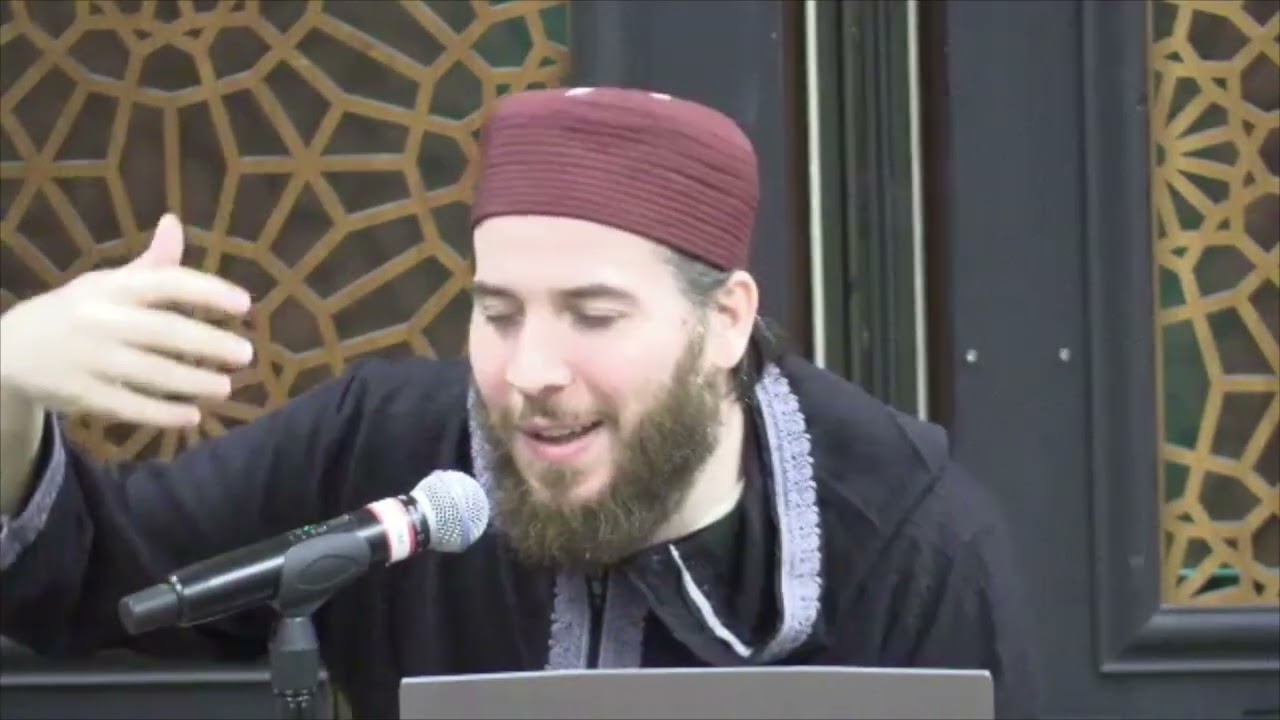
The Prophetic Blueprint: Guidance for Modern Living | Sidi Mohammad Alboni (Part 10)
Watch on YouTubeVideo summary
The video explores the profound significance of celebrating the Prophet's birth as an expression of deep love, drawing a parallel to how one honors their spouse's birthday to illustrate that ignoring such milestones reflects a lack of affection. This sentiment extends beyond mere celebration to encompass the core values of Islam, which are rooted in beauty, love, and happiness derived from submission to Allah. The discussion then shifts to the historical context of the first year after Hijrah, contrasting modern voluntary immigrants with the *Muhajirun*, who were refugees forced to flee their homes, families, and the Kaaba. By highlighting the intense longing of the companions for Mecca through poetry and the Prophet's own words about Medina being his beloved land only due to exile, the speaker underscores the suffering of these early Muslims and urges contemporary listeners to show kindness and support to modern-day refugees facing similar hardships.
As preparations for the Battle of Badr began in the second year after Hijrah, the Prophet demonstrated exceptional wisdom by conducting a census, establishing a swift reconnaissance unit, and sending expeditions that provoked the Quraysh. When faced with a decision on whether to pursue a diverted caravan or confront an approaching army of roughly 1,000 fighters with only 314 companions and limited mounts, the Prophet engaged in consultation (*Shura*) before choosing to fight. Despite initial fear and unfavorable odds, the companions pledged total loyalty, even offering to walk into the sea if necessary, while the Prophet accurately deduced enemy numbers from a captive boy and remained confident that defeating Quraysh's elite fighters would break their power forever. This unity and strategic foresight set the stage for a pivotal moment in Islamic history where divine assistance played a crucial role.
During the battle, Allah provided support in three distinct ways: first, by sending slumber to calm terrified companions and strengthen their hearts; second, by sending rain that solidified the sandy ground for the Muslims while turning the enemy's terrain into mud; and third, by accepting a strategic proposal from Mudhaj ibn Qunuf to destroy all water wells except one behind Muslim lines. This decision highlighted the freedom of speech within the Prophet's camp, as he valued the idea despite it coming from a simple soldier. When the Quraysh army arrived thirsty and demoralized due to the lack of water, the Muslims secured their single remaining well and organized their forces into two tactical rows with archers in the back and swordsmen in the front. These events served as clear signs of Allah's reassurance and purification, demonstrating that true love for the Prophet must be demonstrated through actions that align intentions with deeds to please Allah and support the Muslim community on the Day of Judgment.
Read the full video transcript
Alhamdulillah. Alhamdulillah.
Alhamdulillah. Mubarak. Ra Mubarak to
everyone. Inshallah. Um this is a
special time of the year. This is really
really really a special time of the
year. A special month of the year. um
that we grow in in a stronger connection
to the beloved sallallahu alaihi
wasallam and subhan Allah this time of
the year as every year there's this
usual debate about the mid
soh was making some reflections about
that and and subhan Allah one school
would say um like you should not be
having the mid the mid is a they are not
in favor of the mid another school who
is in favor of the mid and they
encourage us to to really um be sincere
in our love in our connection to the
beloved sallallahu alaihi wasallam. Um I
hope it's obvious to which school I
belong. But uh subhan Allah I was
reflecting on this and there's this
ongoing debate every year almost every
year and I don't I'm not a sheh I don't
have the the sufficient knowledge like
to hold a rigorous debate on the topic
but I wanted to give a perspective. So
what is the mid? The mullet is a
celebration of the birth of the prophet
Muhammad sallallahu alaihi wasallam.
This is something that we do out of
love. And I will try to compare this to
something that many people might relate
to. Um I will think of maybe there are
like three types of men.
There's those who know their wife's
birthday by heart. They mark their their
spouse's birthday on on on their
calendar. They plan and they put the
effort and regardless how big or small
their effort is, but still they make the
effort to make their wife happy. And
there's a second type who get notified
last minute maybe from Facebook or
something else and they will find out
it's not as not something special to
them. It's just another day. They might
rush into getting something last minute.
And there's Subhan Allah, there's this
third type, those who don't even
remember, don't even care to remember.
Those usually are the ones who get the
most trouble. But Subhan Allah, which
one of these three types of men do you
think love their wives the most? Subhan
Allah. Which one of them show the most
care to their wives? And and would you
really blame them for that care? Would
you really blame them for that love? The
birth of the beloved sallallahu alaihi
wasallam is far a more important event
than the birth of any one of us. Far
more important than the birth of any of
our wives. Far more important than the
birth of all mankind combined. Subhan
Allah. And the love that we should have
that Muslims should have to prophet
Muhammad sallallahu alaihi wasallam is
far superior to to to our love to all of
mankind combined. So why would you try
to blame us for trying to show our love
and try to sincerely show our lives at
the at the midsh I come to the mids out
of love and leave with increased love my
like love ometer alhamdulillah is always
increasing after attending such bliss
gatherings and subhan Allah so I I ask
forgiveness for people that follow
either school of thought I ask for
forgiveness from all Muslims but like
really forgive me I I can't I don't even
want to control it. I would listen to
the the the the poetry of im where he
said
let us be. Let us be. Subhan Allah. If
you are fair, if you were fair, you
would not really blame us. You would not
really blame me. A lover is deaf to
blame. A lover would celebrate the birth
of their beloved at least once a year.
Some lovers celebrate the birth of the
beloved sallallahu alaihi wasallam every
single day of Rabia. That's a blessed
habit. Subhan Allah. Some lovers they
celebrate the birth of the beloved every
single Monday. They fast on Monday
celebrating and following his sunnah
sallallahu alaihi wasallam. Some lovers
celebrate every single day sending
hundreds and thousands of salutations
and salawats day and night on the
beloved sallallahu alaihi wasallam. And
for some lovers, every single moment of
their life is emoted. Every single
moment is a celebration of their
beloved. Every single moment they have
that presence in their hearts and they
have that ma, they have that withinness
with him sallallahu alaihi wasallam. And
those subhan Allah are on a completely
different level. But subhan Allah, this
is the core essence of of of our faith.
This is the core essence of our
religion. This is the core essence of of
our tradition. Subhan Allah. This is a
religion of beauty. This is a religion
of love. And this is a religion of
happiness. The the the the core
foundation of Islam is is submission.
And we think we might think that we are
powerful, that we are in control, that
we and we and we and we are capable. And
the smallest germ that we can't really
even see with the naked eye that would
put someone into laying in bed, they
can't even move a muscle. Subhan Allah.
So we we we submit to Allah fully and
and and we acknowledge our weakness and
and that Allah do with us whatever you
whatever he wills. Subhan Allah. And
with that submission comes subhan Allah
senerity and that calmness and that
happiness that fills the heart. And if
you are truly in that pursuit of
happiness, this is the way to go. This
is your your way inshallah. And
alhamdulillah for being part of this
tradition.
So we continue with our study
after this reflection and and actually
I'm I'm missing out on a mullet that is
happening at the moment. So I feel sad
for not being able to attend. But
alhamdulillah inshallah this is part of
the celebration of the life of the
beloved sallallahu alaihi wasallam and
celebrating his s and getting getting to
know more of of his way of life and and
following his footsteps inshallah. So
with that intention um we reflected last
week on the events that took place in
the first year after hijra
and we talked about the the the
migrations and the immigrants and and
their struggles and in their life. But
subhan Allah I was referring to them as
immigrants and trying to relate to them
but I was like reflecting even more like
the our life as immigrants in this
country is even quite different from
their life. Um we are for the most part
we are leaving our homeland by choice.
We are people who are leaving for uh
studying at a better school or getting a
better job and we are living or still in
the pursuit of the American dream versus
in their situation they were forced to
leave. So the muhajarin are actually
closer to refugees than they are closer
to immigrants. If you are looking for
terminology and a state of mind and and
their emotions, they are much closer to
refugees. Our brothers and sisters from
Afghanistan, from Iraq, from Syria, from
Yemen, from all of these places where
there's a lot of wars happening and they
have massive love to their homeland.
They don't leave their homeland by
choice. They leave everything behind.
They even leave their families. Even
this is the case of Snuhammad sallallahu
alaihi wasallam and Abu Bakr
when they migrated they left behind
their families. They did not take with
them their families, their daughters,
their their spouse and their and and
they kept all of their family behind and
they migrated to Medina. And and there
are people still have that situation
until our day and this day and even in
the future. Subhan Allah. And especially
for for people from from Mecca and like
you can think of that longing and that
sha and that uh just state of of really
severe longing to the cabba. The cabba
is not like any other place. This is a
haram. Like for people who go on Hajj or
go on on Omra, they go just for a few
days and they spend a few days in Mecca
and they feel a strong connection to the
Caba. They they don't even want to
leave. They just spend a few days and
they already feel so much connected to
the Cabba. They want to spend their
entire life there. So how about the
people who were born and lived and
raised in Mecca for their entirety of
life and they lived with the Cabba as an
essential part of their life. Now they
are pushed away. Think of that severity
of that emotion of that longing of that
feeling. Subhan Allah. In in like and
subhan Allah we hear about stories of of
the companions and and alabashi who is
even not from Mecca. He's from Abis.
Subhan Allah. He would compose poetry
describing his longing to Mecca. And he
and he would say
Subhan Allah. He is like describing his
longing that he would just if he can
spend one night in Mecca. If he can just
drink one sip of water from from the the
the well of Maj and and as if he just
want to just his lay his eyes on on the
mountains of Shama and these are two
mountains close to Mecca. Look at that
description. Look at that sh and that
longing.
Subhan Allah. Even the beloved
sallallahu alaihi wasallam himself when
he migrated as he was migrating he he
would say that
sallallahu alaihi wasallam he's saying
that this is the best land this is
Allah's best land and this is the most
land beloved to me and if your people
have not driven me out of it I would not
have left
so think about that emotion and and
think about the challenge that they go
through and subhan Allah like the moment
they the refugee set foot in the new
land they might have that happiness that
feeling of security that feeling of like
I'm done with fear I'm done with
persecution now I can live my life but
days soon after it will sink in that
longing like what did I do to myself
maybe I I feel better living under war
and under bombing and shelter and not
have left my homeland. I came to a land
that I don't know my neighbors. I don't
share the culture. In in our case here
in this country, I don't even share the
language of the people. I don't share
their tradition. What have I done to
myself? And look at the state of
depression that refugees get into. And
at their time, they did not even have
Google maps. Someone of of the Muajarin
would leave their home. If they they
really go far away in Medina, they might
not be able to go back to the to their
home, not really knowing the city or
having a way to navigate and go about
the the the the movements. Subhan Allah.
So reflect on this and reflect about
their suffering and relate to the
refugees that we receive in this country
in this time in this age. Be kind to
them. Understand their experience.
relate to their experience and like
think of their struggle and be as kind
as you can as possibly can to the
refugee the refugees and to this
community and support them inshallah
and subhan Allah we talked a bit about
the the other challenges that the
beloved sallallahu alaihi wasallam was
facing in the first year he had the and
these are the new Muslims from Medina
and there's lingering hatred that still
lives in in the hearts of some of them
after going through battle after battle,
war after war, bloodshed after
bloodshed, that hatred still remains in
the hearts of the some of the and and
the and again to add to the presence of
the Jews who had full control over
economy and and and water and resources
and the rise of the hypocrites that new
faction in the society and the
widespread even of a pandemic in Yre
many most even all of some narrations
all of the companions except for the
beloved sallallahu alaihi wasallam they
got sick.
that kind of fever, that kind of
sickness, that kind of pandemic that hit
them in in Subhan Allah. And then when
he sallallahu alaihi wasallam made the
dua and the baraka of his dua, that that
affliction that that pandemic was lifted
that that disease was taken out of
alhamdulillah. Subhan Allah. Think of
the baraka of the beloved sallallahu
alaihi wasallam coming into Medina. like
with his arrival, with his stay here in
Medina, it's no longer that random city.
It's no longer any city. It's the city
part of that city is part of heaven. We
know that subhan Allah that that the
that part of Medina is part of heaven.
If the beloved sallallahu alaihi
wasallam did not migrate there, there
would not be no Medina, none of that.
Subhan Allah. So think of his blessings
and his his his his baraka sallallahu
alaihi wasallam. And then we talked
about the actions that sallallahu alaihi
wasallam he took to address those
challenges. And the first one building
the masjid and establishing then the
brotherhood between the the muajarin and
the ansar and the creation of the new
marketplace for Muslims within the
houses of of the people of and then
drafting and writing that charter of of
Medina that constitution that
norm like formalized the relationship
between every different faction of the
society and subhan Allah then that
finally changing the name of into Medina
and How very very very important that
was is that was for the the state of
mind of these different groups that all
of them they would have that ownership
of this project. All of them they would
have that strong association to it and
all of this happened in one year. This
is really this is really amazing. All of
these accomplishments all these amazing
achievements and it's still one year.
This is how genius he is sallallahu
alaihi wasallam. So now we talk about
the second year and there were a number
of events. The biggest event of the
second year is the great battle of
Pedrat Kubra. And subhan Allah this is
not only an important event for that
year. This is one of the most important
events in the entirety of of the
tradition of Islam that how that
divisive victory and that importance of
it. It's very very very very important
event to talk about and we might not be
able to finish all of the the the the
details of the event today. So inshallah
we might continue next week but we start
so the great battle of better and we all
know the story that the Muslims they
went out to intercept the trade caravan
of Abu Safyan that is coming back from
Sham and they ended up facing an army
from Quraysh that's between roughly 950
to a thousand fighters and when we tell
this story when we hear this story one
assumption might come to mind that the
Muslims were not prepared for battle.
This is not entirely true. So now let's
talk about what sallallahu alaihi
wasallam did in the first year in the
second year after hijra that prepared
them for that battle and that prepared
them for the battle of better. The first
thing that he did sallallahu alaihi
wasallam that he wanted to assess the
strengths of the Muslim community in
Medina. If Quraysh were to attack them
at any point there was a possibility.
Could they really face Qur? So
sallallahu alaihi wasallam he ordered
something called at the time which is in
today's terms this is census this is
really really really amazing to see to
look at his way of thinking and his
wisdom sallallahu alaihi wasallam. So he
instructed the the the companions to go
and count all of the Muslims and then
from all of the Muslims also count those
who are capable of bearing arms. Subhan
Allah. like he doing all of that
preparation just for the building of
that army and building for that force
that now will protect the community of
Islam at large. Subhan Allah. So he's
determining his forces and then
following the census was the
establishment of a very special unit, a
unit that was dedicated for
reconnaissance or scouting. And subhan
Allah, this unit composed of a group of
men uh who are really really swift
horsemen uh that were led by two
commanders.
Remember these names very very very well
because when I mention
when I mentioned
this means that those are the scouts.
Those are the people who would go very
very quickly. They would go on paths.
they would gather information and they
would come back and bring that to the
beloved sallallahu alaihi wasallam and
and and this is very very important and
we will learn about their um
contributions for all of the expeditions
all of the battles that the Muslims had
and subhan Allah these two companions
they are part of they are from the with
Jenna they were giving glad tidings of
entering paradise so very very very
important uh companions and very
important names to know about and know
about their life and memorize their
names names and their uh stories and
their sas. Subhan Allah.
And the final measure uh before the
battle of better was the use of
expeditions. So these expeditions were
not primarily for like meant for combat
but rather just subhan Allah just as as
a way that the the the Muslims would
show power and and they will imitate the
enemies as a way to prevent bloodshed
that uh the Muslim community has grown
strong really. They are now sending
troops here and there for expeditions
and they are subhan Allah becoming a
force to reckon with and they sometimes
they pass by trade routes and that
really provoked Abu Jah in particular he
was like furious that seeing that
Muhammad sallallahu alaihi wasallam and
the Muslims they have become a power
that they would send expeditions like he
was waiting for the the first
opportunity to emulate eliminate
Muhammad sallallahu alaihi wasallam and
and really like seeking that kind of
really hatred to toward them and toward
their growth and subhan Allah we will
see how that kind of blinded his sight
and how that how this hatred contributed
to the battle of of better happening
subhan Allah with all of Allah's will so
one might ask how many expeditions there
were before the battle of better there
were 10 different expeditions so you can
think all of that training that the
companions had all of that training to
endure like the the the the desert and
endure traveling, being uh always
vigilant and and and just being trained
on combat without even having to go into
fighting. That's a lot of training for
the companions. So all of that
preparation was happening before the
battle of Ped. So they had that they
were ready. They were really ready when
when the event happened.
So then the event happened. So Abu
Sufyan, he departed Mecca uh uh to Sham
for the the the known trade that they do
once a year to Sham. And this special
year, it was really a special year for
them because most of the wealth that was
really consisted of stolen property of
all of the companions, all of the
Muslims who left Mecca. So they went,
they took the houses, they sold the
houses, they took the money as if it was
their own. Like how ugly is that? And
then they are even trading with it and
they are going on a trade to to even
make profits out of it. So that trade
was massive that year and they and
Abufan returned with really massive
massive and significant profits. On the
way back they were near Medina and they
you know the path the trade routes they
will come close to Medina and they will
continue to their way to to Mecca. And
here we would see a map that is
describing that route uh where they are
coming from Sham. They would come close
to Medina and this is the route that
eventually Abu Sufyan um alternated and
took to avoid meeting the Muslims.
Subhan Allah. Then the the the beloved
sallallahu alaihi wasallam he summoned
the the the companions and he said Jirel
informed me. So the battle of of better
the initial command it was a divine
command from Allah subhana wa ta'ala and
sabrel conveying that command to the
beloved sallallahu alaihi wasallam and
he is conveying that to the companions
that jirel informed me that Abu Sufyan
is passing now with his straight caravan
returning from sham
rise for perhaps Allah granted to you in
another narration this caravan contains
your wealth and and subhan Allah that
command it was not obligatory It was
limited to only those who were ready and
capable and prepared. In one narration,
the beloved sallallahu alaihi wasallam
says, "Who is whoever had their mount
ready and is able to join now, let them
come." So it was very swift, very fast.
Whoever is ready, let's let's head out.
And subhan Allah based on the intel that
was gathered by this count unit that the
the discounting and the reconnaissance
that we just mentioned that they came
back with the information that this
massive caravan was guarded only by 40
men. Subhan Allah. Imagine this and and
and think about this. A caravan of over
a thousand camel filled with wealth and
filled with money and product and goods
only got it by 14 men. 40, not 14, sorry
35, 40 men. Why is that the case? Why
did Quraysh assign just a very few
guards for that caravan? Because
Quraysh, as we talked many, many classes
ago that they had really um like they
had authority, the religious authority
over all of the Arabs. And all of the
Arabs, they were very nice to their to
the caravans of Qurish. Uh they would
not really uh dare to attack them or
steal from them. They will and the
opposite they will provide them with aid
provide them with food on their way and
support them because out of the fear
that their idols in Kaba if they do
something bad it will might be removed
or displaced. So the Quraysh they had
that religious authority so they did not
really guard their caravans. They did
not even have the need to guard their
caravans heavily. So that particular
caravan was really lightly guarded and
the beloved sallallahu alaihi wasallam
ordered these prepared companions to set
out. In response to this command there
were 314
companions the of the elites of the
companions. These are the the people of
these are the the greatest of of the pe
of the people. Subhan Allah. In some
narrations they are a bit more or less
but they are around 314
um men and they not all of them they had
mounts. Um they some of them they had to
walk. They had only with them 70 camels.
And so you can do the math. Every three
would have to almost share one uh camel.
And it was a distance of 150 km almost
90 miles give or take. And each person
then would walk for 60 miles and would
ride for 30 miles roughly. And then they
will alternate. And even Snuhammad
sallallahu alaihi wasallam the beloved
he shared also a a mount. He shared a
camel with snub and snib.
These were young men at the time. So
they went to him and they told him, "Oh
messenger of Allah, you ride the whole
distance and we we will walk." But
sallallahu alaihi wasallam he responded
to them and and he said, "No, you are
not stronger than me at walking
sallallahu alaihi wasallam with his fat
and his strength. You are not really
stronger than me at walking nor like I'm
I'm in less need of the reward than
you." Subhan Allah. This is this is
amazing. Reflect on this for a minute.
Allah subhana t have forgiving all of
his sense sins sallallahu alaihi
wasallam as if he didn't he had any sins
to begin with and he elevated him and
and and Allahh elevated his mention
sallallahu alaihi wasallam yet he was
eager for reward he was eager for the
opportunity and in each and every single
opportunity to for getting reward and
getting that eagerness for reward should
be within each and every one of ush
especially after we have blessed seasons
where we have for example the month of
Ramadan or the first 10 days of of
don't say that well I have done enough
worship I have done enough recitation of
the Quran during the month of Ramadan I
have filled my my scale with a lot of
good deeds so now I'll stop take take
lesson from the beloved sallallahu
alaihi wasallam do not accept a single
day that pass by you without reciting
even a few verses or even a single ver
verse of the Quran sees on every single
opportunity to to to do good and to gain
good and to increase in in good
inshallah.
So Abu Sufyan now returning with this
caravan Abu Sufyan also he had his own
way of of getting intelligence. So he
learned about the advance of the the the
the he learned in advance about the
beloved sallallahu alaihi wasallam and
the companions that they are coming
towards him to intercept that carvan. So
Abu Sufyan being the expert in desert he
is and and and being really wise he
reacted in two different ways. He put a
plan a two-part plan. First he sent an
urgent call for reinforcement to Mecca.
So he sent a swift rider in the name of
and at the same time so that person will
go there and he will inform and he will
try to bring uh reinforcements at the
same time he changed the the route he
changed and and altered that caravan
route to steer it away from from Medina
toward the the the coast area as we see
in the map here that's near Jada in in
today that's along the the Red Sea.
Subhan Allah.
And um subhan Allah we we see and and
learn how this person
that he was truly an effective
communicator. It was really a good
choice by Aufan. We have to acknowledge
it. So what he did he put on a scene
that really attracted the attention of
all of the people of Quraysh. He rode
his camel when he was approaching when
he was on the gateways of of Mecca. He
flipped his his camel and he rode
backward on the camel. He wounded that
camel and smeared its blood on it on its
clothes and and he tore even parts of
his garments and he entered Mecca while
like beating himself and and wailing
loudly and crying out loud and saying,
"Oh people of Mecca, help people of
Mecca." I want you to imagine the scene.
Someone coming with this, it's a normal
day and then suddenly someone showing up
and coming with this way of of entrance
and making that kind of wheeling and
crying for help. That's that's a big
scene. So people they start to follow
him and they start to gather around him
and he reached around the cabba and and
he made sure that every almost everyone
in Mecca would come and know what is
happening. So they saw him and they
understood that there's something that
is very serious that have happened to
the to the caravan because they know
this person this
he was with the caravan he was with Abu
Sufyan. So he said that and he informed
him with what is happening. He said
Muhammad sallallahu alaihi wasallam had
set out to intercept that caravan and
and you have to come and and help us. We
have to come and save this caravan and
save all of this money and wealth. And
this is really now enraged Abu Jahal.
You can think again of Abujah and how
much he has been really furiated with
all these expeditions even not being
able to to prevent the Muslims from
migrating and now he saw that
opportunity. So Abu Jahal he starts
really mobilizing forces and he gathered
a thousand fighters about a thousand
fighters in a short period of time he
did not really waste any efforts there
even with them they they were 200 200
horses subhan Allah comparing that to
the army of the Muslims it was around
300 314 and they were like they were
they had only two horses with them.
Subhan Allah. Look at the difference.
And then and the army of Quraysh, they
were coming with full gear, full war
gear, with full like arms and and and
weapons and and all of the way that they
can go into a battle.
Subhan Allah. Not all of the people of
Mecca, they were excited about this.
Some they were really afraid to go out.
Some would go and send someone on their
behalf. And we will mention one person
of that nature and that was
because long time ago as we talked about
the event of of Havesi who was a slave
of and was torturing him and they put
the stone on on in the heat of the
desert and they really tortured him in
ugly ways and sayal very calm he would
say toya that the messenger sallallahu
alaihi wasallam
He said that we are the ones to kill you
and subhan Allah he knows like they know
that the beloved sallallahu alaihi
wasallam is the he is the trustworthy he
is the truthful. Soya he was so afraid
that he is thinking that this is the
moment this is where that promise of of
of
will come uh to to fruition will come to
happen. So he at first he was afraid. So
he sent someone on his behalf, someone
who he had like he had like bored that
money that person had money borrowed
from Omeaya. So says I'll forgive you.
I'll forgive all of that money that I
loaned you in in on on the other hand
you would have to to go on on my behalf.
And then Abu Jahal would not sit still
and look at this happening. He want to
bring all of the strongest men in
Quraysh to go and fight the Muslims. So
he would he would go to to he went to to
Umeya and he would approach him and he
will have bakur have this incense and he
would go around him and try to give that
scent to him and start to mock him and
say ohya are you now burning incense
like women they are staying behind like
women and that really infuriated omea
that really touched his honor and that
like he know that he would not be really
saved from that promise of sil
So like he he eventually he decided to
join but he told Abu Jahal it seems that
you will take me to my death.
Subhan Allah. He's realizing what what
is about to happen. But out of fear of
being labeled a coward, he eventually
joined the army. And Abu Jahal's army,
they set out of Mecca. And meanwhile,
while this is happening now, Abu Sufyan
is now really went far away from the
from Medina and in a way he secured that
caravan. He's far from the Muslims. The
Muslims can really catch him in time. so
he can continue his way to Mecca
unharmed. So he sent another messenger,
he sent another person to inform uh that
hold on there is no need to come out. I
have secured the caravan. Everything is
good. Everything is is is okay.
And subhan Allah when that person
reached Quraysh with that second message
of turn back, Abu Jahal refused. Abu
Jahal like out of arrogance and and just
being stubborn. He he swore to continue
just driven by the the the pride and
that desire to just make a statement. He
said, "I will not return until I will
reach the Muslims and I will defeat
Muhammad sallallahu alaihi wasallam and
then I will gather the girls and will
have them sing songs on their graves and
on their bodies on their dead bodies and
we will drink wine and let the Arabs
know that we are still powerful. We are
still to be feared for eternity." This
is what Abu Jahal was saying. the
primary concern for him is is the image
of Mecca which has become really to
weaver um like in the face of this
rising power from Medina. So he was
determined to go and crush that emerging
threat and restore the the the dominance
of of Mecca in the eyes of the Arabs.
Subhan Allah. So now let's turn the
scene and go to the Muslims and let's
imagine this happening. The beloved
sallallahu alaihi wasallams and the
companions they are now receiving two
piece of intelligence, two piece of
information. The first one indicating
that Abu Sufyan and the caravan they
have moved far away. We can't really
catch them in time. We can't really be
there. We can't really intercept the
caravan anymore. And the other
information that oh on the other hand
there's now an army a full equipped army
is coming from Mecca and it's on its
way.
So what would you do oh messenger of
Allah sallallahu alaihi wasallam what
would you do?
So sallallahu alaihi wasallam faced with
this situation
like Subhan Allah even though they were
setting initially just to intercept the
caravan and now they're about to go into
a battle he would never ever force the
Muslims into fighting they love him and
he know that they love him sallallahu
alaihi wasallam. So if he would command
them they will sacrifice their entire
beings their their entire lives for him
sallallahu alaihi wasallam.
So he would always consult with them
first. In every single battle, in every
single opportunity, we will hear this
phrase over and over and over again.
Adise me, oh people. Subhan Allah. Allah
describe this quality of of the Muslims
in the Quran.
Their affairs are decided by mutual
consultation among themselves.
Subhan Allah. This is a very very
important tradition. This is a very
important sunnah. Do not make a single
decision no matter how small or big
without consultation. Even if you
consult one person, this is a sunnah and
benefit from that sunnah and have the
intention of practicing that sunnah, the
sunnah of consultation, the sunnah of sh
in small and in big matters.
But again, this is not easy. Imagine
imagine the two armies faced face to
face a thousand fighters ready for
battle and roughly 300 314
that this army have two 200 horses and
this army has only two horses. I would
imagine the companions in that scene
they are looking at the 200 horses and
they're looking aside and looking at the
two horses on their side and yeah
alhamdulillah at least we have two
horses. That's that's good. Let's go.
So it was not easy. It was truly not
easy. And the beloved sallallahu alaihi
wasallam he gathered the companions. He
discussed the situation with them that
the caravan has escaped. But Allah has
promised them one of the two outcomes.
We read that in the Quran and I
encourage all of you to read surahal all
of the details almost all of the details
of the battle of per inahal and the next
time you read think about the battle of
and try to live those moments as in some
of these verses there's truly vivid and
very strong description that Allah is
providing in the Quran Allahh says
Subhan Allah. Subhan Allah. Allah has
promised you one of these two groups
that it will be yours. That's Allah's
promise.
The first, Subhan Allah. The group is is
the caravan. The other group is is the
army. And the Muslims, the companions,
they have wished for this unarmed,
lightly guarded group to be theirs.
Meaning that the companions, they had
really hoped for that easy target. This
is really natural. Again, thinking of
the difference in in in in in like in
numbers and in equipment and in and in
and really being ready for for battle,
there's there's a big difference at
least from the outside.
So subhan Allah even say Muhammad
sallallahu alaihi wasallam he sent and
to scout the area ahead. They didn't
they couldn't get really close close to
the the army but they were able to
capture a boy a young boy who was just
filling water for for the army and they
brought him back and they started
integrating in in like they started
questioning him and asking him and
subhan Allah s Muhammad sallallahu
alaihi wasallam at the time he was
praying. So I want you to to imagine
that the the state of the companions and
having that fear of now they have missed
the easy opportunity and now we have
about to face the first major battle in
Islam. What would be their state? So
they start questioning the boy what
group are you from? Are you from Abu
Sufyan's caravan or are you from
Abujah's armies? The boy says I'm from
the army of Abujah. So feeling that
answer they did not really hope for that
answer. They would start like beating
the boy and they would start questioning
him again and they would ask him like
are you from the army of Abu Jahal or
are you from the caravan of Abufan and
then he would say out of fear he don't
want to be beaten anymore he would say
I'm I'm from the Abuyan's caravan and
then Muhammad sallallahu alaihi wasallam
he finishes his salah he finishes his
prayer and he would turn to the
companions and tell them like when
really tell when he is telling you the
truth you beat him and when he is lying
to you you you leave him. Subhan Allah.
So I want you to to to look at his way
sallallahu alaihi wasallam and how he
would be able to deduct and get that
important information from that boy. So
he says bring me the boy. So they they
they sent him to the beloved sallallahu
alaihi wasallam and he asked the the the
boy how many are they? So the boy
replied I don't really know the exact
number but they are they were they are
many there are truly many people. says
subhan Allah look at the wisdom look at
how genius he sallallahu alaihi wasallam
he so he would ask the boy how many
camels do you slaughter every day for
food you know it's a long journey from
Mecca to Medina so they they would need
to find a way for to to like to feed
that entire army so they will slaughter
some of the animals with them to feed
that army so he sallallahu alaihi
wasallam asked him asked the boy how
many camels do they slaughter every day
for food and the boy said in one day we
slaughter nine in another day So we
slaughter 10 and s Muhammad sallallahu
alaihi wasallam turned to the companions
and he said they are between 900 and a
thousand subhan Allah with even that
precision and he got the number right
sallallahu alaihi wasallam just from
that question that one question subhan
Allah and he he is not concerned
sallallahu alaihi wasallam he he is
confident and have that 100% certainty
in Allah's victory then he would ask the
boy who is among them who is among that
army and the boy started
saying several names of these prominent
figure, these very strong and famous
fighters says
and this and that and with every single
name the companions and their they have
their their face really lose color and
turn pale. And Muhammad sallallahu
alaihi wasallam on the other hand like
these are the most powerful men in in in
Qur.
So he will turn to the companions
sallallahu alaihi wasallam and he will
smile and he will say Allah abbar Mecca
has thrown its most prized sons at your
feet. Look at his confidence sallallahu
alaihi wasallam. This means that Mecca
has sent its most significant powerful
leaders. Now their defeat will be a
divisive blow. when we defeat them this
this round, they would not really be
able to to to face us anymore. If they
have brought their most
the strongest people among them and they
will lose, they would not have a way
around us anymore. And and sallallahu
alaihi wasallam.
So again, subhan Allah, look at Allah
subhana wa ta'ala and and and Allah how
Allah give the openings when the Muslims
submit. When the Muslims submit to Allah
subhanaa tala and to his will and to the
will of his beloved sallallahu alaihi
wasallam Allah start giving openings and
we see the victory. So the beloved
sallallahu alaihi wasallam again he is
gathered with the companions and he's
saying
advise me oh people Abu Bakr stood upr
the always the initiator.
So he stood up and he said proceed oh
messenger of Allah we are with you.
So Muhammad sallallahu alaihi wasallam
he replied to Abu Bakr and he said may
Allah reward you Abu Bakr and then he
asked again
advise me oh people. So
the strong
he stood up and he said the same thing.
Proceed oh messenger of Allah for we are
with you. And the same response from the
beloved sallallahu alaihi wasallam he
told him may Allah reward you Omar
ask again advise me oh people. And there
was a companion by the name of
who stood up and said something that is
really really quite remarkable something
amazing. He said proceed oh messenger of
Allah by Allah we will not say to you
what the Israelites have said to Moses.
Go you and your Lord go and fight while
we remain here sitting. And we would
rather say
We would rather say go you and your lord
and fight and we are fighting alongside
you. Subhan Allah. Subhan Allah.
Who is narrating this hadith? Who is
narrating this incident? He would say I
wished I had done nothing in Islam with
the messenger of Allah sallallahu alaihi
wasallam except that I have said these
words. Subhan Allah. These words, these
words you would write with musk, you
would write with gold. These are
beautiful, beautiful words. And then
he's basically comparing the the the
reaction of the Israelites to to to
their prophet and their and and
comparing the nation of Muhammad to
Muhammad sallallahu alaihi wasallam.
And who made that comparison? Remember
this named
and when the beloved sallallahu alaihi
wasallam he heard these beautiful words
his face was was shining out out of out
of delight sallallahu alaihi wasallam
and subhan Allah subhan Allah like he
was pleased by by these words but yet he
still asked again advise me oh people
so the first three people and
all of them they were from the
immigrants, they were from the majarim.
It's as if Muhammad sallallahu alaihi
wasallam would not really commit
to to war and bring all of these people
with him without having also the opinion
of the and having their say. So
he he is the leader of the he stood up
and he said um it seems that you mean us
oh messenger of Allah and S Muhammad
sallallahu alaihi wasallam responded
yes. Say, "Proceed, oh messenger of
Allah. We have bledged to hear you and
obey you in everything just as we bled
at at the pledge of the remember the
words that they bled to him sallallahu
alaihi wasallam that they will sacrifice
everything for the cause and and and and
and they will obey him." So he continued
and he said, "By Allah, if you were to
take us to the sea and walk into it, we
would walk into it with you. Not a
single man from us. Not a single man
from the Ansar would stay behind. Subhan
Allah. Subhan Allah. Like imagine and
think about this. The Arabs they really
feared the sea. They don't live most of
them they did not live by the sea. So
they don't really know how to swim from
someone who is from the desert making
that analogy. This is just showing the
commitment showing how much they how far
would they go just to to be with the
beloved sallallahu alaihi wasallam and
and give him victory.
So subhan Allah um Subhan Allah Muhammad
sallallahu alaihi wasallam now hearing
all of these words and and and now that
Subhan Allah that really brought joy to
him sallallahu alaihi wasallam like
subhan Allah this is really really
important uh that like the the
companions they are showing their love
the same way we try to show our love
with the mullet. It's not really that
comparison it's it's not the same. is
definitely not the same but we can
really be with them and and live that
moment. So with all of our weaknesses
and with all of our shortcomings at
least we try to celebrate him sallallahu
alaihi wasallam. We try to celebrate his
companions
and Allahh says in the Quran also.
Subhan Allah. Like we really ask Allah
subhana wa ta'ala that on the day of
judge of the day of judgments that when
we are meeting the beloved sallallahu
alaihi wasallam that you are able to
bring joy to him sallallahu alaihi
wasallam because he sees our actions.
Allah subhana t will see our actions.
His beloved sallallahu alaihi wasallam
will see our actions and the Muslims
will see our actions. So I want you to
imagine yourself at the day of on the
day of judgment you are standing with
those elites, the companions, the
martyrs, the the the scholars, all these
great great Muslims and at this grand
gathering and the beloved sallallahu
alaihi wasallam is embracing all of
these heroes and where are we?
Are we just standing on the sideline
saying, "Oh messenger of Allah, we loved
you." But then he would ask what did you
do? What did you do to show that love?
Subhan Allah. This is the work that
every single one of us we need to think
and bring that intention to the to the
action that we are doing this action to
please Allah subhana tala first and
please his messenger sallallahu alaihi
wasallam and please the Muslims because
all of them they will be seeing our
actions on the day of judgments.
So like we should strive to be with
them. We should not just be content
sitting on the sidelines in that day on
that scene
not only with love but also with action
because we can't really bear and bear
that kind of to be distant from him
sallallahu alaihi wasallam. Inshallah
love alone is enough. We know the
hadith. We know and we believe in it
100%.
But we and like we should show some
action to the beloved sallallahu alaihi
wasallam that we took some action based
on that love just to please him and just
to make him happy and see him smiling to
us inshallah on the day of judgment.
So after all of them and all of these
positive words and and support and
proceed oh messenger of Allah we are
with you as I mentioned when this
submission would happen the the victory
will come and the divine support will
start to unfold. So like let's look at
the at the miracles that happened. The
first thing that happened is slumber,
sleepiness, dizziness. Uh that's really
struck all of the companions, all of the
army of the Muslims. And then the rain
that happened. Subhan Allah. And first
that slumber that will bring a sense of
a calm to the companions. They were
truly afraid. They were fearing for
themselves, for their lives, for their
faith, and for the entirety of Islam.
they had a big big big weight weight on
their shoulders and subhan Allah think
of someone who is in fear would they be
able to go to sleep they would say like
I have lost sleep because of my worry
and I'm thinking about this and I'm
thinking about that they would not be
able to go to sleep the night of the
battle so Allah subhana ta he would lay
down that sleepiness and that dizziness
and that slumber that will fall upon
them just subhan Allah to calm them and
and that's a reassurance from Allah
subhana w t'ala uh that that he even
send the water from the rain to to to be
purify them and subhan Allah in in one
narration one of the companions he would
narrate and say that he was being set
guard on on on on that night and he
would say my sword fell from my hand
nine times that night because I kept do
dozing off. Subhan Allah. He's like
guarding the troops, guarding the ent
entire army and and trying to stay awake
and that out of slumber out of just
sleepiness the the sword will fall nine
different times
and we read about this in the Quran as
well. Allahh says
that Allah subhana t made that slumber
then made that sleepiness fall upon you
to as a reassurance from him and send
down upon you from the sky water to
purif purify you and to remove the filth
of Satan from you to strengthen your
hearts and to make your feets firm.
Subhan Allah. that that that's number
that dizziness it was probably the best
sleep that any one of them ever had.
That's the best night of sleep because
that sleep it was a gift from Allah
subhana t to them at that night.
So they can basically they can wake up
the next day they can be with full
strength and they can be ready for
battle. And the second thing as I
mentioned as a support that Allah
provided rain to them. So I want you to
think and and and we'll probably ask
what is the significance? What's the
impact? was the significance of of rain
coming down on them. Subhan Allah. To
understand its significance, we need to
look at again at the at the map and
understand the positioning of the two
groups. The Muslims they were the
companions they were positioned in an
area in the valley called
while was positioned in another part of
the valley called
and the nature of the land of these two
different positions the
is different. Subhan Allah. But when the
rain came that sandy land where the
companions and the Muslims were, it
become really firm. It stabilized and
and and and they were able to stand.
They were able to walk easily and it
even stabilized the the legs of their
camels. Before the rain they were
struggling because it was sandy so they
their foot and the camels foots will
will really go into the sand and it was
hard for them to move. On the other
hand, in
the Quran,
that rain turned that land into mud. And
you can imagine now because all of that
kind of um supplies and excess armor and
all of the weapons that they had, it way
would weigh them down and they will
struggle to move, struggle to move with
the mud. Subhan Allah. So you can see
how Allah subhana ta subhan Allah like
he's subhana wa ta'ala his words are
amazing. He would describe this scene in
the Quran in a different verse from the
same surah. He would say,
Subhan Allah. Subhan Allah. When you
were on the on on the near side of the
valley and they were on the further side
and the caravan was below you, basically
that caravan, it's in reference to
Abusfan's caravan that is below them.
It's far from them. They can't really
reach it anymore. Notice how these
verses describe the situation again in
in really precise details. And if you
had made an appointment to meet in that
location, you would have failed to keep
it. Subhan Allah. But it's Allah's will
and it's with Allah's might that he
would accomplish the the matter that is
already distant. Subhan Allah.
So again, the slumber and the rain. And
now the third point that came to their
aid is really a brilliant idea from one
of the companions that was inspired by
Allahhana tala a companions uh a
companion with the name of Mundhah
he he was really skilled strategically
in in thinking about planning and he
came forward as Muhammad sallallahu
alaihi wasallam he was stationed the
army in in one area. So he went sabb he
went to the beloved sallallahu alaihi
wasallam and he is just a simple soldier
think about this he's just a simple man
going to the commander of that entire
army the commander and chief and he's
saying oh messenger of Allah is this a
place that Allah has commanded you to
settle in or is it just a matter of
strategy and warfare
do you understand the significance of
whatab
is saying um subhah sabab
He he is basically saying that if this
is a command from Allah, I'll just keep
shut I'll remain silent but it's just an
opinion. It's a matter of strategy. I I
I really have an idea. I really have a
good idea. I will I would love to share
my thoughts. And subh this is how s
Muhammad sallallahu alaihi wasallam this
is how the beloved raised him. This is
how he gave them the Arab like anyone
can speak up. Anyone who have an idea
can share his idea or her idea. This is
truly the freedom of speech. Subhan
Allah. Not in a situation that one would
be afraid to speak and they will be
cancelled or they will lose their job
and or they will lose their status.
Subhan Allah. How he sallallahu alaihi
wasallam gave them the confidence and
the security to be able to speak their
minds. So Muhammad sallallahu alaihi
wasallam and look at his reaction. The
commander of the entire of the army
being now given an idea by just one man,
one soldier. So what would you imagine
his reaction is was so suhammed
sallallahu alaihi wasallam he turned to
him and he smiled and he said it's
actually it's a matter of opinion
strategy and warfare soab he said oh
messenger of Allah this is not the right
place for us
like subhan allah subhan allah like
imagine he's telling even the commander
that you have made the wrong decision
and I have a better idea so Muhammad
sallallahu alaihi wasallam he asked him
what's your opinion? So he said and this
is happening in front of all of the
companions. He said that this area of
Beder it has several water wells and we
should really go and demolish and
destroy these wells except for one well
that we will keep behind us. Basically
his idea is that we will narrow down all
of the sources of water and we are
securing that source of water when the
the the army of Abu Jahal and the army
of they come in they have been on a long
journey on a probably like a six seven
days journey u more or less and they are
probably thirsty they are expecting to
see water they know the area they know
there's a lot of wells and suddenly they
will see no water what will happen to
them what will happen to the moral So S
Muhammad sallallahu alaihi wasallam he
he was really pleased by by this idea
and and and he acknowledged it. He was
really impressed by this suggestion and
he said this is a good opinion and he
ordered all of the wells of better to be
destroyed leaving only one behind them
and the companions they set out to
demolish the wells. Exactly doing this
and subhan Allah exactly what they they
they planned happened when the masses of
Quraysh arrived and they found no water
they were enraged. They went out of
their mind. Even one of the Qurayshi
people, he was extremely thirsty. He
like started charging towards the
Muslim. He's not seeing truly with his
eyes. He's like just saying, "I'm going
to either drink or die." And says, took
care of him. Subhan Allah. So you can
think of how their morale, the morale of
the army of Abu Jah plummeted.
And the Qurayshi people, Subhan Allah,
they arrived and and and the Muslims,
they arrived before them. And St.
Muhammad sallallahu alaihi wasallam
before the battle commenced he started
forming the rows by himself sallallahu
alaihi wasallam the leader is forming
the rows and and setting people in
positions. So he formed the Muslims in
two different rows. The back row is for
archeries for for for archers. And the
front row is for swordmen. And the
swordmen will they basically they will
just uh duck and the the people behind
them they will start arrows basically
breaking the formation of of the people
and and uh causing panic to the mushik.
Allahbarbah.
It's a call for so inshallah we'll wait
just a couple minutes and then we'll
just continue and briefly and we will
stop inshallah for today. So we continue
inshallah and and I'll just share one
more story and we'll stop inshallah
before the the the prayer of for
so Muhammad sallallahu alaihi wasallam
again he's lining up uh the the Muslims
in two rows and all of the companions
they adhere to their position except for
one
I think they are calling for a prayer
okay we'll stop inshallah here for this
week and we'll continue inshallah next
week. Keep us in your dua.