Video summary
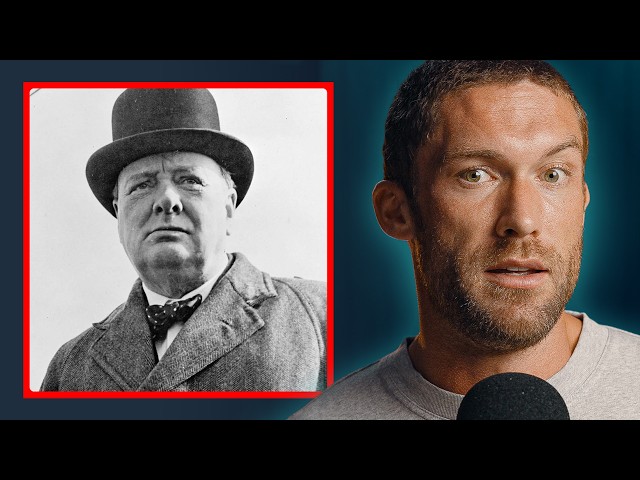
The podcast opens with a harrowing account of Winston Churchill's early struggles at Sandhurst Military College in September 1893, where he was admitted on his third attempt after failing to secure a spot in the elite 60th Rifles regiment. At nineteen years old, Churchill wrote enthusiastically to his father about passing an exam, only to receive a scathing letter from Lord Randolph Churchill that dismissed him as "slovenly" and accused him of leading an idle, useless life. The former Chancellor warned that without significant change, Winston would degenerate into a shabby existence bearing the blame for all future misfortunes, effectively labeling him one of hundreds of public school failures destined for a futile end. The host reflects on this correspondence to illustrate how even after achieving monumental success like defeating Nazi Germany and winning World War II, Churchill likely never felt truly "enough," suggesting that his sense of validation from V-Day in June 1945 lasted only two days or less before returning to the internal voice of his father. This dynamic raises a critical question about the nature of achievement: if success brings no lasting satisfaction because it is driven by low self-esteem and an internal tyrant, what is its true point? The discussion posits that admiring highly successful individuals can be dangerous because observers often fail to see the psychological price those people pay daily, leading them to envy a lifestyle they would not willingly endure. To demonstrate how one might identify such powerful ideas or concepts, the speaker references Neil Strauss, author of *The Game* and Rick Rubin's book, who recently announced his new title: *The Power of Low Self-Esteem*. The host applies a rule derived from this context—that the quality of an idea can be measured by how envious one is that they did not conceive it themselves—highlighting the terrifying yet fascinating nature of Strauss's work. This concept serves as a bridge to broader societal issues, specifically shifting focus toward global health crises where obesity has surpassed hunger as the leading form of malnutrition according to a new *Lancet* study showing over one in eight people worldwide are clinically obese. The transcript details alarming statistics regarding modern nutrition and lifestyle habits, noting that more than 1 billion people suffer from clinical obesity while underweight populations have dropped below 550 million. Experts warn that children are disproportionately affected by this crisis, with nearly twice as many minors classified as obese rather than underweight due to a lack of proper nutrients despite high caloric intake. Compounding these health issues is the modern human condition where individuals spend an average of eight hours daily on screens and six and a half hours asleep, creating a terrifying insight into how sedentary behavior contributes to malnutrition caused by obesity rather than starvation. The episode concludes with a practical application regarding physical recovery and vitality, suggesting that chronic fatigue or slow recovery may stem from deficiencies like zinc rather than just training plans or diet alone. The speaker promotes Momentus' zinc supplement as an NSF-certified product tested for purity and safety, endorsed even by Olympic athletes to support testosterone production and energy levels. Viewers are offered a 30-day money-back guarantee on their first subscription with a specific discount code available via the link in the description or by visiting livemomentous.com/modernwisdom using the promo code "modernwisdom," ensuring international shipping options for those interested in optimizing their health regimen.
Read the full video transcript
This is the power of low self-esteem. In
September 1893, Churchill was admitted
on his third attempt to the Sandhurst
Military College. He wrote to his
father, "I was so glad to be able to
send you the good news on Thursday." His
father, a former chancellor of the
ex-checker and leader of the House of
Commons, wrote back a week later, "You
should be ashamed of your slovenly
happygolucky haram scaram style of work.
Never have I received really any good
report from your conduct from any
headmaster or tutor. Always behind,
incessant complaints, and a total want
of application to your work. You have
failed to get into the 60th rifles, the
finest regiment in the army. You have
imposed on me some extra charge of £200
a year. Do not think that I'm going to
take the trouble of writing you long
letters after every failure you commit
and undergo. I no longer attach the
slightest weight to anything you may
say. If you cannot prevent yourself from
leading the idle, useless, unprofitable
life you have had during your school
days, you will become a mere social
wastel, one of the hundreds of public
school failures, and you will degenerate
into a shabby, unhappy, and futile
existence. You will have to bear all the
blame for such
misfortunes. Your mother sends her
love. Churchill was 19 when he sent
that. And that story hurts to read.
hurts me to read because I don't know
the inner texture of Churchill's mind,
but I would bet that even after
defeating Nazi Germany and winning World
War II, he probably still didn't feel
good enough. You know, V-Day, whenever
it was, June 30th, 1945 or something.
Uh, how long did that sense of
validation and enoughness
linger with Churchill
having the greatest threat that had been
faced for a very long time was just
defeated? Two
days, less than a day maybe. like how
quickly did his mind get back to
castigating himself with that voice,
that internal tyrant that was his
father? And you know, it sort of begs
the question, what is the point of
success if there is no satisfaction in
the succeeding? Which is why you should
be very
aware of envying successful humans
because the price that you would need to
be pay to be the people that you admire
is often one that you wouldn't foot the
bill for. And I spoke about this idea to
Neil Strauss, the guy that wrote the
game and he wrote Rick Rubin's book. Uh
and then he wrote the truth. He's like
seven New York time bestsellers, I
think. And he's writing a new book. and
he told me the title of this new book
and I came up with a rule off the back
of his title which is you can tell how
good an idea is by how envious you are
of not coming up with it yourself when
you hear about it and he told me the
title of this book and I was like [ __ ]
that's so good why didn't I think of
that U and the title of his new book is
the power of low self-esteem and it's
this same idea that I've been obsessed
with for a long time which is look at
the
very successful, very impressive people
that you admire, that lots of people
look up to, uh that we all hold in high
esteem, and look at what the internal
texture of their mind's like. Look at
what the
dayto-day
existence for them feels like. And what
does it mean? How how driven to do
amazing, great, fantastical things are
they? And
yet in reality, do you want to be that
person? Like, do you want to pay the
price that you need to to be the people
that you admire? And the power of low
self-esteem. Just what a awesome title.
And you can tell how good an idea is by
how envious you are of not having come
up with it yourself. Uh so yeah, next
one. This is uh kind of cool. I I mean
terrifying, but also kind of cool. Um
obesity is now a greater threat to
global health than hunger. A new Lancet
study has found that more than one in
eight people in the world are clinically
obese. The number passed 1 billion for
the first time and it is now the leading
form of malnutrition with the number of
people considered underweight falling
below 550 million. Being obese or
underweight are both forms of
malnutrition because in both cases
people are not getting the right
nutrients and vitamins and the types of
calories that they need in order to be
healthy. And experts have basically
warned that children were paying the
price for inaction on obesity by global
leaders with under 18s accounting for
159 million of those who are obese. So
nearly twice as many people who are
obese than are underweight and it is the
leading form of malnutrition in the
world. And then I saw a study that
showed people spend eight hours a day on
screens on average and six and a half
hours a day asleep on average. So we are
now more more people are dealing with
malnutrition due to obesity than due to
being underweight. And people spend more
time per day on their screens than they
do asleep.
And that is a terrifying insight about
the state of modern health. Before we
continue, if your workouts feel flat,
your recovery is slow, or you've just
been feeling off, it might not be your
training plan or your diet. It might be
something a bit more boring like zinc.
And while supplements like tonatali can
help, zinc quietly plays a huge role in
testosterone production, strength,
recovery, and energy. And most people
are chronically low on it, which is why
I'm such a huge fan of Momentus' zinc.
It supports testosterone, boosts
vitality, and helps keep everything
running like it should. Best of all,
it's NSF certified for sport, which
means it's been independently tested and
approved for purity, safety, and zero
shady ingredients. So, even Olympic
athletes can use it and and you too. And
if you're still unsure, Momentus offers
a 30-day money back guarantee. So, you
can buy it and try it for 29 days. If
you don't love it, they'll just give you
your money back. Plus, they ship
internationally. Right now, you can get
35% off your first subscription and that
30-day money back guarantee by going to
the link in the description below or
heading to
livemomentous.com/modernwisdom using the
code modernwisdom at checkout. That's li
i v m o m e n
o.com/modernwisdom and modernwisdom at
checkout. Would you look at that clip is
already over, but if you want more,
don't be sad. The full episode is
available right here.
[Music]