Video summary
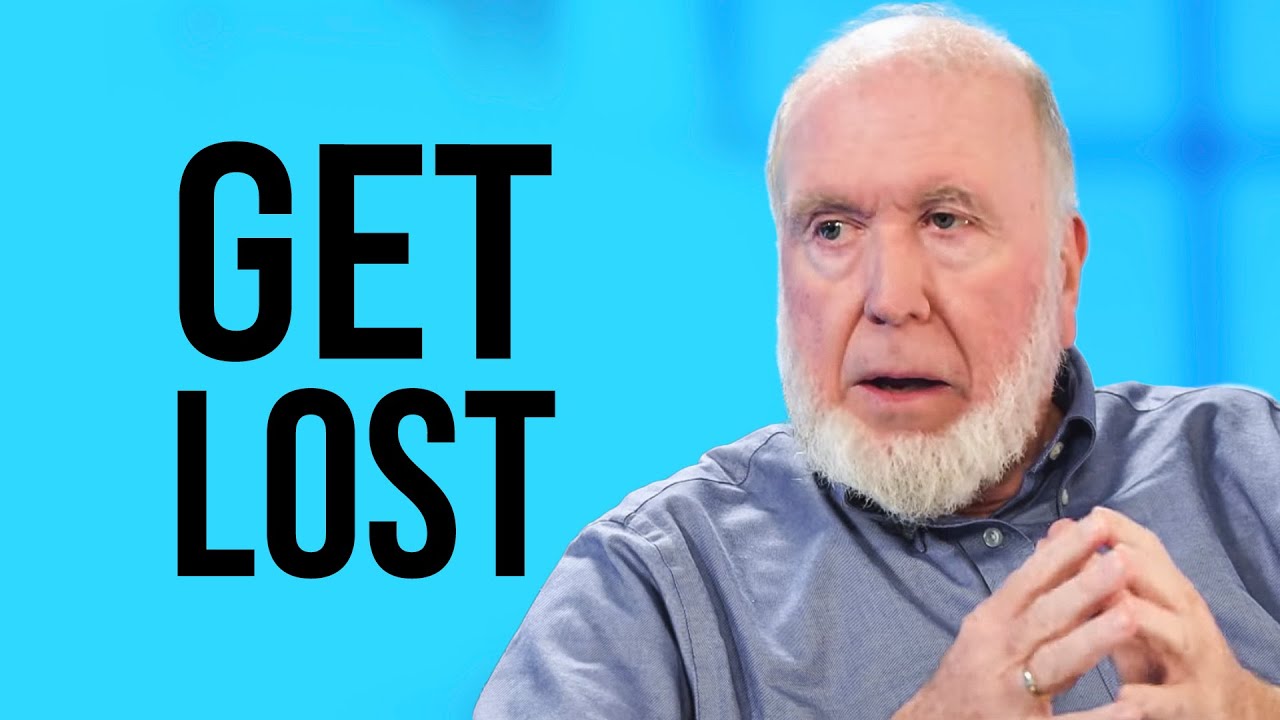
Kevin Kelly, a legendary futurist and co-founder of *Wired* Magazine, argues on Impact Theory that human potential is best realized not through premature optimization but by embracing inefficiency and failure. Drawing from his unique background as a college dropout who spent nearly a decade traveling Asia photographing disappearing cultures before becoming the gravitational center of Silicon Valley culture, Kelly asserts that one cannot be 100% efficient in science or innovation; if an organism or company is perfectly adapted to its current environment, it risks being stuck on a "false summit" when larger opportunities arise. He illustrates this concept with the example of Olivetti, which optimized mechanical typewriters only to become obsolete against word processors. To avoid such stagnation, individuals must constantly test themselves and go wider in their skills rather than over-specializing early, ensuring they remain adaptable as landscapes change. The path to finding one's true voice involves a deliberate process of unlearning ingrained patterns and accepting the role of being a perpetual newbie. Kelly emphasizes that while specific technical skills will inevitably become obsolete due to advancements like AI and robotics, the meta-skill of learning how to learn is paramount. He references his own journey from photography in Asia to founding nonprofits like the Long Now Foundation and the Rosetta Project as evidence that there is no difference between inventing a life path and discovering it; both require active creation rather than passive waiting. This mindset requires comfort with failure, viewing each unsuccessful experiment not as a defeat but as an advance in knowledge, much like Thomas Edison's philosophy of turning failures into data points for the next iteration. Kelly shares profound personal anecdotes to illustrate how living intentionally can reshape one's perspective on time and purpose. In his famous "6 months left" exercise inspired by a religious experience in Jerusalem, he lived as if death were imminent, giving away money and apologizing to loved ones before realizing that even with limited time, the most meaningful actions often involved ordinary things like taking out trash for parents or riding a bicycle across America to visit family. He now wears an "actuarial clock" displaying his remaining life expectancy in days to keep himself grounded against procrastination. This practice reinforces his belief that efficiency belongs to machines and robots, whereas humans should embrace inefficiency through play, hobbies, and exploration, which are the true incubators for new ideas and directions. Looking toward the future of technology, Kelly challenges the prevailing dystopian narratives found in Hollywood and science fiction, urging society to view ubiquitous AI and pervasive virtual reality as opportunities rather than threats. He notes that while every new technology creates problems, it also generates unprecedented solutions, citing the shift from 75% of Americans working on farms a century ago to today's diverse economy where jobs like yoga teacher or web designer were unimaginable then but are now common. The character and governance of AI are not inevitable; they depend entirely on human choices regarding regulation and usage. Kelly concludes that his ultimate impact goal is to increase the joy of learning, helping people remain young in spirit by resisting ossification into rigid expertise, thereby allowing them to fully engage with the vast array of possibilities technology offers for steering their own futures.
Read the full video transcript
You can't be a scientist that's 100%
efficient. If you're a scientist 100%
efficiency, that means you're
discovering nothing new. You're not
making any experiments that fail.
It's through that failure
that we learn.
It's the trial and error. It's the the
error part is hugely important. And so
the challenge for me is that you don't
want to over specialize. You you always
want to be testing yourself and trying
to go wider
to make sure that you are not optimizing
prematurely.
Everybody, welcome to Impact Theory.
You're here because you believe that
human potential is nearly limitless, but
you know that having potential is not
the same as actually doing something
with it. So our goal with this show and
company is to introduce you to the
people and ideas that will help you
actually execute on your dreams.
All right. Today's guest is the
legendary futurist who co-founded Wired
Magazine. A multiple time New York Times
best-selling author, his stunningly
accurate take on the intersection of
humanity and technology have made him
the de facto gravitational center of the
very culture of tech. Silicon Valley
have called his books must-reads and
Hollywood has leaned on him heavily for
the creation of believable futures. His
work deciphering macro trends in
technology cannot be overstated and as
the executive editor and self-proclaimed
senior maverick at Wired, he twice led
his team to winning the prestigious
National Magazine Award for General
Excellence. Additionally, his own
writing has appeared in many
distinguished publications including the
New York Times, The Economist, Science,
and The Wall Street Journal. Pretty
amazing if you ask me for a college
dropout who traded a formal education to
spend roughly a decade roaming the
deepest recesses of Asia photographing
nearly forgotten people and their
disappearing traditions and at one point
making ends meet by running a newsletter
in Tehran, Iran. But this hands-on
approach to life is what ultimately put
him at the center of the then emerging
world of technology. As a rule, he does
not just read about things, he
experiences them and usually long before
anyone else. He was deeply immersed in
the internet by 1981.
He co-founded the Hackers Conference in
1984, launched Cyberthon, the first
round-the-clock VR Jamboree in 1990, and
wrote a treatise on the biological
nature of technology in '94 before most
people even had computers. Outside of
technology, he's also a founding member
of or involved with some of the most
profound nonprofits around, including
the Long Now Foundation, the Rosetta
Project, which is building an archive of
all documented human languages, and the
Last, which is exploring how to revive
or restore endangered or extinct
species, including the woolly mammoth.
So, please help me in welcoming the man
that Tim Ferriss called the real-life
most interesting man in the world, the
best-selling author of The Inevitable,
Kevin Kelly.
That was great.
Yes, it was great. Good to have you.
Wow, what an intro.
Writing intros is
a lot of fun for me. It's where I really
find the guest. Obviously, I'd been very
aware of your work and what you've done.
Um, but like I didn't know anything
about what you were doing traveling
Asia. I didn't know about your love for
photography. So, in putting those
together, I'm really trying to like get
inside what makes you you.
And I would say you've lived a really
atypical life.
What are your thoughts on
building a life versus finding it or
uncovering your passions inside versus
creating them?
I think
there's really no difference between
inventing something and discovering it.
The steps that you take are almost
identical. So, the language is really
not so important. But the main
task that you want to have is to
understand that you have to make it
happen, that you have to uncover it or
discover it that this is something that
is an option for you and even
for people who may not feel as
privileged as I was in growing up
I think that there is far more choice in
how they come to what they want to do
and how they find themselves than they
think at first and it's a long long
process. I think I'm I'm an older guy so
I have a nice big long resume because
I've been around a long time
and so I think
that's the benefit of keep going where
I've been going which is
mostly
trying to find out what it is that I can
do
that only I can do.
That's the real challenge and that
is something that I think takes your
life to figure out.
What I find really fascinating is that
you talk about process and the notion of
doing things that only you can do but at
some point it's
having to learn to learn. It's getting
good at something. It's investing the
time to build a skill set and what did
that look like for you
especially when you did it it had to
have seemed so counterintuitive just to
drop out of college after a year and I
think you said one of your only regrets
in life is that you actually went for a
year.
Exactly. So how is that a regret and
then what did it look like to go
explore? Yeah so so um
uh you know I grew up in the 50s and 60s
and um
there was a little bit more of a sense
of
a plan to life. There was a sequence a
ladder that you went through an
expectation.
There weren't things like gap years or
internships.
You were kind of just a little bit on a
theme ride where you were just going to
go to the next station
and so
I had a kind of a more of a binary
choice of you go to college or you
don't. Um dropping out was was not as
cool as it is today. At the time, this
was a little bit more of like
defeat than it was
an you know an exercise in self-
expression.
Um
so I I dropped out um
after instead of studying for my finals,
I was reading um
Ayn Rand and uh Atlas Shrugged and The
Fountainhead where there was this
architect who
was doing his thing and I was
susceptible to the Whole Earth Catalog
which said you should basically invent
your life.
Um and I said I I decided to to try and
do that to
try and see how far I could go in
you know um trying to assemble something
that seemed to me to be worth giving my
energy to. There was very little sense
of success at that point. You know, in
1969, 1970,
um
the prospects of not going to college
was mean you were going a different
tract.
Right? This was you were you were not
ever going to be rich, you were not ever
going to be really successful, but that
was okay with me because
I just felt that um
it was kind of like the
Henry David Thoreau idea that you would
find yourself and that was
enough of an achievement in life if you
could find yourself. And so there was a
sense of like I'm going to do things
because I was passionate about it and I
was passionate about photography. I
decided to follow that where it went
with no expectation that that would ever
be a career or lead to any kind of
success.
And so I have to say that, you know, it
looks kind of cool in retrospect, but at
the time it's kind of like, you know,
I'm a kid with no prospects and
no money, lot of time.
Um but that actually in retrospect was
probably the best place to be.
One of the things that I cling to, I
don't know, because I didn't have the
fortitude to go against the grain like
that when I was younger, when I find
people that did, I really want to
understand. Like because I think people
watching now live in a different world
where they are going to have to create
their own life. Yeah. But they still
have the familial pressures of following
a traditional track. So, how did you
have the fortitude to look at your
parents who were saying, "Think of the
example you're setting for your
siblings." Like and and face that down
and Well, I mean, I I have to say, so as
a as a kid even, I I was a little
I was always very self-motivated person.
So, as a kid, I had a I built a
chemistry lab in my basement, I had a
nature museum as a little kid, and I had
kids in my neighborhood recruited
collecting stuff for me. And so, I had a
little bit of like I was doing things on
my own to begin with. I was a maker in
that sense. At a time when maker wasn't
really, again, cool or
uh admired. In the 1960s and even the
'70s, if you told someone that you were
working at a startup,
that was a way of saying you were
unemployed.
The whole point that people wanted to do
was to go work for a big corporation, go
through college, and and and arrive at a
place that had a brand name. And so,
um
so, my efforts to kind of do this again,
there was no big plan. It was it was
more temperamental
um uh orientation that I that I liked to
be motivated by the things I was
interested in, and I sort of
didn't care about success
at that time. That was not
I would never describe myself as a
successful person when I was younger. I
was influenced in kind of finding me,
and maybe that was my measure of
success, and I didn't feel I had found
it. So, I was on a
I was on the process, but I I never have
have you ever told anyone that I was
trying to be successful? That was not in
my vocabulary.
Um and I think that's maybe a more
recent
framing of things
where
we can actually tell people that you are
successful because you have found
yourself. That it's independent of how
much money you make. It's independent of
how much how many followers you have.
It's really about whether you have come
to
find out what it is that you can
contribute
what impact you can have that no one
else will have.
What I love about your story is looking
back on your life knowing how successful
you become and how you find your way to
the absolute core of what most people
think of now is like the the
center of coolness. Right. Technology,
the center of wealth creation,
technology, the center of America's
power, Silicon Valley. Like you've got
this concept of um premature
optimization.
Right.
Which I found so interesting.
Mhm. What is it and how do you think
that helped you?
So the the concept of premature
optimization is a very technical fancy
term that comes from biology of all
places. And um
biologists like to think about the
evolution of a species of an organism
over time as what they call hill
climbing. So
you can imagine a picture in your mind
of a landscape with hills and stuff that
over time a species is sort of climbing
the hill and then at the top of the hill
is maximum adaptation. It's kind of like
perfection. It's sort of like the
giraffe in the savanna or the you know
starfish underwater who has found the
perfect place to be for that
environment. So they are
climbing the hill. And the problem is of
course in the real world of evolution
those hills are going up and down.
They're changing as one organism adapts
to another, there's co-evolution going
on, which means the hills are changing.
And so, what can happen with an organism
is that it becomes perfectly adapted to
that hill. It's on the top of the hill,
the summit, is optimized.
But there's a bigger hill that's growing
up over here because things have
changed, and suddenly they're not on the
bigger hill anymore. They're on a
false summit.
They've optimized prematurely cuz they
can't get to the big hill.
And that's true for companies.
Companies like Olivetti, the Italian
typewriter company, could optimize
typewriters, but then the word
processors came up, which were even a
bigger hill, and they're stuck.
They're prematurely optimized on
mechanical typewriters.
And the challenge is for organisms, for
organizations, for individuals is that
the only way you can get up to the
bigger hill is to go down.
Is to go back down that
devolve, become less perfect, become
less optimized, become less profitable,
what all the things that you don't want
any company or person to do. And so, you
have to have this period where you're
kind of going backwards,
letting go. And so, um
the issue always is that you, as you're
climbing the hills, you always want to
be surveying this landscape more and
more to make sure that you're not
prematurely optimizing, that there
aren't bigger,
you know, mountains to climb.
Or if you're skill-wise, that you are
not perfecting a skill that's going to
be obsolete, that you are going wider
and wider as you climb up so that you
don't get stuck on the false summit. And
so, the the the the the challenge for
me,
um and for others in this world where
things are changing so fast, is that
you don't want to over-specialize. You
you always want to be testing yourself
and trying to go wider
to make sure that you are not optimizing
prematurely.
I love that so much and I really hope
people are listening to that.
And that certainly has been true in my
life. So I start my entrepreneurial
journey anyway in technology, discover I
do not enjoy that,
start over after almost a decade in
nutrition, have massive success, after
almost a decade again transition out of
that and into media. And so always it it
is this starting over. And you've got a
powerful
notion about how useful and powerful
unlearning is. Right. What does that
process look like? How do people do that
in their life? How do they stomach the
downturn and believe that they can go
back up? What's that process? Yeah, so
so so part of the general lesson I would
say from the kind of digital firmament
that we're in right now, this kind of
constant upgrading,
the speed and acceleration of new
things, is that all of us are going to
be perpetual newbies. We're all new.
You know, the the the the millennials
these days kind of rub their hands, "Oh,
we're digital natives." It was like,
"Yes, this year."
But in 10 years from now, you're going
to be a newbie like everybody else and
have to relearn everything and unlearn
what you already knew. And so there is a
sense in which constant lifelong
learning is the main node that you have
to be in. Um and that
part of learning that that people who
study it understand is that a lot of it
is is unlearning what you already knew,
kind of forgetting or trying to overcome
ingrained patterns of thought
previously. So you have to sort of like
you have to think differently about
things.
And by the way, that's one of the
reasons why I travel a lot because I
find that there's almost nothing that
forces me to unlearn and think in a
different pattern than traveling in a
real sense of kind of being on the
ground and and confronting things that I
don't understand
that everybody else understands. You
talked about the the shifting
peaks and unlearning, but you've also
talked about, okay, in a world where all
this stuff is moving,
the thing you have to get good at is
learning to learn and that really
learning a specific skill may not be as
useful as it once was. So, what can
people that are in the thick of the job
market now that are going to get slapped
around by robotics and AI? Like how
should they be thinking? So so
you know, a very common question really
related that a lot of parents ask me is
oh yeah, I hear all this stuff is coming
AI and the VR and what should my kid be
studying in school? And I think really
there's no language that's going to
survive very long. There's very few
even skills that aren't going to be
obsolete by the time you graduate. So
most of the jobs that you will have, I'm
talking to somebody maybe who's in the
high school right now, are probably jobs
that don't exist right now. And so then
this idea of well
the only really skill you want to learn
in say school is the meta skill of how
to learn. And what's really interesting
to me is that
that's almost taught nowhere. And it
turns out that um
almost nobody, including me,
really knows how we learn ourselves. So
it's not just how to learn how to learn,
but how you learn best how to learn.
That's a high bar. And to do that is not
going to be something you're just trying
around. You need to be You need to have
teachers. You need to be tested. You
need to be scored. You need to practice.
There are lots of different ways to
learn, so each variety you have to
test yourself and become better in that.
And so so to actually learn how to learn
would require
would require years of discipline
improvement. And we don't have that. So,
that means that neither I nor you
really have have learned how to optimize
our own learning. But, that should be
the general common thing that you're
going to be taught in school and that
when you graduate
you have a meta-skill of knowing how you
learn and whatever kind of
problem comes up, you at least know your
best method for learning that.
I think that idea is so powerful and one
of the coolest things that I came across
while I was researching you is the book
that you referenced Art & Fear. Yeah.
And pottery class. Tell us that cuz that
hit me like a ton of bricks.
So, so the idea of about art is that um
only
flawed people make art and that um
the way that you
want to do art
and the only way you're ever going to
make great art is to do it a lot.
And this is true for science, for
innovation, for business is that you
have to make lots of it. You have to do
it again and again and again because
um
that's really the only way to to get to
these optimization points um is is by
doing again and again. And and the great
example
to kind of prove this point was this
professor art professor who had a
pottery class. And he gave his students
two choices to be graded. In one choice,
they could submit
one or two pieces
and get their grade evaluated on those
one or two pieces. They could put all
their effort into making these as great
as they could
um and they would be graded on the
worth of those two pieces. The other one
he says, you can just do it by weight.
I'm going to grade you on poundage. How
many pounds of
stuff that you make every year or by the
end of the year. And he said, what the
the remarkable thing was that at the end
of the year, almost invariably, the best
piece came not from the people focusing
on the few, but the people who were
making lots of
the pieces.
Okay, so the best piece will always come
out of that lot. And I think there is
lots of lessons for us in culture and in
business.
And just in the sense that you have to
kind of come back and repeat and repeat
and repeat because you don't know what
works. You whatever you're going to do,
you just have to do it lots of it. And
that kind of goes back to the 10,000
hours of practice,
you know, this idea of um
you know, mastering, becoming a master
of by doing it a lot of times.
And what I think makes that story so
powerful is putting you in context a
bit. Wired, certainly when you were in
charge, wasn't so much about the
technology itself as it was the um the
culture around the technology, which
then makes me think how much of Wired
was influenced by this period where
you're finding your voice, right? So,
when I think about somebody watching
this and I think about how many of them
feel lost and they have no idea what to
do with their life. Your story is this
incredible beacon of there's a process.
There's a process. Don't optimize too
early. Go get lost. You've said that um
optimization is overvalued, success is
overvalued, uh wealth is overvalued. I
mean, you've got like this whole list of
all the things that we all think are
like the things we're supposed to strive
for. So,
what does it mean to find your voice?
Yeah, yeah. You know, I mean, I'm taking
to heart cuz I have my son is just
graduating from college next in May,
right? And um he's been working very
hard. He you know, he's good grades all
the way through school. He always worked
hard, studies hard. He has internships
this every a
And so, my advice to him graduating was,
"Look, you need to goof off for a couple
of years. Don't try to get a job. You
know, live at starvation wages. Just
have enough money to have beans and
oatmeal, whatever it is. And goof off.
Just play around. Imagine you were a
billionaire, you know, and you're taking
a sabbatical or something. Just
play a little bit. And um
I I I
I I I I think um part of this finding
yourself is playing
with no goal. That's what play is. It's
you're you're busy, you're doing stuff.
The reason why the young is always
discovering new things is they have so
much time to waste. I'm a big believer
in in inefficiency.
I think efficiency is for robots.
Efficiency is for the AIs and the and
the robots, the machines. And and I
really think that people should
should be inefficient, deliberately
productively inefficient, playing
around, trying stuff,
mastering some video game that takes 50
hours just because it's fun. I think
that's where the
the new ideas will come. That's where
the the the the new direction. So, so
there there there is there is a sense in
which I really value that kind of um
goofing off, playing, trying, hobbies,
um exploring just because you can.
Um and if you read the biographies of
anybody who's successful, they all have
that period of time in their lives when
they were lost, didn't know it. So, so I
embrace that sense of being lost. I love
that. And I really think that people
don't take the time to do that. And I
want to put it in the context of
innovation. So,
you've talked really powerfully about
this. What's the secret to innovation
and how does play and getting lost and
taking chances and failing all feed into
that? Yeah, so so so the um
the first thing I would say about
innovation this is with respect to my
current interest in artificial
intelligence and what we'll do as humans
when we have lots of AI.
Um the all the processes that we most
value, like being creative or exploring,
art,
even human human relationships, are all
inherently inefficient.
Um you can't be a scientist that's 100%
efficient. If you're a scientist 100%
efficiency, that means you're
discovering nothing new. You're not
making any experiments that fail.
It's through the failure
that we learn.
It's the trial and error. It's the the
error part is hugely important. The
really big innovations are always coming
from outside. And so that sense of
kind of like what I want to
nurturing the edges.
Trying to
be at the edge of things, which again
is not the natural inclination if you
want success.
You want to be at the center. You want
to be where it's happening. You want to
be in the the room where it happens. But
in fact, you don't want to be at the
room. You want to be at the edges
because that is where
it's going to happen. However, the edges
is where all the failure happens, too.
Right? So in order to
support innovation, you have to be
comfortable with failing. You have to be
comfortable with things not working out.
You have to be at ease with the long
term saying,
"I know that most of these are not going
to to work out, and I'm going to just
accept it." That was the Thomas Edison's
great insight when he made the first
idea factory, which was that most of
these are going to fail, but
each each time I make a failure, I know
something
that I didn't know before, and that's an
advance. And so I think part of the
innovation process is
understanding that most of the time it's
going to fail, that that is the price
that and you have to be really
comfortable with trying things that
don't work.
So, putting that into your belief that
you're always looking for something that
only you can do. What does that process
look like for you? And quite honestly,
why is it important to only do something
that only you can do?
It's a really fair question. So, um
I thought that I think there's kind of
like stages that a normal person
um who's in say the the workforce
entails. And the first one that I was
in, most people are in, is when you get
your first job, you were really
concerned about doing the job right.
Doing it well.
Making sure you don't screw up.
And after you accomplish that and you're
at ease with that, you then say, "Well,
you know, I'm
I'm good at this now. I think I'd like
to go on and start to do things that um
are fun.
Okay? And then um
you can do that. And then after a while,
maybe well,
they're fun, I can do them well, and
they pay a lot.
So, that's like success for most people.
It's like, "Okay, that's
what How can it be better? I have
something that I like to do, I get paid
to it, and I do it well."
And then what happens though is that
there going to be maybe more
opportunities for you to do something
well and get paid and have fun.
Um and then you you need another
criteria to decide, "Well, how do I
decide what I'm going to do?" And the
answer there is that um
you really want to look for the things
that no one else is going to do unless
you do them.
So, in other words, if someone else is
going to do it, you don't have to do it.
And so, for me, that came from my
experience at Wired that this insight
where
as an editor, mostly mostly what I'm
trying to do is
give assignments to writers to write
stories that I come up with.
And um often times, I'd have an idea for
a story
that was really good, and I couldn't
sell it to any any writer.
I said, "Okay, it must have been a
stupid idea."
But then the idea would come back a year
later
and I would try to give it away
to someone else and
nobody would take it. They would say,
"That's not a very good idea." And I'm
thinking, "I thought it was a pretty
good idea. I guess not." And then it
then it go away.
And then if it came back a third time, I
would try it.
And then I'd say, "You know,
this is a really good idea. I can't get
rid of it. I can't kill it. No one else
wants it.
I have to do this idea." And those are
always the best ones for me because it
was obvious no one else was going to do
it. I couldn't even give it away. I
couldn't even pay people to do it. And
so
those became the best
stories. Those became the best writing
because
um there was no one else who was going
to do that.
I think that idea makes so much sense
when people understand about you that
you use I know I'm going to die as a way
to like razor sharpen your
decision-making.
Right. Um two things I find utterly
fascinating. One, you have the clock
that based on actuarial tables, if I'm
not mistaken, counts down the number of
days that you're expected to live, which
is unnerving, I think, for most people.
Futurama based an episode on your clock.
Very interesting. But the thing that
really captured my imagination was when
you decided to live truly live like you
only had 6 months left.
Right. Right. What was that? Why did you
do that first of all and then what was
that experience actually like?
It's kind of complicated about why I did
the only 6 months to live. Um
I would do better by referring listeners
to the one of the first episodes of This
American Life podcast where I told my
story for the first time. It has to do
with a religious experience in Jerusalem
where I had an assignment to live
as if I'm going to die in 6 months. And
I was very healthy 20-year-old. I knew
that it was very unlikely, but I also
knew that I absolutely had to
do this.
And so I took it seriously and I went
through the whole thing, what would I do
if I had 6 months to live and I did
that.
And it was I was surprised by what I
did. But the important thing of course
is that I didn't die and I came back and
I had a rebirth on that
on the moment when I woke up after the 6
months cuz I was fully 100% prepared. I
did everything, gave my money away, all
this other stuff and I was totally
prepared for it. And um when I woke up
the next morning it was like I was
reborn. It was like I had my entire life
in front of me again. And so I think
that was the part of the exercise. But
the thing was is I kind of I
have already kind of rehearsed that and
tried to live since then without any
regrets with
trying to minimize the regrets that I
would have
when it came to die so that I would not
have
things to repair. Part of what I did in
preparing for that was to go back and
try to make up, apologize, do all the
kinds of things that you would like to
have done if you were going to die. And
now I try to do that kind of like as I
go along. And um I have a clock
to remind me of
you know, to kind of focus my efforts
during the day
because um if you it translates the time
left that I have into days.
Okay, again these are just based on
actuarial table. Maybe I'll live longer,
maybe I won't but that'll be a bonus.
When you look at your future of your
life in days,
there aren't that many days.
And um
I find that that helps me decide, you
know, what do I want to do today because
I have, you know, 7,820 days which do
everything I want to do. That's not very
much.
One thing that I found really
interesting going into that story was
originally you were like, oh I the the 6
months to live story. I want to go back
and spend time with my family. You do
that but after a couple months you
realize you need to do something
different. What was that process? What
did you end up doing?
Well, so so um
I'd spent a lot of time in Asia
traveling all around Asia at that point,
but um
when I had 6 months to live, part of
what I wanted to do was to visit my
brothers and sisters who lived across
the US and had never seen the US.
So, I rode my bicycle from San Francisco
to New York via Idaho and Texas and
Indiana. It was it was really a kind of
a 5,000-mile
bike ride. Whoa. And um I just bought a
bicycle, a random bicycle.
I had no training.
I had no special equipment. There were
no other bicyclists
riding cross country in that year, in
the '70s. I mean, I was by myself. There
was there wasn't again, there wasn't
cool to be riding bikes. And um
I was I was,
you know, having a last visit with my
brothers and sisters, and then I decided
that I would I really wanted to kind of
like
do ordinary things
um for my parents. Um my mother had a
back problems at the time, so I wanted
to kind of like take out the trash for
her.
It was like I was really surprised by
that because I thought if I had 6 months
to live, if you'd asked me earlier, I'd
say, "Oh, I'll climb the Everest, you
know, I want to go um
you know, caving or kayak down the
Amazon." But actually,
I wanted to do the ordinary things.
That's really interesting.
All right, I can't have a renowned
futurist on the show and not ask, "What
do you think is going to happen in the
future? What does the future look like?
How afraid or excited should we be?
And what should we be thinking about?"
That's I like that one.
Each new technology, every new
technology will create almost as many
new problems as it does new solutions.
And so
So, we're going to hear about the
problems that all these new technologies
have, from social media
to AI, to VR.
And and I think I
My job is to really talk about the
unexpected opportunities
that these are going to bring. Because
everyone else is going to be talking
about the unexpected problems that
they'll have.
And part part of my challenge is that um
Hollywood and science fiction writers
today almost universally
are
painting and promoting dystopian
stories. How terrible it will be and
there's not one single movie that I can
think of or even a science fiction story
where it depicts a future in the near
future even that I want to live in or
that you'd want to live in.
They're all dystopian and and and
horrible because they make better
stories. The thing about storytellers is
they have gotten so good. They they
understand that the that a happy future
is boring.
And so
they're all depictions of terrible
futures. And so our all our images about
robots and AIs are all tainted with this
idea that they're going to be terrible.
And what I'm trying to do is to present
an alternative future that has
ubiquitous AI and pervasive virtual
reality and total sur- tracking.
That's a future that we want to live in
because I think that's where where we're
going. I think we will have a place that
is better than today
and even better if we had a vision that
we're working towards. And so um part of
what I would talk about now, how we
should feel about it is that we should
be excited by the whole new
opportunities, most of which are going
to be very hard for us to even visualize
right now.
Just as um
150 years ago
when there were 75% of Americans were on
farms and now there's like less than 1%.
If you went back in a time machine to
those farmers and say, "Here's your pink
slip because
your grandchildren not none of them are
going to be on this farm. And they would
say, "Well, what are they going to do?"
And you'd say, "They're going to be
mortgage brokers and web designers and
yoga teachers." And they would they
would they would say that's ridiculous.
It's That's ridiculous. And there are
they are ridiculous in a certain sense.
And so, most of these jobs that are
coming are also going to be totally
ridiculous to us now. They're going to
sound like implausible.
And I think um
but but but but most of those
opportunities are are going to be are
going to surprise us. They're going to
be new. They're going to be hard for us
to visualize right now. But, I think we
can try to prepare ourselves for those
opportunities. And that's what my
thing would be.
It's inevitable that artificial
intelligence will come. It'll be
pervasive.
It's not inevitable what kind of AI we
have. Who rules it? Who owns it? What
governs it? What the character is? Those
are completely up to us.
We have no choice. The AI is coming.
It's inevitable. We have a whole lot of
choice in what kind, how it's regulated,
etc. And so, it's by engaging it though
that we can steer. It's by actually
using it that we actually can find out.
So, we don't want to prohibit it. We
want to be slow to regulate it.
We want to embrace it and use it as a
way of steering it.
All right, before I ask my last
question, where can these guys find you
online?
My initials KK.
So, I have a website kk.org. My email is
kk@kk.org.
I tweet kind of.
Um
at Kevin Two Kelly.
Um Facebook I'm the Kevin Kelly with the
laughing face.
Uh there are a lot of Kevin Kellys. By
the way, I have a newsletter that I'm
very proud of. Every week we send out
six recommendations of cool stuff to
people. It's called Recommendo.
Kind of like really six brief things of
great things to listen to, people to
follow, movies to see, destinations,
places to go, tools to use, apps, books
that I've read.
So, it's called Recommendo. Try that. I
will definitely be signing up for that.
Um
final question, what's the impact that
you want to have on the world?
Yeah, so
what I'm trying to do is I'm
trying to
um
increase
learning, increase joy of learning,
helping people to
um
stay lifelong learners.
And um
I I my
my sermon is about necessity of
remaining young, playing, trying, and
learning. And I think that um
if I had an impact in
increasing
giving people confidence that that's
something that they can
indulge in, something that they should
devote resources to,
that they should be slow to ossify what
they know, maybe slow to become expert
in something, that they would take more
time
to try stuff, to explore and play.
And that's
and to embrace the technology that
allows and increases our choices and
possibilities.
I love that.
Kevin, thank you so much for being on
the show.
That was incredible.
Thank you. Absolutely.
Guys, I'm telling you right now, this is
one of the most incredible examples of a
human being that really found his voice,
that went on a journey of discovery,
cultivation, creating something in
himself. And the fact that he does that,
finds something authentic, is always
trying to focus on what he can do that
other people can't do, what he loves
that it doesn't matter whether other
people respond to it or not. It speaks
to him and he wants to indulge in it
more. In doing that, he's
not only become insanely successful,
he's really become meaningful at the
center of something that all of our
lives are built around. It it's
incredible that that tale is a dropout
hippie who wandered around Asia for
almost a decade taking photos of
beautiful things and heartbreaking
things and uplifting things. I mean,
it's just incredible and if you ever get
the chance, just type in Asia Grace into
a search engine and you will get to see
some of the miraculously beautiful
photos that he took with those 500 rolls
of film that he carried on his back. It
is a journey of human becoming is the
easiest way that I can say it and you
can swap out in your own life.
Technology was what ended up being his,
but yours can be anything, but to see
that it is a process,
a beautiful process of not becoming a
master too early. If you heard what he
was just saying, to not think about
becoming a master, not overly focus on
becoming successful and he said some of
the people that he respects the most in
life as they approach 70 are still
asking themselves the question, "What am
I going to be when I grow up?" And he
said that life is about answering that
very question. Guys, dive in, you will
not regret it. It will shape your life
if you let it. All right, if you haven't
already, be sure to subscribe and until
next time, my friends, be legendary.
Take care.
Kevin, that was amazing.
Hey everybody, thank you so much for
watching and being a part of this
community. If you haven't already, be
sure to subscribe. You're going to get
weekly videos on building a growth
mindset, cultivating grit, and unlocking
your full potential.