The Pillar of Elisig; A Cultural Biography from Prehistory to the Present
Watch on YouTubeVideo summary
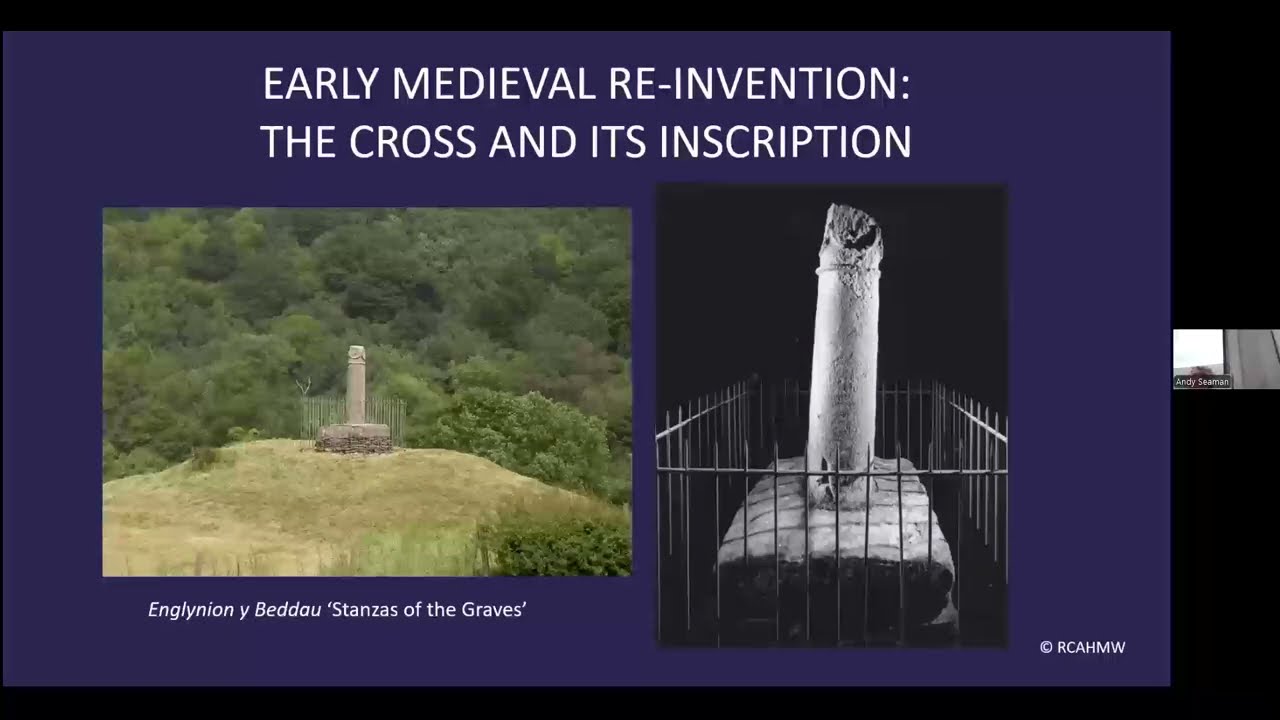
The Pillar of Eliseg stands as a testament to Wales's layered history, situated near St Asaph at a strategic crossroads where east-west and north-south routes converge. Archaeological excavations between 2010 and 2012 uncovered the site's deep roots in prehistory, revealing an Early Bronze Age burial cairn from around 2900 BCE containing cremated remains of up to six individuals, which was later overlaid by a stone mound platform. In the early ninth century, King Cyngen ap Cadell reinvented this ancient landscape by erecting an inscribed cross shaft to legitimize his dynasty and claim descent from Roman figures like Magnus Maximus and Vortigern; the monument's elevated position on a glacial spur likely served as a royal assembly or inauguration site where military victories over the English were celebrated alongside connections to early Welsh saints.
As centuries passed, the pillar's significance shifted with changing ideologies and political climates. By the twelfth century, it remained a notable landmark associated with local gentry and nearby castles like Dinas Bran, though its spiritual role was reinterpreted during the Reformation as superstition rather than piety, leading to partial destruction in the 1640s under parliamentary iconoclasm orders. The eighteenth century brought another radical transformation driven by Romanticism and Grand Tour influences; under the patronage of Sir Watkin Williams-Wynn, archaeologist Trevor Lloyd excavated parts of the mound and re-erected the pillar on an artificial plinth with a new Latin inscription that framed it as the grave of Eliseg rather than acknowledging its prehistoric origins. This era saw artists like Richard Wilson and J.M.W. Turner depict the site within picturesque landscapes influenced by Gothic literature, while scholars later began to restore its early medieval importance in the twentieth century after decades of neglect following industrialization and railway expansion that eroded earlier romantic views.
The physical preservation of such monuments has always been challenging due to highly acidic soil with a pH between 3 and 4, which prevents artifact survival beyond stone structures; excavations have yielded only fragments like broken bone needles rather than complete items because organic materials decompose rapidly in these conditions. Historical records indicate that cross-heads were often removed as building material or destroyed during iconoclastic acts to minimize waste on treasured monuments, a practice exemplified by the White Cross in Tarvin which was brought down by soldiers under Cromwell's side before its fragments were rediscovered later. While graffiti on some bases shows individuals attaching broken pieces with their initials, indicating ongoing maintenance needs for dry stone construction, significant scholarly reassessments began in the 1870s when Cambrian scholars accepted longer prehistories, moving away from conservative approaches that sought to shorten historical narratives by focusing solely on early medieval periods.
Ultimately, the history of the Pillar of Eliseg illustrates how each phase of its existence reflects contemporary social needs, evolving from a tool for legitimizing rulers and asserting royal propaganda to a subject of romantic fascination and finally an object of detailed academic study under Cadw guardianship since 1937. The site's journey through various reinventions—from being viewed as a potential assembly ground in the ninth century to becoming a classical obelisk within Gothic literature by the eighteenth, and eventually a scheduled ancient monument restored after turfing—highlights the complexity of interpreting monuments shaped by successive cultural narratives. Detailed study of such sites not only enhances public understanding but also underscores how archaeological landscapes are continuously reshaped by excavation findings, industrial changes, and shifting ideological perspectives that transform our perception of Wales's past from prehistoric burial grounds to symbols of national identity.
Read the full video transcript
Thank you very much. Um I'm just going
to check that we can go on to the next
slide. Um I thought I better start with
um the location just in case uh there's
anybody who doesn't know where the
pillar of Elise is. You can see it's
quite close to San Gothan and it's very
close to Valer Cruises um Cersian Abby
which we'll come back to in a minute.
And you can see on the right here the
view up the Nant Egglusig Valley because
one of the important aspects of the
pillar of Elise is that it stands very
close to a junction of roots. What we're
here doing is looking northwards up
towards the um pass through the
mountains Buloyonant as it's called and
down into the veil of Clod. So it's um
in a very um important location on that
north south route from the D up to the
north Welsh coast and but it's also very
close to an east west crossing just
south of this point which runs kind of
along the north bank of the D and this
strategic location is absolutely crucial
to the biography of the monument.
>> That's a chance of dimming the lights.
We can try if um Yeah, we can take them
out completely.
>> You want to?
>> Yeah, we can. Whoops. That's
>> How's that?
>> That's f. Okay.
Um so what I'm going to be talking about
today is um relates to project Alys
which was run by myself and Gary
Robinson and Howard Williams um between
2010 and 2012 which was the actual
excavation and as you can see it was um
uh funded by a wide range of bodies
including the society of antiquaries.
And um the aim of the excavation, the
aims of the excavation,
the mound, as you can see in the left
hand side here, was in very bad
condition at the time that the um
excavation took place. And we were
allowed to investigate where there were
kind of holes on the side of the mound,
but also to re-exavate part of the
antiquarian intrusion which was made in
1773.
And you can see um that part going on on
the right hand side of your screen. And
I'll come back to the significance of
this um later on in the lecture. Um the
writing up of this project which has
grown immensely um uh is coming to an
end now and we hope for publication with
University of Wales Press in the not
tooistant future.
So I thought I'd just start by asking
well what is writing a cultural
biography? Why are archaeologists kind
of interested in this? Well, basically
theoretically this goes back to um
Richard Bradley's iconic article um
seminal article in 1987
um called time regained the creation of
continuity and also a volume of world
archaeology edited by him and Howard
Williams in 1998 called the past in the
past and from this I suppose the concept
that monuments could be reworked and
reinvented in new ways over time to
support new ideologies was coming into
being. And this was kind of built on by
Chris Gost and Ivonne Marshall in
another volume of world archaeology in
1999
on the cultural biography of monuments.
And with this we have the idea that a
biographical approach of an artifact or
a site can address the way um social
interactions involving people and
monuments create meaning and how again
this meaning can be changed and
manipulated over time. And this has been
applied to other pieces of early
medieval sculpture, notably the Bradborn
cross in Darbasha and um uh the Hilton
of Cadbol uh cross slab in uh northeast
Scotland.
But also we see the concept of what um
Cornelius Haltorf and Howard Williams
have called an accumulated landscape. In
other words, you start with something
simple and other things are attracted to
that particular monument. And if you
could just bear these concepts in mind
as I carry on, I think um that will help
to explain the approach that I've used.
Now, basically what I'm going to do in
this lecture is to examine these changes
and reinventions
of the pillar of Elise and the mound on
which it stands over time. Um, and I've
only got time to look at some of the
major reinventions.
So, I'm going to look at the prehistory
and at the early Bronze Age Ken, burial
Ken. Then I'm going to look at the
reinvention of the monument in the 9th
century. um by Kungan um or Conan um the
prince of Paris who died in 854
and its probable function as an assembly
and royal inauguration site at that
time. Then I'm going to look part at its
reinvention of the monument as part of
the monastic landscape of Valer Cruises
Abby gives its the cross gives its name
to the Zersian abbey in the early 13th
century. Then the destruction of the
cross probably during the civil war and
as a result of that antiquarian
recording. Then its final major
reinvention
um with the excavation and restoration
of the pillar of Elise in the 1770s as
part of the creation of the picturesque
landscape of the veil of Langautlin.
I'll briefly allude [laughter] if I have
time to the row about prehistory which
stems from this monument in the 1840s
and to its coming into state care and
guardianship.
So let's go to the origins of the site
immediately and um the excavation you
here you can see the major um uh uh
trenches that we dug um revealed a
complex monument
which had two major phases. And what you
can see on the left here is the platform
uh can and curb which was revealed in
the trench nearest to us here. But in
the other trench we found um once we'd
removed the antiquarian intrusion fill
we found two um uh kisss both with
cremated bone in in them. one very small
one which you can see over there at the
top which had in fact been disturbed by
the antiquarian intrusion but there was
enough to get radiocarbon dates from
what remain and then a major kiss which
was set behind the curb um on the on the
top right there and that is kiss three
and this was the largest burial kiss
with cremated bone that has ever been
found in Wales. And it consisted of um
uh at least six individuals in two
separate phases of burial. They were
probably buried in bags and um uh which
were tied by um uh bone pins.
Now um in the second phase the flat
platform Ken with its curb is raised
into a mound again of stone and you can
see the two different phases here on the
left and um a anotherist which we
excavated was set into the upper part
the second phase of the monument. Now
unfortunately this only had token uh
cremated evans evidence in it and it was
not enough to get a radiocarbon date. No
radiocarbon date was possible but
clearly it must be later than the
earlier ones. And um I just wanted to
show you this because you can see that
the lining of this large uh uh um kiss
is is made of mud stone. So it's
decorated with these mudstone flows and
um that was evidently intentional in the
way that the person or people were
buried in this kiss.
And these were the finds from the
excavation. Not very many as you can
see. You can see the bone pins which
probably uh fastened bags um from uh the
two deposits of cremated bone in um kiss
2. We also had animal bones that had
been cremated and also the knife on the
left there was in kiss one. The um
little other small um early Bronze Age
flint um came from somewhere else in the
mound.
Now the radiocarbon dates, we were able
to get radiocarbon dates from KISS one
and radiocarbon dates from KISS 3. And
these provided us with an early Bronze
Age date, very common for this kind of
monument. Um, and uh around sort of
2,900
um uh BCE.
So um uh this is the Bronze Age um uh
beginning if you like of the site and um
there was a um Howard Williams and um uh
Mar Marietta Flores did a survey of um
the GIS survey of the landscape through
time which is published in medieval
archaeology in 2017
and this raised the question as to what
extent there was a ritual bronze age
landscape in the prehistoric period and
one of the things that made us raise
that question is here's the pillar of
Elise and down here is an aerial uh view
here you can just about see what is
probably an early mo um an Bronze Age
ring ditch and um the ring it. We were
not able for reasons of agriculture to
investigate sites other than the pillar
of Elise in the middle uh you know in on
this site. So um it's very tantalizing
to have this likely renditch and not to
have been able to investigate it.
So we go on now to the second major
phase in then reinvention of this
monument in the 9th century um AD. And
essential to um understanding this is um
the verses of England bevi the stanzas
of the graves.
Now, um it's been shown in a recent book
by Patrick Sims Williams that um the
stanzas of the graves are 12th century
or earlier. It used to be thought that
they were 9th or 10th, but now we can't
be so sure. And that the stanzas of the
graves are basically um short verses
about where
early British heroes, mythical heroes
are buried. And this is thought to be in
prehistoric monuments.
And it's this idea of British heroes
being buried in um early
um in prehistoric ks and barrerows
um who are being celebrated from their
for their warrior prowess.
And essentially it's because of that
that Kungen chooses to use this site as
the site of a cross.
And in this early 9th century period, we
can see a general interest in the
writing down and reworking of early
British history. And the classic text
for that is Historia Bretonum, the
history of the Britons. And um that was
written in 829 or 8:30 in North Wales.
And we can see many of the same concerns
on the inscription on the pillar of
Elise as we can see in the histori
Bretonum.
And um
so we can just see here that where the
inscription on the cross shaft is. You
can just about see it in the photograph,
but um I'm afraid we can't read it from
that. Instead, we have to um uh use
antiquarian copies of the inscription.
But before we do that, I just want to
say a little bit about the form of the
monument. Now, as it stands today,
obviously it's lost its crosshair, and
we'll come to that later on, but the
actual circular form of the monument
um is modeled well is the similar things
in England in the 9th century such as
the cross of Beckt St. Bridget in
Cumbria, which you can see again is
fragmentaryary here. But in closer to
home in Cheshire and Staffordshire, this
type of um cylindrical monument is
relatively common in the late 10th and
11th centuries. And it's possible that
there were wooden versions or versions
that have not survived earlier than
that. But there has also always been an
idea that there was some kind of
parallel with classical columns in Rome
because of the round shape. And I've
just put up there the column of Marcus
Aurelius because these were victory
columns like Trajan's column for
example. And these essentially these
crosses are also seen in this period as
signs of victory.
So we have two vers well we have two
different antiquarians who recorded the
inscription on the pillar of Elisek. By
far the most important is Edward Fluid
who lived um in the second half of the
18th century, sorry, the 17th century
and he visited the site in 1696
and he as a result made two um he
transcribed what he could see on of the
inscription on the fallen monument and
one of these survives in the British
Library and I discovered the other in
Banga University archives and special
collections.
Now the importance of the inscription is
that essentially it's a piece of royal
propaganda. It's written in Latin and
the lettering is decorative and
consciously antiquated
um at the time of the early 9th century.
And this is to add weight to the
inscription because the document is
couched in legal language and they use
the term in Latin chyograph
um which is similar to the words found
in Celtic charters
um and uh for example in uh the Landaf
charters and it it also tells us that
the monu the actual inscription ion was
put together by a man called Kmark who
was presumably an ecclesiastic advising
um uh Kungan. Now essentially the
monument was erected by Kungan in order
to uh preserve the memory of his
greatgrandfather Alise or Elise
and um it was erected. We know that
Kungen died in Rome in 854
and he was the last early medieval ruler
of Paris
and his grandfather Elise um was
probably a contemporary of offer of
Mercia and the inscription begins with a
genealogy and then goes on to record the
military success of Elise over the
English in the late 8th century.
Then it goes on to trace the origins of
the kingdom of Paris back to the Roman
user Magnus Maximus who died in 388 in
um northern Italy and also to trace them
back to the sub um Roman lead uh ruler
in Britain Vortigan. So basically it's
all about the origins of the kingdom of
Paris. These are I mean invented but
they're invented in order to legitimize
the present rulers of Paris.
The inscription also names uh
demonstrates links with the church again
legitimizing the dynasty through the um
early gouish saint St. Germanis who is
uh known as St. Garin um in Welsh and
there's a hagography of him in the
historian.
So what we're dealing here is with a
legal document that is all about
legitimating
the ruling line of poets at a time when
they are increasingly under threat from
Gwynez on the one hand but more
seriously from Mercia on the other and
at the after the middle of the 9th
century the kingdom of pace disappears
because it's taken over parts by gynev
parts by the English and it doesn't
reemerge till the um 12th century and
we'll come back to that in a minute.
So um now is this site a site of
assembly and royal inauguration?
Well, the major reason why we think that
it's a site of assembly and possibly
royal inauguration is because of the
content of the inscription.
In the early 9th century, we have a
number of well during the course of the
9th century, a number of royal
monuments, most notably um the Dupin
cross at Fort in Perth which um are
articulating
royal power um through sculpture
and um Fortivia is a it's not actually
on the on the site of the major royal
complex. Lex, but there's a series of
sites at um Fortiviiet and they again
begin in the prehistoric period and are
reinvented in the early medieval period.
There are also a number of Anglo-Saxon
sites like that as well. And you can
even um at Clulo in Cheshure, it's been
suggested that this is an assembly site
um on topographical grounds. Now as far
as the pillar of Elise is concerned, you
can see here um uh that it um uh lies on
um in this valley of the lantry and in
fact it's on the end of a glacial spur.
So if you were standing on top of the um
the mound, you could um proclaim to a
whole lot of people underneath quite
easily. And we know for example that the
stone of Skoon uh sorry the the site of
Skoon uh which also has an abbey um in
um Scotland which replaced Fortivate as
the inauguration site of the rulers of
of of Scotland.
um that this is a similar sort of
topographical um uh confection I suppose
and um Alexander
III in 1249
was um inaugurated
on the stone of SCO stone of Scoon. Um
and the first thing that happened in the
ceremony was that his genealogy was
recited and this reciting of genealogies
thinks seems to be important in making
kings in Ireland and Scotland and in
legitimizing kings. And therefore
[clears throat] the inscription on the
pillow of Alise which begins with a um a
genealogy seems to highlight this idea
of legitimacy and the possibility of
inaugurating a king on the a prince on
the site.
So um after the 9th century this uh
early medieval monument for we just
don't know what happens for several
centuries
but then it's reinvented
as part of a monastic landscape
and um you can see this uh monastic
reinvention here on the left hand side
because to begin with We had the
accretion of the landscape
um with the bronze age early Bronze Age
mound with the early medieval cross
placed on top of the can the burial k
reinventing it. Well, now we get an
accretion of the landscape from other
monuments in that landscape
and um this is brought into being
with the founding of Valeris Ababi, the
veil of the cross, Glenn Groce in Welsh
in 1201.
um a major cistersian um uh monastery
which was founded by Prince Maddok at
Griffith Mor and he was the ruler of
Northern Paris. Now it's important to
state and I can't go into the
genealological um uh problems here but
uh the family um are not related to the
9th century family. Okay. But what they
are doing is using this site um to
legitimize the ruler new rulers of
northern Paris with the re resurrection
of the kingdom of Paris which is
happening in the second half of the 12th
century.
And what happens is that the Cistersian
Abbey it becomes um is patronized by
Prince Maddock at Griffith Mor and his
descendants until the time of the
Eduwardian conquest
and also they are buried there and also
the local gentry become buried there in
the later part of the period and the um
pillar of Elise though it is now kind of
off on the side. It's not in within the
immediate monastic con um complex. It
lies outside the likely enclosure. Still
it would be seen as a major monument for
all those who are passing by on the way
to visiting um the p visiting valley
creatures Abby for example or to receive
arms or as pilgrims or whatever. And we
know from late 15th century poetry in
Welsh by Giten Owen Owen for example
that the monument was named a lot in his
poetry and valued as um a an old
monument um an old cross and it is a
cherished local landmark
and associated with this is not just
falicious itself But over here the
castle of Dinus Bran. So we have three
monuments now. Um all in the same sort
of area. And um Dus Bran was um built by
the son Griffith of uh Madoka Griffith
Mor. Um it's not occupied for very long,
but it's a very atmospheric site. It's
not very defendable um in as much as um
uh it overlooks the D. It's there to um
make a mark, a major mark in the
landscape. It's a bit like Tintagel for
example with the new medieval castle in
that case on top of a major early
medieval site. In this case, it's within
an iron age hill for the chronology of
um cast genus Brown is not very well
understood and heneb are currently uh
conducting excavations to try and um
ascertain more clearly the chronology of
the site.
So um when we come to um
uh the reformation of course everything
changes very fast indeed
and the
attitudes to the pillar of alise
changed not exactly overnight but it's
now regarded did not as a cherished
Christian monument where you might stop
and pray on the way um uh north south um
on that route for example [snorts] but
it's now um seen as an object of uh
superstition
and therefore it's in danger of
iconoclastic uh destruction.
Now we know that Vikrru's abi was uh
suppressed in the dissolution um quite
early on probably around January in
January 1537 or just before that and the
estate is granted to Sir William
Pickering. Now, so William Pickering was
in Yorkshire and um there are a series
of I I presume absentee landlords in in
this period and uh William Pickering the
first died in 1542.
And um his job really was to see that
people uh on his behalf and and and for
the crown um strip the lead off the
buildings and uh began to uh actually
pull the buildings down, but they didn't
get very far. And at the same time,
locals were also taking advantage of an
empty site and also pinching stone for
local building.
Now we I don't think it's in this period
that the cross is um destroyed.
And the reason I don't I think it's it's
later on during the Civil War um is
because Edward Floyd um following a
comment by John Aubry in the 1680s the
who and John Aubry was an antiquarian
with very good Welsh connections.
He thought um as a result of
correspondence with another antiquarian
um Moredith Moredith Lloyd I think his
name was that it might have occurred
during the civil war. There was a
general feeling in the um 1680s that it
had occurred then. And we know that in
the 1640s
um there was an order of parliament
during the first civil war and I quote
to remove all images and pictures from
all open places whatsoever.
Before that, the iconoclasm had tended
to be within cathedrals and churches and
and the stripping of the altars of um uh
plate and and so forth and images and
indeed relics. But I think that in this
instance, we know there was a
parliamentary army um in the area of
Riin and Churk in 1644.
And this would seem to be the most
likely context in which the pillar of
Elise was um essentially the the
crosshair which is very common in in
these instances was destroyed
altogether. It's never been refound and
the whole of the thing was toppled over
and at that stage the inscription
because it was on its side really
started to deteriorate. The cross is
sandstone.
And as early as 1648,
Robert Vaughn of Henort, who was a
famous uh collector of manuscripts after
um uh when they were dispersed from
monasteries uh uh after the reformation,
he visited the site and he made a copy
of part of the inscription
um in his commonplace book in 1648. At
this time he was trying to write a
history of the British and he was
clearly extremely interested in the
monument um because of the genealogy. He
was a genealogologist as well and this
was what drove him presumably to visit
the site and write down what he could.
But for us the as I explained earlier
the really important records are by
Edward Fluid and he visited the site in
1696
and recorded the fallen pillar and I
showed you the Banga University
manuscript last time. This is the
British Library version Harley MS 3780
folio uh 95.
And I think you can see um his careful
transcript, but you can also see very
clearly that a number of the beginnings
of the lines lower down the inscription
are missing, which is why the
reconstruction is has proved scholast,
you know, for scholars really quite
difficult to do.
Now, um this
these um uh anti-quarian
records are the basis that we still use
today. And they're also um because they
were recording all these things because
they were extremely worried about what
was being lost altogether at the time.
So um we don't get much scholarly work
on the pillar of an egg now then until
the early 20th century. There's an
enormous gap. Instead what we get is the
reinvention
of the monument in the 1770s
in a partic completely different way
which I find absolutely fascinating.
Now the 1770s apart from um the uh
colonial things like the loss of America
and the you know rapid growth of the
British Empire elsewhere was also
interesting because of um a resurgence
of ideas about British and indeed well
Welsh history, Scottish history, the
time of Ashen for example in Scotland
and also ideas about picturesque
landscapes
and uh or sublime landscapes and also
concepts of the Gothic. Now I haven't
got time to talk about this in enormous
detail but I thought that what would
give you a flavor of the period be best
is um Thomas Jones wonderful picture of
the bard in se which was painted in 1774
and you can go and see that um in the uh
in amry
and this um extraordinary picture was
inspired by Thomas Gray's poem um which
he wrote in 1757
called the Bard. And this is basically a
mythical story of how only one bard was
left in Wales because all the others had
been killed by the army of Edward I. And
you can see the kind of blighted trees,
the very dramatic hilly landscape, rocky
landscape, indeed a sort of Stonehenge
in one point of the painting. and um the
last bard I think with his liar there um
uh sort of staving off the end. Now at
the same time just before well in the
next decade after this poem was written
and the period just before the painting
there was also the first Gothic novel um
produced which I would heartily
recommend for an extraordinary read. The
Castle of Atranto by Horus Walpole. And
this just shows you the opening um page
of that. And this story um like many
Gothic novels for example by Anna
Radcliffe and indeed Walter Scott and um
uh shows a complete reinvention
of um late abbies in particular and
castles to suit this uh Gothic taste um
of them being used for torture and all
sorts of things. And also um they
recreate I mean the cast of Toronto has
a monument that looks is a sort of tomb
that looks rather like the pillar of
Elise.
Now um Oops. Sorry.
>> Please.
There we are.
Now, at the same time as this resurgence
of British and Gothic and picturesque,
we also have um a large number of
aristocrats going to Rome on the Grand
Tour. And this is going on in the course
of the 17th century. And the most famous
from northeast Wales was um the young uh
very wealthy aristocrat Sir Watkin
Williams win. Um, and you can see that
his dates overlap with the recreation of
the pillar of Elise. And he went to Rome
in 1768.
And he was um painted by the major um uh
portrait painter, Italian portrait
painter of the day, Pompeo Batoni. And
again, you can see that in Amy Vamry.
And what they did was these aristocrats
was they went to Rome and Naples and
various other places and but they did
things like measuring um obelisks and so
forth which um very much makes and we'll
see in a minute that the pillar of
Elisek is now treated as an obelisk and
not as a cross.
Now there were artists also from Wales
who were going to Italy at this time.
The most important of these was Richard
Wilson and he um began in Italy in the
1760s.
He was painting um uh classical
landscapes with um sort of local and
heroic figures like this one of Lake
Venus. they were influenced by um Claude
for example and um but when he comes
back from Wales he is patronized by
Subatkin Williams win and so he paints
Dinas Brown which you can see here and
um this wonderful painting um is um now
um in uh in Princeton I think in Yale
sorry in Yale and um You can see the
ruins there in this kind of romantic
landscape that's bathed in sort of
Italian light. And he painted two
pictures for Sir Watkin Williams win.
But from our point of view, the really
interesting picture is a picture right
at the end of his life
because he painted this ancient British
landscape. It's quite a small picture in
um the National Library and you can see
here uh again Dennis Brown a rather
blighted tree here but it's an ancient
British landscape and what has it got in
it in the wrong place I might add but
the pillar of Alisk and he died two
years later after painting this picture
because by that time he was living very
close to where um to Flanglin
so Um,
so what was culture like in Tangotland
in the 1770s?
Well, we can see this through the work
of the artist William Perry um and his
family because they too um had the
patronage of Sir Watkin Williams win.
And we can see an early portrait by
William Perry of a young Sir Watkin
Williams win um in um uh in 1770 here
with his um dog. And then we can also
see that um William Par's father, sorry.
Yeah, William Perry um uh was father was
um a famous harpist. Um, sorry. John
Perry was his father was a famous
harpist who um was blind and um he uh
was played in London and in the area
around Tangotlin for the Watkin Williams
um family and the other character is
probably William Par's brother. But
William Perry also painted the man who
excavated the antiquarian intrusion in
the pillar of Elise and that was Trevor
Lloyd and you can see him over there on
the right with his staff but also Val um
Dennis Brown behind him.
So um what was Trevor Lloyd's excavation
consist of? Well, basically he dug
downwards and then outwards and um
before the pillar of Elise was
reinstated.
And um you can see the area of the
antiquarian intrusion is marked here in
dark gray. That's just uh we've done
that so you can see it. And in the area
of the antiquarian intrusion, a number
of pieces of 17th or 18th century
pottery were found. also clay fragment
pipe clay pipe fragments which were
clearly the workmen who were actually
conducting this antiquarian um you know
dig if you like and we know that they
found at least one kiss the kiss that we
reexavated
which was um on the right hand side of
that antiquarian intrusion.
Now um
he in se did the excavation in 1773
and in 1779
he reerected the pillar in the base
which had been on top of the mound
throughout. But as you can see he
mounted the the base on a plinth
and there's a he put a Latin inscription
on the back of the cross. Um and in that
he tells us that which remains of this
old monument long removed from eyes and
neglected tidy of Trevor Hall finally
restored in AD 1779.
So why I suppose the question one asks
is what he was what was he doing in the
excavation? Well, I think what he was
doing was that he was trying to find the
burial of Elise essentially because from
this time onwards, it's equated with a
burial, an early medieval burial site,
not anything prehistoric.
And we need to bear that in mind in what
happens later on.
Now what Trevor Lloyd was doing was he
was creating
um and I suppose recreating
elements in a picturesque landscape
and um what we have here is um Valley
Cruises
um and you can see a summer house here.
He erected that summer house. It's got
his initials on it in 1773.
And the idea was that you could view the
monument from Valley Cruises Abby. You
can see it from that uh uh little
summerhouse
over the caravan site. Now um just there
that's the view from the summer house.
So um the main object of visitors was
Valerie Cruises followed by Dinus Brown.
But they were also encouraged by their
excavation to also visit the pillar of
Elisek as the grave of um the early
medieval ruler of Paris.
Now um now how was this these ideas
promulgated so to speak? Well um it was
the time from the 1770s onwards and
particularly during the Napoleonic wars
in the 1790s and early 19th century
we have um visitors were not able to
travel overseas.
So instead they did visited the lakes or
they visited for the picturesque
landscape or they visited the veil of
Langotland and essential to promulgating
tourism in um the Fangotland area was
the works of um Thomas Pennant. Now
Thomas Penant clearly uh knew Trevor
Lloyd I think um and he produced his a
tour of North Wales between uh it was
published between 1778 and 1783
and he's the only person that actually
tells us that the excavation took place
within these last few years. the tumulus
was opened and the relics of certain
bones found there placed as usual
between some flat stones. So he he
actually tells us that they dug up um
kisss
and the guide book essentially tells you
how to go around these monuments. It
provides you with a route and um the
it's accompanied by one of his two
artists uh the more famous Moses
Griffith. And you can see Moses
Griffith's drawing of the pillar of
Alise here before it was reerected but
when it has the inscription on on it
and uh that was an engraving in the
book.
Now by this period
um it it's doubtful whether um the
pillar of illeg was seen as a cross at
all because this was there was still
feelings I think um religious feelings
against such monuments
but um instead it was seen as an obelisk
and we know this because um a sketch by
um The antery James uh Barington
dated to 1773
shows the cross before you know when at
the time of the excavation down um the
actual sketch is was sent was by
probably by Moses Griffith but it was
sent by and James Barington and
displayed in a meeting of the society of
antiquaries in London on the 20th of May
1773 and you can go and see it in the
minute book of the Society of
Antiquities. And this shows the the um
the actual uh cylinder of the cross
shaft on the floor shows this on the
base on top of the mound. But then it
shows a reconstruction as an obelisk.
And at this time a number of monuments
uh former crosses were being reinvented
as classical obelisks.
And this is one uh a medi later medieval
market cross from um in riffin uh which
was reerected in that way in 1760. So it
was natural to think of them as columns
not as crosses. So it's the sort of
ultimate reinvention if you like as
something else.
Now during the period of the um
Napoleonic wars in particular there were
large numbers of travelers and artists
came to the veil of Fangotlin
um and a number of extremely interesting
sketches and and paintings were conduct
you know were carried out. I just want
to show you two. And the first um was is
by Turner. And um you can see uh this uh
very pale um notebook sketch. He
probably visited it in 1794
um when he was only about um 19, wasn't
he? and he just before he um Richard
Colthor the famous antiquaryy acts as
his patron.
So at this time he's clearly interested
in British history and British history
painting and he goes on to do a
watercolor of values
and he also his painting later on for um
uh the when he becomes a royal royal
academy mission um is of Dolbaden Castle
and that is a British history um
painting.
On the other hand, we've got Thomas
Rollinsson um in 1797
and he shows a guide showing tourists
the monument and you can see also Valley
Cruises down on one side.
Now
by the 1820s
the guide there's a new guide book
Simpsons guide book and by this time
it's made into a kind of mythical status
you know and um it goes on about a coin
a silver coin being found in the coffin
and the of presumably the grave of Elise
eggg and that the skull was gilded to
preserve it and then seen uh deposited
with its kindred bones. Now this is
classic kind of Gothic romanticism and
it's made up. So the monument is being
reinvented in this kind of mythical um
way.
Now I suppose finally the row about
prehistory
now because the pillar of Elise was now
perceived to be the burial place of Eliz
the prince of Paris in the late 8th uh
late 8th century. Um by the time we get
the foundation of the Cambrians in 1846
um to Saturn, one of the two major
founders was re the Reverend John
Williams known as Abel. And as you can
see, he was a cleric, but he was also
very much a romanticist who believed in
things like Oen and believed in um how
yolo moan.
So in um archaic camis in 1851
he writes we have in the monument in
question a remarkable proof of the late
period to which the custom of burying in
tumuli was carried down by the Britain.
So what he's arguing is that prehistory
is extremely short. um going back to the
biblical model um and that what we're
seeing is prehistoric customs of the
ancient Britons being continued up to
the time of Elise because they're still
being buried in prehistoric type kes and
the idea of a deep time and prehistory
was very slow to catch on in Wales and
the major reason I think why it was was
because um of the notions that Abbeel
put about about the pillar of Elisek.
So in the second half of the 19th
century um the pillar becomes
essentially a forgotten monument and
this rather interesting 1905 image of
the abbey fields with um the pillowise
egg which has by then trees growing
which was why we were still getting rid
of bits of tree in 2010.
Um uh you you can see it was used as a
bore war um uh training camp site. I
mean there was a bore war militia
militia after the bore war and they used
this site as a training camp and we did
in fact find uh artifacts like pen
knives and things which were almost
certainly to do with this campaign.
Now it was only with Sir John Reese's
article in 1908 in a cumbraor the name
of the article's all around the Ricanin
um that and and we get the reassessment
of the early medieval significance of
the pillar of Alisk. He looks at the
inscription in depth and he's drawing on
um Edward Lloyd and the work that I did
in the early uh 2000s is essentially
stemming from that article and um so
what Sir John Reese did and also the
foundation of the Royal Commission on
the Ancient Historic Monuments of Wales
in the uh early 20th century, they're
bringing this monument back as a uh um
in an academic fashion and they're also
calling on it to be protected because by
that I mean there's various a lot of
letters which um Sean Reese has looked
at indicating its poor condition
and of course in a sense um the monument
was scheduled early on on the 29th of
December 1923
and the deed of guardianship ship was in
1937 which is again early and um in some
senses it protect obviously guardianship
anduling protects the monument and you
can see how the monument looks today um
rather pristine after um returfing after
the um excavation and you can see its
current um interpretation the Radford
version on the left and the modern Kadu
version on the right. And in some
senses, I suppose it sets a monument in
aspic. We're not going to get in the
foreseeable future the reinvention of
the monument in such radical ways as
I've tried to show today because the
monument, as I hope I've shown, has both
a fascinating and a very complex
biography.
And um there's a need I think to think
very hard about the ways that we explain
monuments of this kind when they have
such a complex history. So what I've
tried to do is to show you the
prehistoric origins, the early medieval
reinvention, the kind of accretion and
reinvention in the later medieval
period. its destruction, its radical
reinvention in the late 18th century and
then it's the final um brought into kind
of an archaeological professionalism in
the early 20th century. Darian
Thank you. Well, thank you so much.
>> Oh, yes,
>> there's a microphone if you don't mind.
>> Thank you so much for that fantastic
display of a monument through time. I
think it's just so fascinating looking
at any monument through its different um
uh different phases and different
interpretation how we look at a monument
and I think it's only by doing work of
that sort jolly pine painstaking and and
long term takes that we can really
understand the monuments that we've
inherited today and we have to look
after and it's so important when you
explain the whole transformation of this
monument this landscape and even before
the bronze age what did it look like
before the bronze age? Um so it's just
just so uh important that we understand
them fully and so that we can look after
them better. I bet you anything that we
haven't put it into aspect looking at
the work that Kadu's been doing just
recently on monuments I think that um
things do change quite a lot now but yes
we are in a different phase now we're in
different a phase of sort of um public
archaeology public accessible monuments
and it's just fascinating to see how
attitudes have changed um I think we
surely will have some questions and we
got some zoom people as well um and
Chris is going to look after them. But
in the first instance, could we have
questions from the the floor?
>> Yeah.
>> Um
the depiction of Vortigan in the
Historia is not very flattering.
>> No.
>> Do you think that's significant?
>> Um
not in is not is not flattering in bead
either, is it?
>> No. No. I think if and I think that's
the crucial thing to go back to the um
the thing is that the um in the history
of Bretonum
the Vortigan is linked with the area of
Paris sort of further down
um and it's also thought to have died
down there if I remember rightly and I
think that there are probably more than
one
story or myth or combination of the two
about Vortigan that's going on at this
time because the essentially what
they're doing with the pillar of Elise
if I have interpreted it correctly is
that they're using um first Magnus
Maximus as the progenitor if you like of
this
um line though in fact the line is
probably only comes in in the 8th
century. So they're inventing it
and then they are grafting on to this um
person who died in Aqualia
um a
longstanding British element
and they actually have Vortigan um his
wife on the inscription is Seira who is
Magnus Maximus's daughter. I think I've
got it right. And um and then there's a
son called Britu uh which um who Bengai
thinks might be an eponym I think for
pace itself. So
that is essentially it's all
manipulation
and I think that's why it gets a better
press in in this instance than what bead
for example or historian was saying.
I when I was the inspector for the area,
I did notice always the great drop off
between the field next door and the uh
mound itself. And um I'd often wondered
whether in fact uh when the landscape
was being sort of manipulated for
picturesque reasons um and the view from
the um from the oral window in the in
the summer house whether or not actually
the ground level was uh lowered or the
mount actually enhanced the we think
that where the feel Yeah. We well it was
put on top of a little plinth so you can
see it. you couldn't see it before and
the plinth that um what's what's odd is
that in some of the painting you
pictures like Turner's little sketch um
and indeed um the other one I showed you
the plints doesn't look very tidy but I
think they're making it look kind of
romantic you know um because they move
the monuments round you know they often
show Dennis Brown which you can't see
from the pillar of the Lisa um and but
we came to the conclusion when we did
the liar survey I didn't have didn't
discuss this I didn't have time that the
the where that field boundary is that it
has been manipulated
>> and it's all to give um the impression
when you're moving up towards it that
it's higher than it is and you have to
remember that it's on the end of this
glacial
ridge it's quite pronounced the glacial
terribly um really really acidic soil
but when you're there you get this idea.
um we did sort of play around with how
far sound you know you could project
your voice from there and it was quite a
way and that's why one of the reasons
for thinking it might be an assembly
site because of that position but of
course if it's changed um in order to
make it this gothic monument uh or
British early sort of British heroes
monument in the 18th century they are
going to change it aren't they I mean I
I have yet to contact I'm one of the
things I need to do is to contact the
Lloyd family because they own the
portrait that um I showed you to see
what they I've been through various
archives but there's not an enormous
amount about him in public archives that
I can find. Um so they might have things
as well that might might be helpful. The
other uh just occasionally mismusing in
a sort of um um mental iconoclastic sort
of way is is whether or not the the
cross was always on the top of that
mound. Um we got it down the bottom and
we got bits of stone and so on. But if
it was an assembly site, it's very
mileage and thinking that actually and
there were probably other mounds, other
prehistoric mounds around there. Could
we possibly having the person who's
doing the declaiming on the top of the
mound and and uh
>> somewhere possible? All we know from the
um Moses Griffith drawing that went to
the site of Antic was it was on top of
the mound when
>> then there was a rakish angle.
>> Um I think it likely it was on top of
the mound. Um there is enough room for
people to stand on top of the mound and
for the genealogy to be read read out
and you know um or whatever um to an
assembled audience beneath. And I mean
because of the acidic soil we're very
unlikely to find much in the way of
artifacts.
And I mean I toyed with the idea well
you know masked tents or something which
would is perfectly possible but it
wouldn't leave anything behind because
of you know I think the soil is
something like three or four. We did a
pH and uh it was very very acidic.
>> Yeah. Yes.
>> I have two questions. Um first of all
about the the [clears throat] bone
needle that you found.
>> Yeah. It had a notch in it rather than
Oh, yeah. Do you think the
>> I think it's broken. The bone was
broken. Yeah. One of the bone pins if
you like um was
uh broken in two and the other one was
more but it wasn't completely whole.
>> Okay.
>> And I think we were lucky we got
anything to be honest with you other
than stone because of the the soil.
>> The second question is um it it it's not
easy to to break up a cross the cross
head.
>> No,
>> without leaving fragments around.
>> I wonder whether they've been used as
target practice during the Civil War.
>> Um well, I wouldn't know whether they'd
be used as target practice, but um I
think it likely that they're either in
the wall bits are in the walls round
about and there's major hedges and you
know all the rest of it. Um or they were
carted off somewhere for building
material. And I mean a large number of
crosses, Anglo-Saxon crosses and um you
know crosses in Britain and Ireland
particularly Northern Ireland rather
than the south survive as essentially
the shafts and the bases and they're
reinterpreted as obelisks because I mean
from the point of iconoclasm
um you get rid of the top but these
monuments are often treasured and
therefore you get rid of as little as
possible.
I mean, we know that the white cross in
Tarvin um in Cheshire was actually
brought down by Civil War soldiers, you
know, per um on Cromwell's side and they
did find in an excavation,
archaeological excavation, they did find
part of the cross head, but that is
exceptional because the the um actual uh
documentation, you know, in the Civil
War actually describes them at Tarven.
And I've been I've tried to do this for
the pill which is why I know they were
in Riin and in Churk in 1644 but
obviously I haven't got them. Um and we
looked at the post-medieval pottery that
is in the antiquarian. Um and they and
um uh
I'm just trying to think of the first
name of Julie Edwards who who um looked
at the pottery for us. She couldn't be
absolutely sure what was 17th century
and what was 18th century, but she did
think it was possible that some of it
might have got into the mound in the
antiquarian um uh you know excavation,
but had been in fact dumped
in the um 1640s. But she couldn't, you
know, it's just too precise.
>> Is there a question over there? Yeah.
Yeah.
>> Yes. If if there's time, um I actually
wanted to come back to the Reverend John
Williams Athell because um he would have
been anything but alone in the middle of
the 19th century even amongst thinking
and articulate and sensible people in
wanting to put history within a
>> biblical framework. Absolutely not.
history um too. And it sounded a little
bit as if you were suggesting there was
sort of cause and effect relationship
between what he said in 1851 and then
this actually really quite strange
neglect of the monument for the next 75
years which
>> I if I just sort of ask if you really
>> well I suppose I no I suppose I
simplified it. Um, on the one hand, I
mean, it's not really until, if I
remember correctly, it's the 1870s or so
that, um, uh, that the Cambrians
[snorts] begin absolutely, you know, um,
accept a longer prehistory.
Um, I do think that in the kind of that
the romantic view of the veil of
Flangotlin
had essentially changed
and one of the reasons for this is
industrialization.
Things like the building of the Ponerti
aqueduct in the 1820s is it
>> bit before that. Yes,
>> bit before that. Right. and the arrival
of the railways. I mean, George Borrow
is the last of um the uh sort of he he's
a romantic and he hates going on the
railway and he arrives by railway it
fair um you know in Northeast Wales and
then walks around North Wales but he um
is thought to be very outdated by the
time he was doing what he was doing this
romantic out view and I I think
essentially what changes
is um the romantic outlook
but in the case of Abbe it's very
interesting and he dug at Valley Cruises
actually um uh is that
it's I suppose the last time that this
very very conservative view um of using
the early medieval period to shorten
prehistory
is that I could you know in Wales it's
it's used I mean it's used in plenty of
other ways so it's not it's a
contributory factor
>> any Zoom questions
anything more anybody would like to
contribute doesn't have to be a question
we can we can take um comment can we not
anybody else any views yes yeah
>> it's not a view it's just a question
[laughter]
would be a very early photo shoot. There
was some um redug to be dug before top
of the mound. There was some foundations
>> what looked like foundations.
>> Yeah, I don't think they were
foundations. Um they the
in the 1920s
I think there's a certain amount of
repairing going on and it looks a bit
tidier these days than it did because
they put up the railings and that sort
of thing. Must have been the photograph
with in St. John Reese's article I think
that's the earliest photograph I show.
Um it was early in your lecture.
>> Oh right. Okay. See if we can find it.
quite early on.
>> Oh, we're not going to be able we're not
going to be able to find do it, I'm
afraid. It's just too difficult. But um
I mean
obviously um the pillar, you know, has
been kind of uh periodically looked at
by Kadu, you know, to maintain it,
hasn't it? And um I mean there's some
interesting graffiti actually on on the
um on the cross base um with little bits
that have been stuck back on and they
put their initials on the bits. Um, and
but I I've sorry I can't really help
with that, but my suspicion is that
there's been a [clears throat] quite a
lot of repairs over time
because it's dry stone essentially and
uh you know
well if that's brought everybody's
comments. No, Elizabeth, will you wave?
No, no, you won't. Sorry. Um, uh, I'd
just like to reiterate our great thanks
to you, uh, indeed for not only giving
us the lecture, but the extraordinary
amount of work that's gone into it. As I
said, if if, uh, if we could all have
the amount of time to look into every
one of our Kadu monuments, wouldn't that
be absolutely fantastic? We'd understand
them so so much better. And it's just
terrific to see that this work has been
done on this particularly interesting
and atmospheric monument. So, thank you
very much indeed.