Video summary
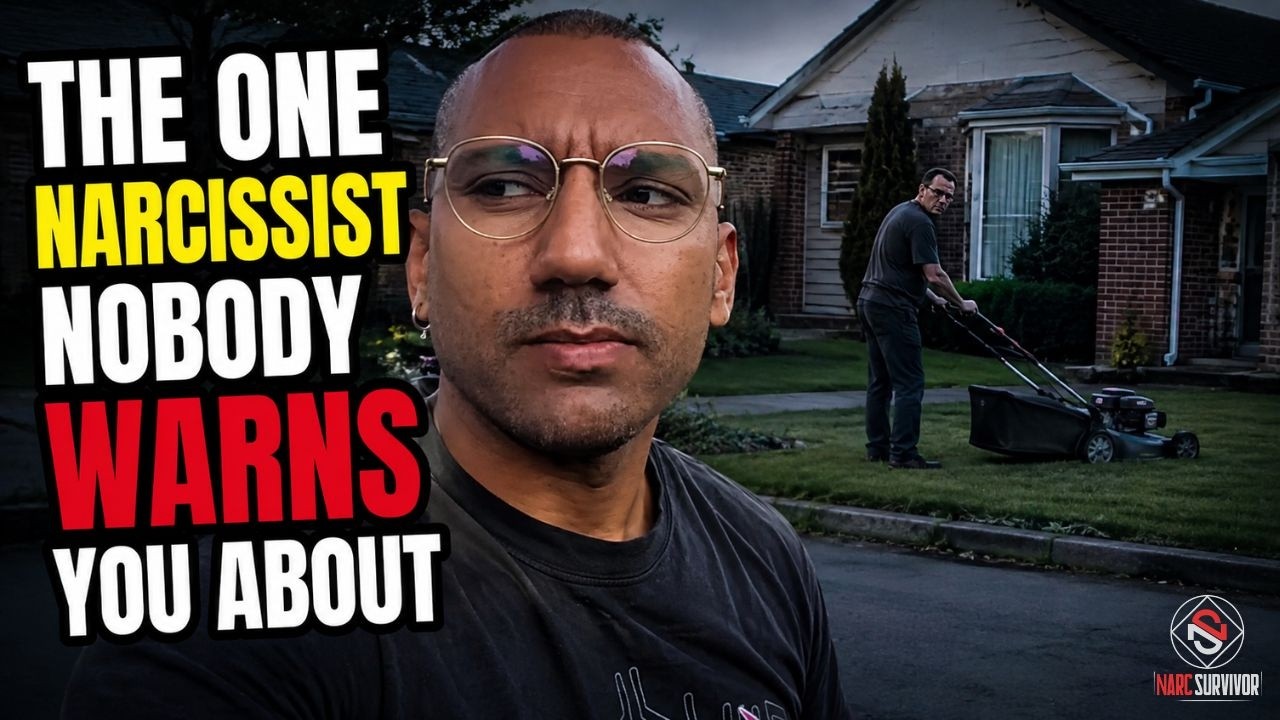
The video introduces a specific yet often overlooked form of narcissistic abuse that comes from neighbors, individuals who are physically close and impossible to avoid through simple no-contact measures like moving away. Unlike other abusive relationships where one can distance themselves easily, living next door means your nervous system remains in a constant state of alert every time you leave or enter your home. The speaker explains that these narcissistic neighbors do not seek peace, order, or mutual respect; instead, their primary goal is to exert control and power over others. They deliberately create trivial conflicts regarding mundane issues like parking spaces, trash bins, noise levels, or property boundaries simply because the problem itself does not matter—the only thing that matters is having a reason to make you feel guilty or defensive so they can maintain dominance in the relationship.
To sustain this dynamic of control, narcissistic neighbors often treat their entire neighborhood as a stage for performance and surveillance rather than just living alongside others. They meticulously observe who visits your house, when your lights go out, where people park, and whom you speak with, collecting every detail to use later against you or to feed their need for information. This behavior forces residents into a state of high vigilance, causing significant mental fatigue and stress because the brain interprets being watched as a physical threat. The energy cost is substantial; even when sitting still at home, victims must constantly scan their environment for potential dangers, which prevents true relaxation and recovery that should occur in one's own sanctuary.
The abuse extends beyond direct interaction through tactics such as smear campaigns where they manipulate the narrative with other neighbors or community members to paint themselves as reasonable victims while casting you as difficult or crazy. Furthermore, these individuals crave your emotional reaction more than any logical resolution; by provoking anger, shock, or defensiveness from you before you can think logically, they secure a sense of victory and avoid taking accountability for their actions. Victims often fall into the trap of becoming hyper-vigilant themselves, micromanaging aspects of their lives to avoid triggering these neighbors, which effectively allows the abuser to live rent-free in their mind. The ultimate solution presented is not trying to win arguments or change them, but rather refusing to play the role of a scapegoat and stopping the emotional revolving around them so they lose access to your attention and control over you.
Read the full video transcript
The one narcissist nobody warns you
about.
I've spoken a lot about narcissistic
partners, [music] parents, and family
members,
but there is one type of narcissistic
abuse that almost nobody talks about,
>> [music]
>> and that is your neighbor.
I was one of the first people on YouTube
to talk about the narcissistic neighbor
nearly eight years [music] ago.
And now, I'd like to revisit this topic.
Because if you've lived next door to
one,
you already know that moving isn't
always an option.
And yet, you can't go no contact. You
can't avoid them.
And every time you leave your front
door,
your nervous system wonders what today
is going to bring.
If this sounds like something you may be
experiencing, stay with me. Because
today, I'm going to explain why
narcissistic neighbors behave the way
they do.
I'm going to reveal the five things
almost all of them have in common, and
most importantly, what actually takes
their power away.
But I also want to say this,
I don't have an issue with any of my
neighbors. So, if they see this, they
are okay.
But this is something I have personally
experienced in the past,
and many of you have messaged me about
this over the years.
So, I thought I would revisit this
topic.
And although I'm talking about neighbors
today,
I think we can all agree that these
types of difficult [music] people are
everywhere.
They're in the workplace. They're in
your family. They're at your children's
school.
And they're even in your friendship
groups.
So, if you've ever felt trapped around
someone that you can't avoid,
then this video is for you.
The first thing to understand is that
they don't ever want peace. They don't
want things to be calm. They don't want
order or safety.
They don't want to get along without any
fights or arguments. All they want is
control. They want power and authority
over you.
So, one of the biggest mistakes people
often make is thinking that their
neighbor wants the same thing that they
do.
Because you may want a quiet life,
mutual respect, and just to simply get
along.
But, that is not what the narcissist
wants.
To them, peace doesn't feed them. The
only thing that does is control.
And that is why they will create
problems out of nothing.
Such as parking, the bins, trees, noise,
property boundaries, dogs, children.
The issue itself often doesn't even
matter. It's not causing any harm or
inconvenience to anyone.
And it's often something they're not
even concerned about.
It's simply the vehicle that allows them
to feel powerful.
Which is why when one problem gets
solved, another one mysteriously
appears. So, that there's always a
problem.
There's always something they're not
happy about.
There's always something you have to
fix.
If you have experienced this, let me
know in the comments. Because I'd like
to know if you have experienced similar
things.
The second thing narcissists can first
tend to do
is they tend to make the whole
neighborhood feel like a stage.
Healthy neighbors will simply live
beside you.
Narcissistic neighbors will perform.
They will watch who visits, who leaves,
what time your lights turn off, who
parks outside, who talks to who.
Everything becomes information.
And it's not because they're genuinely
interested in people, places, [music] or
ideas,
it's because they're constantly
collecting ammunition against you.
And once you realize you're living
beside someone who seems to know
everyone's business, you start to feel
watched,
like you are under close observation,
and that can feel extremely exhausting.
Because your body stays in a constant
state of threat alert. It keeps your
nervous system working hard even when
you are safe.
Because your brain treats being seen or
judged like a physical danger.
The energy cost is substantial,
even if you're physically sitting still.
Because you're continuously scanning
sounds, movements, windows, doors, and
other people for potential threats.
On a typical day,
you may be experiencing up to 10 times
more background vigilance, environmental
scanning, mental fatigue, and stress
than a normal person,
with less than half of the
concentration, recovery, and relaxation.
Because if you are dealing with a
narcissistic neighbor,
you may be spending hours a day in a
high-stress state,
which burns energy fast, when home is
supposed to be the one place where your
nervous system can finally relax.
The third thing is something that
catches so many people off guard,
and this is the smear campaign.
While you're trying to solve the issue
directly,
they're already talking to everyone else
around you.
They're talking to the other neighbors.
They're posting on a Facebook group.
They're talking to local community
members.
They're messaging local people on
WhatsApp to quietly create a version of
events
>> [snorts]
>> where they are the reasonable one,
and you're the difficult neighbor.
And it's not because they believe it.
They don't.
They know what they're doing.
But rewriting the narrative gives them a
control
over how people respond to you.
Until one day you realize that people,
your neighbors, seem colder and more
distant from you.
And you may have no idea why.
But it's often because the conversation
started without you.
The fourth thing could be the hardest
lesson to learn.
They want your reaction. They want your
automatic fast response to a specific
event, word, or situation before your
logical mind has time to think.
Because they want you to behave
irrationally.
They want you to make poor decisions
so that they can point the finger at you
and call you crazy.
Because they're really just looking to
pin the blame on you so that they don't
have to take accountability.
They're not looking for a resolution.
But most people think,
"If I just explain myself clearly, if I
stay calm, if I prove that what they're
saying is wrong, then surely all of this
will end."
But if someone enjoys conflict and
drama,
they're not going to listen to or
consider your logical argument.
Because your reaction is more important
to them than the outcome itself.
The look on your face,
the shock, horror,
anger
is more satisfying to them
than solving the problem or bringing a
sense of peace or resolve.
Because every angry reply,
every shouting match, every defensive
explanation
feels like proof that they still have
access to your emotions.
It makes them feel like they have
control.
But once you understand this, things
will start to change. Because sometimes
most powerful thing you can do is not
try to win.
Refusing to perform the role of a
scapegoat gives you
If narcissistic abuse has affected you
in any way,
I am available for you and you are
welcome to book a consultation with me.
Go to narc survivor.co.uk.
The fifth thing is probably the biggest
mistake that most victims make.
Because often without even realizing,
they become hyper-vigilant.
And they start micromanaging their
narcissistic neighbor.
They start checking if their curtain
moves, where their car is outside, where
they posted online.
And they end up planning their day
around trying to avoid them.
So without realizing it,
the narcissistic neighbor has quietly
moved into your mind and they're living
there rent-free. And that is exactly
what they wanted all along.
Your home should feel safe and calm.
Your thoughts should belong to you.
Instead of trying to make them change,
stop letting them occupy your emotional
space.
Because once you stop emotionally
revolving around them,
they lose what they wanted the most in
the first place,
which is your attention.
I'd love to hear from you.
Have you ever had a narcissistic
neighbor?
What did they do that made you realize
something wasn't right?
Because I believe this is one of the
most overlooked forms of narcissistic
abuse.
And it's often because people feel
embarrassed to talk about it.
But I have received many emails over the
years about this.
And if you have experienced this, you
know how draining it can be.
So if this video helped you to
understand these dynamics more clearly,
then make sure you subscribe and click
all notifications.
Because I upload new videos on
narcissistic abuse every day.
And most victims typically don't
recognize the signs until it's far too
late.