Video summary
A scoreboard malfunction during a game between the Toronto Blue Jays and the Boston Red Sox created one of the most confusing plays of the season, turning a routine defensive sequence into a chaotic debate over scoring rules. With two runners on base and only one out recorded by the official scorer despite the board displaying "two outs," the defense made an error in judgment that cost them dearly. The Blue Jays hit a fly ball to Vlatty, who dropped it for the first out before throwing to second base for a force play; however, because the scoreboard incorrectly showed two outs, the Red Sox players and coaches assumed they had already recorded their third out of the inning. This misunderstanding led them to abandon the field prematurely after failing to tag up properly on the next pitch, allowing an easy double play that would not have occurred if they had realized there was still only one official out.
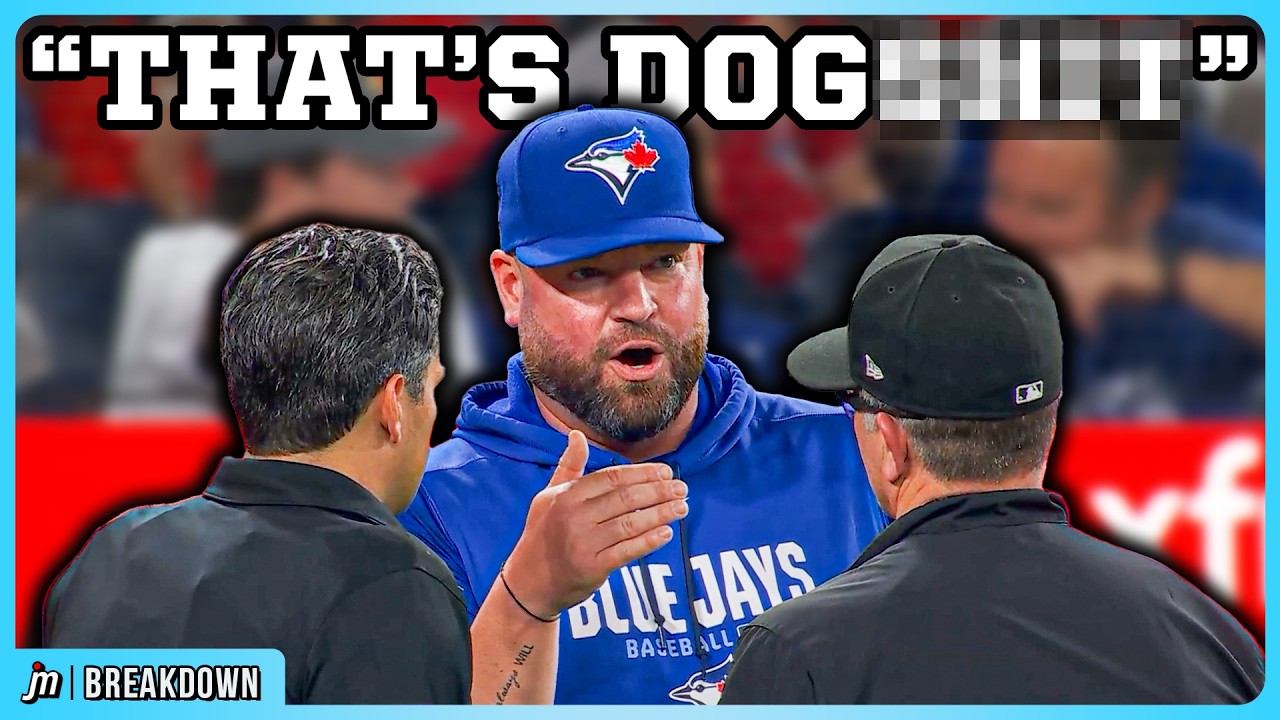
The situation escalated into a classic "time play" scenario where the runner from third base crossed home plate before the defensive team recorded the final out at first base, meaning the run should count regardless of any subsequent errors or missed tags by the defense. The confusion deepened when umpire Dan Sholin initially waved off the run after consulting with New York officials and reviewing past precedents involving similar plays in 1980, 2009, and other instances where teams failed to appeal before leaving the field. Although Blue Jays manager John Schneider argued that his team should have been allowed to challenge the call since players were still on the field when the umpire signaled no run, MLB rules dictate that once an out is made at first base with a runner crossing home plate earlier, the play stands unless properly appealed within strict time limits—which had already passed by the moment the inning ended.
Ultimately, after extensive review and clarification from league officials, it was determined that Anthony Seagler's run counted because he crossed home plate before the third out was recorded at first base, validating his initial confidence despite the scoreboard error and defensive missteps. The video highlights how modern baseball increasingly relies on understanding complex rule nuances like playing for a "fourth out" to prevent runs from scoring when replays might overturn an earlier call, yet even with this knowledge, human errors persist under pressure. While some historical examples show teams successfully exploiting these loopholes or suffering costly mistakes due to miscommunication between fielders and coaches, the Red Sox's failure in this instance stemmed not just from a faulty scoreboard but also from their inability to recognize that they still had one out remaining after dropping Vlatty's catch—a critical oversight that turned what could have been a clean inning into a memorable controversy.
Read the full video transcript
A scoreboard malfunction just gave us
the craziest baseball play of the year,
maybe the last couple years. It's
brought to you by Fanatic Sportsbook and
it's between the Toronto Blue Jays and
the Boston Red Sox. We're in the seventh
inning of a two-run game. The Red Sox
leadoff hitter gets on with a single.
Next hitter comes up. Nice piece of
hitting. Gets it down. And now we've got
first and second two pitch to our third
hitter. And he's going to put that one
in play. Was it caught? Was it stopped?
There's outs. There's outs. One out on
the play. One out on the play, but a a
pause of confusion. Not a lot, just a
little bit because did he catch on the
fly? Did he not? That's the situation.
And no. Okay, he picked it, hit the
dirt, they threw to second to get the
force out. Here's another look. It's a
nice play by Vlatty on the ground.
Submarine throw. They get the force out
at second. But after that play, the
scoreboard reads two outs even though
that was only one out because what they
saw for a split second was that maybe
Vlatty caught that on the fly. That's
the first out. You can see the base
runner stop. Do I have to go back to
first? Did he catch that on a fly? And
then when he throws it to second base,
that's the second out. And we've doubled
up the lead runner. That's what the
scoreboard operator or system that runs
it. They thought that for a split second
now. So it reads two outs. Now the very
next pitch is put in play and on the top
right here you can see that they change
it midplay.
So had the first pitch of the next atbat
been just a ball, a strike, a foul ball,
had it not been put in play, this would
have been fixed and we would have no
confusion. But that's not what happened.
The first pitch was put in play while
the scoreboard was wrong and the two
runners in green here, they thought
there were two outs. They were looking
at that scoreboard. So, they just take
off as if there's two outs. There were
not. Which gives the Blue Jays a very
easy double play like, "Hey, hey, throw
it over there. Throw it to Vlatty. Let's
get out of this inning." Vlatty says,
"Yeah, yeah, throw it to me. Throw it to
me." Bam. Umpire says, "Out." And they
leave. That's just a blunder by the Red
Sox. You can see their coaches pretty
disappointed in their players. Uh
there's one out. Got to beam kidding.
You can see I'm looking at the first
base coach like, "What's going on, dude?
What are you do? What happened?
man." And the first base coach is like,
"Uh, one out. I was all over it." Now
Seagler, the runner who scored, he's
confused. Wait, what? What? What are you
guys saying? I didn't score. What's
going on? Looks at the dugout. Says,
"There was one out." Yeah, you guys
botched it. It's all right. But yeah,
you botched it. Now, the Blue Jays
players, it looks like they thought the
same thing. You see the pitcher and the
catcher, as soon as this ball is caught,
they celebrate in tandem, mind you. Uh,
but maybe Woods Richardson saw the
runners cuz he does kind of turn his
head. He maybe sees that the runners are
just way gone, like there's no salvaging
it. Because a little afterwards after
the duel celebration, which we all agree
is awesome, the catcher says, "Add a
baby." Yeah. I give me that. Add a boy.
And then there's a pause and they're
like, "Uh, no. Get him out first."
Right. Yeah. Yeah. So, maybe they were
maybe they weren't fooled and I don't
know. What do you guys think? Do you
think they thought there was two outs or
do you think they saw the runners being
so far gone or do you not care about
this part? Who knows? I think they kind
of knew the coaches on the Blue Jays
were all over it tracking the ball,
tracking the runners, and then they're
all going to be like, "Hey, get him. Get
him. Get him." Yep. Yep. Yep. Yep.
Amazing. Great job by us. Really bad job
by them, but great job by us, right? Got
to give yourself a compliment. Now, the
umpire comes out and he confuses
everyone. Okay. So, what we have here is
we have a time play, meaning when the
third play when the third out was made
at first base with the with the runner
not tagging up,
the runner that was on third base also
did not tag but crossed home plate
before
the third out was made at first base.
So, that is a time play. We are going to
New York to check. Do a rules check.
>> What? So that just confused everybody.
Like what is going on? It did not
confuse one person. The runner who
scored on the Red Sox, Anthony Seagler,
he's all over it. He says they doubled
you off. If they were to double there,
it wouldn't matter, but they tried to.
They doubled you off. So, okay, Seagler
is correct. The first way for none of
this to happen was the scoreboard
doesn't get it wrong. The second way
none of this happens is that the first
pitch while the scoreboard is wrong
doesn't get put in play. The third way
that none of this happens is if the Blue
Jays throw it to the correct base. You
had a base runner on first and a base
runner on third. Now the ball is hit in
the air all the way to the outfield.
These guys just take off, right? And the
first out is made up here. Out number
one. Now, when that ball gets thrown,
out number two, out number one on the
play, out number two in the inning. When
the ball gets thrown in, if they throw
this ball straight to third base and tag
up the lead runner and get the third out
here, none of this happens. There's no
confusion. They did not do that. They
threw the ball to this base and they got
the trail runner. Now, there was a way
for them to salvage this. They could
have played for the fourth out. This is
the next way we avoid the mess and
confusion. They get the third out here.
They throw it across and they step on
this bag. And now they've doubled up
both runners and you play for the fourth
out. You may be thinking, I've never
heard of this, playing for the fourth
out. Well, it actually does happen a ton
now because of replays and challenges
and teams are playing for the fourth out
more and more. Here's a bunch of
examples. There's two outs in this
inning. They throw it to second. They
get called out, but they want to make
sure this runner doesn't score in case
replay review says nah, he was actually
safe at second. So, they played that
through for the fourth out. They're
like, we're going to challenge the play
at second. and the umpires were like,
"Well, if he challenged play at second,
it doesn't matter cuz he's out anyway."
Good job by the defense. Here's another
example. I think this is the one that
might be in most people's memories cuz
it was a great throw by Freeman. Third
out at first base, but let's just make
sure. And they get Duda who was rounding
and being like, "What?" And then replay
did show he would have been safe at
first. Thank god they played for the
fourth out and tagged him out. This is
common. Teams know about this now. They
say you're out. We've got other
examples. Another Mets game. Mets are
doing everything. Another heads up play
by the Mets on this one because they get
the last out at home. But catchers
thinking they're going to challenge
that. They're going to review it. Let's
just get this guy too. They play for the
fourth out. And in this one, he was
safe. So, thank God they did it. Got the
fourth out. Safe there. The run scores,
but you're out. To recap, the scoreboard
did malfunction. The next pitch was put
in play. The Blue Jays didn't get the
lead runner. The Blue Jays didn't play
for the fourth out. What's the next
thing they can do? Well, they can appeal
the play. But there are some rules to
when they can do that. Rule number one,
they have to appeal before the next
pitch. They have to appeal before the
next play. They have to appeal before
the defense leaves the field. Now,
Seagler again is all over this. He's
trying to get his teammates to
understand. He says, "Okay, it's the
same when like you got like when
somebody's tagging up, but they're
saying they left early, but they're
checking it out first, then you just go
and then they uh get him out right
there. They can't review that play now."
That's correct. That is actually the
second one, the before the next play.
We've seen teams exploit this where one
run will score, but they're like, "Uh,
he might have left early. We don't want
them to double him up." So, they'll just
send the next base runner in motion and
then they'll instead of appealing the
play, they'll try to get this runner out
and then that doesn't erase the run.
That's a play we've seen before.
Obviously, the next pitch we've seen
before, that we've seen before. I've
never seen this third one. That's what's
happening right here. So, we went into
the archives to find how many times has
this actually happened in Major League
Baseball. We found a handful of times
this has happened. Some recent, some
old. This one's from 1989. Yankees are
playing first and third. The buns on.
The runners were going on the pitch, so
they're not tagging. Out is made.
Neither go back and tag. They opt to get
the out at first. You can see the second
baseman saying throw it to third.
Instead, he throws it to first. And that
first baseman isn't standing on the bag,
which gives the runner more time to
cross home plate before that out is
made. And then they run off the field
and they never appeal. So, the Yankees
actually got a run on that play without
tagging up. Now, this one comes from
2009 and Max Scherzer actually pitched
in this game and he's on the Blue Jays
right now. Hot shot back to Dan Herren.
They throw it to second to double up the
runner at second. The runner on third is
going home. If he just steps on second
base here and doubles off that runner,
the run would not count cuz he hasn't
crossed home plate yet. He opts to not
step on the bag and instead goes to tag
the base runner, which gave them enough
time for that runner to score and count,
which is bizarre. So, that put a run
back on the board. 2022 this happened.
And the confusion here wasn't a
scoreboard malfunction, was did he catch
it? Did he not catch it? He ends up
catching it. And the bizarre one about
this is the third baseman. He was so
close to doing everything right. The
umpires get together and they decide,
no, yeah, that run's going to score
because when he's going for the second
out, if he steps on the base, he gets
the lead runner out. They double up the
lead runner. Instead of stepping on the
base, he tags the trail runner. So, they
never double up the lead runner. That
one cracks me up knowing what we know
now, but I don't I can't really fault
the players that much. He's like,
actually, yeah, the run scores. That's a
signal. Run scores. Like, what?
And then the most impactful one, the
1980 playoffs. We had another situation.
Did he catch it? Did he not catch it?
They called it a catch. So, Pete Rose
scores. She does not tag up and they
don't double him off. They double off
the runner that was at first for the
double play. So, they're pissed off
about it, the Phillies, cuz they don't
know at this point that the run counts.
Schmidt's like, "What are you doing? He
didn't catch that ball." And he didn't.
He didn't. This is a bad call and like
kind of just bad baseball. This ball
gets trapped. No replay reviews then.
Umpire had a great angle. He's like,
"Nah." Out. Base runner. You can see
Schmidt. He's looking and he's like,
"Uh," and he says, "No, he didn't catch
it." That led to the game tying run in
the eighth inning of a playoff game. So,
this has happened before and it's
happening now. As long as he crossed
home plate before the out at first. And
Seagler is pretty confident. He's like,
I just said I I got there before that
they got you out. I scored. So, let's
take a look at the timing play here.
There he is on third. There's the ball
in the air and he touches home plate
right there and the out at first base
that he has to score before it happens
happens now. So well before well before
he got in there and they're loving it
now. The Red Sox are like so we didn't
get fooled. We were smart. And he's like
yeah we were trying to exploit some
uh rules. Yeah, we were just
being cool, exploiting rules. Now,
Sherzer, like I said, was in that game
in 2009. He knows all about this. He was
all over it, but he also knows the next
part. He says, "What it up is
that the homeplayed umpire waved it
off." Homeplayed umpire says, "No run,
no run." Points at home plate says, "No,
no, no, no. He waved it off." showed you
before. The umpires when they say run,
they point at home plate to say that run
counts. Now, this is what the Blue Jays
don't like and they're arguing because
Schneider is saying, "But we don't get a
chance to replay because you waved it
off. You can't just stop the play." And
they're like, "Well, we well you guys
stop. You can't stop it then." Well, no,
you guys would have to appeal it.
They're probably telling him that
something like, "You would have to
appeal it." and he's saying, "Uh, I'm
reacting. I'm reacting to what the call
is. I'm on your guys' time. Your man
waved it off." So, they come back from
replay review and this is what the ump
says.
>> After calling New York, getting it all
straightened out. The run is going to
score
into the inning.
Two runs for Toronto, one run for
Boston.
>> Jason Kelsey looking like loves him. So
does Seagler. I told you I knew. I told
you I knew. Yep. He was all over it.
That's what he meant to do. Big brain.
Big brain. Oh yeah. I wasn't confused.
Not once.
All right. Maybe once. Now Schneider
still has some questions. He's still got
some complaints because he's saying, "So
you're saying all of my players were off
the field
before he waved off the run?" Well,
that's absolute dog And it is.
Look, he waves off the run right there.
The Blue Jays still have three players
still on the field. Now, if the umpire
was to do the signal of run scores and
point down, maybe Schneider and the
coaches would have been very alert and
SAID, "HEY, STAY ON THE FIELD. STAY ON
THE FIELD. STAY ON THE FIELD. STAY on
the field. Appeal at third." Maybe I the
way I'm understanding it that would
happen. The only thing I'm confused at
is the ball seems to be dead already
because the umpire's throwing a new ball
out.
But when he waves it off, Vlatty has the
ball still there. Can the ball leave the
field or could have Vlatty have thl
Vlatty could throw that back into fair
territory. It was Vatty, throw the ball
in, throw the ball in if he had signaled
the run. So the Blue Jays are saying you
waved it off. So why would we appeal
when you said no run? So in the end I
think the Blue Jays were kind of on top
of this even though it seems like nobody
was besides Seagler and the Blue Jays.
And that is why Sherzer unofficially
protested the game. P Shan a P. He's
protesting the game. If you understand
what happened after watching this video,
leave a comment and say thanks Jimmy.
I'm so smart now because of you. If not,
watch it again.
And I hope that uh
thanks for watching. Brought to you by
Fanatic Sportsbook. Take your swing
every day with long ball jackpot to
compete for a piece of a 50k fan cash
pot. Over 7 million in fan cash has been
awarded since the start of the MLB
season. Winning hits different at
Fanatic Sportsbook.