Video summary
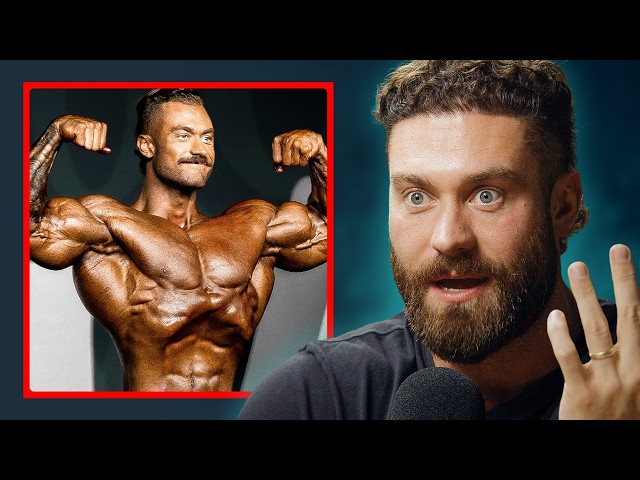
Chris Bumstead shares his personal experience regarding how quickly an Olympia-level physique can deteriorate when training stops, citing a specific instance where he lost approximately 25 pounds of pure muscle in just three months due to shoulder surgery and subsequent rehabilitation. During this period, which included an eight-hour fast that resulted in losing another eight pounds, Bumstead observed the drastic impact on his body but noted how quickly it bounced back once training resumed. He emphasizes that while many people underestimate the difficulty of retaining or regaining muscle mass, he was able to maintain a 250-pound physique by eating healthily and training hard without resorting to extreme measures like PEDs, which he no longer uses despite being on TRT (Testosterone Replacement Therapy). The conversation shifts to the longevity of athletic performance across different sports, with Bumstead noting that while strength athletes like Brian Shaw can remain competitive into their 40s, endurance and sprint events likely decline after age 40 due to attrition rates rather than just injury. He highlights that bodybuilding is not inherently damaging to health if approached gently; in fact, his doctors have stated he is healthier than expected given the physical demands of professional competition. Bumstead attributes much of this resilience to retiring at age 30 before pushing too far and prioritizing a family life with shifting values, acknowledging that continuing such sacrifices would no longer align with his current priorities. A significant portion of the discussion focuses on post-competition physiology and specific health issues Bumstead has faced, including autoimmune conditions, SIBO (Small Intestinal Bacterial Overgrowth), mold exposure, leaky gut, and heavy metal toxicity. To address these complex problems, he employs a combination of natural routes and medical interventions, such as using minycline at high doses alongside herbal antivirals and peptides like LL37, SS31, and BPC-157. He explains the necessity of following specific phases—kill, restore, reinoculate, rebuild—to avoid overwhelming his system, noting that attempting to fix everything simultaneously is ineffective because one can only handle so many changes at once without causing further stress to the body. Finally, Bumstead addresses the implications of exogenous hormone use and the strategy for managing TRT in the future. He acknowledges that introducing external hormones suppresses natural production, potentially requiring lifelong supplementation, but advocates for a gradual tapering process rather than an abrupt cessation to prevent severe mental health impacts like depression associated with sudden drops in testosterone levels. While he recognizes the risks of long-term PED use and sperm count suppression, he maintains a pragmatic view on life's trade-offs. The interview concludes with Bumstead expressing gratitude that his career allowed him enough time to address these issues before they became critical, reinforcing his commitment to health over continued competition as he moves forward in life.
Read the full video transcript
I'm interested, and I'm sure a lot of
other people are, in how quickly an
Olympia level physique falls apart when
you stop training.
>> It's tough to answer because of my
injury I had this year as a whole. It
was holding on like real good until I
had like the shoulder surgery and then I
took about three months off training and
in the midst of that,
>> three full months basically.
>> Yeah. I was I had I couldn't lift my arm
for like a week or two and then I was
using like those fat grips.
>> Mhm.
>> Cuz I couldn't hold a weight to try and
do like a external rotator cuff with
like a 3-in range of motion. Like it was
like a serious rehab back to moving my
arm. And in the midst of that I'm like
I'm going to do a 80 hour fast because I
have never been able to do this as a
bodybuilder and it's great for my
health. I lost like 8 pounds doing that
alone. And then I I only ended up losing
like I mean I lost at that point I lost
about 25 lbs of muscle of like pure
muscle which was drastic on my physique
the change it was and I was like damn
that was a lot but then it bounced back
quick too. I think muscle memory is
absolutely insane.
>> So I think it's harder than people
realize to really lose that muscle. Like
obviously there's the peed side of
things and I'm not doing that
anymore. Still on TRT because
>> once you run that kind of stuff you kind
of need to which is the dangers of doing
it at a young age. Mhm.
>> But it's life. So me not doing all that
stuff anymore and just eating healthy
and training hard because I love it, I
can still be 250 lbs like no problem
that you can maintain that it's an
Olympia level physique,
>> but I could bounce back in like 6
months, you know?
>> You think if if push came to shove, do
you think that how long do you think you
could take off before it would be really
really tough to come back within the
space of a year?
>> I have no idea.
>> Interesting question. It's very
interesting and I'm like like most a lot
of bodybuilders I mean classic physique
is still a new division but most open
bodybuilders peak when they're like 35
and it's different for classic cuz we
need less muscle your waist get bigger
over time so it would be a younger age
but still like your ability to put on
muscle like that continues into your
mid-30s. Look at the strong man, Brian
Shaw. These guys, you know, uh
>> who's the huge black guy that did that
uh really long hole? He's like in his
40s and uh Yeah. strength sports, but
endurance sports, too.
>> Endurance. Yeah.
>> Yeah. Is it I guess fast twitchy stuff.
Um I'm going to guess weightlifters
probably not so great. Like Olympic
weightlifters not so great into later
life. sprinters. I'm going to guess once
you get past 40, probably not
>> quite the same.
>> I wonder if that's an injury thing, too.
There's a lot more likely
>> kinetic.
>> Yeah.
>> Stuff. Yeah. It's just an attrition
rate. It's just these people have been
like headshotted out of the
>> rotator cuff shoted out of the thing.
So, your um
uh bloods and stuff coming back down
into normal life, what have you learned
about the post competition physiology of
someone that's done to their body, what
you did to it,
>> like health-wise in general.
>> Mhm. And hormones and all the rest of
the stuff. cuz I know that you you were
already being as gentle as possible,
trying to get as much out of as little
from PD standpoint, trying to just take
a month off each year from like even
dieting and kind of aggressive training
type stuff. Just
>> that was like a stretch of three where I
was in lowering and ramping up. Yeah.
>> So, yeah, I'm just interested in what
your health after the Olympias looked
like.
um
feeling very grateful that I had that
mindset of not trying to do too much and
getting the least out of the most
because my I had like health issues in
the past that were unrelated to
bodybuilding, autoimmune and stuff and
that affected my health. And then it
feels like bodybuilding wasn't declining
it, it was kind of keeping it in a
level. And now I'm at a point now where
I've worked with a bunch of doctors and
they're like, "You're actually healthier
than I thought you would be given what
you've done to your body." And I was
like, well, thank God I retired at 30
cuz I don't want to hear like, oh, like
>> you push it too far.
>> You push it too far, you know? And
obviously the longer you do something,
the better. And a few doctors have told
me like in your 30s, your body is a lot
more likely, I mean, obvious to recover
in your 40s or in your 35 or whatever it
may be.
>> So, there definitely is some damage that
happened to my health and was another
huge reason of why it was easy for me to
retire cuz I wasn't willing to make that
sacrifice anymore. just I was very
conscious of bodybuilding is not good
for your health
>> and I don't want to continue to do this
to me with a family now and priorities
and different values shifting. So
>> there's a lot of focus on my health now
>> and I'm realizing you can't really
attack everything at once. It's like hey
I want to fix this this this this. Well,
you can only take so many vitamins and
do so many things a week. So like take
the crowd here. Exactly. Yeah. So right
now it's I'm trying to fix my gut which
is something that had gotten beat up for
a while. You know bodybuilders
>> SIBO
>> eat constantly. I have SIBO, mold, leaky
gut, some heavy metals and all this
stuff kind of affecting
>> a my gut brothers.
>> Hell yeah.
>> Are you doing the antibiotic or are you
trying to do the natural route?
>> Uh combination of both. So I'm using
minycline, but minycline is at quite a
high dose now. 200 milligrams a day.
>> Uh a lot of herbal antivirals, some
peptides. Uh I'm using LL37, SS31, uh
BPC.
>> Uh plus I was using oral BPC for a
while.
Yeah, it's it's because if you're doing
the antibiotic thing, you can't do the
rebuild the gut thing at the same time.
>> Probiotic.
>> So, it's bro, it's nightmare. It's so
hard.
>> All I don't even know what the words
are. I didn't do it like the kill,
restore, reininoculate, rebuild, like
all this like you have to go through
these phases of like kill everything
kill. I no I'm
the guy helping me wanted me to build a
little bit of like resilience in my gut
first and then kill and then rebuild
just so the kill wasn't so like tough on
my body
>> so when I get back from this I start the
antibiotics
>> yeah yeah
>> fun talk
>> yeah no I get it um you mentioned TRT is
that
I I don't know how it works with the
suppression sort of natural stuff.
>> Mhm.
>> It's just easier and simpler than trying
to completely go off and survive and see
if it comes back online naturally with a
ton of gentle supplementation. It's just
easier to sit at a low dose like
therapeutic dose of of replacement. Is
that kind of the philosophy that you've
come to? I still haven't really fully
decided what my goals are in that in the
future, but I do know or have at least
seen anecdotally through others that if
you drop it too hard after being so high
for so long that it's really bad on your
body and your mind. You know, people go
through some intense people go through
depression from natural low test versus
like having insane to just dropping it
down. So getting your body used to
slowly decreasing over time is a lot
better for your body to not have that
like big shock of change.
>> Mhm. So, but yeah, it's difficult and
you know, I like people to be aware of
the fact that putting an exogenous
hormone in your body stops your body's
natural production of it. It means you
may have to take it for the rest of your
life. It's reality, you know. So, kind
of going through if I'm even going to
try to go that route or not right now.
>> Well, dude, people say that testosterone
decreases sperm count and you just
continue to pump kids out. They just
>> you win some, you lose some, you know.
>> Well, I I'm glad that the table's so
long so that I don't get pregnant from
being over here.
>> I won't come close.
>> But yeah, dude, pregnant again.
Congratulations.
>> Thank you. Yes, it's pretty crazy. We're
excited. Very excited.
>> Before we continue, this might be the
most refreshing flavor that Element has
ever made. It takes the classic taste of
lemonade, makes it functional, giving
your body back the sodium, potassium,
and magnesium that it loses when you
sweat. No sugar, no junk, just the stuff
that works. I've been drinking Element
for over three years now. And it
genuinely feels different when I take it
versus when I don't. And they back it
with the best policy. You see that that
I've ever seen. And no questions asked
refund. No time limit. You don't even
need to return the box. That's how
confident they are that you love it.
Plus, they offer free shipping in the
US. Right now, you can get a free sample
pack of all of their favorite flavors
with your first purchase by going to the
link in the description below or heading
to drinklnt.com/modernwisdom.
I'm like Neo in the Matrix, dude. You're
not going to win. That's
drinklnt.com/modern
wisdom.
[Laughter]
Thank you very much for tuning in. Oo, a
tasty morsel of a conversation for you
there. Well, full meal available
right here.
Come on,
press