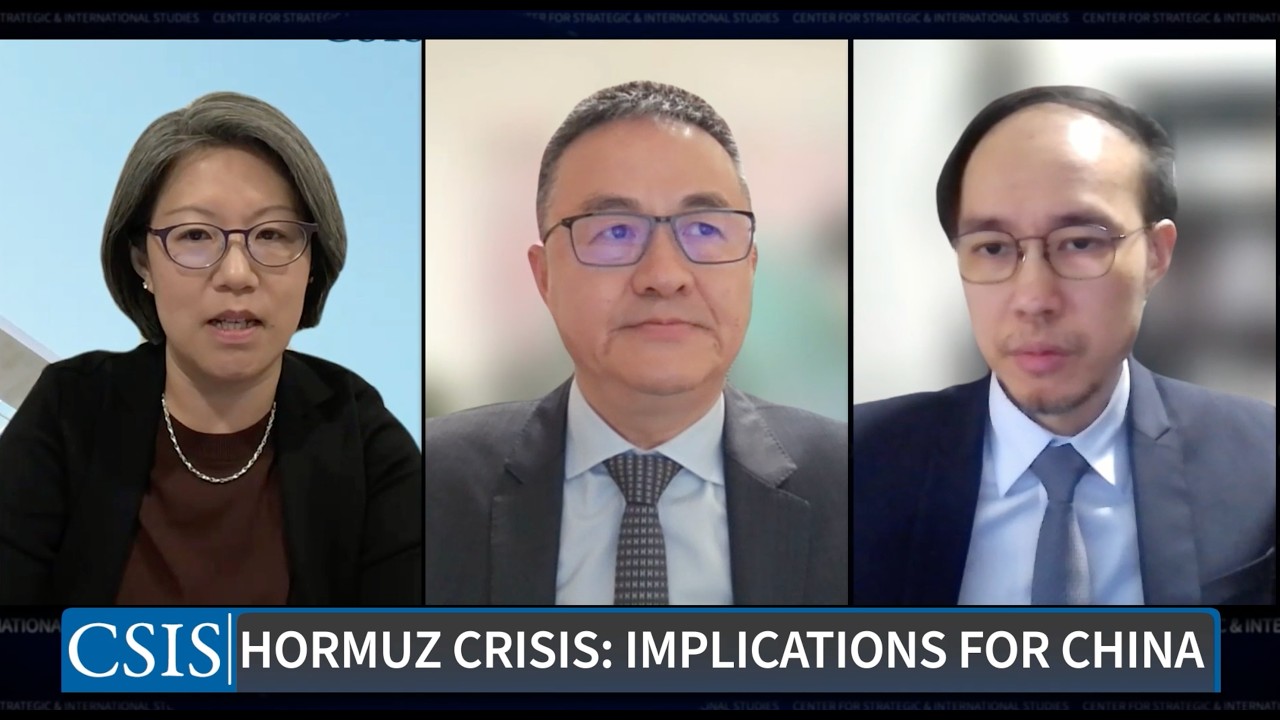
The Implications of the Hormuz Energy Crisis in China
Watch on YouTubeVideo summary
The recent Hormuz energy crisis has prompted China to refine its long-term energy strategy by shifting focus from mere stockpiling to comprehensive supply diversification. While the nation's layered reserve system, combining government strategic petroleum reserves with commercial inventories, successfully acted as a temporary buffer and demonstrated China's ability to function as a global swing consumer, experts emphasize that true security requires robust alternatives beyond simple storage. To mitigate concentration risks associated with maritime chokepoints, China is integrating domestic deepwater production under its 14th Five-Year Plan, developing alternative crude sources, and investing in flexible refining capabilities. This approach ensures that while stockpiles provide short-term purchasing optionality, the long-term goal remains building a resilient system that can bypass logistical bottlenecks through diversified transit routes and pipelines.
Structural shifts within China's energy sector are also accelerating, particularly regarding the transition from fuel-focused consumption to high-value petrochemicals and the strategic management of coal. Although the 15th Five-Year Plan aims to peak coal consumption by 2030, coal remains a critical security backup comprising over half of the energy mix, necessitating a gradual transition over two to three decades that involves significant turbulence. The crisis reinforces the necessity of an electrified system powered by renewables, nuclear energy, electric vehicles, and storage solutions, while cautioning against unchecked investment in coal-to-chemicals projects due to their high carbon intensity and economic costs. Furthermore, China's dominant position in battery manufacturing offers dual benefits for energy security by substituting oil in transport and stabilizing power grids, yet this reliance on domestic supply chains introduces new vulnerabilities regarding critical minerals and localization policies in key export markets like the United States and the European Union.
Geopolitical dynamics surrounding energy imports are evolving as China seeks to balance its relationships with various global players amidst rising tensions. Despite the United States being the top LNG exporter and China the largest importer, bilateral trade faces constraints that require rebuilding government-level political trust for physical imports to resume smoothly. Simultaneously, China is deepening its engagement with Middle Eastern suppliers such as Saudi Arabia and Iran, not merely through oil trading but by focusing on transit route security, downstream investments, and collaboration on energy transition solutions like hydrogen and renewables. The ongoing instability in the region could potentially grant China leverage in future contracts by forcing sellers to lower prices due to increased logistical risks, yet Beijing remains committed to avoiding reliance on a single supplier or route while maintaining strong ties with the Middle East. Ultimately, China's hedging strategy utilizes both maritime and pipeline imports from sources like Russia and Central Asia, ensuring that it does not fully replace Western insurers but rather diversifies its risk-bearing capacity to navigate a complex global energy landscape.
Read the full video transcript
Good morning from Washington DC. Thank
you so much for joining the center for
uh international uh CSIS center for
strategic and international studies
energy program webinar series that looks
at the hormone energy crisis
implications for longer term um energy
policym.
This is second in the series and we will
be focusing on China which has been
gaining lot of attentions. I am very
pleased to be joined by two leading uh
China energy analysts and watchers and
and really uh policy uh thinkers uh this
morning. Um and uh first um is Kevin 2,
Kevin J2. He's the chief advisor Asia
with a Agora Energy Vander and he's
based in Beijing. Thank you for staying
up late and joining Kevin. And the
second panelist speaker is Kahoyu. He is
head of energy and resources with Varys
Mapleroft. And thanks again uh to Caho
as well for staying up late and joining
uh all the way from Singapore. Now let
me get started because there are so many
questions to uh cover and I think you
know the energy crisis in Middle East
has really highlighted various different
approaches but today we do want to talk
about not so much the responses but much
more about the implications.
So let me start with you Kevin. Um so
you know China has reduced crude oil
imports in light of the the hormous
energy crisis that has impacted you know
roughly 20 to 25% of you know both oil
and gas supplies to the world and I
think some of the uh reports mentioned
that it's you know about 5.5 million
barrels per day uh of you know oil
imports crude oil imports um and the
volume is quite significant and that's I
think helping the global oil market from
not spinning into huge huge panic. Um
also it's you know interesting uh to see
the economist magazine you know talk
about how China is sort of shifting from
uh oil you know market price taker to
perhaps very influential if not powerful
uh oil market price maker. So in your
view uh Kevin uh what are some of the
key insights that China may be sort of
uh learning or taking lessons from this
crisis about how they manage their oil
supply security.
>> Thank you very much Chen for inviting me
for this timely discussion.
I would start with a broad market
observation.
For decades, Saudi Arabia was often
described as the global oil markets
swing producer because it could adjust
the production materially at the margin.
China is now showing some
characteristics of a swing consumers.
This shield import scale large inventory
and refining system mean that it can
reduce crude purchase very sharply and
sustain no import for a meaningful
period. that gives demand side
adjustment on influence on global
balance that did not exist at this scale
in earlier oil crisis in the past.
The point of essence is not simply to
accumulate
the largest possible reserves for China.
It is to build a nar and counts
uh cyclonical reserve system. Uh which
means not only government reserves but
also enterprise social responsibility
reserves and the normal commercial
inventories with sufficient operational
flexibility to buy more when market
conditions are favorable and reduce
purchase during a serious market shock.
that converts a high degree of import
dependence into great short-term
purchasing optionality.
But stockpile are primarily a temporary
buffer. The buy times when a transition
uh transit routes fails. They do not
remove uh root concentration which
requires bypass capacity alternative
ports and pipeline diversified shipping
corridor and flexible
logistics.
So as a result I would say China is
becoming an important source of demand
side flexibilities
a potential swing oil consumer. Well,
the crisis also show that inventory
provide temporal o optionality and a
diversified
transit rules provide some spatial
optionalities. So this is very important
down the road.
>> Thank you so much Kevin. Uh let me turn
to you um Kaho for you know if you have
a view as to you know what this is you
know what the what lessons uh China is
taking from you know in terms of oil
management and perhaps you know if you
both you know both of you if you have
also views on this you know especially
SPR management um I think China had been
buying more crude in perhaps 18 months
leading up to this war not that they had
a foresight but you know it's uh in a
way um you the this huge stockpile has
been very helpful to the entire world.
But what are some of the key lessons in
your view?
>> First of all, thank you very much for
inviting me to this very uh important
discussion with two prominent uh energy
expert in the room. Uh I would like to
share two cents on how I understand the
situation. So China has kind of
weathered the sock relatively well
because of multiple reasons. uh of
course uh the SPR the uh the reserve is
very important here because it provide a
foundation for China to kind of
implement or to coordinate what it has
been planning and and secondly uh
together with the stock sock piles I
would say the market size of China is
another important factor because um when
we look at China in the oil market it is
not just pure buyer when they import the
crude oil then they're going to refine
it and then it export it and then some
of them they consume it domestically. So
if the market size is so big then it
allow China to have a relatively safe
buffer to reallocate how much they are
going to use domestically how much
they're going to refine how much they're
going to export. So with kind of
coordination among all these uh roles,
China uh I mean of course with it top
down governance I mean it allows uh the
the market to coordinate different uh uh
players. I mean the NOC's the the
refiners and so on to adjust uh
everything and to re reallocate the
resources. But it is very important to
understand that um the reserve only by
the time in the longer run um the key
lesson is still the diversification. I
would say that I mean when we are
looking at China they are stockpiling as
I mentioned over the last 18 months but
in the longer plan it is more about the
diversification and the stock pilot is
one of it and at the same time China is
importing from other sources. uh they
have different um stuff to do with all
those crude alongside uh domestic
production and flexible refining and
demand uh management. So China is kind
of building a layered system of a
resilient energy system combining
government strategy reserves and the
price responsibility reserves commercial
inventories and so on. Soon the crisis
will just encourage um China to take a
lot more this kind of fible uh
diversification and resilient strategy
down the road.
>> Uh let me ask you a quick uh follow-up
question. Uh since about 19 uh I'm sorry
2018 or 2019
uh you know China has been focusing on
domestic production of an oil and gas.
There was the uh you know now famous the
seven-year plan where the Chinese
national oil companies you were
instructed or encouraged to really you
know uh increase the capex and
successfully increase or uh recover the
domestic output levels uh for both oil
and gas. So do you expect um some sort
of a you know new momentum for the
domestic production as well as some of
the key levers that both of you have
just highlighted you know such as you
know SBR but then also uh
diversification of supplies
u either one of you um
so J maybe I will start so my base case
is that uh this ongoing crisis is
reinforce a strategy that has already
been institutionalized.
The earlier 7-year action to increase
domestic reserve and production
delivered uh quite sound results. In
2025, China produced about 216
million tons of crude oil and 262
billion cubic meters of natural gas.
However, looking uh the five-year plan
period between 2026 and 2030, the
national plan calls for crude output to
remain around 200 million tons a year
while natural gas production continues
to increase. So the dedicated oil and
gas plan goes further by calling for
continued investment intensity and
development of deep and archer deep
rivers offshore fields shield oil and
gas deep coat methane and recovery for
material fields. uh which means uh uh
China has already institutionalized
the national oil and gas production
plan. Uh um so uh that's very important.
So I don't believe the uh country need
some additional sevenyear plan because
it has already uh embedded the principle
uh in the fiveear plan period. Uh
corporate uh capex is likely to remain
the best but seactive.
Um so if we look at major national oil
company they do have quite high level of
investment
uh for the coming uh five years. Um so
the bottom line the crisis with the
strategic value of domestic production
but the rational response is sustained
high quantity investment rather than a
new production at any cost campaign.
>> Thank you Kevin. Um K let me uh can I
shift the gear just a little bit but
still within you know the oil security
uh supply security uh you know context.
So, you know, China's refining sector
has been shifting away from more fuel
productions to more of a higher value
add chemicals production in recent
years, uh, from what I understand. And
so, you know, I'm curious to see how the
hormones energy crisis may, you know, be
affecting that type of a shift or the
tilt towards uh, chemicals production.
And then but then also relatedly because
the crude supply has been constrained
globally and also you know China has
been trying to import less I've also
seen the um the volume of coal to
chemicals production uh increase in the
past you know six months you know uh
already you know this is the you know
this is we're entering the seventh month
uh of this uh energy crisis if you will
so what's your view on the uh refining
industries's uh sort of a you know uh
preference
uh also not just the you know uh oil to
you know uh products but then also the
use of uh you know coals to chemicals
approach in uh China's um planning
>> um I think from a market perspective all
this is about the optionality especially
during a constrainted uh scenario. So
the crisis is not kind of going to
reverse the structural shift towards
chemical because overall speaking I
think the EV adoption is the long-term
thing and it is weakening the long-term
transportation fuel demand while the
chemicals and materials over I mean they
over higher value but this is kind of a
parallel development. So one is more for
the transportation sector. The other I
think it is more for the kind of the non
energy sector to to the downstream and
something like that. So the overall
speaking I think it will also accelerate
the investment in the uh more integrated
and more flexible facilities because
whenever no matter if you are talking
about the shift uh from producing field
to other products or to using coal uh in
this in this uh activities I would say
that it is more about when there is a
crisis whether you can use the same
facilities to do something
I think this is not just about the the
middle east crisis. Basically actually
China has learned that recent mean since
COVID and then the Ukraine crisis and
then now the middle east crisis. I think
all this is more about the what we are
calling now is the resilient of the
energy system or the resilience of the
of the of the supply chain. If the
facilities is relying on only one
supplier or only one buyer then they are
very easily to be kind of uh disrupted
by this kind of geopolitical event or
climate risk and other uh uh uh major
incidents. So that's why I I would say
that um
for a lot of industry in China they are
trying to be as much as integrated and
fible uh to take this strategy to
survive all this kind of risk.
>> Thank you. Caho can would you like to
add anything or um can I jump sort of uh
onto the next uh topic?
So I would um
like to agree with Kaho that the crisis
may change refine uh refinary operating
priority as the margin in the short term
but it does not reverse China's
structural shift from fuel onum towards
higher value and more flexible refining
petrochemical integration. But I would
also like to add something about China's
ongoing uh code to chemical development.
This is actually a rather complicated
issues because if we look at a coal
chemical especially the so-called co
modern coal chemical including co oil
coal gas coin
among other uh petrochemical products
uh they have been a durable
um strategy
um so are but should not be treated as
an unrestricted substitute for imported
oil and gas. uh for China's 15th
five-year plan, it explicitly
strengthens cold to oil and coal gas
capacity and technology results
including strategic basis in order
and harchm
liquid and coal gas should be
analytically separated. They serve
different products and the security
function.
Uh in addition economic cost, carbon
intensity, water use and local
environment constraints
remain very important when look at
whether this type of project should be
uh factor into a national security
strategy. So the right framing is
strategical optionalities
with disciplined utilization not
necessarily co- conversion at any cost.
So that's why overseerization
might lead to um large scale deployment
of co chemical which will result in
stranded assets. uh by the end of the
five year time period. This is a policy
risk decision makers in Beijing need to
be very careful.
>> Thank you Kevin. And you cover you know
you you follow energy transition and in
different levers and you know signpost
quite closely over many years. So and
then also you know we just sort of
talked about coal a bit. Um, so I'd like
to ask a couple questions about how
hormonous energy crisis may shape or
reshape China's energy transition
course. Um, so you know the the 15
five-year plan, the latest 5-year plan
that covers 2026 to 2030, you know,
includes the, you know, reserving a
certain degree of uh, coal production
capacity, not just the use, but the coal
production capacity if I'm not mistaken.
So I'm curious to hear your view as to
this coal consumption question for
China. Um but also you know related to
the coal production capacity. So it's a
the question is sort of a twofold. One
is you know how has you know this energy
you know crisis affecting the way that
the 15th year plan views at the the coal
upstream you know the coal production
side of goal
but then the relatedly you know is
China's coal consumption still set to
peak by 2030 if I'm not mistaken that's
still the the stated goal um So let me
start with Kevin and then and go to
Kaho. Um
>> so uh if we look at co's role in China's
uh ongoing energy sector transformation
uh this is the most important uh
uh questions
uh because despite the rapid renewable
deploy deployment the co still account
for more than half of China's national
energy
demand mix. So, uh that's why uh if we
look at the um coming five years,
whether coal consumption could peak
actually will determine whether China's
uh co- picking target before 2030
uh is achievable or not. Given China's
very unique political system and also
the dual carbon goal was announced by
the current president. Uh I would say uh
the um bureaucratic uh um system and
also the province have no choice. They
need to pick national coal consumption.
uh otherwise the uh the dual carbon goes
uh first denurable uh which is peak
national carbon emissions before 2030
simply cannot be achieved. So that's why
uh on the one hand uh the homeless
crisis has reinforced
the security
uh implication of upstream uh coal
mining uh in the Chinese context. But uh
uh if we look from a medium to longer
term uh perspective, the direction of
travel of China's energy mixed
restructuring is pretty clear. The share
of coal in national uh energy mix needs
to decline over time and uh in the
future coal will more and more uh
serving uh the security backup purpose
instead of uh continuously uh to be the
backbone of uh China's energy
consumption in the longer term.
Thank you Kevin Cah.
>> Yeah, thank you. Um I pretty much agree
with Kevin. I just want to add a few
observation. Um I think regarding the co
or the f of co in China I think for a
lot of uh analyst looking at this it is
very important to understand that
there's no major button for the end of
the sector and the timeline for the
energy sector is much much much more
longer than a lot of other let's say the
financial sector which means it will
always take more than a decade two
decades or something like that to
achieve the policy goal that you see it
on paper And this also means that there
will be a lot of turbulence in the
earlier stage of to failing of code. And
this is exactly what is happening now.
On one hand, China has set a very um
ambitious target to fail code or to pick
code. And at the same time, it is
building a lot of renewables. But at the
same time, you're also seeing China now
saying that ah because of the energy
security and that's why we still need
code. These are all very conflicted
kind of um signals for the outside world
to understand actually look what China
is doing. I mean it's just that you're
doing everything at the same time. But I
think it is very important to understand
that there's I mean when we talk about
the energy transition it does not simply
means that acceleration away from fossil
fuel. It takes a long process. I mean
unless there is a metric but that you
can switch it on and then renewables is
totally ready tomorrow and then it can
save everything. But if it is not that
case then it simply means that for the
base for the foundation of the energy
system it will still rely on a lot on
fossil fuels and the question is how
fast you can build the kind of the
renewable to become the foundation for
the future and they could be a tipping
point on timing that they will overtake
the energy system and I think the crisis
is not just enhancing the need for
energy security more important is that
it is changing how the government uh
actually also in Asia how they are
looking at energy security because when
the petrol centric energy system looks
so fragile the government when they do
the planning they will shift a lot more
to the electrocentric energy system and
then this means they're going to rely a
lot more on renewables nuclear power EV
storage and grid and that kind of stuff
coal will still remain a part of it but
this is just one amount among many other
options. And if this system can
eventually develop to be a very mature
system uh in China and of course with
they're already very uh broad uh network
of grid then I would say that it will
eventually make the energy transition or
what we put it is the fading out of
fossil fuel a lot more easier. But now
it is still in the kind of the earlier
stage of a 20 or 30 years of process and
that's why I would not be surprised
there are a lot of conflicting messages
but the overall the long-term direction
as Kuban mentioned I think it is very
obvious.
>> Thank you Kaho. Um you mentioned some of
the you know energy technologies right
at the moment and and that's a perfect
segue to the next set of questions that
I wanted to ask both of you. So you know
there have been many governments that
are now really reconsidering how they
try to ensure their energy security and
resilience to imported fuels. And there
was a report uh by the International
Energy Agency that came out at the end
of July and about the EV you know global
EV uh um uh sales and the the second
quarter according to that report the
second quarter EV sales doubled in some
of the you know important economies
including Australia, Brazil, uh India,
South Korea and um I think Vietnam as
well if I'm not mistaken. But even in
the United States right where we are,
you know, uh blessed with a lot of
fossil fuels and um etc. you know the EV
sales actually increase in the second
quarter by about 20% uh over the first
quarter of this year. Um and I think you
know China is one of the the global I
mean EV production superpowers. I'm
curious to see how the you know China's
clean tech uh manufacturing and sort of
the industry competitiveness
may be shaped or reshaped you know is
this just a simply like a huge tailwind
for the sector um and also you know what
are some of the um technologies
um you know EV comes to my mind but um
you know what are some some of the
Chinese clean tech products that may
really benefit from uh perhaps you know
increase um interest in technologies
that help not just the greenhouse gas
reductions uh uh emissions reductions
but also energy security.
Uh let me actually start with uh Kevin.
Uh so Jen, if I have to pick one sector,
I would choose the batteries
of course. Uh Sono P is also um
the fast onium beneficiaries.
Uh so um Sono has a
energy security appeal. It can be
adopted quickly. has no continuous fuel
requirement and China has exceptional
manufacturing skill. But even so,
battery connect energy security
transformation at the same time. In
transport, battery enables EVs to
substitute electricity to ponium in the
power system. storage help in integrate
variable wind and sona. So manage peaks
and improve resilience.
That dual role directly link oil
security improvement with power system
security and makes battery especially
relevant to a whole energy system
security framework.
China also enter this period from an
unusually strong industry position. As
you mentioned, the IEA estimates that
China accounted for more than 80% of
global battery cell production last year
and the Chinese producers represented
roughly 3/4 of global EI battery
deployment.
Uh however looking ahead I would say the
future of China's clean um technology
manufacturing
uh also hing on uh whether the country
could um tap and explore
politically practical and also mutually
beneficial collaboration mode with those
export destinations.
uh because the rising dominance of clean
energy supply chain from one signal
country uh could easily lead to rising
uh trade friction. Uh so uh that's the
policy area uh decision makers in
Beijing need to pay attention to.
>> Fantastic Kevin. Um Kaho
>> um sorry for a boring answer but I think
I will take the same one which is the
battery ecosystem because uh as I
mentioned pre previously for a lot of
developing countries they are going to
move forward to uh to grid expansion
electrification or electrical energy
system and that's why they need a lot of
equipment for this and with sitting at
the center of this energy or energy
order energy system would be the
batteries is so it will be the kind of
the uh future investment focus and I I
think maybe I try to add a little bit
more here is that yes China has a scale
to provide a very strong advantage in
manufacturing with the exporting or the
joint venture and things like that but I
I think um we may overlook something is
that even though there's a trend to use
more uh electricity or battery to reduce
the reliance on the fossil fuel but it
does not eliminate the energy security
risk. It is shifting the risk from the
oil and gas sector to the electricity
market. So imagine if you can attack a
pipeline. Equally speaking, you can al
also attack a power station or the grid
facilities and the transmission will
also be interrupted and what make it
more even more complicated is the let's
say the critical minerals the clean tech
equipment or I think the the local
regulations um which means the
localization of policy that you cannot
simply buy the equipment from China you
have to actually build a factories in
the country all this kind of stuff will
make the investment I mean on one hand
still very attractive but at the same
time it will face a lot of kind of
obstacle. So this is what I foresee from
uh from the market or the investor
perspective.
>> That's fascinating. Yeah. Um I'm really
I and actually you know batteries is a
is a fantastic one. Uh it's where you
know it's it's much more you know
there's much more sort of a strategic
value to it. uh whether you know it's
for the mobility or if it's you know for
the grid stability uh it you know I
think there's actually also increasing
focus within the US policy energy policy
community about the value of uh battery
manufacturing and and also innovation
but I'm also um uh you know reminded
that it's not just a trade the battery
you know Chinese uh manufactured battery
exports to some of the countries that do
want to uh address energy security and
emissions issues through um you know
so-called clean techs uh that you know
require batteries. It's also I guess
investments you know Cahoo you know
touched on investment piece a little
more explicitly but there are all these
EV uh I'm sorry the battery factories in
you know Europe as well u by you know
Chinese companies so it' be really
fascinating to see how uh you know the
what sort of a trajectory you know what
are some of the obstacles uh how you
know what type of obstacles may you know
um be uh you know they require you know
certain approaches. The you know EU
markets are quite different from US
markets and so maybe you know we can get
uh get together 6 months from now 12
months from now and then get your
additional thoughts on you know um what
we have uh learned by then but um let me
shift the gear uh even a bit to uh what
I call sort of a resource diplomacy uh
type of questions. So you know China has
you know um has you know a lot of oil,
gas and and other resources also
technologies.
What's also um sometimes
underappreciated is how China has both
uh maritime
um you know uh trading relationships as
well as overland pipeline related you
know energy trading relationships. So
you know the gas natural gas comes from
places like you know Russia uh central
Asia as well as you know through LG
tankers from Middle East and and etc.
And so um you know it's a very dynamic
market right but I'm curious to you know
uh hear your views as to how the this um
energy crisis that stem from you know
the the conflict over this you major
maritime choke point the straight of
hormina's
thinking uh or almost like preference
um towards you know um pipeline
relationships versus maritime
relationships and perhaps if one you
know either one of you have also views
you know the maritime shipping insurance
rates have been uh going up quite a bit
and I think you know a lot of western
insurance companies may have you know uh
have fairly you know high rates from u
what I've been reading you know how does
China want to also address not just um
sort of a maritime trading risks, but
some of the financial
um sort of a considerations or you know
framework that goes along with that
approach. Um so let me start with Kevin.
Um oh I'm sorry. Let me start with uh
I'm sorry uh CHO especially since you're
based in Singapore that's really the
shipping hub but maritime versus
pipeline um and anything that you'd like
to just you know share.
>> I really love this question because from
time to time I receive a very similar
question whether China is going for the
maritime energy import or going for the
pipeline. It really depends on the
background context. Let's say 10 years
ago when China have all those powers of
bra to and that kind of thing those plan
on on paper and then people would just
ask oh if China is relying too much on
pipeline should they go for the maritime
and now when when they rely on looks
like they rely on the maritime and face
a lot of disruption then they ask oh is
China going to do the pipeline so my
answer is very straightfor China always
diversify they are going to do both
because if the land one is in problem. I
mean in history it always happens then
that's why they need the maritime but
the maritime is not I mean it it could
be out of control and that's why they
always need the pipeline one as a
backup. So which is kind of the question
between uh let's say RNG versus gas
something like that. So if you have the
if you're in the RNG market but you have
a big pipeline backing you up then you
can go to tell the exporter to negotiate
the price. Similarly when let's say when
the US I mean 10 years ago when they are
starting to export the RNG so with a
lower much so much lower price to China
then China can go to Russia and
negotiate with them oh maybe you can use
you should change the pipeline gas price
so when China is tapping on both
maritime and overland base system
basically they can be uh not not really
a swing buyer but they have a lot more
leverage in terms of energy security and
the in the in the market um uh
negotiation. So now I would say that uh
because of the Iran crisis the question
or the momentum shift back a little bit
to the overland one and this is also
reflected in the five-year plan that
China kind of black and white put down.
Now they are looking more into those
pipeline. I mean I I I believe it
implies those with uh Russia and this is
kind just a result of further on
diversification
and in in the longer run I did not
foresee or I would be surprised if China
is relying on one particular supplier.
So they would just try to diversify the
overall import portfolio and this is
kind of a hedging strategy and I would
just assume China continue to play this
uh approach.
>> Thank you CHO.
>> So in principle I agree with Kaho. uh
and also um there's certain caveat uh
regarding the relationship of uh marine
time imports and pipeline uh imports. If
we look at the pipeline imports in the
Chinese context, basically we are talk
about China Russia pipeline um China
Kazakhstan and China Mymar pipeline they
together uh account for only around uh
one
uh of China's 2025 imports from a
capacity perspective. So that's why
China is expected to continuously
primarily rely on maritime uh shipping
for crude oil imports uh in the years to
come. Another caveat is uh what uh um
just discussed uh because
Russia had already become China's
largest crude oil supplier as well as
the natural gas supplier.
So over reliance on one signal overseas
producer
um this is not compatible with China's
energy security strategy of
diversification. This is extremely
important. The diversification principle
also
applied to marine time insurance. Uh
because
marine insurance is also part of the
trans seat root security.
The response is better understood
as diversification of riskbearing
capacity logistics and routine than as a
wholesale shift away uh from western
insurance. Of course uh the Hong Kong
marine time war risk insurance pool uh
was launched late last year. uh it's
official website uh states that uh uh
they have US donor 200 million total
capacity and at least five Hong Kong and
China based member insure
um nevertheless
Hong [snorts] Kong is better understood
as an emerging additional center of war
risk capacity rather than a replacement
for Nandon for western insurance center.
Uh so in this regard Nandon remain
important for reinsurance underwriting
expertise and price formation. So uh
even in the marine shipping influence
arena uh China seeks for uh
diversification
uh instead of uh replacing uh one um
center with another. So so that's very
important to understand China's um
energy security strategy.
>> Thank you both. um that seems you know
the you know you know Russia is really a
you know main you know um or major uh
sort of energy you know uh partner to
China and um you know it reminds me how
um you know there has been this you know
ongoing negotiations uh between Beijing
and Moscow over the power of Siberia too
and I think whenever you know um you
know one of the two leaders visits
theater um and you know I think all the
western media at least you know wonder
oh is this the time that we really see
the in you know ink on the the hard
contract and etc. If you do have a view
um you know you know how do you think
about the more of a you know likelihood
or possibility of the s of power of
Siberia too
gas pipeline deal like really you know
reaching that um the finish line where
they can really start uh you know
working on on the infrastructure. Uh
there have been a lot of negotiations.
Um
it's sort of a bit skip you know. Yeah,
it any view um by any chance? Uh so if
we look at what happened to Germany,
what happened to European Union uh after
the out break of the Russian Ukrainian
war and so this
uh certainly
caught the attention of Chinese decision
makers of course following each high
level summit
between head of states. Uh it's natural
for Russia and China talk about this
pipeline. However, the devil is always
in the details. Uh what uh what's the
pricing mechanism at what specific level
uh how the route should be configured
between these two uh country. There are
so many barriers
uh those middle narrow um official as
well as senior executive at both sides
need to overcome before this pipeline
could actually be materialized.
Uh for now I am not extremely optimistic
about the prospect of this pipeline.
Thank you Kevin Cah. Um feel free not
you know not to take or take the the
question but do you have a view as well?
>> It's already in my brain how to answer
it. I I think if you just follow the
policy signal uh this year there are a
lot more about a potential pipeline uh
between Russia and China in the future.
So this it gives a lot a little bit more
hope to the market to expect something
to happen. But just like what Kevin
mentioned I mean yes the overall
direction may be on on that end but I
mean the defos are in the a details
that's the pricing is always difficult.
I mean you have to reach to a a a price
consensus that it is high enough for
Russia and then low enough for China and
that is always a big gap and then and
and I would say that it requires a lot
of upfront investment for it as well and
not to forget this is a partner not
connecting China and Russia directly and
there is a transit country. So there is
I would say that there's um very
naturally people will just ask um if
Russia is not it doesn't looks like it
is able to handle it traditional labor
labor countries like Ukraine
Tes and then what is the role of
Mongolia as a transit country so this
kind of um uh security issues would
always kind of a bundle together with
the pipeline. If you have the pipeline,
then it is just like a chain piling
tiling you up for centuries. So this
kind of practical stuff will could could
be could could be make the could could
result in a lot of turbulence for for
for the development. But for the for the
market when there is a policy that they
put it mention something implying a
pipeline infrastructure in the five year
plan then it sounds like um it gives
people a outlook or something a timeline
or something like that to to follow. So
I think this year is a little bit a
little bit more hot than last year. So
maybe we should look for something more
next year.
>> All right. Fair enough. No, thank you
both. So you know China is as you know
we've been talking about one of the
major um you know oil gas importers in
particular when it comes to LG you know
China has become the top importer um the
you know for the past couple years some
years obviously you know value may be a
little lower or but then higher I mean
but China is the you know what the one
of the top tier LG importers in the
world while the United States is the you
know the the biggest um LG exporter at
the moment in the in the world or uh
yeah and so you know that both are
number ones in their respective sort of
a context. Um and you know if you think
back um you know earlier this decade
even you know uh three four years ago uh
there have been all these contracts
long-term LG contracts that that were
signed between you know Chinese
importers and US um LG producers and and
sellers. Um but you know fast forward uh
at the moment you know there are a lot
of you know trade challen you know
related trade policy challenges. So we
haven't really seen a lot of LNG
molecule uh flow directly between the US
and China. Um in your view um how may
the Hormus energy crisis that you know
also affected you know LNG shipping and
even if China is not the um huge uh
importer of Middle Eastern LNG per se it
did affect price you know the LG prices
uh around the world. Uh so in return you
know in turn that also affected LNG um
uh pricing for Chinese uh buyers. In
your view how may the bilateral LNG
relations um you know could evolve from
this point on um let's say next five
years um if that's a fair way to bound
the the timeline. um you know are we you
know likely to see us shipping more LG
to China um what's your view uh let me
start with um Caho uh this time
>> I think this is quite a a difficult
question I mean 10 years ago I was
already the right commentary saying that
China and the US natural commercial fit
when it comes to RNG as you mentioned
one is a big exporter and then the other
one is a major
uh in porca as well and China needs to
diversify the gas the sources and then
the trade tension came and then so I
would say that all those tension are the
m the source of the constraint rather
than the commercial so uh the trade is
it's more about the overall trade
relationship between the two and then
there's a lot of up and down but in the
very very long term I mean if you put it
down like five years which means I mean
there could be changes and then if there
is changes and then it's beyond that
five years I I would say that in the
longer run uh and the the biggest buyer
and the biggest exporter will just
naturally come back again I mean it is a
very natural fit this is what I see in a
very long-term outro
>> thanks Kevin
>> uh I would separate contractual exposure
from fical imports. Uh as we just
mentioned, the US is the largest LNG
exporters in the world and China is the
largest
uh importer.
So there in theory is a strong synergy
between these two countries.
Um so uh but from a energy security
perspective,
China wants diversified and renewable
gas supply. A US LG developer needs
sufficiently predictable non-term demand
to finance and operate capital intensive
export infrastructure.
So that's why I was reminded that the
Chinese company actually signed multiple
non-term procurement agreement uh with
uh the US developers.
So the amount is uh rather uh
significant. The only difference is uh
Chinese company resell uh those caros to
other market for understandable reasons.
So uh that's why I I do believe uh
there's still quite significant ties
between uh Chinese company and US
developers but the fin
mentioned itself is valuable. Um, USNG
offers a different pricing basis,
destination flexibility and transit
route diversification
outside the hormones. Of course, this is
always valuable uh to Chinese company.
However, unless there is a decent level
of political trust uh that could be
rebuilt between the US and China at the
government to government level. uh the
supply especially significant amount of
LG supply uh from United States um
probably will be regarded as
energy security vulnerability
uh instead of um um supply
diversification. So, so that's why
depending on whether US and China could
restore a decent level of political
trust, the prospects of bilateral LNG
trade will differ towards different
direction in terms of physical imports.
>> Thank you, Kevin. Thank you, Cahul. We
have a couple minutes left. So just one
last question um Middle East you know
obviously Hormos you know this is you
know this is a region that's been very
dynamic
what's your view as to how the current
crisis may reshape or you know shape or
reshape how you know China engages with
the Middle Eastern suppliers
in terms of energy trade energy
investments you know obviously China is
a key customer for you know for Iran for
example you know uh you know chunk of
Iranian uh crude oil goes to China but
also there are other uh countries in the
Gulf that really have robust energy ties
with China so how you know what should
we expect um out of this crisis as you
know China thinks about longer term
energy resource diplomacy visav middle
eastern suppliers uh let me start with
Kevin this time.
>> So uh J I would not expect the crisis to
weaken China's engagement with the
Middle East. The region remains too
imported.
What changed in the risk weighing inside
[snorts] the relationship? So from
China's perspective, the objective is
not only supply security but a transit
route security. A barrel is less secure
if it depends on a single choke point.
From the producer perspective, stable
Asian demand and deeper downstream
relations also provide consumption or
demand security. So these two region are
always uh uh have potential to create
synergy. In addition, if we look at
batal relations down the road, I would
say China also have great incentive to
collaborate with Middle Eastern region
beyond oil and gas supplier. So that's
why uh no matter whether we look at
Saudi Arabia or other Middle East
country when they examine its own energy
transition pathway uh China is also very
important not only for equipment
uh supply but also uh very important to
uh systemic solutions provider. uh so uh
that's why I I believe uh in the future
uh this ongoing crisis on the one hand
will reinforce China's desire for
diversification but on the other hand uh
China will approach Middle East not only
from oil and gas supply security transit
route security but also uh to work with
the Middle Eastern country on the
ongoing energy transition uh as a
solution providers.
>> Thank you Kevin Cah you have a final
word.
>> Maybe I will make a quick one. I I do
agree with Kevin. We are on the same
page that China the relationship between
China and the Middle East major
supplier. Uh the relationship will
continue especially for example like
countries like Saudi and I think they
are also trying to not just to be a oil
buyer and seller relationship. They are
also looking into diversifying uh the
relationship into the investment in
other sector in Saudi Arabia. I mean
related to energy, petrochemicals,
hydrogen renewables, easy US and so on
and at the same time China is also
trying to uh uh attract let's say Saudi
Arabian company to invest in the
downstream of China. So I think this is
kind of the evolving uh energy
relationship between the two. And when
it comes back to the oil trade between
Saudi and China, I would say that with
all those happening now in the Middle
East, then China maybe would have a
upper hand in the future contract or
negotiation given that I mean the
logistic course is higher now. So maybe
the seller would be or I mean they would
have to lower lower the price and that
kind of
kind of a negotiation dynamics would be
I mean something that we won't be a
surprise but overall speaking I think
China will continue to deepen the
relationship with the
uh the Middle East but at the same time
not to concentrate uh in one single
supplier or the supply route. So that is
my uh final word. Thank you.
>> Thank you. Uh thank you Kevin. Uh Kevin
Tu is chief advisor China with Agora
Energy Vendor. Kaho is head of energy
and resources with Deris Maple Croft.
Thank you very much two of you and um
you know please stay tuned. Um I will be
hosting additional experts um on
September 21st. uh the next uh webinar
series uh webinar session under this
series will focus on South Asia
particularly India and then October 2nd
we will focus on Souththeast Asia. Um
thank you again for joining CSIS team.
Um your host was Jane Nano. Uh thank you
Kevin. Thank you CO. Have a good day.
>> Thank you so much. Thank you.
[music]