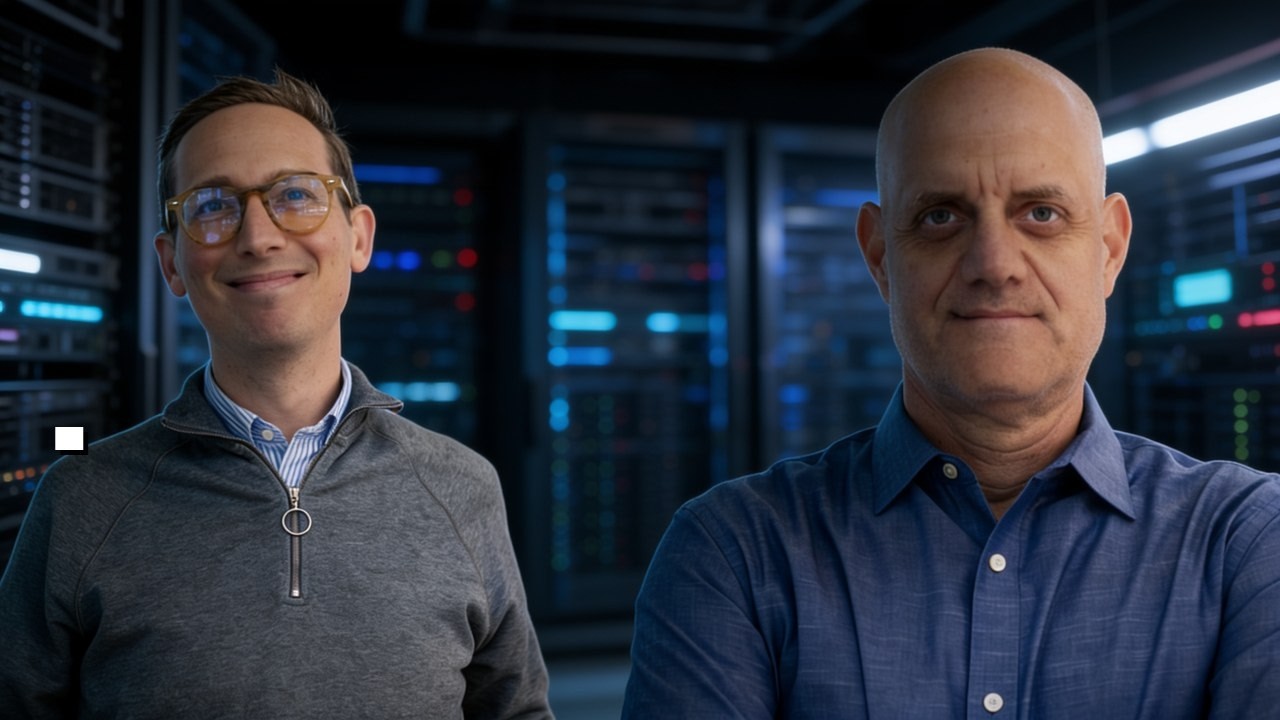
The Hidden Cost of Google Maps for Your Business | Rick Myers & Rob Yoegel, Stadia Maps
Watch on YouTubeVideo summary
The video highlights a critical shift in the location services industry, where major mapping providers now primarily serve advertisers rather than developers by tracking end-users and enforcing opaque pricing models. In contrast, Stadia Maps is presented as an alternative built on core values of clean APIs, transparent costs, human support, and zero user tracking. Rick Myers and Rob Yoegel, both veterans from the renowned company Luno (formerly part of Okami), have joined Stadia to scale this mission. Their backgrounds are deeply rooted in a developer-first philosophy; Rick spent nearly 15 years at Luno leading support before joining Stadia, while Rob contributed significantly through marketing case studies and organic growth strategies during his tenure there. Both founders were drawn by the alignment between their past experiences with high-quality service and Stadia's commitment to empowering developers without compromising privacy or data integrity.
Stadia Maps distinguishes itself as a comprehensive platform that offers more than just basic navigation; it provides essential infrastructure including routing, time zones, elevation data, and specialized solutions for niche industries like golf cart logistics, trucking fleets, and hotel hospitality management. Unlike competitors who dominate the consumer-facing map space with advertising-driven models, Stadia focuses on providing the backend tools necessary for developers to build their own applications across various sectors. The company addresses a significant market gap by aggregating both open-source datasets from projects like OpenStreetMap and proprietary data sources into accurate, deduplicated location information. This approach allows them to solve complex problems involving missing or incorrect address data, leveraging AI not just in the APIs provided but also in cleaning raw data feeds through satellite imagery and community-driven updates.
A central theme of their discussion is the importance of maintaining a "human-in-the-loop" even as artificial intelligence advances rapidly within the tech sector. Rick and Rob emphasize that while AI can increase efficiency, it cannot replace genuine human support or the trust built through direct interaction with customers. They argue that many large providers rely on chatbots for basic inquiries, which often frustrates developers who need nuanced guidance rather than generic responses. Stadia aims to scale its business without losing this personal connection, ensuring that whether a user is an enthusiastic hobbyist working on a side project or an enterprise team managing complex logistics, they receive accurate documentation and responsive assistance from real people. This commitment extends to their internal culture as well, where cross-departmental collaboration between marketing, product engineering, and support teams prevents the silos often seen in larger organizations.
Looking toward the future, Rick and Rob envision a growth strategy centered on community engagement rather than paid influencer campaigns or short-term financial gains like an initial public offering. Their plan involves fostering organic developer advocacy where users become vocal proponents of the platform through authentic content creation and participation in open-source initiatives. They intend to leverage their co-founders' expertise as subject matter experts, contributing back to standards groups and consortiums that define how maps are used on the web and mobile devices. Ultimately, Stadia Maps is positioned not just as a business but as a long-term commitment to building a location services platform that helps customers achieve their goals sustainably, proving that it is possible to run a successful company while prioritizing developer choice, privacy, and genuine human connection in an increasingly automated world.
Read the full video transcript
Today, most location APIs don't serve
developers anymore. They serve
advertisers. They track your end users,
lock you into opic pricing and treat
maps as an ad product. Maps built the
opposite. Clean APIs, transparent
pricing, human support, and zero
tracking. And now they are bringing two
Lenode veterans to scale that mission.
And today we have with us Rick Myers,
head of support and success and Robel,
head of growth at CDM maps. Rob, Rick,
it's great to have you both on the show
after a long time.
>> Great to see you again, Swap.
>> Yeah, great to see you, Swap and thanks
for having us. Appreciate it.
>> It's my pleasure and honor. Uh, of
course, there is so much to talk about
there. So much to talk about your own
journey, what you folks have been doing.
Rick, we used to talk about, you know,
the whole gold standard you folks set up
there. And of course Rob you did a lot
of great work all the case studies and
all the excellent stories that were
there. So I am kind of confused where to
start with stereo with your journey. So
I would actually start kind of mix of
both uh which is more or less like um
what you folks have been up to till this
point and why you chose Stadia Maps.
>> Sure. Yeah I'll I'll go first swap. Um I
um after the uh Lunard acquisition uh I
sp stayed with Okami for a few years and
I I worked in uh support and success um
and uh left about um about a year ago
about a little bit more than a year ago
now. And um I took a little time off to
kind of figure out what I wanted to do.
Um you and I just uh you we probably
remember I had been there almost 15
years. So I I really wanted to explore
what the next thing was for me and uh
Luke, one of the Stadium Maps
co-founders reached out because Stadium
Maps uh is a customer of Lenode and
Okami and we used to work pretty closely
together. Um and uh mentioned, you know,
hey, can we get on a call? Can we chat?
Can we talk? And uh it didn't take very
long for him to convince me with just
the values that Stadia has and their
mission and the fit um from what my
experience was with what they wanted to
do that um this sounded like it could be
the the next best step for me.
>> Yeah. Very similar journey uh uh as
Rick's very similar to very similar
journey to Rick's. the uh time frame is
a little bit uh compressed. I only spent
about five years at Lenode and Okami um
but was introduced to Stadium apps while
I was there. They were actually um when
I was the senior director of marketing
at Lenode. I was responsible for telling
our customer stories in our craft of
code series which you're very familiar
with swap and um Luke was Luke and Ian
were the first story that I was asked to
tell the first craft of code that we
ever did at Lenode. So that's when I was
first introduced to uh Luke and Ian. Um
as I mentioned I spent about five years
total at Lenode and Okami. Um when I
left Okami I went into health tech. I
was a marketer uh senior marketer in the
health tech industry for about a year
and a half. And again, very similar to
Rick, um Luke gave me phoned me up and
asked me to, you know, consider helping
Stadium apps in a growth capacity. Uh
and that includes creating content,
creating wonderful stories of Stadium
Maps customers and uh just lead the
primarily organic growth channels that
we have right now at Stadium Maps. And
that's where I'm at. when it comes to
map uh
what was the original vision of creating
maps you know what is the idea you the
idea is hey I know people want to go
from A to B how do we monetize it how
can we track them how we can spy on them
or the whole idea was how to simplify it
so they don't have to open a map they
get real time data to traffic all the
thing so if I ask you is how would you
define a stadia map today
>> great question. Uh the map the maps
world, if you look into like the digital
mapping world and the uh locations um
industry is really big. Like there's a
lot of people in it. Um and they do uh
they they roughly fit into a couple of
different categories. But what was
missing at least from my perspective
from the outside looking in when I
joined Stadia was um a a platform. So a
location services platform that that
gave developers choice and gave them uh
a good experience to do all the things
that they would need to do from a
location's perspective. So maps,
routing, um even stuff like uh time
zones and elevation like these are
things that you can find you can piece
together across the internet um across
providers but is really hard to find in
a platform. And then when you find it in
a platform, uh they're focused on um uh
they're when you find it in a platform,
they're focused on um uh selling you ads
or selling things or selling your
private selling your data. Um, and
there's there's an open there's a big
there's a big open um opportunity there
for a a maps locations provider who
doesn't care who doesn't care to sell
your your uh sell you up the river in
terms of your privacy or data etc etc.
The other really cool thing is um it's a
we used to have a lot of this and we
have less of this now which is the for
developers by developers um uh platform.
you you see less of that and you're
seeing even less of it now that um
Agentic AI is is taking over and it's
much more um accessible to create um to
create these things which on one hand is
really good and on the other hand when
you're trying to build something that is
secure respectful of your users has
great user experience and really good at
what it does you you want to use those
tools but you also want the um the
backing of a company that's been there
for 10 years and has been doing this for
10 years professionally to run your
business on top of.
>> Very well said. Uh Rob, do you want to
add anything to that?
>> Anything I would add would just be
seconding what Rick said. You know,
there there are providers out there that
um do one or two things, you know,
extremely well. Um when you look at
stadium maps, we do um a lot of things
well. We have a platform where depending
on what your location needs are, you
could very likely find it on our
platform. Uh so I think that that's
first and foremost. Uh I think the whole
concept that Rick mentioned of support
which is why you know I'm sure one of
the biggest reasons why Rick joined the
company because it has you know very
similar uh very similar thoughts and
beliefs around how support should be
handled than Lenode did. So I think that
that's you know super important. And
then I think when you get to the bigger
providers and you start thinking about
the sharing of consumer data and the how
those companies and how those location
API platforms make money um you know
that's something that's not been part of
stadium apps since its founding. It's
not in our DNA and you know it's it's
it's super exciting to be you know to be
in that and be part of that journey as
we try to scale uh you know stadium
apps. Now when we look at maps uh it's
not as crowded space as you know the
other spaces are but at the same time it
is crowded in a way what maps can do but
it is market is mostly dominated by two
big players it all depends mostly I mean
we use maps mostly when we drive around
and most of times you also a lot of
automakers are actually just sticking to
one which is some are building their own
uh in this space can you talk about the
market of stadium apps who is actually
using because in front we see
infotainment system we see the map that
Ford or whatever car offered but behind
the scene it could be whatever API there
so can you talk about the market that is
there for stadium maps right now
>> yeah we don't um so we don't have a a
mapping product and that's on purpose
right you can't go to download the
stadium maps um app and and navigate
from one place to another bread and
butter our bread and butter is providing
the infrastructure for other people to
build that and that world one of the
other things uh like bouncing back to
what you were saying a few minutes go
swap about like why this was interesting
to me and Rob personally. Um, maps are
fascinating and incredible and location
uh stuff is really really interesting. I
would challenge uh you and your
listeners and watchers to uh just one
day count how many times you look at a
map in a day. Um, you probably think
it's one, it's like 20. It's so many
more. And there's so many more
opportunities uh to provide um to
provide those services for developers uh
to empower them to do very specific
things or very wide ranging things. So
on stadium maps you could build a
mapping application. We have lots of
customers that build a mapping
application. But you can also build a
specific mapping application for
something like uh golf carts in your
community or for uh trucking
uh to um to figure out very specific
logistics problems or uh hospitality to
figure out how to navigate around a
hotel um complex or something like that.
And that's just one segment of what
Stadium Maps does, which is that the
mapping um which is our mapping product
set. Um, even in that even in that
product line, there's a million problems
to solve and and we try to be the best
at uh giving developers the tools to be
able to solve them uh for all these
problems we haven't even thought of.
>> Yeah, swap. I think when you when you
talk about who is using stadium apps, I
think again let's go back to the Lenode
days. Lenode customers were a wide range
of of users, you know, from, you know,
home homebound developers who were just
working on their own, not homebound, I'm
sorry, from developers working on their
uh their individual projects that they
wanted to do maybe outside of work, you
know, to, you know, we call them
hobbyists and enthusiasts, right? All
the way through to, you know, enterprise
businesses. You know there there's so
much green field from a location API
platform like stadium maps where you
could be a hobbyist developer working on
a side project. You could be working for
a large organization and you know we
used to call it Lenode you know it used
to be like take Lenode to work where you
signed up as a as a hobbyist enthusiast
to try the platform and then when you
realized it could do all the things that
some of the you know larger players use
that you're spending tons of money to do
then you take that and start using it on
a project at work. Maybe it's a smaller
project, maybe it's a bigger project. So
I think the range of customers could go
from anywhere from the hobbyist
enthusiast to a startup, you know, all
the way through to an enterprise
business who wants to do something at
scale but doesn't want to pay the
exorbitant costs that are associated
with some location API platforms as well
as the data issues that we you know the
data and the uh customer data issues
that we talked about earlier. talk a bit
about uh the whole uh map market that a
lot a lot of people are not aware of and
what a stadium map does behind the
scene. How we generate maps, how every
mapping company or every location
services company generates this map is
really generates our our map tiles,
generates our location data, generates
our address data, our address databases.
uh all that stuff is a really
fascinating problem and it's actually
kind of the secret sauce of any location
um services company. So um the the world
has many open data sets that uh lots of
people are aware of. Um there are very
there are closed data sets, there are
proprietary data sets and um our special
saucer kind of our magic is taking all
of those and putting them together and
providing um like uh simplified
dduplicated accurate location
information to to our customers and um
on the behalf of their customers as
well. In terms of AI, I think the place
where that's happening the most in the
like and this isn't specific to stadium
maps but more to the the industry is um
uh where we're seeing that is around um
missing data or incorrect data sources.
So AI is being used more in like the raw
data sources than it is being used in
like the APIs that we're providing to
customers. Um there's it's it's an
incredible pro I mean it's it's one of
the world's biggest data sets. It's one
of the world's biggest data problems and
it's constantly moving. Um whether it's
address data or if you just think about,
you know, new construction or stuff gets
to torn down, stuff that's there
yesterday and not there um tomorrow. Uh
that's a really hard problem. And things
like satellite imagery can help there.
things like um uh all of the uh
communitydriven stuff that we use um uh
people you know using people to do that
uh is the traditional way but there's
also AI AI empowered or AI enabled stuff
coming to market or coming to um coming
to fruition that is making the raw data
sources more accurate which in turn lets
us give our users um uh better APIs more
accurate APIs um in the long run.
>> Can you also talk about of course
there's open street maps also is there
uh what is the what is the role of
openness open source open sequia
maps?
>> Yeah we contribute a bunch to um we can
contribute back to our data sources and
to our um uh and to the data um
providers like open street map uh open
addresses a bunch of other um uh um open
source projects and open data projects.
Um, so that that's where we contribute
the most. We also provide um some
open-source uh APIs and SDKs that uh
folks can use and learn from. They can
be used with um uh with Stadium apps or
in some cases without. We're also part
of a couple of uh consortiums uh and
working groups that provide um uh
standards and libraries for um uh for
using maps on the web and and in mobile.
Map Libre is the big one that um one of
our co-founders actually helped co-found
and sits on the board of um and uh they
provide um like I said open standards as
well as um help define open standards as
well as uh some open open libraries that
lots and lots of people use with and
without stadia maps uh tile data and
location data.
>> Excellent. Uh thank you. Now let's talk
about
uh how are you Rick and of course Rob
you are going to further help stadium
maps. What is going to be your roles at
the company?
>> Yeah one of the really cool things um
like Rob was saying a bit ago is uh we
walked into something that is going
really well. So uh it's already a value
at stadium apps um in line with that um
our our developer first uh methodology
and and mindset to provide humanpowered
great fast accurate support. Um uh and
we've been doing that stadium has been
doing that was doing that long before uh
I showed up. What I want to help is to
scale that. So as we uh grow the
business and as we uh get more customers
and we get more uh products in our
product line uh obviously support scales
with that. Um and scaling support while
keeping the spirit of uh support and the
core values that we have set at both a
support at a support level is also as
well as um at a stadium apps level. Um
that's what I hope to really help with.
Um, in addition to that, I would love to
what what Rob and I are both doing is
just helping grow the business as a
whole. So, not only um are we taking
some of what we learned at Lenode and
elsewhere to help just grow a startup,
right? Cuz that that's um uh something
that we've done before. But we're also
trying to at the same time learn the
lessons of um what we got right, but I
think most importantly for both Rob and
I, what we got wrong about scaling um
and apply those lessons at the same time
and and hopefully uh we can do both and
it doesn't get out of whack.
>> You mentioned Rick, you know, the things
that you learned at Lenode. Can you talk
about what are some of the lessons that
you learned at Lenode that you feel can
be incorporated or brought to stadium
maps? At the same time, this can be
tricky. Some mistakes that you made at
Lenode where you're like, "Hey, I want
to not repeat them." I was going to say
one area that really quickly comes to
mind and I think it's really the kind of
the one of the core things of reasons
why I wanted to be part of Stadium Maps
is just the
uh the knowledge across teams. Um even
though stadium apps is a super small
team um one of the things that I loved
working doing at Lenode was working with
the success and the support team on
discovering customers who we could tell
stories about. You know working on the
product team working with the product
team to understand our product better so
we can put better technical
documentation out and better content out
there that's accurate and discoverable.
So really just working I hate to use the
political term but working across the
aisle. you know, when you think of
somebody in marketing or somebody in
growth, you know, it's, you know, you
you sit in your little silo and you sit
in your little bubble. And, you know,
I'd never want to do that inside of an
organization. In my career, I've
sometimes been stuck in those areas.
But, you know, now I feel like I have,
you know, the ears of our co-founders. I
have support and success. I have product
engineering. You know, there are so many
ways to collaborate inside of Stadia
Maps. And I think that you know from a
lessons learned at Lenode the reason why
we were successful at Lenode at least in
the five years that I was there and
maybe the two plus years I was there
before the acquisition was just because
of that because of the collaboration uh
that we had inside the organization.
>> One of the things that gets really hard
uh as you scale uh and and this is a
this is this is obvious but it it gets
harder to um to communicate. it gets
harder to stay in touch and uh that I
mean that from two angles and one is
internally and one is externally. I
think that uh Lenode uh Okami to this
day does an awesome job um knowing their
customer and being very personable and
close to the customer. Um being able to
uh reach a real human um is is uh it was
important it was important a few years
ago. It was important many years ago. uh
we're replacing people with uh we're
replacing humans with uh computers and
it's even more important now because
people don't love that um uh within
within reason. So staying close to the
customer um obviously becomes a harder
problem as as you scale and I really
want to drive that home because I think
it's one of the things one of the really
special parts of Stadia that um we can
have uh we're empowered right now to
have a great relationship with our
customers and I never I never want to
lose that one-on-one connection. Um I
and at on the same token exter
internally um as you scale it gets
harder to um to stay a small company um
uh metaphorically, right? And I think
that we learned a lot of lessons growing
so rapidly at Lenode where we saw things
break, right? And we saw oh well that
used to happen just because we knew that
because that person was in the room,
right? or because we said that in a
Slack channel or because um you know we
saw somebody by a water cooler and uh
remote work has changed that obviously
and and things are different but I think
that um when you scale uh an
organization from 10 to 150 or whatever
like you see those things break and I
make no promises that I'll that we'll do
it better the second time but I will
make promises that will at least um
we'll go into those problems with a
little bit more information than we did
the first time.
>> When it comes to this specific market,
talk about the role of developers that
you folks see and how you would as you
also said developers they don't like
marketing. How are you going to attract
developers, show the value of stadium
apps to them and engage with them in
both capacities whether offering better
support or growing the market? I think
from a growth standpoint, it's going to
come down to technical documentation. I
think that that was a very important
area uh of interest at Lenode. People
trusted our technical documentation to
get started. Um so I think that there's
one area. I think the second piece of it
again as Rick mentioned is the human
support element that somebody can get an
answer. Um and Rick knows how to scale
organizations. So when we grow from X to
Y or X to X2, um we can still offer that
human support. Uh on the AI front, I'm a
huge believer in the work that I'm
doing, you know, behind the scenes with
Cloudco and so forth. I'm a huge
believer in human in the loop. I don't
think that that's ever going to go away.
Um I think anybody who pushes an AI uh
agenda on you that doesn't mention human
in the loop is not telling the whole
story. Um there there has to be human in
the loop. And if that's um from a
developer working with cloud co-work or
cloud code to drive their next project
um to a growth marketer you know using
cloud co-work to do x y and zed to
somebody in the support success area who
using AI the human in the loop is going
to be critical. We we can do things t a
lot faster and a lot more efficient with
AI but we're not being replaced. We need
a human. you need somebody to to to ver
validate and verify you know the
accuracy of any output.
>> I totally agree. I I was having this
conversation with a couple of friends
this weekend actually. Um
one of the I love the personal software
re revolution that's happening right
now. I think it's incredible. Um and I
love that everyone can um create tools
that uh didn't exist yesterday uh
without an incredible amount of
friction. whether that's for personal
use or professional use. That's kind of
the difference. So we want to be there
for users and I think every I think
everyone should um maybe think about
operating this way is I think um we need
to be we need to be there for users who
uh maybe have never written code before,
right? Like who have never um but have a
great idea and they want to do
something. Um and we're seeing that
already in the support organization.
We're seeing people who um are coming in
and they're like, I just have this idea
like how do I do this thing? And um
that's one of those things that uh if
they if a customer goes and asks that of
four providers and three of them give
just have a chatbot response that are
like you just use this API. Um I think
that those providers are going to lose.
Uh, and I think the people who are going
to win are the people who are um that
have people on the other end to say, you
know, good idea. You should think about
this, you should think about this, and
you should think about this. I'm not
saying I'm completely writing off uh AI
um support or uh uh AI um support
engines or AI assisted support. I'm not.
Uh but I do agree with Rob that there's
something um really magical in having a
human on the other line. Um and then I
think at this at the other on the other
side of the coin there are professionals
who are using um the our our tools our
platform and we have to be ready for
them in all the ways that Rob was
describing um having an MC MCP server
having great documentation having um
machine readable documentation having
all those things available to us because
the gamut of of customers who are using
Stadia apps has grown with AI which is a
really cool problem to try to solve uh
from a support perspective and from
Rob's perspective as well and from a
product perspective too.
>> Yeah. And I would also add to that uh
community right I think just at its core
and foundation you know you know with us
you know really foundationally being
around you know built around open source
you know I think there's a tremendous
opportunity for stadia maps to drive um
more community in involvement either to
be to to be a leader in that or just to
be involved in it. Um, when I say, you
know, be a leader in it, you know, do we
create our own, you know, community, you
know, do we do we go off and do
something on our own or do we just
participate more and be more active? Um,
I think there's a lot there. Um, Luke
and Ian are brilliant people. They're
brilliant men and they're just so smart
when it comes to the location uh
ecosystem. So, you know, we we need to
get them and they want to be more
involved in the community. Um, but for
the last, you know, 10 plus years,
they've been just running a business,
right? And they haven't been able to do
that. And I know, you know, they're both
very interested. Ian's already doing a
lot more blog posts on stadiums.com and
Luke's, you know, talking to me, you
know, very often about, you know, how he
can be, you know, more forward and be
more out there in the community. So I
think that that's another opportunity
that we can that we bring you know kind
of taking off some of the you know the
growth initiatives and the support and
success initiatives off of two
co-founders um and doing it that way.
You Rob mentioned that you also want to
increase community engagement. uh you
know uh of course you folks recently
joined so I will not ask you to share
the whole but what what ideas that you
have that you know whether it comes from
all the leno days through a kama journey
or what you have seen because this is a
different market this is not a market
where you can get everybody involved you
know it's only very specific market
targeting very specific audience so what
what is your both of you what is your
vision to get more developers community
engagement
>> I think the first one that comes to mind
for me is developer advocate vates,
advocates who are out there using
stadium apps in the wild and having them
create content, speak on our behalf, uh,
and and and just be more public. Um, and
I'm not talking about paid influencer
marketing. I, you know, there's we did
we did some of that at Lenode as well.
Um, people can see right through some of
that. Um, so, you know, if I had to list
things, developer advocacy would be much
higher on the list than, you know, some
paid influencer marketing campaign. uh
you know and I think that that developer
advocate piece extends into something I
mentioned before which is you know
something more founderled you know
something that allows us to put Ian and
uh Luke out there as subject matter
experts um so I think there's tons that
we can do organically
um ground up um around developer
advocacy I would probably say that would
be one area and then as I mentioned also
earlier I think just purely from a
content p perspective um discoverability
ities perspective, you know, in answer
engines and and so forth. Just making
sure that we're there, right? Just
making have getting more mentions,
getting more citations, you know, in the
next 3 to 6 months, if not, you know,
sooner, you know, those are some
initiatives that I'd love to, you know,
get off the ground.
>> Maybe repeating what you were saying,
Rob, of putting in a different way. Um,
my thought has always been the companies
that I want to use are the companies
that are part of the conversation,
right? they're relevant and they're not
companies who are just like here come
buy our stuff. It's here let's um let me
help you succeed in what you're trying
to do. And I think that you it's very
obvious you can see the companies that
do that and you can see the companies
that don't do that. Um and some of the
things that Rob mentioned are part of
just being relevant and being part of
the conversation. Um we want to put out
great developer uh documentation and not
just about Stadia maps but about
location services about maps like maps
are complicated right uh geocoding is
complicated um I think we have a blog
post coming up fairly soon about uh geoc
reverse and forward geocoding about how
they how they work what they are like I
we don't really care necessarily that
someone comes to stadium maps reads our
docs and uh signs up as much as someone
comes to Stadium Maps, reads our docs,
continues to explore the ecosystem,
figures out what they're trying to do,
and then when they need to buy, they
say, "You know who was helpful? Stadium
Apps." And that that's kind of our
playbook. And it's it's more genuine.
It's and genuinity or um or um uh um the
the words escaping me, but that that
real uh that real connection with
customers where you actually care about
uh the company and the company cares
about you. And again, you know these
companies like you you have them. I'm
not going to say them out loud, but you
know them. Everybody knows them. We want
to be that company. um because we think
that that is that is long-term success.
Um not not the flash in the pan, which
by the way is how Stadium MS has
operated up until we've shown up. Like
they're Stadium Maps is in it for the
long game. Like there's no like um get a
bunch of money uh sell go public, get
acquired plan here. It's to build the
location services platform that is here
for a long time and helps customers
achieve their goals for a long time.
There's no escape hatcher or plan to get
out. We're just trying to build a good
company that does good stuff for
customers
>> and have fun doing it, right? Have fun
while we're doing it. I mean, there's
there's there's definitely this, you
know, I would again back to Little Node
days. I joined Lenode in 2019. Rick was
there way before me, but there's this
concept of just having some fun doing
it, right? The outcomes were different.
you know, Lenode was acquired. There's
nothing, you know, like that on the road
map for Stadium Maps, but we want to
just have fun doing it. It's one of the
reasons why I chose to join, you know,
and uh to to join Stadium Maps. Real
Rick's there. Rick, I know Rick. I like
Rick. I've worked well work well with
Rick. Um I knew Luke and Ian, you know,
they're good people. So, I want to be at
this point in my career, I want to be
surrounded by people I want to be, you
know, I want to be working with every
day and see every day. Rick Rob thank
you so much uh for joining and sharing
your story and status I remember I
talked to the founders couple of years
ago you folks are doing a great work
this space you know that's what open
open source is all about so thank you
for not only sharing those story but
also reconnecting which also means we'll
talk a lot as things new things happen
in state map so I would love to have you
folks back on the show but I really
really really appreciate your time today
thank you
>> thanks Bob thanks I'll talk to you