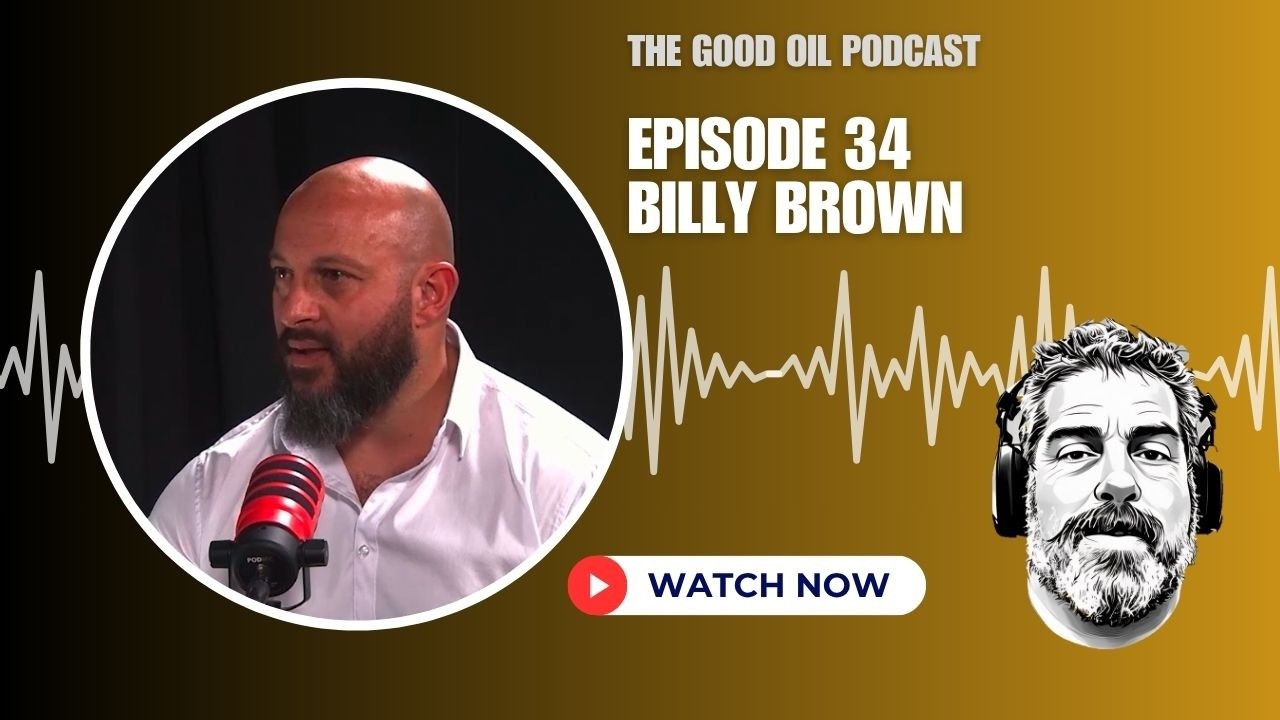
Video summary
In this episode of The Good Oil Podcast, host Cam and guest Billy Brown engage in a candid discussion regarding New Zealand's economic trajectory, social cohesion, and historical narratives. Billy shares his personal background as a working-class Fijian-born European who left school at thirteen due to dyslexia, using his story to emphasize that hard work and accountability are the only viable paths to success rather than relying on government intervention. The conversation critically examines race relations and Treaty settlements, with Billy arguing that New Zealand functions as a meritocracy where anyone can succeed regardless of their background. He challenges the narrative that the country is inherently racist by pointing to recent political appointments, such as two Māori Deputy Prime Ministers, while also addressing the issue of radical leftists or those who mistakenly identify him as Māori when he is actually Fijian (Moti).
The dialogue extends to a sharp critique of current economic policies and historical revisionism. Billy and Cam argue that large financial settlements held by iwi and hapu act as extortion, driving away corporations and mining interests without creating local employment or adding economic value; they suggest that royalties or equity models would be superior alternatives. Furthermore, the speakers criticize both Labour and National parties for being indistinguishable in their management of national decline and their reliance on Māori MPs for political survival, advocating instead for a "Kiwis first" approach that focuses on domestic prosperity and unity rather than divisive cultural identity politics. They urge the nation to stop exporting its problems, such as coal, and to address tangible environmental issues like microplastics and nitrate pollution through practical measures rather than symbolic virtue signaling.
On the geopolitical and structural levels, the speakers advocate for New Zealand to act as a better neighbor in the Pacific by empowering nations like Fiji through soft power instead of sanctions or condescension, especially as Chinese companies fill the void left by Western withdrawal. Billy recounts his positive experiences in Fiji's culture while warning against excessive Chinese influence. Domestically, they call for a constitutional revolution similar to those in the US or Fiji to hold the civil service accountable, potentially moving toward a republic with an elected president who can control the cabinet and uphold fundamental rights, noting that clinging to the Treaty of Waitangi and the Crown currently hinders this transition. The discussion also highlights the need to abandon unsustainable "net zero" ideologies in favor of actively mining coal, oil, and gas domestically, particularly on the West Coast, to restore energy security and economic viability.
Finally, the episode addresses the disconnect between elected officials and policy delivery, criticizing ministers like Nicola Willis for lacking relevant expertise and relying too heavily on advisers from previous administrations. The speakers identify a lack of neutrality in the civil service as a core problem, citing contradictory advice regarding job cuts under different governments, and argue that both major parties fail to represent the working class while perpetuating condescension toward Māori communities through patronizing narratives. A key theme throughout is the public's demand for authenticity and honesty over rehearsed political lines; the speakers advocate for leaders who admit that deep-seated economic issues require long-term solutions rather than false promises of quick fixes. Ultimately, they emphasize that New Zealanders want plain-speaking leaders who tell the truth about national debt and challenges, rejecting the idea that career politicians with privileged backgrounds can effectively manage the country without acknowledging the reality faced by everyday Kiwis.
Read the full video transcript
Hey now, welcome to the show where the
wind's blowing strong and the truth can
flow. This is the good oil. Catch a vibe
today.
>> Welcome to the good oil podcast. Before
we get started with our guest, we have
to look at a one of our latest cigars
that's come in the May
Hemingway selection.
This cigar is a little cutie. Uh, it's a
Cordwell yellow cake 2026 Manduro
Rabusto.
Uh, it's a Dom Dom Dominican Republic
cigar. It's got a little pigtail on the
end. It's just for aesthetics. You
obviously trim that off. Uh, this will
be a uh a fantastic little cigar. It's a
5 in x 52 uh ring size. Uh, it's
probably a good hour smoking. Uh, if you
want to learn more about these cigars,
uh, and everything to do about cigars,
then you can join the Hemingway Club or
the Passionados Club at canteros.n.
Welcome to the Good Oil Podcast. This is
episode 34 and with me is Billy Brown.
>> Thanks, Cam. Thanks. Nice to be here,
eh? Well, yeah. I was watching you um
talk u you're ahead of me on Shubs's
show on Monday and I've been sitting in
there listening to 15 or 20 minutes of
you talking to to Shubs and and uh I
said to Shubs, I need to get Billy on
the show because the things he's saying
just resonate with me. Uh but you're
taking a perspective from a Maui
perspective, but those things are
resonating with me. And I was born in
Fiji and I'm European. So having those
things resonate with me means well makes
makes you interesting.
>> Yeah. Yeah. Yeah. I just got to you know
a bit of a view on things as I was
saying earlier on before the the family
and I very much in that t moldy space
but we I just see where the country
where I believe the country needs to
start heading
>> because I believe in a prosperous New
Zealand because a great New Zealand
actually means a great uh country means
that Moldi can do well as well. as well.
>> No, everybody can do well
>> and and that's the whole purpose. If
we're a prosperous country, New
Zealand's prosperous, moldy can do well
and non moldy can do well. And I just
talk from a moldy point of view because
I'm a moldy man. I want our faro to do
well. So if we can get this economic
machine sorted in New Zealand, how good
it would be for for Moldi as well. I
think it'd be the the opportunities that
this country offers,
uh, you know, from my perspective is
that, you know, we've always had an
ethos of, um, Jack's as good as his
master.
>> Mhm.
>> Um, and you literally can do anything in
this country still. Um, irrespective of
your background if you're just prepared
to work hard. And that's the message
that I'm picking up that you're saying
as well in in your spots on the radio
and you know you you've got your
Instagram and and your Tik Toks and
things like that. But uh you must be
attracting a fair bit of hate.
>> Yeah, I am. But just to touch on that, I
do believe this country is a
meritocracy. And I think if you can work
hard, you achieve anything you want. And
I just want to get my story out there
because
>> I don't come from priv privilege
quotation. come from a struggling
working-class family, New Zealand Kiwi
family
>> who papa is moldi and moldi um
>> and I left school around that 13 years
old not educated um had a learning
disability um got a bit of dyslexia and
if I can achieve um great things I think
every day any key we can achieve
anything so I'm all about that mindset
>> yeah I mean one of my mentors is a guy
that has dyslexia
>> um incredibly wealthy guy. Um, and he
had a hard upbringing. He wouldn't
wouldn't have been classed as, you know,
privileged. Um, worked on the tools, you
know, basically since he was about 15 or
so. And, um, and then he's a
multi-millionaire and he's done all of
that without any qualifications. Um, not
sat any exams. Um, he always jokes that
if you start a question, a a sentence
with, "Have you read?" The answer is no.
>> I agree. I agree. I don't think you need
to be educated to be smart as well.
>> Yeah. Well, that's the thing. So, tell
us a little bit about your your your
upbringing. What is has c you know,
created this foundation of
well, it it's hard to describe what I'm
what I'm seeing right in you is
is a you've got a lot a big presence
when you speak. You speak with
authority, you speak with knowledge, and
you speak with experience. And that
shows through in in the words that you
use. I'm a big fan of listening to what
people say,
>> not watching what they do because what
they say betrays their true self. And
that's that's what I see from you. I
just want the people who have not, you
know, people who watch this podcast or
people who read my website to understand
what makes Billy Brown tick. Well, a bit
about me like I grew up in Canterbury,
North Kbury, Ka Boy, which is just um I
think it's like 15 30 minutes out of
Christ Church. Um as I said, the
upbringing was very very tough. Um dad
worked really hard
>> and that kind of like cemented my
thought process. So dad was a very much
a believer you have to be accountable
for your own actions and he led
>> through his examples. He wasn't actually
a big talker. He he just led. You know,
we grew up in a family where dad would
push bike to Christ Church uh airport
which we lived in Koi. So that's
probably about a 45 minute drive. So I
don't know whe that's in cycle terms.
I'm not a cycller. Sorry.
Don't worry about that.
>> And um it been like a time I remember
this time and it's kind of like
resonates with me is um he would work
that hard. He knew he'd bike to the
Christ Church airport from Koi and he
would do it from dry norwest summers and
extreme cold canary weathers. And there
was a time where the pedal broke off and
he had to bike home with no with only
one pedal. He had to put a block on the
pedal to he could afford to pay for that
the next pay. We didn't. Yeah. So, dad
was all about if you could um get up
early and he was a big believer in
fitness as well. He's still very fit for
a sick 606 that cycling would have
>> Yeah. And he still cycles today. Big
believer in um your body being well,
working hard and provide for your family
as as much as you can, you know. And we
he didn't get to reap his hard work
completely, but he showed me that work
ethic and he and he he clearly showed me
that no one's going to come and save
you. Like I just he just was all about
accountability.
>> So the government's not going
>> to come and government will never save
you. If the government turns up like
Ronald Reagan saying we're from the
government and we're here to save you,
you should run.
>> The nine most treated words as far as
possible because the only person who's
going to save you and I'm going to talk
for men because I'm a man um is
yourself.
>> Yeah.
>> We we're not really loved by people. We
have to be providing and protecting for
our family.
>> And the only people who will save us is
ourselves or the only person who will
save you is yourself. Yeah. So that
resonates with me because dad didn't say
that like I've just said that but he
showed me them attributes how to become
a good strong provider and someone who's
going to protect their family and how to
no matter what your background is you
can stand up and say whatever you want
it's your opinion and we live in New
Zealand
>> we're allowed opinions
>> we're allowed opinions and if you don't
like my opinion don't listen to my
opinion so I I speak from authority
because my father showed me that way
>> you know he had the strength and manner
to stand up.
>> But that does show through in you, you
know, that strength and that manner.
You're you're
>> uh not just portraying, but you're
actually like delivering that when you
speak.
>> And I understand exactly what you're
saying about the only person who's going
to save yourself. I mean, you don't find
this out often in life unless you have
significant, you know, challenges or
trials. Could be health issues, could be
work issues, could be all sorts of
things.
The only person who is going to save you
is yourself.
>> Correct. And it's okay to fail. I've
failed. But you what you need to
recognize, too, is you need to get back
up.
>> Well, you don't learn to ride a bike
without falling off, do you?
>> 100%. But it comes back to that, you
know, no one's going to come save you.
So, you fail.
>> Get back on the bike.
>> Like Joo says um in his podcast, good.
Get back up and keep riding.
>> Yeah. You know, and we have to there's a
point in time in New Zealand now we it's
not 2020 anymore where Auntie Justinda
is going to shut people's conversations
down. We're allowed to have these
conversations and if you don't like the
conversations, don't listen because this
is New Zealand.
>> There's an off switch.
>> Yeah, there's an off switch or there's
you can turn off the internet. We can go
watch someone else. Yeah.
>> But this is New Zealand and we have the
fundamental right to express our
opinions.
the opinions that you're expressing at
the moment.
You know, I was watching some of the the
comments that were coming through coming
through yesterday on Shubs's program
>> and they're outight actually racist.
>> Well, from Maui to a Maui
>> person.
>> Racist,
>> you know, the right kind of Maui is
basically what they're saying. And
calling you things like, you know, an
Uncle Tom.
>> Mhm. and stuff like that that you that
you've been colonized.
I don't I don't see that. But
>> how do you feel when when people are
hurling abuse like that at you?
>> Yeah, that's a great um question. I feel
good.
>> I feel real good because I know I'm on
the right path.
>> Yeah.
>> When I'm getting I'm just laying out a
challenge and our culture is built
around New Zealand's culture but also
multiculture.
>> Right. There's a challenge.
>> There's a challenge. You stand on the
pip. There's a challenge. I'm
challenging our people to step up. And
it goes back to that accountab account
accountability conversation that we just
had. Um I don't it doesn't bother me. Um
they can call me whatever I want they
want. That's their opinion and that's
really good. But I know
>> but you're talking about facts and
details and things like that. They're
just hurling abuse.
>> You're winning.
>> Yeah. Well, and it drives
>> not with them but
>> and it drives the algorithm too. So I do
I I do have a play too cam where I like
to reply with a question and it and it
drives the algorithm a lot a lot more.
So I just think good because if they
don't agree with me, I know I'm pushing
through the radicals, the radical left
within New Zealand culture and that's a
good thing because that it's minority of
New Zealand online. It's minority, the
loud minority. They don't they don't run
this country. Everyday Kiwis run this
country and we need to take our country
back. So when I hear or read them
comments where I get de threats like I
just got before um I feel great about it
because I feel I'm on the right path and
I'm going to make a change for New
Zealand.
>> You were talking yesterday and saying
you somebody said oh New Zealand's a
racist country and you made some
comments about that.
>> Um and particularly you were saying well
in the last three years the two deputy
prime ministers that we've had have both
been married.
How's that racist?
>> It's not racist. I I I don't understand.
It's the same thing what you just said
like they come back and you know David
Seymour is not the right moldy.
>> Winston Peters is not the right moldy.
But the facts are in the last three
years we've had two
moldy prime ministers. I don't agree
with David Seymour's policy on act.
That's my opinion. Doesn't take away the
fact he pop is moldy. I really
like Winston Peters's policies because
obviously I'm a member of New Zealand
first so I have bias here. But he's
they're both still moldy. And
you know, it's interesting because Shubs
asked that and he's on the radio.
>> Yeah.
>> He's not from um wealthy family either.
You know, he has a um tough upbringing
and he can speak on his own upbringing.
>> He was on my show telling me about that,
you know. Then
>> I'll watch that. It's a it's a good one
and people should go watch that because
>> it gives you a true picture of what
Shubs is about. Yeah, but how good is
New Zealand when you got two moldy men
talking about moldy issues online and on
the radio and you got had two deputy
prime ministers in the last 3 years?
It's 2026. We're not living in 1910 or
1840 or 1850 where there was some
difficult uh for moldy people and we can
um recognize historic past but we should
not be trapped in the past and in 2026
the only thing that's holding back
anyone in New Zealand is themselves. The
only person that is connalizing moldy
people today are are the your individual
self and the party moldi because the
party moldi want you to be in that
victim box. They want you to feel like
you're inferior because that's their
business. And if you don't feel
inferior, they're not going to keep
their votes.
>> That's an interesting observation of
Depati Mari because if you look back in
their history when you had Peter
Sharples
>> and you had Tiana as the as the
co-leaders that party had mana,
>> right? Those both of those people had
mana. Tiana Tia stood up to Helen Clark
and made her and left the Labour Party
on a matter of principle. Not many
people do that. Leave on a matter of
principle and then
do what Winston Peters has done too when
he left the National Party. Go and stand
against the party that he left and win.
And that's what Tiana did. John Key
welcomed them into into his government,
right? He didn't have to do that. He
wanted to do that. And I think that the
impact that Tati Mari had with with the
government of the day at that time was a
good impact for New Zealand society.
Um, sadly I see Tati Mari has fallen
into
disarray really. They've got one thing
and that is marry a hard dumb. We was
robbed. Um the treaty's a fraud. Uh
honor the treaty. I how you treaties of
fraud and honor the treat kind of don't
work together. Um and and everything's
the fault of whity.
>> Um and people get sick of hearing that.
>> They do. And you're right to I'll
rephrase that. the Moldi party
>> when they're in power with John Keys,
they they achieve great things for
Moldi.
>> It's better to be in the tent than
outside it, isn't it?
>> And that's that's where Mana comes from.
You don't have to agree with anything,
but what you need is alignment. And mana
is actually sitting at the table.
Leadership is sitting at the table with
people you do not do not like and
getting outcomes for your people. You
don't get outcomes sitting on the
sideline and being an activist. And
that's what's a party moldy.
>> But wasn't that the treaty, right?
Sitting sitting in a tent. 100% it is.
Yeah.
>> Right. With people you didn't really
like and you'd been fighting and come to
an agreement.
>> Yeah. Potentially they didn't um some
didn't like um they didn't like each
other but potentially they some of them
liked each other.
>> Many of those of those WI leaders that
were signing the treaty didn't like each
other.
>> No, they didn't. No, you're right.
You're totally correct there. Yes.
>> Did anyone from Did anyone outside of
Napoui enjoy sitting at the table with
Napoui?
>> Probably not.
>> Probably not. No, you're you're 100%
correct.
>> Especially around the Bay of Plenty.
>> When when only 10 years earlier,
Hungiheka was uh was raiding and taking
slaves.
>> Yeah. And he pushed them all down to
McCoy Island.
>> Yeah.
>> Yep. Totally. So, you're right. Yes. And
the the treaty is it can't be a fraud
and honor at the same time. And there's
only three articles and there's no
principles.
>> And you know, on that too, the treat is
pretty clear too that
>> it's fairly simple. You know, article
one in Moldi, they gave out governance
at a national level. That's that's very
clear. Article two, there's some
property rights for hapu in WI
collective rights. Article three is the
only time they talk about individual
moldi and we become subjects of the
British crown. And there's and that's
there's obligations and rights behind
that, but that's the only time where it
speaks around individual moldi and we
become British subjects. And we if
you're historian, if you know history,
you know what it means to be a British
subject. You don't hold any sovereignty.
You're a subject to the crown. End of.
>> That's right.
>> Yeah. And I do believe there is property
rights for collective. Um and I don't
want them to be eroded at all. However,
at the same time, I don't want EW and
Hapu to hold this country to ransom like
they have down in the South Island and
they want this these payouts of $100
million. Yeah. and total 350 million and
like the question I have I was caught up
with Tracy who's a counselor for western
bay plenty is how much does the tunnif
actually need why is it 350 million a
tanifar needs why isn't a dollar why
does a tanif need 250 million so why are
we paying out so much money to these ews
and hapoos just to tick a box to say hey
kipai here every single kiwi should be
asking that question and that's not a
parkour question that's a New Zealand
question Because every time EWI elites
do this,
we you and I the taxpayer pay more cuz
they pass that cost on to us.
You know, there was a a movie years ago
by Billy T. James
um came out Friday or whatever it was. I
think that was the name of it. And in
that there's this building that falls
down the into the river, catches fire,
and Billy um T. James is on the bridge
and being a Mexican Maui and uh he sees
this house coming down the river. I
don't know if you've seen it, but
>> go and have a look at it. You can find
on YouTube. There's this house coming
down the river on fire and there's, you
know, a couple of windows that are dark,
but there's all these flames and and the
door and the porch and it looks like a a
monster coming down the river and he's
going, "Oh, the teddy, the teddy." and
he's just stolen all this money and then
he just starts flicking it out into the
oh the tannif needs more money and I
thought you know that's what that's
probably 30 years ago
>> right
>> that he was joking about the tannifar
and how the only way that you can make a
tannifar go away temporarily of course
is usually by backing up a large truck
of cash
>> Billy T was ahead of his time I think
and if people actually remember right a
lot of moldy people didn't actually like
Billy two died because he was head of
that time. He was taking the mick
>> out of the hypocrisy in molding them at
the time and and
>> yeah I find it interesting though with
the where they hold the country ransom
though these ew and hapu it's not just
350 at toong it's actually what was it
down south or one of the dams I think it
was 110 million over 30 years
>> yeah now you've got this mine
>> mine in the targetgo they were up around
150 last time I looked
>> that's extortion e and we really need to
push back as New Zealanders and say,
"Oh, what's going on here?" Because
these moldy elite, they're not the Kato
who are having a, you know, a cup of tea
and telling all these whiters or the all
these podos these stories. These are
elite moldi on hundreds and hundreds of
thousands of dollars a year and they're
making a profit out of this and we need
to ask a question, not as moldy, but as
New Zealanders and go, what's going on?
This is this is getting beyond the joke
here because we can't afford this as a
country anymore. Well, if you look at
Nahu and they have to be the ones that
are doing the stuff in the South Island,
right,
>> is they had one of the largest
settlements.
>> Nahu understandably
um very small wi
>> not many members huge settlement
and now they're continuing. A settlement
implies that that's done.
>> It's been paid out. Correct. We we've
drawn a line under the past. We
acknowledged some wrongs. We've passed
an act of parliament. We've given you
some recompense for that. Might not be
as much as you wanted or whatever, but
that's the deal. This having a second
bite of the cherry uh through, as you
say, extortion.
Surely, you know, there's better ways to
do it than trying to do an ewe tax.
I don't know any other words that can
describe it as other than an ew tax
that's occurring just to get a nod of a
scent or approval for for the plans. And
if you look at that mine in in you know
Santana's mine in in in Otago
we would were happy to have mines where
people could work and do things like
that until they didn't get their demands
and then they opposed it.
The only reason they opposed is they
didn't get any money. So that does make
an extortion.
I'm not sure how it helps progress New
Zealand.
>> It doesn't help at all. And I think we
really need to have a a political lens
look at this and go this is not this is
beyond a second bite of the cherry.
They're just taking the mick now because
Kahu also get a top up as well. Every
time someone gets a payout, they get a
bigger payout. Well, they did. they get
a top up and now they're requesting
hundreds of millions of dollars just to
say hey from a E point of view
everything's KTP and there's no there's
no
it doesn't add value there's no value
added apart from more costs to us more
cost to corporations makes it difficult
for this country to be um enticing for
corporations to come in here we want
mining back in New Zealand we need
mining back in New Zealand
>> we're blessed with natural resources in
abundance
Yes, we are. But when we have Ewin Hapu
hold these things, hold us to ransom, it
doesn't look like it's very appetite.
Like people don't want to operate in New
Zealand. Why would you want to operate
New Zealand where you can go a bug of
this? We can just go operate in
Australia, especially when you would pay
10 something million out for a
>> a hole in the ground.
>> A hole in the ground. What's the value
they adding? No value at all.
>> Well, I mean, that's that's a whole
another argument. What is the value for
that? If if you're going to say it's
$150 million, well, what what are we
getting for that 150 million? If it's a
rubber stamp, why don't we just go and
spend the $5 and get the rubber stamp?
>> Yeah, correct. Why can't we just change
legislation to do that? Why can't we
just change the laws? Like my position
on this, if that ground's so tupper, you
need $150 million. Where did you get the
$150 million value from? Where did that
get value from? Where does that does
that does it have to be 150 to wipe out
the the tapuness of that land? Why can't
it be 149? Why can't it be $1?
>> Yeah. How it is extortion, right? H
Howard Hughes uh once asked a woman
said, "Would you sleep with me for a
million dollars?" And she said, "Well,
yes, Mr. Hughes, I think I would." And
uh she he then said, "Well, would you
sleep with me for $50?" And she said,
"What do you think I am?" He said, "I've
already established what you are. We're
just negotiating price now."
>> I love it. I do actually like that.
That's real good.
>> But what do you get? What do you get for
the 150 million or the 350 million in
tower? What do you get other than a
rubber stamp and and less hassles? Is it
is it any different from a Black Power
member putting a shotgun in your face
and saying, "If you don't give me your
wallet and everything in your house,
I'll shoot you."
>> The only difference is um
that they're going to be physically
there in your house, but there's no
difference. It's extortion. It's still
extortion. Like um this is where we need
to push back as a country like how far
we going to let these radicals take over
the country and like even hapu are
entitled to some property rights but
they're not entitled to hold us this
country to um to they're not entitled to
steal this country and make it into a
third world country like that's where
we're heading if we continue to pay all
this extortion money out 350 in Tonga
150 for a mine and there was a dam the
damn name slips my mind but there was
100 million for the dam as well there's
a lot of money
>> going to hapu for no re no reason
there's no value added at all
>> I mean if they said um
take for example for the mine I would
have thought it'd be more lucrative
uh and less painful if you said well
we'd like a royalty
>> right every time something gets shipped
out of here to the markets we get a
royalty on that of half a percent or
something like that
>> or we want equity in the operational
business or something like that.
>> Yeah. Or or you know we want some
shares.
>> Yeah. We want some or you know it could
be a royalty in the game.
>> Skin in the game. It could be royalty.
It could be equity into the business.
And also
>> labor hire.
>> Yeah. And I'm not even sure they even
did that because that's that's real
money. It's actually getting people back
into work not taking the money because
where does that money go afterwards?
>> No one knows.
>> Well, it goes in the coffers.
>> Goes in the coffers.
>> But you look at the seaord deal, right?
The seaord deal was supposed to settle
fisheries for Maui feord deal was done.
Sealord was basically handed over to WI.
Are any marry working on the boats?
>> It's a good question. Are the boats
being skipperided by by Mari? Are they
crewed by Mari? Is is there been has
there been an increase in uh uh Mari
workers in in that fisheries?
>> No. And that's what you know where they
fail because the same in the dairy
sector as well where are the dairies
getting run by their their people who
a papa not just moldi but is it
are their hapu and ewi members running
their farms is their hapu and nwi
members being skippers on their boats
the same when you look at the kitahu
properties
where are the hapu members you know
they're making h they're turning over
hundreds and hundreds of millions of
dollars why aren't they looking at a
strategic plan and going over the next
30 to 40 years, we're going to give out
these grants to the to our HU members
and we want to over the next 30 to 40
years to fill these positions.
>> See,
>> because they don't they don't do that.
They just look at the bottom line and
that's where these wi and hapoos and
excuse my language because I actually
like using this term, but they become
more parker than parka.
they they operate better businesses than
Parker because all they care about now
is they care about the P&L how much
revenue they're getting what's their
opex running at. So the overhead
structure look like and how much net
profit they're making and how much
dividends or how much they can reinvest
back into the business. They don't they
don't care about their people otherwise
they would have a strategic plan over 30
to 40 to 50 years and going these roles
are going to be filled by happy members
and and they don't have to be but it's a
belief
>> but there's training that needs to go
longterm planning isn't it
>> we want the CFO in 30 to 40 years to be
a happy member so what we're going to do
is we're going to give out couple
hundred accounting
training each year and all we want want
we want engineers
scholarship. We want um engineers in
Nahu property. So, we're going to give
out this many and they should target it
and have a strategic plan, but the only
strategic plan they're building is how
much more wealth can they build. I know
of a of a farmer I I won't say the
region because it will start identifying
things. It's u it's a hapu owned farm.
It's uh it's got all sorts of stock on
it. There's dairy, there's obviously
beef,
um, sheep, everything.
Um,
and it's in it's in a you know, it's in
the North Island.
The person who runs that farm, I know
who that person is, and he's uh
European.
He doesn't have any workers on the farm
that are marrying. It's not through his
choice. It's just they won't work on the
farm.
>> Even though the hapu owns the farm, they
all the produce and the profit and
everything that goes to the farm
>> comes from the farm goes to the hapu.
Um at any given time, you know,
periodically
fences will go missing. Like whole
fences,
gates taken, gone. Um items that are on
the farm taken. and he can't do anything
about it because the people who are
doing that are happy members,
right? But he's now then got to go and
get a new gate, uh, refence that area,
um, put that back the way it was. Um,
and he's constantly,
you know, battling to to replace stuff
that the har members think, well, it's
mine, so I can take it. Like a gate's
kind of important. Yeah, it's very
important on a farm,
>> right? That's how you control stock
movement and things like that, but they
just disappear.
Then you'll find uh the gate some, you
know, days later or weeks later or
whatever and it's been used um in a hang
pit,
>> right?
>> Yeah, I know you're saying. Yeah. So,
it's frustrating and but but the hapoo's
not really benefiting from owning this
farm which could have 20 or 30 workers
on it at any given time doing various
different things. Almost everybody works
on the farms European or Indian
>> or you see a lot of Filipinos now too on
farms. And it's interesting because it's
not just a moldy thing about getting
young people back into the farming
industry as uh as across the board, but
it's an interesting conversation too
where hapu members think they're
entitled to things because they still
they still we still need to ensure them
businesses operate well so we can give
back to the hapu.
>> Um and I understand where you're coming
from because we have that in our morti
trust over in the chatams where people
are taking the piss as well. list on
Mori because you said you a papa to
Mori.
>> Yeah.
>> There seems to be some revisionism in
history
>> about Morori now that they would just
marry.
>> What's your view on that?
>> Yeah. So I hookup mi. We're not moldi.
We're morti and we can definitely 100%
different culture. We're all South
Pacific people.
>> But that's just like saying moldi and
tongen. So if you said that to a moldy
person, I'm pretty sure they would get
upset. I'm pretty sure if you said to
Tongen and Son, they're the same people.
That would be probably fighting words.
>> The closest you can get is Cook
Islanders, right?
>> Yeah.
>> Yeah. But we're definitely different
culture. We have different languages. We
have a different language. Um I actually
posted that about that cam a couple of
days ago.
>> Yeah. My my partner said, "You should
get this Billy Brown on your podcast cuz
I was watching that was really great."
Like she was telling me all about it.
>> Yeah. So in 1835, two Wii Hapu um under
some pressure after their campaigns with
uh Tarapura down in the South Island,
they stole a well
>> stole a ship.
>> Stole a ship. Was it stolen? They
>> Yeah, it was stolen.
>> Yeah, they stole it was definitely
stolen. Um similar to what the probably
the
they do in Africa. Um and some some
piracy they pushed down into into the
Chadams or Ficodi if you're if you're
moldy. But fat is actually a township
which is also Mori in the name. Um they
committed genocide. You know they they
actually killed thousands of Miodi um
enslaved them, raped them and this is
what people don't realize. They actually
keep them as Miodi people as food stock
not like Moldi where they have
cannibalism where they eat for mana. So
you eat someone, you take their mana and
defecating them out. So you take their
mana. They were actually kept as food
stock. So we completely different and it
was quite interesting in that I actually
found that one really weird like I said
before I don't mind
people commenting stuff but I found that
really interesting that moldy particular
100% moldi it was all moldi
>> there's no 100% mi
>> no I mean like 100% moldy 100% moldy
were commenting sorry um
>> were
re trying to rewrite history to fit
their narrative on that and the facts
are facts that's what happened cam
>> you I mean didn't this is what happened
and my post was um it was something like
Moldio iconalizes us too
>> I used to joke when I when when I'd go
on radio live with Willie and JT so it's
quite some time ago
>> and I used to joke with them that Mari
were first colonizers
>> and they didn't like that I said well
hang on a second you know and now we've
got this you know this unrip and
indigenous argument and all of that
going on. I Well, hang on a second. You
know, when people stand up and do their
pepper,
they say where their canoe came from.
>> Well, if it came from somewhere that's
not here, you're not indigenous.
>> No, we're not moldy are not indigenous.
And Mi are not indigenous people as
well. We we came from the South Pacific
and I'm not sure where we came from
before that, but we're not indigenous
people. Well, it's like when we get told
about being great navigators.
>> Well, a great navigator goes back to
where they came from.
>> Yeah, they do. They do. And he has
stories though, Cam of them coming back
and forth, but we've lost that.
>> And we've kind of got stuck in this
mindset. We need to stay in the same
place.
>> We were Moldi and Morti were explorers
and we don't need to stay in one place.
We need to keep exploring. Yeah.
>> And we need to keep changing our
mindset. We need to bring back that
strength of being able to have a mindset
of exploring and doing things
differently. We don't have to be stuck
in this golden age of Moldy. When
Captain Cook came over, everything was
Katie Pie. It wasn't Katie Pie. We're
not in this golden area uh era. And we
we can evolve and we can change. I mean
evolve. I'm not mean like genetically.
I'm talking about culturally we can
evolve.
>> We need to we can't be stuck.
>> You can't be stuck. I mean, if you look
at the at the at Great Britain, for
example, or or you know, the British
Isles,
there's been a million different, you
know, it's an exaggeration, but you had
your your Bretonic um you know, tribes,
uh the Canai, the um all various
different tribes in various parts of of
the UK. And then the Romans came along
and uh well, just imposed Roman law. And
now we've got Roman Britain, Britannia.
Then they sort of waned after three or
400 years and disappeared. And then the
Angles and the Saxons and the Judes all
came across from from Europe.
>> Then you had the the um you know the
Vikings. The Vikings, the Normans were
actually Vikings, right? They had
settled in Normandy.
>> Um that they were called Northmen.
That's where Norman comes from. They
came then came back into the UK with
with some from Britany which had
actually come from Britain as well. And
you've got this conglomeration that
merges about, you know, post 1066
uh into this um what what's called
English, which was obviously a a
amalgamation of um angles uh English and
things like that. That's that's where it
comes from.
There is no British race. It's a
conglomeration of everything else. And
New Zealand's in the same position.
We've got people who have come from
everywhere. I was born in Fiji. Um my
parents uh were were Kiwis, but they
were working in Fiji and their uh
parents and grandparents came from
Scotland. So we've got Scots, we've got
Irish, we've got Pacifica peoples here.
Um we've got Maui obviously and we've
created a country that has you know
Kiwis living in it. Uh some people uh
fal about into different places, right?
I I find being born in Fiji, I have an
affinity with Fiji. Don't know what it
is. When I get off the plane, I just
feel like I'm at home. It It's a
feeling. I I can't describe it any other
way.
>> Yeah. And you're right. We are doesn't
matter where you come from or where your
papa, we are all just all Kiwis.
And that's what we need to actually
start heading back towards. M
>> you know I wasn't here through co I was
up in the islands and coming back just
at the tail end of justinda um I was
quite surprised how divided the country
>> it was appalling
>> it was crazy you know thank thank
goodness I wasn't here but coming back
to a country that's super divided and
obviously there's always been moldy and
non moldy but coming back and hearing
this language of everyone's a connalizer
and all these types of things and parka
this and the word parka are getting
weaponized. It's just appalling. And we
need to bring it back. We need to bring
this think about becoming back a
prosperous country and putting Kiwis
first instead of the neoliberals and the
international um parties that want to do
whatever they want. We just need to put
everything through a Kiwi lens and bring
everyone back and saying, "Cool, the
country does well, we're all going to do
well." And that's what I I'd love to see
in New Zealand. We need to get this
economic machine going again. And once
we get that going and cranking again and
we see decent GDP growth, I think a lot
of this noise or this culture
conversation will just die off. But
there's some certain areas that we need
to fix. Like we just talked about, you
know, Ewin Hapu holding us to to ransom.
We need to sort that because this
economic machine won't crank if they
keep holding us to a ransom. If we get
that sorted because Moldi and Noldi in
the same boat, Cam, we're just like
>> we're just people.
>> We're just people. People want to pay
the power bill. People want to be able
to pay the groceries. I know people who
are after paying their grocery bills
because they can't afford their power
bill. People are struggling to put
clothes on their kids' back. And it's
not because these people are hardworking
Kiwis, too. Working two jobs. Um I know
my nephew's staying with me. He's
working three jobs and he's working real
hard. And and both parents, mom and dad,
both working and they're still
struggling because the cost of living is
so high. And that's a people need to
realize that this is a hangover from
Labor over three.
>> It's not just a hangover from Labor.
It's also, you know, I I lump in the
National Party in here, right?
>> Because there's not many differences
between National and Labor. You can put
a tissue between the differences of
those those two parties. All they really
are ever arguing over is how much and
how.
>> I agree. I agree. That's all they're
ever arguing over. It's not. And so when
you come to uh you know treaty
settlements that was the national party
that started that
>> right for all the thanks that they get
for it which is none. Labour takes all
the credit uh and have I think abused
the support of Maui for hundreds of
forundred years.
The existence of the Labor Party has
been reliant on a small rump of Maui MPs
and that's when you saw first New
Zealand first tip that on its end and
then then the Maui party and now to
party marry Labor is beholden to that
that rump whether it's a small party
like to party marry now or whether it
was New Zealand first back then or
whether it's um um the Labour party
having it within their own party. They
really want those marry seats back. Oh,
>> they do. They want them back.
>> They think they own them.
>> Yeah, they
>> And it's condescending.
>> Yes, I agree with you. But you're right.
National Labor, same thing. But where I
was going with it is Labor 20% over
three over three terms. And we've had
seen that. I don't know what Chris
Luxon's even up to. Like he can't even
make a decision right now.
>> Hipkins
Lux. So yeah, I agree. Labour just under
Adun.
>> Um
>> they split the country. They split the
country in many different ways, but it
was always a us and a them. It was
vaccinated and unvaccinated. Maui and
>> got a team of for 5 million.
>> But we all got to play in a team, but
you can't play in that team.
>> You can't play in that team because
you're not brown enough. But and then
you're right. And then Chris Luxon
hasn't got leadership skills. So I don't
actually I just think national labor are
the same thing. And if we're going to
continue to vote national labor,
okay, this year I'm going to vote this
this this this three years. I'm going to
vote Labor. Nothing's changed. Now we're
going to go national. Nothing's changed.
They've had their turn. They had their
turn.
>> How many times do they do this?
>> And that's why I jumped in Uncle
Winnie's boat in his walker or M Winnie
and Shane Jones because they haven't had
a chance. What's the worst thing going
to happen? Can we kick the can down the
road another three years? But there's
actually some
>> Yeah, but that is right because let's
say New Zealand first gets 20%. Right.
>> I think that's possible.
>> I think it's really possible,
>> right? they get 20% and they're now, you
know, have a a bigger say that there's a
lot of things that have to fall away
after that, right? And and there's some
big things that Winston Peters is going
to have to deliver if that happens.
>> Really big things
>> because he has to first of all uh stop
the criticism that he gets from National
Party people, right? Um, National has
harbored a visceral hatred of Winston
Peters for more than 30 years, right?
It's it's in their DNA.
>> And I know, right? Because my father was
a president of the National Party. I was
deeply involved with the National Party.
I'm no longer involved with the National
Party. I I I'm ambivalent to their
success or failure. I don't literally
care. People say to me all the time on
my website, "Oh, Cam, you should be
doing this for the for the greater
good." And I'm sitting here thinking,
well, I don't think National is the
greater good.
>> I think every day is the greater good.
>> I think I think that they they are the
party of the status quo.
>> They never do anything innovative. They
just manage the decline a little bit
better,
>> but it's a decline nonetheless.
>> I agree.
>> We need to change that. We need to when
people say keep the coal in the hole, we
need to say you're stupid. We're not
listening to you. Goodbye. We're going
to dig that coal up. We've got the best
coal in the world.
>> Oh, I agree. And and you're right. And
we got to dig it. And we got to dig more
of it. Dig all of it.
>> And we got to export it
>> until there's none left.
>> And on that because we can't just keep
exporting our problems overseas, too.
This is the thing with the the the
Tapati, Moldi, Labor, and and and the
Greens and National is they don't want
to do anything. And and we have to start
mining again in the backyard. We have to
stop this not my backyard nonsense. We
have to dig. We have to drill. And we
have to explore for oil and gas. And we
have to bring a prosperous country back.
We have to We got so much coal on the
west coast of the South Island. And
there's people in Oakuckland here in
Oakland.
>> There's coal that's about 100 kilometers
south of here.
>> Yeah. In Woo. Um but there's people in
Wellington and Oakland in these urban
areas saying we don't need to do that.
I'll just talk about the West Coast
spend a lot of time in the South Island.
They're struggling. Always have. Always
has. Well, why don't we crank their
minds up so they're not struggling?
>> Yeah.
>> We have the best labor conditions, the
best environmental conditions in the
South Pacific. And if we don't use our
coal here, all they're going to do is
use coal somewhere else with poor labor
condition and poor environmental
conditions. So why don't we do it right
here? Why don't we get that royalties?
Leave 50% of the royalties in the
regions so the regions can be prosperous
so they can invest into infrastructure
like stock banks, roing three waters,
etc. Um, it'll be great for New Zealand,
but we have to we have to dig, we have
to mine.
>> We've got we've got rare earth metals
here,
>> 36 of them. Yeah, we've got amazing
resources offshore. Um, uh, especially
in the Great Southern B basin, there's
there's vast quantities of oil and gas,
>> especially in the southern basin. Yeah.
>> Right. Why why are we paying $350 for a
liter of diesel when when we've got oil
here ourselves? It's ridiculous.
>> I agree.
>> Um, why are we importing it from from
all these places? We've got oil. we we'd
have more royal if it wasn't for the
retards of the Labour Party saying we're
not gonna we're not going to have any
more, you know, um expiration. It's
virtue signaling nonsense. All of those
um you know, wankers in their EVs are
all driving around on power that's
topped up by Huntley.
>> Yeah, they are
>> with coal.
>> Correct.
>> Right. Because if we didn't have
Huntley, we wouldn't have a a core base
load in New Zealand.
>> No. And that's real critical for us as a
country. And people don't realize that
winds and solar don't give us that base
load. We need base load. So we need more
Hunley's. We need more hydro.
>> And they're just stuck in that ideology
of net zero. Yeah.
>> And Labor did signal to the signal to
the market. And the reason why we're
having so much impact now is because
they're signaling to the market. It does
have an impact.
>> But there's this cost of living that you
identified earlier as being key. And
people are working multiple job jobs to
pay the bills, buy food. You know, you
go to the supermarket, you buy a one of
those brown bags with a few things in
it, 100 bucks.
How did this happen?
>> It's crazy. You know,
>> it is. I was just
>> It happens because of all the virtue
signaling, right? Oh, well, you know, we
need to um pay a green dividend. Well,
well, that means the customer is paying
the green dividend in the increased
price of the groceries. Uh, you've got
all of this nonsense that's happening of
virtue signaling on electrifying this
and doing that and it's all cost.
>> I laugh because I I love the the Greens
saying, "Hey, I got a great policy.
We're going to electrify everything."
>> Cam, you're not allowed to build
anything though.
>> Yeah, you can't build a new dam.
>> So, just work that out. Work that out.
For example, you you go work this out,
Cam. We want to electrify everything,
but don't go build anything. How you
going to do it? We can't do it. And
they're just hypocrites. the greens
because they did that with the Waha dam
in the South Island on the west coast
which was a I'll use the word
consortium. It might have been a joint
venture, but we'll just say consortium
between Kitahu Hapu and the West Coast
Power Company. I can't don't actually
know the name. And the Greens, it's been
pushed through fast trap. The Greens
tried to get it taken out because
there's a little frog or something.
>> Little frog, but don't the Greens uphold
the treaty?
>> So, if you're all about moldy rights and
Katahu want to actually build a dam
because it was a consortium. It wasn't
>> Why are you declining moldy rights?
What's more important to the or the
frog? They're hypocrites. This is the
thing that people don't need to start
waking up to the left is they're a bunch
of hypocrites. They they want to tell us
what the news is, how to think about the
news, and if we don't agree with it,
we're a bunch of racists and bunch of
bigots
>> and you need to be silenced.
>> You need to be silenced. And I'm just
tired of that nonsense. And they need to
be called out. There's this hypocrisy of
we want to build we won't electrify we
want to electrify every single item but
we can't build anything and then we
uphold the treaty but Moldi are not let
to build the dam. Well, it it goes it's
worse than that though, right? They want
to electrify everything, right? Chris
Bishop signed up to this, right? He may
as well be in the Green Party.
>> What I'm saying? Totally.
>> Chris Bishop says, "Oh, no. I drive an
electric car."
>> Have you ever tried to buy an electric
car? No.
>> Right. They're horrendously expensive,
even for a one.
>> They don't go very far. Even for a
one.
>> Uh, and then if you own it a couple of
years, you've now got a boat anchor
because no one wants to buy it off you.
No, they don't. Right. And on top of
that, they're saying, "Oh, we need more.
We need more electric cars." Well,
there's already, you know, almost
brownouts that are happening in suburbs
in Oakuckland when everyone drives home
with the Tesla and plugs it in, right?
Because we haven't upgraded the
infrastructure to take all of these cars
uh and you're going to start seeing um
transformer fires. You know, those green
boxes that you see on the side of the
road, right? They're all full of oil,
those things. It's how they keep the
electricity cool.
If it gets overheated because of the
draw down, it will catch fire.
>> Yeah, it will. Yes.
>> And I was told this a number of years
ago by an electrical engineer saying,
"Well, it's all well and good to have
electric cars, but we haven't got any
more production. We've got a a a
single cable running between the North
Island and the South Island. We built
most of the dams in the South Island, so
we have to import the power to the North
Island, but it's at capacity. You can't
shove more power through the cable.
>> You can't.
>> So, you need to b build another cable.
Well, that's going to cost the thick end
of $2 billion.
>> And no one's thinking about this stuff
while they're all out there saying you
need to drive electric cars. Yeah. They
drive around in a cloud of smug.
Well, they do. And they're stuck in the
ideology of like these electric
vehicles. Like
>> they're boat tankers.
>> They're not doing anything for the
environment. They're not. We have we and
when you look at the full this why I
think a bunch of hypocrites when you
look at the full supply chain there's
slave labor in there and there's poor
environmental condition all we're doing
every time we drive electric vehicle we
export our issues overseas the best
things
>> to Congo or to Mongolia or you know just
destroying the environment in those
countries
>> 100% so we can feel good in Oakland
Wellington look at me
>> I'm driving an electric vehicle but
>> the best thing for us to do is to stop
that uh net zero nonsense and just get
back digging oil and gas. They're the
fundamental princ principles for to
build a prosperous country. And
who cares around um a carbon footprint?
>> I don't
>> I don't at all larger one as possible.
>> Why do we why do we care when we got um
India, Brazil, US and China producing so
much more? We should focus on real
environmental impacts. Why don't we
focus on
>> especially the hypocrisy the hypocrites
on the green on the greens is
why are you buying all these shampoos or
body washes with microplastics in it?
Why don't we get rid of microplastics
from our waterways? That's something
that we can actually control.
>> And the great thing about waterways is
they're constantly being flushed out.
Yeah. They are right. So if you say
right no more microlastics in New
Zealand,
>> it won't take very long before that's
all flushed out.
>> Yeah. And I'm not I'm just making as a
broad statement, but you know, like
there's actually real environmental
things that we can do. Like I live in
the local
>> clean water, clean air.
>> Yeah. Clean air and clean water. Why
don't we focus on that? So why don't we
have a target instead of net zero, why
don't we have a target to say by 2050 we
want a certain percent of our waterways
so clean that you can swim in them with
not worrying about
>> you can drink them.
>> Drink them. Why don't we have a I don't
know just a
>> Well, you take Rooua for example, Lake
Roou shallow lake. It is very shallow.
>> Even the deepest part is not that deep
when you compare it to Tabo, right?
>> But it has a nitrate problem. It has a
nitrate problem because all the farmland
around all the streams that are feeding
into Lake Rooua, which then goes into
Lake Rotoiti, which then goes down the
Toway River, right?
But they've got nitrate levels that are
causing algo blooms and and affecting
everything else. If you can stop that,
that's an environmental win that
everybody wins on.
>> Agree.
>> Right. Because the farmers don't have to
do that much.
>> No, they don't.
>> They just have to fence off the
waterways um and have uh plants there
that love nitrates to suck it all up.
And you know, conveniently, Flax is very
good at doing that.
>> Yeah. And not tax them to do it.
>> Yeah.
>> Incentivize them to do it. Maybe give
them a tax break to do it as well. We
have to be smart in this place. But I
I'm sick of this net zero ideology of us
feeling good where we can actually make
real changes.
>> It's not feeling good. It's feeling
smug.
>> Yeah. Like they're saying, smug.
>> They're feeling smug. You know, I'm a
green. I I vote green. You know, I'm I'm
smug.
>> Yeah. I don't I haven't met too many
working-class people who vote
>> green.
>> Green.
>> No. It's all mostly women.
>> Um and
>> live in the leafy suburbs.
>> And either you're right or they go to
university. Yeah.
>> And they're not working yet obviously
>> or they're 12
>> or they're 12 or they are very ultra
wealthy.
>> Yeah.
>> It's not the working class Kiwi who are
voting for them. That's for sure.
>> No, that's right.
>> Because you know we just have to get
back to these fundamentals to build a
prosperous country. I keep going back to
it because I'm a construction worker and
I you know it in the 50s we were one of
the best
>> well we built amazing projects in
>> the 50s 60s built everything.
>> Look at Manipuri right now. Okay. We had
to import some Italians to do that. But
that was a skill level that we could
have, you know, built on. Um because if
it works for Manipuri, why doesn't it
work somewhere else, you know, on a
similar basis?
>> And our economic powerhouse was strong
too in the 50s. So why can't we just go
back to building the fundamentals that
build a strong economy? We don't have to
um lower baseline power to to build
iPhones here because we're not we're not
going to do that. But we have great
joinerary businesses and we have
businesses closing across the mutu
across the country because the power is
too expensive. We don't compete with
Southeast Asia and China with labor.
>> We can't we don't with labor. It's with
power.
>> So we need to lower that baseline power
>> or quality.
>> Or quality.
>> Yeah. You got to have better quality
product.
>> Um you know the Chinese are the world's
best at doing everything 80 85% correct.
you know that you accept the poor
quality because of the low price. And
that that's what I found with Kiwis
generally, right? We we're industrious.
>> We're innovative. I mean, look at the
things that Kiwis have invented, you
know, and where's that innovation
happening now, you know? It's it's been
smothered. It's been killed off.
>> It's getting killed off through
regulations, red tape, the bureaucracy
in New Zealand.
>> But you'd know this. You you're working
for a roing company, infrastructure
company, right? 10 years ago, right? I
bet you you had about 10% of the road
cones you've got now.
>> Yeah.
>> Or even less. So
on that road makes up probably around
15% of the tender.
>> Yeah.
>> 15% PNG. So your your overheads around
12%. Yeah.
>> And the rest is pure cost.
>> So we actually have to and also there's
so much environmental stuff that we have
to jump through.
>> Yeah. So the road itself is actually
cheap to make. It is
>> cheap. Yeah.
>> Right. And we make cheap roads because
we do hot mix.
>> Yeah. We do great we do great roads.
>> Yeah. When when they're done properly,
right? Um
>> but the actual base course, the
midcourse, the the the rollers and
everything like that that go and the hot
mix that goes into it and the curving
and all that. That's what you're saying
15%.
>> And the rest is compliance.
>> Compliance. Yeah. 15% for traffic
compliance. usually about 5% for
environmental and then you got your
overheads and the rest is your your pure
to build your yeah
>> to your road or your bridge. See I look
at I I live in Fun Praa right so I've
been I've lived up there for seven years
till 2021 then had a few years living
other places I'm back living in FAR and
I've talked about this new tollway right
it's not a very long distance it's about
five or six kilometers
it's now into year six of building it
and I look at also the the project that
was started to uh build a busway to
extend a busway from constellation drive
to Otiha Valley which is 4 kilometers
took six years to do it and they what
they've done uh in that six years is
they've built there's two lanes either
way to Otihar Valley then there's five
lanes either way for four kilometers and
then from constellation again it's two
lanes each way until you get to Takapuna
Okay.
>> All they did is move the tail back 4 km
closer to the city.
>> The traffic's still the same.
>> Still the same. Yeah.
>> Right.
>> They just changed the bottleneck
somewhere else.
>> And you look at some of the
infrastructure projects like the at Fong
Praa they built a bus station there an
interchange and a very tiny car park.
And then a year later then that was that
was full. All the streets around it were
full. Oh, we better extend the car park.
They extended the car park. It's still a
onelevel car park. It's full. You can't
get any. So, they're encouraging people
to take the bus, but they're not
encouraging people to park their car.
>> Yeah. Seen that,
>> right? So, why didn't they build a
three-story car park?
>> Oh, it's a great question.
>> It would have cost exactly the same
it like upfront cost was higher. Sure.
But it you wouldn't have had to have
built a car park there for 10 years.
>> Yeah. yarn up front cost is higher, but
the overall your cost is lower because
we're not building later on with a more
expensive price tag. And this is where
I've mentioned it a few times like we
have to bring back that think big you
know I say let's think big again like we
do I'm not talking about true I mean we
have to think big we have to think this
is the problem we keep thinking
>> small
>> small we keep thinking in these election
cycles okay we're going to do this in
infrastructure we're going to do this um
to get the economic machine cranking
again we actually got to think
>> 12
you know 24 years out out and go what we
need to do is actually this is a
strategic plan for New Zealand and this
is what we got to start building because
we don't have that thought process.
Imagine if we didn't have that think big
era. We wouldn't have
>> everyone criticized Muloon at the time
because it was eye watering debt that we
got into right to do it. But all those
people driving around in a cloud of smug
driving around in a cloud of smug
powered by think big which they opposed.
>> Yeah.
>> They opposed the the high dam at Clyde,
>> right? They they opposed Monteneui. They
opposed the expansion of Marsden Point.
They opposed the expansion of Huntley.
>> Mhm.
>> Right. Those are all think big projects.
>> 100%. Imagine if they weren't built.
Where would it be?
>> We'd be $10 a liter. We'd be paying for
fuel like the Pacific Islands pay for
fuel.
>> Yeah. And you'd have you probably have
more brown outs. It probably have, you
know, big brown outs and probably have a
situation like Fiji where they banned
all their public servants. uh service
people um members of parliament flying
overseas because they don't have any
money left in the budget because
majority of their fuel uh sorry their
power is diesel generation
>> diesel generation which is ridiculous in
a country that's got masses of coconuts.
>> Yep. And they got big like you look at
the Satoka River too.
>> Yep.
>> And the Loka River up
>> massive powerful rivers.
>> Yeah. Upstream you can have dams and
they are looking at that but
>> but they should have looked at that 50
years ago.
>> Yeah. And that's where New Zealand needs
to start looking back into where do we
want to actually be as a country.
>> Well, we're in the Pacific. Yeah. That's
what Winston Peters talks about that
we're in the Pacific and we need to be
better neighbors.
>> Instead, what we do is we say, "Oh, no.
We don't like who your government is, so
we're going to put restrictions on you."
>> Yeah, we shouldn't do that.
>> We should never have done that. Um, we
we we lecture them and and are
condescending towards Pacific nations.
Um, Australia is worse, right? Both of
New Zealand and Australia could could
create a barrier to Chinese investment
in the Pacific by being better
neighbors.
>> I agree.
>> Is do we really want the Chinese to, you
know, basically take over small Pacific
nations because that's essentially what
they're doing.
>> Well, they are doing that,
>> right? You've worked up in in in Fiji
and in the islands.
A lot of the contracts for roading and
things like that especially in Fiji were
were now they're now done by Chinese
companies.
>> Yeah. So all the international funding
like you go world bank and ADB
majority of the people delivering
networks to China rail five and four
which is all backed by the Chinese
government you know they all own a
percentage of these private
>> they're CCP controlled companies.
>> Yeah that's what they do and um and they
say soft power as well. So they they are
building things in the Cook Island right
now. They're building things in Fiji and
we do need to be better neighbors and
like what I've learned up in the islands
too is it's just how you present
yourself and we are condescending to our
island nations and we need to talk let's
not talk down let's talk up you know
what I mean like let's empower our
Pacific people we need to have a big
geopolitical footprint in the South
Pacific that needs to be our backyard we
need that for security
>> we do And and we're naive. And people
are naive to think that China doesn't
want to play down here.
>> Oh, they do.
>> They want to They We feed 40 million
people.
>> That's what they say. New Zealand feeds
40 million people. Why wouldn't they
want New Zealand? And we'd be naive to
think their one of their plans over the
next 100 years is to take more land. You
know, the thing is if the Chinese uh the
PLA and the PLN PL Navy and the Army
decided that they were going to invade
New Zealand, be all over in
>> they didn't they have a situation where
one of the Navy boats had to get called
in by the Chinese boat a year ago, a
little less the Quantis flight seen it.
>> Yeah.
>> And the Australian Defense Force didn't
actually know it was there.
>> Yeah.
>> It's unreal.
>> They're sailing down the Tasman Sea.
>> Yeah. It's unreal. Yeah.
>> And they're they're postpuring posturing
towards us to Australians and to the
Kiwis. And we don't need to invest a lot
of money. We just need that um soft
power and that that
>> expertise
>> expertise and um that ability to work
with them instead of trying to
>> talk down to them.
>> See, I know in Fiji
um when after B Maram had his had his
coups
basically to eliminate racism, right?
You had you had you had had uh it's now
called Sadelpa. They were in government
in Garisay's government and they were
basically nationalizing things, taking
things off off uh corporates, taking
things off um Indians and preferring uh
it talai over um over everybody else.
And B may said, "No, no, we're all
Fijians and got rid of the government."
And what we did is instead of saying,
"Well, we didn't really like what you
did, but how can we help you move
forward from this coup culture?" No,
instead we put a big wall up. And so,
here's Bonnie Maramuse trying to help
his country
uh faced with the prospect of Australia
and New Zealand boycotting them, uh,
putting in place sanctions, not allowed
to travel here. um all sorts of things
like that. And along come the Chinese
and the Indians who don't care about
things like what your government is. I
mean in China they're they're a
dictatorship and in India it's a
democracy but kind of not. They don't
care. So well how can we help you?
Because they know that they they can't
go anywhere else. And so now you've got
all the Chinese moving in. They built a
second cement factory to compete with
the local cement factory. They're
starting to build some highrises in SUV
and things like that. And then started
taking all the bids and extending the
the runway at Suba and building a new
all of these infrastructure projects.
And then people look at it and go, "Oh,
well, they're actually nice." Whereas
we're sitting there going tutt. We don't
like how you governed.
>> It's an interesting one. Like
the coup culture is not great, but the
the the
goal was to ensure safety for all
Fijians.
>> Yeah,
>> there's some crazy stuff going on
towards the Indo Fijians at that time
and he made the right decision for his
country and we should have said like you
just said, cool not a big fan is a coup,
but how do we how do we engage and
actually what you've done here is is a
great thing and we need to support you.
>> Yeah. How can we help you write your
constitution? How can we how can we put
in place um things that will balances
that will foster democracy to move away
from military control to um democracy
and having you know series of elections.
>> Now
Fiji's had three elections now with no
coups. That's good, but it's still
fragile because the military is one of
the largest earners of of foreign
currency in Fiji.
>> Oh, really?
>> Yeah.
>> I didn't know that.
>> Um the the two largest um income earners
for Fiji
are remittances,
right, from people who are Fijian, who
live in Australia, New Zealand, all
around. There's a lot in the UK as well.
Sending back remittances to their
family, right? That's one that's the
biggest income earner for Fiji. And the
second biggest is renting out their
soldiers to the United Nations.
>> Oh, yeah. Yes, I knew about that one.
Yeah, I didn't know. Yeah, sorry. I knew
about that. Yes.
>> But there there's a large contingent of
Fijian soldiers that are in the British
Army.
>> All right.
>> Yes, there is. Yes.
>> Huge. And I contacted um one of them
actually when I was up in Fiji for a
significant amount of time. I con tried
to find the family when we lived in
Fiji. We had we had a a house a house
girl doing the housework and her brother
and um I wanted to make contact with
them. You know that when I went back to
Fiji and I so I put it out on the
coconut wireless. That's what they call
it in Fiji. Um within 24 hours we had
located relatives of of those two. They
were they had both passed and um uh I
got all the history and then one of
these relatives was in the British army
and so I had a Facebook you know
Facebook chat video call with him and
heard all the story of how they had been
brought up and everything and the
difference that working for mom and dad
had made to their lives.
>> Oh, really? And I I was kind of really
touched by that that because dad used to
take um
take uh what was his name? Um
uh Filimona Phillip um to school every
morning, you know, in his car. Um and
and uh and Eta uh she um never married
um and and Filimony looked after her
until she passed. But he he went to
school um got his qualifications and
everything. Then worked in post and
telegraph and ended up living in a post
and telegraph house out by the rifle
range for the army looking after the
infrastructure for radio and and
transmission and stuff like that. And
then his son ended up in the British
Army. That's the guy I was talking to.
>> What was your dad doing over there?
>> Uh, he was the chief accountant for the
Fiji Development Bank.
>> Oh, really?
>> Yeah.
>> Oh, cool. That's pretty cool.
>> Yeah.
>> So, um,
>> how long he's based over there for?
>> Uh, just a couple of years.
>> Um, but yeah, I was born there. It's
probably why I've got, you know, size 12
wide feet cuz I don't think I wore shoes
or anything for the first couple of
years of my life. So, my feet just
>> Yeah. No. Yeah, I understand. say my um
son little Billy, we brought him out
back here for to um be born, but we
obviously he was there in Fiji for about
four years and he just thinks
>> he had massive feet now.
>> Yeah, he's got wide feet. He thought he
was Fiji and um we had a nanny and a
cleaner as well and
>> she had kids and my faro is quite oh no
actually you can just come live with us
and
>> yeah that's how mom and dad were.
>> Yeah, I just we just loved it and then
the kids would go back to their village
and stuff like that. I just love the
Fijian culture and how beautiful it is.
like they're real open like it's real
it's quite you walk around New Zealand
and people like oh good day how you
going
>> it's just like a a gesture and but when
Fijian ask you oh how you going they
actually they mean it and
>> I remember when the wife excuse me
>> um came back to New Zealand for a bit um
cuz little Billy was having some health
issues and the the ladies in the office
were like cooking me food and just it's
just real cool you can't it's hard to
describe but the feeling is so amazing.
>> It is like if you go on holiday and just
watch, right? You go to Fiji, we I last
year I went for 10day holiday um to
Tokariki Island which is you know um
off uh often you're out there bit
further an hour in the boat and all the
people who work in the hotel they either
live on the island or they live on the
island across
>> Yeah.
>> Right.
Um, and uh, there's, you know, a lot of
parents there had little kids and if
they were uptight or anything, they
didn't really, it didn't really work.
But the parents that were more uh, open
with other people picking up their kids
and things like that. Well, these PGs
would just pick the kid would be crying.
They go, "Come, come, come." And they
picked them up and and they stopped
crying straight away.
>> Yeah, you're right. It's
>> It's unbelievable. They just pick up the
kid who's crying and beside himself and
red in the face and tears streaming.
They pick the kid up, instant silence.
>> Oh, that just such a great culture. I
just I'm shocked at how loving they are,
you know, and then it's the same thing
you see here in New Zealand. A lot of
the political aspects of New Zealand and
Fiji is quite the same. They drive the
vision, but when you actually talking to
everyday Fijians and Indoians and
Fijians, they just get on so great. And
there's it's probably a little bit
different in SU but in the western
division it was great and Chloe
>> when you go to La Sata places like that
it's about 5050. It is right Indians and
and andai.
>> Yeah. And it's amazing too like the so
many of them have got like to speak
three languages or two languages cuz
they talk the
>> Hindi English and and and Fijian.
>> Yeah. And some of them have the fourth
because they have their own dialect plus
the national dialect as well. So it's
real real real cool. Like I just my
memories of Fiji is just amazing people,
amazing Indo-Jians and amazing Fijians
and I just think New Zealand's for soft
power should do more for Fiji, Tonga and
Samoa and Collins because they're great
people and the people we have um who
descended from Fiji and all these other
islands, they're great citizens of New
Zealand too. And look, we're a Pacific
country and we should just just do more.
E
>> yeah, I I 100% agree with that. And we
got to stop this talking down. Something
I learned in Fiji very quick when I was
dealing with government officials over
there is don't do any talking. Have a
premeating with your team and let them
do all the talking because I don't want
any kyalangi
park what you want to call it foreigner
kyalangi telling them what to do.
>> Yeah. See I'm lucky is they look at me
and they think I'm a kyalangi. Yeah.
Right.
>> But I'm actually a kyi. Yeah. Yeah.
>> So, um I try and get it out as soon as I
can that I'm I'm from here.
>> Yeah.
>> I understand.
>> Yeah. My two from another relationship,
my two other boys,
>> Awanui and
um and uh their fe their mom's Fijian.
So, they're from um Ria just just on the
other side of Su on the on the west.
Well, the leader of the used to be the
leader of the opposition uh road to Mumu
Kipa. She's she's from Riawa, right? But
when I was at the holiday place, I said
to one of the um one of the ladies that
was working there, I said, "Oh, where
are you from?" She said, "I'm from
Riwa." And then I said, "Oh, so your
your chief is Roumipa."
Said, "How do you know this?"
Well, for Fiji, I know this
>> cuz I asked her if we could get some rea
butter and she
>> Oh, yeah. I was about to say that. Yeah,
cuz it's big dairy aspect.
>> But but the but you I mean you've tried
rea
>> I love it. E it's real good. It's like
that that kiwi butter of like the ' 90s.
>> Yeah. Yeah.
>> Like all the all the bad stuff they
reckon still in there. And heaps of
salt.
>> Yeah. It's the most amazing bar. I said
I said we what's your butter here as
mostly anchor said get some rea butter.
Oh, how do you know?
>> Rea butter's good. E
>> yeah, it's like the hot bread shops,
too.
>> Yes. Oh, yeah. They're real good. The
red ones. Yeah, the red.
>> Yeah, the red ones. Yeah. And pie. They
made brilliant pies. Good pies.
>> That teach a few people in New Zealand
how to make a pie.
>> Um but that was See, that was all mostly
Fijian's worked in those hot bread
shops. She's passed away now. That lady
that that owned that, she made moon
beams out of it.
It's a great they honestly I just can't
stress enough. Such a great country,
great people. Like I think it's amazing
Fiji.
>> Well, there's a lot of things that we
could learn from Fiji. Um and and from,
you know, uh By Marmer himself. I mean,
I I used to have great conversations
with him um about his what drove him,
you know, to do what he did and why he
did that. And he still believes in those
things. you know, they they just stayed
in power for too long and and lost focus
like all politicians.
>> Yeah, they did.
>> But I think that that what they did is
create a constitution that brought in
equality and didn't uh empower
separatism.
>> Yes.
>> Um not even um not even the current
government has tried to roll that back.
>> No, they haven't. I'm quite surprised.
>> I I thought they might. I I thought that
Rambuka would try and roll that back
because, you know, he he did some pretty
bad things.
>> He did when he
>> his two coups were
>> Yeah, they're pretty bad.
>> Pretty bad. Right. And they were
designed to cement power with with the
um with it.
>> But then in the election that that got
him elected, he went around and
apologized to people. he went in and um
engaged in Talanoa, you know, and and
made them understand that what he did
was wrong and he hasn't rolled it back
and I I thought he might but
>> yeah, I thought he would do the same
thing because Booker of old used to be
quite a strong present man and he
hasn't. I think the downfall of Frank
too is the
the aspects
>> it was the AG that was the downfall of
Frank. Yes, I was about to say that we
had so many times where the AG's
I don't know if they're affiliated with
him, but they said they were affiliated
with him. No, they were affiliated with
him. I don't know why I'm lying. They
were affiliated with him trying to
extort you for cash for projects for
being consultants over there and so many
times where you get threatened to be
deported. I used to carry my passport
with me because I thought I'd get
deported. Um and that was a downfall
because there was a lot of
corruption in that space and that was a
downfall of Frank because Frank was a
very much a visionary man and there are
some similar from Winston Peters and
Frank and I'm not talking about coup
aspects and stuff. I'm talking about
visionary of one nation one people
because Frank believes that.
>> Yes he does. believes that and he and he
>> and people forget though that you know
in in one of the in in George Spates's
coup
>> um they tried to kill um Frank B they
did and he managed to get into a
drainage ditch at the Victoria barracks
and
>> and yeah up and he went up the
>> back hills
and then got his troops together
>> and came around and put the put the coup
down.
>> Yeah. Um, and that was an actual
shooting coup,
>> right? George Spade.
>> Yeah, it was. Yes.
>> Crazy. You had some some bent army
people uh and actually shot people.
>> Um, every other coup in Fiji, they don't
even have the magazines in the rifles.
>> No, no, no, no, they don't.
>> But, um, but yeah, I think we could we
could learn a lot from Fiji and some of
the things they did, particularly around
the Constitution. Um, but the problem
that I've always talked about that New
Zealand has is we've never had a
revolution. Right? Usually constitutions
happen because of a revolution or
because of an uprising or because of
things like that, right? There's a drive
of the US Constitution formed as as they
seeded themselves from British control,
fought themselves out of British
control.
>> We've never had that.
>> Do you think we need it? No, I don't
really want to have that.
>> Do you think we need to head towards a
republic?
>> Um, yes, but Helen Clark needs to die
first.
>> It sounds crash, but um I don't want to
have a republic with a with a president
where the person who's appointed as
president is a political favorite or or
or whatever. And I always said that um
Jim Bulier and Helen Clark both need to
pass. Yeah,
>> because otherwise one team will say,
"Oh, this guy should be because he was
prime minister for 9 years and he'd make
a good president." I don't want Helen
Clark as a president. I don't want her
anywhere near.
>> So, you believe in a republic similar to
Fiji where there's the the president
who's more of a a figurehead and then
the prime minister.
>> Yeah, I think something like that.
>> So, no. Okay. No,
>> but we need to get rid of like the the
problem actually preventing that
happening in New Zealand is the treaty,
>> right? and Mari want to keep clinging to
the crown, right? For for whatever
reason, right? I don't know why.
I think most New Zealanders don't care,
but Maui do. And I think that's what's
stopping us moving towards a republic
eventually.
>> I think you're right. I think um the
people put up a hor of a fight, but we
do need to eventually head towards where
there's some a constitution of New
Zealand where we have fundamental rights
given to us by your creator, whatever
your god is.
>> Well, you you look at the Bill of Rights
Act, right? That should be the primary
piece of legislation in New Zealand,
>> but it's not.
>> It's not. and the and governments of the
day left and right doesn't matter
completely ignored the bill of rights um
justindra completely ignored the bill of
rights particularly around medical
interventions and things like that
>> yep and and keeping Kiwis out of the
country
>> y all of that right and there was no
consequences for that ultimately and
there's still people in New Zealand who
hold her up as being one of the best
prime ministers we've ever had
>> and destroying the country maybe Yeah.
>> And do you do you think there needs to
be another inquiry around the co?
>> I don't think inquiries will help.
>> All right. It's just a the system will
prevent it. Right. Just like the system
has prevented the co inquiry
>> getting to the bottom of what actually
happened and that's why Winston forced
the second one. But again, the system
through the processes that having the
hearings and it takes so long.
>> We're now six years down the track,
>> right? Seven years down the track. No
one cares anymore. Some of us do, those
who fought, those who who who stood up
and said, "No, this is wrong. We're
we're not going down this path." You
know, this is totalitarianism. We were
laughed and and mocked and and
>> called the unvaccinated.
>> Yeah. called the unclean and everything
else, right? River of filth and
everything else. We remember those
politicians that did that. Most of them
are gone now. So, how do you think in
New Zealand democracy we have more
accountability so that doesn't happen in
the future? What's your thoughts on
that? Like,
>> well,
this again, it's the system like there's
there's a
we think that we vote when we vote every
3 years that we we can change the
government.
We're not actually changing the
government. What we're changing is the
managers of the government. Because
underneath the politicians is this
massive level of civil service that's
there
>> that is still there no matter who the
government is of the day and they do
what they do. I mean I've seen
uh like in Ministry of Health for
example, this is a real example.
They had um a national government that
didn't wanted to regulate vapes or um
wanted to didn't want to be as punitive
on cigarette smoking. And so they just
wait and then they get a Labor
government in whose ministers are either
dim or uh uh unable to have a cogent
argument over something.
And they then put in recommendations to
the minister that we do this, this,
this, and this. And they do crazy things
like they don't they can't find a
reason, a medical reason to ban vapes.
But they don't want the vapes to happen
because in their world, in the Ministry
of Health and in the lobbyists that are
reliant on anti-tobacco
funding to,
you know, uh, help people get off
smoking. They see vapes as a replacement
for cigarettes. And that means the
tobacco company's still going to make a
profit. So therefore it's bad even
though it might be 90% better as a
product. Right? So they conjure up ways
to make it look bad. And so they what
they did under Aisha Verero as the
health minister is did this work stream
that said oh what we'll do is we'll ban
um uh vapes that don't have a removable
battery
because if they throw it out and it goes
in a rubbish bin it could start a fire.
That was the logic.
Right now, what they did is pass a law
to to do that. But the unintended
consequences of that law meant that we
had breached the China free trade
agreement.
>> Oh, really?
>> It meant that anything that has a
non-replaceable battery, not just a
vape, was also captured by the law. So
that meant cell phones, laptops, and all
of those sorts of things. And so the
next government came in and had to
overturn that law. and the health
lobbyists all came out and said, "Oh,
this is, you know, caving into tobacco
lobbyists." And right, but it was all
done
uh
outside of the government because Asia
Ver just rubber stamped it, oh yes, no,
we need to stop vaping. Really? So, we
want people to keep smoking. It's nuts.
>> It's totally nuts. So, so that that
level of government, the swamp, the blob
that exists, until we can work out how
to get control of that, changing the
government every 3 years isn't going to
change anything.
>> Yeah. Know, you're right. I asked a
question of um a couple of New Zealand
First people like their policy has been
to push through everyone getting treated
the same
>> in the health sector. Correct.
>> Yeah. Um, and I got a friend of mine,
what's my wife's friend, our friend,
she's training to be a nurse, and
they're still getting trained. They need
to prioritize molding.
>> So, they just ignore. So, how do we get
that? I understand what you're saying
and I agree with you. So, it's how do we
get accountability that public service
they work for us?
>> See, I think we for the elected
government. So, how do we implement that
and deliver that?
>> I think the only way that we can do that
is to have a quai US system, right?
where the president is elected,
>> every member of his cabinet is not
elected. He appoints them, right? So, uh
Pete Hick says there's the minister of
war,
>> right? Or the the the war secretary.
>> Yeah.
>> And defense and everything under defense
comes under his control and he exerts
the the president's wishes onto his
department and says, "If you're not
going to do this, will you be replaced?"
And they get rid of people. But see,
we've got like people like, you know,
Brian Roach and various different other,
you know, Mandarins that are working in
this blob. They never change. They go
from one highowered job to the next one
to the next one and then, oh, we made a
bit of a mistake there. We'll slip back
into that level and then couple of years
later, we'll be back in that level. They
never change. They never get sacked.
They're never held accountable. They're
the ones that we need to hold account,
not the politicians.
>> Yeah, I agree with that. But isn't that
the whole purpose of a ministry as a
minister?
>> Well, that's what I would have thought
>> the ministry is supposed to be. So, we
got the the legislated in the house, but
also we got the the ministers are
supposed to be the executives. So, we
already have that quasi system already.
So, we need to empower the ministers to
deliver. Well, I don't know if we
probably already got the powers in
place. Do we just need
>> the problem leaders in place?
>> There's a separation of power in these
too, isn't there?
>> There is. But the the problem is that a
lot of the ministers like like this is
what I always say to people about about
politics. Why are you expecting the
minister to come up with the answers?
They don't know.
>> Like honestly, does Nicola Willis know
anything about accounting?
>> No.
>> No. No.
>> Right. So why have we got somebody there
who's going to be the Minister of
Finance who doesn't know anything about
accounting? because she relies on her
advisers. You see the problem? They're
always relying on their adviserss. And
you know what? The advisers that are in
Nicola Willis's office were in Grant
Robertson's office.
>> You're so right there. It's quite
interesting. And when you go against the
advisor, the advice of your advisor,
>> then it's bad news.
>> And then it's bad news in the media.
>> Right. But but as Winston always says,
well, that was the ministry's advice. I
don't agree with it.
>> Yeah. I like that. So right and that's
where we probably I don't think you
actually need to have the skill sets to
be to be a finance manager to the
minister sorry to to deliver that we
just need people who actually want to
deliver it and actually we need to have
a system where we're actually looking at
our advice advisors and saying are they
the right ones to deliver this policy
for us because they're elected we got
elected officials they sit in the house
then we have their executive side the
ministries and they need to be able to
deliver on what they run on. You might
not like what they but they're in power.
That's democracy.
>> See, we don't have a neutral civil
service.
>> No, we don't. Oh, no, we don't.
>> That is the problem.
>> No, that they are.
>> So, take the PSA, right? The PSA says
that Nicola Willis's announcement
they're going to cut 8,700 jobs,
>> right, is 14%
>> is bad,
>> right? I don't think it's anywhere near
enough,
>> but the PSA has come out and said it's
bad.
Four years ago, Christopher Hipkins
announced a a reset and that they were
going to need a reduction in this in
this count of civil servants and the PSA
said, "Oh, well, times are tough. You
know, we're just going to all have to do
our bit." It's the same organization,
right, led by the same guy who also
happens to be a Labor candidate,
and we've got two different messages
coming from them. The problem is not the
politicians. The problem is the blob.
>> Yep. It is. It's that swamp.
>> Yep.
>> And we need someone to drain the swamp.
>> We need to have the will as a country as
well. Like, do we actually want to
change or we just want to keep kicking
the can down the road.
>> See, see, Labour's answer is, oh, we
need to have more civil servants, right?
They added 40,000 civil servants in
their six years. 40,000. Did the
services get better?
>> No.
Did did the services become cheaper?
>> No. Cost went up.
>> Cost went up.
>> Taxpayers paid. Services got worse and
more divide happened too. We set up
organization like I don't know what the
right term was but moldy health.
>> Did moldy health get any better?
>> Far aura.
>> Yeah. Did it get any better for moldy?
No. No. Got it got the same probably
even worse.
>> But again they say oh the health system
is racist towards Maui.
>> No it's not. And you go and you say okay
so can you give me an example
>> crickets
>> um moldy are over representative in
>> in smoking
>> smoking that's an individual's choice to
>> I I like a cigar like you I know it's
not great for my health
>> no actually cigars you can have one to
two a day the FDA in the United States
has done peer-reviewed studies one to
two cigars a day is negligible impact on
your
>> Can you make sure this was on the
podcast Ray
My wife Rayan, did you hear that? I'm
not two cigars a day. Also,
>> she complaining I'm having four a week.
>> Also, cigars help build because they're
very high in nicotine. Nicotine is not a
problem. It's a good
>> It's really good. Nicotine actually
helps
>> helps neuroplasticity,
>> but it also increases your testosterone
and and when the more testosterone you
have, you have better men, stronger men.
Not just physically strong, but your
mentally strong.
>> Not these weak whoopsies that we see
protesting everywhere.
It's pretty bad. It's pretty bad.
>> Well, no, it's true. You know, strong
men um create strong countries.
>> Yeah. And then weak men
>> Yeah. weak men get what we've got.
>> Well, that's what we need more of, too.
And that's I go back to the economic
thing. If we have a strong economic side
of things, we have strong men. Men, we
have strong families. Men stick around
when they're I say this all the time
like men stick around when when things
are good. you know, they when they feel
not not when it's good, but you know,
when you can provide, you stick around.
You're comfortable. Hey, I can provide
for my family. I feel real good. I'm
going to make real good choices in my
life. When we don't have a good economic
um
um situations in New Zealand, it's easy
for men to run away because they don't
feel good about themselves. And that's a
is a personal choice. But if we can get
the economic machine,
>> it's a societal choice as well, right?
Because we've got society the same way
that society is beating up on anyone
who's not married, right? And then
eventually they run away. They go, "I
don't want to listen to this
anymore." Correct. Right. And if you
tell uh anybody, man or woman, it
doesn't matter, that they're no good,
that they're helpless, that they're
useless, that you you're a screw up,
>> guess what? They'll leave.
>> They will,
>> right? They'll either leave or they'll
become self-fulfilling in that.
>> Yeah, they don't.
>> And this is the problem that I have with
the Labor Party in particular, always
telling Maui that they're feeble, right?
you're feeble-minded, you need to wrap
around services, you you you you know,
you need to recover from the hurt. You
all of this stuff is telling Maui from a
from a political party that you're not
enough.
>> You're inferior, condescending,
>> and so you need to be looked after.
>> Yeah. So, you're not
you're not educated. You're not smart
enough. So, we're going to wrap all
these services around. You can't be
healthy enough. So, we're going to wrap
this special health. Do you know what?
You're not politically smart enough.
>> So, you need to vote Labor.
>> No, you need to vote Labor, but you also
need to be on the moldy role as well.
>> Yes.
>> They just talk down to Moldi. They do.
It's a condescending.
>> But the National Party's not much better
either. No, they're not.
>> Cuz I remember having a discussion with
Tony Roy once in the '9s and I said, "We
should just get rid of the Maui seats."
He said, "Oh,
oh, no way. He's from the Bay of Plenty,
right?" And then uh there was uh Roger
Mcclelay there from Rooua. No, no, no,
no, no, no, no, no. We're not we can't
get rid of the marry seats. So, why is
that? Well, because then they'll all be
on the general role and I'll lose my
seat.
>> That's what they said.
>> Yeah. And um
>> that's what they said.
>> Yeah. It's interesting because
you're right and there's no debate
around that. and they one party thinks
that we're inferior and the other one
the other ones are scared because we'll
come
on the general um and vote them out and
Mlan it's interesting on because that's
Todd's father, isn't it?
>> Todd's father. Yeah.
>> So look at it. They're just career
politicians.
>> Yeah.
>> What have they actually done?
>> Well, this is the problem that we have.
There was a time when Labour ministers
actually worked on the tools
>> and they did the mahi. They did the
work.
>> They did the work. Right. There was if
you look back at post World War II, a
lot of the ministers that we had were,
you know, officers in the army or or,
you know, had been and done all of those
sorts of things. They had been men being
men.
>> Correct me if I'm wrong because I'm not
great at the labor story.
>> Started on the West Coast, was it? The
labor movement
>> in Blackboard.
>> Look how far they gone. Do they
represent miners?
>> No.
>> Do they represent construction workers?
I don't think they do. I think they just
represent the elites.
>> They don't achieve and this is not a n a
target at labor because national is just
as bad.
>> They're just as bad.
>> They don't like
who's in there who's actually done a
hard day's work.
>> Not many if any.
>> You know, Winston's been in there for a
long time, but he's actually come from a
hard background.
>> I was listening to a speech the other
day. I didn't realize his family lived
in a tent before he was born. And prior
to that, they had 10 kids in a
two-bedroom place. Rode a horse to
school, I'm pretty sure.
>> Yep.
>> That's hard work. But then you look at
Chloe.
>> Yeah.
>> She's had what owned a cafe.
>> Yeah.
>> And then you look at Chris Hipkins. Has
Chris Hipkins actually had a real job?
>> No.
>> She went from university political and
university went into
>> student union
>> student union and then straight to
Wellington as a
>> Yeah. Something like that.
>> Civil servant or something like that.
>> Many of them are like that. you know,
they're they're just career politicians.
>> And this is where I come from is like if
we actually want a change in the
political stuff, it's not just that blob
we talked about, that swamp we talked
about. We actually need to change the
political class as well. And we actually
>> But the political class are actors.
>> Oh, they are.
>> I'll give you an example, right? What
are we six months out from the election?
>> Yes.
>> Right.
>> Anytime now, you're going to see a
picture of Todd Mcclelay with a pig on
his back.
>> Oh, really? He does it every election
cycle. All right.
Now, I've been hunting with Todd. All
right. And we've shot a couple of deer
and things like he does do it, but he
doesn't do it very often. Um but he but
always before the election, there's
always him, you know, cutting out a
beast or something like that. He's
actually shot it.
>> Yeah.
>> Right. But um it's it's a show. It's
everything's acting.
>> But we do need to change that political
class. We actually need Kiwis back in
charge because I'm not the working class
and the working class actually keep this
country running. It's the people on the
ports.
>> Yeah. People who drive trucks on the
ports driving
>> tanker driver who's up at god knows what
half past early.
>> The people in the dairy feeding their
people. The people in the bakery. They
keep this country going. I tell you
what, Chris Chris Luxon doesn't keep the
country going. This these people, the
working class, the everyday Kiwis keep
the country going. But we actually need
to realize as New Zealanders, we need
more everyday Kiwis representing us
because these people don't care.
>> No.
>> Kobe doesn't care.
>> Mama doesn't care.
>> Chris Hipkins,
he doesn't even care about his own kids
by the looks of it. Um, and Luxon, he's
just
>> And Rowy doesn't care.
>> No, Ray, he's a different story. I don't
think he's he should be put out to
pasture. And then Chris Luxton just
seems to be an empty shell.
>> Yeah, there's no
>> dresses very well. He he dresses well,
you know, but he seems like a um empty
shell.
>> Well, he he's never used his hands for
work and you can tell that because he's
always putting them in his pockets
playing pocket billiards.
>> Yeah. And what came I've realized too.
I've just started posting from February.
I think Kiwis just want honesty.
>> That's the thing, right? We want
authenticity.
Like if you listen to Luxon speak and
this is a trick that I do, right? been
been involved in commentating on
politics for more than 20 years.
I close my eyes and don't watch the
video, right? And you can hear their
words without the visual clues of their
face.
>> Then what you do is you replay it and
turn the sound off and then watch the
visual clues
>> and then you put the two of them
together and you can tell when they're
lying. You can tell when they're
inauthentic.
Christopher Luxon is incredibly
rehearsed.
Uh, and when he is under pressure, he
just sticks to his rehearsed lines. And
you've seen interviews where he just
says, "What I'd say to you is what I'd
say to you." Well, what I would say to
you is,
>> do do you know anyone who says that in
real life, right? when you're talking to
someone on the tools right behind the
truck shoveling um hot mix out to fill
up the potholes. Do they say, "Well,
what I'd say to you is I'm going to take
this pot mix. I'm going to put it in."
No, they say, "Oh god, talk to me in 10
minutes, boss. I'm just doing this."
>> Yeah. Right.
>> Or off once I get this done. Yeah.
But that's what Kiwis I started this
journey. Like you're right because Kiwis
are just sick of getting lied to. Like
they just want real leadership that
going to tell them the truth. I think
the majority of New Zealanders, everyday
Kiwis would accept a politician saying
we're not going to fix this country in 3
years.
>> What we'd like to hear is a politician
say sorry occasionally.
>> Yeah, I agree. Or just the honest
opinion like
>> I think any politician in this election
saying they're going to fix this country
in the next line and won't be six. And
now Kiwis
>> can are sick of it. And I've just
noticed that I've only like I'm just a
construction worker. Like they it come
from the tools. I just
>> Yeah. You know, if you give someone a
bit of lip
>> that that pick that pick head is coming
off the um off the handle. Yep. And
you're going to get that handle.
>> Yep. And they But they want they want
honesty. Yeah.
>> They want honesty from their leaders.
>> And the construction workers, no
different from most New Zealanders. They
just want honesty. And what I've
realized in this journey as well is, you
know, they just want that. They just
want that. They're just sick and tired
of
>> We want plain speakers. Yeah. Not not
riddle speakers.
>> Yeah. I I had to actually have a
conversation with the team, our
leadership team. What's today? Tuesday.
It was last week, Friday around targeted
a audience and then we keep talking in
this corporate talk and our team doesn't
understand that. And New Zealanders are
exactly the same. They don't want to
hear these fancy word words. They don't
want to hear DUI and this and that and
>> we're going to get the country back on
track.
>> Yeah.
>> Is it?
>> No. What we got to do is, hey, it's
going to take more than three years. The
country's in a bad way.
>> I need to be honest with you. Country's
in a bad way. We've got a lot of debt.
>> We've got a lot of debt. However,
if we do this and this and this over the
next 3 6 9 12 years, we can get back on
track. But we need your vote over the
next 12 years, not this next three
years. It's going to be hard and we're
not going to fix it for us. And we're
going to stay focused on these things
>> on these things. And we're not going to
actually fix it for us. You and I can.
We're going to fix it for
>> Yeah.
>> our kids and our great grandkids or
grandkids and our great grandkids
because that's what Kiwis want to hear
because that's that's actually the
truth. That's the real deal truth.
>> And that is a really good point at which
we can wrap up this conversation.
>> Awesome. Thank you.
>> But but that that is exactly what we
need. We need more truth speakers and
less PR flimflam merchants.
>> Agreed.
>> Thank you for coming up from Rooua to
talk to me. It's been a real pleasure.
>> Thank you for letting me come. It was
awesome. I appreciate it.
>> Hey now, welcome to the show where the
wind's blowing strong and the truth can
flow. This is the good oil. Catch a vibe
today with Camp Slater leading us all
the way from the