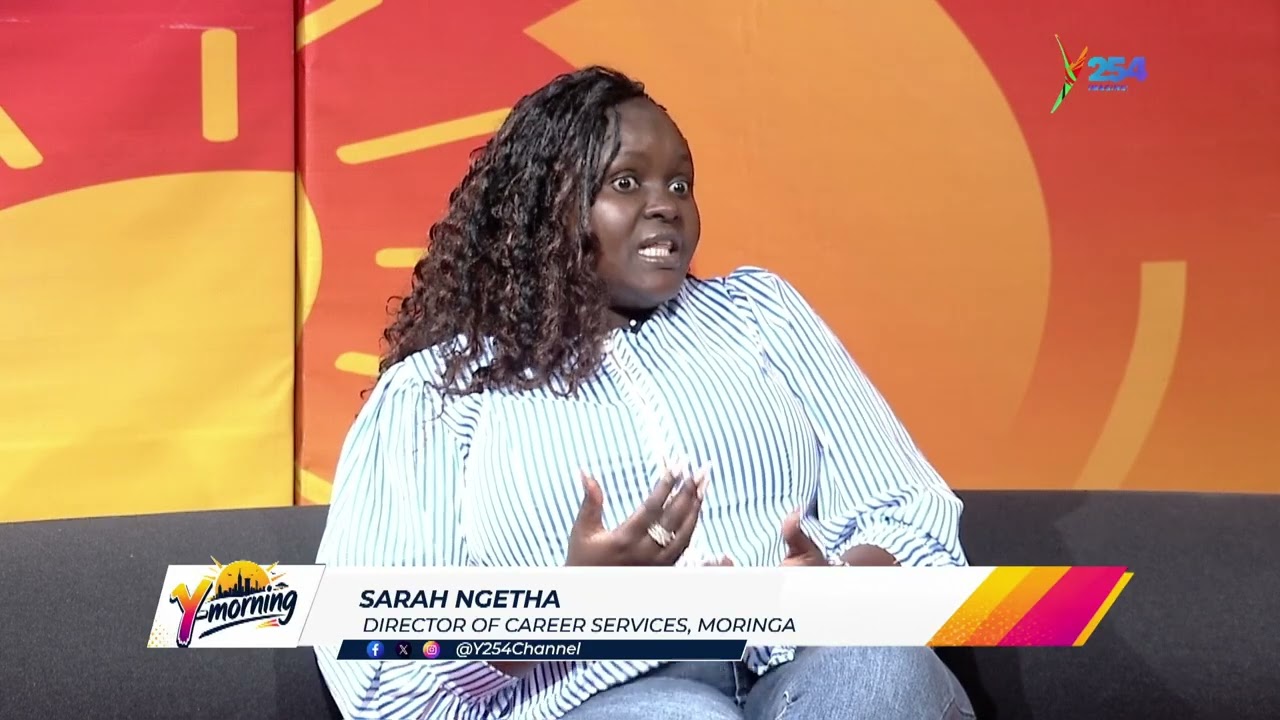
The Future of Work in East Africa with Moringa Scool | # Entrpreneurship Tuesday
Watch on YouTubeVideo summary
The video explores the evolving landscape of work in East Africa, focusing on the intersection of emerging technologies like artificial intelligence and the changing needs of both employers and the new generation entering the workforce. A central theme is the growing disconnect between educational institutions and industry requirements, where graduates often feel unqualified for available jobs while employers struggle to find candidates with the necessary skills. This gap is largely attributed to a lack of direct communication between students and hiring managers, often mediated by recruiters who may not fully convey specific skill needs. Consequently, there is a critical need to shift the mindset from viewing education as a standalone endpoint to seeing it as a foundation for continuous learning and adaptation within a rapidly changing technological environment.
A significant shift in the skills demanded by East African employers is moving beyond purely technical proficiency to include essential "human skills" such as emotional intelligence, effective communication, problem-solving, and critical thinking. While technical abilities remain important, especially in fields like medicine or data science, the ability to collaborate, explain complex solutions to clients, and adapt to new tools is now equally valued. The conversation highlights that job titles are evolving rapidly, with roles like AI engineer and cybersecurity expert becoming prominent, while others become obsolete. This evolution suggests that individuals should not aim for a specific static job title but rather focus on developing the capacity to solve societal problems, which naturally leads to creating their own opportunities regardless of whether they are freelancing, entering the creative economy, or pursuing traditional employment.
The discussion also addresses the challenges surrounding internships and the role of government in bridging the gap between education and employment. Unpaid internships are identified as a barrier that prevents talented young people from gaining necessary experience, often forcing them to choose between survival and professional development. The video suggests that governments can act as enablers by offering incentives to organizations that hire interns or apprentices, thereby building a robust talent pipeline. Furthermore, it emphasizes that technology should be viewed as an enabler rather than a replacement for human workers; understanding the fundamentals of one's field allows individuals to leverage AI and other tools to become more efficient. Ultimately, the advice given to young people is to remain curious, build deep expertise in their chosen fields while layering on human skills and digital fluency, and to embrace a culture of continuous upskilling and reskilling throughout their careers.
Read the full video transcript
You're going to talk about the future of
work in East Africa. What comes to your
mind when you hear about the future? Of
course, it comes about the new
technology. The new technology comes
with the AI and all that type of
innovations. Then uh when you hear about
now the future of work, now of course
with this new generation, the genes
entering the workforce and then the the
employers being the millennials. So
there's that type of assumptions I want
to get to know where you find in a way
where the new employ the employer say
they cannot find the skills that they
need in this new generation then the new
generation is saying they cannot find
the jobs that they are qualified for. So
who is to blame for all this? So we're
going to look at the role of education
all these then industry collaborations
we're going to look at how skills are
changing. So we want to know what uh
what's next mostly in these schools and
what uh these schools are providing for
this new new generation so that they can
prepare for to enter the the new
workforce. So to debunk this and talk
talk this in depth I'm joined here by
Sanga who is from Moringa who is the
that is the director of career services
at Moringa. So karana welcome
>> thank you so much.
>> You look amazing.
>> Thank you. Thank you. So now before we
get to the discussion topic maybe tell
us about a little bit about yourself and
maybe what you do in Moringa and what
our Moringa does.
>> Perfect. So I am like you said the
director of career services and alumni
engagement
>> and what that means is that we are
primarily charged with creating the
bridge between education and employment
within the institution. So our role is
to the institution gets to train the
young people or the individuals who come
in but then we get to connect them to
the industry but we also get to prepare
them for that industry. So think about
work readiness or career readiness as we
like to call it
>> and the reason why we focus on career
readiness as opposed to work readiness
is because we've realized it's not
everyone who's looking for a typical 9
to5 job.
>> There are people who want to get into
freelancing. They want to get into the
creative economy and it's not the
typical 9 to5
>> and there are some who want to get into
entrepreneurship. So that's why we call
it career readiness.
>> So that's what we do. We get to prepare
them think about how do you do personal
branding? How do you create your CV?
What are employers looking for? So we
get to create those linkages and
connections so that then the employers
can also come and talk to the talent and
tell them exactly what it is that
they're looking for in good talent and
the talent can also have conversations
with employers and tell them what kind
of skill sets that they have. So that's
what I do in a nutshell in Moringa.
>> Uh Moringa is the leading AI tech and
data skilling partner in Africa. Our
role is to reskill and upskill
individuals who are interested in
getting into the tech space
>> and getting into the tech space does not
necessarily mean that you stop whatever
it is that you're doing if you had
another career. It just means that you
get to enhance your skills because
[clears throat] like you rightly said
the future of work is based around
technology. So we get to equip you with
those skills to figure out how do I
employ them in marketing or in finance
or in medicine because we do have people
professionals who come in from the
medical field and want to understand how
they can incorporate technology in their
day-to-day working. So that's what Minga
does.
>> Amazing. Now talking about of course you
mentioned something about AI and also
upskilling because of course new
technology that means new skills maybe
what have the biggest shift that you
have seen in the maybe skills that East
African employers are looking for
currently which might be crucial maybe
the next even 3 to 5 years as the AI is
coming we are going to familiarize
yourself with the AI everyone is is
talking about you must know how to use
AI yeah back then we used to say yeah
you must switch from analog to digital
to digital now it's all about switching
from digital now to to familiarize
yourself with AI maybe what's some some
of the skills that you the shifts in
skills that you have seen
>> yeah so the biggest shift we have seen
with employers is that they're no longer
just concerned about the technical
skills they are really really important
no doubt about that but the other thing
they're looking at are what we call the
human skills so can you be able to
communicate effectively are you a
problem solver do you have emotional
intelligence in your workplace um do you
have critical thinking skills So there
has been a definite shift
>> while um professions like medicine yes
will require you to have in-depth
technical skills but they also require
that extra layer of what we are calling
the human skills. So that's the shift
that we have definitely seen. I mean 5
years ago when I got into
um this tech space we realized employers
yes are looking for those technical
skills but as time has progressed they
want people who can be able to sit in
front of clients and have conversations
with them explain to them the solutions
they're coming up with
>> [clears throat]
>> um help them solve their problems
because that's why you you you're in
that specific space. So we've those are
some of the things that I can say for
sure for sure has been a definite shift
for uh what we have seen you know.
>> Now let me ask you maybe is the shift
about maybe brand new job titles or just
the same job titles but with different
with different requirements.
>> So it's not really about the job titles.
It's the how you present yourself in the
workplace. It's how you present yourself
in the industry that has changed and
shifted. Job titles definitely have
changed. We have some that have been
relegated. they are now obsolete and
there are some new ones that are coming
up.
>> Um if you asked me maybe 10 years ago we
didn't have an AI engineer. Now that is
something that is becoming very
something exactly that's that's that's
building up.
>> Um we're looking at cyber security
experts. 20 years ago
>> really wasn't something that was there.
So those role titles are definitely
changing and shifting just based on what
solutions employers are looking for
within the workplace.
Can you say
that you say it's creating even more
people to upskill up getting to create
new job opportunities?
>> Yeah, it it definitely is. It's just
that we don't
>> we're not intentional about what those
job opportunities would look like. Um
there's again I mentioned there definite
skills there are definite job titles and
job roles that are shifting some have
become obsolete some are being created
every new day we have new roles that are
coming up
>> so
>> that that is something that we need to
be able to look out for just
understanding that you're not going to
school to train for a job you're going
to school to figure out how to create a
solution for a problem within the
society so once you figure that out then
you'll know how to fix yourself in
whatever niche that you identify.
>> Okay. Now, now kicking back the topic of
course talking about the future of work
in East Africa then uh in this new
generation think a lot of people have
gone to school. I think uh you have seen
a lot of numbers young people coming
from from school graduated having
graduated the with the bachelors with
the with the certificates but they
complaining about they are not getting
the job that they qualified for. So my
question is employers keep on reporting
skill shortages yet many young people
have qualified for some of these u some
of these jobs but they still struggle to
to find these jobs. So what what
[clears throat]
caused that type of disconnect between
the employers and the young people
trying to find the jobs.
>> Fantastic. So what causes the disconnect
is there's no communication between the
two between the employer
>> and the students. I like calling them
talents. The one there's that there's no
conversation between the two because
there's always a middle party and
sometimes the middle party is a job
aggregator or a recruiter right but not
the employer directly.
>> That is one and then two there's the
mistake that we're making of assuming
that because you are educated that means
you're qualified that means you're work
ready.
>> Those are very different things. So you
can be qualified and educated and
talented but unless you can show an
employer how you can employ employs
very difficult for them to say that this
skill is actually available.
>> So we want to make the shift or we're
advising people to make the shift from
just thinking about education as a
standalone and start thinking about this
thing that I am I'm learning in class
and based on the environment that I'm
in. How do I employ the skills that I
have gotten? How do I employ the
knowledge and build the skills that an
employee is actually looking for?
>> That is the other thing. Then that
communication that I mentioned between
the talent and the industry sometimes is
facilitated by offices such as where I
sit in career services. So being able to
create the platform where the employer
can come into the classroom and have
conversations with students and explain
to them explicitly what they're looking
for as far as talent is concerned. So
what qualifies as good talent?
What do I need someone to come to my
organization and I consider that a
return on investment
>> and then on the flip side the student
can also talk about these are the skill
sets that I have. So based on what you
have mentioned this is what I can be
able to bring to the table. So just
having those conversations between those
two stakeholders I think is also very
important. So that now when you're
talking about skill shortages then we
can say that yes it's the skills that
we're not training for. It's just that
the skills are there but the other side
doesn't know that the skills are there.
>> Now I'm just looking at it. I'm seeing a
future where maybe even the papers won't
be uh won't be needed or you're looking
for a job. Maybe just say I'm good at
this. I can I can do this and I'll show
you my portfolio that I'm doing this and
then I I'll qualify for a job. So aren't
you seeing the same vision? Cuz I'm just
picturing I'm saying
>> maybe in the next 5 years even next 10
years or so maybe in a place like
graphic designer you won't need to go to
school to to to do the graphic designer
get the certificate for a gra graphic
designer you just need to have the skill
then you show me what you can do then
you get the job don't you see it will it
will it will make people not to to value
maybe the need to go to school
>> I I think going to school is very
important the foundation of building
that knowledge is very important. So
there are things that being in a
tertiary institution
>> teach you. They teach you time
management skills which are very
important in the workplace. They teach
you how to communicate because when
you're doing your group projects, you
have to communicate with your peers.
When you're presenting to your lecturer,
that's a totally different audience. So
you understand how to talk to those
people.
>> The other thing it helps you think
through is is problem solving skills. So
when you're doing your cuts, you're
doing your assignments, you're doing
your exams,
>> it helps you employ that. So we really
cannot negate the need for lack of a
better word the papers. They're very
very important.
>> But the question that we lay on top of
that is that when you're building that
technical skill, are you also building
like I mentioned the human skills,
right? And then on top of that then are
you able to combine the two
>> to solve for a problem? Are you
adaptable? Are you
>> um
>> are you a problem solver? Are you
someone who can actually be able to see
a problem and create a solution out of
and create a solution for that problem?
>> So
>> the education is still very important.
Your degree, your diploma, your
certificate still very important because
they give you that foundation and then
on top of that what you build on with
based on continuous learning and just
figuring out what the society requires
is what now adds value to you.
>> Yeah. Now I think a lot of people young
people actually they don't understand
where education now ends after after
maybe you have graduated you don't
understand that when you're going to an
industry you don't really say okay I've
done this so I need the job I must get
it cuz I have it so you have you must
have the skills as your mention but what
can you tell maybe the young people so
that they can understand not really not
really everything is all about the okay
you have you have you've gone to school
you've learned this maybe you've done
maybe a course on certain course but you
don't understand that when you're going
to industry it's way different than what
you actually did in class in class maybe
you did a little bit of practical then a
little bit of theory so maybe what how
can you explain to a young person so
they can understand you need to even to
upskill the importance of upskilling
[snorts]
>> um very key
>> so
one thing that we assume is that when
you graduate that's the end of your
education we we get very excited
>> but if you listen very carefully
>> when people are giving their speeches
and when the vice chancellor or whoever
the head of the institution is they said
that you have now been given the power
to learn
>> right
>> that doesn't mean you stop there it
means that you have to consistently seek
out information seek out knowledge
>> um seek out mentors even you don't
necessarily have to go back to class
>> to continue learning it's just are you
able to build based on the environment
that you're in
>> are you sitting down to seek knowledge
to understand that in the medical field
again we are moving from this kind of
tools to this kind of tools that when we
talk about incorporating technology in
your day-to-day activities what does
that really look like what are other
places or other countries doing can I be
able to assimilate the same or adapt the
same and then the other thing is also
being very contextual
>> so it's not every solution that you see
that will work in your context are you
able to think that through and see where
do you apply you know specific solutions
to specific contexts.
>> So the learning is continuous and that's
what we call that's what we talk about
when you say continuous learning. It's
not going back to class to do your
masters. It's not going back to class to
do your PhD. I mean that's fantastic.
You're adding to the body of knowledge
but learning goes beyond that. It is
sitting down with that older supervisor
and getting to hear what their story has
been, what have they seen, what shifts
have they seen and understanding then
how do I also create a shift to where
I'm seated.
>> Um
>> listening to you know podcasts
information or doing your research on
where the industry the field that you're
in is is moving towards. So
>> again continuous learning is not
something that you have to do in a
classroom.
>> Yeah. Now about continuous learning,
let's get uh let's get to that. Now
after after graduating, I think a lot of
people get excited really not know
what's next for them and uh the only
option I think the only option the only
opportunities that they get mostly is
the internships.
>> Yeah.
>> Yeah. Right now the the company is still
investing in internship programs.
>> Yes. Yes. Yes, they are
>> actually quite extensively
>> the and I'll talk about a bit in the
space the tech space. So the general
assumption and the biggest fear that
people have had is that AI has come to
to replace people in tech developers,
data science people.
>> It really hasn't worked like that.
>> So
the work of AI is not to replace the
human. You still need a human in the
loop. But AI is an is an enabler. It
helps you do your work better. Mhm.
>> So if you understand the foundations
then you build AI into it then you
become a more efficient worker.
>> So the but organizations are still
realizing they require junior talent.
>> They they we've had an influx of
organizations coming in to tell us we
need more interns. We need people for
graduate management programs. Why?
Because fortunately or unfortunately the
workforce is also shifting. The talent
pipeline needs to consistently be built.
companies still are expanding and they
still need a workforce to come in and
get the job done.
>> They still investing in training
programs of course for the for the next
talent. Not talking about those type of
investment also type of opportunities
for the young people. We have had a lot
of cases about unpaid type of
internships and I think there's a lot of
complaints about that. So do you think
for you do you think maybe it's a good
opportunity for them or it's just an
exploitation of a of maybe a young type?
Um, [sighs]
I'm going to answer this very
diplomatically.
>> Mhm.
>> For some people,
>> having an unpaid internship is the
difference between them and making a
livelihood.
>> Mhm.
>> Because it is very likely that they were
to get that degree or that certificate
>> and start fending for their families.
>> So, you can imagine here you're telling
this person, I need you in the office at
this time.
>> Um, or you probably need to use XY Z
data bundles. M
>> the general assumption is that there
should at least be a stipent to
facilitate them, you know, to make sure
that they get the job done.
>> So having unpaid internships stands
between
>> really talented young people
>> and the workplace because they would
rather not take that opportunity
>> right because it is not offering them
>> um a remuneration which is very
important for them to to get to survive.
So am I for it to be honest? No.
[clears throat]
>> Because it
it doesn't give the value of the skill
set that this young person is bringing
to the organization.
>> And I believe I believe maybe after a
young person have gone through maybe
that type of unpaid internship. Maybe he
was working from 9 to 5 get that type of
trauma and that's why a lot of young
people are saying nah no I'm not going
to do this. I think I'm going to do my
own thing. I'd rather do my own thing
compared to what I was doing here. But
maybe what can um and just finish up
because I'm seeing that the time is not
on my side. We had the president say
even give them about 5,000 shillings
just for a stupid but maybe what's the
role of government when it comes to to
building strong path pathways into
emerging careers maybe for the young
people even encouraging them maybe where
does the government step in
>> in two ways. So the government becomes a
connector and the government becomes an
enabler. So a connector making sure that
we are able to really narrow the gap
between education to employment
>> through policy. But the other thing that
and sometimes [clears throat] the
government doesn't see itself as an
employer as well. So you can look at all
the offices and the functions of the
government that require to be
>> done.
>> That's an opportunity. So government as
an employer and then government as an
enabler. So from policy perspective are
they able to give incentives to the
organizations that would want to take up
interns. So an organization will say yes
I need an upwards of 13 of 30 maybe 15
interns but I can only afford to take on
board five
>> just because of how much it costs to how
much labor costs. So if the government
can be able to give incentives to these
organizations especially around
internship or apprenticeship
opportunities then it will change
because these young people require the
ski require the experience
>> and they can't build experience in the
classroom they need to build experience
in the workplace.
>> So that is those are some of the ways
that I think the government can be able
to step in and help the young people.
Yeah.
>> Amazing. Now maybe what can you say
about that role of maybe the people in
the the organization maybe how they how
can they encourage these young people
not only not only about the steep ends
and all that even shaping their future
advising them on the changing patterns
and also what can you say
>> so the work of training institutions is
exactly that it is to build the
knowledge it's to add skill sets is to
build the human skills but the work of
the organizations is to teach these
young people or the people on their
systems and processes within the
organization.
>> So having industry again get into the
classroom is very important.
>> That could be through informational
sessions, it could be through employer
branding activities, it could be through
uh mentorship sessions or even setting
up for career affairs because quite a
number of organizations actually run
career affairs. So those conversations
can only be had when the industry
>> gets out of the office and gets into the
training institutions.
>> Yeah.
>> Amazing. Now talking about training
institution of course Mingo school of
just in an update over the past decade
you've trained about 20,000 students
across software development data science
AI and also cyber security nearly of
them 5 nearly 5,000 of them in 2025
alone. You train only nearly 5,000 of
them in 2025. So this is amazing. So
maybe maybe uh just to finish up to wrap
it up maybe what's the advice you can
tell you can just look directly with
camera maybe you can tell maybe our
viewers that I think there's a lot of
people who have graduated you have seen
a lot of graduation going on maybe you
can tell them just prepare them for the
future what's next what's the future of
the of the work of the work environment
now it is compared to what now back then
it was go to school finish go to your
papers get a good grade get a good job
but now the the future has changed maybe
what the advice you give to our young
peers.
>> So for the young people, those who are
looking to transition into university or
those who are transitioning from the
university to the workplace,
>> the one thing that I would say is remain
curious
>> always.
>> Um technology is here to stay with us.
So it helps to really build your digital
fluency. It affects every scope of work,
every field that you can think of. So
are you able to respond to that need?
And then it's great to focus on your
degree. Build a deep expertise in one
thing but also build a layer of human
skills. Build a layer on technology
because like I mentioned technology
becomes an enabler in every field that
you're in.
>> Then on top of that um
>> build your grit
>> uh be adaptable because adaptability
means that you're able to move and shift
with how the world is moving and
shifting. So new opportunities coming up
they will not find you flatfooted.
you'll at least know that these are the
kind of spaces that I need to get
prepared for.
>> Uh continue learning, continue upsklling
and resklling yourself because that's
the most important thing. It's what will
get you ahead of the game.
>> Of course, continuous learning culture.
I think it's something that we need to
normalize everybody. Then of course
upscaling, talking about AI, everybody
need to be famili familiar with the how
to use it. Not only is not there to
replace you rather than to help you do
what you are doing but to help you just
make it better even efficient for you
but um maybe where can they get you on
social media maybe they want to connect
to Moringa school where can they access
the website and how can they get you on
your maybe personal handles. Yeah,
perfect. So, we are Moringa School on
Instagram, on X and on Facebook. Uh, you
can get us on our website www.maringa
www.mmaringaschool.com.
Um, and you can also find us on
LinkedIn. So, please reach out to us in
the event that you [clears throat] would
want to upskill or reskill yourself.
>> Again, just because you have a degree in
marketing does not or in business
administration does not mean that you do
not need the backing of technology. So
come and reskill yourself and get
yourself ahead of the game.
>> Amazing conversation. Thank you so much
for coming. We had a lovely conversation
though it was it was short but we got a
lot of insight and I think our viewers
also got all those insight. So make sure
you get if you missed the conversation
of course it will be uploaded on
YouTube. So make sure that you go there
then review the conversation. Maybe even
comment what you think about the future
of work in um East Africa. But for now
we're going to take a short break. This
was uh sanga the director and also the
director of career services at Moringa.
Thank you so much for coming for me. I'm
going to take a short break. Brans just
coming up with a conversation. So make
sure you stay tuned for that. Then I'll
be coming back at 9:00 a.m. with another
conversation about Zenz's and workplace.
You have se you have heard about what we
need the upscaling for the new uh
workspace as opportunity. So what do
what about jenzies? You have people
talking about oh jenses can be stubborn.
Is that really true? So that you'll get
to know that better. But for now, I'm
going to take a short break. But we'll
be back in a few.