Video summary
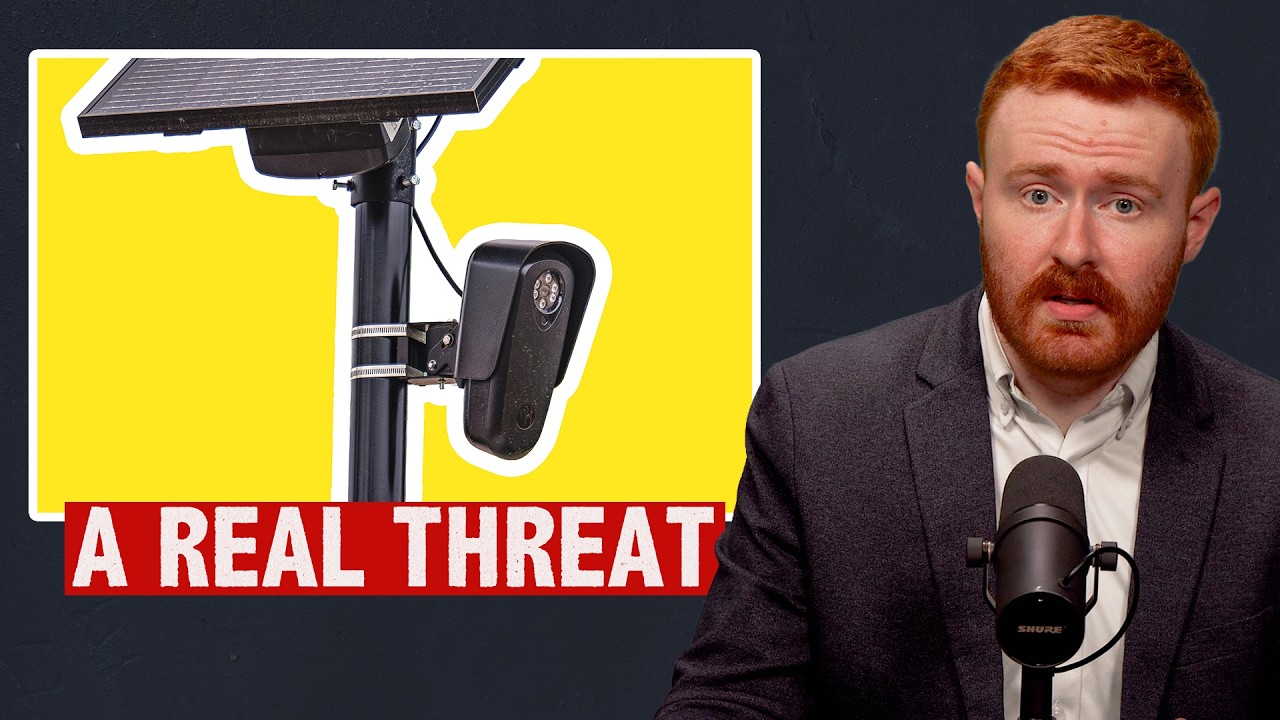
In a year marked by chaos and economic instability, the primary source of public outrage for many Americans has surprisingly become traffic cameras known as Flock systems. These automated license plate readers, deployed across forty-nine states with over 120,000 units currently in operation, collect detailed data on every passing vehicle, including make, model, and timestamped locations, storing it in a searchable national database. While proponents argue that recording public observations is legal unlike installing GPS trackers in every car, the cumulative effect of these widespread networks means the government now possesses surveillance capabilities nearly indistinguishable from having trackers in all vehicles. This reality has sparked a visceral, cross-partisan backlash, with citizens organizing through local groups to pressure lawmakers into rescinding contracts and even physically cutting down cameras with electric saws.
The controversy has forced significant changes from the manufacturer, Flock Safety, which recently announced plans to reduce data retention from 30 days to just 7 days and implement stricter controls on government searches, such as requiring specific case codes and flagging emergency exceptions for review. The company also removed federal agencies from its nationwide search database following public pressure. However, the most notable aspect of this movement is the failure of standard government propaganda to justify these surveillance expansions; familiar tropes claiming that data collection is essential for safety or only targets criminals are being widely ridiculed rather than accepted. This skepticism is fueled by documented instances of officials using the database to track personal relationships and dangerous cases where innocent drivers were pursued at gunpoint due to mistaken identity, proving that current misuse is just the tip of the iceberg regarding potential future abuses.
Ultimately, the widespread anger over Flock cameras stems less from their current usage and more from fears about how the technology could be employed in the future, such as enforcing stay-at-home orders during pandemics or deporting individuals based on political opinions. This healthy public mindset reflects a complete erosion of trust in elites and institutions, as Americans no longer believe that promises regarding the good faith use of new surveillance infrastructure are credible. The fanatical opposition to these cameras serves as evidence that the long-held lie—that the government acts solely in the public's interest—is no longer effective after years of power grabs including the Patriot Act, various bailouts, and lockdowns. As this political revolt against incumbents continues to grow, it highlights a critical realization: we should not trust those in charge with such expansive powers, and the hope is that this lesson regarding government overreach will not be easily forgotten by the American people.
Read the full video transcript
In a year as chaotic, violent, and
economically destructive as this one has
been, it is interesting that to many
Americans, the great villain of 2026 is
turning out to be a traffic camera. But
indeed, we are seeing visceral,
cross-partisan opposition to so-called
Flock cameras, named after the leading
manufacturer of these automated license
plate readers, take hold in communities
across the country. And that opposition
is, to be sure, entirely legitimate.
Flock's camera networks are based on the
idea that while it would obviously be
illegal and unconstitutional for law
enforcement at any and all levels to put
GPS trackers in everyone's cars, it
would be legal for a cop standing on
some street corner to report that they
had seen a specific vehicle drive by if
it later turned out that that car had
either been stolen or used to commit a
crime. But taking that idea that public
observations are not violations of
privacy, Flock and similar companies
help set up networks of cameras that
record and register the license plate,
make and model, and identifiable details
of every single passing vehicle into a
timestamped and searchable national
database. And as more and more of these
cameras are added to streets and parking
lots all over the country, and they
therefore get harder and harder to
avoid, the data the government has
access to becomes essentially
indistinguishable from what they would
have if there were government GPS
trackers in all of our cars. There are
currently around 120,000
of these cameras across 49 states, with
more being added every day. And the
American people are not happy about it.
genuine grassroots movement spreading
primarily through local Facebook groups
and the like, with little coverage
outside local media, concerned citizens
are doing everything from pressuring
local lawmakers to rescind their
contracts with Flock Safety to donning
masks and cutting the cameras down with
electric saws. And this opposition is
starting to have some success.
More than 50 jurisdictions have ended
their relationships with Flock after
local backlash. And after Flock tried
and failed for months to get the wider
public to view organizations that track
the location of these cameras as
terrorists because some have used those
locations to avoid, disable, or destroy
some, the company announced last week
that it was implementing several changes
to try and diffuse the public anger.
Starting next year, Flock says it plans
to cut the default retention period for
data stored on their system from 30 days
down to 7 days, require its government
clients to use the internal system for
detecting unusual and potentially
abusive searches, require all searches
to be tied with a specific case code
with emergency exceptions getting
automatically flagged for review, and a
few other changes meant to at least
appear like they're addressing the
public's concerns. And Flock has already
removed all federal agencies from its
nationwide search database in an earlier
public concession. It's notable that a
government contractor that does no
direct business with the public feels
this pressured by that public to change
its behavior. But even more notable is
how ineffective the normal propaganda
that gets rolled out to justify these
kinds of advancements in government
surveillance has been this time around.
The familiar tropes that government
officials are only gathering this kind
of data on all of us because it's
crucial for our safety or that it only
ought to bother us if we're criminals
with something to hide are not just
falling on deaf ears, they're being
widely ridiculed. That's certainly in
part because there have already been
plenty of documented cases of police
officers and government officials using
the Flock database to track the
activities of romantic partners,
ex-partners, people now dating their
ex-partners, and more. All of that, of
course, constitutes warrantless
government surveillance for the personal
interest of the officials with access to
the technology without even the
semblance of a legitimate investigation.
There've also been several dangerous,
nearly life-threatening cases of drivers
being pursued and held at gunpoint
because Flock cameras mistakenly
identified them as criminal suspects.
But, what's really driving the
widespread rage is not how the cameras
are currently being used or misused.
It's how they could be used in the
future. People across the political
spectrum are concerned about this
technology being used for everything
from detecting stay-at-home order
violations in a future pandemic to
rounding up and deporting people because
the government doesn't like their
political opinions. This is a remarkably
healthy mindset for the public to hold.
Basically, don't let the government grab
power you wouldn't trust your political
enemies to wield. But, also, this is why
the controversy surrounding Flock
cameras has grown so large and why it's
quickly emerging as one of the major
political issues ahead of the midterms.
It's not really about the specific
workings of this one brand of automated
license plate readers. It's because the
public's presumption that our elites and
institutions are acting in good faith
has completely evaporated. The American
people do not trust the people in charge
enough to be reassured by promises about
how this new surveillance infrastructure
will be used. And that is good because
we should not trust the people in
charge. They have, fortunately, made
that very clear in recent years, which
is why we're seeing such a political
revolt against incumbents. But, going
back, all the government power grabs
that have brought us to this point, the
Patriot Act, the invasion of Iraq, the
banker bailouts, the insurance industry
bailout known as Obamacare, the COVID
lockdowns, and more,
all of it was only possible because
enough of the public fell for the lie
that the government was acting in their
interest. The fanatical opposition to
Flock cameras is evidence that that lie
isn't working right now.
Let's hope that lesson is not easily
unlearned.
>> [music]