Video summary
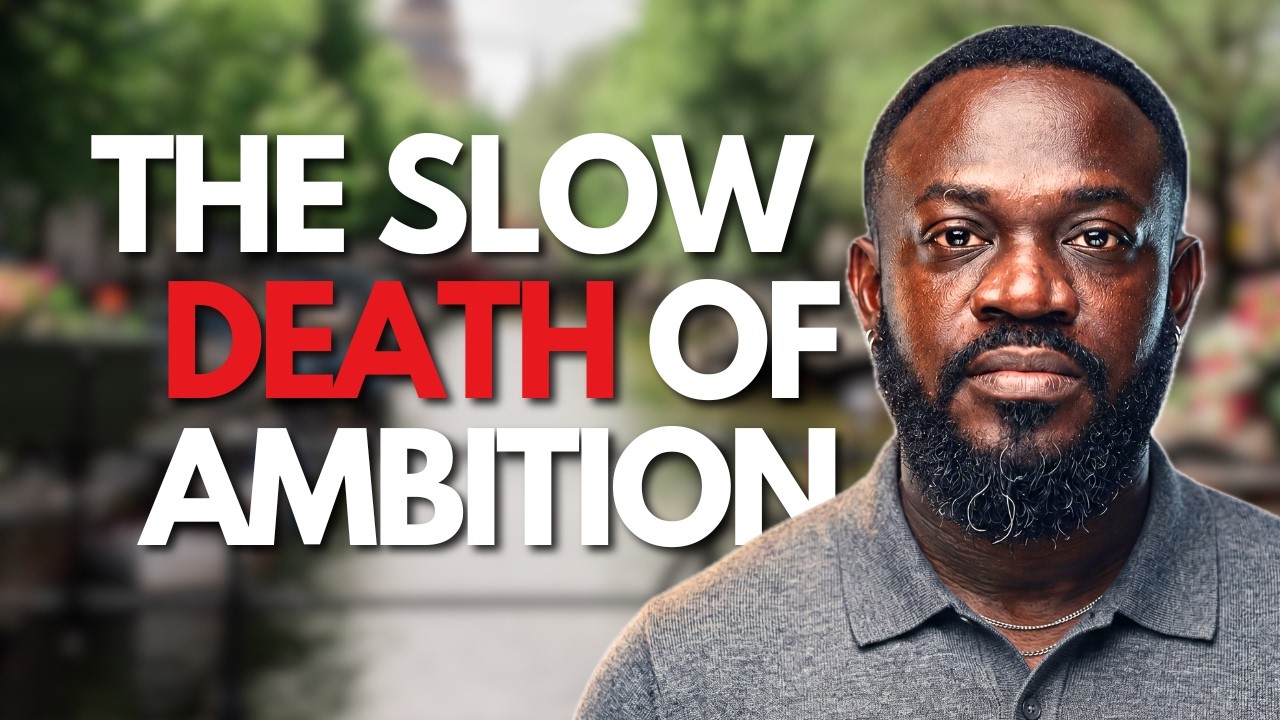
The video explores an invisible architecture within European societies, specifically highlighting how systems like universal healthcare and unemployment benefits are deliberately designed to remove the sharpest consequences of failure for their citizens. This social engineering creates a safety net where individuals know they will be caught if they fall, effectively filing down the sharp edges that define what happens when life goes wrong in less protected environments. The speaker contrasts this with experiences from outside Europe, noting how immigrants often feel an immediate shift away from low-level urgency and hunger once they arrive. While many initially view this security as purely positive, the narrator suggests a deeper psychological transformation occurs over time: the baseline fear of ruin is structurally managed to such an extent that it disappears entirely from daily life, raising questions about what gets quietly taken away when survival pressure vanishes.
This absence of existential threat fundamentally alters human psychology and ambition in ways that comfort cannot replicate on its own. The speaker argues that genuine struggle shapes a person's interiority by forcing clarity about priorities and fostering a willingness to endure hardships that those with security simply do not face because they have no need for it. A comparison is drawn between two individuals of equal intelligence: one who grew up knowing failure had a manageable ceiling versus another who knew failure could be total. Over decades, the person without a safety floor often builds more and takes greater risks not out of inherent bravery, but because that was their only available mode of operation. Conversely, those in highly secure positions may find themselves stuck in comfortable stagnation, grateful for shelter from storms they rarely encounter, leading to a situation where preparation becomes life itself rather than a means to achieve something meaningful.
However, the argument is complicated by evidence showing that Europe does not simply lack innovation or ambition; instead, it faces a different kind of risk landscape. While metrics on high-risk entrepreneurship and new company formation often favor regions like the US and parts of Asia, countries like Denmark remain among the happiest in the world with citizens who do not appear tormented by unlived ambitions. The core issue is not that Europeans fail to take risks generally, but rather what specific kinds of risks feel available or necessary within their personal lives versus those required for economic indices. When survival risk is removed, a new space opens up where individuals can theoretically pursue existential risks—such as becoming who they truly want to be or pursuing creative intellectual endeavors purely by choice—but this requires generating internal pressure that the environment no longer provides automatically.
Ultimately, the "European risk problem" identified in the video is not that the welfare system itself is flawed or wrong, but rather that the absence of fear can incrementally become an absence of motion without anyone noticing the transition. The speaker concludes by reflecting on immigrants who arrived with a history of taking real risks and facing uncertainty; their presence serves as a data point regarding what they are capable of when something is required of them. The challenge for anyone in a comfortable position, regardless of geography, is to deliberately maintain an internal pressure that used to be manufactured by circumstances rather than relying on the environment to provide it. This does not imply that comfort or security is bad, but recognizing one's own capabilities requires intentionally choosing the harder path and asking what remains possible when nothing at all is required of you.
Read the full video transcript
There is an invisible architecture to
life in a country like this. It has been
designed quite deliberately and over a
long period of time
to remove the sharpest consequences of
failure.
Universal health care, unemployment
benefits, social housing, the whole
system is built around a single quiet
promise.
>> [music]
>> If you fall, we will catch you.
And that is an
>> [music]
>> extraordinary thing to be able to say
about a society, and I don't take that
lightly. And I don't want anything I say
today to sound like I do.
But what I want to sit with today is a
thing that doesn't get talked about
nearly enough when people talk about
systems like this one.
It's not the whether it's good or
whether it works, but what happens what
actually happens to a person on the
inside,
a person who knows in their bones that
they will always be caught when they
fall.
So, let me be precise about what I'm
describing because I think this
precision matters here.
The Dutch welfare state, and I mean this
without any irony, is a masterpiece of a
certain kind of social engineering.
You get sick, you are covered in a way
that doesn't bankrupt you or anyone
around you. You lose your job and
there's a cushion that actually
functions as a cushion.
You are priced out of housing and the
system at least formally acknowledges
you that you exist and that it has some
responsibility toward you. Compare that
to what I grew up knowing, what the
baseline expectation of safety looked
like where I come from, and the contrast
is significant enough that it took me a
while for me to fully absorb it.
Most people who come from outside Europe
feel the shift immediately.
And [music]
the pressure is different. The pressure
is not gone, that's not what I'm talking
about. The sharp edge of what failure
actually means has been filed down to
something more manageable.
I've spoken to people who said somewhere
around their first year or their second
year here that they didn't feel that
hunger anymore. That particular
low-level urgency that had been running
underneath everything for as long as
they could remember.
And they were not sure whether losing it
was a good thing or not. And for me, I
also felt the versions of that shift
myself. A kind of settling, a loosening
of something I hadn't fully realized I
had been holding until it started to
release. So, I started to ask the
question. The question not being about
whether the system is good. It clearly
provides things that other places simply
cannot. [music] And that matters
enormously. But about what it does to
the psychology of the people living
inside it over time. What does a culture
start to look like when the baseline
fear of ruin is structurally managed and
more or less removed from the equation?
That is the question. And what does that
produce? And what does it quietly take
away?
Certain kinds of struggle are not just
something you survive. They are
something that you are shaped by in ways
that does not have a clean equivalent
[music] in comfort. The experience of
genuine risk, of not knowing whether the
thing that you're building will work, of
staking something real on an outcome
that is not guaranteed. It does
something to the interior of a person
that safety, however designed or
well-designed it is or generous it is,
cannot replicate.
So, think about the first generation
immigrants who built significant
portions of the economies that they
moved in. And I'm not talking about any
one group specifically.
The pattern actually repeats itself
across different contexts and different
countries and different periods of
history.
It wasn't that they were more
intelligent than the people who were
already there or more talented in any
raw sense.
It was that they had no floor. The floor
had been removed or they had left behind
and the condition as brutal and as
genuinely unfair as it is, it produces
something specific in a person. A
clarity about what matters,
>> [music]
>> a willingness to do things, to endure
things that people with more options and
more security simply won't do because
they don't have to. And there is a way
of thinking about this that I find quite
useful.
So, two people, same starting
intelligence roughly,
same education, similar ability by any
external measure.
>> [music]
>> One of them grew up knowing that failure
had a ceiling, that the worst that could
happen was uncomfortable but manageable,
[music] that there was always something
underneath.
The other one grew up knowing that
failure could be total. You just lose
and there's nothing underneath and
[music] you start again from a much
harder place. That's if you even start
at all.
Now, 20 years later,
the pattern I have seen and heard
described enough times to trust it, the
person who had no floor has built more,
risked [music]
more. Not necessarily because they were
braver in any inherent sense, but
because they didn't have the option of
not being brave and so bravery became
the only available mode. There are
people here in this country, some of the
most capable, well-educated, talented
people I've come across [music]
who have been in the same position for
8, 9 years.
And [music]
it's not a bad position. It's safe, good
pension, clear path forward, nothing
[music]
obviously wrong. And they don't talk
about it as a success exactly. They talk
about it in a way that you talk about
shelter from a storm that almost never
arrives.
>> [music]
>> Grateful for the shelter, a little
unsure what to do with themselves while
the weather stays fine. And the question
I kept turning over was, what storm are
they preparing for?
And what happens when a preparation
quietly becomes the [music] life itself?
Now, here is where it gets more
complicated because
>> [music]
>> if the theory were clean that removing
risk simply removes ambition and this
was in a direct measurable [music] way,
you would expect that Europe would just
be falling behind everywhere you looked.
And in some specific ways, there's
evidence [music] of that.
Innovation indices consistently show the
US and parts of Asia outpacing Europe
in, for example, new company formation.
>> [music]
>> That is the density of high-risk
entrepreneurship, the kind where someone
actually [music] bets everything on an
idea and lives or dies by the outcome is
measurably lower.
The phrase risk-averse culture appears
in European economic analysis with a
frequency that probably tells you
something about how widely the pattern
>> [music]
>> is recognized. Germany has been having a
difficult version of this conversation
recently. The honest core of it is
something [music] like, we optimize so
thoroughly for stability that we stopped
moving. And the question that nobody has
fully answered yet is whether stability
and forward motion can really coexist
over the long term or whether one
eventually and [music] quietly crowds
out the other.
But
here's what complicates the simple
version of the argument and I think it's
worth sitting with rather than just
explaining away. Denmark consistently
ranks among the top two or three
happiest countries in the world by most
measurements that have been attempted.
One of the highest tax rates on Earth, a
relatively quiet startup culture by
global comparison. [music]
And the Danes, by self-report, by the
way they seem to actually move through
their lives, are not a people who appear
tormented
>> [music]
>> by unlived ambition or haunted by the
roads not taken. They seem sincerely, in
a way that is
hard to dismiss, [music] at ease with
what they've built and who they are
inside it. Maybe the problem isn't that
Europeans don't take risks. Maybe it's
about the kind of risk that feel
available to them and whether they are
actually taking the ones that matter to
them personally rather than the ones
that
>> [music]
>> would register on an economic index, for
example.
When survival risk is removed, when you
know with reasonable confidence that you
won't lose everything, [music] won't
lose your health care, won't be entirely
ruined in any reversible way, something
opens [music] up. A space that wasn't
there before, or rather a space that was
always there but was too crowded with
more urgent concerns to be noticed.
[music]
And in that space, theoretically, you
could take a different and in some ways
harder kind of risk, an existential one.
The risk of actually trying to become
who you want to be rather than who the
circumstances required you to be. The
risk of building something with no
guarantee attached to it. The risk of
genuine creative intellectual pursued
not because you have to, but because you
are choosing to.
And because the choice itself means
something. That choice, [music] in the
absence of survival pressure, is
actually the harder one in a way that I
don't think gets acknowledged enough.
Because nobody's going to force you.
You could just live comfortably and the
system will [music] not penalize you for
it. The system is not going to create
the urgency. If the urgency is going to
exist, it has to come from somewhere
inside you.
And that [music] is a much more
demanding place to try to generate it
from.
Here's what I noticed, and I want to say
this carefully because I'm not trying to
make a sweeping claim about anyone.
The people I find most genuinely
interesting [music] here are the ones
who are building something or pushing
something
and creating something that has real
stakes attached to it.
>> [music]
>> And those people are often not
originally from here, or maybe they're
from here, but they spend a meaningful
stretch of time somewhere else first
[music] and came back changed in a way
that they can't
fully articulate. They developed an
internal pressure that the environment
around them never provided and never
intended to provide. [music] And I don't
think that's an accident.
There's a version of this that has
nothing to do with the geography or
which country you happen to be living
[music] in.
The question is never really about the
place. The question is about whether the
comfort available to you, whatever form
it takes and however it arrived, is
making you braver or smaller.
>> [music]
>> Whether it's creating a space for
something or filling space that
something needed. Because you can be
financially secure and still like
[music] risk-taking. You can be fully
protected and fully alive. But it takes
something deliberate that the
environment does not hand you
automatically and was never designed to.
It requires you to manufacture a
pressure that used to be manufactured
for you by the circumstances you didn't
[music] choose.
So here's where I want to land with all
of this. The European risk problem isn't
that the system is wrong. The system is,
by any measure of what matters most,
genuinely [music]
extraordinary. And I think that's an
important thing to keep saying in a
conversation like this one. The risk
[music] problem is that the absence of
fear can quietly or incrementally,
without any announcements, become the
absence of motion. And nobody tells you
when that transition happens. It doesn't
feel like a decision you made. It just
[music] happens comfortably in the
warmth that you're enjoying. And the
migrant, the person who left somewhere
to come here, is in an interesting
position relative to all this because
they already took a risk,
>> [music]
>> a real one with real stakes. They chose
this orientation over familiarity,
uncertainty over the known, the hard
work of rebuilding a life over the
easier work of staying in one.
That decision, whatever the specific
reasons behind it was, is [music] a data
point about who they are and what they
are capable of when something is
actually required of them. The question
is whether they are still using that
instinct or whether they arrived, found
the comfort, felt the relief of it
>> [music]
>> and quietly stopped.
The system here is generous enough to
catch you, but also generous enough to
hold you very gently, very warmly in a
way that doesn't feel like being held
until you try [music] to move and notice
the resistance.
And maybe the work for anyone in a
comfortable place, European or not,
expert or not, wherever you are watching
this from,
is to keep choosing the harder thing on
purpose, [music] to maintain some kind
of internal pressure that the
environment stopped providing a while
ago and was [music] never going to
provide forever anyway. Not because
comfort is bad or because suffering is
the point or because struggle is
inherently noble, but because you
already know what you are capable of
when something is required of you. You
have seen that version of yourself.
>> [music]
>> The real question, and the one that I
think sits underneath everything that
I've been trying to say today is that
what are you capable of when nothing is
required of you at all? So, yeah, that
is a question. Let me know in the
comments whether you felt these shifts,
the change [music] that happens when
survival pressure is gone and you're
left with the space that [music] it
leaves behind. What did you do with that
space? I'm genuinely curious about that
one.
And I'll catch you
>> [music]
>> in the next one.
Peace.