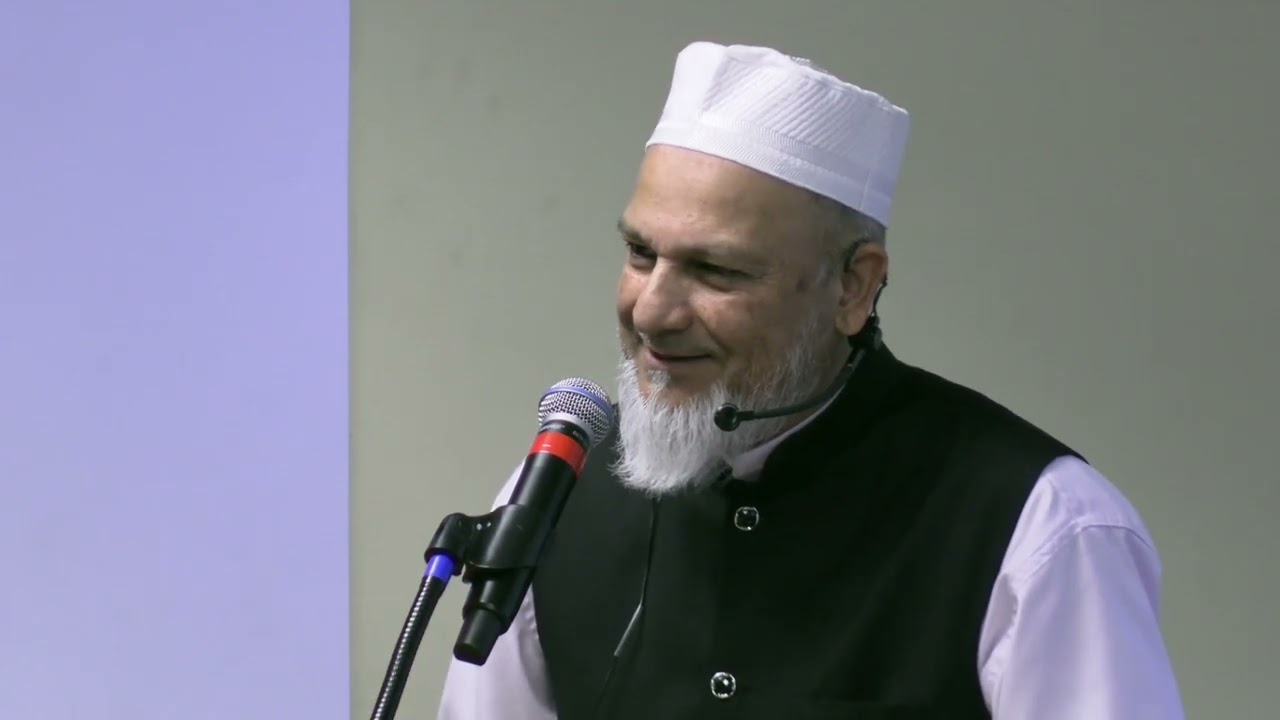
The Currency on the Day of Judgment is Accepted Good Deeds | Ustadh Abdul Baseer
Watch on YouTubeVideo summary
The central theme of this discussion is the profound transformation that occurs to a person's good deeds on the Day of Judgment, where only pure and sincere actions are accepted as currency for entry into Paradise. The speaker illustrates this concept using an example attributed to Imam Ghazali, depicting how a believer might arrive with hundreds of multiplied good deeds, only to have them systematically deducted by angels for various imperfections. These deductions include sins like consuming forbidden food or missing prayers, but more critically, the removal of deeds performed out of insincerity, show-off, or desire for fame. Even after these subtractions leave a person with what seems like a sufficient number of deeds, further reductions occur due to bad character traits and violations of others' rights, leaving potentially just a single accepted good deed that is enough to grant entry into Paradise.
This process highlights the absolute justice of Allah, who ensures that on the Day of Judgment, no injustice will be done; if a person has twenty good deeds but twenty-one are required for punishment, no one can donate an extra deed to save them, just as no one can accept fake currency in this world. The speaker contrasts the imperfect laws made by fallible humans with the perfect divine law, emphasizing that wealth, power, and social status will be useless on that day. Instead, individuals will see their loved ones around them yet flee from one another in fear, while those who have accumulated only bad deeds due to their own sins or the sins of others they failed to protect will be dragged into Hellfire without any hope of redemption through external help.
To elevate a believer's standing beyond mere fairness (Islam) toward sincerity and excellence (Ihsan), the speaker introduces three spiritual levels illustrated through practical examples. The first level is Islam, defined by basic fairness, such as eating one's own share of food when hungry. The second level is Iman or Ikram, which involves going above and beyond by sharing with others despite one's own needs, like giving part of one's meat to a companion. The highest level is Ihsan, exemplified by Abu Bakr Siddiq, who gave his entire piece of meat to a hungry companion out of pure love and generosity. This concept is further demonstrated through the Prophet's reaction to the martyrdom of Hamza, where he initially sought revenge but was commanded by Allah to be patient, showing that patience and forgiveness are superior paths for the righteous.
The speaker concludes by urging listeners to strive for this highest level of Ihsan in their daily lives, whether it is waking up exhausted to pray Fajr with enthusiasm or forgiving those who slander them, as seen in the story of Abu Bakr forgiving his nephew after being falsely accused regarding his daughter. He reminds the audience that death is inevitable and written by Allah, citing a recent tragedy where an entire family passed away together, yet their lives were filled with service to the community and preparation for the hereafter. Ultimately, the message is a call to protect one's good deeds from corruption by bad character and insincerity, ensuring that our final days are the best of our lives through conscious effort, good health, and righteous actions.
Read the full video transcript
Respected listeners,
Allah subhanahu wa ta'ala in the Quran
says
Whoever does any good action
or one good action
he or she will
get a better reward for that.
Allah subhanahu wa ta'ala also says man
ja'a bil hasanati falahu ashrun
amthaliha.
Whoever does any good action
and when that good action is pure,
sincere
unadulterated, uncorrupted, untainted
that will be multiplied 10 times
minimum, Allah subhanahu wa ta'ala says.
On the day of judgement
even the good deeds, good actions are
few
but they are pure
and sincere
that will be enough for a person to
enter paradise.
Imam Ghazali rahmatullahi alayhi
gives a beautiful example. Let me say it
in my words.
On the day of judgement, for example, a
person has done 10 good deeds.
And this those 10 good deeds are
multiplied by 10 minimum by Allah
subhanahu wa ta'ala out of his
generosity.
The 10 * 10 is equal 100.
A person will say this 100 good deeds I
have.
This is enough for me to enter paradise.
He or she starts walking towards
paradise. The angels will stop and say,
"Wait, stop."
We're going to take away 30 of your good
deeds, hasanat.
Maybe you didn't protect your eyes.
Maybe you eat some haram food came into
your halal food. You miss some salats.
We're taking out 30 out of your 100.
70 are remaining.
70 are plenty
for a person to enter paradise.
He or she is walking towards paradise.
Angels stop and say, "Wait. Stop."
We're going to take away 50 of your good
deeds because they were not sincere.
You did for show off. You did under
pressure.
You did for name. You did for fame. You
did for gain.
You're going to take away 50 out of 70.
How many are remaining? 20.
20 are plenty for a person to enter
paradise.
If they are accepted hasanat, good
deeds, accepted deeds.
Ahsan alladhi khalaqal mauta alladhi
khalaqal mauta wal hayata liyabluwakum
ayyukum ahsanu amala. Good accepted
deeds. This is a test for all of us.
Allah says we created death and life to
see who who amongst you
comes with those accepted good deeds.
Not tainted and corrupted and impure and
insincere.
So, out of 70, 50 are taken away
for insincerity.
Now, he has 20.
She has 20. They are plenty for a person
to enter paradise. Imam Ghazali
rahmatullahi alayhi says.
Now, he or she is walking towards
paradise.
Mhm. Ecstatic, happy.
The angels say, "No, wait. Stop.
Out of your 20, we're going to take away
19 of your hasanat, good deeds, for your
bad akhlaq.
For you violating the rights of fellow
human beings, we're going to take away
19 out of the 20."
Mhm.
On the day of judgement,
Allah prophet salallahu alaihi wasallam
said in the sahih hadith, "A person, a
believer, will come with mountains of
good deeds.
Mhm.
And he will be a poor person," said
prophet salallahu alaihi wasallam,
"because out of those mountains of good
deeds,
many, many, many will be taken away
for his bad akhlaq."
Mhm.
So, out of the 20, the angels say,
"We're going to take away 19
out of your
hasanat, good deeds.
How many are remaining? Just one.
One good deed.
Untainted,
pure,
clean, uncorrupted,
sincere.
One good deed.
Nothing else but one hasanat. One
accepted good deed."
On this, Imam Ghazali rahmatullahi
alaihi quotes the verses of the Quran.
In surat al-haqqa, Allah subhanahu wa
ta'ala says, "Fa amma man utiya kitabahu
bi yaminihi."
And when the book of deeds is given in
the right hand of the person,
mhm, this person with one good deed, one
accepted good deed, has been given the
book of deeds in his or her right hand.
He will say for you all
Read my book. Look, read. Read my book.
I knew for sure
I will meet my account.
I will meet my account, the things I did
in this world. I knew for sure this is
going to happen. Look, it has happened.
Here it is, my record, my book of good
deeds.
Now, he starts walking, she starts
walking towards paradise.
Allah continues in Suratul Haqqah, the
angels say
Enter
into a peaceful, happy life.
Enter into a happy life.
Into
a lofty paradise.
Eat, pluck the fruits
at your hands' disposal, lowered bunches
of fruits.
Eat and drink with ease, with comfort.
No worries, no anxieties, no
insecurities. Eat, drink for the good
things you have done in this life.
One hasana.
But one accepted
good deed.
He had 20.
19 were taken away, but one
will take him into paradise.
Having 20
on the same token, conversely,
if he had 20, she had 20,
but 21 needs to be taken away.
21 needs to be taken away out of 20.
Because on the day of judgement, the
currency Rasulullah sallallahu alaihi
wasallam said will be hasanat.
Will be accepted good deeds. Not that
you come with 100 deeds, 1,000 deeds, a
million deeds, they can take away from
mine. No, people will take away from the
accepted hasanat.
The pure.
You bring fake money, fake dollar,
nobody's going to accept that. She in,
you know, not valid.
Only the valid currency will be accepted
in this world.
Similarly, on the day of judgement, only
accepted, clean, sincere hasanat, good
deeds will be accepted. A person has 20.
Now, 21 needs to be taken away.
Al yawma la tudhlamu nafsun shay'a. On
this day, Allah says, there will be no
injustice done on that day. No
injustices will be done. This
world, respected listeners, the law of
the land
is made by human beings, and human
beings are not perfect.
The law is not perfect.
The law is not just because the human
being is not just.
He's a human being. He's weak. He has
made the laws.
But the laws of Allah subhana wa ta'ala
There
will be no injustice done on this day,
Allah says.
21 needs to be taken away from 20.
Will someone give him one hasana or her?
No one will give.
On the day the man will run away from
his wife, from his parents, from his
children.
Everyone will be heedless of one another
on that day, Allah says.
A man will run away from his brother,
from his parents, children from their
parents, from his wife, wife from her
husband. You must
Allah says you will see all of them
around you, but you will run away from
each one of them to the point woman feel
Jimmy and
Allah take all of them. No, Allah take
the entire world. Let me go, Allah. Let
me go, Allah.
Now the angels will say
"The verdict has been given.
The book of deeds has been given to him
to him on the left hand. Nobody's giving
him any one good deed."
20 instead of 20 he has 21 bad deeds.
He cannot give to anyone. Nobody can
take because in
on conversely Rasul
others bad deeds will be given to him
for him violating their rights. That
will be a day of burdens that Prophet
Muhammad
tears rolling down his eyes. Fear Allah
and make reconciliation
amongst yourselves that says the Quran.
Nobody will give respected listeners.
Allah protect us.
And then Allah describes in the Quran
continuing those verses in
Imam Ghazali says, "The book of deeds
will be given on the left hand to that
person and the person will say,
When the book of deeds will be given in
the left hand,
Oh,
how I wish
the book of deeds was not given to me.
Oh, how I wish my account was not taken.
Oh, how I wish I had died before this
book was given to me. I wish death had
overtaken me. All
the money and the wealth I had is
helping me nothing. All the money and
the wealth I had is helping me nothing.
All the money and the wealth I had is
helping me nothing. All the money and
the wealth I had is helping me nothing.
All the money and the wealth I had is
helping me nothing. All the money and
the wealth I had is helping me nothing.
All the money and the wealth I had is
helping
at all.
All
the power I had
is gone. Is gone.
The angels will say, Allah continues,
"Seize him.
Fetter him. Chain him.
Arrest him. Seize him. Put an armor on
his neck. Throw him into the hellfire.
Put him in chains where the length of
the chain is 70 ft."
Allah protect us, respected listeners.
When you read the Quran from the
beginning to the end,
>> [clears throat]
>> the commentators of the Quran say
that Allah
has put all of us into three levels.
You decide which level you are in.
Level one
Islam
fairness.
What is Islam? You're being fair.
Let me give an example. You have a plate
with two pieces of meat.
You're hungry.
The person you're eating with you is
hungry.
You eat your piece of meat. He eats his
piece of meat. Fair?
This is Islam.
Next level, the higher level.
You're hungry. He's hungry. But you give
part of your piece of meat to the other
person. This is Iman. This is Ikram.
You're honoring the other person.
This is Iman.
The highest level, the top level
on which
was
Abu Bakr
was.
What you do in
Isar?
You give you're hungry. He's hungry.
You have one piece of meat, he has one
piece of meat, but you give your entire
piece of meat to him.
This is Ihsan.
In the aftermath of the battle of Uhud,
when Rasulullah sallallaahu alaihi
wasallam found the body of Hamza
radiyallahu ta'ala anhu,
brutally
killed, savagely murdered, mutilated.
>> [clears throat]
>> Rasulullah sallallaahu alaihi wasallam
screamed.
His scream could be heard in the houses
of Medina.
And he said, out of anger and anguish,
"In lieu of Hamza, my uncle, I'm going
to kill 70 of the enemies. I'm going to
kill 70 of them."
The Sahaba, the companions, when they
saw this reaction,
they said, "Oh prophet of Allah, we are
also going to kill 70 of them. We will
kill 70 of them, too."
The prophet of Allah had spoken.
The Sahaba had spoken. Now Allah
subhanahu wa ta'ala spoke.
He revealed the verses in the Quran in
the last verse of Surat an-Nahl. "When
aqabtum fa aqibu bi mithli ma uqibtum
bihi. Wa la in sabartum lahuwa khairun
lis-sabireen. Oh prophet of Allah, if
you want to take revenge, go ahead, take
revenge.
Islam, fairness. You want to take
revenge? You can, on equal terms. This
is fair fairness. This is Islam.
Oh prophet of Allah, if you want to go
take revenge, go ahead, do it.
In a similar way. But however, if you're
patient,
this is the best course for those who
are patient.
Wasbir wa ma sabruka illa billah. Wa la
tahzan alaihim wa la taku fi dhayqim
mimma yamkuroon. Innal laha ma'al
ladhina taqaw wal ladhina hum muhsinoon.
>> Was beer or prophet of Allah, you are
patient because of Allah subhanahu wa
ta'ala you are patient or prophet of
Allah. What
don't you grieve? Don't you grieve or
prophet of Allah neither you should your
companion should grieve. What
don't be distressed on the planning the
planning these people have.
Do not be distressed.
Surely Allah is with those who fear
Allah, who do righteous deeds. Surely
Allah is with those who do righteous
deeds. Who do righteous deeds.
Rasulullah backed away.
Was patient but we all say he was a
prophet.
He was a prophet.
How about Abu Bakr Siddiq
he was a human being like you and me.
He was a regular human being like you
and me.
When his beloved daughter, the beloved
wife of prophet
Aisha
was slandered.
Accused falsely not some
regular accusation, accusation slander
of adultery and fornication.
And one of the chief
rumor mongers was his cousin his own
cousin nephew Mistha Usasa.
Who was poor. Abu Bakr was a rich
businessman. He was giving approximately
$2,000 every month for his support
because he was poor. But when he found
out that his own nephew whom he was
helping financially is accusing his
daughter slandering his daughter he
stopped paying the money immediately.
Fair?
Islam? This is fair?
But he was Siddiq.
He was Siddiq.
The truthful one.
When he stopped payments,
Allah revealed the verses in the Quran.
Oh Abu Bakr, forgive and let it go.
Overlook oh Abu Bakr.
Pardon pardon oh Abu Bakr.
Forgive oh Abu Bakr.
Don't you love that Allah forgives you?
Don't you love Allah will forgive you?
Surely Allah is the most forgiving and
merciful.
When Abu Bakr realized these verses are
being revealed on him,
tears rolling down from his eyes. Ya
Allah, forgive him ya Allah.
I want to be forgiven by you oh Allah.
He started immediately paying back the
money. He's accusing his daughter of
adultery.
But he started giving the money back to
him.
You and I respected listeners, Allah has
given us that capability. We
underestimate ourselves.
Of what potential Allah has given each
one of us to forgive our wives.
Wives to their husbands, our children,
children their parents. To let it go.
It's a lesson for all of us.
Protect our good deeds.
May Allah make us among those in this
category of Ihsan respected listeners.
We can we can do it. We have the
capability. It's the thought of doing
it.
Somehow we are just at the very bottom
level of Islam fairness.
We have a lot of capabilities respected
listeners.
>> Let me give you another example.
Summer days, long days, short nights.
You go to sleep late night.
Now you wake up early in the morning to
pray Fajr otherwise you're going to miss
your Fajr.
You wake up tired, exhausted.
But I still I'm going to get up, do
wudu, pray Fajr, then go back to sleep.
This is fair? This is Islam?
But no, you want to go to a higher level
because you are capable of doing that.
No, I'm going to be on a higher level.
Iman, ikram.
I'm going to do wudu. I'm tired,
exhausted. I'm going to do wudu. I'm
going to go to masjid to pray salat
al-fajr with jama'ah. Even though I
don't like it, I don't feel like it. I'm
tired, exhausted. I will push myself. I
will go. This is iman.
But you can be on a higher level than
that.
You get up tired, exhausted. Do wudu.
Time for Fajr to go to masjid. I'm
tired, exhausted. But I love to go to
the masjid. I love to go pray salat with
jama'ah. This is ihsan.
May Allah make us among those respected
listeners.
We can do it. And this is just an
example in many things. Controlling our
anger, controlling our tongues. We can
go to a very high levels, respected
listeners.
Forgiving others, tolerating.
Putting it in our hearts not to express
those grudges.
Those revenge words.
Those angry words. Take it to the grave,
respected listeners. The grave will be
happy.
Life is very short, respected listeners.
Who knows how long
are we ready to leave the world,
respected listeners, right now? Allah
bless you all.
This coming to Jumu'ah is preparation
for but how much are we prepared?
Two weeks ago we buried three bodies of
one family in one grave.
Mother, daughter, and her son.
From Fremont. Many of you must have
heard that, if not all of you.
Mother Alima, scholar. Subhanallah.
She changed her life last few years in
Fremont.
She made her son Hafiz ul Quran, Hafiz
Omar, 13 years old.
I would ask the father how is Omar doing
whenever he would meet me. I know I know
I know them.
Father would say, "Oh, he's when he's
not with him." It's how is Omar doing?
He said, "Oh, he's he's doing good. He
goes to his mom and tells your khutbahs
all of it to his mom."
That was last khutbah he was in Omar bin
al-Khattab radiyallahu anhu three weeks
ago.
Or four weeks ago.
Mother Alima driving the car.
Daughter Alima Hafiza.
She made her Hafiz ul Quran and she
became an Alima in in in in this in
Masjid ul Huda over there.
Son sitting in the backseat.
Father taking a break sitting all the
way in the back in Honda Odyssey. And
the little daughter 8 years old sitting
all the way in the back.
Walain yu'akhir Allahu nafsan idha jaa
ajaluhum. Allah says when the time of
death has been written, no one can
postpone that moment. No one can
postpone that time.
People say they died of accident, they
did not die of accident. The time was
written and they were prepared. This
family was well prepared.
Allah had written that time, that day,
that hour, that minute, that moment,
accident happened.
The moment was written, accident
happened.
We say person died of cancer, heart
attack, stroke. No. The moment that was
written on that day, that time, disease
of cancer happened. The stroke happened.
The heart attack happened.
All of us are going to face this,
respected listeners. What is this life?
May Allah subhanahu wa ta'ala make us
conscious. May Allah subhanahu wa ta'ala
increase in our good deeds. And may
Allah subhanahu wa ta'ala make us
protect our good deeds from bad akhlaq,
from insincerity, from protecting our
eyes, our tongue.
Giving our rights to fellow, smiling at
someone
is good, but don't be deceived by that.
Oh, I smile at everyone.
That is part of akhlaq, but akhlaq is
giving their due rights. That is akhlaq.
Giving the due right of your wife. Wife
giving the due right of her husband.
And the children. And vice versa,
children to the parents.
May Allah bless us, respected listeners.
May Allah bless us with good akhlaq. May
Allah subhanahu wa ta'ala bless us with
good with good a'mal. And may Allah
subhanahu wa ta'ala make our last days
the best days of our life. Even though
the life is young, this family was a was
young. 44-year-old mother driving. But
her her last days were the best days.
They had done khidma of the jamaat that
came from Pakistan, Karachi for whole 1
week in their house for woman.
Always in the khidmat of deen.
They were prepared.
Their last days were the best days. May
Allah make our last days the best days
of our lives. May Allah give us long
life with good health and with good
a'mal, good actions. A holy holy Allah
astaghfirullah li walakum astaghfirullah
al rahim.