Video summary
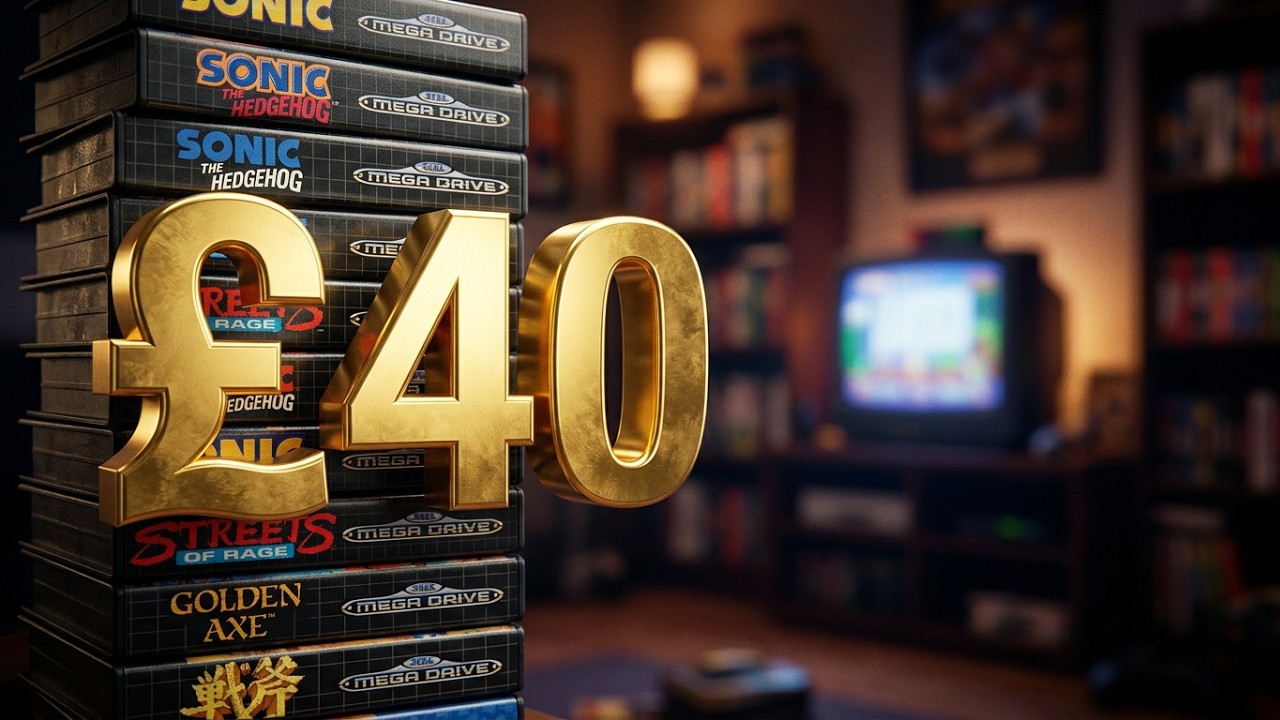
The speaker reflects on their experience completing nearly every Mega Drive game they owned, not out of exceptional skill, but because the games were incredibly expensive at the time. Each cartridge cost around 40 pounds, which represented a significant portion of a child's savings, often equivalent to a birthday gift or half of Christmas money. This high price tag meant that players could not simply buy a large collection and move on quickly; instead, they had to live inside each game for extended periods, mastering every level, boss, and hidden trick because there were no other titles waiting on a hard drive to distract them.
This scarcity fundamentally changed the way people approached gaming, forcing a deep immersion that is rarely seen in modern times when consumers have access to vast libraries of hundreds of games. The speaker notes that finishing a game was the entire point of ownership, creating a sense of accomplishment and dedication that comes from having only one option available. In contrast to today's culture where many games are barely touched due to overwhelming backlogs, the constraints of the past meant that players gave each title their absolute best effort, treating every cartridge as a precious resource that deserved to be fully explored.
The narrator admits that it took them thirty years to realize how much they missed these limitations, observing that scarcity actually made them better players by fostering a deeper connection to the medium. They contrast this with their current gaming habits, where a massive backlog of half-played games sits untouched, highlighting a shift in priorities and engagement levels over the decades. The video concludes by inviting viewers to consider their own experiences, asking which specific game they played to exhaustion simply because it was the only one they had access to at the time.
Read the full video transcript
I finished nearly every Mega Drive game
I owned. Not because I was good,
because [laughter] they cost 40 quid.
People forget [music] what a game cost
back then. 40 pounds a cartridge,
probably more.
That was real money, a birthday or half
a Christmas.
So when you got one, you didn't move on
after a [music] weekend. You lived in
it. You learned every level, every boss,
every cheap trick the game threw at you
because there wasn't a stack of 80
others waiting on a hard drive.
There was that one and you finished it
because finishing it was the whole
point. I look at how I play now, a huge
backlog, half of it barely touched. I
almost miss the constraint when you
could only own a few. You gave each one
everything. Scarcity made us better
players. It just took me 30 years to
notice. What's the one game you played
to death purely [music] because it's all
you had?