Video summary
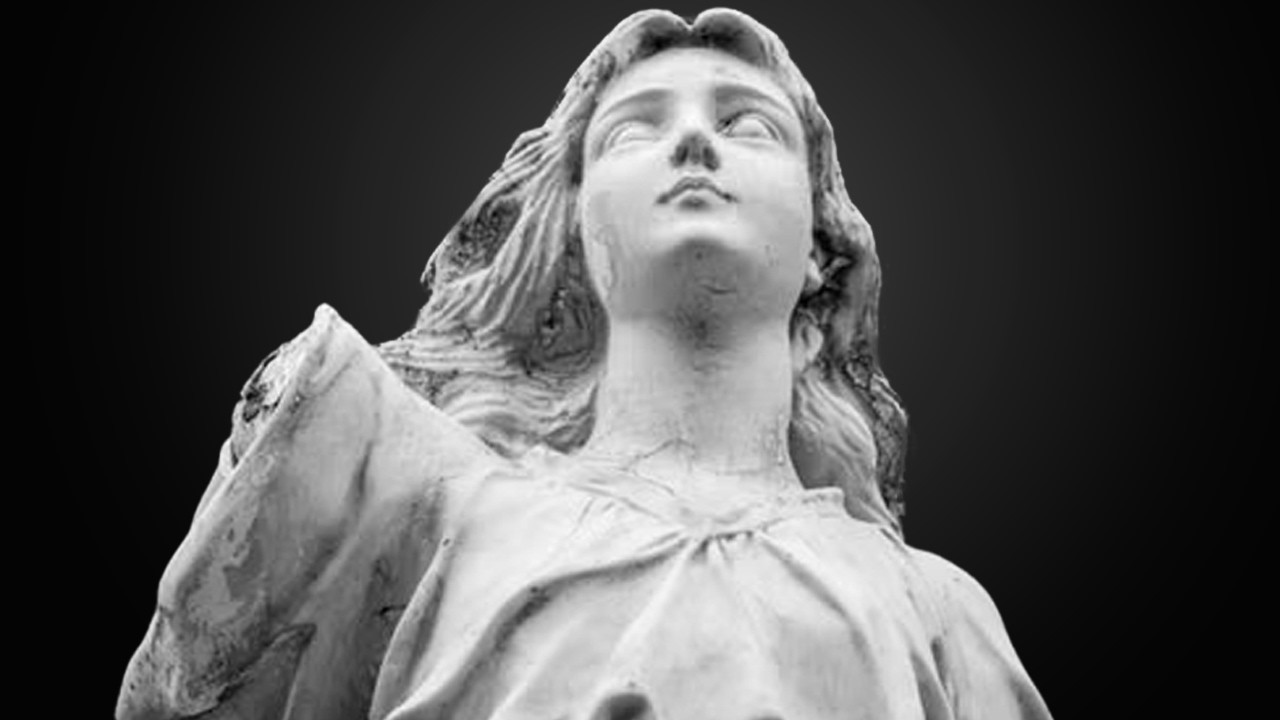
The speaker argues that contemporary art has largely abandoned the heroic and grandeur found in earlier periods, instead depicting humanity as weak, pathetic, and broken. Since the turn of the 20th century, artistic representation has shifted away from admiration or striving toward a worldview where man is shown as defeated and decaying. This decline mirrors the medieval perspective, where life was viewed as horrible and only an afterlife offered hope, leading to sculptures of gargoyles and monsters rather than heroes. The speaker suggests that modern art has returned to this pessimistic outlook, failing to present any admirable qualities or models for human excellence.
In popular culture and media, this trend is evident in television shows and movies that emphasize physicality and the principle that might makes right. Examples such as *Game of Thrones* are cited as narratives focused on power, force, and coercion without featuring true heroes; even when characters change or reveal motives, they often do so in ways that are not particularly virtuous. Similarly, the series *Breaking Bad* is described as a story about a protagonist descending into hell, where every character except the FBI agent is portrayed as a horrible human being. The speaker contends that these works emphasize the horribleness of man and offer nothing for audiences to admire or strive toward, reinforcing a sense of moral decay rather than elevating the human spirit.
A second major component of modern art identified by the speaker is non-representational work, which rejects the selective recreation of reality essential to true art. Instead of generating deep values or emotional responses, this type of creation is dismissed as mere design or aesthetics, focusing on patterns and colors that may be visually pleasing but lack substantive meaning. While the speaker acknowledges powerful historical pieces like Munch's *The Scream* that evoke intense negative emotions yet remain great art, he contrasts them with much contemporary work which is neither threatening nor deeply engaging. Ultimately, the video concludes that this shift toward depicting a broken humanity and abandoning realistic representation signifies a collapse in art that is actively breaking civilization by stripping away the values necessary for a thriving society.
Read the full video transcript
I thought the talk was great, by the
way, but I I thought you were going to
contrast this to sort of
the kind of art that's more prevalent
nowadays.
>> No.
>> So,
uh
>> For example.
>> What would you say about like
contemporary art, what you see nowadays,
or maybe stuff by like
I don't know, Basquiat or
Picasso. That's a little bit older, but
>> I mean, I think most contemporary arts I
mean, contemporary art is split into
two, I think.
Uh one is
it it views man as
um
weak and pathetic and broken and uh you
know, there's no heroism, there's no
admiration, there's no striving in in,
you know, most kind of contemporary arts
that we see out there. If there's even
man represented in that art, but to the
extent he's represented
he's not represented in any kind of
admirable way. Not something you want to
strive to, it's quite the opposite. He's
he's represented as
you know, worse than the average, as as
as defeated and uh and decaying.
Uh
and you can see that, you know, you can
see that really from
mostly from the turn of the century, of
the 20th century.
Uh the last 120 years there's been very
little
of the um uh you know, again, of of the
heroic and the grandeur of art that came
before it.
Um and it it much more is like, if you
will, going back to the medieval times
when uh you know, what they represented
in sculpture, for example, gargoyles.
Right? Uh monsters. Not They weren't
interested in presenting
heroes because life sucked. I mean, life
really did suck. They couldn't imagine
anything different, right? The only time
life would be better was in an
afterlife. This the world Life in this
world was horrible.
Um and and I think that to a large
extent contemporary since the turn of
the 20th century has returned back to
that.
Um in in in movies and in TV shows, what
you see
is you know, the best TV shows are
either
shows that highlight physicality.
Right? And and uh might makes right. I'm
thinking Lord of the not Lord of the
Rings. Um
Game of Thrones, right? If anybody's
watched Game of Thrones,
uh which is which is this big hit. It's
all about might is right. It's all about
power. It's all about force. It's all
about coercion and and putting, you
know, destroying one another. They're no
real heroes in Game of Thrones. And and
the heroes when you think you're going
to have a hero that either killed or uh
you know, or they they they change or
they they reveal their true motive,
which is not particularly heroic.
Or things like um
uh God, what was that what was that
school teacher becomes a drug dealer?
Breaking Bad, right? Breaking Bad.
Brilliant writing, brilliant acting, you
know, really good structure plot. But
what's it about? It's about a guy
descending into hell. And there's no
virtue there. There's not a single human
being there who's a good guy except the
FBI
guy and he's so pathetic and he's
ultimately killed and he can't do
anything. All the all the people who
actually pursue anything during the the
thing are the bad guys, right? They're
all horrible human beings. So it's
emphasizes the horribleness
of of man. There's nothing to admire in
Breaking Bad. There's nobody
to admire in Breaking Bad. And I think
that's
you know, that is prevalent again in in
in much of modern art. And then there's
what I think is the other part of modern
art, which is or contemporary art,
which is non-representational art, which
is it it it takes away
the artist's recreation of reality, the
the selective recreation of reality in
Rand's definition. And there is no
selective recreation. And in that sense,
I'm not sure it's art. That is I I think
it's much more about design, about
aesthetics. Some of it's very pretty.
Some of it's it even interesting. It has
interesting patterns and interesting
colors and you might you might hang up
on a wall or something you know pretty,
but it's not art. It doesn't generate
the kind of values
and the kind of value response that you
get from good art. Even when that Look,
I don't even show you admirable art, but
I could have showed you
uh what's his name? Monk's The Scream. I
don't know if any you guys are familiar
with Monk's The Scream. But those of you
who are, it's a powerful piece of art,
right? It evokes real emotions and the
emotions are negative. They're horrible.
You want to run away,
but you know, it's great art. And I I'd
say a lot of the contemporary art is
blah. It's it's
it doesn't it it's not threatening and
it's not pleasing. It's just
it's just there. It's either You could
say, "Yeah, that's pretty." Or it's not
pretty, but nothing more than that.