Video summary
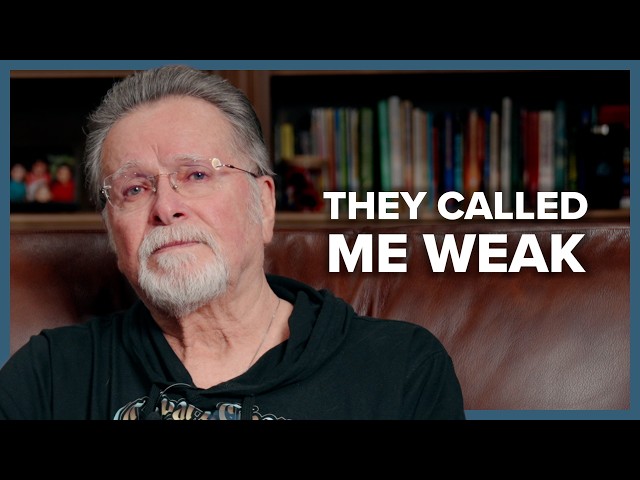
The video addresses the profound isolation and emotional burden that pastors often carry alone, using the speaker's personal experience of losing his father to illustrate the point. When faced with such a sudden and devastating loss, the speaker found himself unable to share his grief openly without being perceived as weak by those who did not understand the depth of his pain. This highlights a critical issue within the church community where men, including clergy, often become loneliest after marriage because their primary focus shifts entirely to family, work, and children, causing previous friendships to fade. The speaker emphasizes that while a spouse provides essential support, there is a unique need for male fellowship and relationships with other men who can truly understand the specific struggles of ministry that even a mother cannot fully comprehend.
A central argument presented is that pastors are uniquely positioned to carry heavy burdens for others, yet they rarely take off their "pastoral hat" to seek help themselves. The speaker recounts instances where he felt his Bible study or sermon was flawed and needed correction, only to be told by others that it went well because they could not feel the internal struggle or the failure to articulate deep thoughts clearly. This disconnect leads to a situation where pastors are expected to always appear strong and faithful, even when their hearts are broken, causing some church members to leave during times of crisis. The speaker challenges this expectation by noting that Christians often grieve deeper because they love deeper, but without a support system, this grief can lead to misunderstanding and criticism rather than compassion.
The transcript concludes with a powerful call for pastors to find or build a circle of trusted friends who can listen without judgment and offer genuine comfort. The speaker shares an example of a friend named Ral Ree who simply listened quietly after hearing about the death of his father, demonstrating the kind of understanding that is so often missing. While acknowledging that Jesus is the ultimate source of encouragement and presence, the speaker argues that human friendship is still necessary to help bear the weight of life's burdens. He urges both pastors and the congregation to pray for such friendships, reminding everyone that while God never leaves us, having a brother who can stand by our side, hold us up, and weep with us is essential for survival in ministry. Ultimately, the message is one of solidarity, asserting that no pastor should face their deepest struggles alone because there are friends available to help carry the load.
Read the full video transcript
when my father passed and it was a
sudden unexpected death. It was the
hardest blow that I ever emotionally had
taken [music] in my life and I had
people leave the church because my heart
was so broken by the loss of my father
that I would I would tear up when I
would share and they thought he's just
weak. Where's his faith? His father's in
heaven. Who Who's there to shepherd the
shepherd? Who's there besides Jesus?
Who's there to heal the healer? pastors,
who do you talk to when you're [music]
sad? Who do you speak to when you have a
need? There seems to be an epidemic
of loneliness in uh in the society that
I live in. It's an isolation, if you
will, that many people find themselves
trapped in. I in in general I would say
that the loneliest people that I
encounter in my church in our fellowship
will always be the men. Many of us and I
can't speak for every guy cuz not every
guy is like this but for me in general I
I grew up with uh friendships and
relationships that were centered on
things that we did. Ultimately what
happens you get married and as a man you
pour yourself into your family. You pour
yourself into your wife. You pour
yourself into your work and your
children
and the buddies that you once had that
you would go out to a movie with or go
out for a steak or hang around, have a
cup of coffee, whatever. Those things
stop. And what what happens is
you become lonely. It's interesting to
note that the very first bad thing that
is ever mentioned in scripture is very
first time God ever says it is not good
is when he said it's not good that a man
should be alone. Now he created Eve to
fill up that emptiness and that's what
my wife does for me. But that doesn't
mean that I'm not supposed to have
friends or fellowship or relationships
with other guys. Because
as well as my wife knows me, there are
things that another man will understand
that my wife as a woman just couldn't.
In the same way that I can't understand
everything that my wife goes through. As
a pastor, it's even different. As a
pastor, there are things that I, as a
pastor, go through that even a dearest
friend who's not in ministry, would
never understand. I I remember my mom
approached me one time, many years ago
now.
And she said to me something and I
responded
about a bit of a difficulty I was
experiencing. After all, she's my mom.
So I told her as a son would tell him,
"Mom, ma'am, this is what I'm I'm going
through right now, mama." And she says,
"Oh, I understand." And I I remember
smiling at her and and I said, "No,
mama, you don't. If I were to tell you I
understand what it's like to have a
baby, would you think I do?" And she
says, "Well, no. How could you?" I said,
"My point, you know, I don't understand
what it means to give birth, mama. You
do. But you don't understand what I go
through as a pastor. You see, as a
pastor, I have different things that I
deal with, different concerns that I
live with that other people wouldn't
carry. See, what we do, God has given to
us these broad shoulders so that we can
help carry people's burdens. That's
something that we do. And and we never
take this pastor hat off and put it down
to put a different hat on. always in a
pastoral role. There's always a an
opportunity to minister. Whether it be
to strangers in a church setting or in a
supermarket or in your own home, you're
always wearing the role of a minister, a
servant, a shepherd. It just has
variations of it. And so, in many ways,
people don't understand. They can't
understand. I'll give you an example. If
I if I say on a Sunday morning, if I
give a Bible study and I do my best, but
I know I it just wasn't a good study. I
could tell that to one of my staff
members or I can tell that to a um a
friend or a family member. I can say,
"Oh boy, that was bad." And they'll say
that, "No, the study was good. It went
well." They don't understand what I'm
saying. It's not that they should. I
don't think they should, but they don't
value it the way I do. They don't feel
it the way I feel it. They don't
experience it the way I experience it.
They don't know what I wanted to say and
I was unable to or what I wanted to
clearly present, but it came out
muddled. It didn't come out the way I
think it should. There are times that we
pastors will try to present this un
unbel unbelievably deep
thought from scripture that we're trying
to grasp ourselves and we fail. We fail
to present it as clearly as we want.
Pastors, who do you talk to when you're
sad? Who do you speak to when you have a
need? Who's there to shepherd the
shepherd? Who's there besides Jesus?
Who's there to heal the healer? Who's
there who can put their arm around your
shoulder and weep with you when you're
broken over something when you've lost
something or you've been hurt?
Who comforts the comforter?
Who encourages the encourager?
Oh yes, we find our encouragement from
our Lord. And that's true.
And I thank God because he brings the
encouragement in the deepest recesses of
my heart. But some of you even right now
are misunderstanding what I'm saying
because you're not in the ministry. You
don't know what I'm saying. You don't
understand it. Some people are thinking
that's weak. I thought you were a man of
God. That's what I'm talking about. When
somebody opens up like I just did, there
are so many critics who are out there
saying, "Oh, then you shouldn't be in
ministry." When my father passed and it
was a sudden unexpected death, it was
the hardest blow that I ever emotionally
had taken in my life. And I had people
leave the church because my heart was so
broken by the loss of my father
that I would I would tear up when I'm
with Sharon and they thought he's just
weak. Where's his faith? His father's in
heaven. Normally it's people who've
never lost anything or lost anyone. So
you see I long time ago came to believe
and I know this is true that Christians
grieve deeper because we love deeper.
The sense of loss can be deeper because
the relationship was deeper. But who you
tell? Who do you tell? Who do I who do I
call up and say?
When my my father passed away, one of my
very dear friends, Ral Ree, called me up
and all he said was, "Uh, David, I heard
your dad died." And didn't say anything
else while I shared with him and he just
quietly listened. He understood. His
father had passed on. So, pastor, who do
you have to speak to? Who do you have?
What group of men do you have that you
can gather together with and open your
heart to that you can bear your soul to?
I hope you have a group that you can.
Over the years, I've tried to develop
friendships like that. Over the years, I
do have close pastoral friends who do
understand.
I hope and pray that you have one, too.
And those of you who are going through
whatever you're going through, yes,
bless Jesus. He's with us. He never
leaves us, nor does he forsake us. And
yet it's Jesus who also said, "And yet
now I'm alone.
And yet now I'm alone.
And yet I'm not alone. You're with me."
At the end of the day, our father is
with us. But thank God when he gives us
friends who can be there with us, to
help to bear that, to shoulder that with
us, hold us up when we need it.
Because we all need friends. I hope and
pray that you have one. And if you
don't, pray that God will give you a
friend because we all need them. Because
they help us.
There's a friend that sticks closer than
a brother. May God give you that friend
even now. And pastor, you're not alone.
We're with you and we love you. God
bless you.