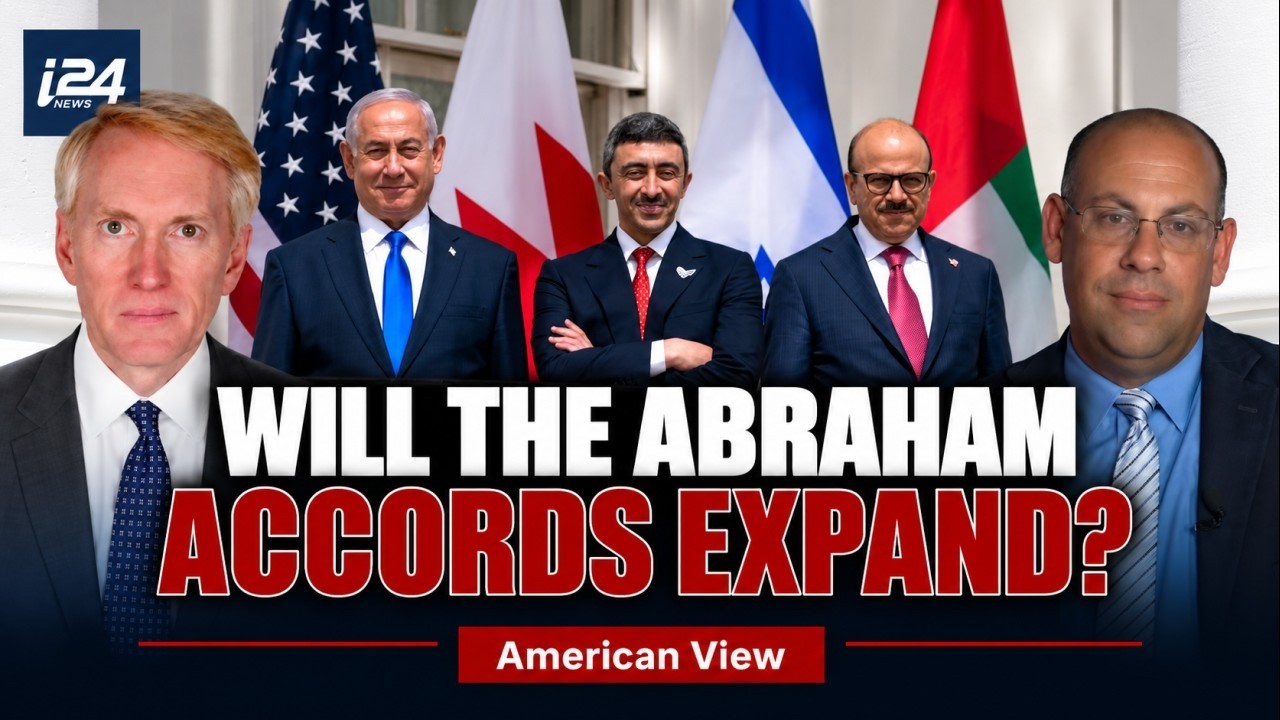
Video summary
Six years after the signing of the Abraham Accords, the initiative has fundamentally altered the geopolitical landscape of the Middle East by establishing normalization between Israel and several Gulf nations, including the UAE, Bahrain, Morocco, and recently Kazakhstan. Senator James Langford emphasizes that while the original focus was on economic engagement and trade, the accords have evolved into a comprehensive framework encompassing technology sharing, intelligence cooperation, medical research, and defense protection. This expansion beyond simple economics was anticipated from the start, as business-to-business interactions naturally paved the way for deeper government-level partnerships. Despite the challenges posed by the October 7th attacks and the subsequent war with Hamas, the accords have proven resilient, demonstrating that established economic and personal connections between leaders create a mutual benefit strong enough to withstand significant regional friction.
The longevity of these agreements is attributed to the pre-existing relationships and shared security concerns among the participating nations, particularly regarding the threat posed by Iran and its proxies like the Houthis. Senator Langford argues that contrary to fears that the ongoing conflict with Iran would cause the accords to crumble, the shared existential threat has actually reinforced alliances, as Gulf partners have seen direct American support in defending against Iranian aggression. However, a significant hurdle remains: member nations frequently ask what specific tangible benefits the United States offers beyond general security guarantees. The Senator notes that America has yet to clearly define an exclusive incentive package—such as guaranteed access to trade agreements or intelligence networks—that would compel fence-sitting countries like Saudi Arabia to join the club, leaving the expansion of the accords somewhat stalled pending a clearer definition of these rewards.
Looking toward the future, the stability of the Abraham Accords depends heavily on sustained political will and active management from both the White House and Congress, rather than relying solely on the momentum of a single administration. Senator Langford warns that without constant advocacy, the initiative risks drifting among hundreds of other global priorities at the State Department. The path forward involves maintaining bipartisan support despite shifting domestic politics in the United States and Israel, ensuring that the strategic partnership remains a priority regardless of election outcomes. Ultimately, the success of the accords relies on a continuous push to cultivate new relationships, often starting with business leaders before involving governments, to build the trust necessary for further regional integration and peace.
Read the full video transcript
6 years since the Abraham Accords, since
the Middle East change in ways thought
unimaginable, the US brokered
normalization packs between Israel and
Gulf neighbors sent the region into
unchartered territory. And while it
certainly hasn't stood still since then,
there are questions about whether the
accords can be advanced or if the Iran
war has cost the Americans the juice
necessary to entice more allies to sign
on. We'll speak with Senator James
Langford, co-founder and co-chair of the
bipartisan Senate Abraham Accords Caucus
to examine the Accords and where we go
from here as we get the American view.
Senator James Langford of Oklahoma,
thank you so much for taking the time to
join us. This week marks six years since
the Abraham Accords. You've been there
pretty much from the start looking at
this, analyzing it, trying to figure out
ways to move it forward into more
unchartered territory.
What does it feel like six years on
here? What what what kind of sense do
you get of the the current legacy of the
Accords? Well, it's remarkable to be
able to see uh the Accords. When I think
of the Accords, as funny as it sounds, I
think about six years ago sitting on the
south lawn of the White House uh during
the signing of the Accords, which as is
everything starts a little bit late and
my redheaded self ended up just as
sunburned as can be. So, that's six
years from a really good sunburn that
day. But it's also I think about the
signing on UAE and Bahrain and Morocco
and now recently Kazakhstan to be able
to join in and to be able to see the the
growth that continues to be there. I
think about the the terrible atrocities
since October the 7th and everyone said
the Abraham Accords won't hold won't
make a difference during that time
period and that has proved to be
absolutely not true that it did make a
difference during that time period. And
then I see Iran now attacking its
neighbors and to be able to see what the
importance of the Abraham Accords then.
So six years ago, we could never have
expected what has happened since then.
But we've seen the strength of that
economic engagement, the engagement on
humanitarian issues, on technology, and
all that's happened and how that
engagement has really made a difference
in the last six years.
You know, it's interesting because the
the it seems like the original intent
like many things of the Trump
administration, economics is behind it,
trade uh and development, regional
development, but there's so much more as
you mentioned some of the other sectors
that have fallen into these particular
courts when we comes to technology
intelligence sharing. We just learned
this week there was a recent meeting uh
between Sentcom, US Central Command, and
the defense chiefs of Israel and many of
its Gulf allies. So this has gone beyond
the typical Trump administration focus
on economics and the art of the deal
into so many different areas. Did did
you anticipate it going in in this
direction from the start?
>> As as crazy as it sounds, yes, I did
actually. Uh because when you start
economic engagement, you start
person-toperson engagement outside of
government. Uh then you start developing
that relationship back and forth that
then expands into then government
leaders. government drags behind uh
business leaders most of the time in
most issues. Uh so it it is a formula
that we think works over and over again
to say if we'll have normalization with
Israel, it opens up opportunities for
economic engagement, for medical
research, for technology research, for
uh intelligence sharing, for defense uh
protection, not only in this region, but
we anticipate in countries around the
world. Uh so yes, that that's something
that was anticipated at the very
beginning. Quite frankly, I still think
that's a significant formula of economic
engagement, Judea and Samaria and that
engagement all across that region to say
how can we actually have more businessto
business engagement because then
government lags behind that?
Did did we get our hopes up too much?
Everything seemed to come together so
quickly and we know there were behind
the-scenes talks that had gone on for
years and cooperation on certain levels
for years, but publicly this just came
in a rush in 2020 and it it definitively
changed the region. But the the feeling
was okay this is going to begin a domino
effect. One country after another is
going to join. The Saudis of course were
going to come on board. October 7th
happened. It's unclear if Saudi ever
really committed, but there was this
expectation that this thing was just
going to expand throughout the Middle
East. Here we are 6 years later. Sure,
Kazakhstan has joined. Sudan joined
shortly after in 2020, but for the most
part, we haven't really seen progress on
that front. Were our expectations too
high to begin with or do you feel this
this thing is kind of stalled out a
little bit?
>> Yeah, a couple things I'd say on that. I
think the expectation was Saudi Arabia
joining in right away was too high of an
expectation on it. uh the issue with
Sudan and them joining in immediately.
Then of course all the challenges in
Sudan and trying to figure out the
complexities of their government was
just a reminder again of how complex the
region really is. Uh but I think one of
the biggest stalling points of this is
in the nations that are already a member
Morocco, UAE, Bahrain uh they they've
asked the question several times what
does America bring to the table to say
if you join this club then you get
exclusive access to this and America's
not been able to define that yet. So
that that incentive to be able to put
out to say we'll make sure that you're a
part of this conversation or the part of
this tariff agreement or a part of this
trade agreement or or this intelligence
sharing agreement. You'll only get
access to that if you're a part of the
Abraham Accords. I I think America still
owes the rest of the region that and
owes quite frankly those nations that
have already joined in so they can tell
their neighbors, hey, if you want this
benefit, you got to join this club.
>> You and and others have kind of alluded
to this. There's one way of looking at
it where okay, so it it didn't
completely expand throughout the the
region. The flip side of it is this
thing could have fallen apart really
quickly and especially with the Israel
kamas war and the way that Israel
absorbed criticism from many of its Gulf
allies. I mean, this thing could have
crumbled months into the war and yet
here we stand uh with a ceasefire in
place and God willing some progress
coming in Gaza and the accords have
stood at least in the medium term the
test of time. There is that way of
looking at it. What do you feel was the
key or the keys to this thing being held
together because it's still so fresh.
It's only six years old and yet it it it
held together seemingly like a rock.
Although I'm sure there were frictions
behind the scenes.
>> There were tons of frictions behind the
scenes on that. I would say I was privy
to several of those. But it it held
together because people already knew
each other. They had their phone
numbers. They had already engaged. They
had already talked about what they were
planning to do and those plans had
already started on that. Tourism had
already begun. Business deals had
already begun. So once those connections
come between countries, they find a
mutual benefit to it. Friends can
disagree. We we disagree. Yeah. I have
disagreements in my own household at
times. Uh but that doesn't mean we're
not committed to each other. And so I
think that initial commitment to each
other to say we're going to work to be
able to make this work. And then the
initial swapping of ministers, swapping
of engagement on business engagement,
water development, technology. Uh once
those relationships started, people
wanted to be able to maintain those
relationships long term even when
there's an enormous challenge uh like
the war against Hamas. Uh and quite
frankly, most everyone in the region was
adamantly opposed to Hamas as well and
understood what Israel was trying to be
able to push back against. They may
agree or disagree on the tactics of
actually pushing back on Hamas, but they
knew Hamas was a threat not only to
Israel, but to them as well.
>> There [clears throat] isn't much
nowadays that gets bipartisan support in
Congress. And when the Accords were
first signed, I I mean, Democrats,
Republicans, independents said this
can't be anything but good for the
region. Can't really be anything but
good for the United States to be
involved in in such a monumental event.
We're six years on now. Obviously, the
Israel kamas war has changed many things
in the Middle East and Democrats more
and more are peeling away from the US
Israel relationship and seeing really
any ties at all to Israel in some cases
being a a negative. Do you feel that,
you know, we worry so much about it
standing the test of time from the
Middle East perspective. Do you feel
like this can stand the test of time
based on the changing philosophies and
the changing visions within Congress,
specifically on the opposite side of the
aisle with the Democratic Party, that
they can remain firm behind this vision
of an Abraham Accord style Middle East?
>> I would hope so. We're about to find out
on history on this. When I when I first
came into Congress a decade ago, this
was a nonpartisan issue in relationship
with Israel. Everybody knew that was a
close ally, has been a close ally, will
continue to be a close ally. Was a
totally nonpartisan issue. Now, Israel
has become more and more partisan. I've
seen over a hundred members of the
House, for instance, vote against any
kind of support for Israel. Uh we've
seen multiple members of the Senate vote
against support for Israel on this. That
was just not so a decade ago. So, that's
been very, very frustrating. I would say
it was part of the group trying to talk
to the Biden administration in the early
days of the Biden administration because
there was real conversation. Is this the
Trump Accords or is this the Abraham
Accords? And the Biden administration
had to determine are we going to keep
trying to advance this? And there was
about six or eight months that there was
a real dialogue behind the scenes if
they were going to just not do anything
with Abraham Accords at all because
Trump had worked that deal in the final
months of his presidency in the first
term. Uh now and they wanted to be able
to see what they were going to do with
it. They did finally make a decision.
No, we think this is good for America
and for the entire region and for Israel
and for Middle East peace long term. We
think this is a benefit. And they
eventually jumped in and worked to be
able to advance more and more
cooperation which was a good thing. So I
I would say the Abraham Accords has a
true Abraham Accords bipartisan caucus
in the Senate. We believe that this is a
good way to be able to resolve this.
This is not just all about President
Trump. This is about the entire world in
the entire region and we think that this
should be something to advance. How that
will prove out in the days ahead, I
would only tell you many of us still
have conversations with other countries
uh in the region and quite frankly
outside the region as well and to say
this is a benefit. You should actually
join into it. We just need to clearly
define all the details of that benefit
so we can continue to make that package
clear.
>> You know, the the Iran war could have
sent the Abraham Accords in in one of
two directions.
>> If this went well, well, then we could
have seen likely countries say, "Okay, I
get it. We're under the American
protectorate umbrella here defense-wise.
We're seeing the regional integration.
We're seeing the teamwork uh visav
defeating the Iranians and and and at
least in my mind possibly some of these
countries that have could have been on
the fence for a while now could have
said okay I I I understand it now I I
get the value even if we have to you
know beat back popular sentiment on the
street in our particular nations or our
particular kingdoms you know visav
Israel the other scenario is okay this
does not go well and now we have
countries questioning America's
commitment to the Middle East,
questioning their ability not just as a
broker but a backer of of these sort of
deals. And it seems like we've gone to
the latter side of that where the Saudis
and others are questioning how much will
America really have our backs in this
when push comes to shove. Do you feel
that this the way the Iran war has been
going so far is is a detriment to the
advancement of the accords and maybe the
the the thinking of some of these
countries that have been on the fence
and saying, you know what, we're we're
not quite ready for this unless we get
firmer commitments that the US will have
our backs in the uh the case of Iranian
attacks.
>> I I actually don't I I think this has
been a reminder of how close our
relationship is with Bahrain and with
the UAE in particular. They have taken a
tremendous amount uh from the Iranians
as well as the Jordanians. Uh and what
the Jordanians, the Bahinis, and the
Emiratis have seen is we are there.
We're going to continue to be able to
work for your defense. We're going to
continue to be able to push back against
Iran, knowing that Iran is first a
threat to them as well as they are to
Israel and to the United States. But
they understand they're looking right
across the water uh from Iran and they
understand full well what the threats
really are coming at them. I think the
Saudis and the Immiradis and others
clearly see the rise of the Houthis that
they want to be able to attack Israel
obviously, but they also want to be able
to attack the Saudis and be able to find
ways to be able to shut off shipping in
that entire region and have seen the
Americans have been engaged to be able
to provide them intelligence support
insight uh as well as uh training and
troops on the ground uh in places. uh
the interceptor missiles and all that we
have done to be able to help protect our
allies and continue to be able to stand
with our friends. We're going to
continue to be able to do that. So, no,
I think it's actually been the opposite.
And when I speak to the Emiratis,
they've been very clear, hey, we
understand the threat against Iran, but
we also understand the United States is
standing with us.
>> Something I want to return to that we
spoke of earlier, and that is the the
the democratic view right now of Israel.
We've got elections coming up in Israel
in a few short weeks. Now, from the
Israeli perspective, a lot of it is
domestic politics and a lot of it is
about internal matters and and the
differences between Prime Minister
Netanyahu and his opponents in the
election. much of foreign policy
outside of actual messaging seems it's
going to be very much the same because
most Israelis at least leadership wise
agree on the the course taken during the
u the Israel kamas conflict on the
course taken on beating back uh
anti-semitism and and boycott of Israel
and things of that nature within the
halls of the capital do you get a sense
that they're from the other side of the
aisle from from your folks you deal with
on the other side of the aisle that they
would be more amendable to backing the
Abraham Accords in Israel in general if
there's a change in leadership. And from
the Republican side, is there a sense
that if there is a change in leadership
and a more moderate or even center-left
government that there might be some
issues with Republican support of Israel
dealing with with possible centrist or
left of center government there uh after
election time?
>> Uh let me let me first start with this.
Our relationship with the United States
and Israel is not based around who's
elected this week. Whether it is Trump
or Biden, whether it's Netanyahu or
someone else, that relationship should
continue to remain strong between the
United States and Israel. We have too
much in common with functioning
democracies and our relationships and
our values uh to try to separate based
on a different election. Uh the people
of Israel will choose their leadership.
the people of the United States will
choose their leadership, but those two
countries should remain solid, committed
friends and continue to be able to work
through that. So, let me let me begin
that way on it. As far as the future of
the Abraham Accords, I don't think an
elected leader uh would actually make a
difference on that. I think there is
still an interest in negotiating in the
region. I I do think right now many
countries in the area are waiting to
negotiate anything with Israel or
Abraham Accords based on the direction
and knowing who they're going to
negotiate with in the days ahead. If
they engage now or even the last couple
of months as I've had conversations with
some leaders in the area, they've kind
of said we're going to wait and see till
after the Israeli elections to make sure
who we're negotiating with is still who
we're negotiating at the end. That's
understandable for them to to wait that
out on it. But I think once the
elections are resolved in Israel, uh,
which isn't always fast as we all know
that sometimes it takes a while to be
able to work out the details. Once
that's resolved, I think that reopens
the conversation again saying this is
the person that's actually the leader.
This is the group that's actually
leading. It's time to be able to
negotiate what's the next step in
relationship.
>> Yeah, we've heard some of the names that
have been floated, but obviously the
Saudis have been there forever. I'm
talking about candidates to expand their
courts. Now with Israel deep in talks
with Lebanon, that's been floated as a
possibility. Syria as well, although
there's still obviously deep distrust
between the Israelis and the Syrians,
though the Americans seem to uh have the
Syrians um back when push comes to
shove. We hear
fairly regularly from the the Trump
administration itself, hey, we're right
around the corner here. We've got names.
It's going to happen again. Here we are.
Is it realistic to expect that there's
going to be a name dropped in the next
month, in the next year? Will it, you
know, what what's kind of the sense? Is
it hyperbole right now from the White
House or do you feel there are really
in-depth active discussions about
potential new members?
>> You're talking about new members of the
Abraham Accords there. Yes, there are
active conversations with new members.
The timing is always going to be
interesting. uh quite frankly these are
relationships you cultivate over years
and then there becomes a moment to say
this is the right moment. Now obviously
several folks uh several different
countries are saying hey we will join an
Abraham accords when there's a two-state
uh when there's a Palestinian state or
when there's some other resolution on
Palestinian issues on that. I understand
that that they want to be able to see
some of that that actually pacifies
their street uh in the conversation on
it. But the challenge is always going to
be who is it Israel is actually
negotiating with in the Palestinian
leadership. Do they speak for the
Palestinian people and what does that
look like long term? Obviously the whole
world changed after October the 7th. Uh
when you realize, okay, we we've got to
figure out how we're going to actually
manage our security and what this looks
like long term. Um, in terms of uh the
the kind of longer term uh vision of the
accords here, you know, the good thing I
guess about being a a dictator or
monarchy, you don't have to worry about
elections and you can kind of uh plan
longer term when you're in a democracy
like we are. It's there's going to be
elections and you've got to kind of
worry about your legacy a little bit
more when you're when you're planning
these sort of big visions and big uh
initiatives. another administration
comes in, whether it's JD Vance, whether
it's Marco Rubio, whether it's AOC, who
knows what comes down the line here. At
what point are you and folks on the
Abraham Accords caucus comfortable that
this has been set foundationally and can
kind of survive and kind of roll forward
on its own valition on its own own
momentum without having to have the
constant push that we've seen from the
Trump administration to to to continue
um advancing it. When when does this
kind of move on its own?
>> Never. No. it it's always going to need
a push. The the State Department will
have the priorities coming from the
president and the push from Congress as
well. The State Department is easily
distracted with a lot of issues globally
on that. And if we don't continue to be
able to put focused attention and to say
this is one of the priorities is to be
able to expand the Abraham Accords, it
will drift off into a list of a hundred
other priorities, which means none of
them are a priority. Uh so this whoever
the next president is, whoever is
leading the next State Department will
continue to need a push from Congress
and a push from their own leadership to
be able to make sure that this remains a
priority.
>> In terms of the other members of the
Abraham Accords caucus that you you
mentioned um you deal with regularly. I
mean what are the the concerns within
the caucus itself? Where does where does
Congress see opportunities for
advancement? How much political capital
do you actually use as opposed to just
doing things kind of behind the scen? I
mean, where does a caucus sit in all of
this and and trying to move the ball
forward rather than having it come from
the White House, the State Department?
What what is kind of Congress's role in
this?
>> Well, let me give you a couple ideas.
One of them I mentioned when the Biden
administration came on, there was a push
among several of us to be able to go to
them and to say, "Hey, these are not the
Trump Accords. These are the Abraham
Accords. this is important for our
national security and for security of
the entire globe and certainly the
Middle East peace. Uh so they finally
made the decision but that was something
we could do to be able to push that and
to continue to grow that when I speak to
ambassadors when I speak to heads of
state as I travel around the world and
get a chance to be able to interact with
folks representing my state in the
United States. This is something I can
bring up to folks and say would you
consider have you considered this is
what it means to be able to be there. We
we're partnering with the Emiratis in a
different way because of their
relationship uh in the Abraham Accords
and we think this is a good formula to
be able to join into. So those
conversations have got to just continue
on otherwise again it it drifts away. Uh
so for me it's continuing to maintain
the conversations the relationships
establishing new relationships with
countries and regions and to say hey
have you considered this? Uh again long
term uh people see that there will need
to be a resolution and normalization
across the entire region. Uh to to have
that occur is not going to happen
accidentally. It's going to happen with
a constant push.
>> The accords the the way they're
structured. It's interesting because
they're they're bilateral relationships,
>> right?
>> And yet we see the kind of multilateral
way in which they're employed. So from
your perspective here, I mean, what are
we looking at in terms of how America
manages this relationship? Because we're
looking at Israel, Israel, Bahrain,
Israel, UAE, but it's also coming from
the American side and then we have this
regional infrastructure. It's a
complicated thing to manage. I mean, h
how does America, at least from your
perspective, view the accords within,
you know, kind of the the American
vision here? Is it just advancing the
Israeli cause? Is it advancing the
Middle East cause? Is it just saying,
"Okay, we want to set up the Middle East
for success so you guys can handle your
own affairs so we can finally get the
heck out of there." I mean, h how is
this viewed within your your office,
within the caucus, within Congress?
>> Yeah. Let me let me clarify a couple
things. there there's not a turning away
from the Middle East. And and some folks
misheard even President Obama when he
was talking about that we're going to
make a turn towards the Pacific and
towards China and our focus. That's not
a turning away from the Middle East by
any means. Those are long-standing
friendships and relationships uh that
are there. So those need to be able to
be maintained. I really see America's
role as twofold. One is a convenor uh to
be able to pull the Abraham Accords
countries together to be able to talk
about what are we doing about water,
what are we doing on technology, how can
we cooperate together on defense
agreements, on intelligence sharing. Uh
when the United States actually pulls
people together and say let's meet,
they're more often to be able to meet
together. Uh we're going to be at the
table. Don't necessarily have to lead
the conversation, but as a lead
convener, I think that's very important.
That happened a lot more uh before the
war with Hamas. uh I think we that needs
to be re-engaged more often now to say
how are we actually convening that
particular group of countries together
to plan on specific areas tourism like I
said water infrastructure things that we
can actually work on cooperation and
sharing together on that uh the third
thing is the United States has a role to
be able to say if relationships are
broken how can we pull two people
together we have a relationship with
this country and with Israel but they
don't have a relationship with each
other so introducing friends becomes a
priority for us to be able to make sure
that they actually establish that
relationships and connection. Some of
those happen behind the scenes out of
the public eye, which quite frankly is
more often than not how those
international relationships are
happening. I know of multiple
conversations that are happening with
Israeli officials and leaders from other
countries that very few people actually
know about, but it's that's actually a
good way for them to be able to get
started to establish that initial trust
and then to be able to take it to the
next step. So those things are things
that the United States can do just based
on our position in the world, but also
also our ability to be able to convene
people together.
>> We have about a minute left. I I need to
ask you this because when the accords
were first signed, we were looking at
some folks involved in the negotiations
who everybody said had no business being
there. the Jared Kushner, the Jason
Irene Blats, the David Freeman's, the
attorneys, the real estate developers,
and yet they were able to to to capture
magic in a bottle seemingly and to get
this pushed through. H some of these
same folks are still aboard now. Kushner
is still there. Now, Steve Wickoff has
come. How do they recapture that magic
and and and get these deals done and
advance peace on behalf of America?
>> Well, the challenge we have with Wickoff
and Kushner is they're all over the
world. there's not the only spot they're
not at is at their house uh right now
and so they're they're everywhere and
it's it's harder for them because
Kushner was able to develop more
relationships and to be more focused on
that. So we've got to have more folks
from the State Department that are
actually committed developing that. But
it's got to be as it started businessto
business relationships. Business people
are more interested in establishing
relationships and then passing that on
to government leaders. That was the
magic in the bottle as you described it
before. When business folks actually get
together and say, "Let's figure out how
we can actually have economic
development," that helps everybody in
both countries.
>> Senator James Langford of Oklahoma,
thank you so much for taking the time to
join us here on the sixth anniversary of
the Abraham Accords. We really do
appreciate it.
>> Yeah, glad to do it. It's a big
celebration.
>> We will talk to you again next time on
the American View.