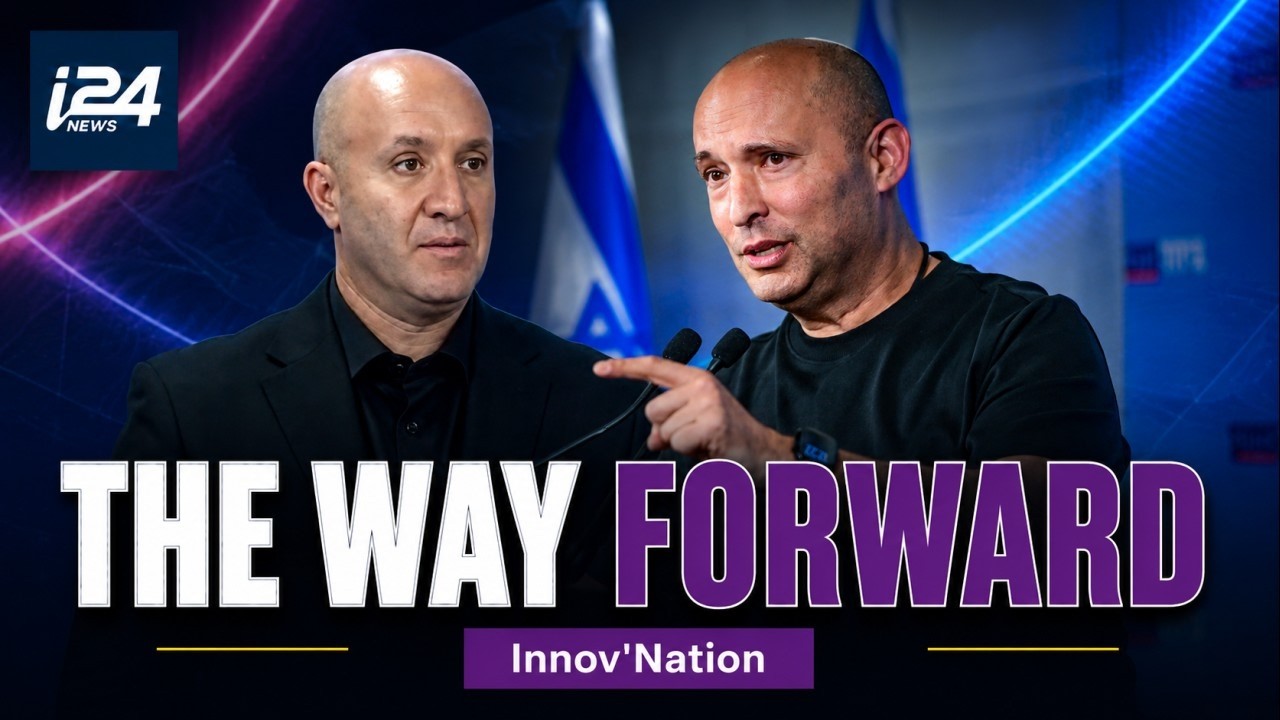
Video summary
Tech entrepreneur Matti Gill has made a significant return to Israeli politics by joining Naftali Bennett's party, marking an exciting new chapter in his career after two decades spent in the private sector and high-tech industry. Gill explains that his decision was driven by the urgent need to reverse dangerous trends that emerged following October 7th, particularly the severe brain drain, lack of investment, and downturn in R&D employment within the technology sector. He views this political move as a necessary step to bring back some of the nation's brightest minds who built the country with pride, aiming to help rebuild and strengthen Israel for the next eighty years under the leadership of Bennett, whom Gill admires both as a successful tech entrepreneur and a former prime minister.
The primary challenges facing Israel, according to Gill, revolve around three critical pillars: securing exceptional human capital, maintaining a cutting-edge technological edge, and attracting sufficient investment from both government and private sectors. He highlights that while Israel has historically been a leader in innovation, it currently lags in AI infrastructure and needs to reclaim its top-three status in defense technology and deep tech fields. A major driving force for this recovery is the people themselves; Gill emphasizes the importance of cultivating an education system that produces world-class scientists and ensuring that brilliant minds feel proud enough to stay rather than emigrate abroad. He sets a specific goal to proactively bring back those who have left and to welcome another million immigrants over the next decade to refuel the country's potential.
Gill distinguishes his approach from traditional politicians by combining deep political experience with an entrepreneurial, "can-do" mindset that acts like a bulldozer to make things happen even when they seem impossible. He cites his success in building a unique venture studio model as proof of his ability to execute complex projects and notes that his passion for the country's future is fueled by a desire to ensure better opportunities for his own children and their generations. This drive, coupled with Bennett's background and leadership, forms a powerful team capable of addressing fundamental issues within the nation. Gill believes that this partnership will not only fix current structural problems but also position Israel as a global beacon of light and a leader in future technologies.
Looking ahead to the next four to five years, Gill outlines a clear roadmap for transformation that focuses on reversing the trend of emigration, catching up with advancements in AI and quantum technologies, and revitalizing the investment landscape. He stresses the need to reinvigorate the education system from primary school through high school, encouraging students to excel in mathematics, English, and STEM programs similar to the initiatives Bennett undertook during his time as Education Minister. The ultimate vision is to evolve Israel from its past identity as merely a "startup nation" into the future of global technology, ensuring it remains a source of inspiration for nations worldwide. By addressing these core areas, Gill aims to create a prosperous environment where the country can once again lead in innovation and serve as a model for sustainable growth and national pride.
Read the full video transcript
Um, it's a very exciting step into
Israeli politics. Uh, you all you
started in Israeli politics, but now
you're returning to join Naftali
Bennett's party. So, what made you
decide to join him?
>> Well, Lynn, I've always lived my life
saying Israel, family, and work with
meaning. And you're right, 20 years ago
I was part of forming a
party and worked in politics for about 4
years and then went over to the private
sector and industry and high-tech. And
really after October 7th and with this
current government, there's a need to
reverse some of the very dangerous
trends, brain drain,
uh, the lack of investments, the
downturn in the amounts of employees
that we see in the R&D sectors of the
tech industry that are the future growth
engines of this country. And what's
needed for that is that some of the best
people that have worked in our startup
nation, that have built things that we
are all proud of, will go into politics
and work for the future of our country.
So, when the opportunity arose and I was
asked, I I said, "Absolutely, I'm in."
And very proud actually to be working to
help Naftali Bennett be the next prime
minister because he himself is a tech
entrepreneur, a successful one that was
also a great prime minister, and
hopefully he will be our next prime
minister and we'll be able to help
rebuild this country, fix this country,
and build up the next 80 years.
>> So, what do you think right now are the
biggest challenges for Israel?
>> So, for Israel in general, we have
geopolitical challenges, we have human
capital challenges, we have internal
challenges as well. If we go to our
sector of, uh, the high-tech and
technology,
we need three things, uh, in order for
us to continue to be a leading
innovation ecosystem for the world.
Number one is we need great human
capital. Number two is we need
this to be a cutting-edge technology
that we are ahead of the game there. And
number three is we need enough
investment to come in to help fuel this
whole environment. And it can't just be
government investment. We have to bring
in private investors. And so, the
private investors and private
investments in Israel have gone down.
And the technology we are not not at
this point ahead of the game in some of
the areas of infrastructure for
artificial intelligence. So, we need to
fix that. We need to be top three in the
defense technology in deep technologies
in AI infrastructure. We need to
actually bring back investments. But,
the biggest driving force is our people.
And our people for centuries have always
been the best and the brightest and
leading the way. Unproportionately, we
have Nobel Prize winners, even one that
we lost just yesterday, Professor Ada
Yonath. And our people we cultivate by
making sure our education system's
great, our science and academia is
excellent, and that we're able to
actually give them a country that they
can be proud of and live in. And what
we've seen over the last three to four
years is more and more of the best
Israelis we have, their the brilliant
minds, are leaving this country. Are
going abroad. We need to go bring them
back. And we need to go proactively
bring in another million olim over the
next another million people to want to
immigrate to Israel over the next 10
years so we can really refuel this
country and make this into a country
that will be something we can all be
proud of. And that's something I want to
work on after the elections.
>> What do you think like the edges that
you bring specifically? Because of
course there's a there's a huge
Well, I don't know like all the people
in politics, they are very
politic-minded, right? They know how to
play the game, but tech is a whole
different field. So, where do you think
you position yourself when it comes to
the difference between somebody from
your background and somebody who's been
in politics for a long time?
>> That's an excellent question, and then
maybe I'll just say I do have deep
understanding of the political and
experience in the political arena. I
also come with an entrepreneurial
mindset and a can-do mindset that
actually can be a bulldozer and help
make things happen even when they seem
un
impossible to do just with venture
studio that I had the opportunity to
actually build and help lead that
doesn't exist anywhere in the world a
model like that and we've been able to
create it and make it into a successful
reality. But third, I think and this is
probably the secret sauce, I have the
passion. I have the drive. I want to
make sure this works. I love our country
and I want to make sure my kids and
their kids have a better future here and
that's what it's all about. Just today
we dropped them off at school. We want
to make sure that they go to school
every day learning the best, growing
into be the best and then they will be
the future leaders of this country. But
we need to make our we need to fix so
much about our country fundamentally and
we need the best people to be able to do
that. And Naftali Bennett, I believe
with his background as a tech
entrepreneur and someone that has deep
in politics and he has his own drive,
he's the best person coming prepared
with a great team of people around him
that I am very fortunate to be part of.
That's be able to build up the next 80
80 years of this country.
>> So,
you you've been back for now 2 years in
a row for InnovNation. Hopefully next
season you will also open the show.
Um in four in four five years time, what
will change and then you can say to me,
okay, I'm really proud that we have
accomplished this.
>> All right, that's great. So, it's a
great question. So, I'll go back to the
same thing. We need to
fundamentally go out and proactively
bring back the best Israelis that have
left us. We need to inspire them to want
to come back here. We need to start
bringing back immigrants. We need to see
that whole trend reverse, number one.
Number two is we need to make sure that
we are at the forefront of the future
deep technologies so that we no longer
miss out like this current government
missed out on AI. We need to make sure
that we need to not miss out both on AI
infrastructure to the
capacity that we're able to actually
catch up, but also on quantum
technologies and other deep technologies
of the future. We need to make sure
we're at the forefront of that. And then
number three, we need to bring back
investors. So, we need to see that trend
going way back up. And we need to make
sure fundamentally that we are training
the next generation of scientists from
primary school through high school in
the same manner that Bennett, when he
was Minister of Education, got our
students all throughout the country to
re-apply themselves to learning the the
top levels of mathematics and then
English and other STEM programs. We need
to reinvigorate this country so that we
are not just the former startup nation,
but the future of technology throughout
the world. And really make this a beacon
of light to nations throughout the
world.