Video summary
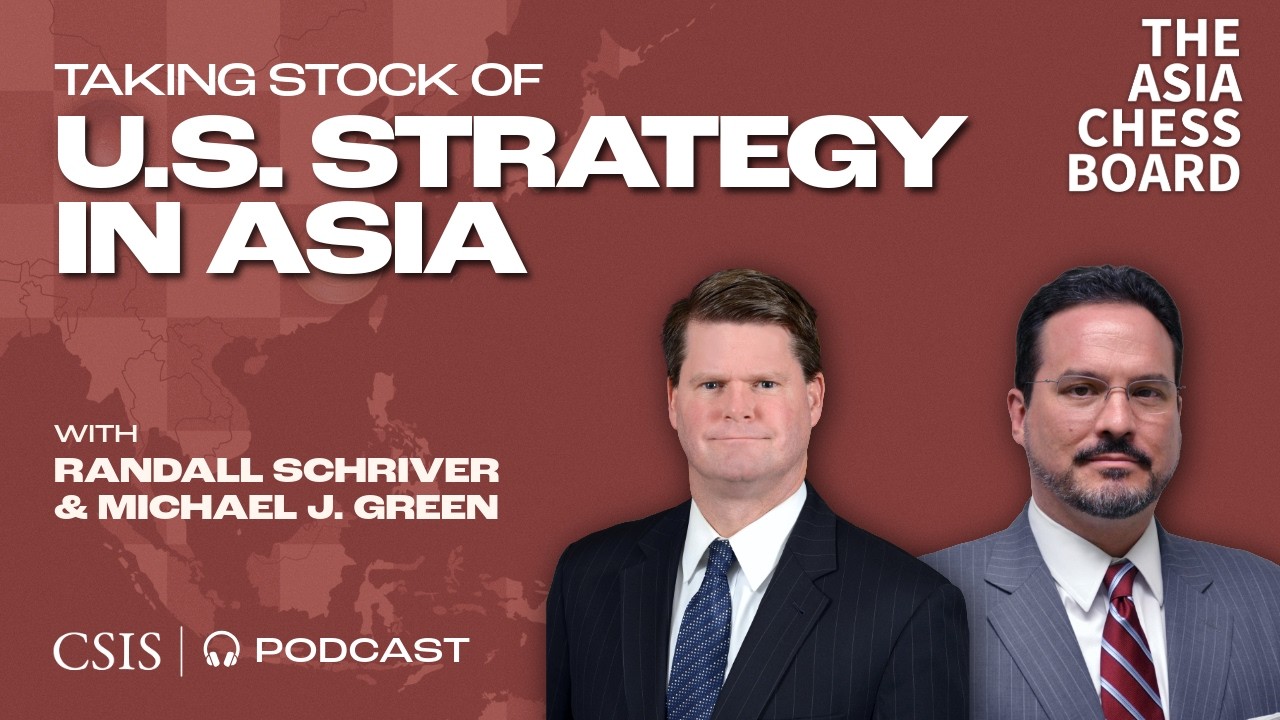
The discussion centers on the evolution of U.S. strategy in the Indo-Pacific, highlighting a significant shift established in the 2018 National Defense Strategy that redefined China as the primary pacing challenge for long-term strategic competition. This approach marked a departure from earlier efforts to stabilize relations through external factors, creating a framework that has maintained continuity between the Trump and Biden administrations despite political friction. However, the current administration under "Trump 2.0" is criticized for lacking the disciplined execution seen previously, resulting in chaotic messaging from officials like Secretary Hagstans that confuses allies even as the underlying strategic operating system remains intact. While there is cautious optimism regarding the resilience of alliances in Japan and Korea due to high public support, experts warn that future administrations will not need to re-establish consensus on China as the main competitor because this reality is now deeply embedded in the region's security architecture.
A critical component of this strategic landscape involves reassessing the capabilities of the People's Liberation Army (PLA), particularly their rapid advancements in artificial intelligence, quantum computing, and biotechnology applications. Although the PLA still faces challenges regarding a lack of combat experience since 1979 and difficulties integrating new technologies into doctrine, the threat is considered serious enough that the previously cited 2027 readiness goal should be viewed as a "be ready by" date rather than a guaranteed deadline for conflict. Experts emphasize that while autonomous systems may offer defensive advantages, significant investment is required to counter cheap, tradable threats like drones effectively, noting that lessons from conflicts in Ukraine and Iran underscore the urgency of preparing for near-peer competition where technology plays a decisive role.
Beyond the immediate U.S.-China dynamic, regional partners are adapting their roles and forging new security architectures to counter broader Chinese power projection, particularly in the South China Sea rather than solely focusing on Taiwan. Australia, for instance, views itself as an enabler to the United States while navigating a complex domestic landscape where younger generations increasingly perceive both Beijing and Washington as equally unhelpful; despite this, the government remains vigilant against Chinese naval activities and diplomatic influence campaigns that threaten Pacific Island alliances. To address these challenges, Australia is expanding its security network by establishing its first military alliance with Fiji and signing agreements with Brunei, demonstrating a proactive effort to maintain stability even as public opinion shifts in the region.
The long-term sustainability of this strategic environment relies heavily on cultivating the next generation of talent capable of navigating the intricate geopolitical landscape of the Indo-Pacific. While there is a robust pipeline of young professionals possessing strong language skills and international experience, concerns have been raised regarding a decline in writing proficiency, prompting initiatives to nurture these emerging leaders. To strengthen the U.S.-Japan alliance and foster deeper regional cooperation, the Institute for Indopacific Security is launching the Richard Armitage Fellowship in October 2026, which will pair American and Japanese fellows for six-month rotations in Washington and Tokyo starting April 1, 2027. This program aims to build a cohesive community of experts who can articulate clear strategies and maintain alliance cohesion amidst the unpredictability of current U.S. policy and the evolving nature of great power competition.
Read the full video transcript
Welcome to the Asia Chessboard, the
podcast that examines geopolitical
dynamics in Asia and takes an inside
look at the making of grand strategy.
I'm Mike Green of the United States
Studies Center in Sydney and the Center
for Strategic and International Studies.
Welcome back to the Asia Chess Board.
I'm Mike Green. joined for a tour of the
horizon of the geopolitics of the Indo
Pacific with one of the very best in the
field Randy Shrivever. We've worked
together on and off over it just
occurred to me Randy over three decades.
>> Yeah.
>> And you've been there for a a lot of
history. I think you were 12, I was 10,
but uh you've been there for a lot of
American state craft in different parts
of the US government think tank
community in the middle of a lot of
important decisions. So, lots to get to.
Randy is currently the chair of the
board of the Institute for Indo-Pacific
Security. He served as assistant
secretary of defense for Indo-Pacific
Security Affairs in the first Trump
administration from January 2018 to
December 2019. He founded the Project
2049 Institute, which a lot of listeners
will know for its work on East Asian
security, especially around Taiwan. He
was president and CEO. He was deputy
assistant secretary of state for East
Asia and Pacific Affairs in the Bush
administration from 2001 2003. He served
as chief of staff and senior policy
adviser to the then deputy secretary of
state, a big mentor for me as well, Rich
Armmitage. And we first met when Randy
was working in the Pentagon for Kurt
Campbell and Joe Nye and Bill Perry and
others. He was in the Pentagon in the
Clinton administration 94 to98 in the
office of the Secretary of Defense. was
the senior official responsible for
day-to-day management of US bilateral
defense relations with the People's
Liberation Army and bilateral security
military relationships with Taiwan. So,
I was brought in in the middle of that
just in case Randy messed up things with
the PLA to make sure that the US Japan
Alliance was ready and waiting. So, lots
of history, lots of insights. Really
excited to have you and and Ry's coming
out to Sydney for our Sydney
International Strategy Forum in
September and that'll be great fun. So,
thanks Randy.
>> Great. Well, thanks for having me, Mike,
and I look forward to the conversation
tonight and seeing you soon in Sydney.
>> So, we always begin with the how did you
get here part and why don't you tell us
you're from the west coast, so you
probably had a little bit of Asia on
your mind, but what pointed you in the
direction of security of Asia, of China,
Taiwan.
>> Yeah. So, really my uh China origin
story goes back to college when I was
failing out as a premed student. There
was a mutual agreement between the
faculty and myself that I was not going
to become a physician. and actually had
to take summer courses to make up credit
between my freshman and sophomore year.
And by luck or by providence, my father
was on sobatical in Washington DC. So, I
took a summer course at Georgetown
University, a place you're very familiar
with, an IR course. And I returned to uh
Williams College, now in good academic
standing, and I sought out this
professor who couldn't pick me out of a
crowd of two. And I said, "Hey, this IR
stuff is kind of interesting to me.
What, you know, do you have any advice?"
And he said, "Take Chinese language."
And if he had said take Swahili, I'm
sure I would have done that. But this
was 1986.
So Mike, you'll both appreciate this and
probably be saddened by this a little
bit. My Chinese 101 class was four
students. The Japanese 101 was 40. It
was literally 10 times. You, we remember
the mid 80s, the trajectory that Japan
was on or thought to be on and China was
still pretty backwater. But I got
recruited into the Navy, Navy
intelligence because I, you know, spoke
a little Chinese, which three years of
undergraduate Chinese language, you
know, is not really sufficient to be
translating documents, but it was such
an unusual thing and a a distinguishing
thing at that time. So I got recruited
in the Navy intelligence and of course
the first thing they did was send me to
the Middle East for uh Desert Shield,
Desert Storm. But after my active duty
time, I did get into the reserve system
working on China. did some recall duty
to Embassy Beijing and then I ended up
after graduate school working for Kurt
Campbell and another guy you know well
Carl Iikenberry on the China Taiwan
desk. So that sort of married the
Chinese language, Chinese interests and
security issues for the first time fully
together.
>> My son wants to do the same trajectory
that you did actually
>> if he could cut out the premed part.
>> He's given premed. I cannot tell you how
many people have been on this program,
Americans, and said, "Yeah, I was in
premed." And I decided it'd be easier to
learn Chinese or Korean or Japanese.
>> That's [laughter] right.
>> But my son's on this trajectory. He's
got one problem, though. He's fluent in
Latin. So, I keep telling him like, "The
Navy needs to be counting those Roman
tri." But it's a really cool track. When
you went into the Pentagon, you weren't
detailed from the Navy, right? That was
a civilian belllet.
>> That's right. I I had a uh an
interesting Navy experience. I I
deployed Desert Shield, Desert Storm.
But you will also recall 199091, we were
still sort of in the peace dividend even
though we went to war. And I was asked
after I returned from Desert Storm if I
wanted to take an early out and and join
the active reserves, cut the active duty
time. I was advised by a mentor of mine,
I don't know if you know this, Mike, my
my first boss in the Navy when I was an
enson and he was a lieutenant
commander04 was Harry Harris. And so
Harry said, "Take it." And uh I'll write
you a recommendation to go to the
Kennedy School.
>> So I went to the Kennedy School and I
joined the Office of Secretary of
Defense after that as what was called a
presidential management intern, PMI,
later PMF, presidential management
fellow.
>> Currently more bound thanks to the Trump
administration, but I joined as a fellow
and then converted into the civil
service.
>> My wife was a PMI and I got into the
program, but I was on a fullbrite. When
I came back, the only job left was to be
in the Defense Logistics Agency counting
how much toilet paper the army had. So,
I never did it. It's a great program.
People who have worked with the US
government, with the State Department,
Pentagon, Energy will find some of the
top civilian, not foreign service, not
military officers, but top civilian
officials you meet were out of that
program. So, I'm sure it will come back.
It's just a
>> I look at my cohort group. Kathleen
Hicks was was in my cohort group. She
became Deputy Secretary of Defense.
Christine Warmuth was in my cohort
group. she became secretary of the army.
So, it was a pretty good pipeline.
Sharon Burke became an assistant
secretary. So, I hope so, Mike. I really
do. Yeah,
>> I can't imagine it wouldn't. It's just
such self harm to cut off the pipeline
of talent to the top levels of the US
government. You mentioned a couple of
people worth flagging there. Harry
Harris, Georgetown, a really influential
figure in East Asia. He had the Japan, I
think, desk at the joint staff when I
met him. That maybe that's when you'd
worked for him. But he ended up
becoming, of course, the paycom
commander. Um, and probably the first
one, I think the first one in the
postcold war era,
>> tell me if you disagree, but the first
one in the postcold war era to really
focus on the war fight
>> with the PLA. And I don't think I'm
exaggerating when I say that, to like
really take it seriously. not just see
the role as maintaining alliances and
stability and reassurance but actually
really taking seriously the way US
forces Korea would the possibility of
real combat like real danger. He had to
sell that to a Trump administration as
you know where there were Chinese
representations saying he was dangerous
and he held his ground and I think
really set the trajectory that we now
see with Indopaccom as it's been renamed
or back to PCOM. So pretty important guy
and and wonderful Georgetownrad naval
officer. I work for him in the
operational forces. So we were deployed
together in a P3 squadron. So it was
literally my first deployment in the
Navy and we were in Msira Oman but was
really a formative period for me
professionally and then having him as a
mentor was fantastic. I agree with your
assessment. I mean, it was probably
somewhat evolutionary as the Chinese
started misbehaving more and more, but I
think he in many ways did reorient
things to a real greater sense of
purpose about the war fight and more
serious preparations. I actually don't
think he was having to push too hard on
people like Jim Mattis and some of the
others that served in the first term of
the Trump administration, Matt Potinger
at the NSC, but certainly his visionary
leadership and his sort of brute force
personality certainly helped drive
things in that direction
>> for sure. And he had no problem with the
policy or military side. It was a bit
more of the political people who in the
end came on side. Well, like most
administrations, you won't be shocked to
hear we had people on the economic side
of the house and, you know, a lot of
mixed equities, mixed interests, but I
think, you know, we got a lot of help
from the Chinese in that period as they
really started intensifying the coercion
and it wasn't limited to just Taiwan. It
was really along the first island chain
and it was becoming a global phenomena
if it if it wasn't already. And so, you
know, that first NDS that was released
in the Trump administration, which our
mutual friend bridge KBY had a big hand
in was really, I think, the first to put
a fine point on China as the pacing
element and as our, you know, Pacific
priority theater, China is the priority
challenge. One could argue with very
compelling evidence that we say it on
paper, but we don't always live up to it
in actions and resources. But I think
the 2018 NDS was really a seminal piece
of work that for our department
certainly was a valuable strategic
guidance document. You know, sometimes
NSS NDS's seemed somewhat disconnected
from the policy, but for us it was a
very powerful instrument and really at
the core of that was this idea of
long-term strategic competition with
China. I want to come back to the
national defense strategy and of course
the national security strategy HR
McMasters and others worked on that set
the predicate for it but let's talk a
little bit more about people you worked
with leading up to that because when you
and I worked in the Pentagon there were
real debates about what American
strategy should be in Asia and this is a
little bit of a simplification but there
was basically a school that believed
that a kind of reassurance institution
building confidence building economic
interdependence with China should get
the lion share of our efforts. We should
be willing to take risk on the security
side to invest in that. And then there
was another view that didn't disagree
with investing in stability and
interdependence but wanted to be much
more prepared for it failing. That
latter group you were in, I was in Kurt
Campbell who we worked for a lot of the
people we've been talking about
especially Rich Armmitage. How did you
come into Rich's orbit? I mean for my
part I met him through not introduced by
but because of the work I was doing on
the alliance for Kurt and Jonai because
there was such a bipartisan consensus
growing around the importance of
alliances and readiness and deterrence.
But did you meet him when you were
working for Kurt in a Democratic
administration? Was that the first
introduction?
>> I did. And it's funny you put it that
way because that's one of the reasons
Kurt introduced me. I was looking
through my soda straw. I can't claim to
have this great vision of how we should
have strategically been realigning or I
was looking at China's growth and
increasingly malign activities around
including another country in my
portfolio Taiwan but Kurt sent me over
to see Rich cuz he knew I was a
Republican and he said you're going to
have to wash this Democrat stuff off he
used a different word wash this Democrat
stuff off him someday when he makes a
bid for a political appointment and so
that was an introduction but then I
actually worked a bit with him when
Secretary Cohen was getting ready to
make his first visit to China as
Secretary of Defense and he asked the
Defense Policy Board to do some
preparatory work for that and Rich was
on the Defense Policy Board but clearly
the person with the most Asia background
and so Rich sort of led that effort for
the Defense Policy Board. I was sort of
the liazison. So I was traveling back
and forth to Roslin. You remember the
old Armadage Associates office in
Rosland on Wilson Boulevard and I got to
know him then. And then when I left the
department to become an academic,
another conversation that resulted in
the faculty and my being in mutual
agreement that I wasn't going to be an
academic, I did leave to go to Stanford.
Rich invited me to join some projects
and initiatives he was working on. So I
had this very weird poor PhD student by
day traveling for trilateral meetings
with the Japanese and the Taiwanese at
the Okora by weekend and [laughter] then
back to ramen in my dorm room the next
Monday. But Rich was very kind and very
generous to include me in all those
efforts and that sort of led to us
developing a relationship that led to
his invitation for me to work on the
campaign and then ultimately the
transition in the Bush administration.
>> Yeah, it takes a particular I don't know
if it's discipline or pathological
disorder to stay focused on your PhD
when you're actually doing all those
kinds of cool things with the countries
you're supposed to be researching and
writing about. It is interesting and
I've written about this myself but
there's a very strong maritime service
Navy imprint the people who really drove
what became the strategy in the 2018
national defense strategy rich obviously
Navy yourself Kurt was a Navy reserveist
you had people like Carl I can army it
wasn't exclusively maritime services but
a very heavy dose of people who had
served at sea or had thought about
maritime problems
>> tol Jim Kelly you could have
>> Jim Kelly took Patterson that's right
and my theory is it's because they're at
what the Australians would call the
coalace. You're thinking about the first
island chain sea lanes and that's where
the lights start turning from green to
yellow, yellow to red first. It's a bit
less so in other sectors of
relationships. That's where the
problem's most acute and where the
thinking begins, I find.
>> Yeah. I mean, it makes a lot of sense to
me. I haven't done the deep thinking
necessarily than you have and you've
written on it. But I think the other
thing Mike is that as a um forward
deployed and float force you're also
immediately aware of the time distance
issues the tyranny of time and distance
and therefore in the western Pacific the
extraordinary importance of alliances I
mean whether that's for protocols or
coordinated joint activities whatever it
may be when you're dealing with that
kind of time distance problem when
you're dealing with that vastness of
contested areas you know it's not going
to feel too crowded. on your side of the
battle line if you're joined by partners
and allies and all the things that naval
forces afloat ultimately need. So I
think you're sort of born into that
world too. It's not part of the naval
service and the orientation to think
about sea lanes and all that, but you
naturally go right away to the
importance of friends and allies.
>> Yep. The 2018 national defense strategy
built on the national security strategy
the year before. US national security
strategies coming out of the White House
from the end of the cold war until Trump
always premised the possibility if not
the expectation that US China or US
Russia relations could be stabilized by
something exogenous to the relationship.
So for George Walker Bush it was kind of
the new world order. For Clinton it was
enlargement and engagement. for our
administration, for Bush, it became the
war on terror.
>> Yeah.
>> And for Obama, it was climate change.
And so, every administration, for as
long as you and I have been doing this,
had a national security strategy that at
least publicly was premised on the idea,
no, we're going to get along. We'll have
to have allies. I mean, I was brought
into the Bush administration because of
my alliance expertise, you know, going
to have to have allies. But 2017 and
then with much clearer lines of effort,
the 2018 national defense strategy said,
"No, the defining characteristic of our
new era is strategic competition,
particularly with China." It was really
clear. It was really clear. Yeah.
>> And for a Trump administration that was
not, you know, or let me put it this
way, for a president who was not famous
for being disciplined, it was a strategy
that was incredibly disciplined, at
least on the national security side. And
of course, I'm sure there were people I
know there were people often on the
economic side or the political side who
and there were in the Bush
administration who found competition
inconvenient. Without going into
details, you will recall the two of us
getting in trouble with our bosses,
Colon Pal and Kandi Rice because we kept
nudging them to approve arm sales to
Taiwan that were not diplomatically
convenient. And that happens in every
administration. And I'm sure it happened
in Trump one, but it was pretty
disciplined. I guess the question for
you is, was it that disciplined? and how
much of that is left in Trump 2. I think
a lot of the elements continued through
Biden
>> with Jake and Kurt and Tony. But in
Trump 2, it's just a very very different
policy process. It's much more chaotic.
It's much more as Habberman and Swan
Wright, the president deciding in the
moment. How much continuity do you see
and how much of the strategic
competition discipline I guess do you
see surviving today from what you worked
on? Big question, but you know, go at
it.
>> So, I'd say a couple things. First of
all, I do want to say what I did say
when I was in office is Trump won was
more evolutionary than revolutionary.
That I mean, I'm sure people were in
office, maybe even myself talking about
how groundbreaking the NDS was and
everything, but if you look at previous
administrations, they were definitely a
combination or a mix of engagement and
hedging. There's always the hedging
piece and then I think by the time you
get to the pivot to Asia which Kurt
would say it's not about China which led
us all to understand okay this is about
China and really the if you unpack that
what they were talking about 60% of our
naval forces in the Indoacific and the
rebalance within the rebalance to put
greater emphasis on engagement with
Southeast Asia. All of this, I think,
were the building blocks for the Trump
administration to be able to come in and
say, "China is the organizing principle,
and we're going to have our executive
branch agencies build out policies in
accordance with that." I think the Biden
administration, there was not only
continuity, but I would say in certain
instances a hardening of some of the key
positions, particularly on export
controls, but also on posture
initiatives in the Indoacific. Eli, I
think, did a terrific job and a lot of
the work in the Philippines and and the
um other alliance of Southwest Island
chain of Japan and the opportunities
that started to open up there, the
Second Island chain, all of that I think
was not only continuity, but really kind
of hardening. You get to the Trump too
and it's a little hard for me to comment
on because well, on the discipline part,
it's not hard to comment on. It's not
discipline. But in order to sort of
evaluate the policy, I'd have to better
understand what it is. And I keep
getting sort of mixed messages. Shanklaw
speech number one from Secretary Hagsth
versus number two. It looks like two
different administrations, right? And
then you have this discussion about
deterrence by denial. And then we're
sending our aircraft carrier, the only
one in the Indoacific, to the Middle
East. And you know, you talk about
Taiwan needing to spend 10% of its GDP
on defense, which is an absurd number,
but made all the more when you don't
sell them arms when you put 14 billion
worth of arms on freeze. So, the point I
can agree with you on, or I don't know
if you said it explicitly, but that I
would underscore is yes, it does appear
to lack discipline and be a bit chaotic.
I think what the Trump people would say
is it's the sort of outward public-f
facing activities, statements, strategic
documents, and then there's the real
work, what we're doing dayto-day. And
they would point to certain things on
diversification of supply chain, the
critical minerals, critical inputs as
being an effort that gets very little
attention, that's very consequential.
They might point to joint training in
Taiwan. We're not selling the big arms
packages since December 2025. We've got
this unprecedented growth in training.
And so this this notion of what did Hick
says quiet but strong and clear. I'm not
sure we got the strong part with all the
resources being amunitions being
depleted and attention being diverted to
the Middle East. But I think there's an
element of truth there that there are
things going on outside the public eye
that are meant to strengthen our
competitive posture visa v China. And so
I want to give him a little credit for
that. But we talk about Korea being a
model ally in a very public speech and
then a couple weeks later we're talking
about reducing exercises and criticizing
them for not supporting us on Iran. So
it's doesn't quite have that discipline
>> as those exercises are beginning and
hundreds thousands of people are being
deployed and leaving their families and
money being spent. I think you'd agree
with this but I kind of from the
beginning have rejected this effort to
define a grand strategy for the second
term. You know, it's Western Hemisphere
really than what are we doing in Iran.
>> Okay. It's a G2 with China really. It I
think it's more of a roulette wheel
every day or every week and and whatever
the strategy is coming out of the Oval
Office or the latest thing is what it is
and then it goes away. Living out in the
Western Pacific or sort of the hanging
off the bottom of the Western Pacific
and interacting a lot with defense
forces and diplomats and US officials
and military officers. If you just peel
a few layers back, it's the operating
system, if you will, that is in the 2018
NDS or in the Biden administration
strategy is still the operating system.
There is no new grand strategy. But you
probably pay a pretty big price when you
don't have a clearly articulated grand
strategy from the top in terms of things
like munitions or attention or what you
can say about China. like you will not
hear senior officials criticize China
strategically very much right now
because the president has a summit
coming up. So this I mean you and I have
both worked at senior levels of state
defense. I was in the NCS. I like to
believe that the message and the
strategy coming from the top matters to
actual successful implementation and it
is very hard to read right now and I'm
sure we're paying a price for that at
some level. But the operating system has
not changed that I see.
>> That's a great way to put it. I I agree
with that. It's gonna sound like I'm
picking on my friend Bridge. I I don't
mean to, but you know, he gave this
speech in Manila, very public, and it's
all splashed out of DoD press releases
and and the like. And he gives a speech
in Manila, doesn't mention China,
doesn't mention South China Sea, doesn't
mention the war in Iran. I mean, it's
interesting at a minimum, right? So I
guess that's protecting the president's
decision space when it comes to
negotiating with CJ Pang and its
implementation of this quiet but strong
and clear strategy. But I got to believe
at some level also that countries are a
bit confused by this and trying to
understand what our priorities really
are and how reliable we really are if
we're not even going to talk about the
South China Sea in Manila which is you
know that's the number one security
challenge right now for sure. And you
know you were always an excellent leader
on this when you were at NSC in the
White House keeping us all knit up on
public messaging and talking points
across agencies because I think you know
our allies depend on that. They want to
know what the message is and they want
to be able to see if there's a say do
gap and measure us by our words. And I
just don't see that coming out of this
administration. Now, a big part of it is
who's the China desk officer right now?
It's Donald J. Trump. Who's the Iran
desk officer right now? It's Donald J.
Trump. And either for self-preservation
reasons or just adaption to how
decisions are made and things get done
in this administration, he gets all the
space he needs to make decisions. And
that sometimes that space is
uncomfortably empty until we await the
president's words or decisions, but
that's the way it is and I don't see
that changing for the rest of this
administration.
>> No, I agree. In fact, it may get even
more, what's the word? Dramatic,
hyperactive as politics inevitably turn
against, you know, the incumbent
president. There are two things that I
think probably will not happen in 2029
after the next president comes into
office. Obviously, a lot depends on the
election. But one thing that's not going
to happen, I think a new administration
is not going to have to come in and call
together the foreign service and the
joint staff and the CIA and say, "Guys,
look, China is our main competitor." I
mean, there's a bit of that in the 2018
NDS. That's not going to have to happen.
The system knows. I don't worry about
that. And the other thing I don't think
is going to happen is I don't think our
main allies are going to hold what Trump
did against the next administration. A
lot of commentators write, "Oh, this is
it. we're done. But when a new
administration comes in, I don't think
the foreign ministers of Japan or
Australia or Korea are going to say,
"Nope, no, no, no. What you did to us,
we didn't like, so we're not going to
work. What the previous guy did, we do
not like, so we're not going to work
with you." And you can see it in the
polling already. Trust in the US in
polls, including a poll we just put out
today, is the lowest on record right now
in Japan, Australia, not Korea, but that
now probably will change. Support for
the alliance is in most of these
countries the highest ever. 97% in
Korea, 93% in Japan. Pretty steady in
Australia. So structurally, I don't
think see a plan B. I don't see
decoupling. But we've not actually been
in an administration like this. So we'll
just have to see.
>> The other interesting thing to me is you
see a lot of hedging. I would say minor
hedging, but to date most of this are
things we would have encouraged.
>> Exactly. Either way, now if it becomes a
fuller hedge, and that becomes the
defining quality of what our allies are
doing, that's a problem. But more on
defense spending, more miniateral work
that doesn't necessarily have the US as
the convenor. You know, all the great
work Japan's doing with the Philippines
and Australia, these are things that we
would have long encouraged and are happy
to see, even if it's the result of a
hedge, fine for now, I would say. Do you
agree with that? The US ally that's
probably hedging the most in terms of
trying to fight alternates to the US
right now is Canada. And I would say
first of all they are by far the most
dependent on the US. So in a way you
can't blame them. And number two other
countries aren't really buying it. They
like the vibe. They like the Mark Carney
Davo speech but they're not the Japanese
and Australians aren't canceling F-35s.
And to your point about allies working
together. Last week there's a big Japan
Australia conference here in Sydney
hosted by Nikke and there was an
impressive list of Japan Australia
cooperation from the Moam class
destroyer to critical minerals and I
said to the group this is really good
and it's really good for the US and if
you had the most reassuring president
imaginable John McCain or Jeb Bush this
would still be happening and it's
primarily happening not because of the
US because of China.
>> Yeah. So, I think it's hard to keep
perspective, but I think there's a lot
of reason to think we don't have to put
a fork in it yet. We got some room,
>> nor is the administration done yet.
>> No, that's true.
>> You're out in the region, but I've
traveled through a few times recently
and the conversations on the Iran war
are different than what diplomats are
saying to US interlocators here in
Washington.
>> There's a lot of frustration and there's
a lot of concern about no endgame, no no
strategy to end the conflict. You know,
that's just one, it's a big piece, but
that's just one piece. You know, where
are we going on tariffs? We we seem to
get this decision from the Supreme Court
and he pivots to another somewhat
obscure section of trade policy to
strike 50% tariffs against Canada, our
largest trading partner. So, you know,
that challenging that in the court
system would take a while and and it
seems like we're on sort of this gerbo
wheel of the president's not going to
give up use of tariffs as a tool and you
know better than I do for for friends
and allies who want some privilege with
alliance and partnership with history
behind it. They're they're not going to
get it. Administration is going to
continue to reach for this. So, I think
your fundamental point is right. I like
the way you put it. We still got time to
go here.
>> You're right. I mean, the thing that
drains my glass half full to glass half
empty is that we have two more years.
And most presidents, as you know,
because you worked for most of them in
the last 25, 30 years, if they lose the
midterm election, they become more
internationalists. They move to the
center. They emphasize allies more.
Clinton did it. Bush did it. Obama did
it after losing the midterms. If
President Trump and the Republicans lose
the House and maybe the Senate, I don't
think that's what will happen. I think
that Trump's particular style is when
you're under duress, show you have power
even more dramatically. So, it could be
an even wilder ride. And so, really, we
have to temper the cautious optimism
with that fact because we just haven't
been in this kind of sustained pattern
of presidential decision-m that's so
just not trusted. You can see it in the
polls around the world. Let me ask you a
little bit. When you were in the
Pentagon and in the State Department,
you would comment and it really caught
people's attention. And you would say
early in your career when you were
involved in projections about PLA
military capabilities, you were accused
at the time always of being too hawkish
and you always underestimated how
serious the problem would be. So I
haven't heard you say that in a while.
>> Yeah.
>> Let me ask you about it. So looking at
the PLA now and the capability set and
looking back on the work you did in the
Trump administration 1.0 or in project
2049 say in the Biden years were you
were on the you know the edge of saying
look how dangerous it is. Are you
surprised? Are you surprised at how
dramatic it is or is the trajectory what
you expected?
>> I think the pace I mean if you go back
to the 1990s I would like to think I was
you know sort of an early hawk and part
of that is just when are your formative
years what are your formative
experiences? I came into the Pentagon in
'9495
and Carl Iikenberry said I want to do
big China you do the little stuff. you
do Taiwan, Hong Kong, and Mongolia. And
so I took up the Taiwan portfolio
literally the month lead on the way went
to Cornell University and gave the
commencement address and all hell broke
loose with exercises. And you know, I'm
scratching my head saying they're
becoming a democracy and they're getting
missiles lobbed at them for that. That
just doesn't seem right to me. And then,
you know, even the other portfolios, I
worked the Hong Kong revision. You know,
we used to do 60 to 80 ship visits a
year there. US Navy ship visits, we do
none now. But kind of seeing all that
unfold really made an impression on me.
But I think yeah, I was surprised at the
pace what you're referring to, Mike. I
was commenting on a study we actually
did. We had the intel community do
something that they're normally loathed
to do, which was grade themselves, do a
study of studies and say how well we did
in predicting China's trajectory. And as
you said, at every juncture, in
virtually every category, they were
underestimating the progress.
>> And when when you say we, you mean in
the second Trump administration, so like
2019 or so?
>> Oh, 20. So I think we got more
sophisticated and and have a much more
realistic understanding of the
trajectory. I think what's at play now
though is this evolving nature of
warfare harvesting all these lessons
learned from Ukraine and and even Iran
for that matter. Not only the
foundational research and the
development of certain technologies with
military application but actually
fielding them and incorporating them
into doctrine and operational concepts.
I think we would be really ill advised
to underestimate the PLA's capability of
doing that though it's certainly a
challenge right I think even in the
beginning of the Trump administration
there was still this idea that China's
innovation cycle was uh fast follower
that they'll steal the IP and the
technology they'll duplicate it they'll
build it to scale but they're fast
follower they can't innovate the way our
country does and that includes
technology with military applications
innovations with military applications I
think what we're seeing and I'm drawing
on work I do with the US China
Commission for the Congress. What we're
seeing is pretty impressive innovation
in AI and quantum and biotech. And we're
starting to see some things reach the
military, at least things we can observe
when we look at exercises and media
portrayal that the Chinese are letting
out. You know, the uh use of autonomous
systems, the use of even advanced
robotics. And I do kind of wonder with
these dog robots actually, you know, if
they hit the beach, how well they're
going to do. But, you know, they're
showing them off in these exercises. I
mean, there's some impressive stuff
going on. But to use the Rumsfeldian
lexicon, the big known unknown is how
does all this come together for a
military that hasn't seen combat since
1979 and doesn't train in highly complex
environments. They're better, but
they're not to our level of complexity
and difficulty. And that's just hard to
know.
>> Yeah. And where are you on the so-called
Davidson window? the idea that when Phil
Davidson was into Paycon commander, he
gave that speech in 2022 citing
Xiinping's call on the PLA to be ready
to fight and win by 2027. Are we in a
dangerous window or what are you
thinking?
>> I've talked to Phil a lot about this
actually. He would hasten to add that
that was a be ready by date, not a go
date and a lot of people treated it as a
potential go date. I think there are a
number of things to suggest that if it's
a be ready by date, they might not be
ready by then and that there are things
that would surely give them pause if
they're studying the battle space of
Ukraine and Russia right now and again,
frankly, even Iran and what Iran's been
able to do against the United States and
what they've been able to do to take
advantage of their asymmetric
capabilities and and their geography and
so on and so forth. You got the massive
purging of the PLA that continues. There
are a lot of things that would suggest
they don't look like a military that's
sort of on the verge of a major
operation of that nature. And it's still
a hard target. 80 nautical miles of
water, mountainous, inhospitable
terrain, unfavorable sea conditions for
most of the year, very few ports for
imbarcation that are favorable. So, I
don't think we're looking at the most
dangerous window. There's a huge caveat
I would add to that which is they're
watching what's happening to the United
States military very closely. They're
seeing the depletion of munitions.
They're seeing our inability to
replenish at sufficient rates. They're
seeing our resources which were meant
for posture initiatives and building our
logistics and maintenance capabilities
for a contestant environment in the
indust. They're seeing all that diverted
and one would think they're calculating
maybe this is a better window than we
thought despite our own shortcomings and
our own uncertainties. Would the United
States and would this president take on
another major conflict right now? Taiwan
is doing all this work on national
resilience. Do we really want to wait
till that all comes online? So, there is
risk. I don't think, you know, this is a
stretch where I'm going to wake up one
morning and be wrong. It's a big thing
to be wrong about, but I I think
deterrence can hold longer at this
juncture.
>> I'm going to butcher it, but you know,
Admiral Paparo, the current PCOM
commander, sort of describes the big
sweeping epical changes in warfare and
describes World War I as advantaging
defense to the surprise of the cult of
the offense that came out of the 19th
century, World War II, favoring offense
with the Blitzkrieg and US island
hopping to the surprise of those who
came out of World War I and and fixed
defenses. And he he said it could be
we're entering an era where defense
again has the advantage that autonomy
actually helps defense more than
offense. A do you think that sounds
right? And B do you how do you think the
PLA looks at that? Because theirs is no
longer really a defense doctrine.
They're moving to my interpretation of
the PLA campaign plan is it's a
theaterwide campaign p plan very much
like Japan in 194142.
So the burden of offense is on the PLA
in many ways. So so what's your take?
Yeah, it you know all these things China
hands love to talk about things with
Chinese characteristics, right? So it is
more of an offensive oriented plan and
doctrine and operational concepts being
developed for that. But there are
Chinese characteristics to this, right?
Which is the lawfare political warfare
piece and what you're seeing around
Taiwan right now. For example, a new
coast guard patrol that's supposed to be
a persistent control east of Taiwan. You
know, really interesting development.
So, I think, you know, the win without
fighting thing is still very important
and if not the PLA, the CCP's mindset.
I'm not smart enough to give you a good
answer on the defense versus offense. I
do know this that even if that were to
be true, you have to make the right
investments in the joint force in order
to leverage that new reality. Right?
defense may have the advantage, but if
you're shooting patriots and thads to
knock down very cheap and tradable
drones, that's not a good that's not a
cost-effective way to do defense. Now,
there are ways that you can match cheap
tradable things to shoot down cheap
tradable things, but I think there
probably is some some truth in that, but
we we got to make the right kind of
investments. When Admiral Paparo talks
about hellscape as part of the defense
of Taiwan, I think it well I know
because we read what the Chinese write
about it. It's something they're very
concerned about, but it's still highly
aspirational. We have to build that and
we have to work that into operational
concepts and ultimately into the war
plan for that to really be a deterrent.
Right now it's a oh shoot, the United
States may be on to something, but it's
aspirational.
>> Yeah. You spent a lot of time obviously
with Taiwan, but also Japan, Australia,
other US allies. What's your take on our
alignment on the Taiwan problem and
China's take on our alignment? Do you
think that the PLAC seems that they can
exploit and neutralize key countries or
do you think they're assuming that, you
know, all the key allies, particularly
Japan, Australia, Philippines are in?
>> Yeah, you know, Mike, it's a great
question and you're more expert in more
than one of those countries you just
rattle off, but particularly Japan. My
read is they're very upset at Takiichi
for the Taiwan statement, but not just
because she said it's a survival
threatening situation, but because Japan
is doubling its defense spending, it's
introducing counter strike capability,
which to the untrained eye looks a lot
like strike capability. That they're
doing a lot of things to strengthen
their position for their own defense,
but also to contribute to regional
security or as we used to say around the
95 96 areas situations in the area
surrounding Japan. Is that the
>> That's it. [laughter]
>> Yeah. So, I think Japan to me looks more
serious and that draws on my recent time
in government, but also recent travels.
And I think the Chinese understand them
to be more serious, which is why they've
really taken a turn to pressure the
Japanese. I think the reports from the
cross party diet delegation that was
just in Beijing, they were basically
lectured on Taiwan and nothing's going
to change from China's perspective
unless Japan changes its Taiwan policy.
You know, I think the Philippines under
Marcos is certainly more inclined to
support US initiatives. You know, they
get a little squeezy when you start to
specify what some of this stuff might be
meaningful for. If you get into deeper
conversations about a Taiwan
contingency, you're going to make a lot
of people pretty uncomfortable quickly.
Australia, I think they take a again,
you're far more expert than I, but they
do think of the regional picture sort of
what they can contribute and what they
can be enablers to. And they're worried
about, you know, not just Taiwan. It's
not the situation that Amble Paparo has
where he's got to think about honoring
domestic law and having a plan that
could work and being able to say we have
the capacity to resist force. I think
they'd look at broader Chinese power
projection and what they've seen in the
areas in the South China Sea and beyond
Chinese patrols and they're thinking
about delivering a force that is capable
enough to secure its own interests which
increasingly include broader regional
activities and I think they've given
serious thought to being a stronger
partner and enabler to the United States
and all of that is coming online. I've
never had the impression that anyone in
Australia is looking for a fight over
Taiwan.
>> Three people are. I know them all
personally. [laughter]
>> Yeah, you're right. And it's
interesting. Our poll that just came out
showed younger Australians, Australians
in their 20s now think that China and
the US are equally unhelpful in Asia.
>> Equally unhelpful.
>> Equally unhelpful. So that's a big
problem. That's not where the government
is. What the government is seeing is
missile tests, circumnavigation by PLA,
Navy task forces. And just this week, a
big diplomatic effort by Australia to
get the Pacific Island leaders to agree
in effect that there should be no
Chinese bases is in real peril because
Beijing has successfully reached under
the hood in some of these countries and
convince leaders not to go. So, it's a
knife fight and it's across all domains
and some of the most intense ones are
actually not physical or kinetic.
They're diplomacy and influence
campaigns and information. So I think
for that reason there's going to be a
tolerance for American let's just
charitably say lack of discipline for a
bit longer but we'll see.
>> That's encouraging. That's oddly
encouraging. Thank you.
>> Look the best friend we have right now
is Xinping until he's not.
>> Yeah. Well, if you watch the region over
a stretch of time, as you certainly have
more than even the strongest Asia, I
mean, you'll see these little indicators
that aren't so little like Fiji and
Australia entering into an alliance.
This is Fiji's first military alliance,
first security alliance ever. And for
Australia, it's only what US New Zealand
leanes treaty and they reach an
agreement with BNG recently. I mean,
this is new stuff
>> and it's not because somebody cracked
open a textbook and said, "Hey,
alliances, that sounds interesting. We
need that."
>> No, it's, you know, the Chinese are
really overplaying their hand and making
a lot of folks nervous and we need to
leverage that. And I it looks to me like
folks in Cber are and and doing so in
very smart ways.
>> I think that's right. They definitely
didn't crack open my textbooks.
Hey, last quick question because your
institute and before that project 2049
were drawing some of the best and
brightest Asia hands in as RAS and
interns and stuff. I'd be interested in
your take on you know where the if you
will future Randy Shrivers are coming
from how they're doing. Are you are you
going around to premed programs and
liberal arts colleges saying don't do
anatomy do Mandarin? I mean, presumably
you're getting people out of Georgetown,
GW, A&U, places like that, Japanese and
Taiwan and Korean universities, but
what's your take when you work with
Americans, but also Australians,
Japanese, Taiwanese, Koreans and stuff
in their 20s, it gives me great hope
because I find they're very, if you
will, mission focused, they realize how
high the stakes are and how important is
they really master the subject. You
know, let's let's face it, this is less
than 1% of the population, but it does
seem like there's a pipeline of real
talent. That's my impression, but I've
been in Australia for four years. What
are you finding? I
>> agree 100%. When we have intern
applications come in, it's an
embarrassment of riches and incredible
choices, and 95% of the time it more
than pans out. We've just been so
blessed with spectacular talent. And
there are things that really stand out,
language capability and international
experience. I often tell young people
like, you're asking about my career
path. My career path today would not
work. you know, three years of Mandarin
undergraduate language, which made me an
interesting candidate for a bunch of
jobs that required Chinese language. We
get people that started studying Chinese
language as an elementary school student
and lived in China and that's not a
distinguishing feature anymore. So,
that's really impressive. I could say
there are some things that maybe aren't
as strong as they used to be. It's you
tell me is do you find young people
write as well as they used to?
>> No.
>> Yeah.
>> But maybe they won't have to someday. I
don't know. But well, that's fair
enough. too too much texting and and
social media, but I I'm very encouraged
and I'm going to take the opportunity to
do a little plug here. We are creating a
fellowship in honor of Rich Armmitic
who, as you said earlier, also was a
person who mentored a lot of young
professionals, myself included, you
included. We're creating the Richard El
Armadage Fellowship at the Institute for
Indopacific Security. His family's very
involved, Lauren. The kids are very
supportive. It's going to be focused on
the US Japan Alliance. We're going to
have a cohort group of two fellows every
year, one Japanese, one American.
They're going to do six months at our
institute in Washington area and six
months in Tokyo. And we're launching
that this fall as a pilot program. We're
sending an American young professional
to Tokyo. And our plan is to launch the
full program April 1st for reasons Mike
you will understand, April 1st, but I
don't know that all your listeners will.
But we'll have a full cohort group April
1st, 2027. So in our small way, we're
trying to not only honor Mr. Eridge, but
to your point, try to mentor and and
nurture young professionals who are
coming into the field who want to have
their time making contributions and and
we'll try to help them do that, build
the skills and the tools, capabilities
to do that.
>> That is fantastic. Not April Fool's Day,
but the beginning of the Japanese fiscal
year, just so people know, that is
fantastic and exactly what Rich would
have wanted. So well done, Randy
Shrivever, is the Japanese say national
treasure.
>> Yeah. So, um, thanks Mike. Thanks. And a
lot in there and I hope people enjoy the
discussion.
>> Great. I always come out of a discussion
like this and I think, God, I every
question Mike asked me, I would have
rather heard his answer than my own, but
we'll have time to chew the fat a little
more in Sydney, maybe.
>> Excellent. Thank you.
>> For more on strategy and the Asia
programs work, visit the CSIS website at
csis.org and click on the Asia program
page. And for more on the US studies
center in Sydney, please visit
ussc.edu.a.
AU.