Video summary
Following the successful Flight 13, experts are closely examining Starship Flight 14 as a critical stepping stone toward initial operational capability and full reusability. While SpaceX aims to eventually attempt ship catches on orbital flights using up to twenty production units, panelists debate the immediate feasibility of such maneuvers due to significant logistical hurdles like towing vessels from the Indian Ocean where sea states are unpredictable and forward tow points may be lacking. Consequently, water landings might remain non-viable for routine operations compared to returning boosters to launch towers similar to Falcon 9's second stage recovery methods. Flight 14 is expected to focus on consistent Starlink deployments while the Super Heavy booster continues its testing phase following previous issues with boost-back maneuvers, suggesting that SpaceX will likely adopt an iterative refurbishment approach rather than rushing into rapid reusability immediately.
The path to daily launches by next year appears supported by Elon Musk's recent claims of resolving heat shield problems and streamlining tile inspection processes, which are more interchangeable than those used on the Space Shuttle. This technological progress positions Starship as a transformative vehicle capable of delivering 100 tons to orbit at low cost within years rather than decades, potentially enabling new satellite manufacturing models like flat-pack satellites and reshaping the space economy. However, achieving full reusability will likely render expendable launch providers obsolete unless they pivot toward reusable designs such as Blue Origin's New Glenn or Relativity's Terran R. The discussion also highlights specific engineering challenges regarding cryogenic liquid oxygen valves, where thermal contraction at extreme temperatures can cause sticking issues in sliding surface or ball valves; this has led experts to prefer pintle valves for large-volume flows that avoid complex sealing surfaces under varying temperature gradients on massive vehicles like Starship made of stainless steel which shrinks by inches when cooled.
Beyond the technical specifics, the conversation touches upon broader industry dynamics and engineering cultures, noting that SpaceX employs a hardware-rich approach willing to destroy prototypes quickly to gather data, whereas Blue Origin utilizes extensive paper-rich analysis but faces difficulties transitioning to flight-ready iterations without similar vehicle losses following their pad explosion. The episode concludes with lighter moments including trivia about solar eclipses visible from Europe in 1905 and discussions on atmospheric pollution versus microplastics concerns before the hosts introduce crew members who have contributed over eighteen years of production. Viewers are directed to YouTube or Patreon for membership perks such as access to "After Dark," while the team apologizes for a recent hiatus due to travel, announces upcoming topics covering AI and ground umbilical carrier plates, teases an interactive game regarding hotel reservations, and confirms their return next week before signing off with a formal address to the audience.
Read the full video transcript
[music]
>> Now, I don't know about you, but flight
13 looked like an absolutely epic
success to me. [music]
Assuming SpaceX continues engineering
wins on the Starship platform, I kind of
wanted to ask
>> [music]
>> what do we think flight 14 will look
like? Is it time for Starship to begin
its initial operations, or do we still
have a couple of test flights left?
[music]
Buckle up. Put your tray tables in their
upright and locked position because
Project Tomorrow Orbit 18 episode 22 is
now departing.
>> [music]
>> So, I know we were off for like the last
2 weeks, and what a perfect timing,
right? As flight 13 happens, and then
immediately we go off the air and for
for 2 weeks straight. But, let's take a
moment.
Let's not cover all of the things you
guys already know, right? Like you you
everyone already knows most of what
happened on flight 13. I Let's start
with this. Flight 13 looked to be a
really great success, at least in my
eyes.
We'll bring it over to the round table.
Now that flight 13 is out of the way,
what do we expect flight 14 to look
like? Do
What do we What do you think's going to
happen there? What do you think's going
to happen there? Dave, I'll I'll throw
it to you first.
>> Uh well, if we believe everything SpaceX
has said, we're going to go for a ship
catch. We're going to go orbital. We're
going to launch at least 20 production
two orbit Starlink reals V3s and put
them into the network.
Uh all sorts of stuff is happening.
>> Well, I hang on. I I thought it wasn't
hey, we're definitely going to do a ship
catch. It was wasn't Elon a little more
Didn't he give himself a little bit of
wiggle room on that?
>> Well, it's as if we look good, we'll try
to catch the ship. So, that means if
they make it to orbit and the orbit
okay, they'll probably try to catch it.
>> Ryan, what do you think?
>> Given that they said they've landed all
the previous Starships in the Indian
Ocean within a very tight box.
>> That sounds like an aspirational target
that the engineering team found out real
time.
>> [laughter]
>> Um, I think they've been tooling to it.
>> That happens a lot, Dada.
>> [laughter]
>> There were There were so many events
>> constantly.
>> Yeah, there were so many events that I
found out Elon would be like, "Oh, we're
going to do a you know, a a Starship
unveil event, you know, next Thursday."
I'm like, "We are?"
>> [laughter]
>> I'm glad I know. Let me go start running
that event.
Um, that absolutely
>> He's not the only CEO that does that, by
the way, but yeah, that's that that is
what it is.
>> Are you saying you have stories you
can't tell, Dada?
>> I do.
>> [laughter]
>> I think we all do. Uh, Ryan, what do you
think? You think they're going to catch
Ship 14? What What do you think is going
to happen on Flight 14?
>> Well, I don't think they're going to
catch Ship 14. I think that's long gone.
Um, but I think the ship [laughter]
You got the numbers in the wrong order.
Forgive me, the ice cream van is
literally driving past as soon as you
throw to me, so I apologize if you can
hear that, but I do think Ship 41 has a
good chance uh, four then one, not one
then four, of uh, coming back to
Starbase for a catch. Whether they pull
it off or not, I mean, who knows, but
before uh, Flight 5, which is when they
caught the first Super Heavy Booster,
Bill Gerstenmaier said that they landed
the booster with centimeter accuracy,
and
Elon said a very similar thing after
Ship 40 landed in the Indian Ocean. He
said that if this had been like it was
precise enough that it could have come
back uh, to the tower uh, for a catch.
Of course, there's other things that
have to happen
ground side for a catch to happen, but
you know,
the precision of the landing of Ship 40
on this previous flight was good enough
for a catch. So, that's very promising,
and there is no reason I can see why
can't go to orbit. You know, they have
demonstrated that Raptor works in space.
They've demonstrated that they can come
home safely.
Those are the things you need to do to
prove not only to the regulatory
authorities, but also to the general
public we're not going to be, you know,
doing something dangerous here.
They have a vehicle
which works in terms of delivering stuff
to its destination. Booster needs a
little bit more work, but in terms of
the ship, I mean, that's pretty much
good to go as far as I can see. So, I
think there is a
if the data agrees with the visual
things that we've seen from all of the
footage that's been released, I think a
ship catches a ship catch attempt, I
will specify, is looking pretty good for
the next flight.
>> It's kind of a big deal, right? Because
right now the ship is, you know,
basically staying over ocean at all
times. But in order to catch the ship,
it's going to have to fly over US
population, is it not? Like this is a
you can't detonate I'm excellent.
Yeah, well, you're you're flying over
population. It doesn't have to be US. It
doesn't matter. You're flying over
humans as opposed to what they have been
doing up until now is really not flying
over humans. Like they've been purposely
not doing that.
And and you you mentioned, you know,
they've kind of proven that it's safe.
Have they proven enough that it is safe?
Have they proven enough that this
thing's not going to just break up on
re-entry? They got one They got a They
got a handful that are really good, but
like do they have enough data, do we
think?
>> I think they have plenty of data. I
mean, they're doing this thing that with
Starship, they're doing this on the
bounce uh with the upper stage. I think,
you know, V1
was a very linear path of of success. V2
was unfortunate for the ship, and I
think SpaceX lost their way a little bit
in 2025. V2 is not going to be an era of
Starship which SpaceX are going to look
back on favorably, but it did give them
a lot of lessons which is that, you
know, you can't take things for granted.
And, you know,
they dropped the ball again bit with the
with the V2 program. But, V3, I mean,
they knocked this thing straight out the
gate with ship. Uh
the very first ship that they flew in
V3,
um the very first ship that they built
in three V3, they got it to the Indian
Ocean with a beautiful heat shield, and
they just did it again on flight 14.
And, you know, that heat shield look
I uh maybe I didn't see something, but
that heat shield was like 99%
looking good. Uh the only big visible uh
tile losses were around the aft end, uh
which uh we believe was caused by
staging, not by entry itself. So, if
anything,
staging needs to be looked at, not
re-entry. I mean, they've got a pretty
reliable system given they've got a
numerous ships now on target to the
Indian Ocean across V1, V2, and V3.
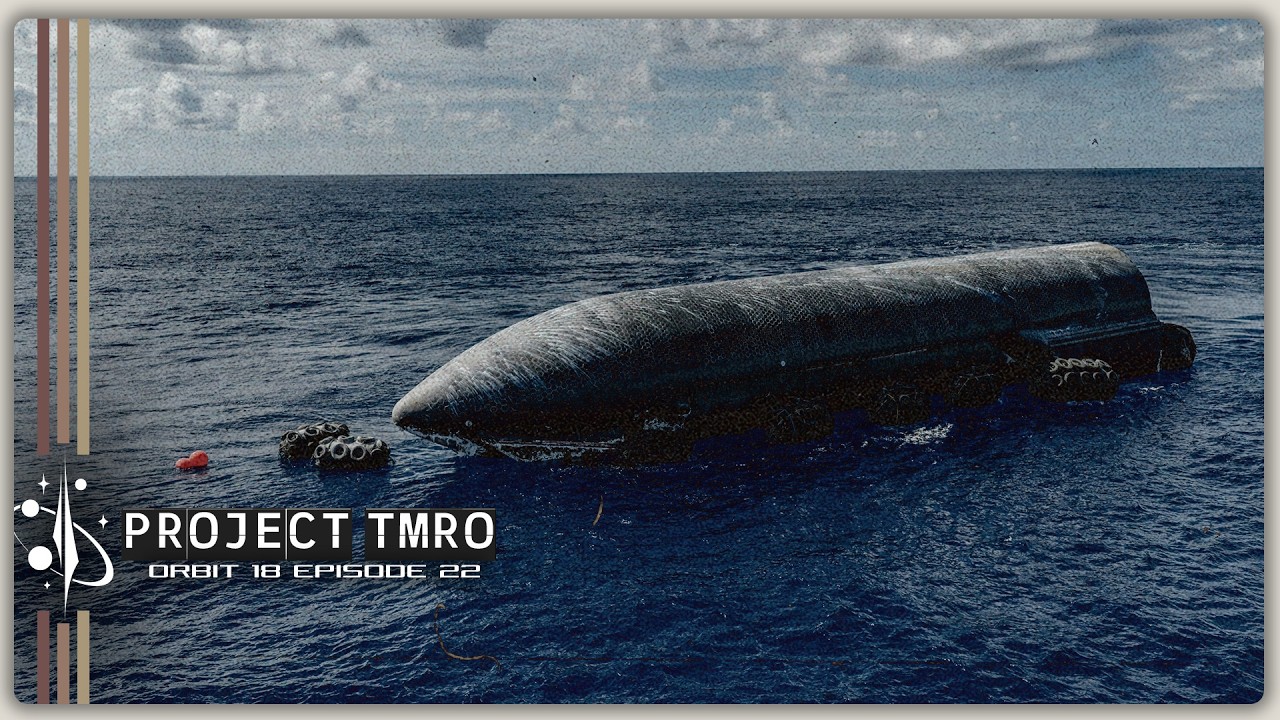
>> It is I didn't grab any of the B-roll,
but it is pretty cool. If you go on X
and you you look at SpaceX's account,
looking at the footage of them
effectively towing back
uh towing back the ship to I think it's
going to Australia. And like, kind of
struggling to tow the ship back to
Australia. I don't think I'm not sure
anyone expected it to survive. I
remember watching the live stream, and
it you know, it lands and tips over, and
I'm waiting for it to explode, and it
just kind of bobs in the ocean, and
you're like, wait, what? And you could
kind of even hear it in his voice. He's
like, uh uh uh uh uh
I guess we caught like, it didn't blow
up.
>> [laughter]
>> Yeah.
>> Well, I I understand that I understand
that yeah, that one of the Starship guys
was immediately packing a bag and on an
airplane to Australia within moments of
that because they had to put together a
whole rescue effort with no plan to have
other rescue ships going out to join
their their on-site crew, which couldn't
tow it if they wanted to.
>> And I even said on the NSF stream, if
you're listening to that, I said, as the
ship was tipping over, queue explosion,
and then nothing happened. It didn't
explode, and we were our minds were just
utterly blown that that thing survived
the tip over. And I mean, yeah, even you
know, the wording that SpaceX and Elon
have put out on Twitter over the last
few days seems like towing it back to
Australia is really difficult and
they're not sure if they'll be able to
do it
simply because of how the you know, the
the tides and
waves and how water works and things
like that is working kind of against
them.
But they've got so much imagery and
they've clear they've rigged things up
to the ship. So they've clearly sent
people, you know, physically to the ship
to inspect and gather data. And I mean,
they've got so much data out of this and
you know, on the question earlier like
is this reliable enough to come back
through? Even if there were things that
they were worried about, they'd know
actually physically been able to touch a
Starship that has gone through re-entry
which is going to give them so much more
data than than on-board sensors ever
could before the ship blew up and kind
of
destroyed itself.
>> Oh, yeah, 100%.
>> Do they have to keep it pressurized in
order to be able to to not make it float
cuz it's just a the sealed vessel but in
order to have the rigidity
so that it doesn't destroy itself over
the waves and stuff?
>> Unknown.
>> I don't know if anyone
knows that. I would have assumed just a
little bit I don't know that they need
flight pressure but I have to assume
some pressure.
>> No.
Yeah, I mean the big thing is they're
trying to tow it rear end first.
And the rear end is down a little bit in
the water and
also at least from the last reports
there's pretty severe sea state out
there right now. There's a lot of waves
breaking.
>> That's that's not the hard way to tow it
at all.
>> Yeah, why are they
towing it rear end first? That doesn't
make any sense in my brain.
>> Because that's where they have anchor
points.
>> There probably aren't any tow points in
the nose.
>> There's no there's no big there's no big
tow ring up in the nose they can hook
onto.
>> Huh.
Do they need
>> There's another question.
>> I can't bring it up. Bust some tiles out
and weld a ring on there or something,
man. Like In the middle of the Indian
Ocean?
Why with the ship bouncing 10 ft? Yeah.
Tech divers, dude. Tech divers. I can't
bring up the pictures now, but SpaceX
did release imagery looking head-on with
the ship and you can see because of the
way before if you imagine that this is
the ship, right? Before the forward
flaps were like this. They they moved
them to the steel side to protect them
against re-entry because they were
getting burn-throughs on the flaps. And
when you fold the flaps in like that cuz
they're kind of like this, right? And
then you fold them in the flaps kind of
create a very
perpendicular horizontal surface and the
flaps would then be dragged through the
water this way and I'm not sure if the
flaps could physically survive being
dragged through the water
that way. That would be pushing very
hard on the flaps as they kind of yank
the ship through the sea. I don't know
whether that has anything to do with it,
but it was very It surprised me to be
perfectly honest with you seeing head-on
with the ship laying the on the side
that it is laying with those flaps in
the sea to then try and pull that. Maybe
it's easier for them to pull the other
way. I don't know. That's just a guess.
>> I mean it's everything I've seen
everything I've seen from the marine
rescue side is there's just no place to
hook in multi-inch diameter steel cables
to it other than maybe through the clamp
hooks in the aft end which appears to be
what they're doing. Actually, I've seen
a report they didn't even hook to the
ship. They actually surrounded it in in
floats and they're towing the floats
like a fishing net and the ship is just
coming along for the ride.
>> There's a really simple solution to this
which is just land the ship back on the
tower and you're good to go.
>> [laughter]
>> Flight 14 like yellow, let's go. So
first of really quickly from the ground
umbilical carrier plate and I love that
the ground umbilical carrier plate
called out data said data is back. Yay,
I've missed you.
You [laughter]
know what? In after dark we'll tell
data's ground umbilical carrier plate
story with space shuttle once more for
anyone
>> The feeling is not mutual.
>> [laughter]
>> Um great comment from the chat room from
Airvel who says for like the past 5
years next year was going to be
Starship's year. And I think that's
partly my fault. I think I've been the
one that's been like it is it's a year
away. We're a year away.
But I think 2027 is really going to be
it which leads me brilliantly into my
next question which is you know do we
think Starship's about to enter into an
operational state? Right now it's an
experimental rocket. Um and I'm going to
say operational kind of comes in phases,
right? You don't go into full
operational state. We're kind of maybe
like a a minimal or initial operational
state just kind of carrying up a handful
of Starlink satellites and like
successfully doing this over and over
and over again. Not a single flight. I
know flight 14's planning Starlink, but
do we think they're going to start to be
able to recur and like do this
consistently like an actual operation?
Do we do we think that's real at this
point?
>> This is not the way to go if they're
trying that. They need another solution.
>> What do you mean?
>> Um
towing
Starships back.
>> Oh yeah, their solutions are going to
land on the on the tower, right? Like
they're they're going to try to bring it
back to the
>> Water landings are gone.
>> But you don't need
>> This should be the last ever water water
landing.
>> In fairness, you don't need to recover
for operational to become an operational
like there's no stage two recovery for
Falcon 9 and it's an operational rocket.
You just got to like in your CONOPS be
like, all right, we're going to lose the
second stage to plan to lose the second
stage. Don't put it into your manifest
and build another one. Which I make it
sound like just build another second
stage. But like [laughter]
>> It's very simple.
>> Just build a Starship.
>> It's
>> Just build a Starship.
>> It's easy. You just
hand wave. It's the answer to
everything.
>> It's fine. But but hang on, but that's
what rocket companies do right now,
right? Like they just build another
second stage. So like do we think that's
going to be their CONOPS
for the next few flights? Like try to
recover them, but like what what do we
think is going to What's this look like
here? What are we doing here?
>> They're going to go and try and recover
them. I mean, they have to. I mean, you
can't You can't build a rapidly and
fully reusable super heavy lift launch
system, which Starship is designed to
be, if you're suddenly going to turn
around "We'll just throw them away. Who
cares?" Like, that's not the point. The
point is that it's a fully recoverable
launch vehicle, and when you decide to
start expending things, it's no longer a
fully recoverable launch vehicle. In my
opinion, I the ship is ready for
operations. The booster, on the other
hand, is still going to be in a test
flight phase. So, I think we're going to
see some kind of hybrid flights, where
the booster is still in testing and the
ship is operational. The booster has
proven twice the new Super Heavy V3 that
it can deliver the ship to hot staging,
but it has had two troubled flights.
Like, after hot staging, it's completely
on the first flight, that boost back
burn
was a boost back burned.
It didn't do anything, and then it it it
impacted the water at supersonic speeds.
That was not a good flight for Super
Heavy.
But, the second flight of Super Heavy
V3,
they did get the boost back burn
underway with 33 engines, but again, it
ended early, and they had an
unsuccessful landing burn. So, the
booster has still got some stacks they
need to work out. But, in terms for the
upper stage, ship hasn't done anything
wrong. Ship has done two perfect flights
as far as I'm concerned for the V3, you
know, meeting mission objectives so far,
and they've deployed Starlinks. They've
carried Starlinks to space and deployed
them. Starlinks don't care if they're in
orbit or if they're on suborbital
trajectory or not. They just burn up.
They don't care. I mean, they might as
well have been put into orbit, and they
would have been fine. So, they can just
do the same thing next flight, going a
few kilometers per hour faster,
and you've got an operational launch
vehicle.
>> Uh Gregory Lane 9044 from the chat room
says, "Quit telling them how to do it.
Let them work." It Okay, it it I get it.
We're not telling [laughter] SpaceX what
to do, right? Like, we're speculating.
We're having fun. And
uh for those who don't know, I was at
SpaceX for 14 years. I was a principal
engineer. I recently left SpaceX, and I
can tell you, yeah, we we don't like we
we they it's like
the internet isn't like, oh my gosh, I
didn't think of that. Like, we already
knew all this stuff. It's just fun to
speculate, right? We're we're all
nerding out. I've lost all my internal
data, so all's I can I can only
speculate with you guys, right? And so,
it's fun to speculate. Like, we're
having fun to speculate and be like,
hey, what what's going to happen? How
are they going to do this? Cuz
to to to an early
>> There's still there's
there's still always an element of we're
just trying to figure this stuff out.
>> Well, yeah. Well, but that well, that's
SpaceX's MO, right? Of like, not really
trying to figure it out, but like uh
>> [clears throat]
>> always making the product better.
And and and good enough is never good
enough, and you can always the best
part's no part, right? So, you can
always make it simpler, you can always
make it more reliable, you can always
make it better. And that is that's just
>> Yeah, but there's there's still
there's still daily deliveries from the
Acme company.
>> Yeah, that's true, too.
>> [laughter]
>> Both things can be true.
>> That is true.
>> On On a related note, I can't find it
now. I was trying to find it, but I do
know there used to there I'm not sure if
it's still there, but they definitely
used to be a note on SpaceX's website
with on like their contact page, like,
"Please do not email us your ideas for
rockets."
>> [laughter]
>> Because they don't like they like they
don't want us sending them ideas on how
to do things. They'll just do it by
themselves. We're just we're just having
fun at speculating and just imagining
what the future might hold.
>> Absolutely. And and I will say, like, we
are years behind their internal plans
already, right? Like, they they already
like they they already know all of this.
They
They have They have a great plan. It's
incredible. They just have to work
through certain things of like, okay,
how how do you do this thing that was
previously thought to be impossible? How
do you do this impossible thing? And
they they do the impossible every day.
So, we're not telling SpaceX what to do.
We're having fun speculating on it. Um I
want to go back to my point about um
op- making the vehicle operational cuz
as we're saying like towing these
vehicles as it's being done right now is
non-viable if we want a fully reusable
rocket. And Ryan, your point of like,
"Hey, this is a fully reusable system."
Valid point. But, as Arval says in the
chat room, I mean, they're building the
machine that builds these machines. So,
it doesn't What what's more important?
Getting full reusability as fast as
possible at the cost of making it an
operational vehicle, or making it an
operational vehicle and then building
that reusability in ala what they did
with Falcon 9? Cuz they could say,
"Okay, look, we're going to learn how to
make stage two fully reusable while we
make it also an operational vehicle
sending up real Starlink satellites,
real payloads that we don't want to
lose."
And then kind of learn those lessons
along the way. Keep That's exactly what
they did with the Falcon 9 and the
reusability there. But, it does handcuff
your design a little bit when you do
that.
>> They can't make a fundamentally flawed
vehicle reusable.
There's no point setting up product a
production line for a vehicle which you
might find in 3 months is, you know,
imagine if they set up a gigabase style
production line like they're building
right now for Starship V1 or for
Starship Mark 1 when the thing looked
like it'd been wrapped in, you know, tin
foil.
>> [laughter]
>> You know,
you you can't do that. They need to they
need to set up they need they they I
believe V3 they are honing in they're
you know, they are
closer to the final Starship design than
they have ever been and they need to get
that on on Starship V3. And then once
they get to that, they can start
contracting their production processes
from kind of the multi-months per
vehicle down to the to the weeks,
perhaps even days.
>> I I don't think this is the end of of
the evolution of production, you know,
Boeing didn't build one 707.
Lockheed didn't build one Electra.
They're going to have to iterate as they
they
get these into a quote-unquote
operational state
and find out what the pain points are
and and reduce or eliminate them.
Like you you you don't you don't have a
car fully formed
and that's the only change you make. You
you iterate and iterate and iterate.
Look at Teslas. How many versions of
Teslas in the same model year have you
seen?
>> Yeah. I well, that was that was the
weird thing for me like like when buying
my Teslas like they they really don't
have a model year. They have to cuz
that's like that's like how the like the
the what am I trying like the NTSB and
the the all the road systems works and
you need to have a model year, but like
Tesla will do major revisions inside of
an existing model year and it really
blurs the lines of like cuz once but but
that goes back towards
Ryan, you said if you've got a
fundamentally flawed vehicle, I'm not
convinced the vehicle's fundamentally
flawed. It It looks like it's actually
pretty good.
>> flawed either, but I also didn't think
that V1 was fundamentally flawed and I
also didn't think that V2 was
fundamentally flawed until I got through
for the first time and it started doing
loop-de-loops over South Texas two
flights in a row. So, I mean,
>> [laughter]
>> we could we could find There could be
doing loop-de-loops over South Texas on
flight 14. Who knows? We we genuinely
don't know right now and that's SpaceX's
whole approach. They find these things
out by flying the vehicles and if you
what if you set up the production line
and then start flying the vehicles, if
you find something when you're flying
the vehicles,
whoopsie-doopsie, we now have to go back
and redo our entire production line.
>> No, that they're they're agile enough in
order to be able to to counter those
difficulties as they as they arise.
>> They're they're much better at getting
rework incorporated into in process
uh
machines uh than other people some other
people are.
Um we can talk more about in the next
that in the next subject.
>> I mean think about it this way. The the
first Model 3s that were produced
are vastly different from
you know, 6 months down the road, but
they looked exactly the same. They
completely changed the structure, the
contents, the electronics, the wiring
like schema
from you know, the beginning of
production to the end of production
inside of the same model year. So, it
looked the same, but it was nowhere near
the same car. Like
you didn't have to re- completely retool
a production line. They made agile
changes.
>> I mean
>> see any reason you can't do that with
the internals of a rocket that no one
sees.
>> We we we already know they are. I mean,
the amount of change work
>> Yeah.
>> Um all right. I let's I mean, let's now
assume that uh maybe not flight 14, but
maybe flight 15 cuz it does feel like
you know, just gut checking this.
Flight 13 was pretty good. It was pretty
good. I expect flight 14's going to be
even better. Like
it feels like flight 15 is kind of when
they enter that initial operational
stage. We'll see. We'll see how flight
14 does. Once Starship is fully
operational, right? Like actually
flying, we've got full reusability, this
thing is going, what does that mean for
the rest of the space industry? Cuz like
how many other vehicles are fully
reusable? Even if they don't get rapid
reusability right away.
Like
this is going to be a game changer,
isn't it? What does this mean for the
industry?
>> Forget forget the reusability. How many
other vehicles can launch 100 tons on a
monthly basis?
>> Yeah, I mean, dystopian profit in the
chat room. 100 tons to orbit for a
couple hundred million dollars is good
value. And like this is
this is going to be crazy when this
thing actually gets operational you can
send more than just Starlink up there.
Like start imagining what the industry
looks like. Like
your ride share programs, a 100-ton ride
share program. You could ride share full
satellites up.
Like like
what you're going to be able to do with
this thing is crazy. Who
>> As soon as as soon as they get rid of
the payload dispenser.
>> Well well, yeah. I mean I I think that
goes towards full Well, or or
um they and maybe they've already done
this, but they just published a spec on
how to build a pizza box satellite.
>> They are. People are already
People have already announced other um
Rocket Lab has a flat sat for Neutron.
>> Yeah, but in time for Starship uh Vast
is developing a a flat pack satellite
system to fly on Starship. So, it's
going to be very similar to if you go to
Rocket Lab, they'll sell you a Photon
bus. You go to Vast, they'll sell you a
a flat satellite bus and then you can
launch it on the current Starship system
um before SpaceX uh develops a
uh whatever kind of cargo door they
decide to do, whether they'll do kind of
the clam shell or the shuttle payload
bay. Who knows, but they you know, that
kind of thing is a few years out. So, uh
payload dispenser is going to be the way
to go initially.
>> I mean
>> You still have the issue of
you still have the issue of getting an
orbit that is what you need or what you
desire.
If you're doing a 100 satellites in a
launch doing a ride share with with
Starlink, like you're going to be in
their orbit
unless you dramatically change
something. It takes a lot of delta V to
change what your orbit is.
Um so, there's still going to be a
market for individual launches of
smaller satellites or you know, smaller
satellites. Is there not packing
>> Well, hold on. It takes a Wait wait wait
wait. It takes a lot of delta V, but
you're also assuming that the second
stage has no fuel to perform those Delta
V maneuvers. That is not a safe
assumption with Starship. They can send
up and
fully refuel the second stage and move
you to whatever orbit you want.
>> Yeah, I mean, there's
I think at this point
there's still a market for the small to
mid sat launchers
while the other heavy lift vehicles are
coming online. But, I mean, when when
New Glenn and Neutron are also
operational, hopefully,
uh the market's going to look totally
different.
>> The DoD isn't going to want a Starship
that everyone in the world can track
to be determining where their their
orbit is.
>> I don't understand how that's any
different than any other rocket.
>> Yeah, everybody tracks every rocket.
>> Yeah, there's
there there's places where
there isn't satellite or radio coverage
and there there's ways of
of sneaking things around a little bit
in space. And
>> But, I mean, the DoD is not going to
>> the small the smaller
I
aren't
You never know.
>> I I would argue that I don't think
Starship's any different from a DoD
perspective than New Glenn, Falcon 9,
Electron, you know, pick your poison.
Right? Like, you it's they're all making
a giant flame.
Uh
Right? Even the X-37B,
people could track the X-37B. So,
you know.
>> True. We've imaged the X-37B with with
ground-based telescopes.
>> Uh Ryan, what are your thoughts? What
what what happens to the space industry
once Starship is fully operational and
it's sending up whatever it needs to
send up and it's fully reusable and it's
100 tons?
>> Well, first of all, uh I think we're
definitely a few years away from being
able to send anything up on Starship,
but once we do get to that point,
fingers crossed, sooner rather than
later, I mean, anyone developing or
operating an expendable launch system,
uh, you know, if you if
the nails are not in the coffin. The
coffin is underground and dirt has been
placed on top of it. I mean, there
>> [laughter]
>> there is there is no coming back. United
Launch Alliance, Arianespace. Um,
so,
>> [laughter]
>> you know, it's going to be very obvious
that reusability is the key. Um, and I
think
Starship is just going to get SpaceX to
get even further ahead than they already
are. Um, and I mean, good on them
because they're SpaceX is, you know, a
decade, if not decades, ahead of the
rest of the industry for a reason, and
that's because Elon Musk had a vision,
and that vision has been executed by an
incredible team. Um, but I think Stoke
is probably going to be up there, uh,
because they are the only other company
developing a fully reusable launch
vehicle right now. And they're also
getting close to flight. It's much, much
smaller than the Starship. It's
currently three times the VEO,
um, but I mean,
it full reusability is the key. That is
the magical key that unlocks everything
at a much cheaper cost. So, um, SpaceX
is just going to advance their lead, and
I think Stoke is going to kind of
leapfrog the rest of the industry as
well. Um, maybe Blue Origin will do
something, but I I think even partial
reusability, um, unless you're doing
like super deep space exploration
missions, then maybe partial reusability
makes sense cuz you want a big super
heavy upper stage. Um, not a super heavy
booster, a
very heavy upper stage. You know what
I'm trying to say.
Uh, not a noun, an adjective. Um,
>> [laughter]
>> but yeah, for anything into low Earth
orbit, full full reusability is the way
to go. So, if you're not doing full if
you don't have plans for full
reusability, and if you're not doing
partial reusability right now, you're
not actively developing that, I mean,
you're you're done for. You're screwed.
>> Uh, what about Relativity? Aren't they
working on a fully reusable vehicle as
well, or is it only half reusable? I
feel like Relativity is one of those
weird ones.
>> Yeah, it's currently partially reusable.
That's Terran R, which is going to be
kind of a Falcon 9 class vehicle. Um
they're actually putting engines on the
first stage as we speak. They're getting
really close to doing some proper
testing with Terran R, which is
exciting. Um but that was going to be
fully reusable and then they
transitioned away to being partially
reusable. Uh but that was before Eric
Schmidt took over and uh now in the Eric
Schmidt era of Relativity, they're
continuing to develop Terran R kind of
how it was, a partially reusable vehicle
with a big upper stage and a big
fairing, kind of similar to New Glenn,
uh but a little bit smaller. Um but I
would not be surprised if they also
transition to a fully reusable uh
vehicle as well. I mean, I personally I
think New Glenn and Terran R are two
rockets which are going to be quite
quite simple to transition quite simple
to transition to a fully reusable uh
launch vehicle because they will have um
at least it already in the case of New
Glenn, it has a reusable booster. They
have proven that works.
Um
So, I mean, this is really really
exciting. I think, you know, if there if
there's any two companies, uh you know,
SpaceX is already going to have a fully
reusable Starship. Stoke is going to
have fully reusable Nova. If there's two
more companies to add to the list, I
think the easiest in the biggest air
quotes possible vehicles to kind of
transition to fully reusable is going to
be New Glenn and is going to be Terran
R.
>> You know, uh I want to talk about New
Glenn in a moment, but before we do,
um
let's finish up on the flight 13 and
stage two when it came back down. You
know, Ryan, you mentioned that some of
the aft um heat shield looked to
potentially get kicked off at staging,
but when I looked at it, it did look
pretty toasty, right? Like that that
ship saw some stuff on the way [snorts]
back down. It It dealt with a few things
before it hit the ocean. And um
Like based on that, how soon do we think
stage two reusability really is for
Starship? Let Is this something where we
think they can reuse that heat shield or
is this something where it's going to be
a little more space shuttley where it's
a refurbished spaceship where they got
to go through and inspect every single
heat tile and like we don't get to that
rapid reusability, we're more in like
that refurbishability. So, we can re-fly
it, we don't have to rebuild it, but
like it's going to take a while to get
us into that state. Uh
Dave, what do you think? Like
what did that look like 13 and what do
you think's going to happen?
>> Yeah, I I think I think the the ship
doesn't isn't as bad as it looks.
Uh we saw a lot of uh probably the
crunch wrap ablative uh making those
white streaks. Um that may have
literally just been the crunch wrap
ablative um that was slightly slightly
proud of the surface.
Um so, the tiles themselves may be
completely okay and if they look at the
crunch wrap and go, "Yeah, there's
plenty left. We can re-fly this."
They're probably going to have a pretty
small subset of tiles that
would have to be replaced. The other
thing is unlike shuttle SpaceX is really
experienced already at replacing tiles.
Uh
production side, they replace hundreds
of tiles all the time just because of
production defects or whatever. The The
tile crew can replace a tile in you
know, multiple tiles an hour.
Not not like uh
the shuttle was.
>> Mhm.
I mean that's still a refurbish though,
not rapid reusability. I understand
rapid reusability is you land it, the uh
ground umbilicals pop back in, you fuel
it, you launch it again in a few hours,
right? As soon as we talk about, "Hey, I
need to inspect my heat shield." Rapid
reusability, in my opinion, unless you
guys disagree, rapid reusability is off
the table.
Is Is not rapid reusability.
>> Rapid reusability, reuse, yeah, you got
rapid reusability reusability, and
refurbishment. If the fact that they
catch it, throw it on a stand, take it
back to Gigabay, it spends a week there,
and then it comes back out,
that's still order of magnitude better
than shuttle ever was.
You only need seven Starships to do
daily launches if it takes a week to re-
refresh one.
So, I think we're it's going to be a
it's going to be a curve. Uh it's
probably going to be a month or more
from the first catch, maybe even 6
months to a year before that ship would
possibly fly. But, after that, I expect
that time will keep shrinking, and at
some point they might actually relaunch
one without sending it back to Gigabay.
>> Uh Dean White in the chat room uh 9386
says, "And the SpaceX tiles are the same
as each other, which was very different
than shuttle. Shuttle had like
independent tiles that were kind of a
pain in the butt, so
>> I would say they're mostly the same
Starship.
>> Yeah, mostly the same, but there are
numerous unique shapes and sizes
of tile on Starship. They are not
exactly the same. There's square tiles
around the flaps, there's smaller tiles
like kind of like 50% hexagonal, if not
smaller, tiles around weld lines. So,
there are a variety of very unique
>> There's probably a hundred There's
probably more than a hundred different
types of tiles on a Starship easily.
>> Yes, but that being said, I will say
that they are much more interchangeable
The vast The majority of tiles on a on a
Starship are more interchangeable than
shuttle ever was because, you know, each
shuttle tile had a specific
identification number for a specific
location. That is not the case with
Starship. You know, the
the vast majority of the tiles
of the the same shape, but
they're not all the same. There's not a
blanket statement that they're all the
same. There are very specific
different tile shapes. And another point
on the on the earlier point, SpaceX had
their first public company earnings call
this week. And during that call, Elon
Musk said that the heat shield tile
problem is, quote, solved. So, whatever
that means,
I don't know, but Elon says it's solved.
So, he also said there'll be daily
Starship launches this time next year.
So, um yeah, let's go.
>> I just think you have to have lots of
launch pads.
I mean, they're working on it, right?
>> They're working on it.
>> Uh Dystopian Profit in the chat room
says recovering ship will give him a lot
of info. I That's a very true statement.
It's one of the huge advantages of
having reusable stages, cuz you can
actually see how it's fairing both on
the way up and on the way down. But,
they'll need to do some retro-
interpolation there. 1 to 2 years of
refurbishment, then real reusability.
And that kind of tracks, right? Like,
that's sort of what happened with Falcon
9 uh when they started uh
landing Falcon 9, and it really wasn't
reusable at first. It was It was
refurbishable at first. Uh it was It was
an effort to get it back uh flying
again. But, they streamlined that
process, and uh Dave Orion, or anyone,
do you guys know what's the fastest
turnaround for a single booster? Not
pad, but like single booster for Falcon
9?
It's pretty quick, right?
>> That's a Ryan question.
>> Well, that's not That's an Alex
>> That's really Yeah, so you're You are
correct.
>> All right.
>> All right, fair enough.
>> I'm going to I'll have a quick look.
I'll have a quick look.
>> It's It's
It's month-ish period, I think, but
that's just vague recollection.
>> Yeah, I mean, and if if they want to
make this thing
>> F9-97 has done a 14-day 3-hour reuse, as
one example.
>> So, 2 weeks 2 weeks from launch to
launch. Like, that's not terrible.
>> a faster one.
>> But, I mean, we'll we'll just baseline 2
weeks. I think that's faster than
Shuttle ever was. Wasn't Shuttle about a
month the fastest they ever did?
Something like that? Data, would you
happen to know that one? All right.
Put everyone the spot.
They they've they've flown
just different shuttles
within a month.
>> Yeah, that's the that's the trick.
>> I don't think the same shuttle
recycling.
The same shuttle recycling
>> Uh it was so
>> Just just for just just for order of
just for order of magnitude, the space
shuttle had up to 31,000 distinct
individual heat tiles.
>> Woof.
>> And Starship has 18,500
but many of them are exact exactly the
same.
>> Uh so I asked AI, so take this with a
grain of salt, um but it says the
fastest individual space shuttle orbiter
turnaround was 54 days. So I'm going to
call that 2 months or so, and it was
done by space shuttle Atlantis, which is
OV-104, the goat of space shuttles, just
so everyone knows.
>> Uh
I'm going to pretend that I didn't hear
that, and I'm going to tell you that I'm
I've only made it to B1075,
but I have found B1088, which has done 9
days and 3 hours for you.
>> like
>> Yeah, 9 days
>> stuck uh stuck out of my head.
>> Yeah, pre- pre- pretty incredible. Um
Oh well, actually, this is a good So I I
I keep trying to move on to the next
topic, but like chat room has got some
good comments.
Uh Phil Baxter 487 says, "I want to
remind everyone that everyone thought
the space shuttle would be rapidly
reusable and change the launch
industry." Uh totally fair. Totally
fair. I think there is a difference here
in that uh SpaceX has already exceeded I
think as we just showed, they've already
done better than space shuttle ever did
with Falcon 9. However, space shuttle
was stage two reusability.
Which
is crazy hard, right? Like
I you got to give kudos to the engineers
for the space shuttle, cuz they were
designing this thing in the '70s, and
they got stage effectively stage two
reusability. '60s '60s and '70s,
absolutely.
>> The space shuttle did change the
industry because for 30 years we used
the same five orbiters.
>> It It It
And you know, it's still
stuck in our psyche to the not psyche,
but it's like in the collective
consciousness. When you see sci-fi shows
talking about whatever and you got to go
save the world, you don't launch a
rocket. You still in modern movies, you
launch a shuttle. There was something
just glorious. Look, the shuttle had its
issues. The shuttle had its issues. It
needed to retire, but that doesn't mean
it wasn't a work of art. It was
absolutely glorious. It was
incredible. What an incredible
>> And a workaholic.
>> It It It was. It was It was
It was It was pretty great. It's pretty
great.
>> By the way, I I I watched I watched for
For All Mankind and I'm still having
trouble getting around a shuttle at the
moon.
>> Oh, uh you know, we'll talk about this
in After Dark, but for everyone who was
watching the new intro sequence there
sitting each other's legs there and um I
look forward to your letters. Uh okay.
>> [laughter]
>> Let's move [clears throat] on. Let's
talk about New Glenn because New Glenn
had a a little oopsie on the pad. That's
what is That's what it's known industry
term, a little oopsie.
Uh highly technical, highly technical.
>> Observation. We call that an
observation.
>> Exactly.
>> [laughter]
>> And uh it looked So, um they've been a
lot more transparent on socials than
they have in the past, which I'm very
thankful for. They're moving a lot
slower than SpaceX with regards to this
transparency, but you know, that seems
to be Blue's MO, just move with whatever
pace they want to move with. But, it
sounds like
>> said, I will say that I trust the Dave
Rim Buck Day over an Elon Musk update,
but that might just be me.
>> I
>> Turtles all the way down.
>> Tur-
Seems fair. It sounds like So, Dave Limp
did tweet out and say, "Hey, we've
isolated this issue to uh an oxygen
valve in the in the engine." It sounds
like engine There's an engine oxygen
valve that was at fault in the engine
bay itself. Now, he said oxygen valve. I
assume it's a liquid oxygen valve as
opposed to a gaseous oxygen valve cuz I
don't know that they use gaseous oxygen
anywhere on the vehicle.
But, they only said oxygen valve.
But, a LOX valve makes a little more
sense to me cuz
cryogenic valves are
They they require the dark
>> freakishly hard.
>> Yeah, yeah, they they require the
Actually, Dana, this is your area of
expertise. Do you have any
understanding, full speculation? Do you
have any theories as to like what may
have gone wrong with an ox valve?
>> Uh it didn't keep the ox in.
>> [laughter]
>> Thanks.
>> Or it didn't open when it was supposed
to. I think it's actually the
supposition that it stuck.
And
the differential the contraction from
cryo temperatures jammed it. And there
was a
Tom Mueller had a post saying that's why
we went to pintle valves.
Um because we discovered that sliding
surface valves have problems at those
temperatures.
>> Yeah.
Ball valves are hard when you want to do
cryogenic and the quickest way to make a
valve go from fully open to fully closed
or vice versa is a ball a 90° ball
valve.
Um the problem with that is that your
your sealing surfaces
have to basically You have a a ball and
it's got a hole drilled through it and
the flow goes this way and you rotate
the hole so that it can open or you
rotate the hole so it can close. The
problem is you have to seal against that
ball
on all sides
and it's freezing cold over here
freezier than freezing cold over here
and warmer than warm over here. So, all
of the materials are different sizes.
They You've got to have
uh
enough flexibility that your tolerances
don't get out of spec and it's still
able to seal like this
This is hard. Um
Yeah, it's it sounds like they they use
a a a a
I I I don't know. It's It's sounds like
it was a It was a a valve maybe that
they were trying to
uh
I mean, it's it's a it's a huge problem.
Like the the the the the volume that you
need to pass through there. That that
gets to be bigger valves, bigger
hardware, and higher pressures inside of
bigger structures makes more force.
Uh it just sounds like they they were
too close to the the edge of
what you could do with that size ball
valve.
Um you know, the bigger and bigger these
these ships get, the more fuel and more
oxidizers they need to pass through.
And And that becomes a a challenge.
>> So, and I think the way and uh Dave, I
think you had mentioned pintle from uh
Tom Mueller. The way I always describe
pintle, and maybe this is a
oversimplification, is
So, Data mentioned ball valves, which is
kind of like, you know, it's an
open-close sort of thing. A pintle is
more like a garden hose. When you
squeeze on it, it kind of like it comes
in through multiple areas, and you can
kind of squeeze the trigger, and you get
more or less
squeeze.
>> It's a hole with a a concentric cone
that's that you can press against it to
seal. And then, as you open it, it it
has a smaller opening. And as you remove
the pintle further, you get full flow.
>> So,
um Merlin 1D famously uses pintles. Uh
it's a pintle injected engine. So,
um
I guess my question then and and Data,
you are uniquely suited to kind of quasi
speculate the answer.
How how hard is it to fix this? Like,
let's They've isolated the problem. It's
a LOX valve or They said oxygen valve.
I'm going to assume LOX valve. Let's
assume it's a cryogenic valve. Like, is
this an easy fix or is this actually a
really complicated fix for them to to
implement?
>> It should be a relatively easy fix. Uh
if it's if it's something where they're
trying to get a large volume through a a
valve, you can either
completely change how the valve
operates,
ball versus pintle,
or you can modify the the structure
around the valve, add more material, and
make it so that it's
uh it it's a a more robust valve, but
the
the seals all There's I mean, there's a
bit to it.
Uh the seals have to grow and shrink
with temperature and grow and shrink
with the material and still seal.
Um but if it's just the valve that's the
problem, then it's just the valve that
you need to fix.
>> Uh John PR in the chat room says,
"Sounds like they forgot to prime the
valve before they open the system." I
mean, I feel like that's I I didn't hear
that online. I would
I have a hard time believing that. Like,
you There's an entire chill-in process,
and I
>> You You prime You prime pumps. You don't
prime valves.
>> Oh, okay. That's interesting.
>> mean, there there's been lots of
supposition I've seen that the valve
might even have opened, but was slow,
and that leads you to a very fuel-rich
uh start, which leads you to a hard
start, which leads you to a RUD.
>> That I I've I've had I've had stuck I've
had
>> stuck valves.
>> You can't prime a valve, right? You have
to You have to open it.
>> You have to pre-chill it. So, you have
to get media to it.
>> Yeah.
>> Um
Part Part of the the secret sauce there
is that you have to make sure that there
is no air in that line,
so that you can get your media all the
way to the face of the valve so that the
valve gets its
uh
cryogenic dimensional state
and then when you open the valve then it
it chills the rest of the line. Um if
you
have a an air trap for example and and
you can't get your cryogenic media to
that valve then you don't get everything
shrinking to the right size and then you
don't get a seal.
Um
things of that
problems similar to that.
Um but at the same time once everything
gets cold it shrinks.
And it shrinks depending on its
temperature.
So if you
uh
if if you're you you get it to your
operational temperature and everything
shrinks and maybe you that that
particular valve isn't isn't adjusted
correctly for that that temperature.
Um and this I've I've had this happen
where you get a valve that's stuck and
it won't open or won't won't partially
close or
um
I've had valves that get stuck at like
45° so they they have flow going through
them. So you can't close them and you
can't open them.
Um sometimes the actuators are not not
properly geared so you have a an
actuator that's either electric or
pneumatic and you put air to it and it
doesn't quite have the oomph to open or
close or fully open or fully close.
Um I mean there's there's a there's a
lot of design and engineering that needs
to go into that but um
it it it it it all of that is is
something that you can overcome if you
understand the problem.
>> I think we need to start a new series on
the channel called Dutta's magic
cryogenic valves and just explaining cuz
I you mentioned you can't really
pre-cool a or pre-chill a valve and I'm
like I
you're totally right. Like you you're
right. You can bring You can bring it up
to the valve, but in order to chill the
rest of the line, you have to open the
valve, which is defeats the point of the
valve, kind of, to a point. So, that
This is a really tricky
>> You can
partially pre-chill with something that
is not explosive. So, for example, if
you have a liquid oxygen system,
you can on the other side of the liquid
oxygen system use liquid nitrogen.
And that brings the materials down to a
cryogenic temperature
and gets all the seals where they where
they need to be dimensionally,
but then you've got to do something to
get rid of that liquid nitrogen
and not affect the combustibility of
your liquid oxygen.
>> But, ideally, you wouldn't have to do
any of that, right? The cuz now we're
just adding complexity and you're
already complex system. Yeah, so it's a
really difficult problem. It's I I'm
always fascinated by cryogenic systems
just in general.
It's If you ever look at pad, I guess
it'd be 39A. I'm not sure if it still
exists 39B. The the locks the liquid
oxygen farm and like the different farms
of cryogenic fuel are way away from the
pad and just watching the pipes that go
from the farm to the pad to fuel the
rocket and just watching them zigzag
back and forth. And then you can
actually see them if you if you have an
overhead camera and you do a time lapse,
you can see them like shrink and then
come back and they shrink a lot. They
move a lot. It's not a little. It's a
lot. And I don't know, I'm always
fascinated by like the engineer who goes
behind to fixing this.
>> So, so
the the cryogenics that I worked with
most of it was based on shipping and we
we made fuel pumps for container ships.
And the skid that I was working on is
what 20 ft long or something like that.
And if you have cryogenics that need to
go from one end to the other, you have
to account for the fact that that
material is going to shrink 3 and 1/2
thousandths per inch.
Which over 20 ft is an is not an
insignificant amount of
distance. So you put a bend in the pipe
so that the those joints, those angles,
as everything shrinks from one end to
the other, they kind of open up a little
bit. So instead of a square bend like
this, you get kind of this W with
everything everything shrinking.
And you do that over
a quarter mile to get from your your
tank farm to your launch pad, like all
of those joints are being stressed.
>> It's crazy.
>> Well, I'll I'll throw this one out to
one of the things we point out to people
at Starbase is Starship shrinks inches
>> Yep.
>> Mhm.
>> when you fuel it.
Right. So top of Starship
uh everything has to be flexible on the
QD arms and everything else cuz that
ship is going downwards as the cryo goes
into it.
>> And as you as you load mass on it.
>> Right. Yeah, I mean it it it but it's
amazing. It's it's literally inches over
400 ft that that the getting down to
cryo temperature shrinks that stainless
steel.
>> On flight 13's wet dress rehearsal, we
deployed a new camera and we had a
zoomed in on the ship quick disconnect
and you can actually see the whole thing
sag as it gets loaded with cryo because
it's you know, it's getting so cold.
It's just
SLS does a similar thing as well, which
is pretty cool. But I think that's
mainly due to the sheer mass of the
propellant being loaded into that core
stage.
>> You know, so this is a lock style
>> with
>> Go ahead.
>> Eek says with 3D with 3D printing you
can build cooling tubes into the body of
the valve. Yes, as long as you can
counter the porosity.
>> Um
with
uh
with the issue it sounds like the the
LOX valve or the valve the ox valve
issue is in the engine itself from from
what I was able to determine.
So the BE-4 engine well the Vulcan also
uses the BE-4 engine which is also
grounded for totally different unrelated
issue, right? So
uh it
Liftoff uh on the in the chat room
liftoff 80 uh 285 says according to Eric
Berger this is not an issue on Vulcan.
What are the chances that they were
trying something new on New Glenn? So
New New Glenn. Yeah, I mean I I have a
hard time understanding how this is a
non-issue on Vulcan if it is a LOX valve
in BE-4 when Vulcan uses
the BE-4. Does anyone have any thoughts
on this or do we just kind of have to
kind of I mean it's hard to speculate
cuz
we don't there's no like real data.
Yeah.
>> There are different They are different
versions.
>> Oh they are.
>> Yeah, my guess is that they kind of
branched off so Vulcan is kind of more
of a
more of a kind of stable branch to use
software terms of BE-4 and then they
branched off to do a development branch
for for New Glenn because of course on
New Glenn
when you it's kind of like F1 when you
develop your engine and your rocket you
can optimize for that whereas ULA is a
is a is an engine customer
so they just kind of have to accept
whatever Blue Origin will give them. Of
course they'll be working together but
uh not to the degree that that that Blue
Origin can with New Glenn and ULA is
built Vulcan is you know kind of having
to be
locked in system because it's designed
to be that you know put your super
secret expensive DOD payloads on top.
Uh we definitely can't have this vehicle
blowing up. So
that's one of the reasons why they have
a bit more of a
Well, I was going to I was about to say
that's the reason why they have more
stability on Vulcan but they have a one
in six SRB failure rate. So they don't
have a lot of stability right now, but
the idea is that Vulcan is more stable,
I should say.
>> You you don't sell your prototype cars
to customers.
>> Exactly.
You know,
>> So, Blue is classically much slower than
SpaceX, right? SpaceX at least getting
rockets to market, right? And we watch
SpaceX do hardware rich engineering and
Blue does uh you know, paper rich
engineering. And And neither is
necessarily right or wrong. It's just a
different way of looking
>> Paper rich engineering?
>> Or what what pad rich engineering? Is
that what you're saying?
>> engineering. god.
>> Too soon, Ryan. Too soon.
>> [laughter]
>> Uh
>> Tower rich engineering, I don't know.
>> The thing with paper rich
>> SpaceX has had their pad blow up, too.
>> Yeah, oh yeah. [laughter] Yeah, yeah,
yeah. The thing with
>> Concrete rich
combustion.
>> [laughter]
>> But, okay. The thing with paper rich
engineering is that you should fix you
should be able to, in theory, find most
of your issues before you ever even
begin bending metal, right? So, you've
run all of the analysis, you've done all
of the all of the data, you should know
going in that your rocket's going to
work really, really well. And here we
are, we had a pad anomaly. Now, that's
not to say SpaceX never had a pad
anomaly, that in fact their rocket was
operational and they had a pad anomaly
during a static fire, very, very
similar. Different issues, but like
both took out the pad, both took out the
rocket. However, it is a
little bit like Blue takes so long on
paper to do this, you kind of expect a
different level of maturity of their
rocket.
Do Do we think there are more gremlins
in the system that have yet to be
uncovered that they need to start
working out? Or do they need to change
mentality and move into
Okay. Like
What do they do? How do they fix this
without
How do they fix this in the culture that
they already have?
>> [laughter]
>> Make fire.
Thoughts and paper can't find
everything.
>> Mhm.
>> There's a point where you got to stop
moving pencils around and start moving
metal.
>> Is this a culture problem or is this a
vehicle problem or both?
Or management problem? Like where what
do they need to change to get this into
a stable
>> I think it's changing. You you you have
to be you have to you have to get out of
the we're designing and get into the
we're flying
>> Mhm.
>> Launch cadence is what you have to
change.
>> Mhm.
I mean, they were starting to get that.
>> SLS
I
like yeah, I mean
one of the problems that we had at VOA
is every rocket was different and we
weren't launching enough to be able to
validate a change per rocket. So there
was like six.
And we we found gremlins and by the time
we were able to find them and address
them
uh there was already two other rockets
that had them. And so what do you do? Do
you not launch or do you run the risk of
maybe not making it to orbit and and
like
you can analyze data from previous
launches, but if you don't fully
understand what's happening and do
testing physical testing
uh
either you know, launching stuff or
doing you know, ground testing whatnot.
Uh you're never going to be able to
resolve all of these issues and and
that's one of the things that SpaceX has
done well is getting getting
everybody used to the fact that you have
to destroy some rockets in order to be
able to make them leaner, meaner, more
efficient and cost less.
>> Do you think they'll get there though?
They don't destroy rockets, right? I
mean, they don't purposely destroy
rockets where SpaceX does. I don't want
to say purposely like that's never the
end goal, but they're willing to destroy
rockets and they they've got you know,
they're will they're like look, we've
got six more behind it. We'll figure it
out. And that's just not how Blue works.
So, you
>> The SpaceX's
mental mantra mentality is is
what some would consider reckless.
>> Yeah. Oh, yeah.
>> And I I don't I don't say that to be
mean, but they are
they are intentionally hardware rich.
They're like, "Well, let's see what
sticks. Let's Let's throw it at the wall
and see what happens."
They They've got some crazy ideas and
they've made some made a lot of them
fleshed a lot of them out by
like doing the thing and then coming
back to the table and saying, "Okay,
look. Here's our data. This is what we
learned. Let's fix it on the next one."
And the next one is a completely
different beast.
Um
that mentality
is not common, is not well understood or
appreciated by investors.
Uh so, anybody that's putting into Blue
Origin or or the whatever investment
groups they they've convinced to to to
add money to this or customers,
um not all customers are willing to
uh
take the risk on something that's
unproven and unstable and could be
different from one to the next.
Uh
it Blue Origin is going to have to learn
how to make significant changes based on
a very, very small amount of data that
improves their vehicles. And that's not
easy to do, but you still have to launch
launch rockets in order to be able to
get data to correct your problems.
>> I There's an interesting comment in the
chat room from Dean White, that which
is, "Will AI make paper analysis paper
rocket analysis more valuable?" I I
don't want to answer this right now. I
want to come back to this in after dark
cuz I it's easy to just go no, cuz it's
going to hallucinate, but I think there
might be something deeper there. So,
>> [laughter]
>> No, hard no. I I I actually I do want to
explore a little bit. We'll explore that
in afterdark.
We'll explore it.
>> I look at my rocket design. Where are
the failures? Don't make any mistakes.
>> There are Hank, there are AI developed
rocket engines that they have test
fired, like 3D printed and test fired
that did work and they're weird looking
designs, but like
>> [laughter]
>> afterdark, afterdark, afterdark.
>> I'm going to push back on that one, but
>> Oh yeah, I I I know. I I as you should.
I like I I
>> [laughter]
>> yeah, right? Like as you should. You
know, finally
are we Well,
>> [laughter]
>> I'll start this with Alex's comment in
the chat room, which is Elon needs to
pass the baton to David Limp for really
really optimistic launch by end of the
year or even first quarter of next year,
right? Cuz Blue still thinks that
they're going to launch New Glenn again
this year and it is August 9th. They
have until December 31st for this to be
in inside of this year and they got a
lot of work to do. I mean, that is truly
an Elon level timeline.
Um
do we think return to flight for New
Glenn is still possible in 2026? There
are 143 days remaining for them to be
able to return to flight. Dave, what do
you think? Can we do it?
>> Uh
no.
I I think yes and
>> Yay.
>> It It doesn't So, return to flight,
especially once the the FAA or NTSB gets
involved,
um
they don't stop you from making changes.
They don't stop you from making more
rockets. You can make changes based on
your analysis and your assumptions and
uh
shoot your shot to where you think it's
going to land and by the time the NTSB
or the the the administration has
declared, "Okay, this was your problem
and this is how you fix it." You've
already got a fix, you've already got
parts, you've already got everything
ready to go. That's not impossible. It
doesn't If if it's something that's well
understood, if it's a failure that's
well understood, if you had a structural
failure, you can change the structure.
If you had a valve failure, you can
change the valve. All you need to do in
order to get approval for your next
flight is to show that you've addressed
the problem
sufficient to their
requirements, to to their understanding.
Um and and, you know, they've got a long
history of understanding what these
problems are and how to fix them, so
that's not that difficult. I don't see
that that's difficult.
>> I I I I agree with Tutter on New Glenn.
I'm not so sure about the GSE and the
launch facility.
>> I thought the GSE was
>> I think they're going to run into the
>> That's just a money problem. That's just
a money problem.
>> It wasn't the GSE mostly intact? Like,
do they really need to do a huge GSE
lift and rebuild? I mean, they they
>> Well, not the GSE tankage, but all all
of the quick dis- the non-quick
disconnect, all of the plumbing, all of
the
fueling, telemetry, all of that
infrastructure that connects to the
rocket is 100% new on the new design.
They can't reuse anything. They have to
start from scratch.
>> Fair but I think a lot of the complexity
in the GSE is at the GSE farms
themselves and like monitoring input and
and being able to push output and
getting all of those cuz there's a lot
of sensors, there's a lot of valves,
there's a lot of stuff that goes into
the
>> Yeah, but I'm literally talking about
the launch complex itself.
>> Sure, and and you're right. Like,
there's a lot of work to do in the
launch complex, but the quick
disconnect, the QD, yeah, there's some
technology there, but that's really just
talking back to the farm realistically
and telling it hey, this is what it
is doing.
>> I'm not worried about the tankage. I'm
worried about the fact that they
completely deconstructed their tower
down to ground level and are going to
completely refit the interior of it and
have to restack and reconnect every pipe
and wire inside it
before they can even have a side arm
that they now have as a quick disconnect
arm that they never had before.
>> Uh
>> Yeah.
>> Doing that in 120 days? That's
>> 120 they've got No, no, they've got more
time than that. They've got uh
>> I'm giving them 20 days after it's
functional to get the rocket into the
air.
>> It's 100 Well, it's 143.
>> rocket.
>> It's So then they have 123 days.
>> [laughter]
>> They got to have the tower before they
get the rocket on it.
>> Fair enough. Fair enough. Uh you know,
in the chat room, let us know what you
think. Do you think end of the year
We'll keep asking over and over and over
again. Do you think end of the year is
possible still for New Glenn? And And
then what do we count as success, right?
Like is a static fire by the end of the
year good enough? Uh or do they actually
need to like try to light the engine
with the intent to launch?
Uh I feel like it's the later ladder,
right? Like it's
>> Yeah. I'm going to say I'm going to say,
you know, I'm a I'm a I'm a Blue Origin
fan. New Glenn is a beautiful rocket. I
love New Glenn.
But uh
if they can get New Glenn vertical on
the launch pad this year, that is a
story for the ages because they blew the
whole thing up pretty much, right? So if
they can pull that off, if Blue Origin,
the tortoise, the slow company that
takes forever to do anything and doesn't
share anything with the world as they
are perceived, rightly so, because of
what they've spent the last two decades
doing, if they can pull this off, if
that company can pull this off, that
would be a story for the ages. If they
can light the engines, that's icing on
the cake. If they can launch it or
attempt to launch it, that's whatever
you put on your icing. You know, that is
just
if they can get the rocket on the pad
this year, that would be an incredible
achievement in of itself. And you know,
I'm going to I'm going to say they can
launch. I think that I think the chance
is slim, but I don't I I still think
there's a chance. I still think there's
a chance.
>> Should we do something kind of like what
Peter Beck did when he ate his hat?
Should we do something if they can get
the get the vehicle on the pad vertical
on the pad? We collectively as like
tomorrow hosts, should we do something
even though it's not our rocket company?
Like should we do something and if so,
what should we do? Again, leave your
ideas in the chat room. I'm curious to
know what you think. What are you going
to torture us with? All right. I think
it's time to move on. I think it's time
for a Cayden Conundrum and uh to
Yeah. Yeah. Uh to
try to something something make this one
go. Uh what which one do you have here?
>> I have the first one.
Which is Hang on. Let me press go to
live. Ta-da! There we go. Uh it's uh
There we go. Uh what uh
Jamie hasn't updated this graphic. Uh
when was the last total solar eclipse
visible from continental Europe? Was it
2015, 2017, 1846, or 1999?
>> It is the only graphic I did not update.
Uh I I ran out of time.
Uh
Yeah. Made me sad.
Man, continental Europe.
Mhm.
I know the chat room is saying 1999, but
I feel like 2015.
I feel like it's the 20
I Oops, I forgot to do my I forgot to do
my big text.
Uh big big Wait. Wait. Wait. I got to do
and then I got to do Oh, no. I'm going
to do this. Uh 2015.
I'm going to do 2015.
>> Okay.
Uh Dave?
>> 1999
>> Okay.
>> Yeah, he's cheating. He's cheating cuz
the chat room cheats and so he's
cheating.
>> I I had 1999 before the chat room.
>> No,
cheater.
cheater
>> Well, who says that 1999
>> was busy doing something else when the
chat room was doing their thing.
>> Mhm.
Dasa?
>> Uh
1846 just cuz.
>> Okay.
>> Heck yeah.
>> Uh well You will be shocked to discover
that it was indeed 1999. Uh there was an
eclipse in Europe in 2015 but it was not
a
sorry, it was not over continental
Europe. It was totality was only visible
uh from the Faroe Islands uh which are
Danish Islands north of Scotland.
South of Iceland.
>> Out in the middle of nowhere, sort of
like Saxa Ford.
>> Yeah, tell me about it.
>> [laughter]
>> Let's move on to uh some comments from
last week's show uh left in the show. I
So, by the way, uh if you watch the
unarchived version, we do post an edited
version where we take we trim off like
the pre-show and all the the weird stuff
at the end and try to clean it up just a
little bit. I do try to pull most of the
comments from that version of the show
which usually shows up on Monday or late
Sunday night, early Monday. So, ideally,
you would leave your comments there
which I'm not telling you at the end of
the show. Hopefully, you made it that
far to but
whatever. But anyhow, this is from space
space manav
which says, "I see a list of Indian
startups working on orbital launchers
has been mentioned. It's an inflection
point when it comes to commercial
spaceflight in India and it will be very
interesting to see it unfold."
Absolutely. And actually, this is I
think seeing more countries get more
into space. We're seeing China get more
into space. We're seeing India get more
into space. Uh I guess I'd love to go
around the the room and like we've
talked a lot about China recently and
like there's a space race between the US
and China happening between, you know,
trying to get to the moon. Do we foresee
India entering the ring anytime soon?
Cuz it feels like they're working on
some pretty cool stuff.
>> Well, I'd say that
>> They've been working on some cool stuff
for a while.
>> Yeah, that's
>> have we. So is China.
>> [laughter]
>> Yeah, India India is definitely an
up-and-coming and uh is probably going
to uh hang around and provide some very
interesting things over the next couple
years.
>> I mean they've already pulled off like
really impressive interplanetary
missions. They have a science mission
studying the sun. They uh you know, the
they are pulling off moon missions on
Hollywood movie budgets. You know, for
better or for worse, India can pull off
incredible missions incredibly cheaply.
So, you know, we we were talking about
reusability in the first segment of the
show. Um
the bring the reason for reusability is
to bring the cost down. And India is
able to produce these missions not using
reusable rockets for uh incredibly small
amounts of money compared to, you know,
the the billions that end up on on NASA
flagship missions. So, you know, that's
for better or for worse, but it's a
different country, a different economy,
and uh
if western peop- if western companies
can purchase rides on Indian rockets,
then um
they're going to be able to be a very
very
uh competitive market uh in comparison
to the US and Europe.
>> But Ryan, that's diametrically Sorry,
earlier in the show.
>> Sorry, my eyes are just twitched.
>> [laughter]
>> All right, cuz earlier in the show like
you were like, "Look, if you're not
fully reusable, you're not going to and
like here we are with India not not
reusable, so like
>> Well, I think the I think there's a a
a difference and that's the fact that
the Indian economy simply allows them to
build stuff so cheaply
um
that that's not a a critical concern for
them right now. You know, in in the US,
things are
uh much more expensive than they are in
India, and therefore reusability brings,
you know, it gives it a
a cost benefit. But, if you are an
American company or a European company
launching a mission on an Indian rocket,
then that rocket can be expendable, and
it will probably be a
competitively priced compared to
a reusable or partially reusable
American rocket. I mean, just as an
example, this is already happening. Uh
NISAR, which is a synthetic aperture
radar satellite collaboration between
NASA and the Indian Space Research
Organization, launched on an Indian
rocket uh last year. I mean, these
things are are already happening now
between government agencies.
Uh we have uh Bluebird satellites from
AST Space Mobile launching on Indian
rockets. This is already happening. Uh
and if India is able to to ramp up their
production cadence uh to to spit out
more rockets, they could be competitive,
and they don't have to worry about uh
developing reusability. That being said,
reusability is in their is in their road
map.
>> UK Space. Al- Alex says UK Space. That's
hilarious.
>> I mean,
that is the uh pri- premier
uh spaceflight economy in the world,
which is the UK spaceflight economy. We
are
basically a perfect economy. I mean,
just incredible the amount of things
we've been able to pull off uh since
1970. We've launched and rocket.
>> [laughter]
>> Didn't the Didn't the last uh satellite
launch from Britain fail?
>> Yeah, well, that was built by an
American company, so I'm not sure that
counts, um really. So, I think we can I
think we can disregard that. And it was
a failure.
>> we've got we've got we've got we've got
a
German or Austrian company that's going
to launch from the UK soon, we hope.
>> Yeah, so that that's Rocket Factory
Augsburg. They're they're based near
Munich in Germany. So, if they launch it
it's a great success, then I mean,
that'd be a brilliant job for the UK.
But, if it's a failure, then I've never
heard of them.
>> [laughter]
>> Moving along.
>> I'm just kidding, of course.
>> Tom Tom uh mentioned uh I heard there
would be if there were some sort of
firmware bug or something preventing
uh suddenly all Starlinks to do evasion
maneuvers, we'd get collision every few
days. That sounds like Kessler. And this
is in re uh this is in reaction to what
we're talking about like Starlink would
really be difficult to have like a
Kessler syndrome because it's in a low
enough orbit where even if they slam
into each other, it's all all that
debris is going to fall to Earth really
rapidly. It's not going to sit up in
orbit for 20 30 years, right? It's just
like destroying everything in its wake.
I I don't know. I
To that same end, right? Let's just say
all Starlinks suddenly lost their
ability to do colo- collision avoidance.
Um
it's not like they're going to just
suddenly slam into each other.
Uh and then
you you know, right? Like
it would be a long time before you would
probably have a collision and even then
Go ahead.
>> all you need All you need is one
collision and then there's a bunch of
debris.
>> Right, but the other one is SpaceX says
they do perform a
amazing number of collision avoidance
maneuvers. The real question is of all
those maneuvers they performed, how many
would have actually led to a collision
if they had not
added the extra margin
uh to the to the pass.
>> But but let's just say somehow magically
uh all the constellation freaks out and
it just steers itself into each other
and they all hit each other, right?
You're still only We're not talking
about a scenario where we're locked out
of space for decades. We're talking
about a scenario where we're locked out
of space for like weeks, maybe a month.
Right? Cuz that's all low enough They're
still in atmosphere, right? They're
going to get pulled back down pretty
quickly.
>> Yeah. I disagree with you guys. I think
it would be months. You know, if if we
assume that if I click my fingers and
then suddenly every single styling
satellite conks out at that moment.
That'll be that'll be over in a month.
You know, it would be a major
inconvenience,
but it would not be
the end of the world cuz you know
>> It just means we need to get the V3s up
there to replace them.
>> [laughter]
>> We just need to launch more starships to
fix all of the satellites I've just
killed.
>> Starship solves all woes. Starship
solves all woes.
>> [laughter]
>> Uh let's see here.
Uh up next we've got from Trevor says
uh
there is some existing data on re-entry
pollution. This goes towards I was
talking about hey when we take all of
these satellites and they slam into the
atmosphere and they obliterate
themselves, you are like it's not like
they go nowhere. Like that material gets
absorbed by the atmosphere, right? So
like we got to be doing something to the
atmosphere. I'm curious as to what that
is.
Goes on to say atmospheric titanium and
aluminum levels are measurable, but as
of the last research I'm aware of being
released, we don't have any information
of the effects of
atmospheric metal vapor on humans or the
environment we've projected. And yeah,
that's kind of my point of like I want I
want I don't know. I'm not saying it's a
problem. I'm saying I wonder how much
data we have that goes into as we start
deorbiting hundreds or thousands of
satellites to you know the
these these new next gen satellites that
are in lower Earth orbit um you know,
really really close to the planet still
within the um
impact of our atmosphere.
They're only designed to last 4 or 5
years. And so we're going to start and
we've got constellations of what SpaceX
is talking a million? No, I think those
are supposed to be a little higher, but
you get the idea still. So what's that
going to do the atmosphere? Maybe
nothing, maybe something. What's it
going to do the environment? I'm just
I'm curious as to what that is.
Um
>> It counters the effects of microplastics
on humans.
>> Okay.
>> [laughter]
>> Well, I mean, I would I would assume
that because we're demising it by
basically combustion, we're not going to
have much actual metal vapor. It's going
to be oxides and nitrides.
Um which are much more inert.
>> I mean, but who know we're we're messing
with our own environment.
As as I like to say, we're not killing
the earth. The earth will always
survive. It's ourselves. The earth will
eventually eject us from the planet and
not be able to support life anymore.
>> Yeah, but I mean, look, we use titanium
we use titanium dioxide in the million
pounds a year level as white pigment in
paint and plastics.
>> [laughter and clears throat]
>> Yeah, I mean, like I said, it may be an
non-issue. I'm just curious. I'm curious
what the data is. And like there are
other materials on these satellites that
are in use as well. Like
What does what what's it do? Maybe
nothing. Maybe nothing. Just curious.
>> Yeah, but Yeah, but Dave, for for
decades they made paint with lead
thinking that wasn't going to have a
problem. So
>> Yeah, details.
>> [laughter]
>> That's a hand wavy. Hand wavy. Hand
wavy.
>> Hand wavy.
>> I'm sure SpaceX would argue that the
benefits of Grok or whatever they end up
running on those AI satellites will
vastly outweigh any detrimental impacts
it might have on earth or the
atmosphere.
>> Well, yeah, if you get enough AI, who
needs humans?
>> Might as you start mixing in some daily
vitamins in them and then and then the
whole
whole [laughter] species will become
more more healthy.
>> Add some fluoride and everybody's teeth
will be good.
>> I do have an our after I've heard rocket
design. Can you imagine if Blue Origin
used Grok to design their rocket and
they got successful because of it? The
beautiful irony that that would be.
All right. And finally,
this is from
Ty994APC
who says, "I did not know you guys were
still around. I thought you guys shut
down 10 years ago." No, no, what happens
is
I'm a marketing genius.
Absolute genius. And what I do is I
constantly rename the show and make it
hard for you to find. You're welcome.
This is very good. The algorithm loves
it. Absolutely loves it. And then what
we do is we're inconsistent on our
uploads, just keeping the algorithm on
its toes. Absolute marketing genius. No,
no, no. We're still around. One thing
that does happen from time to time is
you can randomly just get unsubscribed
from channels. I don't know why. Uh so
like just double-check, make sure you're
still subscribed. And sometimes they'll
just turn off the notification bell. So
just really quickly, while you're here,
make sure you're subscribed. Like it
costs you nothing and it helps the
channel a great deal when you do that.
So just please, if you wouldn't mind,
make sure you're subscribed. Do all the
YouTube things. Hit like. That helps a
great deal. Feed the algorithm monster.
Uh I I hate to ask you guys that cuz
like it just it sucks and you hear it
from every every other channel. But the
reason I have to ask is if we don't ask,
people don't do it and then we don't
feed the algorithm and then people don't
find us and that sucks. And also it's my
name of the show cuz it was Space Bate
Cast and then Tomorrow and then Project
Tomorrow with multiple brand changes in
between. And um Dada, do you think I'll
change it again? I'm probably I'm
probably not going to change it again,
right? You don't think I'll change it
again?
>> Yeah.
>> You know me well, right?
>> You you will change you will change it
again, undoubtedly, but
Here's the key. You need to change your
address with the bank too so they know
where to mail your checks.
>> Right.
Whoops. Whoops.
Yeah, that's it. All right.
Before we go into thank yous, I think
one more Cayden Conundrum. Try to stump
us. This Yeah, I feel like
>> I've got another This second question
very different from the first question,
very unique compared to the first
question. When was the last total solar
eclipse visible from the Iberian
Peninsula? Was it
1999, 1905, 1959 or 1954?
>> to say 1905. That sounds like a good
date.
I'm going to lock in 1905.
I got to find Big again. Where's Big?
Yeah, got to go.
>> Now I got to see if chat listens to
Jamie or not.
>> Yeah.
I don't see anyone voting. Did it not uh
>> See, it's done It's only done Discord
and it hasn't done YouTube. [music] I
did I followed I did everything you told
me.
>> Yeah.
>> I did everything you told me to do.
>> No, no, you're right.
100% 100%. Everyone go to Discord. 1905.
That's what I'm voting.
1905.
>> We have got one vote on Discord, which
is for 1954. And the music's up, so
chat, whoever
>> Chat has voted.
>> You have voted for all of chat. Um
and more
>> Colton, if you're watching, this is 100
I can validate 100% he did this right.
And he ended the previous poll. I
watched all of that happen. There's
definitely something going on.
>> Uh but we got a second vote.
Oh.
>> No, no, no, no. The music ended. The
music ended.
>> Okay. So, chat chat votes for 1954.
>> [laughter]
>> And Molding in our Discord has said, "I
have no idea."
>> [laughter]
>> So, they have no idea and they have
spoken for chat. Thank you. Okay.
Uh so, uh Dutta, what do you think?
>> I'm going with chat. I have no idea.
>> [laughter]
>> You're not just going to pick one?
>> Uh
>> You got your four-sided die?
>> 1959. Okay.
Um
uh Dave?
>> Uh I have no idea, but I was born in
'54, so I'm going to go with '54.
>> Well, this doesn't happen very often,
but Jamie is the only person to get the
correct answer.
It was indeed 1905.
>> I guess I got checked that one. I was
like, I have no idea. That one sounds
like a good date. Oh, I'm so proud of
myself. I got a point and everything.
Oh, that's That's really great. Woohoo!
Go me.
>> Actually, with that extra point, then
that brings you level on points with
Dutter, you've both got 15 points.
>> Uh oh yay, yay. I think we've done a
really
>> three months or something.
>> I am a winner data. I'm a winner data.
All right, on that note, I want to thank
everyone so much for watching. I also
want to thank everyone who contributes
whoa, I don't know what I did, but I hit
a button that makes it do this now.
>> Whoa.
>> It's cuz I won. It's cuz I won.
>> That's the winning answer. Look.
>> Yeah. Yeah, this is the I don't know
what how I made that happen. Um I want
to thank everyone so much for watching.
I want to thank all of the citizens of
tomorrow
I don't know
did you not put the
did you forget to put the the crew slate
in there? Do I need to stall for a
moment Travis? Tell the world tell the
world if I have to stall Travis.
I need to stall. All right, how are we
stalling? I already did like and
subscribe. Make sure you do that.
>> got the alternating questions.
>> I can read that.
>> Oh no, we're not going to we're not
going to stall that long.
>> I can read that the the quiz the the the
scoreboard the scoreboard for the quiz
and then I can tell everyone how one to
three or not one to three you're doing.
So, we have
uh this is going to this is going to be
in no particular order.
>> Travis, go back to the quad for me so
that we're not just sitting on me. Well,
thank you. All right, there we go. Cuz
he's working frantically to get the the
thing in.
>> Uh we have Jamie who's on 15 points.
We have Jared who's on 21 points.
>> No.
>> Dutter who's on 15 points.
Uh Mike who's on 12 points. Chat who
definitely cheats and on 25 points. Is
that back of the launch pad on 14
points. Uh Spencer has no points
although they only did one quiz. Uh Dave
has seven points. Zack has one point and
Andrew has three points.
>> How many how many points do you have
Ryan?
>> I have a a million quadrillion points
because I am the best.
>> Mhm. I don't
>> I I think Zack would agree with that.
>> All right, Travis do I need to keep
stalling or are we going to basically
I'll it?
>> He says should be in.
>> Oh, look at this.
Ah, hazzah. Here we go. All right, cool.
These are the all of the crew of
tomorrow who have helped to make this
episode happen, contributing week after
week, month after month, year after
year, even the 10-plus years. This is
the 18th year that we have been doing
this. If you want to get [music] your
name in the show, you can head over to
youtube.com/tmro/join
[music] or head over to
patreon.com/tmro.
And of course, you get access to our
after dark
>> [music]
>> heading up right after this, where we'll
be talking about AI. Uh, we'll be
talking about the ground umbilical
carrier plate for data and uh I don't
know anything else that we [music]
decide that we want to
chat about. Uh, so I like
>> We can also play the game. I've an
interesting [music] game. Has my hotel
reservation been canceled? Find out
after the program.
>> Oh, yeah. Actually, I am really curious.
I am really curious. Uh, I like to thank
everyone so much for watching this week.
I'm sorry that we were off for a couple
weeks, but um we're back now and we'll
try to be back next week as well, even
though I'm traveling. Thank you for
watching. We'll see you next week.
>> [music]
>> Ladies and gentlemen, may I have your
attention, please?