Spreading the news The role of individuals, social networks and sociocultural variability in the sp
Watch on YouTubeVideo summary
The presentation begins by introducing Dr. Orosi, a leading expert on Neolithic societies in the Carpathian Basin who focuses on how social networks influence the spread of innovations like metallurgy. She argues that traditional archaeological models based on "archaeological cultures" often obscure individual agency and local diversity because they treat material culture as homogeneous units rather than examining real social entities. Instead, she advocates for a multi-scalar approach that builds understanding from individuals up to regional levels, integrating data from ancient DNA, isotopic analysis, and artifact study to reveal how personal decisions and interpersonal relationships shaped historical transformations during the Copper Age in Southeastern Europe.
A key example used to illustrate this complexity is the site of Erdőtelek-Forrás, where a settlement cemetery revealed distinct social dynamics between living spaces and burial grounds. Analysis showed that while settlements displayed local homogeneity with limited mobility among inhabitants, cemeteries contained individuals who had traveled long distances or were born elsewhere but returned later in life to be buried locally. This contrast highlights how material culture usage differed by context; for instance, high-quality prestige goods like gold ornaments and exotic stone blades found only in graves suggest that access to these items was tied to specific social roles or networks rather than being evenly distributed across the community, challenging earlier assumptions about gendered metalworking and local production capabilities.
The speaker further explores how technological knowledge spread through specialized craft communities rather than isolated elites, using copper hordes as evidence of high-status gift exchanges between distant metallurgical centers in the Balkans and Northwestern Carpathians. These hoards contained thousands of standardized ornaments made from raw materials sourced hundreds of kilometers away, indicating sophisticated trade networks where objects were likely produced by skilled craftsmen who operated within specific social circles rather than state-controlled workshops. By combining these findings with isotopic data showing varied mobility patterns among individuals in the same cemeteries, the research demonstrates that innovation diffusion relied on dense webs of alliances formed through feasting, marriage, and gifting, which allowed small-scale communities to share resources and stabilize their societies against external risks.
In conclusion, Dr. Orosi emphasizes that understanding the transmission of technological know-how requires moving beyond broad cultural phases to examine the mosaic variety of individual life courses and social interactions recorded in archaeological data. The integration of diverse analytical methods allows researchers to reconstruct how local communities maintained intense contacts while forming wider alliances necessary for accessing raw materials like copper and gold. Ultimately, the stability and success of Copper Age societies depended on these coordinated networks that facilitated creativity and enabled innovations such as metallurgy to spread across Europe, proving that social factors were just as critical in driving prehistoric change as economic or technological variables alone could explain.
Read the full video transcript
[Music]
foreign
good evening everyone
nice to see you here
really nice to see what colleagues new
friends
in this marvelous place at the Queen's
University in Belfast
I'm Alexandra Anders members of the
scientific Committee of the EA annual
meeting in Belfast
it's my honor to present to you today's
Keynote speakeroshi
is an assistant professor at The
Institute of archaeological Sciences at
osloor and University in Budapest in
Hungary
she's an expert in the Neolithic and
coverage of the carpesian Basin and
focuses on various social archaeological
issues
holistic Prestige Goods won a
publication award she received items
promising researchers award in 2018
she is currently leading two major
research projects one of them aims to
model the spread of early copper
artifacts and the technology of
methodology from Southeast to Central
Europe
additionally she is the PA of the
momentum Innovation research Group which
explores the factors that affected the
spread of Innovations with the goal of
understanding the transmission of
technological know-how and of which
factors influenced these Transmissions
thanks to her multidisciplinary interest
and cooperation Network
her name is also well known among
leading research institutes and labs
she is very active member of the EA
Community as a presenter or session
organizers since the meeting in zadar in
2000
we have known each other for quite a
long time
we are colleagues at The Institute and
we have co-served several papers and who
have co-edited various volumes
the situation of young female
researchers is not easy anywhere in the
world
but they have
not easy in anywhere in the world but
they have to work particularly hard in
Eastern Europe
to break through the glass ceiling
juja is one of the few who have been
able to do so through her Talent
determination commitment to science and
Archeology and the warm support of her
family
the keynote speakers are Scholars who
were selected to be representative of
EAA membership and because there are
fascinating areas of research spend many
aspects of the conference teams
this was the case with Regina to the
motto of the series am is weaving
narratives
telling stories about the past
or will demonstrate how we can write a
perceptive Narrative of individual
communities and local diversity in the
fifth Millennium BCA
come and spread your news from the
coverage the stage is yours
thank you Alexandra this uh very nice
introduction their clicks the organizers
first of all I would like to say thank
you for the invitation it is a it is a
great honor to give a keynote lecture
here in Belfast
I'm very much grateful for the
opportunity to present to you a new
research group
we have already seen many exciting
presentation today and I hope our work
our work below the rose your interest
the more existence of an independent
coverage has been debated among European
research European archeology since the
19th century the increasing number of
pure Capital objects European
collections LED some local researchers
mainly where Pro copper was available to
insert a new period between terms and
sneotic and Bronze Age the copyright
ference polski's Earth fits well into
this European context he argued for the
existence of an independent coverage in
1883
based on copper and gold artifacts from
Hungary and then recently found storhoff
horde
in the first half of the 20th century
where Golden Child linked the
technological development of
archaeological periods and Metallurgy a
craft specialization to the rise of
complex societies according to child's
definition and narrative archaeological
cultures were analytical units and
active agents of prehistoric processes
as we all know in the second half of the
20th century the new archeology reformed
the definition of archaeological culture
and highlighted some of its basic
conceptual problems however the notion
is still widely used
following the new paradigm corner and
few argued for an autonomous coverage in
Southeastern Europe which emerged
independently from the near East review
based his idea on the exploitation of
local sources of copper room materials
and the surprisingly rich
Rich Cemetery in Varna supported by
radiocarbon dating at that time this
idea was revolutionary
he plays the spread of metallurgical
innovation in an economic and social
context and considered the large
quantities of copper artifact as
Prestige Goods healing the beginnings
and spread of Metallurgy to the
emergence of chieved arms and social
inequality
reviewed that the production of metal
objects required specialized Craftsman
for which a society must be capable of
surplus production and was controlled by
Chiefs
processorist archaeologists focus on the
study of individuals identities micro
histories and site-centered studies from
the 1980s however from this point we
must talk about parallel archeologies
perspectives and trends Regional or
macroscale investigations which use the
traditional definition of archaeological
culture implicitly or explicitly still
existed
almost 10 years ago
Christians and showed in an excellent
paper that big data and expressive
development of scientific analytical
methods primary the ancient DNA led to a
paradigmatic shift again in
archaeological research thanks to these
new methods now we can see how small or
large-scale Mobility as the
neuralization or the amnia impact
reshape the European continent's history
these analysis or the frequently
considered archaeological culture as an
analytical unit this approach has been
widely and severely criticized
Big Data big stories but individual
decision right history
even the post-procession and biosocial
Archeology is created
methodology to study individual life is
the different perspectives have have
been really applied together
the fact that we do not Define what we
mean by the spatial and temporal
distribution of material culture is the
basis of misunderstanding we do not make
a clear difference between the patterns
of production use and deposition of
objects we do not focus on interpersonal
relations and differences in access to
knowledge and information when we
discuss the distribution patterns of
certain elements of material culture
pay less attention to whether
distribution pattern is equal to a
certain social unit and if yes which
unit it is
in my presentation I will argue for the
need to develop a multi-scaler approach
building from the smallest social units
the individuals via the communities and
the local scale to the micro Regional
and Regional scare
to understand how individual decisions
relative history forming Transformations
we need a multi-scaler and integrative
approach that uses uses real social
entities
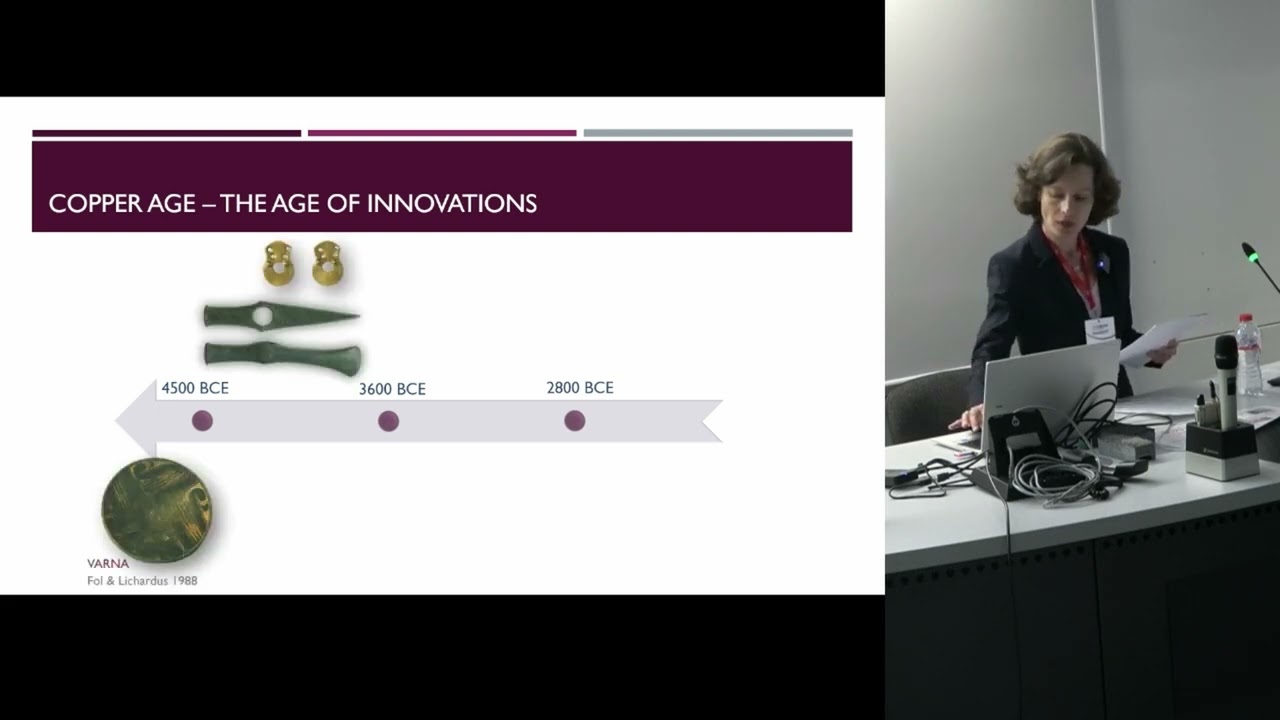
the coverage was the age of Innovations
these period so the birth and spread of
many historic technological innovations
across Europe these include the spread
of Metallurgy the invasion of the weird
wheeled vehicles and animal attraction
The increased consumption of diary
products and the processing of wool
except for Metallurgy Andrew described
them as the secondary products
Revolution his theory has been refined
since since then the emergence of these
Innovations did not occur together but
it is still still true that eventually
they were compiled into a package that
shaped human history
so the question is how we can better
understand the spread of these
Innovations and how we can detect
individual decisions and real social
interactions Beyond them
the Carpathian Basin played a key role
in the spread of these Innovations
because it's geographical location
provides a natural link between
Southeastern and Central Europe
the Danube and its tributaries offer an
excellent use for communication and
transportation the great Hungarian plain
is the westernmost boundary of the
Eastern European step by transa Nubia is
linked to Central Europe therefore what
is now Hungary is a natural linking
point between large areas
copper mines the attitude at least 5500
5300 BC and now from present-day Serbia
and Bulgaria targeted argument are
hematological research has revealed many
details about the local methodology and
the organization of the production
contrary to the previous assumptions no
special furnace was needed to smelt
copper
a little a simple pit was sufficient the
key to the process was was cooperation
in other words instead of individuals
specialization within the community and
individual Workshops the entire
community of the settlement participated
in metallurgical activities
if we can talk about secret knowledge it
was a secret of the community part of
the community's identity
the social identity forming significance
of Metallurgy and copper objects is
reflected
in the groups of miniature
anthropomorphically figurines excavated
as trickness to Brina in Serbia
recent multidisciplinary studies on the
Varna symmetry should new light on
copyright Elite the rheumatological
analysis of gold artifacts and the
complex interpretation of
anthropological Studies have led to to
the conclusion that the graves which are
extremely rich in world objects
including
God imitations of the godsmiths tools
may have been the graves of goldsmiths
these people
could have been involved in not only the
production of these objects but also
their Exchange in other words it was the
Craftsmen themselves rather than a
separate Elite who organized the
transmission of the objects they made
briefly
we can see a differentiation of
knowledge in the fifth millennium BC a
high level specialized knowledge of
craft craftsmanship appeared at several
places throughout the continent and was
accompanied by a long-distance
distribution of its product that can be
regarded as Prestige objects
used the innovation of Metallurgy as an
example of of his famous paper in which
he highlighted the importance of
studying the spread of Innovations
he implemented average sociological
study into archaeological research in
the last decade
researching to Innovations has become a
leading field in archeology however
neural Complex Motor has been developed
so far which would integrate the results
from different fields to explain why
Innovation and more broadly knowledge
transfer has spread rapidly in some
areas and slowed down and stirred in
others but social factors help or hinder
the transfer of information and
knowledge
who and and how creates those social
networks through which Innovations
spread and how are they maintained
one of the reason for the lack of a
comprehensive explanatory model is that
archaeological research either focuses
on the flow of information between
individuals at the side level on the
spread of significant Innovation
Innovations on a continental scale this
is because there is no methodological
and theoretical framework that could
connect the different levels and explain
how human interactions between
individuals became become Global
historic events and how we can link this
to the available archaeological record
in material culture studies the channel
Preparatory approach has long been used
to detect each step in the manufacture
and reveal the scarce and knowledge of
the manufacturer using this methodology
we can trace the teaching and learning
processes the real interpersonal
relations and communities of practice
thanks to the wide range use of
analytical methods
we we now have the opportunity to reveal
the traces of individual knowledge
skills and their differences among among
individuals and communities as well in
what follows I will demonstrate how
different narratives can be created
using such a multiscaler approach
building from the bottom up instead of
using the archaeological culture the
homogeneous analytical unit
examples will be shown from the coverage
of the Carpathian basin
the cultural and chronological framework
of the area Middle Corporation Hungary
seem to be clearly outlined by the end
of the 20th century after the
abandonment of late neotic tests on the
great Hungarian plane a new fine
Motorola
culture appeared around 4500 BC
it was a company
by the appearance of the first former
cemeteries and heavy copper twos and
biodispersed settlement pattern the
copper age lasted until 4000 BC
consequently it was both cultural and a
chronological period or unit
Define material called
culture seem to be its immediate
cultural and chronological descendant
it was represented by the appearance of
God ornament and heavy copper twos in
Greater months and accompanied by The
Continuous change of pottery forms and
decorations
this chronological period the middle
coverage lasted on tiers
3600 BC
its second part
was separated and called
catcher based on primary the changes of
pottery moreover this was the period
when the first traces of local
Metallurgy appeared birth and great
Hungarian plain and transdanubia the
beginning of the transdanubian capriage
was not soup
was not such a profound to change the
landia complex survived albeit with less
intensity than in the late neotic the
middle coverage volatola senior culture
was characterized by a dance network of
small form-like settlements and was
as rich in matters as the Border
cholesterol capture on the great
Hungarian plain
in the second half of the middle cap
rate is characterized by the sporadic
settlements of the food handshake
Pottery culture with central European
relations and there were chases of local
metallurgy this traditional culture
historical perspective would think in
terms of homogeneous pressure and
temporary units as archaeological
captures and it describe their unilinear
uniform development on the whole great
Hungarian plane and transdambia
the first signs showing problems with
the system appeared in the 2000s when
large-scale excavations revealed two
cemeteries the fully excavated Cemetery
in Heidelberg Ser May Feature Feature
contain disappear style pottery and was
dated with EMS measurements to between
4350 and 4250 BC another Cemetery Equity
Forever by 2 was discovered with the
Bedrock arrestor style Pottery gold and
copper ornaments and heavy copper twos
its EMS dates were surprisingly old LED
it to the same period
we can see the two symmetries which
according to the traditional system
should have followed each other in time
might have been contemporary therefore
it was clear that we need to reconcile
reconsider our conceptual Frameworks to
describe the copper age
therefore together with parotsky we took
further EMS measurements and we
interpreted them with biasing modeling
we found that the dating of the
disappear style did not did not change
as much as the assemblage is represented
by budrocare student porterist style
which were dated to a much earlier
period than it was expected before
the results suggested that the former
system of successive phases of disappear
again store catchers cannot be
maintained anymore because these ceramic
Styles might have been partially
contemporary
therefore are starting my postdoc
research project in light of these new
results in 2012 and I focused on three
strongly Related Group of questions
the problem of dating the space and the
problem of cultural and stylistic units
my colleague Martin silagi joined me in
this project and his task was the
systematic evaluation of pottery styles
using a uniform statistics-based
stylistic analysis
during this project we built up our
model from the smallest units as Graves
or pits via the sites to microagents and
regions and they bear different
contradictory models we use all together
more than 100 AMS measurements in by
Asia modeling
if we study the use of deep different
styles in the context of space and time
on the great Hungarian plane we can
witness a contemporaneity of different
Pottery stars and a continuous spread of
the Bedrock arrestor style it seems
evident that what we call the disappear
style appears earlier than the
bodrokera's tour style based on these
results we can observe the
contemporaneous use of various Pottery
Styles at different sites on the great
Hungarian plain instead of homogeneous
unit of archaeological cultures the
picture becomes more complicated by the
fact that it is usually not easy to make
a difference between the disappear again
and modro caress tour Styles instead a
mixture of different proportion of the
element occurs on several sites
models
restore style appeared 130 to 230 years
earlier on the great Hungarian plane
then the disappear style disappeared
due to the multi-level modeling we can
even see the spread of boudre store
Style on the plane
we can witness the variability of styles
in material culture Mortuary practice
and settlement pattern in a regional in
a regional level on the plane the
regional homogeneity as disappear and
Woodrow crestour catchers cannot be
maintained anymore in a time interval
that can be studied nowadays moreover
the first appearance of a step origin
barrier makes this picture even more
colorful
an important consequence is is that if
we try to maintain the regional unit of
archaeological culture
it would hide a variability that we can
currently witness in the use of material
culture I think that we can find traces
of overlapping complex social networks
of individuals forming communities
behind this variability in the material
culture and archaeological features and
this is much more realistic picture
we can Recon reconstruct the life of
past communities only if we try to
reconstruct the real significant social
unit at every level and we try to
reconstruct their social networks and
social interactions
every Community is built up of
individuals with multiple and multiple
level identities as age gender kinship
rituals and so on
these communities can be formed on a
local level or on the basis of
interactions between individuals who are
connected with some common features
therefore we cannot expect that we will
be able to reveal clearly separated
units by this but this complex subtle
network of social relations can be
explained by the Mosaic variety of
archaeological data
in the following I wish you this
complexity using the example of the
board of
directorside 1C
a settlement of three buildings and
several pits and a contemporary Cemetery
of 79 Graves was revealed
both were totally excavated and there
was a dividing empty space between them
this fortunate situation provided as a
unique opportunity opportunity to study
how material culture was used in various
archaeological contexts
a single barrier was found in the
settlement contemporary with the oldest
griefs in the cemetery
at first glance the barrier right is
identical to that scene in the cemetery
but the left side laying is a female
characteristic by the by the long
Bohemian flind blade is a mere
characteristic
anthropological studies revealed that
the deceased was an adult wear it is
striking
that the decoration of the pottery
Pottery grave Goods is of excellent
quality which makes them more similar to
the settlement's pottery even if we do
not know exactly why this person was
buried in the settlement instead of the
Symmetry it is certain that the rules of
the community made this situation
possible
two special groups can be distinguished
in the cemetery the Western group is the
older one the Eastern group is a little
younger the whole asymmetry is used can
be estimated for 130 years at most among
the grave Goods in the older group both
type plastic plastic decoration occurred
all three grips with Pottery of
different Stars can be dated between
approximately 4 350 and 4250 BC which
can be explained either by a sudden
change in the use of pottery Styles or
these styles were used contemporary at
least in a scale that we can detect now
one of the richest Graves was a symbolic
one
it was found in the center of the
Western Group surrounded by an empty
area the grave contains all significant
symbolic objects but gold
Dubai work and copper acts the special
welcome by facial Leaf point the long
volcanian Stone blade indicating long
distance connections and the Triangular
arrowheads and milk Jack are typical of
local barriers on the great Hungarian
plain we interpret this grave as a
symbolic representation of the
community's relationships
the differences between the use of
material culture at the settlement and
the cemetery is striking the quality of
the vessels the forms and their
frequencies
are different in the settlement and the
Symmetry the so-called milk Jacks were
mostly placed into the graves and hardly
deposited in the context of the
settlement
in contrast with the 18 copper artifact
and further gold ornaments found in the
cemetery no trace of metallurgical
activity was revealed in the settlement
based on the chemical composition
Atlanta isotope analysis the objects
were made of high Purity copper or
driving from the biochem mines
according to Norbert farago the few nap
students found in the settlement were
made of local materials many nap stones
from the cemetery could be associated
with the Virginia and fruit type raw
material from 400 or 450 kilometers
Northeast of Records forever further
objects were made of obsidian or
limnosis originating in the Tokai
mountains
an extraordinary piece by facially
reduce
Leaf point from the symbolic barrier was
made of biochem Flint originating more
than 800 kilometers away from Bulgaria
the twos were most likely made as well
during the evaluation and the refitting
test of the Bohemian Flint traces of
several noodles were found but no
conjoining pieces could be identified
this may prove that these pieces
came together from the same Workshop
summarizing the results of their Equity
forever case study the difference
between the settlement and cemeteries
material was surprising
it is also striking how different
identity types appear in the two context
two very visible identities appeared in
the cemetery the smallest one the
individual
and any as an interesting dichotomy the
largest one because the cemetery was
also the place of the most distant
connections and the emergence of large
identity groups in contrast with it the
settlement seems to be a different word
a parallel reality with a completely
different dynamism
no distant connections or stylistic
separation is observable in the
settlement material for us however the
main lesson was the variety of almost
all after effect types or phenomena the
concept of site history made all these
observations possible top down modeling
and using the concept of archaeological
culture would have obscured much of this
diversity going further from the side to
the micro Regional and Regional level we
conducted a similar site-based approach
and besides local variability we also
detected shared traditions
style and decorations can be easily
copied and rapidly changed Esther Show
and I started to analyze the ceramic
fashioning sequences because these
appear to be more resistant to change
forming gestures become water habits
during the learning process the Decatur
and the learner are always socially
related
does the set of technical Traditions are
shared and transmitted over time with a
socially related communities of practice
this is true for not only Ceramics but
any other crafts this is why the channel
Preparatory reproach is the relevant
methodology to reveal the learning
processes and detect the set of skills
and shared knowledge
as there is an analyzing the requisite
Forever by to assemblages and other
contemporary sites on the great
Hungarian plain in her PhD dissertation
the frequent forming techniques that
occur in large quantities on the sides
refer to a common set of technical
Traditions that strongly defined the way
of doing of The Potters the universal
distribution of these techniques
independently from the ceramic Styles
suggests a common social network
what is more
different probably non-local Traditions
can be also detected on the site with
bedrock arrest or ceramic style these
indicate that deporters in these
settlements might have had widespread
social networks and diverse traditions
as we have seen a dense network of small
form like settlements was established in
the early coverage this small scare
agropostale settlements for were
economically self-sufficient this
suggests that there were closed social
ties between the inhabitants of the
smaller settlement in a narrower
geographical area which determined that
they were buried in the same place it is
also possible that communities change
their residence weekly
frequently within an aerial area
the results of isotopic studies on
individual diet do not show differences
by gender and rest so degree of social
inequality that would have limited
access to basic food sources is unlikely
according to strontium isotope analysis
the disabled are barriers of hydrography
feature and pustach coin adensa sites
are of local origin the barriers or in
the disappear again Cemetery accompanied
by disappear style Pottery are also
essentially local here however the
barriers with wardrobe restaurant style
Pottery included several no locally born
male individuals additionally several
Mobility patterns were observed
there were some who moved here as adults
some who had changed their resonance
several times during their lives and
others who were born here spend their
Early Childhood somewhere else and they
returned here
this suggests the diversity of
individual life courses within a
settlements within a cemeteries
community
individuals with greater Mobility tended
to have fewer grave Goods than
individuals with stronger local
connections the trace is a question of
the relationship between the mobility of
individuals and the youth and deposition
of long distance objects
could they have been the individuals who
were involved in a transmission of
long-distance objects perhaps in the
transmission of technological know-how
no evidence of local Metallurgy has yet
been found in a recuperate settlement on
the great Hungarian plain and the metal
objects have been found typically as
three finds whereas grave Goods
they only find from a certain context
that can be linked to the technology of
Metallurgy is a small plum shaped copper
Ingot Fund in grave 59 of the cemetery
at the supportanya the grave of a 30-35
year old woman with border character
style pottery this find also questions
the early and implicit assumption that
only men were involved in metal working
this fight suggests that social contacts
with Balkan communities may have led to
the sporadic transfer of information and
technological knowledge
in 2017 I started a comprehensive
project to investigate the origin of the
raw material for the copper artifacts
whether potential sources in the
Carpathian Basin were exploited and
whether there were differences in the
use of sources between transnubia and
the great Hungarian plane
and whether access to sources change
between periods
I represent its results
related to the topic of the analytical
unit and the transmission of
technological knowledge
according to the distribution of metal
artifacts the Border collector culture
was said to be a metallurgical Center
I think that this this interpretation
misses the crucial difference between
the consumption deposition and the place
of manufacture
this is a typical problem and
prehistoric archeology uses the concept
of archaeological culture
if we look into the details we can find
that the majority of the copper
artifacts are Str are stray funds
without any archaeological context
therefore we cannot place them precisely
in time and frequently quite frequently
even in place
moreover the boardwalk arrest or culture
covers the plane
where there are no coupler sources
this distributional map usually covers a
Vine range of typological forms of axes
and edges but from well-documented
archaeological find context only yes
in these communities only a very limited
number of diet men could have had access
to these artifacts
therefore the question should be what
these communities could provide in
exchange for long distance artifacts
including copper gold and stone
artifacts
returning to transdanubia another
remarkable example of issue as the long
distance interactions and various
expressions of identities of a copyright
community
a unique copper horde was honored in
2017.
during a preventive excavation in the
middle of Southern transdanubia although
similar hordes are none from Central
Europe there are either stray fonts or
were discovered in the 19th early 20th
century and later is known about their
archaeological context the discovery of
The Horde from major regress represents
an outstanding opportunity for studying
the social role of copper hordes the
excavated part of the settlement reveals
a well-organized settlement with north
northwest southeast oriented buildings
huge amorphous pit an area of economic
activity and an enclosure
based on by using a modeling of EMS
measurements the site was used during
the second half of the fifth millennium
BC
The Horde was recovered from a port
placed upside down at the edge of a
large complex speed
complex the pot contained two large
spectacle spiral pendants three large
spiral bracelets two of which fit
together intentionally cut into two
halves 19 Spirit coins chords and more
than 600 small copper beads
as well as almost 300 Stone beats and
one spondility speed
the manufacturer Technologies
the Manufacturing Technologies were
revealed by Esther Horvat the Chan
operator was highly standardized and
certain technological characteristics
were shared in case of the different
types thin ornaments such as Synergy
curb its and tubular spiral coils were
made of a single copper sheet
thick pieces like bracelets and pendants
were constructed by stacking several
copper sheets to create a laminate
structure
which was neroiled or foiled and coiled
into a spiral shape
the Sheets Were flattened and shaped by
hammering standardization is reflected
also by objects shapes cylindrical
tubular and Superior forms occurred
isotope and chemical compositional
analysis suggests the probable North
Western Carpathian origin of the raw
material this is consistent with the
archaeological data large spectacles
spiral pendants are known from horde or
as stray font in the territory of
present-day Slovakia the Czech Republic
and Austria
the very context of the large spectacles
period pendant is unknown as these
artifacts were never found in Graves
the objects that make up the horde were
probably made ears were
but may have arrived as part of a gift
or Prestige exchange between
high-ranking individuals no artifacts
have been found in the settlement
material that suggests local manufacture
the making of all the objects of The
Horde requires a high degree of skill
and the objects must have been of high
value the Balkan and the Northwestern
Carpathia metallurgical Center centers
were different in the sense of product
distribution the objects from the back
has reached long distances as far as the
North Sea by at least some special types
made in the Northwestern carpetians were
only spread in a smaller area which is
called volaton La senior ludenite Jordan
of complex
this fact might be due to the different
operations of the center centers and the
different attitudes towards their
products
this is where we were before our current
project
next to the generous funding of the
Hungarian Academy of Sciences landlord
momentum program we could establish a
new research group at the end of the
last year
following the above presented approach
we build models from the individuals to
the local communities and larger micro
and Regional social networks we study
the interpersonal relations with the
combination of ancient DNA Isotopes and
material culture analysis or Metals
stones and potteries during this project
we pay particular attention to the
archerozoological material and avoid
range of animal products using this
integrative approach and social network
analysis we will be able to detect
differences in access to raw materials
information knowledge and resources and
finally Define a set of knowledge that a
certain Community shared
in summary we find essentially local
small-scale communities who maintained
intense contact with other small-scare
communities based on the objects they
placed in their griefs there is a
difference in Prestige or rank
we carry out the possibility of major
population movements that might have
played a role either in the beginning of
the coverage or in the spread of
pathology Mobility is likely to to have
occurred only within the plane and over
shorter distances
for these small scare corporate
communities it was essential to form
alliances with other similar communities
to have access to additional resources
to avoid risk and to reach stability
there were several ways of doing this
organizing communal feasts gifting of
prestige goods and building marriage
relationships could all help to maintain
and strengthen these alliances
the small scale communities of the
corporate were open colorful and diverse
the key to their stability and success
was the diverse network of relationships
the coordinated cooperation
collaboration and information that
flowed between the members of these
communities Kudos support creativity and
emergence or spread of new Innovations
the results of this can be seen in the
archaeological record thank you for your
attention and I would also like to say
thank
thank you to my colleagues the members
of the momentum Innovation research
group with whom we would like to
contribute not only the investigation of
the coverage in the cooperative and
business but also wider European
prehistory thank you
[Applause]
foreign
[Music]