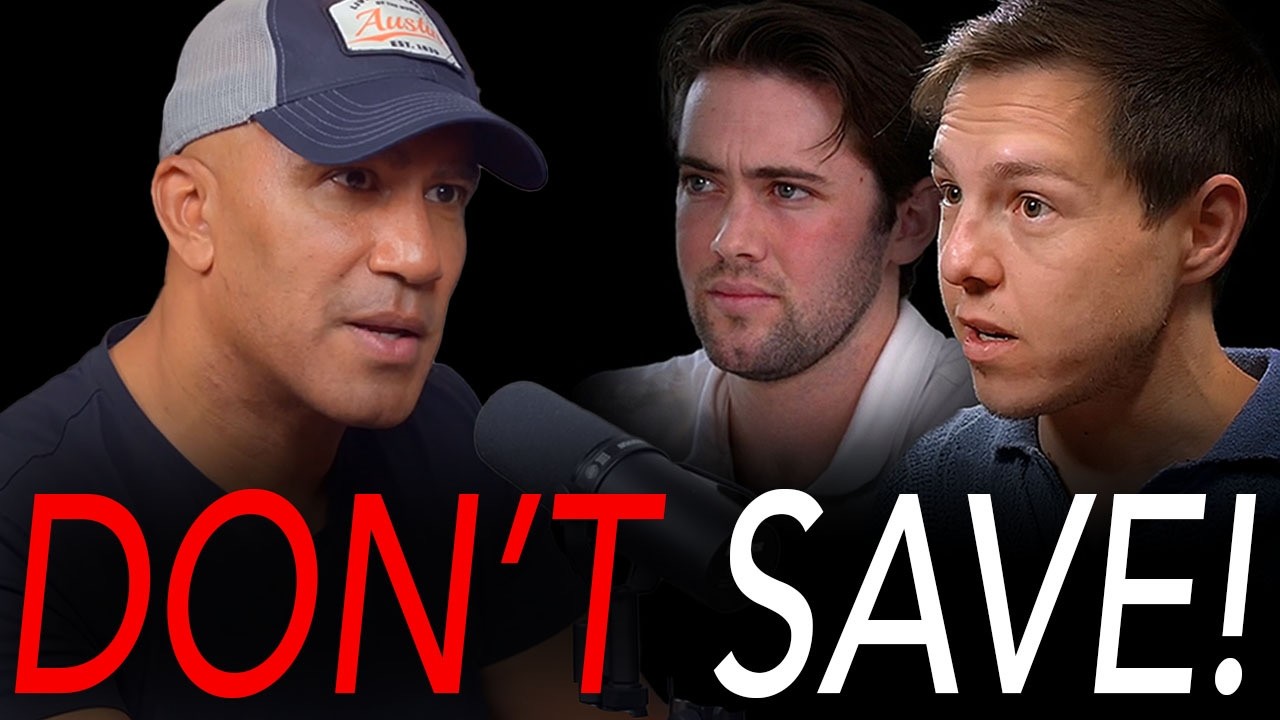
Spend Your Money NOW - Before It’s Too Late! (Bill Perkins Final Warning)
Watch on YouTubeVideo summary
Bill Perkins challenges conventional financial wisdom, arguing that an obsessive focus on saving money often stems from fear rather than optimization for fulfillment. He posits that while frugality and delayed gratification may help one survive, they prevent individuals from thriving during their prime years of health and mental acuity. Perkins suggests that the human body inevitably decays over time, reducing the utility of wealth as a tool for experience; therefore, it is more logical to spend resources now when physical capabilities are at their peak rather than hoarding them indefinitely. He advocates for "time bucketing," where individuals assess their biological age and current health status—such as lung capacity or joint function—to determine how much they can enjoy life before those abilities decline, effectively treating money not just as currency but as a finite resource to be exchanged for memories while the body allows it. Perkins shares his personal journey from extreme frugality in childhood to becoming a successful commodities trader and investor with a net worth exceeding $100 million at its peak. He attributes his success to stoicism, curiosity, and an unafraid attitude toward risk, noting that he learned early on not to care about others' opinions or the cost of things like Starbucks coffee. His philosophy shifted after reading books like *Your Money or Your Life*, which taught him to view money as a measure of time exchanged for goods. However, Perkins warns against becoming so frugal that one misses out on life's discoveries and joys. He emphasizes that fulfillment is subjective; what matters most is aligning spending with personal values rather than adhering to societal norms about saving or accumulating wealth. A significant portion of the discussion addresses how parents should handle inheritance versus providing for their own experiences, particularly in light of Perkins' desire for a large family. He argues against leaving massive bequests that might stifle children's creativity and resilience by removing them from struggle. Instead, he recommends establishing trusts where money is protected but not immediately accessible to young adults who lack the maturity or necessity to spend it wisely. This approach ensures that heirs do not lose their drive to hustle while still being supported if they face genuine hardship later in life. Perkins also reflects on his own upbringing and how saving small amounts as a child, like $400 by age 12, deprived him of formative memories he would have cherished more than the bank balance itself. The conversation extends into practical applications for growing businesses and maximizing mental energy allocation. Perkins critiques the tendency to focus excessively on minor savings or deal-hunting at the expense of revenue-generating activities like content creation and business expansion. He suggests that entrepreneurs should consciously redirect their "mental neurons" toward high-yield opportunities, such as developing new ideas or improving production quality, even if it means taking calculated risks or spending more lavishly than necessary. For instance, he proposes renting office space to foster collaboration and accelerate idea generation, arguing that the potential revenue increase outweighs the costs of rent and travel. He encourages listeners to experiment with shifting their focus from saving deals to creating value, noting that comfort can become a barrier to growth if one stops challenging themselves or trying new experiences like pickleball or traveling abroad. Ultimately, Perkins concludes that life is about continual discovery rather than optimizing for safety or accumulation alone. He illustrates this by comparing the speed of travel available today versus historical times, suggesting that modern wealth allows people to experience more in a lifetime than kings did centuries ago. While he acknowledges that some individuals derive genuine joy from saving and finding deals, he urges others not to let programming dictate their choices if it leads to regret or wasted potential. The episode ends with an invitation for listeners to reflect on what true fulfillment means to them—whether through travel, family experiences, or creative pursuits—and to make deliberate decisions about how they allocate their time, health, and wealth before biological decline limits those options.
Read the full video transcript
I don't give a [ __ ] about saving. I
don't give a [ __ ] about spending. I care
about fulfillment and thriving.
We have all learned to focus on saving
your money for your golden years. But
our next guest says actually do the
opposite.
I've read your book probably five to six
times because I am the exact opposite.
You're afraid of running out of money.
I'm afraid of wasting my life. You are
living in fear of something in the
future and robbing yourself of your
current life. Delayed gratification
indefinitely is no gratification. And
unfortunately, your body has a vote and
it's going to decay and you will not be
able to get that gratification to the
extent you can. Now,
I mean, Google lists your net worth at
over $100 million. So, some people are
going to comment that it's not just that
easy. For those who are like have
average intelligence and lots of hustle,
there's so many ways to make money.
What's your advice to people with a low
income? Like, if you're very poor, the
first step you're trying to do is
Bill Perkins, thank you so much for
coming on the Ice Coffee Hour.
It's good to be on.
We have two lives and the second one
begins when we realize we only have one.
What does this quote mean to you?
It means that um I think a lot of people
behave as if they're going to live
forever or they're going to get a second
life like in video games. And when you
realize that you only have one life, one
ride on this planet, you begin to take
it a little bit more seriously. uh you
begin to care a little bit less about
what other people think and you begin to
dive deep and chase after what you
really want out of this ride.
It's interesting because I've read your
book probably five to six times in
total. It's the one book that people
keep telling me to read through because
I am the exact opposite of everything
that you describe in the book. I am ex
I'm extremely frugal. I like saving
money at all costs and I like delaying
gratification. For me, I get a lot of
peace of mind knowing that like 30 years
from now, I'll have enough versus living
it up today.
Right. But is that a fear-based thinking
or is that an optimized for fulfillment
type thinking?
I would say probably 80% fear, 20%
optimization,
right? And so fear is a great thing that
we have, right? It keeps us alive. It
keeps us from eating bears or lions on
the on the uh Serengeti when we we were
in tribe, right? And it prevents you
from getting mugged or whatever it is,
right? But it doesn't help you thrive.
It only helps you survive. And you're
surviving, right? But you're not
thriving. And you're not thriving in
probably one of the best periods of your
life where you have your health uh and
the ability to take advantage of
everything that's around you. Whether
you want to go hella skiing, swimming,
etc. Your health is not going to limit
you. Your mental acuity is not going to
limit you. Um if you wanted to go to
school or college or spend money on
that, your lung capacity isn't going to
limit you. And so you are living in fear
of something in the future and robbing
yourself of your current life.
Your life has led you to have this very
interesting philosophy around why you
should spend money while you're young
instead of saving for the delayed
gratification. For those unfamiliar, how
did you make your money?
I started making money as a uh broker of
commodities and then really made
significant amounts of capital as a
commodities trader in natural gas. And
so that's where the money came from.
How do you learn how to do that? How do
you learn how to trade natural gas and
profit from it?
I I think you have to be a person that
is, you know, unafraid of risk. Uh has
kind of like a stoic attitude about
things in order to take the losses and
and the stress associated with it. I
think most people have the intelligence
to be a trader, but they don't have the
mental fortitude to be a trader. And
then you just have to want it. And so
what I wanted um to shorten the story is
essentially to be able to exchange uh a
few hours of my time for a lot of hours
of everybody else's time, right? That's
what money represents is your time,
right? You spend time doing something
and you acquire this thing called money
which is funible for other people's
time, right? Their goods and services.
And so I wanted to be rich, you know, I
wanted to be rich. I wanted to chase the
girls. I wanted to, you know, live the
rockstar life, you know, that's what a a
young me, you know, those those are kind
of the goals, right? Like on autopilot,
right, of what do I what do I think I
want out of life, but I didn't want to
have to choose or be frugal or not buy
Starbucks. I wanted to not even care
what the price was. I wanted to have
enough resources to exceed my wants. And
so, in that case, are you trading your
own money or are you working for a firm
that gives you capital and you're
trading that capital and getting a
percentage of the other?
Both. Both. I I'm a I rent out my brain
and I I get a percentage of the money
that I make for other people. So some
people, you know, they they they rent
out their bodies, they do manual labor.
Uh I I I'm a mental.
But what set you apart that you were so
profitable at doing this? Like why were
you different than everyone else who's
tried doing this and failed?
I think it's a curiosity and stoicism.
So the the ability to handle losses and
still be able to think through things um
basically gives you an edge. Um and and
that's not necessarily in trading.
That's in life and romantic
relationships etc. When things are going
wrong in romantic relation, the person
that's like going crazy or things are
really bad in a relationship um will
have reactions that are not necessarily
helpful
and those things add up. and a person
who's a little bit calmer will think
through things, try to come to
resolution, will do things that are are
accreative to the relationship or or
healing to the relationship. And so
that's huge in any field. Um the other
thing is just being very curious and
dedicated to it. So you're very good at
what you you guys do here. You spend a
lot of time and effort. You're curious.
You're you're looking at how other
people do things. You're incorporating
things that work. You're experimenting.
You just become better at something. How
did you cultivate this stoicism? Because
for me right now, like it's easy to be
stoic when things are good. But right
now with like the tariffs and this and
that and I see my portfolio, I'm like,
"Oh my gosh, this is just he refuses to
even open my account because I've
realized that that's the best way that I
can remain stoic in times like this. But
if I do check it, I can notice myself
getting a little bit emotionally
connected to the outcome." And I know
that's like for an investor not what you
should want. You kind of just have a
method,
tried and true method. How did you
cultivate this stoicism?
I think one it's training uh just
reading books the daily stoic looking at
the quotes etc. Just kind of like
repeating that but also um losing the
ego losing the ego attachment to the
result and learning to enjoy the ride
and the process and just kind of
sticking with that and being okay with
being broke or looking like an idiot or
looking like a fool. And so I I kind of
developed that over time. You know, I
was kind of trained in that as a kid and
the environment I was in. And so, you
just learn not to care what other people
think, including yourself. And then
you're just kind of detached from all
this like fear.
What do you mean trained as a kid? Like,
how are you?
I think um you know, I'm I'm an old guy,
right? I I was born in ' 69. Um and I'm
like post civil rights kid where the
world was a lot different place growing
up. And so there was overt racism like
TV shows and and stuff that was going on
then, right? Uh would just be completely
banned or shut out right now.
And when you know I say this like when
people have kind of like this idea of
who you are, let's say you're racist
against Indians or blacks or whatever,
right? You learn to know that that's not
true. I can either accept that and adopt
that attitude or not give a what other
people think. Now little did I know at
that time right that I was being trained
to not give a what people think
right at all right because like it
doesn't matter what you do or what you
say or you know I don't need to prove
myself to those other people right they
have their opinions and that's on them
right and you you read books like uh
don't take it personal that kind of
quote out of the four agreements one of
my favorite books of all time if anybody
asked me what's the best book on trading
I go the four agreements what's the best
book on this the four agreements ment
that is a superpower
the don't give a type of people uh I
don't care what other people think
including yourself because a lot of the
negative talk that people have comes
from themselves so how did you actually
go and and make changes from what you
were reading though because a lot of
people they face adversity like that or
just adversity in general and it spins
them down the negative consequence that
sort of life rather than the taking it
and turning it into a positive like why
what made you any Nobody learns piano
overnight,
right? So if if if if I say, "Hey, it'll
be really great if you ever play piano."
You're like, "Yeah, I I really want to
learn piano. This is great." And I come
back the next day, I'm like, "You're
banging on the piano." Like, "This is
terrible." Right? Like you're not going
to learn life. I come back in a week,
you still haven't in a month, still
haven't learned it. But if you keep at
it, right, over the course of a year,
you're going to be like, "Holy [ __ ]
this guy can play piano and he's pretty
good." And so I say that to realize that
whatever behavior you're trying to
acquire, whatever mindset you're trying
to acquire, you're not going to learn
them overnight, right? Like these habits
take time and you have to stick with it.
And so when you say like how do you
acquire it? It's just practice,
practice, practice. So despite all of
your challenges and adversity, I mean
Google lists your net worth at over
$und00 million. And I just have to ask
like are these Google estimates based in
any sort of reality?
Not really. I mean, you can you can
influence what the estimate is. You
don't you kind of don't want your your
net worth out there. Is is has it been
north of $100 million? Yes, it has been.
Has it been, but with these tariffs
recently
things have been less than that?
Yeah. I I mean I I get I get smashed on
days just like the everybody else,
right? Like it's going up and down. I'm
looking I'm like, "Oh, I have to spend
less this year or maybe a lot less from
the next 5 years." uh you know or or I
get to spend more you know over the next
five years or next year you know
what's interesting is in your book you
say that you have to pick a time in your
life where you want your net worth to be
at its peak correct
and then after that then your net worth
should decline as you age which is
completely counterintuitive to a lot of
people like you should always be growing
and as you're growing you can always
just continue scraping a little bit more
off the top what was your age that you
picked that you wanted your net worth to
be at
it's it's right about now right about
now. And so that can change, right?
Because it's your biological age, right?
Like at the end, like if we can just do
this simply, like the day before you
died, you you don't want your net worth
going up, right? You want to spend
everything you got. But unfortunately,
your body decays. It doesn't just die,
right? And so long before that, you'll
be doing less things and have less use
for money, right?
So in terms of your net worth, was this
intentional to pick right now or was
this because the market was going up so
rapidly that you couldn't spend? has
nothing to do with market has has to do
with your biological age and your body
decaying.
So how do you test this?
This is this is one of the hardest parts
like like this is reasons why it's not a
strict formula. You have to understand
like there are people smoking, heavily
overweight, etc. at 40 who should be
spending like rock stars, right? And
there are people who are 5 years older
than me who are like, "Hey, you you're
actually still in plateau, right?" like
they're running iron mans, they're
they're running marathons, there's like
they have the body of a 30-year-old,
right? And they're able to do all the
things, right? And so it's really based
on like how are my knees functioning?
What's my lung function? Am I do I have
cardiovascular disease? What's my lung
capacity? You know, what's my V2 max? Am
I able to go to Paris and walk seven
miles and really enjoy Paris? Or am I
going to walk one mile? You know, my
parents, my mom, it's like it's a lot of
people have parents where it's hard to
even get them on a plane for 10 hours.
They don't need any money for traveling,
do they? Right? Do they need that
international ticket? No. Do they, you
know, it so you can see the utility,
their ability to convert their money
into experiences or into fulfillment
declines as you age, right? I'm just
giving you a couple examples. And that
really depends on your biological age,
not just the numerical year you were
born. And so a lot of that is just you
know there's this whole quantified self
crowd that you know optimize for health
like the Gary Breers and Peter Tears and
Hubman's of the world etc. You know
which Peter T is my doctor you know we
do all the stats etc. And I'm like okay
you know I'm a bad boy yes I should be
doing more cardio but given where I am
this is kind of the things I'll be able
to do over the course of my life and
this is what the last 10 years of my
life is going to look like. So based on
that, how long are you expected to live
for?
I think I'm a 76 to 84 guy. 84 is
probably what the charts would say.
I've heard for anyone who's under the
age of 50 now that they could live past
100 with with modern AI and medicine
merging and
Yeah. could. And everybody with a
biology textbook could get an A in
biology. But that's not how it goes,
does it? You know what I mean? Like
these coulds
Yeah.
are are or are are just like what is
achievable, not what human beings do,
right? It's like, oh, why why do some
people get A's and ones why do some
people flunk out, right? Like
they just don't they're not they're out
of compliance, right? They don't do
their homework. They they have other
priorities, etc.
Well, regardless of whatever Google
says, you've done really well for
yourself, made a great living. When did
you first become rich versus when did
you start to feel rich?
I felt rich before I became rich. Um,
and I think it was around 25 when you
know
when you started feeling rich.
Oh, no. Before that, like 22. As soon as
I made more money than my mom, it was
like the best day of my life.
You felt completely
Oh my gosh. You couldn't have told me.
I was like, what sort of lifestyle? What
sort of lifestyle?
And and the funny thing is I was still
living at home with my mom, not paying
rent. I was just about to move out to to
to the to the pizza oven that I lived in
with Jason Rufo. Um, but do
you think you felt richer then or now?
Then I mean just the feeling of just
like just the the upward trajectory, the
the the rate of change in my life was
just so great. And going from straight
broke to like 50s something,000 a year.
That's how much you made to
Yeah. something 40 50 whatever the
number is. I was like, "Oh, I'm a
buppy." That stands for black urban
professional for those people who don't
know. There's yuppies and buppies. And I
was just ecstatic. Ecstatic. I had extra
discretionary income. I could take a
girl on a date. I could pay for It was
the best feeling. Um I I think it was
like uh late 20s, 28, 29. I was rich,
you know, millionaire.
So you made millions between the ages of
22 and 29.
Yes.
What did you do with the money?
I didn't really do much the first time.
I didn't, you know, I was so uh
inculcated with the hive mind culture,
right? I didn't know what to do. Go to
Vegas, hang out with friends, go to
bars, right? like I didn't really think
about what do I really want, right? I
was advertised a lifestyle that I
thought I wanted and I I followed that,
right? And I was also very obsessed with
natural gas trading back then. I golfed,
I hung out with other traders, I went to
Vegas, I chased girls, I did those
things, you know,
why natural gas over anything else you
could be trading? I think um you know I
I serendipitously was a peon on the New
York Merkantile Exchange and the natural
gas contract was just starting then and
I looked into it and I was like this is
the this is the future new commodity not
that many people into it place where you
know there was legacy crude oil all
traders right like and this growing
efficient fuel was the wave and I was
like oh this is where I want to go and I
could you know in theory make a bunch of
And when did your perspective on money
begin to shift?
There was a book called Your Money or
Your Life. You probably read it that
completely
changed my view of money and what money
is. And so if you've read the book, you
know that one of the definitions they
use that they they say holds up all the
time is money is something you exchange
your time for, right? You change your
life. So there's a lot of what I what I
think are dactic exercises, very
painful, but you go through them and
then you have a visceral understanding
of spending your time for money, right?
They they ask you to count every single
nickel and penny that comes into your
life, then count every single hour and
minute you use in order to achieve that
money, right? Take the taxes out and
there's your net true hourly wage. And
you've done that, right? You've done
that painfully for a period of time. And
then after that, uh you get rid of the
dollar signs and it just becomes hours.
So whatever you buy is in hours or
minutes of your life. And you do that
for a while and you go, "Holy," you
really get in touch with your values,
right?
See, I did that exact same thing. I must
have read that book when I was 14 or 15
years old. And I started looking at
every single purchase as hours of my
life. But that caused me to not want
anything because I would look at like a
Starbucks coffee and I'd say I have to
exchange 45 minutes of my life after tax
to go and buy one coffee and that coffee
might last me 30 minutes. So I'm
spending 45 minutes for 30 minutes.
That's a bad deal. But maybe I could buy
a pair of shoes for one hour of my life
and I get those shoes for a year. That
seems like a pretty good tradeoff for
like physical things that last.
I went the same way as you. I went super
frugal the f when I read it. Um, and the
other thing is it's not it's not about
the uh it's not about the the time
equation like you some of the most
enjoyable things in your life will only
last two minutes. I'm winking at some of
the guys out there.
One minute. One minute.
One minute. All right. So, so, so it's
it's really about it's really about the
yield on fulfillment, right? Like cuz I
you know around that time I started
thinking about like what is it all for,
right? There were lots of uh you can't
swing a dead cat without hitting a
millionaire in lower Manhattan, right?
And I'm busted at the time. And I was
thinking like, well, I want to be rich
before I'm 30, which I think a lot of
people say that, right? And I think um
in that statement is kind of this
understanding that the ability of them
to enjoy the money or convert into uh
meaningful experiences declines as they
age. Nobody says, "I want to be a
millionaire by the time I'm 86." Now,
when it comes to the Ice Coffee Hour, I
just want to say that short form content
has been one of our biggest drivers of
growth on the Ice Coffee Hour. Like even
this episode with Bill Perkins. We'll
often clip up the most memorable moments
and post them as shorts throughout Tik
Tok, YouTube, Instagram, Facebook, you
name it. But let's be honest, it also
takes a lot of time to do it correctly.
That's why tools like our sponsor
OpusClip are a gamecher. And right now,
they're celebrating their 2-year
anniversary with a huge giveaway.
They're giving out a $5,000 cash prize,
exclusive swag, and even a MacBook Pro
to one lucky winner. Opus Clip isn't
just a clipping tool anymore, though.
It's a full AI powered video editor
built for creators. It can automatically
pull in your long- form YouTube videos,
find the best moments, add captions,
B-roll, and even schedule clips to post
while you're away. It's basically like
having an entire editing team, but built
by AI. Top creators like Jubilee and
Darmian are already using it, and we use
it, too. I mean, do you see this clip to
reacting to right here? That clip was
made by OpusClip and everyone who joins
gets free credits just for
participating. All you have to do is go
to opus.pro/clipip-enthe
future right now to learn more and enter
the contest. Again, that is
opus.pro/clipip-enthe
future or click the link down below in
the description. Seriously guys, getting
clips is extremely expensive and a very
long process, but you can just use
OpusClip and get them done instantly for
a fraction of the cost. So, I highly
recommend it. Thank you so much to
OpusClip for sponsoring this episode.
Nobody says I want to be a millionaire
by the time I'm 86 or or 72 or 73,
right? It's always before I'm 30. Forbes
30 under 30 under 40, whatever, right?
Some age that's below 40.
And when I was walking around lower
Manhattan looking at these very wealthy
traders, I was like, "Yeah, but what's
an extra million going to do for them? I
mean, what are they going to do? Drive a
nicer car, their kids to school in a
nicer car? What where's the fun in
that?" Right? because I'm a young 20some
lyic system driving all my decisions.
Like how are you going to get any more
girls with that? You can't take any
girls on a yacht when you got kids and
you got to drive them to school, right?
But aside from my goofy thought process,
like I had something right and that was
basically the uh the utility of money
declines as you age to the individual.
Like I'm not an institution. I'm not
going to I'm not like the United States
of America or Swiss bank. I'm not going
to last 200 500 years, right? I got an
86-y year ride, maybe if I'm lucky,
right? And unfortunately, that ride
isn't at a consistent health. It's like,
I'm going to reach uh physical maturity,
mental maturity, and then I'm going to
plateau and decline. And so, I'm like,
holy,
I got to get rich fast so I can really
enjoy my life. And it's like, what's the
purpose of getting rich? Like, in that
all those all those questions are going
on, right? And so that's when I started
to think like wow at a certain point the
reward goes away right obviously when
you die but even before that right
because like you're in a nursing home
and everybody's seen they've had parents
etc you know or or grandparents that are
like can't really convert that money
into meaningful experiences right aside
from survival and so I was like holy
what there then there must be a curve
there must be a utility and money curve
and then when you start thinking about
that like wait a minute if you're going
to go to work and exchange hours of your
life for money and then you don't
convert that money into experiences
right what and experiences in the
broadest sense choice choices right
whether it's buying a watch or
building bridges for poor people or or
etc then you essentially waste your
hours of your life and that's the only
thing you got right and so and then to
think about then there must be a
derivative on this there must be a peak
if I'm supposed to spend it before I die
there must be a peak peak and is that
peak a number? And I'm like, wait, wait,
no, no, it's not a number. It doesn't
matter what the number does. It doesn't
matter what your net worth is. It's
focused on your health and the decline
rate of your health. And so your your
net worth peak is not a number. It's a
date, right? It has to do with your
health and your age. And so that's how I
came to that conclusion. Very, you know,
I'm condensing it down and leaving some
things out, but that's when I was like,
holy,
right? to be grinding out in your 70s to
make more money for a party at 80 is
absurd.
Yeah.
Right. It's easy to point it out that
way with those two numbers, but it's
equally as absurd. You know what we were
talking about earlier what you're doing
like you know when I became very frugal
my boss uh you know I saved some money
on like no salary and my boss called me
a idiot.
I was like wait what you know and I
pingponged on autopilot to the other
way. began spending money crazy, which
is not what you want to be doing either.
That's not what I'm advocating for. What
I what I'm advocating for is people to
think about what are the things that
they're fulfill them and and what they
think those experiences they want to
have on their way to the grave, whether
it's in your 20s, 30s, 40s, etc. Or
break them down in 5 years period. See
what they are, right? And then go out
and pursue those.
What would you say to the people who get
more fulfillment from saving than
spending? Let's assume they're my my
very close friend because I'm at the end
of the day I can't tell you I can't tell
a addict that's bad for them. I mean I
can tell them right but you know they're
like you got a problem I don't have a
problem
right like you know what I mean like you
have a problem with my you know what I
mean that that that's the people with
saving right but at the end of the day
what I try and point out is like it's
suboptimal like the point of saving yes
there is some hydonic value to know
you're doing the right thing etc but the
purpose of delayed gratification
indefinitely is no gratification and
unfortunately your body has some has a
vote and It's going to decay and you
will not be able to get that
gratification to the extent you can now.
And so the purpose of working is the
reward and the reward is not the token.
The token is useless. Who gives a you
care about the experiences that it's
going to afford you, the life it's going
to afford you. Like builders don't
really give a about hammers and saws
except to the fact that it helps them
build houses. If they didn't, they've
thrown them the away. And so imagine you
had a, you know, people that are just
saving money to be saving money are just
collecting hammers and saws to never
build a building.
What if they're collecting options in
terms of they're collecting the ability
to have the choice to do whatever they
want.
I think that's great. And I think there
is a place for saving, but those options
expire just like you will. And not only
will you expire, this time period will
expire. So, it's not just the one death
you have. It's the many deaths you have.
The single you, the you without kids,
the you with small kids, the you with
kids out of the house, the you that can
actually sprint, the you that will never
sprint again and for the rest of your
life,
right? I'm just pointing out some R.
There's lots of them, right?
Yeah. And so in each period of your
life, certain activities, choices are
optimal, you know, and in certain
periods they don't transfer well or they
don't transfer at all. And so depending
on who you are and what you want to have
out of your life, when you get off
autopilot, you think about what
experiences I want to have in my life,
then you know, you can allocate your
funds correctly. You can save for the
things that are, you know, you you get
the spend burn ratio right. Right. But
just to say I'm preserving options, like
who gives a like, what option are you
saving for? List them to me. Tell me
what they are. To have this nebulous
thing is just fear-based thinking and
just trying to justify it by saying I'm
saving for options. I'm like, you're
full of you just haven't really done the
homework about your life. You haven't
really thought about what you wanted out
of life and you're hiding behind this
like I have a bunch of money thing to
justify the laziness of not really
getting off autopilot and thinking about
what experiences you want to have in
each period of your life, right? Like
the purpose of the money, right, is for
your fulfillment, right? And part of the
fulfillment is planning the activity,
doing the activity, and then reliving
the activity and talking about the
activity. Like before we got on, we were
talking about your wedding and how you
thought it was great. And he was saying,
"Hey, you thought you could have made it
better if you l loosened up a little
bit, right?" And so when you talk about
your wedding and it was great, etc.,
you're getting fulfillment from that,
right? Zero cost fulfillment. How did
you pay for that? You pay for it earlier
when you spent the money and now you're
reaping the dividends. And so if you
delay gratification pretty uh far
enough, you don't get that many memory
dividends. You get less fulfillment,
less high score, and less ability to do
some of those activities. Now, this
might be oddly specific, but where do
you draw the line for opportunity cost
if you're in an area or time of your
life where you're where your time,
working hours are really valuable,
whereas in the future, you don't think
you're going to have the same ROI as you
do today.
Yeah, that that's like these
calculations are tough and everybody's
going to have to, you know, that's why
these like variables come in there. But
you just want the mental model like how
am I thinking about this? This is okay,
I'm 25. I can take uh three ski trips
when I'm 30 or one ski trip now because
I'm going to give time out. Like is what
is a better deal for me? Right? You
might say, "Well, I'm going to be 30.
I'm still physically fit, right? I don't
reach uh physical maturity until 33.
That's a great return and I still get
many years in a memory dividend. I'm
going to grind it out and have three
trips later." Plus, as a young male in
your 30s, the sexual power dynamics, you
know, I'll be able to meet a lot more
girls as a 30-year-old with my together
as opposed to a 25-year-old without my
together. So, you might make that
decision. Um, when you're 60, you might
not make that decision, saying, "Three
trips at 65 versus one trip now. I don't
know. My knee hurts, my back hurts. This
might be my last, you know, ski trip. I
might not even be able to ski." you
know, the friends that are with me that
I would go that actually add to that
enjoyment, they might not be around.
George is 70. He might be dead. You
know, whatever it is, like I'm just
making up these these scenarios. So,
that thought process, right? Like not
kind of that that autopilot like, "Oh,
I'm just going to save save." Just
thinking it through.
And so, I think like a 25-year-old will
have a lot of arguments and probably
tilt towards like, "Hey, I'm going to
take three trip ski trips later." And
Mr. 60, 65year-old might be no.
Yeah. Speaking of death, when is that
something that you started to consider?
Uh
when did that start creeping in that all
of a sudden your life isn't just going
to last forever?
It was it's it was kind of early. Um but
more profound, you know, uh when I
started thinking about like money, its
purpose books like your money or life
fulfillment and and kind of like where
are you going to get the maximum
enjoyment out of your life? Like where
is most of your fulfillment going to
come for your life? And so I thought it
was like being aware of your death and
that you're going to expire kind of like
cuts through your ego, right? Like if if
you're in a you're in a plane crash or
like you were uh terminal disease, you
know, you're going to die. You're going
to have great health, but you're going
to die in a year. Like it's going to cut
through all the ego and you're going to
live the life you really want to live,
right? You're going to do the things.
You're going to say that I love you.
You're going to take the risk. You're
going to do all the things because
you're going to die in a year. Um, and
so you know, you don't live each day as
if it was your last. You live each day
with death in mind in the future, right?
The things you do now are actually
influenced by the day you die. It's just
a little bit more remote, right? Cuz the
day before you die, you would do certain
things. The two days before you would
die to do certain things, a month
before, a year before, etc., and so on.
And so how you behave, whether you save,
the risks you take, the things you do
are really influenced by the day you die
and the deterioration rate of your body,
right? It's just an integral, right,
over time. And so being aware of kind of
the idea of like when you're going to
die, you know, getting a range of that
date and your health is extremely
extremely important for you to have the
courage to implement, you know, this
holy I'm not going to be as rich as I
was last year. I need to convert them
into experiences. Like I need to live
the life I want. It like kind of forces
you to live and take it seriously. Like
when you're on vacation and the
vacation, you know, it was never going
to end. You might never like when I
lived in New York, I never went to the
Empire State Building. I never went to
all these stores unless somebody came in
town because I could always do it right
when I But then when I came in town,
it's like, oh, they're here for a
weekend. They take they they go see the
things, they go to the place, they go
whatever, they take full advantage of
New York.
Um, and so I think kind of life is that
way. A lot of people think like, it's
always going to be there. I'll always be
able to go to Japan.
I'll always be able to do X, Y, and Z.
Later in life, these things are going to
happen, right? and then they they let
their lives pass them by.
One thing that is is a bit of a taboo
topic, but would you say money buys
happiness? I've seen like I'd rather be
crying in a Ferrari than a Civic. What
do you think about that?
Yeah, I I actually think it does. Um,
but you need to know how to use it. You
know, you have these Chuck-E-Cheese
tokens, right? And you need to know how
to go to the desk and exchange them for
the comb or or of the doll that
Chuck-E-Cheese. And it's kind of like a
a joke, but what I'm trying to say is is
that going back to the hammers and saws,
right? It's a tool. And so I can give
you all the power tools and all the
things uh to build a house. But if you
don't know how to use those tools, you
will not build a house. And so I can
give you a ton of money, right? And if
you don't know how to use that tool
called money to build a life of
happiness, then you won't. You'll just
have a bunch of money. And so what you
find is when people point out examples
of like money ruined this person or
money didn't make them happy is
generally they did not know how to use
the tool.
When do you feel like it starts tapering
off in terms of satisfaction with money?
Is there a point of diminishing returns?
I think it's person specific money for
all the things you want plus a little
bit more. Right? So that depends on the
things you want. And what happens is
with money is that you discover a
lifestyle and things that you want that
you never knew. Like you don't come out
of the womb knowing that you like
chocolate and you hate onions and I like
France and I don't like Thailand or
whatever whatever the mix is, right? You
go out in life and then you discover the
things you like and you want, right? I
remember when I never wanted to leave
Jersey City. I thought it was the best
place in the world and I never want to
leave. Why would anybody leave Jersey
City? Right? went out discovered like
what a idiot I was. Nobody needs more
than $150,000 a year. Blah blah blah.
Make $250,000, have zero zero left over.
You're like, "Oh, what an idiot I was. I
can really use $250,000." That's even
being efficient and frugal like you,
right? I could still spend it.
Then it becomes a million, right? And so
when you say the average person, it's
very easy to pick a number that's like
double what they have or triple what
they have or 2,000 income. Then you meet
somebody that's made five making $5
million years, etc., and you're like,
it's not even close, right? It it's not
diminishing at the same rate, you know?
And I I think it's when the person is
now having capital that they'll never
spend and living that life, right? You
could just point it out. They don't even
realize it, right? But you can just
point it out. Then then we're at enough.
I saw a study on CNBC that actually said
that in order for people to feel rich,
they need double from what they
currently make. And they found that
across pretty much every single income
group, whether you make a 100red, you
need 200. If you make 200, you need 400.
500, you need a million. That just kept
going.
Yeah. That they people are not finding
the concept of enough, right? Like
they're not in touch with what they
want. And part of that, which I think is
going on, is they're discovering the
world,
right? You don't know what it's like to
be on a superyacht until you can afford
to rent a superyacht. And then you're
like, "Holy, I would like to be on a
superyacht a lot more. You know, I need
to make more money to rent superyachts,
right?" And so, you know, and it's like
I'm actually much happier on a
superyacht than I was not on a super
yacht, right? And I'm getting
fulfillment out of it, etc. I didn't
know I like to travel as much as I did.
I didn't know I like Japan as much as I
did. I didn't know I liked X, Y, and Z.
And so, I think um part of that is going
on, but also people just aren't having a
concept enough, right? Like they, you
know, there is um that is not taught
here. It's not part of the culture, the
concept of enough.
Yeah. I think Tai Lopez was telling us
that 10 million was the point of
diminishing returns where everything
beyond that point you start getting a
little less than what you could get
going from like 0 to 10.
That wasn't true for me.
I thought it was like what he said was a
a few million single digit million.
That was that was per year income.
Oh, $10 million in terms of net worth
net worth. Okay.
Or $2 million a year was optimal if you
want to do like 99% of things that you
could do. That was enough to buy it. I
went to Thailand and I saw people that
were visibly like I felt were extremely
happy and more fulfilled than I was at
the time that I went that were at like
fractions of income or like close to no.
And I've seen scenarios where personally
like I'm happy. I'm very grateful where
I'm at. I live in I live in gratitude. I
I can't believe the life I get to live.
But I'm like, "Oh, I can convert more
into more fulfillment and more
happiness." And so,
um, you know, I'm not going to cry if I
go back to like sleeping on a couch,
right? I'll be like, it sucks, but I'm
going to have a great life and I'm going
to get as much as I can out of this
life, no matter where I'm at um, with
the resources I have. But if I'm giving
more resources, I'll know how to use
them.
I agree with with travel being a massive
like opening of the third eye. Like when
I It's It's interesting cuz a lot of the
time that we spend now, Graham, with
like our friend group and stuff like
that, like we're around people that for
the most part have like comfortable
financial lives. And then when I went to
travel in like Southeast Asia and like
Manila, Philippines, and stuff like
that, like I saw a completely different
like way different than the United
States too, like like low levels of like
poverty in the United States is
completely different than like
low levels in Southeast Asia. And for me
to see that and a lot of the times it
seems like they were they were pretty
content with like for me that was just
like it was mindblowing.
Yeah.
And it completely like reshaped my
entire understanding of like you know
what is needed
in America. Yeah. It's not it's not need
like when we left the caves um
we left living in a world of need. We
live in a a world of want.
We don't operate on a need basis. We
operate on a want basis. And so a lot of
the questions for us in the western
world is like what do you want? What do
you want your ride to look like?
What do you think are the biggest
mistakes that rich and poor people are
making when it comes to their money?
Not realizing that there whatever it is
like it it's a tool for their life, for
their fulfillment, right? They they're
they're realizing that
like if you're very poor, the first step
you're trying to do is is survive,
right? Like once you have survival
covered, the rest is your choices. It's
like what kind of ride do you want to
have, right? How do you want to live
your life? And so I I think a lot of
people think that money is a goal and
it's not. It's just one variable out of
like the three macro variables, your
wealth, your health, and your time,
right? To drive fulfillment, right? And
so I think people get that formula
backwards.
And what would you say are the highest
ROI ways to spend your money? Although,
really quick, I just want to mention
that our sponsor, Notion, has helped
keep us running smoothly on the iced
coffee hour. We've used it for
everything from guest planning, tracking
sponsors, keeping our schedule
organized. It is the glue that keeps us
together. And now with Notion AI, it's
gotten even better. So, we were honestly
just really stoked when they offered to
sponsor this episode. Notion AI is
allin-one AI powered by your work, and
all in one place. It automatically
captures meeting notes, instantly finds
the exact content you need, drafts
detailed documents for you, and lets you
chat with the best AI models. Notion AI
also just became twice as powerful for
teams, making it the best AI tool for
work. And with AI meeting notes, it is
just so easy. All you have to do is type
/me and it starts transcribing the notes
immediately. And then when the meeting
is over, you get a clean summary and
suggested action items. It is absolutely
perfect for keeping track of decisions,
ideas, or even podcast interviews just
like this one. So whether you're in
school, managing work calls, or just
trying to keep your thoughts together
and organized in one place, Notion AI
helps you remember and act on what
matters. So try it for free at
notion.com/iced
coffee, all lowercase. Seriously, guys,
we have used this for years. I even used
it in college. When I was 18, 19 years
old, I was using Notion. I absolutely
loved it. If you're not using it, you're
behind. And it's absolutely free to try
out at notion.com/iced
coffee. We also have a link down below
in the description. Try it there. Thank
you so much to Notion for sponsoring
this episode. We were just talking about
that like some of the hard in terms of
fulfillment the things that I found are
for me anything that I'm able to do
things and experience new things with
friends right like most of the time like
I I I joke that uh if you go to the
movie yourself you're either a critic or
a psychopath that's not true right like
some people like to go to movies
themselves but like we are wired to
connect right we have whites in our eyes
we can tell if somebody's looking at us
from a from a far away I think a
evolutionary biologist told me that like
we're one of the few animals that can do
that, right? All babies dance.
You can go into a jungle that nobody's
ever met this tribe, start playing a
beat, and the baby will start dancing,
right? And it's it's a it's a method to
connect with each other, right? And so a
lot of the fulfillment for me and a lot
of other humans, I'm not saying that
every single human is doing interesting
things, learning things, having fun with
other humans, right? Cuz we're wired to
connect. And so games very cheap. You
can make them up yourself. Or hikes or
walking, right? costs nothing to pay to
go into a state park and go see the
wonders of a state park with people you
love and love hanging out with and share
that experience. Um you can tear up a
piece of paper and play werewolves and
write the rolls down and play a game
right there. So
that's a card game for it's a board game
and you could just cut up a piece of
paper and
Yeah. the same thing with cards, right?
Like well you can't do it with cards
because the card then people will know
you got the six
but but cards board games things like
that I think those are the highest ROIs.
Uh then when you get into like money,
it's like boats, boating trip, buy
buying the bike tour. Like when you go
into a city and you're visiting friends,
get the tour with your friends. Make it
a goofy tour. Wear different hats. Like
those are amazing, right? Those are
superersizing your trip. Like one of the
um best parts of like a very expensive
yacht trip with friends, etc., was like
going on tour and taking the bike tour
with the guides, the ebike tour. It was
like this was the best day ever,
you know. So now that you're at the
point where I it's there's probably very
few things financially that you want
that you can't really afford like at
that level. What are the things that you
spend your money on that really give you
the most amount of joy?
I think I think um anything that like I
think my boats so the wake surf boat. I
have a wake surf boat.
That's awesome. I I got addicted to wake
surfing
and that's got to be the highest ROI
thing I've bought because you you can
put 16 people on the boat. Everybody's
cheering. You're having the times of
your life. I I it's a memory maker in
spades. Like it's memory dividends upon
memory dividends and new ones coming out
and people, you know, giving them that
experience and teaching them how to wake
surf, hanging out with my daughter's
friends. It's just absurd the return on
that boat, right? People look at it and
be like, "That's a expensive boat." I
was like, "Do you understand how many
core memories I've had uh and great
times and other people's had great times
and connecting times that are
radioactive?" Like friends meeting
friends and talking on and them learning
to wake surf and then doing it on their
own, etc. It it's amazing. Um,
how much was the boat?
My boat because I I think it was like
300,000 or something like I have a very
fancy boat, right? But it's like
as bad as I thought.
No, it's a higher RA and like even a
like in St. Thomas like I was like in
St. Thomas was like, "Oh, do I want to
get a boat?" And I was like, "Let me get
a dinghy to see how like I got a
dinghy." He said, "Cruise around." And
we just call them dingy dinghy days all
around the islands like go to the ocean
and the BVI and a dinghy or whatever.
And I was like, "This is amazing." And
then I bought, you know, you know, you
it's one man's trash is another one's
treasure. Like the boat I have that
people's like, "Oh, you got a nice
really nice boat." It was their tender.
So I bought this
Yeah. I bought this as that was like uh
another guy's tender, right? It's my
boat. They're like, "That's a great
boat." You know what I mean? It was his
tender and he's like getting a new one
and I have like the most memor amazing
time. You know, friends go down. I'm
like, "Take my boat out. Have a great
time." So, for me, th that has been,
you know, an amazing amazing memory
maker, amazing fulfilling times, uh, one
of the best investments that that I can
make that like cost money, right? But
there other things like taking a hike
with friends that cost no money.
that are very fulfilling, that are
really amazing times as well.
So, if you're giving people a blueprint,
where do they start? If there's like
five steps that they need to do to reach
this point where they truly optimize
their money, first I I think the first
step is like figure out the day you
think you're going to die. There's
actuarial tables, you can go see your
doctors, etc., and your health, right?
Like that is like number one, right?
Like when you're going to die. And then
the second thing is like
whatever periods you want to break them
down, five years, 10 years, etc. Break
them down and write as much as you can
the type of life you want to have
spiritually, physically, uh, activities
wise, etc. Um, what you want in those
buckets, right? Like you want to have a
kid, you want to see your kid go to
kindergarten, you want to graduate
school, you want to go to Japan, you
want to learn whatever, right? Put put
those in each period. The further you go
out, it gets harder and harder, right?
because it's hard to know what you want.
You're going to discover, right? So, you
have to leave some for discovery, right?
I'm going to try this things. I'm going
to turn try and learn French, whatever,
right? And then when you discover, it's
like, holy, your life can go in these
past. So, you have to you have to
constantly update this this thing. But
that is the first first first first
step, right? Is what do I want out of
this ride before before we spend a
nickel, before we even think about the
money, what do I want out of this ride?
Because you might write like on one
extreme it's like all I want to do is
take walks in the park visit with
grandma and play chess. I'm like, "Well,
quit your job. That miserable job you
hate. Let's get this other job. This is
the amount of money you need." Right?
Like, this is the whole your money or
your life. The fire, financial
independence, retire early. Like, what
do I really want out of life? Once you
know that, right? We can start talking
about spending, saving, grinding, not
grinding, etc. Right? What does the arc
of your life look like? You know, are
you the type of person that's like, "I
just want to garden, hang out, play
chess and checkers with my friends." Are
you like I want to travel the world and
and and be on yachts etc. Is that is
that fulfilling for you? You know so I
think knowing who you are and what you
want out of life is kind of the first
step. And then after that how do you get
over the fear of spending down your
money.
What helps me every day when I wake up
and I go into my closet there's a clock
that tells me the percent of of of of
life I've had left. Um you can look it
up online. uh there's this guy that
makes these clocks and you put in your
birthday and it you know it'll say like
50 70% 69% whatever wherever I'm at
right and I also have your life in weeks
calendar like and you mark off each week
right and I think that that uh awareness
of your demise and um helps you get over
fears right you get really bold when you
know you're going to die
yeah that's one of those weird panics I
get every now and then is I just think
to self. Usually people believe that
like your 50s is middle age, but when
you look at the average life expectancy
is like 78.
It really occurs before the age of 40.
Correct. And like really 39 is kind of
like middle age. And then I have this ex
existential panic. Like 2:00 in the
morning, I'll wake up and be like, "Wait
a second. In a few years, is it half
over?" And I freak out. I'm like, "Wait
a second. That can't be half over."
Well, don't freak out. I mean like just
take it seriously. Just realize like,
wow, I have this, you know, you're
young. You have a body that can trans.
You have this bio suit that responds to
your wants. If you want to run, it'll
let you run more. You want to lift heavy
things, it'll give you muscles to lift
heavy more things, right? Like it will
do what you want to do, right? But
eventually, and also it's like it will
say, I will last longer in the state for
you too, right? I will carry you further
because you are doing things, right? And
so you're you're in a great great great
spot, right? Like you got like what most
Americans don't have down, the ability
to optimize and get more out of every
single dollar you have, right? And
you're in touch with things that you
value, you don't value. You're like, I
don't value that Starbucks coffee,
right? A lot of people are on autopilot
the other way, right? That's why I've
sold more books in Japan than I have in
the US, right? I've sold over 500,000
books in Japan and like aund 200,000
books in in here, right? And it it's
been out in Japan for far less time than
it has been here, right? Because the
Japanese
are notorious savers, right? Like they
don't have the like we're broke problem.
And and you know, this book isn't just
for the rich people. It's really about
how do you allocate your life resources?
If you have zero money, you still have a
decision on whether or not you goofing
off and playing cards with your friends
or you go visa
and hang out with grandma
before she dies. Right. It's a it's a
it's a book about choices.
How long did it take you to write the
book Die with Zero?
You could say a lifetime because the
ideas didn't come like, oh, I got it
overnight, right? There were like events
that happened in my life and I wrestled
with this idea for for a long time but
it took like 18 months I think from like
okay I'm going to write this book to
getting an outline to you know working
with a writer going through it writing
chapters tearing them out giving it to a
friend him reading it giving feedback
I'm like you're right that doesn't make
sense this is too confusing going back
and trying to get a book that speaks to
the most people right I wanted something
to save my life right and I've said this
before and people like, "What the do you
mean save your life?" And I'm like,
"Well, listen. If he
got hit by a bus, right, or whatever,
and I went in and did the cardio and
then mouth to mouth or whatever, all the
things. He came to life like, "Oh, you
saved my life." You know what's true?
You know what's the most true thing
about that? He's still going to die.
He's 100% going to die. He's just not
going to die that day, right? And so,
what does he get when he doesn't die
that day? Well, he gets more I love
yous, more walks in the parks, more
trips to Japan, more all the things he
wants out of life, right? All the
fulfillment that he wants out of life.
He gets more to do that before his final
destination. Okay? So, when I write a
book that teach you about optimizing
your life and having more fulfillment as
opposed to wasting it away, right? I'm
saving your life. I'm saving a piece of
your life. I'm giving you more. The same
as this in the case where I I did that
for him. And so I thought about that for
me and I was like I you're afraid of
running out of money. I'm afraid of
wasting my life. That is my number one
fear is wasting this ride.
How often do you not follow the rules of
your book?
Often. Often because autopilot I think
is a default mode of humans, right? I
think we become good at things in
different areas and they become
automatic just like driving, right? Like
when you first learn how to drive it was
like chaos, right? It was like I got a
signal and you thought hit the signal
button, check the mirror, you know, it's
very like h right and park and whatever
and now you're driving home, you listen
on the phone, you you you don't even
know how you got to where you were,
right? It just becomes automatic, right?
Even your job like editing a video,
putting the thumbnails, right? Like at
first it was hard and do I put here and
then you're like cut snip snip snip
whatever, right? And there's some
creativity and changes, right? Anybody
who does sales or etc. their job becomes
easy to them becomes a routine. all all
their all their activities become
routine and that helps you survive right
you don't walk up to a door like I say
in the book and go is this a door you
know round thing seems like a door
you're just like door open door go right
memory of a dividend right there and
autopilot
serving you well but that doesn't help
you thrive right and so I need to be
reminded by my wife by what I wrote um
just really to get off autopilot and
think about my decisions so that I have
the most fulfilling life possible so
that when I'm back on autopilot I set up
the processes and systems that I have a
very fulfilling ride.
What's your advice to people with a low
income?
I mean for everybody it's the health
aspect of it. Like there's no bigger
single determinant in on your
fulfillment than is your health, right?
And those choices to be healthy, right?
And you you can be healthy with low
money or no money, right? You can hike,
you can walk, you can avoid eating,
right? Um but it it's really to think
about your life the same thing to think
about what choices can you make and what
will be more fulfilling for you, right?
It's that mindset, right? is uh you know
should I spend time with my daughter
reading books with my daughter or
hanging out with my friends or should I
be going to grandmother's house like
what is going to give me the most
fulfilling ride right it's not a rich
person's books it's a living's person's
book right this is book is about living
right like you know there's lots of
quotes about like most pe most people
most people die in their 30s and and are
buried in their 70s you know what I mean
right like you just don't want to be
that. And and when you travel the world,
you're like, "Holy, these these poor
people are living here, right? They're
having a great time. They're doing
things. They're they're they're happy.
Uh they're having a fulfilling life,
right? They're they're they're living
life. And a lot of people are are rich
on autopilot, saving, saving, saving,
saving for another day, for another life
that they're not going to have."
How often do you try new experiences to
see if you enjoy them?
Often. I try and just like whats, you
know? I I'm very much in around to find
out mode. That's kind of like my my
life. Like one of the best experiences I
had or I discovered is like riding a
train and like there's these trains that
go on tours and I was like, why don't I
go on a fancy ass train? You got to wear
a suit or whatever to go in the dining
car or just, you know, somewhat formal.
And I was like, okay. Reluctantly went
on this Orient Express for 3 days and
turned out I loved it and discovered
this whole world of riding trains across
Canada. There's one my friends were on
in Peru. I did one in Japan was like one
of the best trips of our lives. And so I
realized that it'd be a world if I knew
at all and that I don't know at all. And
one of the things I don't know is what I
like.
Yeah. What would you say are the biggest
waste of money that you've personally
spent on or things that you spent money
on expecting fulfillment, but it ended
up just being nothing?
Oh, cars. Like like I I I thought like
when I first got rich, I was like, "Oh,
yeah. I I chopped up a Lamborghini. I
had a McLaren and I kept like buying
these cars thinking like I'm going to
like the car and I just felt like a
douche driving around in the car. I
didn't like it. They were loaded ground.
They couldn't handle potholes. I'm in
Houston and I was just like I hate this.
I really hate it. I don't like it. I
feel awkward in it. Uh and it's just not
me right now. Now somebody else might
get value out of it, but I was just like
I didn't know how to be rich for me. I
knew how to be rich for what was
advertised on TV, right? I was an idiot
on autopilot. It's a different kind of
autopilot, right? Like I was the super
save everything blah blah blah guy
autopilot. And I was the idiot spending
money on goofy autopilot that and and
the only reason why it was goofy is
because it wasn't me. I didn't sit down,
get in touch with myself, understand
like what do I really enjoy? What do I
really like? What is really fulfill?
What is the car really for?
So what car do you drive now?
Uh I I usually Uber or something, but I
have a Toyota Sequoia. The funny thing
is I did buy a Ferrari Spider that I
never drive just because it's such a
beautiful piece of machinery
and you can get enjoyment out of like
looking at it and stuff.
I do. I just don't drive it as much.
It's It's like you know what I mean?
It's It's like
It's just to me it's just weird.
It's just weird. I mean like if I was a
race car guy or whatever, I would just
drive it all the time. Like this is what
I do. I drive I drive I drive fast cars,
but I don't even like driving. I hate
driving.
What would you say are your biggest
financial failures? I guess uh I tried
to do this big large infrastructure
project in El Salvador and California
and took like a x years permitting this
thing. Won a contract and then they
voided the contract and the whole thing
was rigged and I couldn't do it right. I
learned a lot on it but vaporized a ton
of money. And then movies I did movies.
You did movies. Um
but the movies wasn't financially that
wasn't a disaster. The Bond part like
back in movies that was like the biggest
Could you explain the difference? I'm
not familiar. So there's there's
financing of movies, right? And there's
there's all the structures, right?
There's the equity, there's the debt,
and there's a senior debt, right? And I
took on uh significant position in a
firm that did like the debt, right?
Thinking it was safe, wiped out.
But you produced movies. You funded the
production.
I did it. I was on the set. I grinded
it. I've edited written written sides.
I've done the whole thing.
Like big movies. That one would be
I don't know. Bad movies, but big movies
and bad movies. I mean, I don't know.
Have you ever heard a movie called
Unthinkable?
I'm not a big movie fan.
Baytown Outlaws, Cat Run, Dark Under the
Stars. I don't know, eight, nine movies
I've done.
And where do you think you went wrong on
those investments?
Well, the movies weren't like wrong on
the investment like you know into a
movie knowing you're not going to make
money in the movie, right? Like if you
look at the the movie business as a
whole, right? Like back in the day when
actually they released movies, there
would be like 160 to 200 movies released
per year. and like the top 50 make all
the box office
and no independent movie is ever in
there ever
ever ever ever right if it's not picked
up by a major studio but there's 600
film there's
there's at least 600 to a,000 films with
a budget over a million that get a
rating which means they intended to be
released right or or sold over a million
dollars a year and you're not a studio
All the movies that are independent,
they are in this other field trying to
like sell rights in like Europe etc. and
grind it out and the only people making
movies in and money in the movies are
the actors and and the unions helping
you, you know, key grip and those guys
writing on salary,
right?
So it was funny cuz we would be on set
and uh uh some of the they would be
complaining like you guys are making
money. I was like I will gladly give you
my points if you will work for free. You
can if you guys if you guys will do all
this for me, I will gladly give you all
my points.
What do you expect the ROI to be?
Negative 33%.
So why would you why would you put money
in an investment that you expect to
lose?
Why do people do art? It's not an
investment, right? Like if you're you're
you passion project.
This is why I tell my friends like if
you're going to the movie business, you
either want to go to the parties and and
sleep with stars. uh you want to make a
make a piece of art that's never been
done, you know, or be a be a patron art
or or or say something, right? Make a
piece, right? Like those are there's
where's your returns coming from?
Because if I always tell them, if you're
in it for the money,
you you you're you're not going to do
that. Actually, I would say if you're in
it for the money,
back in the day, you used to be able to
go to Sony and be like, I want to invest
in your slate and give them money. And
they would put you in their slate and
you make like an 8% return, right?
they'd have a flop flop a hit or
whatever because if you don't have that
distribution and that power,
you're done for.
Interesting.
Now, there there are always exceptions
to the rules like if you make a horror
movie where people do not care about the
actors and the cast, etc. You can make a
low-budget horror movie, grind it out,
sell it, and be profitable and keep
doing that, right? But if you're trying
to be creative and I just want to make a
movie about this story and this is a
great idea, you're done for. So here's
another thing is how do you balance
enjoyment, saving, spending in different
areas of time in your life like 20s,
30s, 40s, 50s, 60s. For me, when I'm
considering, okay, I'm 26 years old. I
can go out on a Friday night, for
example. Two nights ago, I went out and
got a really nice dinner with my
friends. And then after that, we went to
some bars like over in Las Vegas on the
strip, and I stayed out until probably
like 3:00 a.m., right? And now I'm like,
okay, how does that affect my lifespan,
right? like the amount of money that I
spent like in your 20s should you be
doing these sorts of things that could
shorten your lifespan.
Yeah. I I you know I was on Peter Atia's
podcast and we talked about this and the
purpose of your health is to drive your
fulfillment not the other way around.
And so it's not about being in maximized
health. Like I don't want to be the
healthiest that ever lived like uh Brian
Brian Brian Johnson.
Brian Johnson, right? Because why? I
don't want I don't want to be in a lab
like a boy in a bubble, right? In in the
most shape, right? Not not not having a
fulfillment. So that's an extreme
example, right, of me saying that your
health is a tool for you to be
fulfilled. Your wealth is a tool for you
to be fulfilled. Your time is your tool
for you to have a fulfilling life. And
so for you, uh, that time you're at your
friends that you can't get back, if that
was fulfilling to you, yes, you know,
you'll die a minute earlier. Who cares?
It's not about living the longest life.
It's about having the most fulfilling
life. And if you accept that, right,
that axiom, then yes, there's times you
should do things that are unhealthy.
What about for the audience watching,
they're in their 20s. Let's just start
there. What are the experience that you
found to maximize your 20s? I mean,
every single story I tell uh aside from
like personal feasts that I needed to
overcome involved other friends,
involved things, right? Like we scred up
the people and we went on a trip here
and hilarity ensues and learnings and
fun and sometimes fights and disasters
and whatever, but like now it's like, oh
my god, remember that time, right? So, I
would do so much more of that that I
didn't do in my 20s, right? And you
know, you think your core friend group
who you're still going to love
throughout the rest of your life, you
get to spend all this time with them.
You don't. You don't. They pair off.
They have kids. They have other
priorities. They chase jobs. They have
other dreams, etc. And so, I would
create more moments, activities, and
excuses to spend time with them. I
actually say that most of the things I
do or the activities we have, it's just
an excuse to hang out with our friends
and do comedy show, a trip, boat ride.
Yeah, like wake surfing, whatever, but I
don't do it alone. Yeah, I like movies,
but I don't watch them alone. Yeah, I
like clubs, but I don't do them alone.
You know what I mean? And so, I would
look for more activities
uh to do that.
And what about in your 30s? I mean, the
thing in your book that really hit is
that there there are times in your life
to enjoy certain activities.
And there's no sense wasting time, let's
just say hypothetically, in your 20s
going on a train when your 20s could be
spent hiking up a mountain that you
can't do in your 60s,
right? I think there's a balance. I
don't think it's zero of that, right?
Like, but you know what you want to what
you want to do is is like if if you're
forced into a decision, right, point
between a more athletic and physically
demanding activity versus a more uh
sedentary type activity, you want to
shift those more athletic activities to
your 20s and 30s and and and early 40s
and the more sedentary activities to
later in life, right? If you're trying
to get the high score, right? Because
just think about it was a video game
like and and and we got fulfillment
points for activities and we laid them
out there, right? If you have your
character, right, and this character has
this decay curve, right? If you have
your character uh trying to do all the
physical activities later in life, like,
you know what I mean? Then you're not
going to get to do them all and you're
not going to get the high score, right?
Like you'd reverse them, right? And
you'd be able to do all them all and you
get the high score, right? And so life
is like Tetris, you know, you kind of
got to get the order right. It's the
same thing with activities in your life,
right? Like if you delay hiking
Kilamanjaro to your 80s and hella skiing
and all and you know walking all these
cities, right? Like until you're later
in life, um you're probably not going to
get the high score, right? There's a
kind of that meme that uh floats around
about the couples asleep in the gondola.
Have you ever seen that one?
No, I haven't.
Look it up on the internet. There's like
this older couple asleep and it's like
reasons why you should travel when
you're young. One thing that's a little
bit harder of a conversation is if
you're younger, let's say in your 20s,
maybe early 30s, something like that, or
even late teens, and you're working a
job, and maybe you can save, you know,
$500, $1,000 if you're lucky at the end
of every month, like most people out
there, like it's it's hard to have a big
financial cushion. Maybe even it's just
like a couple hundred bucks,
right? How do you justify then spending
that money on experiences and activities
rather than putting that in something
like a Roth IRA or cutting out on
certain experiences and activities to
then be able to at least have some sort
of like minimum financial standard? How
do you how do you draw the line on that?
Well, I I think it you know in each
individual uh person they're going to
have a certain um financial trajectory.
Are they going to be making more money
in the future or less? Are they going to
be making the same? For those who are
going to be make more money in the
future, it's a no-brainer. The
experience is you can have higher have a
higher return on fulfillment than the 8%
10% return you're getting in a Roth RA.
And on top of that, you are taking from
your poor self and giving it to your
future rich self. So, it's just
completely backwards, right? For those
who are going to have steady or
declining income, then you know we are
bumping up against survival and we need
to save money for survival. So, it's
really a question of where are we on the
survival curve and is our income going
to be growing um outside of savings,
right?
So, you just have to consider your job.
Is it scalable? Do you think that your
income is going to be going up over
time? You have to have an honest
conversation with yourself if you think
that you have the skills and wherewithal
to be able to make more money when
you're older.
Correct. And, you know, there, you know,
I don't get into like the making money
and earning money, but there's like
there's side hustles. There's all kinds
of ways. Like one thing I realized like
for those who are like have uh you know
average intelligence and lots of hustle.
There's so many ways to make money.
Well, really quick fun story here, but
when Jack and I first started the Ice
Coffee Hour, we had to figure out
everything ourselves from the best
cameras to use, how to edit, how to pick
our guests, tracking sponsors, you name
it. Every single day was a new
challenge. That is why if you're
starting a business, you know exactly
how relevant today's sponsor is, and
that would be Shopify. Shopify is
basically your all-in-one business
partner. They power millions of
businesses worldwide. From major brands
like Mattel and Gym Shark to
entrepreneurs just getting started. And
here's a fun fact. If you've shopped
online in the United States, there's a
really good chance it was through
Shopify since they power about 10% of
all American e-commerce. What's great
about Shopify is that you get access to
a complete design studio with hundreds
of readytouse templates to build a
beautiful online store that perfectly
matches your brand. No coding needed.
Their AI tools even help you write
product descriptions and enhance your
product photos. Shopify makes marketing
extremely easy with simple email and
social campaigns to reach customers
wherever they're scrolling. Plus, they
handle literally everything from
inventory to shipping to returns.
Basically, all the complicated stuff you
don't want to deal with. If you're ready
to sell, you're ready for Shopify. Turn
your big business ideas into So, sign up
for a $1 per month trial at
shopify.com/ic.
Guys, it is $1 to change your life
forever. I've had several Shopify
stores. Graham has had several. We've
had several people on this podcast that
have become millionaires because of
their Shopify store. So, it's a $1 per
month trial. You can change your life
forever at shopify.com/ic
all lowercase. There's also a link down
below in the description. Thank you so
much to Shopify for sponsoring this
episode. One thing I realized like for
those who are like have uh you know
average intelligence and lots of hustle,
there's so many ways to make money.
Do you think that applies to the average
person? because I I realize where we're
sitting right now and for those that
aren't aware, this is Caleb Hammer's
studio and all the time he has people on
this side of the desk that have blown
thousands of dollars on trips or
experiences and they're going into
credit card debt because they spent all
of their money and then their car broke
down.
We're not saying be foolish, right? Like
I mean
so where do you draw the line?
I mean like you you want to you want to
consider these things, right? Like I I
there there is a line, right? Right?
Like I've been on both sides, right?
I've been on the super frugal and I've
been like, I have no money. Like I have
I literally have no money and I have
credit card debt and I make an obscene
amount of money, right, at for for my
age at the time. Um, but what we want to
do is thinking like what are the
fulfilling things I can do within my
budget and what is my future income look
like, right? And for each person that's
going to be different. Am I a, you know,
am I eventually gonna hit a home run
type of guy or am I a guy that's like,
I'm gonna have a safe job and this is it
and this is my income and what I save is
going to have to sustain me for the rest
of my life, right? And there all kinds
of different people with different type
of risk appetites with different types
of opportunity sets. It it made me think
back to something I haven't thought
about in probably 15 years or so. I I
was 11ish around this time. And I
remember
so envious
I went to
I went to Chase Bank,
right?
Or or Washington Mutual, whatever it was
back at the time, a long time ago. And I
deposited I think it was like 50 or so
bucks, right?
Uh because it was like my birthday money
or something. And then I looked at the
amount of money I had on my my savings
account and my brother went with me. I
mean, it was Christmas cuz we both went
together and my balance was like $400. I
was lucky like like my parents, they you
know, I'd get some money and stuff for
birthday and Christmas. So, I had like
400 bucks by like 11 or something like
that.
And then my brother had 700 and he's 2
and 1/2 years older than me. And I was
like, "Wow, like if I save my birthday
and my Christmas money in 2 and 1/2
years, I'll have $700, right?"
You know,
but I also remember like there were
games that I wanted. Pokemon had came
out and like I wanted to buy Pokemon,
but it's like 50 bucks and like all my
friends had it and I became very frugal
because I saw my brother was very frugal
and he was able to save $300. Um, and
now I think like wow, like $300 like
like obviously that's a sizable chunk of
change. You could still do some really
cool things with that, but like the
amount that it means to me now versus
the amount that it meant to me when I
was 11 or 12 is just like incomparable,
right? So you have a you have
like Yeah. and and and now I like I try
to apply that between now and you know
wherever my future is at while obviously
remaining you know like I would say
conscious and like accurate hopefully.
Um, but yeah, it's it's it's completely
I don't know what the right answer is
for you, but if you are thinking about
it and you're modeling it out, you are
closer to an optimal life than just
autopiling it, right? Like you were
taught a very good skill and something
to have in your toolkit, which is saving
at a young age, but you remember at the
expense of a fulfilling childhood. Like
buying a bike would be much better for
you than that 400 bucks. Like who gives
a you can't remember 400 bucks, right?
If you had a bike, you would remember
all those times biking around with your
friends and all the memories you have
and that's what you'd be talking about
instead of this like I had 400 bucks
saved in a bank useless story that you
have right now, right? The skill is
useful, but the the the fulfillment and
the memory divisions are completely
missing at that age, right? And so what
you don't want to have happen is that it
happen now and but at the same time
being mindful of like I don't want to be
busted,
right? The the trick is to be mindful,
but it's hard because like you say, it's
developing the skill of saving or like
developing the anti-skll of just
spending all of your money and getting
stuck on this like hedonistic pursuit of
life.
The skill is living. The skill we want
is living. We want to thrive, right? And
what thrive means to each individual
person is different, right? So, I don't
give a [ __ ] about saving. I don't give a
[ __ ] about spending. I care about
fulfillment and thriving. Those are just
tools for the big F, the big
fulfillment, right? My health, my
wealth, my time, all my decisions,
right? It's all from my fulfillment. And
then the the hardest question, which I
don't write about in the book, is well,
what what is fulfilling? I'm like, I
don't know. That's up to you, right?
Like there's tons of books on like how
to live a fulfilling life and you can
believe one or whatever according to
your values, your religion, whatever
whatever whatever belief system you
have. like you kind of have an idea what
your fulfillment is but like you need to
get off autopilot and think about that
what that means in each period of your
life but saving spending I don't give a
fulfillment
what do you think is more dangerous
overspending or underspending
from my fear point um it's it's
underspending
because the the thing I'm worried about
is wasting my life because if I think
for for particularly you guys right like
you have no risk if I take all your
money away from you guys now. You're
you're going to make it back, right?
You're going to go get a job. You'll
have a well-paying job. You're going to
have a great life. I could vaporize your
money right now and you're still going
to have a successful life. You have zero
risk. Zero. You guys are intelligent
people with great skill sets, right? Uh
subjectverb agreement. You know, you
think through things. You are blessed
with mental acuity. You have zero risk.
zero.
It's so funny. I see us have a lot of
risk.
I know. You live in fear.
Yeah.
You you there's mon opposite of that.
You're monsters under the bed type of
guy. You know what I mean? You have
monsters under bed. But like I look at
you guys, I'm like these guys
I was I was even telling Jack I'm like,
you know, Jack, we should prepare for
like the podcast maybe not doing as well
because of of what's happening in the
markets. And I'm like the last time
these have happened like we ended up
losing out on quite a few contracts.
It might happen. It might happen. You
might lose it all. I'm just saying
you're going to be fine. I'll come to
you in 10 years and I'll be like did it
matter? like, "No, we we figured this
out. I got a job here. I got whatever."
Like, you're
you're easily to employ and you're also
easy to start another business.
Whichever whichever path you choose, the
safe route working for somebody else or
the wild adventurous side of an
entrepreneur. And I think entrepreneurs
like, "Holy, I can die. I could die. I
could die." The business can die. You
won't. In fairness, here's a here's
another thing is that some people just
have differences in terms of where they
get their enjoyment from in terms of
expense. Like Graham, the things that he
likes in his life tend to be a little
bit more on the pricey side. Like he
wanted an aquarium and kudos to him for
doing this, but he spent a lot of money
on this aquarium. He wants experiences.
For example, once again, not trying to
say the group, but like he took this
group out, the index, on this very
lavish 40 grand.
Yeah. He dropped he dropped 40 grand for
two days on this on this group that he
has. And for him, like
that is like what he wants to be doing.
for me pickle ball and the cost is maybe
$300 a year and that like like so it's
easier for me to have you know I I don't
see money and happiness in the same sort
of thing whereas other people they they
their money is directly tied to their
like some people are also more
materialistic like Graham genuinely does
get happiness like the guy that has that
nice cars in the group like having nice
cars and having nice watches and this
and that
I would say to a certain degree I like
collecting things I'm a collector
so you have zero 000 zero risk. Like you
should be taking maximum risk, right?
Like he has like a little bit of risk,
but like at what what you're young,
you're still going to discover things
that you like. You you didn't know
pickle ball existed four years ago.
True. Right. So now you're like, it's
pickle ball, right? But four years from
now, it's going to be the other thing,
right?
It's always going to be pick. He's like,
no, it's pickle ball. I love her. She is
my best. It's always going to be pickle
ball. But you're going to discover other
things that you like. Maybe pickle ball
will always be number one, right? But
there will be other things that drive
your fulfillment just like he will as
well cuz life is discovery. And the more
you live it, the more you'll discover
and the more you learn. It's a very sad
sad sad world if you discovered it all.
So to be intentional about how you
should be spending your resources, time,
money, etc. mental energy. What do you
think? You just read certain books? Do
you meditate? Do you write down and just
sit and like I think what we went over
like what are the first steps is like be
aware what you die. Break your life off
into periods. I call them time
bucketing, right? And then think about
the experiences you want. But realize
like you are going to discover what you
like. Like you didn't know your wife at
one point, right? Or your girlfriend or
pickle ball or whatever. Like you
discovered these things and realize like
that is life, right? Life is going to be
discovery. And you're and I think like
uh you know my belief is is having a
fulfilling life is continual discovery.
And so you're going to be out there. You
didn't know you wanted to do a podcast.
You didn't know you wanted to have this
guest. you didn't know you like the book
Die with Zero. Do you like it? I hope
you like it. Anyway, like you know, so
like just remember that like that is
what's going to be driving it. Like
there's a there's a um you ever hear the
thing like would you rather be the king
of England in 15 something or or like
lower middle class or poor today,
right? And I think the answer is obvious
uh you know poor today, right? And
people cite reasons, different reasons,
right? But I think one of the main
reasons is the speed of travel. The
average poor person could live the
entire life of the king in 2 months,
right? They could take a bus to Florida
and you know what I mean? They could
probably buy a Super Saver ticket on
Southwest and go, you know, uh have an
adventure and go around, which would
take a lifetime for a king, right? and
on the way he did this and oh he went to
this concert and he did that and he saw
a show and whatever. King can do that,
right? Aside from that he had straw for
toile the paper and would die of like
simple things or whatever. Forget all
that. Just the speed of travel which
allows you to move through this world
and experience more, right? Allows you
to condense more, right? What period of
time in your life has been the best so
far? Now. It's always now. But um I
think you know I was the good old days
like I I think um courting my current
wife and and and and
um
the engagement and and and my daughters,
you know, now one just turned 21, one
just turned 18. Um it seems like it's
the best time, right? But I've been
grateful for every period. Like
sometimes I'll go back and like oh those
were the greatest times in high school
hang
etc. like like being busted in New York
City trying to make it was like an
amazing time in my life. But it was a
different it was filled with activities
that were meant for that period that
don't really transfer like running
around and spending money and being
broke and trying to make it in New York
City and chasing girls don't fit into
this time period of my life. But it was
a great time. It was a great time being
young and single in New York. Right. And
how do you balance this book with
raising your daughters and making sure
they don't grow up spoiled, but they
appreciate the work and sacrifice that
went into this, but also enjoying life?
It's the same thing. Like my message,
the the physics that govern my body are
the same physics that govern my my
daughter's body, right? Like they will
grow, they will reach mental maturity,
uh calculation power at 28, they will
reach uh physical maturity at 33, they
will plateau and decline. And so, you
know, I I want them to go out and um
what resources they have, their health,
wealth, and time, right? And whatever
resources I will give them, right, which
would be part of their wealth to use
that to drive their fulfillment. You
know, my goal is to give them the value
system and the answers to help them
navigate the world and then to let them
go out and make their own mistakes,
right? Like,
I've made millions and millions of
mistakes. I will continue to do that.
I'm a mistake making machine, but that's
part of the ride. Do you think there's
an amount of money that you could give
them that might stifle some of their
creativity? And
yes,
100%.
Okay.
Uh it's funny because I um I was talking
to a friend. It kind of shifted my view
a little bit. He's like, "Look, uh our
kids, you know, they want an iPad, they
get an iPad, you know, they they they
they we didn't have iPad. You know, even
if we were wealth, like we we necessity
was was part and and struggle was part
of the ingredients that made us, right?
It wasn't like the only ingredient, but
it was part of the ingredient. And they
are missing in many ways, not
completely, that ingredient, right? That
that gave us like whatever advantage,
right? This some advantage. And so, you
know, my friend is like, you have to pay
for that. You have to cover that because
you robbed them of the struggle,
right? And you don't mean to rob them,
but like if you made it like you don't
want to like it's like, "Oh, I don't
want to live a busted life. What was the
purpose of making like I could have I
could have lived a simpler life." And I
could have made that choice. I could
have said, "You know what? Live on a
farm. We're going to grow our own
potatoes. We're going to live a simple
life or whatever." And my kids would be
like, "Okay, I have this grit and
necessity. And if I want an iPad, I got
to go hustle. And then if I want these
things, I got to go hustle." and they
would have that as part of their, you
know, repertoire at a greater greater
index than what they have now and they
can go out and make it and I've robbed
them of that because I didn't want to go
live on a farm. You know, I'm using
extreme examples, right? But you get the
idea.
And so if I keep giving them money, I
would completely
they would lose it all, right? You know
what I mean? They would lose it
completely, right? Like not have that
necessity. And I think it's it's it's
part of the ingredient of of of of
navigating the world.
And how how do you balance giving to
your children versus giving to yourself?
I pick an amount that I'm going to give
them. I don't know what the like in the
book I talk about when you should be
giving um the inheritance to the kids
and not make it a bequest, which is
absurd, but not the amount, right? It
could be zero. It could be a zillion
dollars. I think that's very personal.
But for me, the thing is is you need to
come up with a number so you're not just
using that excuse of, "Oh, it's just
going to go to my kids when I die and
they're 60, which is absurd. It's just
an absurd thing. They're not they're not
kids then, right? Like more than
twothirds of their life has passed them
by, right? And and their ability to
enjoy that money has declined, etc.
You're giving them money at the the the
wrong wrong time. And it's completely
not thought out. It's not deliberate.
It's random. It's silly. What you should
do is figure out what you want to give
them and then spend all your money down
till you die. And then they have their
money. It's protected. You you you get
sued. You know what I mean? It's it
doesn't take that money. You you you
know, you do something stupid and you
lose all your money. Their money is
protected. It's separate. It's their
money. Doesn't mean they get to go spend
it when they're 19 or 20. It's in a
trust and it turns over to them when it
turns over to them, right? And if you
don't have all the money made, you just
get put money in yearly until it gets
there, right? If there's some
uncertainty, but there's ways to do it.
But the whole book is about living off
autopilot and being deliberate and
thinking these things through not just
be like, "Oh, when I die my money will
go to my kids." Right? That worked when
you know a couple hundred years ago
where you were a farmer, your kids were
a farmer, they're going to be kids were
going to be a farmer, etc. Right? So
like you died, they take over the farm
and they do the same thing and he takes
over farm or he's a blacksmith, my son's
a blacksmith, they'll always be a
blacksmith. We're the smiths, right?
Like that's not how it works nowadays,
right?
You know, you don't just turn over the
family enterprise and that's what they
do. Now, since you wrote the book, is
there anything that has changed your
perspective or that you would change
about the book if you had the power to
snap your fingers and edit it?
No, I've never been like I've done I
think over 54 podcasts. I've done a
couple talks. I don't like to do talks
and in the beginning like they want you
to go around do all talks. Um nothing
I've been stumped. I'm like, "Oh my
gosh, I should change this, you know,
this principle." Like I think it's like
very axiomatic. It's not like new. It's
full life cycle hypothesis like laid
out, right? Like have you guys heard of
that? It's essentially income smoothing
about like basically you know taking
from your richer self in the future and
giving to you now so that you have a
more fulfilling life etc. Uh two guys I
think they won a prize for it. Um so you
can look it up but um what is the life
cycle hypothesis?
It's essentially it's it's basically
income smoothing like when you're in
your poorer self right now you should be
going to somewhat in debt. Okay. because
your income is going to grow and you're
going to be able to extinguish it in
order to get the experiences you want to
have now.
So it's exactly it's essentially what
your
yeah like it's like I didn't know about
full life cycle hypothesis. I learned
about it when I hired an economist when
I wanted to make this program and I was
like holy it's like
you to me it was like a sign that like I
am thinking about this life problem
correctly right like if if people
discover the laws of physics right they
didn't they didn't invent them right
like you just you discover a truth right
and so I I discovered a truth I think
you know I have friends that are like we
want the 600page version of this we want
like I didn't want to write it like a
cookbook like do this do that do this do
that like it's it's modeled a lot on um
your money or life where there's like
exercises at the end or like suggestions
at the end. So there's a couple
suggestions at the end, but whenever I
go give a talk, they're like, I want the
cookbook. You know what I mean? I want
more examples of how to do this, right?
I want more examples to how to spend my
money or how to save. I want more
examples of annuities and things or how
they work. I want more examples of
granted annuity trusts or or ways to
transfer your money. like a 600page
version will give people like kind of
like what to do but I I didn't think
most of the value is getting the concept
right it's like just getting the concept
right once you get force equals mv²
right then you do all kinds of wonderful
things right once you get E= MC² you get
satellites that get the timing right and
all these other kind of things so it's
like really about getting the formula
right and the concepts right and then
people can apply them individually as
they see fit. So where do you invest
your own money?
I am not an example.
Like I I tell this people like I I
futures and
I'm not a role model. I think I can be
an inspiration, right? I make way too
many mistakes to be a role model. Like
do not live my life. You are
but I think I can be an inspiration. You
know what I mean? I think I can be
inspiring. And so you know I take
maximum risk, right? Like a lot most of
my money is either tied up in my fund,
right? or or the the things I have at I
have a lot of private placement too.
Like I probably have way too much money
in venture capital and private
placement, right? Like cuz now I'm like
you say like I'm going to lick it. Like
what if I want to go here? I don't I
can't get the cash, right? And so um
that's generally where it is. And now
I've actually put a needle scratch to
all that because of my age. A lot of
friends are like, "Oh yeah, you're going
to make money in 10 years." I'm like,
"10 years?"
Yeah.
Trying to have a party now. So, do you
have this cash on the side that you're
like, "This is my money that I don't
touch that is there for a rainy day if I
absolutely need it just in case?"
I used to. I don't because I have houses
and assets that I can liquidate in a
fire sale. And even if it's half, it's
like I'm okay, right? I'm quite okay and
quite planning to have a lot less money.
Not right now, but like if it happens,
it happens.
I'm not ego attached to it. It seems
like this has been something that has
been you for decades though. I mean just
to be able to trade.
Yes. Like I've been trading
like that and take on that risk. I think
your risk tolerance is probably 10 times
higher than mine.
Yeah. It's it's very high. I And you
know one of the one of the things people
say like what what would you say to
somebody in their 20s or 30s like what
what advice do you give to them? I I say
in every area of your life take the most
risk you can possibly stand and then add
a little bit more. So, I guess here's my
philosophy. I feel like you could take a
ton of risk when it comes to your time
and career, but then when it comes to
your money and investments, you could
play it safe there. And so, that's like
maybe a good balance where like,
yeah, I mean,
go gung-ho on like making as much money
as you can, but then once you have it,
I would say take all that money and
invest it in yourself. Go start the
business that you have inside your head.
That's the riskiest thing you could
probably do, right? That's going to give
you the most yield. I'd say the savings.
But that's just me. Remember, that's
just me.
You can always go get a job. So you're
not going to be broke. You will never be
broke and he will never be broke because
you can always go get a job. So what's
the safety for? Do you have any advice
for people who want to start their own
business? Make sure you're the type of
guy that can be an entrepreneur and take
the risk. I think a lot of people it's
romanticized a lot and not everybody is
cut out to do that. Maybe you're the guy
that needs to get paid first, right? Not
the entrepreneur that's dipping into a
savings to pay the employees and and do
the vision, etc. that hold it and like
do your best. Like a lot of people think
an idea is is the thing and it's
actually the execution. I'm sure you're
very well very well aware of that,
right? Like podcast sounds like a great
idea, but people don't realize like how
much work goes into editing, getting the
thumbnails, getting the guests,
coordinating with the guest, running
around, you know, dealing with sponsors,
you know, not being too commercial so
people turn out. Like there's so much
that goes into making this podcast
entertaining and running it as a
business than just like I got a great
idea, right? And so make sure you're
that type of person and that you can
take that risk that
how do you know if you're that type of
person?
Yeah, I mean you can develop it like you
know are you the type of person that's
okay going bust for a bit or having to
go back to work? You know, I always like
people like yourself that are like you
can easily get a 50 60 70 80 100,000
$200,000 a year job. Like you have no
risk. There's no real financial risk.
You only have ego risk. You know,
it seems like the common thread between
everything you're saying is just being
hyper intentional.
Yes. About everything.
You got the book. You got the book. The
book is about being intentional. Living
an intentional life. And there's a lot
of other books out there that come at it
from a different angle, right? They talk
about different things about
intentionality, being aware, being
conscious, living a conscious life. But
that is the whole book in a nutshell.
What have you learned from Dan
Bulzerian?
I've learned that I don't want to be too
famous. That's one of the reasons why I
don't like somebody's like, "You should
TED talk." I was like, "No way. While I
do a TED talk, I I wanted to do a TED
talk and originally, but like I don't
want to be famous. I don't want to be
too famous." Right? Like you want to be
like Zle famous. You get a nod, a little
dopamine hit, you're you're legitimized,
but like you can be anonymous. Like you
can walk around like one in 300 people
recognize you, right?
What's the risk with being too famous
for the life I want to live? It robs you
of your life.
I would completely lose because you
cannot enjoy life. Like you cannot when
you are famous like it's constant people
coming up to you wanting a picture,
wanting to talk to you, trying to force
a conversation to connect with you.
They're not bad people, right? But like
they get to see somebody's famous and
they want to take a picture. Like when
else are they going to bump into you and
they want to have a conversation about
somehow you're connected or how they
know you and you're robbed constantly
like you're in a bubble. You have
security and you can't go anywhere and
you can't do things and like I like to
travel to Europe and walk around the
shops and meet the people and not be
known and it's a great great life of
discovery. But like if I was famous,
it's gone in a heartbeat and then I have
too much money cuz I can't spend it on
the things I like doing. And then you
have to worry about people who are you
just we're hurt animals, right? Like we
get fame brain so people act different
around you and you can't have authentic
connections with new people because the
fame is always in the way, you know? And
so it's a it's really really bad. The
only thing fame gets you is uh sex with
the opposite. So, if you're a famous
woman or a famous man, you can have all
the sex you want with all types of
people.
What else did you learn from Dan?
Kind of uh the the idea of
what is um
what is more powerful as a as a sexual
attractant, whether it's fame or money.
And we always knew it was fame,
not money, right? You always know like
the broke drummer in the band is going
to get way more laid than the rich guy,
right? This guy's not even getting in
the club cuz he's not cool, right? He's
got to buy his way in if if he can. But
we didn't realize like it was a hundred
times more powerful or a thousand times
more powerful. It is way way way way
more powerful than anything.
We had Greg Ducet on and not that he's
like a love guru or anything, but he
said he read a study that what was it?
$30,000
in income every increment up $30,000 is
the equivalent of one extra inch on your
height. And he says that height is like
super important. That's what he said.
Yeah. I I think I think for the average
person uh non-f famousamous uh height
matters. Dan's short, right? But he's
famous. It doesn't matter. I don't care
how tall you are. You'd be 6' three,
trust fund, whatever. The famous guy
wins. Prince was short. He everybody,
guys and girls,
I'd be curious to see
like like these guys are short. Like the
most actors that you see that are like,
you know, people are screaming at and
girls are throwing their bras at,
they're short. Doesn't work well. Tom
Cruz is short. You know, I'd be curious
to see the correlation between one inch
of height and 10,000 followers.
And just see like where the optimal is
because I'm sure being 6'2 is equivalent
to like
Yeah. for the average person that's out
there,
just overall there's got to be some sort
of
height. A comedian said this and I'm I'm
going to steal it, but he's like,
"Height is to guys what titties are to
women. Height is just titties." You know
what I mean? It's male. It's like, you
know, like it's like, "Oh, wow. He's got
nice tits. Like, it's an attractor,
right?" Like, and so like, you know, I I
I don't know. Like those those things
matter. Um, but you know, the experiment
that Dan ran was
what does fame do for you, right? like
in the in the pursuit of getting famous
in order to to to to get women in that
hydonic treadmill, fame is extremely
powerful and it taught me that I don't
want to be famous. Like I I was wanted
to go that route and then I was like,
"Oh, no, no, no, no, no."
So for the people who come up to you and
recognize you, what are some of the most
impactful stories that you've heard from
people who have read your book and
changed their
Yeah. Like originally it was like, "Oh,
because I'm a trader, like people knew
me from natural gas and trading, like
very small niche." And then it was poker
cuz I play poker on TV and the movies
etc. And then then recently it's all
been like you're Bill Poker and you
wrote the book Die with Zero. Um I get a
lot of stories about how people have
completely needle scratched their life
and woken up and now they're pursuing
their life. And so it could be time of
like now I spend time with my family or
I take my whole family on this trip or
now we're doing this. You know I'm I'm I
haven't been living and now I'm living.
But it's some version of they were on
autopilot and now they're not. Right.
And it's it's an amazing it's it's a
great feeling. Like it's overwhelming
though. It's a little bit because it's
like oh I can't you know what I mean?
Like one of those guys that can't take
little me. No, I just can't take it.
It's like
it was this was a side project, right?
This was like a side thing like [ __ ] it.
It was like
a side quest.
Yeah, it was definitely a It was a side
quest. Like I'm going to write this
book. I'm going to save my life. Like
the doctor's like you need to write a
book. I'm finally going to write a book.
I've been talking forever. It's time to
back it up. you know, went through the
grilling process, wrote the book. I
really wanted to get out there, but now
I'm like, "Holy, it's out there." You
know what I mean? It's coming back.
Ever had someone come up to you and say,
"Hey, man. I I spent too much money."
Never. Never in my life. I mean, I get I
get I mean, I get the in the the beggars
on Instagram like, "I went broke
gambling or whatever or something like
that, but never was like, I read my
book, your book, and because it's not
about spending all your money like an
idiot." You know what I mean? It's about
having the most fulfilling life.
Like the title is catching, right? It's
supposed to catch you in an airport.
It's like what the does he mean die with
zero. This is you know read the book.
Holy. It's not it's not what it says it
right. Like so the book is about,
you know, if I wanted to have like a
kind of like I don't know what is the
the own network type title, you know
what I mean? It would be like uh have
the most fulfilling life, you know what
I mean? Get the most fulfilling life or
fulfillment it's for you or something
[ __ ] like that, right? And I'm like,
"No, let's stick with the with the
axiomatic principle is that you should
uh use all your resources up before you
die."
I'm in a lot of financial independence
groups and your book is the only one
that's consistently mentioned probably
on a daily basis.
Yeah, like the fire guys like there
there was a Mr. Money Mustache, right?
Like he's one of the guys who read the
book and like kind of shifted and you
know they they always like have this
like allergic reaction at first to the
book, right? because they're baptized in
fire like I was baptized in fire and
like I just tell them like what happens
to the principal whatever you know
they're always like I'm going to spend
3% of my I'm like what happens to the
principal so whatever you have of the
principal right like whether it's a
million 500,000 whatever take the hours
of your life that it took to build up
that principle that's a waste you have
to spend down the principal the
principal has to go too and they're
always like h you know what I mean they
freak out right uh because they've been
they're they have this religious belief
about this 3% 4% whatever rule they are
that keeps them safe and living that
life and I'm like the goal is
fulfillment not to have a nest egg the
goal is not the money the goal is
fulfillment and the only way to use all
up all your resources is to spend all
the money have great health and be live
in a conscious be conscious about your
life
in terms of being healthy what have you
found to be the the best ROI activities
a gym membership is it food
no um it's walking and hiking
by far because it's free. Um, you
actually enjoy it with friends. You can
do it with a group like let's go hike.
People go in California run canyon.
Let's go hike all these trails around
here. You experience nature. You're
actually having an experience like a
fulfilling experience while also
improving your health.
Yeah.
And you know like all the doctors like
sitting is death. You know people like
this gym or that gym. I'm just saying
free activity and you know running and
walking if walking three miles and
running uh three miles is almost the
same thing, right? it it's the same
amount of energy, right? Except for
running is inefficient from going up and
down. So it's like 10% more or whatever
or how inefficiently you run 10 or 15.
So walking, running, it's just a physics
equation, right? And so you're creating
a memory, having a fulfilling time, and
preparing yourself for future enjoyment
by by getting yourself in shape and your
lung capacity, right? Then you know,
calisthenics and all these other things
like that. And so, um, I think those are
that is a very very very high ROI is
hiking.
What's your skinincare routine?
I don't have I mean, I just wash it and
then I put some
like very very young.
Oh, that's very
Well, I I think I've been told this I I
think one I have I have good genetics. I
think I'm I'm just lucky. Uh, two though
I don't smoke. I don't really drink that
much. I'm a vegetarian. So, I think
these things matter, right? And then so
like if you're out there smoking, you're
up late at night and you're drinking and
it's and then you just hydrate your face
and then you should be okay.
Do you have like wear sunscreen because
you you have no wrinkles? It's like
I have I have some wrinkles here, you
know, do this whatever but like just
hydrate your face. Just like get some
vitamin E oil, put it on in the morning
and you be you're fine.
Like Botox 10,000 like nothing.
You get you get the Botox. You get the
Botox up here. But I still got it right
there. But like if you But you get the
oil, man. Just get the oil. Don't smoke.
Do you smoke?
No.
Do you drink a lot?
Rarely.
Okay. Just do. And then just like, you
know, eat
might have one drink a month. I mean,
that's it.
Eat right. Exercise. You know, eating,
diet, there's there's
you can't really like as you get older,
like unless you're Olympic athlete, you
can't you can't outdo your your diet,
right? It's like 80 85% of it. Like you
just can't do it. Like if you're eating
a bunch of chemicals, it's going to get
you.
It's going to pierce through your skin.
It's going to your liver. It's going to,
you know, it's going to your metabolism.
Like when you're young, yeah, you can
you can but eventually it catches up.
Do you have any questions for us or any
comments?
Yeah. Like why did you start this
podcast?
Well, this was really the the brainchild
of Jack back in 2020. My theory is that
he saw that Joe Rogan sold his podcast
exclusivity to Spotify. And he came to
me, he's like, "Dude, we got to start a
podcast." And this was May of 2020. And
I said, "Sure, let's give it a shot." Is
that is that what happened, Jack?
No, that is not what happened.
But it was it was funny because we
it was like nearly exactly after he sold
his podcast is when we first uploaded
our video and like we were a you know
Graham was a finance channel and so the
top comment was like Graham Stefen sees
Joe Rogan sells podcast for 100 million
starts a podcast.
But but in this case um no it's because
I watched a lot of podcasts or I
listened to a lot of podcasts throughout
the day. I'd go on a walk and and just
binge that type of stuff. And I figured
that Graham could connect with his
audience better if he had a more candid
uh conversation like because the the
content he was putting out online was
all heavily scripted and and planned.
But I thought he could cultivate a
stronger connection with his audience if
it was more just kind of impromptu. And
we always had kind of funny random
banter and people were also aware of my
existence even though I wasn't publicly
facing just cuz Graham would randomly
bring me up. I'm like, "Oh, maybe we can
try this out."
What's the number one activities or
activity or activities you want to have
in your 20s?
I
want to travel a lot. That's that's the
only thing is I I went on my first ever
like real vacation maybe a year and some
change ago. And it like I felt like I
had finally experienced a a sort of
happiness and fulfillment that I just
didn't even know existed. And this was
like my first, I would say, awakening
because I I never
it words can't describe how like how
happy I was for like two weeks straight
just traveling with my best friend like
going all around. And
your pictures of the choir. I get it.
And uh and then since then I'm just
like, "Wow, I I want to do that more,
you know?" And I think that every time I
go on a little trip, like it's going to
get I'm not going to enjoy it as much as
that first time, but like every single
time I get out of and and and have a
purely personal vacation, it's it's
incredible. Well, you know the saying,
travel is the only thing you can spend
money on that makes you richer.
That's awesome. Yeah.
What about you?
I would say Japan was definitely a
really fun experience. I want to do that
again. But I don't know. Part part of me
because I was thinking through as you
were saying that like I some of my best
days are when I just lock myself in the
office and just crank out a video. And
it's one of those times where it's like
you get in a flow state and just you
lose track of time and you're so in it
and then at the end of the day you have
like a finished product that I'm really
proud of and then it's fun to put it out
there and to see how it does and get
like the immediate feedback.
So some of my like favorite days are
just like being able to have the
opportunity to do that also. Yeah. But
then I also sometimes don't know if
that's because I love the creation
process and being in the zone or if I'm
conditioned to feel good about being
productive and working.
Yeah, that's a that's a good point
because I think like a lot of people get
habituated
Yeah. uh into you know let's say you're
selling plastics and you're like you get
good at selling plastics and then all of
a sudden you're like I love selling
plastics and it's like
did I just get inceptioned and
habituated to be a rat in a wheel
selling plastics and thinking I love
selling plastics at the expense of the
rest of the
I don't know people people enjoy what
they're good at and that's kind of just
like a natural human thing if you're
good at something it usually ends up
being fun to you
but then what happens is that you
believe that that is the thing
Yes.
I always love having something to do and
there was a this is about a year ago. I
painted the entire garage and and the
garage is like 20 feet tall. It's like a
big garage and I spent all weekend. I'm
probably talking maybe like 18 hours,
maybe 20 hours painting this garage. I
loved it. But I also don't know if I
like just being busy and and feeling
like I'm doing stuff.
You can do some great travel charity
work. You would love that. Do you like
Doctors Without Borders or you know
doing some charity work where you're
like busy and doing something and
fulfilling? I think you might like it.
But but my other thing is that I like
having the ability to stop at any point
and just return to whatever I was doing.
So it's like
freedom freedom and creativity.
Yeah. So if I had the ability to like
Yeah. go across the country, but I could
snap my fingers and be back in a in a
heartbeat, I would do it. Like,
so I I like having that freedom of just
I wake up in the morning and I just say,
"I want to do this or I want to do
this." And that's and that's some of the
hard thing with even traveling on the
podcast. Sometimes I'm like, "Yes, I
really want to travel." And other days
I'm like, I just don't feel like it. So,
it's hard to lock myself in 6 months
from now because I don't know how I'm
going to feel.
Where do you think you got this fear
from? What do you think is driving your
fear?
I think I just naturally always kind of
been like this. I mean because I'm
thinking like I'm trying to go through
my childhood. Uh and we certainly didn't
have money and I know money was
definitely it was scarce but I didn't
even realize that until probably I was
like 15 years old and my my wanting to
save money has been around since I was
like five. Like I do remember my grandpa
having like rare coins and me thinking
that's so cool that there's like a 1920s
penny so I'm going to save these or like
saving Christmases and birthday money.
So I've always been like that. So it's a
great skill to have.
I don't know. Part of me thinks that
like maybe I was a bit wired for the
propensity of like saving money or
delayed gratification and that's just
how my mind works.
But I I can't think of like there's a
trigger point of like oh this happened
and I and I like shifted my like because
I've tried to think through this.
So when have you and you don't have to
list them all but if you have something
when you say delayed gratification I'm
just like okay what are you delaying?
What's the gratification? I would know
what the prize is.
Like immediately what what I really want
right now, the only thing I want is a
really nice house with a big yard and a
view of the Las Vegas strip with a koi
pond somewhere in front.
Very specific. He's got it down.
I check Zillow every day because I'm
thinking like, listen, if the perfect
house comes up, like I'll jump on it
like but it's got to be perfect. But
then I'm thinking, okay, that house is
probably going to be about four to seven
million bucks, let's just say, for like
that sort of house with like greenery
and it's really inspiring. I'm thinking,
do I need that now? No. It's like it's
better for me to like still play it
smart to, you know, optimize what I'm
doing with work to invest the money and
like that house isn't going to go
anywhere over the next 10 years.
Like you're wearing it out. What's going
to be the most fulfilling record?
Yeah. So, I'm thinking like that's a
delayed gratification thing where it's
like it would be irresponsible for me to
jump on that now when I feel like I
could still enjoy that just as much when
I'm like 45. Uh travel is another one
where it's like I I would love to fly
first class if if money were just like
nothing and I could snap my fingers.
It's everything is free. Like yeah, I
would love to do that but at the same
time like business or or premium
economy, that's what it is. the premium
economy is like 80% of the experience
for like 10% of the cost. And so I I I
look at that and I'm thinking that's a
better deal. Yeah.
So I do the premium economy.
Just curious, Grant, when when you have
those days where you lock in and I I
know you enjoy these and I don't doubt
that for a second, but do you have like
memory dividends from those days?
Certain days. Yeah. The So here's a good
example of this. when the Japanese yen
was absolutely collapsing. It was like
11:00 p.m. at night, East Coast. And I
was telling Jack, "Dude, I got to get
out a video on this. I got to get it
out." And Jack's like, "It really
doesn't make any difference either way.
If like if you post the video, great. If
you don't post the video, like it's not
going to make a material change in your
life." And I was like, you know what,
that's true. But man, I had a great time
filming that video. And and even the
memory card, I I filmed the whole video
and the memory card corrupted and I had
to refilm this thing and edit at like
1:00 in the morning.
Wow.
I look back at that. I was a and it was
a fantastic video.
I remember that time because I was
sending notes in our Tokyo travel group
and we're like, we should go back to
Japan now. It's on sale.
We can have the same experience for like
20% off, you know.
But yeah, but certain certain times like
that, I'm so glad I did that because I
remember that I had a great time. time I
was set. I I spent like an hour setting
up in an Airbnb, like a little studio
set with just whatever I could find in
the kitchen. Um, that was a great time.
I even did this last night and my memory
card corrupted again.
You got I don't know.
It's terrible.
You might have to invest in a new
system.
The first time was a fluke. The second
time I just was I wrong setting on the
camera.
Did you guys go to Team Labs boardless
in Tokyo?
Love Team Labs.
Amazing, isn't it?
Yeah.
Did you use Team Labs?
No.
That's the interactive.
But which one did you do? Did you go to
Borderless?
Um, no. I I just went to the one
They have Planets and Borderless.
Planets?
You got to go to Borderless.
Okay. Borderless is the real deal.
Okay, I'll do that.
I mean, Planets is great. I mean,
Borderless is next next.
I I will 100% do that. Yeah,
cuz it was closed for a while. They were
re redoing it.
Yeah, I'm going to go uh later this
year.
Yeah, Team Loves Borderos is just
absurd.
It's absurd.
Where's your favorite place to travel?
Uh, wow. It depends on what type of
vacation you have. Like Japan is my
favorite. I did the countryside. I did
Kyoto, Fukuaka, Tokyo, visited with the
geishas in Kyoto. It was amazing. But
that's a different type of trip. The
reason why I love Japan so much is it's
like um a modern culture, first world
culture that is completely different
than any place else, right? I think you
would have had that experience before
they became a monoculture
uh in the world. Like when you go to
Europe, you go in some place, you're
going to hear hip-hop, right? Like it
it's very they're losing the the the
distinct, you know, the French being the
French. I mean, there's French things,
right? French culture. Uh Germans being
Germans. I think in the 40s and 50s, it
was very distinct and very unique and
not Americanized so much. But Japan is
wildly different.
Mhm.
Wildly different, right? And modern. So
it's kind of odd, right? the way they
think uh the whole whole existence of it
and it's really amazing to discover um
but the Met is amazing like Italy uh the
Maui coast that whole area is an amazing
playground amazing to go discovery uh go
to Pompei learn all kinds of different
terrain Greece that whole area then into
the other side Croatia is amazing I mean
that whole European area then also I
love uh Denmark and Amsterdam
in the summer only in the summer you
It's Europe. Europe's great. There's a
lot of a lot of travel around there.
Is there anywhere you wouldn't go?
I think I wouldn't go places where uh
the death rate or or was extremely high.
Like I would even go to places where
it's like this is going to be a
struggle. Like I'm not going to like it
at first, like resist it, but just to do
it, you know what I mean? And feel it,
you know? The last time I went on
safari, there were so many bugs in my
room. It was crazy. And I I'm not a bug
guy. And then by the third day, I was
like, "Okay, I can be used to these
bugs." Like I it was in and it was like
in a nice place, but our
our our roof, the thatch roof got
infested with termites and then the bugs
could get in and it was just like the
net and the bugs and cups and shower
bugs everywhere. But uh it but Safari is
amazing. I highly recommend Safari
before you die, do Safari. And your
least favorite place to travel. like if
you if you if you were to name or call
out a destination and say this was not
worth it or I didn't like it and I would
not go back again.
I think anything that's designed for
tourists like I I didn't like going on a
cruise. I mean I see the value play in
it etc. But it was it wasn't me. I could
do that when I'm 80, you know what I
mean? Or 75, right? Like it's like
basically taking like a little bit of
America, sticking it on a boat
and doing this thing on a boat with a
bunch of people.
Sure.
Consuming.
Doesn't have to be on a boat.
Consuming, you know what I mean? And
then you're like, you're on their
schedule. So you have to get on and off
the boat on their schedule. And you
first you're like, "This is great. Like
look at all this food." And then like 10
pounds later when you get off the boat,
you're like, "What the did I just do to
myself?" You know what I mean? Yeah. And
it it's very canned, you know what I
mean?
Sure.
Now, I could see myself like later in
life really enjoying like the peace of a
cruise and the food's over there. It's
always there. There's always food out
and snacks out and everything being your
spot and America is just cramped on this
thing and you're just enjoying the view.
But at this age, I hated it.
I hated it. Now, maybe maybe it was the
type of cruise I was on, but I wouldn't
do it.
So, anything like that.
What do you think of what the fire
community has become?
I mean, I think fire is a great skill
set, especially like there's no fire in
Japan. Like this, this is them. They
save. They give to their community. They
don't, you know what I mean? Like they
have a simple life. They understand the
concept of enough, etc. And I think when
your money or your life, when that came
out, which launched the fire community,
that's kind of like their bible, right?
Um,
you know, I think they went into the
extreme. It's become this like how can I
refreeze popcorn to get the popcorn out
right and it's a lot of people it's
become savings porn right which you know
your money or life was about getting in
touch with your values and having a
fulfilling life that's what the book is
about right and it suggests ways at
which you can do that like like even
taking less salary by not commuting as
much and looking at your hourly wage
right And I think the fire community has
kind of lost that, right? They they've
gone on to this like a version of not
completely, but a version of is like I'm
going to do 15 years and sing sing and
then when I get out I'm going to live
the life, you know, and I won't have to
work anymore, etc. And I'm like, listen,
while you're in jail, life is passing
you by. You know, you're not meant to be
in any kind of jail. Whether it's your
own jail of your mind that you're
creating by not enjoying life now or
actually going into singing for some
like prize or some Mr. Beast prize. I
got $50 million or somebody would do 15
years in jail, you know, that type of
thing. And so
that's my criticism of the FIRE
movement. On the flip side though, here
in America, there is an epidemic of um
careless and wasteful spending and
people living above their means and not
thinking uh consciously about earning
and saving. And so that's the good part
about the FIRE movement. But I think it
teaches people to be like not live their
life. So what if a person says, "Hey, I
went 30 grand into debt so I could go
and travel the world, but now my credit
cards are all maxed out. I'm making 20
bucks an hour. It's going to take me a
decade to pay this thing off, but I had
an epic time.
It might be worth it. I don't know. It's
really about like I I would go into debt
if I if that was the experience that I
could have. And it depends. Like the
fire people are doing it in reverse,
right? They're like, I'm going to grind
out for 20 years and then I'm going to
have this great trip and this guy's
like, I went into debt and I'm have to
grind this way. Right? Isn't this the
same thing? Right? like it's it's it's a
version of autopilot, right? Like they
didn't think it through. It's like maybe
there was a better way to do this or
maybe that was a proper way to do it,
you know? They're just doing it in
reverse, right? They're just grinding it
out, grinding it out, grinding it out,
and then when I'm 45, I'm going to have
this great wonderful life, right? Like
this guy's like, "No, it I'll go into
debt and I'll grind it out later."
Right? Struggling flipping burgers or
whatever, right? But I think there's a
there's a there's a there's an in
between conscious way to think about
this is like where experiences belong
where what are my resources what are my
future resources going to be like and
how do I allocate my resources through
this period right that's the real way to
do it
right not like give up 10 years of your
life so that you die with 10 years of
your life to go to taxes and whoever
randomly is going to get it you know so
I I I think you Well,
fire is great and America needs more
fire than it needs the latter, but we
need to be a little bit more conscious,
intentional about these things. And I
think fire is great that it helps people
get in touch with their values, right?
When you start shedding the marketing
and and the right, I think they get more
in touch with their values of what ma
matters to them. They lose their ego,
which is a great thing, etc. But they
kind of get into this robotic thing,
right? This kind of like addiction. See,
look, look how much money I have. 3%.
Look, I did this. But
on the flip side, as much as I mock
that, right, these guys are finding out
all the hacks, right? Like I I I often
uh say that,
you know, I can be on a super yacht in
the a coast or whatever and somebody
somewhere is on a boat on a ferry having
the same experience, soaking it all in
and enjoying it, right? They're getting
the same fulfillment and they're with
their buddies and they're having a great
time, right? So I think at all income
levels you can have that adventurous and
fulfilling life,
right? And you can talk right in and
glaze it over if you want as you make
more money,
right? And so I think what the FIRE guys
do is they figure out like
you bought a house for this. Well, I
found this deal and you got a mortgage
for that and I found this deal and like
you're buying shirts from here. I get
shirts online for this, right? And so
like reverse image.
So what they're doing is is they're
they're they're reducing amount of life
you have to give up for this level of
fulfillment. And that's a subcategory
of like the wealth, right? And so
that's me to a te like try to figure out
what is the best value for every single
thing I could spend on.
I could use you. I could use you like
you know this million dollars is going
to go a lot further in fulfillment,
right? Like they they they're in the I'm
at the top level, right? Like I'm like
your wealth, health, and time. And these
guys are at us optimizing one of the
columns, right? They're optimizing the
wealth bucket so that for every dollar
you spend, you get that much more
fulfillment.
Yeah.
So, what I would tell these guys like,
let's not do without,
but let's just find the the most
efficient way to do it. Like, let's
still get all these things, right? Let's
still go to the club, but let's find the
cheaper, more fun club with the better
specials, right? You know what I mean?
The bottles here the bottles here are
6,000. The bottles here are 2,000. I did
a video on this like seven years ago. I
went through all of my expenses and
talked about ways to optimize them. And
one of mine was like I had a buddy who
got a Thanksgiving bonus of like 200
bucks. This is when I was like 21 years
old. Spent it all at the bar, the entire
thing that night. I was like, it's
ridiculous because you could have the
same experience had he just gotten a
bottle from the grocery store for 20
bucks. The whole thing, split it with
his friends.
Oh, this is something I learned from
Dan.
Yeah. And just do that and then you go
to the bar and like that's what I would
I would never spend money in the bar. I
would always just
get a bottle from the grocery store.
Sometimes you get the bar in the parking
lot.
Sometime parking lot, but then go into
the bar and then I just order waters the
entire night.
Well, this is one of the things you
said. So, what I learned from Dan and
Dan would be like, "Look, why would you
spend all this money in a club? We can
spend like that much money, control the
environment, have a party at our place,
rent a place, have a party, you control
the environment, you control the guest
list, you're the man, so you have all
the girls there, etc., right? You're the
one throwing the party, etc. As opposed
to like one dude out of many, right? And
like those were the things you would do
is like why would you spend thousands
and thousands of dollars, keep going to
club with take that, throw one party,
and you are the man. The other thing
that reminded me of uh going out to
restaurants throughout my early 20s, I
would never want to spend money at
restaurants, but I still wanted the
experience of going out with friends to
restaurants. So, what I would do is I
would eat at home beforehand, but then
go to the restaurant and order the least
expensive thing on the entire menu,
which is usually like a $10 a $10 salad.
And then what I would do
is I'd bring cash because what would
happen is that everyone would be like,
"Oh my god, how do we split the bill?
Uh, we have to throw on a credit." And I
want to throw in a credit card when
they're all their bills are like 100
bucks. Mine should be 10. So I'll bring
like 20 bucks cash and I throw my 20.
I'm like, "All right, I'm set. I don't
have to worry about splitting this
check." But the same both the restaurant
and his friends, but yeah, I get it.
There was there was one time even uh
this is going to sound awful. There was
one time um I went to the restaurant. I
asked them if I could bring in
a Subway
and I brought in a Subway because
there's a Subway like a few little
They let you bring in a subway. They let
me bring in a Subway.
Jesus.
Now, listen. I was in a group of like 12
people, so I just asked for a plate.
They brought me a plate. It was super
nice. I mean, I left a tip, but I
brought in a Subway, and my meal was $6,
whereas everyone else is like 40 bucks.
It's the same experience.
Yeah. I don't know if it's the same
experience cuz you're not eating the
same food. The community
chicken and bacon ranch is delicious.
And the thing is, he also plays the
waiting game and he's like a scavenger
where if they don't finish the food,
he'll also get a little taste at the
end. I I have a thing for food waste. I
hate wasting food. And so sometimes I'll
see someone order like a big steak or
something like this. They eat half and
then they send it back to be thrown
away. And I'm like that's $50 worth of
food that they're throwing away in the
trash that I would be happy to eat
for granted. It's it's always about
increasing value. So like as long as
he's better off, he's just better better
better. Steak right here. Yeah. You took
a you took a bite out of this carrot.
Okay. Like, you know, if I can avoid
your teeth mark that is me getting paid
for doing nothing. So, let's just say in
that situation, we're we're all out to
eat at at a dinner. We're all paying for
our own meals. And you have half a steak
that you're going to throw away. And
your half of steak is worth $40. Me
having your half a steak that would be
thrown away is the equivalent to me
making $40. That's how I see it. I I I
mean you're not wrong, but you know
there is some entrepreneur out there who
built this restaurant whose hopes and
dreams that he doesn't want them to be
inefficient. He wants them to eat the
whole thing, but they didn't that you're
crushing cuz you're taking up the chair
that could be another patron who's a
paying patron and you're robbing him of
his services indirectly. So I mean
you're what you're saying is correct.
You are getting paid. This is full
optimizing your gaming man, but you're
over the entrepreneur,
but the food's going to be thrown away.
So, it's their work is wasted. Isn't
there work?
Let's put it down at the bottom of this
video. Please don't waste food. Order
appropriately. You know, don't waste
food.
Order appropriately. We can put that at
the bottom and then you can go in and
you can order your own food and support
the business.
Yeah. But to Jack's point though, there
are some people that I would
consistently go out with and they would
always have like half of their food
thrown away. So I got in a habit of
there's no sense in me ordering.
You sound like my mom. My mom was like
from members of depression.
Yeah. But I wouldn't I personally
wouldn't order because I knew there's
four people that I'm meeting with two
equivalent two full meals because they
throw it away.
This is going to be on the cutting room
floor, isn't it? This is not going to
make the episode licking his chops
beside them. They're like, "Oh, you know
what? Actually, you can."
It started to be a running joke, but
like but they would come over and throw
away the food like and I say, "Oh, wait.
Actually, could we get all this to go to
go and I would eat for like
stand outside and panhandle for scraps?
Why? Why even why pretend? Just stand
outside and panhandle for scraps. People
definitely be like just stand out and be
like, "Hey, whatever you don't eat,
could you pack it up and go?" And they
will do that. I wish I honestly I wish
there were a service
that would just go around restaurants
and be like, "Whatever you're about to
throw away, just put in this side of the
restaurant."
They have that. They do have that for
the homeless. Like they do give that
out. There there are those services.
They're generally for the homeless, not
you. But you know, you could start a new
trend.
I heard that they're not allowed to give
that food to homeless because they get
sick from it. Now it's
not the halfeaten ones. No, but the the
ones that are not sold.
So will take the stuff that the homeless
people reject.
Well, they won't allow they won't allow
legally.
The homeless people can't even ingest.
Yeah. But if you stand outside the
restaurant and be like, "Hey, whatever
you don't eat, could you put in a go?"
I'm sure everybody will
listen. If it were not for people like
Jack and my wife just getting really
embarrassed by that and for like social
norms like stand like I would be doing a
lot of this stuff.
I I feel you like the hive mind is like
no this isn't right and you're like no
this is right. I I I most I hold back
out of fear of embarrassing the people
and I appreciate that sometimes like
like even last night like which is fine
but like we were checking into our hotel
and and like the you know the guy was
like oh do you live here in Texas and
Graham's like no why and he's like you
said no
I said no why you know I'm not going to
lie and then he said oh because there's
a locals discount and Graham's like oh
well in that case we live here in Texas
and then the guy the guy said in a very
joking way.
The the guy was like, "Oh, haha." And
Graham's like, "No, seriously. Like, you
know, do you guys have a discount or
anything?" He's like, "Yeah, it's a
little bit of a discount." And Graham's
like, "Well, what?" Like, the guy's kind
of trying to like swat him away like a
fly. Like, you know, he was laughing.
He was laughing. Like, granted, I'm
making it sound worse than it is. He was
kind of laughing and playing along a
little bit, but still like if I get one
rejection for like Graham like probably
asked finally on his like third or
fourth time of like what would we have
to do, you know, to try to get a little
with this with this restaurant thing,
he's going to save more money than he
ever made cuz he's going to [ __ ] be
getting free food. He's like, why view
that as 40 bucks? I'm like, he keeps
doing things like this.
And they they they ended up giving us,
you know, some sort of a discount at
least.
Yeah, they did. It is. It is nice. But
he was Yeah. Oh, yeah. successful. But
he was laughing a It wasn't that. Jack
said, "No, we didn't." And I'm like, "Do
we get a discount if we do?" And the guy
said, "Yeah." And I'm like, "Well, in
that case, yeah, I guess we live in
Texas." And he laughed at it. And then I
jokingly said something like, you know,
"Are you able to apply something if
we're like visiting friends in Texas?"
He's like, "You know what? Yeah, I could
do that." Like something like that. To
me, it's just like I I don't know. Maybe
it's a an ego thing, too. But I'm like I
just don't like defying social media.
I think it's negotiate. Like hotels and
mattresses, you can always negotiate on
always. So, he's found something, right?
Like that ones and your ego's like, I
don't want to look like an idiot. He
should lose that part. But like the the
food one.
Yeah. Pick and choose battles, man.
I mean, we're we're we're going further
and further along the spectrum, you
know?
See, almost anywhere I go, if if I'm
alone, I ask for the employee discount,
but I want to say like discount tire. Oh
my gosh, I saved like 300 bucks recently
just because I was joking with the guy
and I'm like, you know,
I need this guy in my life.
But I want to
You are a sub routine that needs to be
running and everybody needs that sub
routine to certain degree.
But yeah, but but I'm never a Karen
about it, but it's always like like a
really joking friendly sort of like,
"Hey man, can we can we hook this up?"
Or like but usually they're all like,
"All right, yeah, okay." And then they
type in like a few things and then
they're never they're never like, "Of
course, man. I'd love to give you the
same thing I've given everyone else but
for a little bit cheaper. Like they're
never like enthusiastic to do it, but
enterprise Jack that you benefited from
that.
So this got me to a question like a
question for both of you that I think is
is like it seems like you spend a lot of
time and a lot of mental energy on the
saving side.
How much mental energy do you spend on
the revenue side?
As much cuz I went the opposite way when
I read your money or your life. It was
like all these frugal exercises saving
money. I went that way. But what it
really wanted me to do is like, oh,
there's another way to solve for this
problem. Having so much money that you
don't give a
such that it's not worth my time to even
ask for the discount. Like the two
minutes speaking for the discount. Wow,
I've lost so much money.
Yes and no. I see my time as having
different values throughout different
times of the day. Like right now, my
time is really, really, really valuable.
But at 1000 p.m. at night, my time is
worthless for the most part. So if my
time is worthless, I may as well utilize
that time effectively. Same thing with
on an airplane, my time is worth zero.
So I try to do an activity where at
least it's not worth zero. So if I'm out
at AutoZone getting my tires replaced,
it's going to be I I'm there regardless.
So like spending that extra 2 minutes,
it's going to be the same thing. So I
may as well optimize it.
I can see some of the the variable value
in a person's time. I don't do that as
much but I to that extent but I do
realize like my free time is way way way
more valuable than my my work time
because that's the reward and you don't
want to up the reward.
So it's like time with my daughters if
something comes up I'm just like you're
everything's out right unless I
absolutely have to higher obligation I
made a commitment but if it's like oh
these things that are going to go away
and I'm going to get to spend less time
with if they like oh yes I will spend
time with you everything stops. So I
there is some variable in the value of
time but not that much.
It might be different with kids. Would
you say that's the case?
Oh yeah. It's always I mean
it's just it's really your priority
stack, right? Like you'll have this
priority stack, you know, whatever is
going on, your kids, your family, your
friends, your your your hobbies, your
interests, your work, whatever. And you
you arrange this priority stack and they
have the way to interrupt your sub
routines, right? Like this one the
highest one can interrupt this one. This
one can interrupt this one. this and it
shouldn't go this way, you know, that
much, you know, very very very hard to
go this way, very easy to ramp her up
going that way, right?
And so that that's kind of the way I
look at it, the mental model I have in
my head.
Um, but even with even with uh, you
know, you can get to a wealth level or
earnings level where none of it matters.
Like you won't waste the time. Like, you
know, people write these things like if
Bill Gates dropped a hundred bucks, it
wouldn't be worth the time that he spent
to pick up the hundred bucks type of
thing. I mean, that's kind of like this
big extreme example. But you can get to
where it's like it's not worth
negotiating. It's not worth even talking
about. It's not worth wasting the nuance
even thinking about it.
That's kind of what I wanted, right?
That was I don't I haven't gotten there,
but that's the the goal, right? Like I
don't worry about it. I don't ask the
price. Not worried about the price. It's
not going to affect my life. I have a
problem. You know, in the beginning when
we were talking about like this guy has
a need to spend money and the only way
he can immediately search out is $10,000
bottle at the club, right? Like I have a
need to convert it into experiences and
I can't really focus on the savings
part.
Mhm.
Right. That's where I wanted to be. And
so I wonder you say you spend a lot on
the revenue side,
but do you spend what would you say is
more revenue or or savings?
I would say the what would you say?
Probably 5050.
Yeah, savings. Savings. I save more time
on savings.
Yeah, I would say a substantial amount
more on savings. Like
like I mean I'll
dayto day I'll come to Graham for like a
certain deal or this or that and he's
like yeah yeah whatever you think
whatever you think. And which is fine
because I I like to have control over
stuff like that, but at the same point
like Graham will spend I mean how much
time have you spent you know on bring a
trailer cars and bids looking at the
price of a certain vehicle and you're
like oh it's just not an you know it's
it's just not that great of a deal like
like oh it's just not that great of a
deal like on Zillow like all of these
things scouring to just try to save a
little bit more money on something you
could potentially do.
Yeah. which
my guilty pleasure cars and bids or
bring a trailer and I look at certain
cars that I've wanted and I'm like if it
sells at that price I can't say no to
it. I love a deal. So it like everything
at a certain price I'm like I'm a buyer
of that.
But the difference is if you if you
spent all of that time that you've spent
on bring a trailer you can probably buy
the cars you're looking at you know on
on increasing
like and I'm going to pay you like kind
of a backhanded compliment. I would
think that like at your level of
intelligence and hustle etc that you are
incorrectly allocating your mental
energy on savings because
the revenue side that you can yield
would blow away the savings
right so he's saying he's spending over
50% time thinking about savings and it
was like if you just focus your mental
energy on like how can I generate
revenue like like significant capital
like more money than you actually need
to live. I think you would be successful
and I think it would dwarf all your
savings.
What about the enjoyment of the hunt and
feeling proud of a car?
That is a thing for Graham. Like there's
the the cars that I bought. I'm like
that was a great price. Like that was a
good and and I wouldn't
4 GT. I could see a little like sparkle
in his eye.
Yeah. Another Let me put it to you this
way.
I think you have probably superior
mental acuity than me. How would it feel
to buy a hundred of those cars and not
give care? How about
you even need a hundred though?
I know, but I'm just saying like or or
or 100 or other things. How would it
know to feel like your kid is going to
college and never have and not have to
worry about things? How how would that
feel? You think you get fulfillment from
that?
I don't. But the part So my counter to
that would be to me it seems like a like
a disrespect of money.
No, you're disrespecting your mental
neurons and the allocation of it. You
we're just talking about fulfillment.
Yeah. and you're saying, "I love getting
a deal on a car and doing that." I was
like, "Do you like traveling? Are there
other things you like in life?" I mean,
I'm not saying that it's not
fulfillment.
Sure.
I mean, it's nice, but you don't have to
do that all the time, right? Like,
there's other things in life. And I'm
just saying that if you allocated your
mental neurons to the revenue side,
giving how bright you are, right, and
the hustle you have and your work ethic,
okay, that it would dwarf the
fulfillment of getting the deals that
you're getting. I'm just pointing that
out. I might not be true, right?
So I'm just saying like from the outside
know I could be dead wrong because you
don't know what you're talking about. A
lot of times I don't know what I'm
talking about. I'm just saying that I
think you're misallocating your
resources. Like if I got to play the
game of your life
with your resources and your abilities,
right? Like focus on saving deals all
the time or spend time dreaming up ways
and reviewing deals and making money.
I'd be like this one. This is the more
fulfilling life. 50/50 or 8020. I like
8020 this way.
So I think I think just from an
allocation your mental cap you have
finite mental capacity right finite
hours right I would just say that
I think you're overallocated the wrong
way
okay
I could be dead wrong right but I'm just
saying and you're like well I get
fulfillment out I'm like well
there's a lot of fulfillment in 10
million bucks right and you're the type
of guy that can make $10 million in a
year
and so is he
yeah like I said I don't know if it's
the enjoyment of saving or I don't know
if I'm programmed to think that I enjoy
that because That's all I know.
I would for a lot of money. It's the
programming.
I I mean, I've known him a long time and
I' I've said the same thing over and
over again that it's the programming,
but he really does enjoy a deal. And I'm
not just saying this to offend him. I'm
just saying like,
well, he's well.
He is very, very well. The only thing
that I I feel like as a friend that I
could recommend to him and and I want to
hear your perspective on this is that he
should get uncomfortable a little bit
more often because at this point in
Graham's life, he has a very very strong
tie to just being comfortable. And it
boils down to things as simple as like
the temperature in a room. But I feel
like what it comes down to is never
trying something new and challenging
yourself. It's like you've been rewarded
financially. That's where the growth is,
right?
For Yes. And and that's why I think like
maybe Just maybe you try to like spend
some money and just see if you like it.
Maybe you try like when you got
uncomfortable and you skipped a posting
and you decreased the upload frequency
on your main channel. Your life has
improved drastically and it took you
years to get there. But realistically,
you could have done it 2 years before.
You really really could have. I
I begged I begged to differ
a year before. Like you you it didn't
need to be exactly at that time. And I
think that just and not going allin with
trying something new and getting
uncomfortable, but doing little like um
experiences and uh and and trying out
small things every once in a while to
get to get
Yeah. or even focusing on the revenue
side. Like you don't have to go 8020
like I said. You could just spend 10%
more. I mean there's just like a lot
there's a lot like you're just like I
really enjoy to get a deal and like I'm
pretty sure your audience be like yeah
there is a lot of fulfillment in $10
million. Like what are you talking
about? Like if I told you for a fact,
okay, let's just take all the risk out
of it, that if Graham only focus 20% of
your mental energy on savings and 80 80%
on like uh making money, revenue ideas,
uh deals, whatever, and you are
guaranteed to have $10 million extra,
would you take that deal?
Yeah.
Okay. So then you already agree that if
the reward is 10 million, so somewhere
between 0 and $10 million, it makes
sense. You should calculate what that is
and then see if it's achievable and then
run it out.
Yeah.
You follow me? Like that's just
consciously thinking about like we just
poo pooed it right away. No, I get I
enjoy getting a deal. I'm like, well,
let's think about this for a second,
right? Somewhere between 0 and $10
million, you should be spending more of
your time focusing on real estate.
And then we should think about what's
realistic. And I I think that, you know,
not not immediately, like nobody's going
to learn how to play piano overnight,
but I think there's like a lot of yield
in your time. Like everything you
create, it comes from out of your mind.
This whole podcast, all your success,
right? You don't go dig ditches or
you're not a construction worker or
whatever. It all comes from here,
right? And then you executing on that,
right? So more of that is more revenue.
And you've gotten comfortable where
you're at and you're like, I all my
fulfillment comes from making deals. And
I'm like, well, there's a lot of
fulfillment in having the capital and
being able to spend that. And also
obligations, future obligations have to
be met. You said you want a big family.
Well, it's a lot of obligations. So, you
should think about that.
And then maybe you might go, well, 10%
more on revenue side, mental focus, or
20% or 30% or 80% or maybe even 90 more
than Bill said, right? Cuz that's that's
that's kind of the conversation I had
with myself, right? Like, am I going to
save myself into the life I want? And
the answer was no. Not the life I
wanted. Maybe some people can, but I
couldn't. I wasn't going to save it. I'm
like, I'm going to have to take big risk
and make a lot of money.
It's weird. I not to dig too much into
like my own personal matters, but like I
I I think I've already done that where
where I'm like I'm spending an amount
that I'm comfortable with assuming a 50%
market drop, like you know, family
obligations come up, you have a kid with
a disability that needs some care. Like
all of these things happen at the same
time. I'm talking like, oh, and then our
income goes to zero. And so I'm like I'm
like in that case can I still live the
exact same? And if the answer to that is
yes then I'm comfortable and then I'm
good.
Right. Well then you need no more.
There's no then then the answer would be
honestly that
no copy paste repeat.
Like I'm not here to change your life.
I'm not here to save your life. Right.
I'm just here to tell you that there are
ways that you can look at things and see
like hey
yes
$10 million I have use for it. What
you're saying is I don't have use for
$10 million. I'm happy. I don't have any
wants.
Well, the thing is 10 could be five and
then at five at a 4% withdrawal rate
it's grand.
Hey, there he goes.
You know, after tax now you're with, you
know, 170 and then, you know.
Yeah. I'm just saying like
however you convert it to fulfillment is
your way. Like whether you spend it on
or 4% a year on getting deals at
restaurants, that's up to you, right?
I'm just saying like where is the best
allocation of your resources, right? And
right now we're talking about your
health and roughly your mental health,
right? Where are you where are you
sending these neurons? What problems
should your neurons be working on? It
seems like your neurons are heavily
focused on saving.
And I'm like, you know, those are some
really good neurons, right, Jack? These
are good neurons.
Well, they're all right. They're all
right. He's got some good neurons,
right? Like you guys got good neurons
together with your friend together.
these neurons. I'm like, should I focus
those neurons on the revenue side? Me,
evil Bill Perkins.
Yeah.
Right. I'm like, give me those neurons.
Let's focus on the revenue side. No more
standing outside trying to get
leftovers.
Yeah.
Yeah. Listen, I I could commit to a few
months of trying that out. Like two
months as an experiment.
And what is that going to look like in
in application? I would say instead of
being so focused on the saving little
aspects here and there of just being
more focused on
the the revenue generating side.
Yeah. Well, he needs an action plan like
what is that we're going to meet on
Tuesday and go through ideas, stocks,
investments, business building. Like
what are we going to like what what how
tell me what are the things you're going
to do? I mean we don't have to lay that
now but you should commit to that. It
would it would probably just be less
focused on like the little tiny details
which maybe that frees up an extra 10%
where
yeah but the brain has to then take
those neurons and apply them to like
what is your action plan but we don't we
don't have to go into that right now but
like offline you guys should be like
okay every x day at whatever o'clock
we're going to have a meeting and we're
going to go over these things and get
action items on like whatever and we're
going to execute on one of these plans.
Well, I'd say one of the biggest ones is
uh office space. Jack and I right now
don't have an office. It's out of a
bedroom, which I love. It's convenient,
but it also doesn't lend itself to
working together.
How does that yield more money? Because
we're focused on the revenue side.
Yeah. Whereas back in the day, like
someone would come up with an idea and
the amount of time between idea and
execution was a lot longer because we
had a text and, you know, I'd only see
Graham once a week or this or that. But
I think that if we had an office where
we're all meeting in person,
you're 100% right.
The the speed by which things will get
done is is a lot faster. So the way I'm
understanding it is that if you put out
more content, it equals more revenue and
your audience grows,
more content, but also just like in
terms of just like communication and
coming up with, you know, guest ideas,
content. Yes.
You know, yeah.
So you have you have you have more
content, better guest ideas, better
quality show, better execution, more
money.
So here's what holds me back from a
finance perspective. We have it so well
in the house. It's easy. There's no
commute. the cost of each episode to
produce is like a few grand as it is.
And I'm like, if we tack an office on
top of that,
the cost per episode
now, the cost per episode more than
doubles because we don't film every
episode in our office. We film maybe
half of them in the office and then the
other h sorry, half of them in in the
home studio and then the other half on
the road like we are right now. And so
if we only film two episodes a month in
an office space that we now rent, the
cost per episode skyrockets and now our
our threshold is so high. And I'm like,
do we need that?
Well, it depends on the production value
and what goes into it. And the only
answer is is it net more revenue
and does it grow the platform?
I would say the the quality is going to
be the same. I don't think quality is
maybe a market
quality will be improved a little bit. I
think the main thing is just that we're
kind of talking every day. You know what
I mean?
So idea generation.
Idea generation. Yeah.
So, so what he would say on his argument
using his neurons, he would say that why
don't we just have a mandatory Zoom
every day that we discuss this and it's
a 20-minute Zoom
and that will solve the idea generation
without having an office.
We could I it just I don't think we
would like like I think like we can come
up.
You don't think you would?
I don't think we would do the Zoom. No,
we'd be like, I don't really have
anything to talk about today. But if
we're like in the office and we're just
kind of working on something. Oh, this
is interesting. And then I run it by
hand.
So, you're saying that there's a f like
what if you had a mandatory meeting
place that you went to? So, it wasn't an
office, but like every x time we have to
go to Starbucks or wherever the place
that people hang out and
that that could work out.
The thing is when you pay for something,
you're going to value and use it more.
And it's one of like like an expensive
gym membership where it's like oh man if
I don't use it now I'm wasting money.
That's how I that that's a motivator for
but that's what you need to get him to
go to ideate to create the the more
money then I guess that's the only way
you can do it. If you can't force
yourself to meet at a meeting place or
whatever but like this whole exercise
and I'm not saying that you come to the
exercise is that this is how you should
be spending your neurons more so than
the food example.
Yeah.
That that's just my two cents, right?
Like I think that's what's going to
drive you to the level of comfort that
you aspire to to live and the level of
pickle ball travel that you want to live
more so than saving.
Panhandling for half eating sushi.
Panhandling. I I've panhandled before as
an exercise.
How was that?
It was it was eyeopening. It was
awakening and it was it was uh it helped
me realize that no matter what you can
make money.
Were people nice to you?
No, it was a little dangerous. It was a
dangerous job. A lot of people were nice
and there was some danger associated
with it.
What happened?
Oh, there were some like gangbangers
that were going to me up,
you know, get out of the street or do
whatever. You know what I mean? Like
just because cuz you're low because they
can, right? Humans are humans and there
were people who were very nice and very
sweet.
How much did you make?
Enough to be on pace to make like 60 to
$70,000 a year taxfree.
Whoa.
Right. But I stopped I stopped the
experiment. It was part of an emotional
intelligence class. right? Like facing
your fears about things and I went out
and did it and it was very liberating
and it was just like yeah you're just
you're just going to be all right.
And that was meant to teach people that
no matter what you
It was my exercise. No, it wasn't like a
everybody does this exercise. It was
like my exercise like some people had to
go to something way high whatever like
but like it was it was a great exercise.
It was like this is a hard job.
Yeah.
Uh but it's a lucrative job. Was there
an effective way like a sign that was
I didn't even have a sign like I was
that's why I was like oh I know I can
really crush it if I had a sign.
So what's like the optimal way to
panhandle?
I don't know. I was only out there for
like one day a couple hours.
He's like he's like
I think I think I think a sign would be
better. I I think looking destitute uh
is fine, but not completely like um
disheveled or smelly or like scary. Uh
and being at a very busy intersection
and it's going that has a light.
Yeah.
Uh and that allows people to give you
money.
So I think the it's a it's always going
to boil down to a numbers game. Uh that
reminded me uh I remember in 2009
I believe it was I would get off a
freeway exit in Studio City on a regular
basis driving from Glendale to Beverly
Hills and there was a guy who was
constantly on the side of the freeway
but he he wore a suit like like a decent
looking suit. Uh he wore glasses,
cleancut sort of guy, but he said he
lost his job. Like on the side he says
like he lost his job looking for work.
anything helps. And the fact that he
wore a suit and seemed cleancut, I'm
like, "This is the guy who gets my
money." So, like, usually what I do is
I'd pack Neutrorain bars actually on my
drive knowing that when he's there, I
give him a neutrorain bar or I give him
a water or something like that. But
yeah,
did that just popped into my mind like
that?
I mean, I I don't know. I mean, the
answer is I don't know. I don't think
like 90 minutes or two hours out there
or who whatever time I was out there
pops in his Ferrari and goes straight to
that one lady pretended to be disabled
and then she you see her just like
wheeling off a few blocks.
I mean if you're going to be
disingenuous yeah
she was making like 100 grand a year.
You can I mean you can do well I mean
but I think that would be an effective
allocation of your mental resources but
I could see him like Yeah. Yeah. I can
see him like gamifying it and getting
some fulfillment out of it, justifying
it. I like I like optimization.
He's like, "Yeah, I go on a hike in the
morning and then I panhandle for a half
an hour and then I
My time is worth zero anyway."
Yeah, he's got this zero time calculator
going.
Anyway, I I don't have that many. You
know, I can I can ask a zillion
questions, but I don't want to I don't
want to take up all all our time.
How about this? If you guys enjoy this
episode, if you want a round two at some
point, let us know in the comments
section. We'll do my I'll do my best.
I think you guys had enough. I feel like
I can't take this. I can't take this
sushi
ramen. But if you if you do, we can do
it. We can do a round two.
Yeah. And also for anyone who made it to
this point in the episode, cuz I'm
really curious about the retention
graphs. If you've made it to this point,
if you wouldn't mind giving us a
comment, let us know you made it to the
end. That would be awesome.
Also, what you liked and what you
disliked. That would also be very nice.
Yeah.
If you want.
Well, we got to you got to edit up and
put bookmarks. People got to skip
around. There's a lot of work.
Yeah. So, and we're also going to link
to all of your info in the description
along with your book. I highly recommend
it, by the way. And if you want to be a
part of the group, the index, that link
is also down below.
The index, huh? What goes on in the
index?
So,
oh dear. He's like, why did you ask?
Why you third index slot in the video?
We could cut it if you want to. Yeah.
The the index is an amazing group. I
attended the It was Disneyland and there
was like a tour and then the very fancy
dinner like Graham said, he dropped
40,000. The idea of the group is to get
a bunch of young wealthy people together
to have experiences like
and uh a lot of the money that is paid
by the the members of the group gets
cycled into these really lavish
experience.
We do we do really unique experiences
that I would never do on my own but I
could justify it in a group like this
cuz you get the discount. because I get
the discount, but then I could also I
reinvest. Like a lot of the money that
goes in is just I spend it back on those
experiences. But we've cultivated a
really cool group of like 13 people so
far. And our vetting process is like we
go through like multiple rounds of phone
calls just to make sure everyone's the
right culture fit, right?
But yeah, like the group that we have so
far is incredible. And when I submitted
the first application, we got like 3,000
people applying. Uh and out of those
3,000 so far, we've picked like 13.
That's great. So you guys are like
investing experiences. So at the end of
your life when you retire, you retire on
those memories.
Yeah. And I like how involved everyone
is. Like we've met some really cool
people and one guy like
how do you go through 3,000 applicants?
3,000 applications.
Some of them easy.
We I don't I don't want to give the the
secrets away for how we how we search
through, but but we have a method for
going through them that
I love.
It's not just me, but but I have a
partner offline. I'm going to find out
what this is.
Yeah. Listen, you're you're invited. Um
indexy.
Just tell me when you go someplace fun.
Just tell me where you're going. Be
like, "All right,
deal.
Disneyland."
He's a huge fan of you.
So, if you want to say if you want to
say hi to Andy.
Hi, Andy.
Thank you guys for watching. Till next
time. Next time.