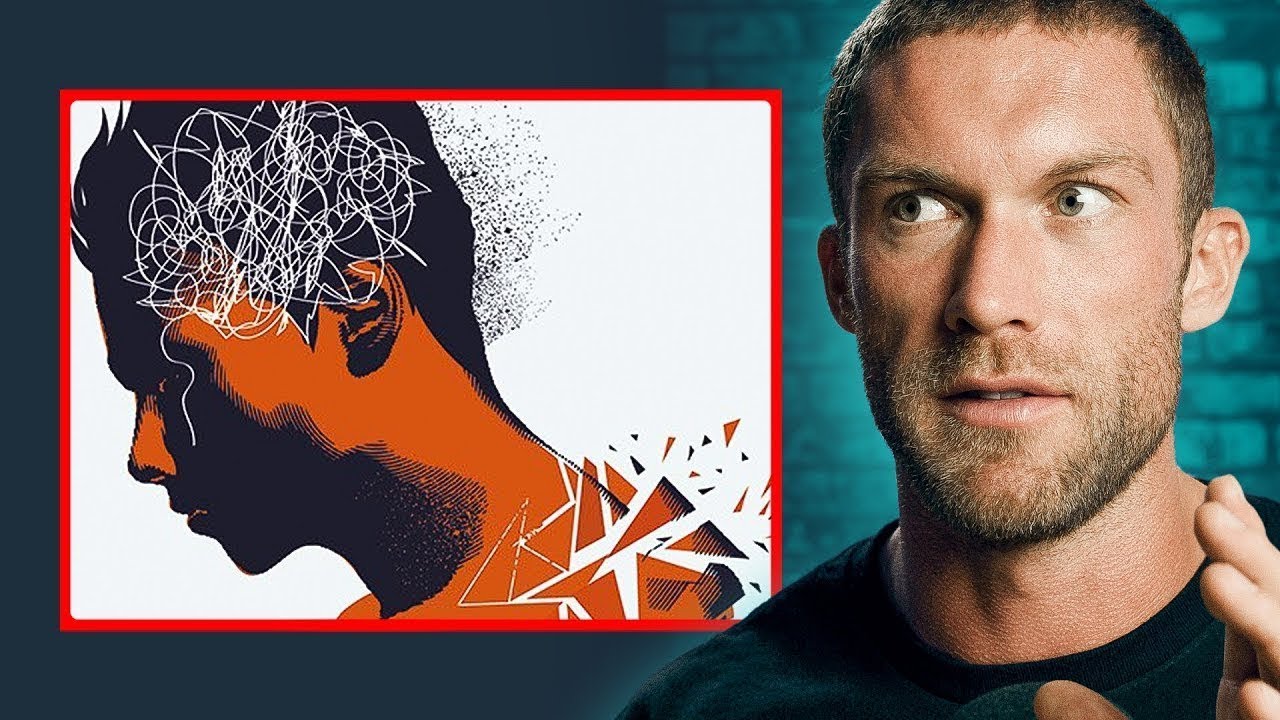
Video summary
Richard Reeves, a prominent author and researcher known for his book *The Boys & Men*, returns to discuss the critical issue of societal failure toward men in modern America. He highlights that while society often views women as victims needing protection, young men are frequently perceived not as people with problems but as "the problem" themselves. This perspective is starkly illustrated by rising suicide rates among men under 30, which have increased by 40% since 2010 and remain four times higher than those of young women; male suicides account for deaths comparable to breast cancer cases annually. Furthermore, data indicates that men are less likely to attend college or own homes compared to their female counterparts, face greater loneliness, and suffer disproportionately from addiction, with low-income white men in particular falling behind their fathers on nearly every economic and social metric. The transcript argues that the Democratic Party and progressive institutions have developed a massive blind spot regarding these male issues, effectively neglecting them under the Biden Administration. Despite initiatives to promote women in STEM fields and construction sectors, there has been no corresponding effort to encourage men into teaching or address mental health crises specific to boys. The Centers for Disease Control and Prevention (CDC) is criticized for refusing to acknowledge gender disparities in suicide rates, while the White House Gender Policy Council has failed to tackle single issues facing primarily male populations. This neglect suggests that young men are not turning against gender equality but have instead drifted away from the political left because it has turned its back on them, framing these problems as a result of elite policy failure rather than voter chauvinism or reactionary movements. A significant portion of the discussion addresses the flawed zero-sum mindset prevalent in current social justice conversations regarding men and women. The speaker observes that activists often assume any attention given to male struggles detracts from female suffering, creating an adversarial dynamic where empathy is treated as a finite resource rather than something expandable. This perspective leads to bizarre attempts to balance opposing statistics—such as comparing the number of false allegations against sexual assault rates or contrasting female college graduation numbers with male CEO positions—which ultimately equates one group's privilege directly with another's oppression. The speaker asserts that suffering cannot be mathematically equated between groups, and viewing these challenges through a lens of competing victimhood prevents genuine understanding and pushes both genders further apart rather than fostering solidarity. The dialogue also explores the psychological dynamics when advocacy efforts are met with rejection or dismissal. When campaigners feel their points are not only unheard but actively pushed back against, there is an intense temptation to become more aggressive or "fiery" in their rhetoric, a dynamic that can lead to polarizing behavior on platforms like Twitter. The speaker acknowledges this gravitational pull toward extremism when facing opposition but notes the importance of maintaining nuance without resorting to excessive caveats about women's issues before addressing men's troubles. Such hedging is described as boring and narcissistic, serving only to reinforce divisions rather than building a cohesive narrative that accepts difficulties faced by all genders simultaneously. Ultimately, the conversation concludes with an acknowledgment that while much progress has been made in navigating these complex discussions this year, significant work remains to be done. The goal is to dismantle the assumption that caring for struggling men requires diminishing attention from women or other minority groups, thereby correcting a broken framework where empathy becomes competitive rather than collective. By rejecting the idea that male issues are inherently misogynistic and recognizing them as distinct challenges requiring specific policy interventions—such as an office on men's health—the dialogue aims to restore balance to social justice efforts without erasing the valid struggles faced by women regarding sexual assault or other forms of discrimination.
Read the full video transcript
another lesson one of my favorite ones
this was from Richard Reeves great
author wrote the book of boys and men
and came back on the show for the second
time this year we end it going for three
hours uh he he's just such an
interesting researcher when it comes to
sort of the masculinity question men's
roles boys roles in the modern world
said men aren't seen as having problems
but as being the problem suicide rates
among men under 30 have risen by 40%
since 2010 and are four times higher
than among young women male suicide
accounts for as many deaths as breast
cancer male suicide accounts for as many
deaths as breast cancer men are less
likely than women to go to college or
buy a home they are more likely to be
lonely and are more vulnerable to
addiction young white men from lower
income homes are worse off than their
fathers on almost every economic and
social indicator there is a bigger
gender gap on campuses today than in
1972 when the government passed Title 9
to prevent sex-based discrimination in
education but today the disparities in
college enrollment and performance are
the other way round there is no strong
evidence that young men are turning
against gender equality but they have
turned away from the left because the
left has turned away from them the
problems of young men are not the
Confections of reactionaries this is the
story of elite neglect not voter
chauvinism the Democrats have failed to
address these issues under the Biden
Administration the Centers for Disease
Control and prevention has refused to
acknowledge the gender disparity in
suicide rates the White House gender
policy Council has not tackled a single
issue facing primarily boys and men
there have been initiatives to promote
women in stem and construction but
nothing about encouraging men into
teaching on Mental Health there are
women's health research initiatives but
no office on men's health the Democrats
and Progressive institutions have a
massive blind spot when it comes to male
issues and this was exposed in the
election at worst men are seen as not
having problems but as being the
problem remembering that Richard is the
most
gentle
researched sort of Lefty policy wonk
type guy DC type person that you could
have saying this and that sounds like a
[ __ ] Hammer blow that will have been
dampened down an awful lot and the
language will have been dialed back it's
not good uh and you know a lot of the
conversations that I've had this year
have been around trying to effectively
navigate the conversation to do with men
and boys um how much do we need to
caveat how much do we need
to say I'm it's not to say that women
don't have problems but we now that I've
gone through this weird laundry list of
like a [ __ ] land acknowledgement for
for sex and gender uh I can now talk
about the problems that I'm here to face
that doesn't happen in the reverse if
someone's talking about the problems
faced by girls and
women that doesn't occur well we must
remember that men kill themselves at
five times the rate that women do and if
men had killed themselves at the rate
that women had we would have half a
million more men from 1999 to 2020 that
doesn't happen um but I'd had guess
another Insight was I'd had a bunch of
conversations about the challenges that
men and women face in the modern world
and I realized
how rarely prale and pro- female
activists are prepared to genuinely
accept that the other sex May encounter
difficulties without measuring it
against their own suffering there is an
assumption that any attention paid
toward men takes it away from women or
some other minority group who is more
deserving and vice versa it's a a zero
some view of empathy and obviously this
is not how empathy Works rather it
indicates just how broken the
conversation around men and women is
that care for people who are struggling
in life is seen as a [ __ ] finite
resource women can point to how men
don't need to fear sexual assault as
much and men can point to how women
don't need to fear me too allegations
and but men hold more CEO positions but
women are graduating college at higher
rates but there's more male homelessness
but there's more women in sex work it's
like both sides are trying to balance
some bizarre simultaneous social justice
equation that how many false allegations
are worth a sexual assault how many
female graduates are worth a male CEO
the entire conversation is basically
saying my privilege is more oppressed
than your privilege it's like victimhood
masquerading as arithm IC and it's
entirely based on a flawed premise
because the complexity of the truth is
inconvenient for both sides there is no
equating the suffering of one group to
another and
perceiving the discussion in this way
causes everyone to enter the framing
correctly as adversaries accepting the
challenges of one group does not disable
attention from being paid to another and
similarly it shouldn't be the case that
discussion about men's troubles should
first be hedged with [ __ ] gring
caveats about how we know that women
face a myriad of problems to lest the
position be seen as myopic misogyny
zeros empathy is one of the most boring
and narcissistic things that keeps on
happening and it's done over and over
again and it achieves nothing except for
pushing both groups apart from each
other and I I can't do much for women
but I've got some I think pretty
reasonable and influential friends that
could prel a better conversation around
men and working quite hard to make that
happen in whatever way I can um but it's
an uphill battle in in many ways um
Richard taught me this really
interesting thing about how when people
don't listen to your point if you've
been sort of you know campaigning for
something for a while you turn up the
volume you and the intensity ever more
uh especially if they say no it's not or
they um you don't feel like it's being
welcomed not only not being heard but is
actively being pushed back and I can
definitely see
that Temptation that Dynamic going on
that gravitational pull uh for you to
become ever more a fire brand when
talking about this sort of stuff and uh
there's definitely days when I feel a
bit more fiery than others those are the
days I try and stay off Twitter but um I
think I'm happy with the job that's been
done this year I think the conversations
I've had have been really great and I
hope that they've helped a lot um but
still more to be done thank you very
much for tuning in if you enjoyed that
clip the full length episode is
available right here if you hurry up and
press
it come on