Video summary
The video explores the complex intersection of property law and outer space, focusing on individuals attempting to claim ownership over celestial bodies like the Sun, Moon, Mars, and even Pluto. The speaker introduces two primary figures who have attempted these claims: Maria Anelaes Duran L Del Soul, who famously purchased a deed for the entire Sun from Dennis Hope's Lunar Embassy after realizing that the Outer Space Treaty of 1967 only restricts nations from claiming sovereignty over celestial bodies, not private individuals. Similarly, Dennis Hope has sold plots on the Moon and other planets since the early 1980s based on the argument that because no country owns space, anyone can buy a piece of it. These sellers rely heavily on the distinction between "national appropriation," which is forbidden by international treaty, and individual ownership, arguing that their deeds are valid under common law principles where possession or purchase grants rights to property.
However, the speaker argues that these claims lack legal substance because they ignore fundamental requirements for establishing property rights in a vacuum of existing laws. The core principle discussed is "possession," which dictates that one must physically occupy and defend an area to claim ownership; pointing at something from Earth does not constitute possession. Furthermore, the video explains that even if private individuals could theoretically own space resources under domestic US law, such as through the 2015 Commercial Space Launch Competitiveness Act signed by Ted Cruz, this creates a significant diplomatic inconsistency with international obligations. The speaker draws parallels to the Guano Islands Act of 1856, where vague language allowed citizens to claim remote islands for resource extraction, eventually leading to US jurisdiction over territories worldwide despite constitutional ambiguities regarding new territory acquisition. This historical precedent suggests that while private claims might be legally attempted domestically, they do not necessarily grant recognized international rights or immunity from trespassing accusations by others who arrive first.
The transcript concludes with a nuanced assessment of the current legal landscape for asteroid mining and space resource utilization. While the speaker acknowledges that technology is advancing rapidly to make asteroid mining feasible and economically viable, emphasizing that we should develop these capabilities regardless of immediate regulatory clarity, they caution against assuming existing laws provide a secure title. The US statute attempting to grant citizens rights to possess extraterrestrial resources does not resolve whether this violates international treaties or how other nations will react to such unilateral claims. Ultimately, the video suggests that while buying deeds for celestial bodies is largely symbolic and legally unenforceable in an international context due to the Outer Space Treaty's prohibition on national appropriation of space itself, future developments may require a renegotiation of these global agreements before private entities can truly stake legitimate claims without risking diplomatic conflict or legal challenges.
Read the full video transcript
okay so the topic uh I'm going to
discuss is actually a little bit more
specific than that one uh it's property
law in space I want to talk about kind
of two different groups of people who
sort of have the uh the opposite problem
okay hold the mic closer to your
mouth thank you feel free to shout out
tips like that uh especially if you've
been drinking as much as she has uh okay
um okay let me start uh let me start
with this one um show of hands uh who
used the sun today
anybody you in the back you didn't okay
that's fine some people won't raise
their hands for anything uh okay if you
use the sun uh let me guess you probably
didn't pay anything for it right if you
didn't this is who you have to thank for
that okay and this is uh Maria aneles
Duran L Del Soul the woman who owns the
son now you're probably
asking how does she get to own the son
well here's here's how she did it all
right she heard that there was a thing
called the outer space
treaty uh which governs what it says and
we'll talk more about this it says that
Nations can't own the moon or anything
uh in space but she also heard that it
did not apply to individuals it's a
agreement between
countries uh so this gave her an
idea and she wrote up a deed and you can
that's what she's got there and she went
into town and she had it notorized and
that's why she owns the
sun now you're probably pissed that you
didn't think of it first but it's too
late she already has the deed now she
got the idea from this guy uh who name
is Dennis hope and for about 30 years
he's run a thing called the lunar
Embassy and you can see him here with a
map of his
moon and the red areas are uh where he
sold plots of this he sells plots to
people um the uh the value varies it's
usually about 25 bucks uh and if you do
that you will get an actual lunar deed
like this this is the kind you get in uh
in
but it says that you have lawfully
purchased uh a 1 acre or 5 acre plot
depending on how much you paid uh and
then it's all legal and you've got this
document to prove it and he's been doing
this for since about
1980 uh and there are some estimates
that he's probably made several million
dollars from from doing it uh now it's
maybe he's joking maybe he's not joking
but he's made a lot of money money from
doing it anyway his his legal argument
is exactly the same as uh Mrs Don's the
outer space treaty doesn't apply to
people uh and so what he did actually is
write up a claim and he sent a letter to
the United Nations to tell him that he
was claiming the
moon and when he didn't hear
[Applause]
back and here you can go there right now
and as you can see he's branched out
quite a bit um not only can you buy the
moon you can get land on Mars
Mercury um is it IO or EO EO thank you
on EO if you want to I have no idea but
you could buy a you can buy plots on
this Venus um so he branched out from
the Moon to uh to other planets all in
the same legal Theory and this is my
favorite if you got 250 Grand he'll sell
you Pluto the whole
thing and this is uh I like this a lot
he's got one in
[Applause]
stock act
now okay now he's not the only guy to do
this either specifically with uh with
the moon uh here's this is just one
other example this is the an outfit
called the lunar registry uh and you may
not be able to read that but you can see
all of these groups have they've got a
page somewhere on their website that is
devoted to whether this is legal or not
and here what they're you all what their
argument here is they're talking about
the outer space Treaty of 1967 and they
say they give the full title there um
they say it's more commonly known as the
1967 Moon treaty and then down at the
bottom they say later on the UN expanded
on this with its Moon agreement that all
un States uh uh have adopted and then it
was ratified into law in the 1980s and
that that's the legal framework today
none of that is
true uh the 19 there is a moon agreement
but almost nobody has signed it uh it's
certainly not binding international law
there is a
1967 uh outer space
treaty and this was uh entered into
obviously a couple years before uh we
landed on the moon it was not clear at
the time who was going to be first and
so both the Soviet Union and the US
that's I'm paraphrasing a little bit
here but this is basically what it says
so the Articles uh uh both the the major
space Powers had an interest in um
setting out some rules so that whoever
was first wouldn't claim the whole thing
and so this is these are just I'll come
back to a couple of these but this is
sort of a summary of what it says uh
space For All Mankind Nations uh cannot
appropriate things for
themselves uh No Stealing spaceships is
a paraphrase of the principle that if
you launch something into space if a
country launches something into space um
you have jurisdiction over what happens
in that that spaceship that's so um and
you're supposed to return spaceships to
others so this is this is basically what
it says and it lays out some general
ground rules
okay and obviously the countries in red
still matter they just don't matter
really to to space travel so almost all
countries uh have signed the outer space
treaty there is a moon agreement that
virtually nobody has signed so I'm not
going to talk about that okay so there
are uh there is this treaty out there
that applies to that was agreed to
between the space powers and almost
every other country uh in the world has
signed it
and it has those Provisions about uh
sort of hands-off celestial bodies right
so here's the thought process of Mr
donon and Dennis hope and everybody else
who is selling Deeds to outer space
property the outer space treaty does not
apply to me
debatable premise and therefore
conclusion I can point at things in the
sky and say that I own them
uh that I don't want to get I I
deliberately I'm trying not to get to
Technical and legal terms here but we do
have a term for that uh that we use in
the
profession it's complete
there a term that you will want
to uh it's very comes really comes in
handy uh these days so you'll want to
remember it tell them a lawyer I told
you to use it okay so um set aside this
treaty let's say it doesn't apply to
them you don't just get to Point at
things and say that you own them okay
how do you get a property right in
something does anybody here own
something anybody you what do you
own you what a house you own a house
how'd you get it you bought
it how'd they get
it you have no idea are you sure you own
it
okay so you could buy something what's
another way you could get a property
right in something
you could inherit it yeah that's true
anything
else you could adverse possess it uh
there aren't supposed to be other
lawyers here tonight but okay anything
else you could lie is that you could lie
you could buy it right
okay okay there's there's several
different ways um you came up with some
of them I like uh I just happened to
find this this picture today I like this
a lot because it's it's true either way
right okay so you might own something
because uh the thing is you this is uh
uh this is sort of we're going back to
John Lock sort of original principles
here most of us would agree that we own
our own bodies uh you know some people
don't agree with that but uh that's
generally
generally agreed or you made it and this
is part of John Lock's theory of of
Labor um basically saying you know we
agree we own ourselves we own our labor
if you mix your labor with something and
he's typically thinking about uh
agriculture you own not just what you
create but also the the land because
you've mixed your labor with it okay
doesn't really work for a fisherman but
that's the theory uh you bought
it uh nobody nobody yelled this one out
I'm glad but you killed the previous
owner and took it the ride of Conquest
is well established unfortunately in
history there's actually a Supreme Court
decision from uh the 1820s I think that
had to do with um with this basically it
was avoided the question as you can
expect but that's one way to get it uh
you found it right at Discovery but the
most important one is uh you're on it
you possess it you possess it or uh you
occupy it so uh you know think about it
this way and again we're trying to go
back to First principles here if there
are there are no laws if this treaty or
whatever doesn't apply where does it
come from so let's say you're floating
around in the Pacific and you come
across this
island uh it looks nice you decide you'd
like to live there so you uh you move
you you do whatever you do um you live
on it for a while one day you go
swimming okay uh then you come back and
there's a somebody on your
Island so now maybe you can agree to
share it more likely knowing people he's
going to say don't even don't even get
out of the water because uh no
trespassing and you're going to say what
I was here first I was here first that's
what you say and that's really it's a
very fundamental principle of where
property rights come from you might have
heard uh prop possession is 9/10 of the
law it's just very fundamental that you
were there first and you're there at the
time or you can prove you were there
first uh you have a property right that
other people will recognize and uh I
don't know if uh in the sources that
they asked us to put together for the
these things I I put in an article on
evolutionary theory
and um and the origin of property rights
and it's uh I'm oversimplifying it but
basically it says that the same kind of
thing happens in nature that biologists
will say that um the rule in nature is
the resident if there's a territorial
dispute the resident always
wins and uh evolutionary theorists have
worked this out and basically it comes
down to uh um if you have say you have a
population
that's uh you've got Hawks that are very
aggressive about uh seeking out
territory and you've got doves that
don't that don't want to fight at all
you don't end up with a population
that's all hawks you end up with a kind
of hybrid population in between where
animals are uh they tend to defend or
protect what they have but they tend to
then respect what their neighbors have
and it has to do with the
you know the risk of being injured in a
fight uh not being worth the gains as
long as there's uh relatively speaking
there's enough to go around so this sort
of
territorial uh property rights issue is
you even see in the animal kingdom and
that article is interesting if you if
you were interested in the topic because
it talks about how this might have
happened with you know uh with early
humans or in uh a situation where there
no no laws the first people to a a
location so it may be that fundamental
just to say I was here first okay which
is why it's so dumb to claim that you
could own the sun right you can't I now
hopefully somebody's going to say you
could do you could go at night but you
can't go to the
sun I thought that was too obvious a
joke to tell um you can't go to the sun
you can't fence off pieces of it you
can't exclude other people from it it
just makes no sense um for Lan D soul to
to say that she owns the son now she
actually um she is modeling her thing
here after Dennis hope in the lunar
Embassy and she actually uh was trying
to
sell plots of land on the
sun on
eBay uh this is just last year eBay
kicked her off because they said um they
have a policy against selling intangible
rights I guess so they kicked her off
last I heard she was challenging that in
a Spanish court so she's really going to
the mat on this stuff uh she's a
complete lunatic it just makes no sense
here so it makes a but it it does make
some sense in the context
of
uh asteroid mining or traveling to other
places because you could and assuming
you could overcome the technical
problems you could actually go there and
sort of plant your flag you can occupy
it you can uh do things with it stake
your claim and so it's not uh it's not
crazy in this sense now they're a long
way from doing it but it's not it's not
crazy they actually have um kind of the
opposite problem it's because it's clear
that if they could get to this property
stake their claim they they might have a
claim that other people would recognize
just based on kind of common law
principles the issue that they've got
though is uh concerns about whether the
outer space treaty in fact applies to
them so that's uh that's what the rest
of this is about kind of the opposite
problem uh I apologize for the legal
text here but we have to do uh some of
it um this is the first article of the
outer space treaty I was talking about
before and you can see it says uh the
exploration and use of outer space
including the moon and other celestial
bodies that's how it's
defined uh shall be for
everybody um free for explor exploration
and use by all states so it's pretty
General uh general statement but that's
the very first article the second one is
the most important one it says outer
space including the moon and other
celestial bodies they say that every
single time I've spared you that that um
is not subject to National
appropriation by sovereignty by using it
by occupation any of the means that we
talked about um off
limits and then there is an article
further down that talks about how States
uh I mean it recognizes the fact that
there will be National activities by um
governments or by non-governmental
entities and that states have
responsibility for what their Nationals
do uh and states have to ensure that
National activities are carried out in
Conformity with the treaty
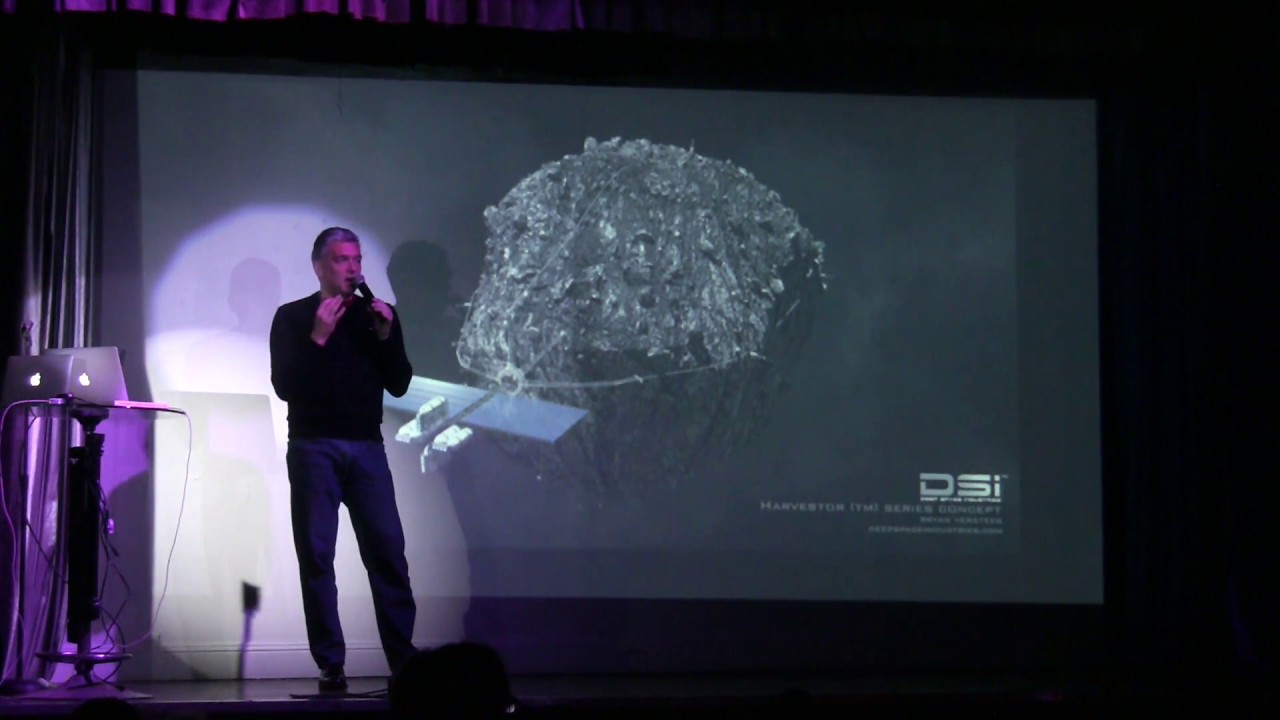
okay so if you work for Deepa uh deep
space injury deep space injuries sorry
I'm a tour lawyer sometimes uh Deep
Space Industries or planetary resources
or um I think there's one other group
that is actually investing money into
developing um space
Technologies uh and you are one of their
lawyers here are some of the arguments
that you make uh
one uh I'm talking about asteroids now
uh these aren't celestial bodies
remember outer space including the moon
and other celestial bodies um so well
what well I'll be honest I think this is
kind of a dumb argument right uh what
are celestial bodies well the Moon is
obviously um other moons
planets so probably Suns not that it
matters but so why would asteroids not
be um the point is the the the treaty
was trying to define the uses of outer
space but nobody gives a about
outer space they care about the stuff in
it right and asteroids are in it so I
don't think that this argument Works uh
now a little bit better argument is
screw the tree my country said I can do
this all right um that's possibility
come back to that they also say uh this
isn't appropriation remember the treaty
talks about no uh no National
appropriation of these bodies and
they'll say well I'm not appropriating
anything I just want to get the good
stuff out of it I just want to dig into
it to me this is sort of like saying
like you wake up in the middle of the
night and I'm out digging in your yard
you know and uh and I say don't worry
I'm not threatening your property I'm
just doing some digging I mean that's
probably not going to make you feel too
comfortable and there also you also get
to the point of well what if you've
you've dug out the whole thing and
you've hollowed it out you've basically
appropriated it so that's a little dicey
and then they'll also say all right well
it's not National appropriation which is
basically the same argument that Dennis
hope is making I'm not a nation um and
so the treaty doesn't apply to
me all right in the topic of US law um
there's really not very much of this
here but the United States did pass a
statute um at the end of
2015 sponsored by of all people Ted
Cruz
um the US commercial space launch
competitiveness Act and the first part
of this totally boring and has to do
with like insurance and things like that
but at the very end they stuck in a
provision that it used to be called uh
the asteroids act uh you know they like
to have these cool acronyms now it's got
a crappy acronym but they they stuck it
in there at the end and uh this is
basically what it
says a United States citizen shall be
entitled to any asteroid resource you
can possess it Own It transport it use
it do whatever you want with
it uh have fun as long as it's obtained
in accordance with applicable law
including the international obligations
of the United
States so all right wait a minute if the
United States can't appropriate it for
itself how can it tell its citizens to
go and do
that it doesn't seem to be consistent
with the international obligations of
the United States how would we feel if
uh you know Russia or China were doing
that probably uh probably not great
maybe we're fine with Russia doing it
now but all right um and they also
included this isn't in the statute but
they put this in the ACT uh Congress
likes to do this um they'll stick in
this stuff about what they understand
the law to mean uh it is a sense of
Congress that by passing this the United
States is not asserting sovereignty or
Sovereign or exclusive rights over any
Celestial body well okay yeah I'm not
sure if they're very clear on this but
you can't you either either violating
the law or you're not you don't get
to violate it and then say you're not
violating it even if you're
Congress um so so this is all it's very
up in the air what what does this mean
um and this was sponsored by um in part
by the industries because one of the
things that they want is certainty in
this area because they want people to
invest right um
well this just doesn't do that passing a
law that says um go get asteroids and
you know we'll worry about it later
doesn't really um settle the question
but the US here is disclaiming any
intent to take over uh things in outer
space okay so well will people will
other countries be comfortable with
that I don't know and the example uh
that I want to use is
a strange uh old law called the guano
Islands Act of
1856 and this is uh laws still on the
books today
actually uh it was passed at a time when
there was there was no artificial
fertilizer um so the best source of
fertilizer at the time was bird
shed guano right uh seabirds have lived
on these islands for like a mill
years and wow the stuff they left behind
is great fertilizer so at the time the
United States wanted to encourage people
to go and mine this vital resource so
they passed a law saying if you United
States citizen find one of these islands
um go for it and uh as I don't know if
you can read down here it says if you
find this and you exploit it those
islands uh shall be considered as
appertaining to the United
States uh what does that mean no one
knows no one knew at the time no one
knows now appertain can we claim it
because here's something something is
interesting to remember um the uh the
Constitution talks about States and it
talks about territories which we had at
the time okay um there is no no
provision in the Constitution for
getting new territories let alone for
claiming these islands that are out
there there's just no authorization in
the uh in the Constitution for it the
the Louisiana Purchase which you
probably heard of totally
illegal uh Jefferson in fact President
Jefferson um wrote a uh he drafted a
constitutional amendment that he was
going to propose that would have given
the the country the power to uh to do
this kind of thing to expand that way
and then he thought about it and he
decided yeah maybe we shouldn't uh maybe
we shouldn't offer that and he just kind
of stuck it in a drawer and did it
anyway so that's that's how the
Louisiana Purchase happened but um so
appertaining to the United States nobody
knows what it means
um oh yeah I found this guano guano
guano it was a big deal at the time I
just thought that was uh that was funny
uh and this is the show still on the
books today the guano Islands act there
was a case involving guano Island as
recently as
1997 um and uh the issues surrounding
jurisdiction over these
islands um and we still claim treat we
still claim territories around the world
um that we originally claimed under this
guano Islands Act of all things because
what happens when uh you say your
citizens can go and exploit territories
and things like that um things happen uh
people uh you know crimes are committed
there was a murder committed on one of
these islands in the Caribbean and that
the issue of jurisdiction over that
Island went up to the US Supreme
Court um and that hard as it may be be
to believe there's a series of cases
about that that are the whole legal
basis for why the United States has
these um basically this kind of semi
Empire around the world uh all comes
from this guano Islands act so the point
is that um the the US has kind of done
this again right we've passed this sort
of um odd statute that's sort of vague
we sort of deputize citizens to go out
and do this and um but other countries
probably are not going to be too uh uh
too comforted by the the statements in
the law saying that we we're not
claiming these things because um oh also
in the law authorizes the uh the
president to use Armed Forces to defend
these things if necessary you know it's
not necessary now but uh but it was then
so uh this is just an example of how
those kind of unusual uh vague uh
statements in the law can turn into
something that really uh that really
matters now uh don't get me wrong I
think we should uh I think we should get
involved in Asteroid mining I think we
should learn to uh we should develop the
technology to go and and uh mine these
things and go and divert them if we need
to okay it's uh it's important to do
that uh I just think it's um it's not
entirely clear uh that there's we have a
legal right to do this now so um to uh
sum
up here's what we've learned using the
sun is still free it's good to know she
was planning to charge
corporations uh but she said there would
be an exception for individual people so
you're you guys are covered uh if you
buy a moon or a planet from somebody all
you're getting is a piece of paper
Dennis Dennis hope and Mr donon do not
have any rights that they could sell
you uh the US might be violating the
outer space treaty we need a new treaty
we can withdraw from it if we want to
but uh we should renegotiate it uh go
get an asteroid if you can do it I don't
want to discourage you from that just be
sure that you can defend it if somebody
else also wants it
okay all right thanks this is my book my
firm uh my blog is lingthe bar. net uh
please check it out and um I did one
once represent a guy who owned a
moonrock so I have at least that much
experience in the area okay thanks very
much
[Applause]