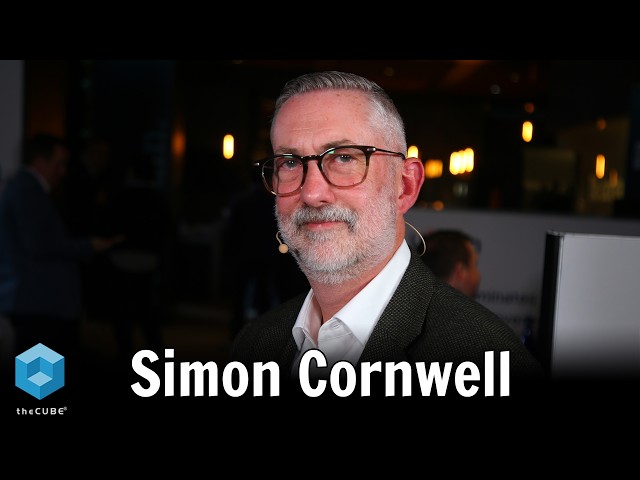
Video summary
At Dreamforce 2026, the conversation surrounding enterprise AI has shifted dramatically from the fear of legacy systems becoming obsolete to a strategic embrace of Salesforce as the central system of record while work moves fluidly across various platforms like Slack and Teams. Simon Cornwell, CIO at Civica, highlights that this evolution marks a move away from rigid, proprietary product shapes toward a more flexible ecosystem where data remains unified but execution happens wherever it is most effective. This transformation is particularly critical for organizations like Civica, which serves over 100 million citizens globally by managing essential services such as parking permits, school lunch payments, and social care arrangements. As the company navigates its own digital transformation to consolidate fragmented data from organic growth and acquisitions, the focus has turned to creating a single source of truth that allows customer data to flow seamlessly from sales through to delivery, thereby maximizing the potential for AI-driven insights.
The integration of artificial intelligence into this landscape is expected to be both incremental and groundbreaking, fundamentally altering how organizations approach time-to-value and revenue recognition. A key theme emerging from the discussions is the shift from probabilistic AI models to deterministic ones, a change driven by the paramount need for trust in high-stakes environments like the public sector. Cornwell emphasizes that trust is no longer just a buzzword but a multi-dimensional requirement encompassing data sovereignty, regulatory compliance, and the ability to explain AI decisions. In sectors dealing with sensitive citizen data, organizations cannot simply adopt models from any country; they must ensure data residency and security standards are met. This necessity for "sovereign AI" means that the architecture of AI solutions is becoming as important as the capabilities themselves, requiring a careful balance between innovation and strict governance to prevent unintended consequences or data breaches.
Ultimately, the future of enterprise AI relies on a symbiotic relationship between human judgment and digital agents, where technology acts as an augment rather than a replacement for human workforce. The industry is currently grappling with the pace of technological advancement versus the need for regulation and safety, leading to a consensus that consumers must take responsibility for how they deploy these tools. Civica's approach involves rigorous vetting of every new AI tool based on data provenance, processing locations, and predictability of outcomes before adoption. This responsible AI mantra suggests that while technology will evolve rapidly, the currency of innovation moving forward is trust. As organizations look to compound value over time, they must ensure that their AI systems provide the certainty needed to make consequential decisions, proving that the right mix of human oversight and machine efficiency will drive economic growth without compromising safety or ethical standards.
Read the full video transcript
Welcome back to the cub's continuing
coverage of Dreamforce 2026 where we're
focused on the professional services
industry which is clearly a leading
indicator of where uh enterprise AI is
heading. I'm Scott Hebner. I'm the
principal analyst at the cube research
for AI. Appreciate you tuning in today.
Today I'm thrilled to be joined by Simon
Cornwell. He's the CIO at Civica.
>> Thanks very much, Scott.
>> Appreciate you being here.
>> Yeah, it's great to be here. Thank you.
>> It's been a great show, hasn't it?
>> Yeah. Yeah. Yeah. Dreamforce is always
an intense like mix of new
announcements. We get to see where the
products are going. We get to meet great
vendors like Satinia. So, yeah, good
show.
>> Yeah. Good weather, too, this time. Uh
>> yeah. Yeah, it's a bit warm. It's a bit
warm. [laughter]
>> Not terrible. And uh we're in a great
venue here with great food. They keep
coming around with the steaks and
lobster, so
>> makes it a great environment. And
actually before we dive into things
here, what what was your thoughts on
Mark Beni off's keynote and where
Salesforce is heading in general?
>> Yeah, I think it's I think it's really
interesting. Two years ago, we were all
talking about the SAS apocalypse and
this is the end of SAS. You know, we
don't need SAS anymore. We're going to
vibe code it in a weekend.
>> Uh I think what the the direction set
out in the keynote is is really clear
that, you know, it SAS in a way is a bit
dead. SAS really now becomes the system
of record. It becomes where we keep our
data uh our workflows our semantics but
actually the place of work where we do
our work could be anywhere it could be
in Slack it could be in teams or claude
and so yeah I think it's very exciting
that they are moving away from uh a
Salesforce shaped product which is only
Salesforce shaped and uh yeah
>> and there's a massive uh corporate
graveyard of companies that resisted the
change and it's because we're
indispensable. Yeah. Yeah. Yeah.
>> Just to say, "Hey, this is I know this
is what we built our business on, but
it's time to change." And and uh yeah, I
thought it was very good and I very
clear. I like the idea of moving from
probabilistic AI increasingly to
deterministic.
>> Yes.
>> And all the stuff they're doing to build
that stack. So, um I I thought it was a
very interesting keynote. Um okay. So
before we like start talking a little
bit about what you see happening in the
industry and talk a little bit about uh
Civica, what you guys do, what your role
as a CIO is.
>> Okay. Yeah. So Civica, Civic's been
around for a few decades now. It is a
company. We provide SAS and services to
predominantly public sector. So local
government, central government around
the world. Uh our products and services
are powering the interactions of
citizens about 100 million citizens
right the way across the world.
typical use cases. It could be anything
from how you buy your parking permit to
how your kids pay for their school
lunch, you know, using a contactless
payment or how you arrange social care
for for a relative. So, it's, you know,
we have a wide range of software that we
deliver out um through our professional
services
>> in customized is it customized or is it
>> Yeah. Yeah.
>> Yes, it's a combination. uh we we have
all of our base products but yeah we we
then do professional services to
actually implement those configure
customize whatever the the the customer
actually needs and then my role as a CIO
so I own all of the technology that's
used internally within Civica so the
corporate space right
>> uh so that includes things like
Salesforce and Satinia uh and our
telefan and our finance system so all of
the internal technology right that comes
under me
>> and so what exactly are you doing with
Salesforce in Certinia there.
>> Yeah. So, um, Civic's actually grown
quite successfully over a number of
years, but it's grown organically and
it's grown through acquisition and and
that's left us with a landscape of
bespoke systems, disconnected data, uh,
fragmentation. So, we're going through a
transformation at the moment. Um, we've
had Salesforce for a number of years. We
are in the process of implementing
Satinia and it creates that center of
gravity for everything relating to the
customer. So all the data is in one
place and you know the data then flows
data that's captured in sales flows
through to delivery and we're working
from a single source of truth rather
than multiple sources of truth.
>> Right. And how do you see AI affecting
all this big change incremental?
>> Massively. Yeah. Yeah. It's going to be
a massive change. Um
uh it's probably a scale isn't it? Some
some of it's going to be very
incremental but others is going to be um
you know for us groundbreaking in some
areas. you know, it's um we're looking
at how we can speed up our time to
delivery, our time to value, time to
revenue recognition. Um we are looking
as well about how do we get the right
mix of agentic workflows and people,
humans,
>> right?
>> Um we're not sure what the answer is
yet, but you know, that's something
we're navigating right now, but it's uh
it's very exciting. All of that only
works if you've got good operational
data, trusted data, trusted source so
that you know you can trust then the
outcome from whatever AI you're using. I
remember last last year, I think it was
last year, Mark Benov did a interview
with Dave Volante at the cube,
>> the same setting here,
>> and he had made the comment that he was
going to be the last leader
>> at Salesforce to manage a human-on
workforce,
>> right? Yeah.
>> And uh so it's interesting your comment
about, you know, there's going to be
digital agents, little co-workers,
>> how that mixes in, you know, my
observation from just tracking the
industries, I think AI will eventually
be a net job growth.
>> Yes. versus it's going to change the
nature of jobs, but people are just
going to get superpowers going to be to
do more and then they're going to want
more people to do the high value things,
right? So,
>> exactly. Exactly. The the the nature of
work may change. Uh it's not going to
just do away with everybody's job
overnight. You know, I don't believe any
of those predictions,
>> right?
>> Or kill everyone like uh over the week.
>> That's a really interesting debate going
on right now around the pace of
development and uh unchecked
development. It's it's an interesting
discussion.
>> Yeah. Yeah, I think that's one of the
interesting things that c certainly we
have to struggle with and it's a lot
more intense than it was in the cloud
transformation or client server or
>> um
>> how much do you slow down how much do
you regulate to slow down the technology
advancement?
>> Yeah.
>> When perhaps other parts of the world
that's not going to happen as much.
>> Yes.
>> Yet you run into risk like uh I don't
know I watched the video from open AI
about how those
>> how those models escaped and hooked up.
>> Yes. What a that was they should make a
movie out of that. It's like a drama.
>> It sure will.
>> Yeah.
>> You know, and um so it's going to be
interesting to see where that all goes.
>> Yeah.
>> And obviously you you're in public
sector a great deal of your business
>> which tend to be a little bit more
regulated
>> Yeah.
>> than everyday commercial industry. So
how do you see AI affecting that world?
I mean you you mentioned the key word
which was trust.
>> Yeah. Trust is is going to be the word
that everybody's going to be hearing
both at Dreamforce and outside for the
next few years. It's it's the most
important word. You know, we have to be
able to trust the uh trust what the AI
is doing, trust the outputs, trust the
decisions that it's either making for us
or the decisions it's suggesting to us.
Um so you know I think um
for our particular line of work where
we're dealing with citizen data you know
absolutely we have to be able to provide
that level of trust to our customers
>> right
>> uh and sometimes the um the work that we
do means that uh we can't use models
which are in a different country and we
have to think about residency and
sovereignty and and those uh different
aspects of compliance. defense and
regulatory uh compliance.
>> Yeah, that's another big uh topic these
days is sovereign AI.
>> Yeah. Yeah.
>> And uh it sort of reminds me of the the
cloud transformation in reverse.
>> Yes.
>> Right. Um but I think that you know your
your data is proprietary, your
information, your policies, your people.
>> Yeah.
>> And there's got to be an element of
sovereign capabilities. And I think
that's what's going to help to and I
think trust is multi-dimensional, right?
is are the explanations you know
accurate enough that you can rely on it
and feel confident about it. Yes.
There's the human trust you know these
things are only going to be as good as
humans trust to right then there's like
are you know all the compliance and
security of data and yeah
>> you know do I trust that ROI is going to
come. So I agree with you that if I was
to summarize um all the conversations I
get to have in this job with leaders
across the industry, the single word I
would use to define the state of
enterprise AI is that word trust.
>> Yeah. Yeah.
>> Heavy multi-dimensional and I imagine in
the environments you're working is even
higher because there's fewer degrees or
you need greater degrees of precision.
>> Yes.
>> Um Yes.
>> to do things in those kind of regulated
environments.
>> Absolutely. Yeah. Absolutely. Yeah.
Yeah. The decisions we make need to be
grounded in trust and in truth. And we
have to be certain uh that the models
that we use uh we understand how they
work. We understand where our data is
going. Uh how it's going to be used. Um
how do we protect it? Because like you
say, our data is proprietary to us. Our
ways of working is proprietary to us.
>> Yeah, definitely a number one topic. Um,
in fact, we're running actually running
a digital summit on AI trust and cyber
resiliency.
>> Um, which I think has been part of the
slow down, you know, with all technology
ramps up and we've slowed down as an
industry a little bit.
>> Yeah.
>> And I think it's because of that word
>> trust because as you get into more
consequential, it's one thing to have us
doing better analysis and all that, but
when you start making consequential
decisions that have, you know,
consequence like real consequence to the
business, whether it's financial,
reputational,
>> Yeah.
>> you know, you got to have that higher
level of trust. So
>> yes. Yeah, definitely. Definitely.
>> Which is I sort of like the um again
what Mark Ben off was saying about going
from probabilistic to more
deterministic.
>> Yeah.
>> That's going to enhance a little bit of
trust.
>> Yeah.
>> Uh Sat Certinia's message here is be
certain.
>> Yes.
>> Be certain about the actions and they're
trying to drive towards greater
certainty.
>> Yeah.
>> Which again is another one of those
little coral areas or pillars off of
trust. So
>> totally. Yeah. And and all of that
relies on that data foundation which is
leads us back to our transformation and
our focus on that center of gravity of
Salesforce and Catinia. you know, we we
>> need data to flow through the process in
a single system. Uh then we can use that
to expose it to AI for agentic AI
>> uh and use that to help develop
insights,
>> right?
>> Actionable insights,
>> right?
>> Yeah.
>> Well, you know, that's one thing I'm
really impressed with in terms of
Satennia doing the
>> they have built the knowledge graphs and
then now they have the ability to
maintain context.
>> Yeah.
>> Right. with the Moon Knox uh acquisition
and now they're using that to create you
know more certainty.
>> Yeah.
>> Or you know confidence in the actions
that you take the system of actions and
how they relate and affect each other.
>> Absolutely.
>> Which ultimately will lead to better
outcomes that
>> that you can then compound the value
over time.
>> So it's it's an interesting um approach
to it which at its core is what you've
been saying is it's trust. It's
addressing the trust iss you head head
on.
>> Yeah. Yeah. Yeah. Yeah. And being
certain um you know that's one thing
which Catinia does give us. It gives us
the ability to go from an estimation uh
at the start of a a deal process through
delivery and understanding that the
estimation is based on you know how we
can actually deliver this uh and if we
improve the accuracy of the estimation
at the front end it improves the success
uh of the the project the implementation
uh reduces time to market improves the
predictability of onboarding customers.
Yeah. So yeah.
>> Yeah. And back to your point your point
earlier about it's it's always going to
be a mix it's going to be a mix of
humans and digital agents
>> one augments the other.
>> Yeah. Exactly. And and when they when
the trust is improved between both of
them
>> Yeah.
>> you're more certain about what you're
doing.
>> Yeah.
>> You know it it it it makes a good
>> you know I the word I was struggling
with and it just came to me is the word
judgment.
>> Yes.
>> Because in the end humans are still
gonna have to make judgments. the more
they can trust the AI agents, more
certain they are that what they're
recommending or what they're uncovering,
the better judgment you're going to
make. The better judgments you make, the
better the outcomes.
>> Yes.
>> And false negatives and going off the
wrong path and stuff like that. So,
>> and then you get things done cheaper,
more efficiently,
>> better price point and you can do more
and you can see how it becomes an
economic catalyst.
>> Yeah. Exactly. Exactly. Yeah.
>> At least in the in the commercial
market. Now what additional constraints
are you seeing just in the p in the
public sector area besides because ROI
doesn't really have the same meaning
does it as in commercial?
>> Well
yes and no. uh so I guess public sector
aren't beholden to uh shareholders but
they are beholden to the public and so
they have to be able to demonstrate that
they have made good judgment themselves
in their purchasing decisions you know
buying our software uh and uh using that
to deliver the services they need to the
citizen you know they have to be able to
justify so it's still uh an interesting
conversation around ROI
>> yeah I think that the other thing I've
been picking up on too is more and more
uh leaders out there saying you
the architecture really matters now.
It's not
>> it's not as simple as going off and
choosing the most capable model.
>> No,
>> it now is becoming an architectural
um game where you have multiple elements
of AI doing thing, not just agents, but
yes,
>> you have models and you have knowledge
graphs and you got Yeah.
>> Yeah. Exactly. Yeah. Now uh probably a
year 18 months ago we were talking about
what's your AI platform whereas now you
know that's not even a question anymore
because we use the right AI for the
right job
>> uh the right circumstanc
and and that will mean using models from
different providers. It'll be using
solutions, AI solutions from different
providers, but then the right solution
for the right uh purpose and the right
bit of our um organization rather than
blanket everybody gets everything.
>> Yeah. And where you put the models and
whether they're in a sovereign
environment and what the data
>> exactly and exactly
>> it becomes much more of an
architectural, you know.
>> Yes. Yeah. And we have to think about
not just uh what are the tools that
we're putting in place but how do we
govern those tools? what is the the
fabric or the framework that we're using
to to manage those and uh ultimately
should we ever need to to stop them from
uh from doing what they're doing.
>> Yeah. So, go back to the the the notion
of the headwinds of, you know, more
regulatory or more constraints or um do
you think we're at a point now that
there's so much new technology out there
that it's not a bad idea to kind of get
get our hands around it, figure out what
you can do with it? Um, again, part of
what I get to do is talk to tons and
tons of people. I get I get a sense that
there's so much new stuff out there
>> that's coming out so quickly that
everyone's just struggling to to to
understand it all.
>> Oh yes.
>> And it seems like there's enough there's
going to be a way before it's saturated
where we have to move on to the next
innovation.
>> Yeah.
>> And it's going to be fascinating to
watch the debate coming up about
>> does the industry slow itself down. Now,
by the way, these guys like, you know,
that are talking about this, the CEOs of
Enthropic and Open AAI and all this, I
mean, they can certainly just slow
things down, right?
>> Yeah. Yeah. Yeah. Um, but
>> yeah, I'm I'm I'm not sure how it's
going to go, you know, perhaps we're
reaching this point and having these
conversations now because the
capabilities
are becoming more credible. Uh, the
ability is there to do more. uh there
are more stories of models that have
escaped their guard rails and there's
been unintended consequences and so it's
good that we have these kinds of
discussions what the the landscape's
going to look like in a few years. Uh I
think that's anybody's guess you know
are we going to see similar to the uh
the cloud uh technology landscape where
you know it it exploded and there were
so many new produ uh providers and then
it kind of consolidated over time and
things dropped out you know we we
focused then on on core capabilities
which are now purely commodity um we
don't even think about them anymore and
I think that's where AI is going to get
eventually. Well, I remember we were all
going to die with the year 2000 and all
the cobalt developers are gone and no
one knows what they built and
>> I worked on the millennials. Remember
that? So, sometimes you have to take
these things, but my sense in
professional services at least is
there's a lot of new technology that
still needs to be
>> tuned. Yep.
>> Proven.
>> Yep.
>> Um, a lot of really good use cases and
outcomes so far. Yeah. But there's
enough to work with now where maybe as
an industry just not so much the
producers of the stuff but the consumers
get that trust level to where before you
start innovating to the next level and
>> yeah yeah I agree and um I think it's
almost beholden on the consumers to take
a lot of the responsibility because how
you use a product what you do with a
product what data you provide that
product that's a choice that you have to
make and there's a there's a education
which needs to happen right the way
across um the world. You know, people
need to understand what AI can do uh and
what happens when they interact with it.
And we have to take responsibility in
our own businesses about what that
means. So, Pacifica, we consider any new
AI tool or product before we introduce
it. We think about as I the the themes I
talked about, where is our data going to
be? Is it going to be used for anything
other than what we say it's going to be
used for? um where's it going to be
processed? How many copies are going to
be stored? You know, all this kind of
stuff. Um what can it do? Uh and how how
can we trust that it's going to deliver
predictable outcomes, whatever that
outcome is we're trying to achieve.
>> Got to as an industry ramp up the
responsible AI mantra, which was very
very prevalent a couple years ago. it
kind of has faded back into you don't
hear as much about it anymore but yeah
>> maybe the more recent uh you know
discussions we'll get that back up
>> yes it's just going to become all our
responsibility you know we we we can't
simply just uh let something happen and
then say well it was the AI that did it
>> right that won't that
>> I'm responsible yeah yeah
>> yeah so last question here before we
have to wrap up it so
when you talk to a CIO
>> right your your cohort out there. What
would be one question that they should
ask every vendor before they really
consider them?
>> Yeah.
>> If they're going to be like a a provider
of some sort of AI capability.
>> Yeah. So, it's it's all all comes back
to this one word, you know, how can they
demonstrate to us trust?
>> How do we know um that they understand
how their product actually works, what
it's doing, um what are the implications
for us? How will it work with everything
else that we've got? because we will
never be a a single vendor enterprise. I
don't think any organization will uh
will be. So yeah, it's it's it's
demonstrating to us with authenticity
and credibility that
uh the the service that they're
providing
>> is what we need and trustworthy.
>> Yeah. Sort of um getting getting in
there with this huge innovation message.
>> Yeah.
>> Needs to be balanced with the trust
message.
>> Yeah. Yeah, it's it's way more than just
saying our product is great.
>> Yeah,
>> our product is the best out there,
right?
>> You know, why is it the best? Why, you
know, why should we trust you with our
>> most valuable assets, our data,
>> especially as it get, you know, it
evolves into more consequential business
decisions is that trust that that is
like current, you know, trust is the
currency of innovation, I think, going
forwards, you know, from this year on
forward. So, everyone's got to double
down on that. So, I think that
>> answers, you know, right on with
everything I've heard. So,
>> all right. Well, it's been great. I
appreciate taking the time to be here.
Enjoy the rest of the show.
>> Thank you.
>> All right. All right. Well, we'll be
back with more here from Dreamforce
2026. Hang in there. We'll be back real
soon. Thanks.