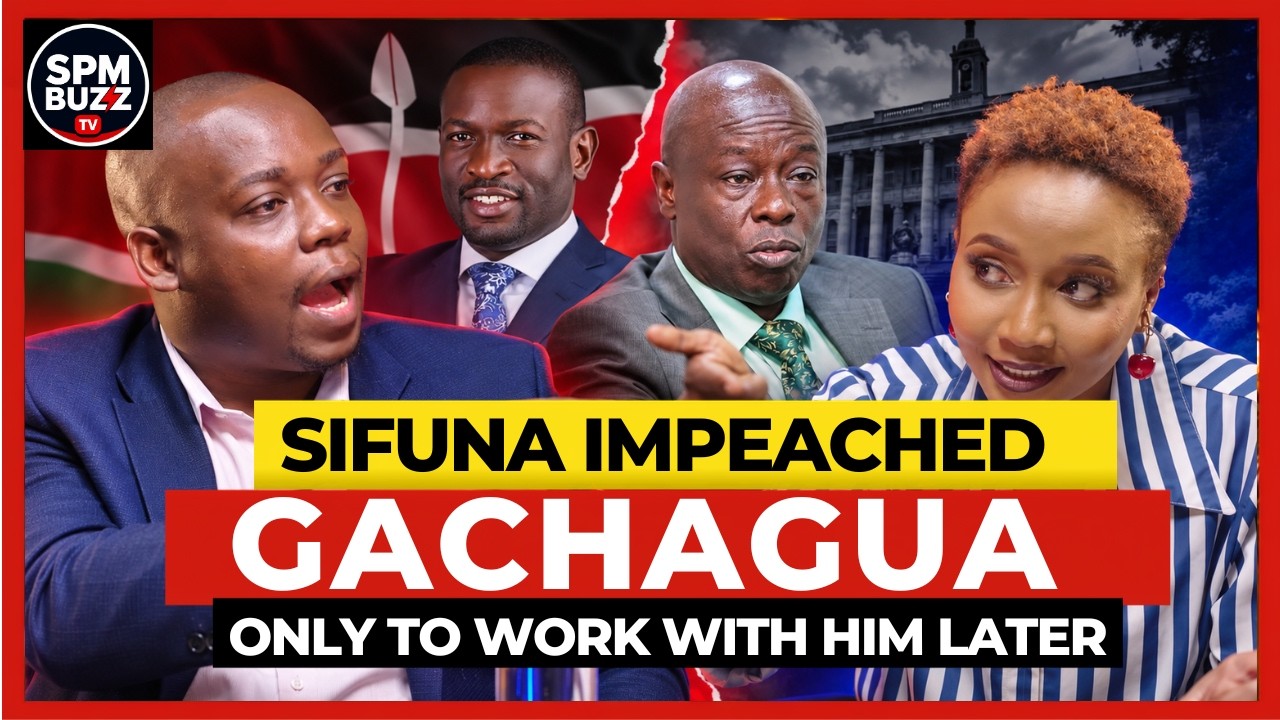
Sifuna Believed Impeaching Gachagua Was a Right move, Only To Work With Him Later | Public Square.
Watch on YouTubeVideo summary
Wesley, a strategist and lawyer for the DCP party, argues that Sifuna's initial decision to impeach Gachagua was a pragmatic political choice necessitated by the realities of the time, even though it eventually required reconciliation. He emphasizes that opposition parties must balance critiquing the government with demonstrating their readiness to govern, focusing on substantive core issues like healthcare, agriculture, education, and security rather than engaging in mere personality attacks. While acknowledging that Gachagua's policies regarding small business costs and healthcare reliability are significant, Wesley notes they are often misunderstood due to communication gaps between rally rhetoric and detailed policy discussions. Furthermore, he clarifies the party's non-tribal nature by highlighting key leadership roles held by individuals from diverse backgrounds, such as Deputy Party Leader Cleopas Malala and Executive Director Hironaga, who manage logistics across various regions.
Regarding election integrity and political stability, Wesley cites the *Minor Kai* case law to assert that votes effectively end at the polling station and do not require a central announcement by the IBC, a stance he believes reduces unnecessary anxiety. He suggests that local agents can mathematically tally results similar to practices in the United States to further de-escalate tension, while also addressing the logistical impossibility of deploying enough police to monitor every constituency against "goons" or rigging attempts. Consequently, he observes that the government often resorts to softer tactics like limiting internet access for opposition supporters rather than relying solely on heavy-handed enforcement. He warns against viewing political opponents as personal enemies, stressing that addressing systemic issues like a failing healthcare system requires unity that transcends the removal of a specific leader.
The discussion also tackles the generational dynamics within Kenyan politics, noting that while older generations possess essential institutional memory, they can sometimes be resistant to change, whereas youth bring fresh energy but must learn from the wealth of knowledge held by millennials and baby boomers. A central theme is that political choices carry consequences, illustrated by Sifuna's journey from believing impeachment was a right move to later working with Gachagua, demonstrating how political realities can shift alliances over time. This evolution underscores the democratic principle that difficult choices must be made and their outcomes accepted, as politicians often change stances based on evolving circumstances rather than sticking rigidly to initial positions.
Finally, the conversation addresses specific economic challenges facing creators, such as double taxation and the need for better negotiation regarding digital economy contributions from Kenyans. The dialogue concludes with advice for young people to give room for growth, listen to others, and recognize that Kenya will only truly change when voters stop viewing politicians merely as a means to secure their next meal. This shift in voter mindset is presented as crucial for fostering a political environment where leaders are judged on their ability to govern effectively and address systemic issues rather than just serving personal or short-term interests.
Read the full video transcript
They fight today, they unite tomorrow.
Is politics really about the people?
Wesley responds.
>> Tuna believed that impeaching Gashagago
was the political choice he needs to
make at that point. Now, I'm not making
excuses for him. However, I understand
the political realities of it. It people
don't care too much about it. Uh in
fact, [clears throat]
in fact, when you think about it, he has
admitted himself that when he impeached
Kashagago, he thought he was doing the
right thing.
>> Yeah. He says
>> but now he he circles back and finds
that he needs to work with the same
gashagua
>> on gashagua. Is it tribalism or simply
how the message is being delivered?
>> As we speak in the construction of DCP,
the topmost positions are occupied other
than the party leader occupied by people
who are not Kikuyu. For example, I'll
talk about the deputy party leader
Cleopas Malala. Cleopas Malala is a
deputy party leader currently running
for governor and heading spearheading
the DCP campaign in Western. Western is
not in central. The executive director
of the party, the who's who that signed
the actual documents that run the party
every day is a man called Hzronaga very
effective and in fact these two people
planned the Kalao by election in terms
of the nominations the logistics
everything
Malala delivers for us a seat in Kisa
East right those are not Kikuy the
chairman of the party is called para
he's he's a messiah from Kaj
>> Wesley says that there is a
constitutional rule that Kenyans need to
know about voting
>> legally, right? People don't understand
>> or haven't understood. There's a there's
a very
um jurispidential setting case called
the minor kai case.
>> Mhm.
>> That case by and large the determination
was the vote ends at the polling
station.
>> So whatever is said at the polling
station is final and sacred.
>> Mhm.
>> That is why agents are told make sure
you're there. Make sure you're
observing. Make sure you're taking
pictures of all that.
>> He did not hold back on at full's
remarks about young Kenyans leading the
nation. His response brutal.
>> Even fools grow old. So in the same way
you hear somebody like at say something
as foolish as you know at young people
should not lead. They should go to the
police and protect the country and all
that. We want to protect our country
economically. I am protecting my country
by being a policy maker. Because you see
the stroke of a pen, Miss B is very
important, right? When you stroke your
pen and you say that all children go to
school for free the same way Kbaki did,
then it becomes something that changes
the lives of so many people. This and
much more on this show.
Hello and welcome to the show. My name
is Miss Betty Kenji and thank you for
tuning in. Now my guest today is a DCP
strategist. He is a lawyer and also a
policy maker. We are going to be
dissecting what is happening in the DCP
camp and a lot more. Welcome Wesley.
>> Thank you so much.
>> Please introduce yourself and say
anything else that I haven't said.
>> Well, thank you for the generous
introduction. My name is Wesley. I am a
lawyer by trade. I am also a consultant
for DCP party especially on the areas of
strategy and policy
>> and uh with a bias to young people. I
mean because I am a young person and
would allow me to allow me to say hi to
your viewers. Um it's a pleasure to be a
guest on your show.
>> Yeah. and um most specifically the pool
of lipia county where I spent yesterday
the most the better part of yesterday
and the day before
>> um just talking to people understanding
what people are thinking and just taking
stock of what the country is saying cuz
that informs a lot of the policy and
strategy work we are doing. So
>> how how is the Lipia um Ebola facility
center going on there? Let me tell you
uh there was a lot of news about it when
it was that whole story was popping.
>> Yeah.
>> But now it has gone quiet but it's not
because it has stopped.
>> It's because now Kenyans I think I think
we we have we suffer from a lot of
overwhelming information. So today wake
up there's this there's that there's
that and the other thing. So Kidogo
people have almost like forgotten about
the Ebola but it's still there.
>> But who are people still coming to be
quarantined there? Really?
>> I wouldn't tell you. I wouldn't tell you
because I am also guilty of the same
thing because as much as I am a county
member from Lyia
information so the last thing I I
remember it was stopped by the court and
the government took the position that it
will still proceed. So
>> after that it has gone and subsided it's
not now making the national news.
>> Yeah.
>> So maybe we wait for the people in the
media to tell us if it's still going on.
>> Mhm.
>> Yeah.
>> All right. So do you think DCP is ready
to govern Kenya or are they better at
opposing?
>> I mean um you see where you start from
as an opposition party
is to yes oppose but people like to
simplify the issues of opposition a lot.
You know they like to say is to be
anti-government.
You have to first of all critique what
is offered before you. um especially if
you either have been part of the of that
former government or at the very least
you understand what the former
government uh promised.
>> Yeah.
>> So there's an element of both, right? So
there's an element of opposing what you
see that is wrong which again you've
seen we've been consistent about doing
that and about ready to govern. I think
it makes it even easier because when you
sit with the top leadership of the
party, they tell you our age, the young
people who have criticized this
government very heavily,
um they did not vote for this government
because one one reason or the other, but
the biggest one being that they were not
voters or they did not have uh the
capacity to vote then. So when we sit
down with the top leadership, they ask
us if these people did not vote for that
government and you saw how much pressure
they put on the government. Imagine if
for some reason they actually trusted us
their vote. What do you think is going
to happen? So it gives you a bit of
clarity of mind for starters. It helps
you understand the task ahead because
it's not just purely about say we are
ready to govern. It's about what's the
job looking like, right?
>> So readiness looks like not repeating
mistakes first.
what's working go back to basics. Um I
like to use a football analogy sometimes
right when the more football glows grows
the more complicated things happen right
there's tactics there's linemen and all
that but sometimes to fix your team you
just have to go back to basics. So the
basics of this country are rooted in
healthcare
agriculture because we still have a
serious huge food crisis education and
also other things like security. So if
you fix those some of those core points
of governance then you start to have a
functional country and you might not
experience um because we acutely aware
of what is going on and how bad the
situation is. You might not experience
an a turn in governance that looks like
magic. It's going to be very progressive
but progressive forward
>> not a decline or a decrease in
progression. Yeah.
>> Well so your party leader G
>> Mhm.
has gone around of course the country
mount Kenya especially that region
especially
>> but in terms of what is going to be done
that hasn't come out clearly yet
>> however the correction and the you know
and the calling out has been there 100%
and you've mentioned that's important
>> when are we going to start hearing what
actually they're going to do to take
care of the healthare the schools
>> specific
in Fact I would like to challenge that
that that question with a thought
process. You see a lot of the time when
you're talking to Kenyans which is
something that as well we've when you're
doing your own research and talking to
people you get to understand the psyche
of people is they want a very clear
result. But the only problem with that
is that they want it in a certain way.
Maybe you have a fixed mindset of what
you want to hear. However, if you really
examine what regago has been saying and
largely even the DC party, there's been
actual
actual talk of what they want to do.
>> For example, let me give you an example.
>> One of the things that is a major pain
point for people right now is one small
business um small businesses, they are
very expensive. People are closing down
their businesses more than we've seen at
an unprecedented rate. Another much
larger cry is the pay slip holders
and around that conversation about and
that is directly tied to microeconomics
right the ability for you to go to a
shop and your a thousand gets you more
than it does today. We've been talking
about hands off on that. For example,
hands off on the pay slip, hands off of
businesses, dignifying the pay slip. He
keeps on talking about that. But largely
you'll hear the critics of regarding
ashagua. I mean people have problems
with him for different reasons including
personality which personality really
doesn't apply to pragmatism. If I am
offering you a solution to make you keep
more money in your pocket, then that
should be to your benefit. You don't
have to like me for that to be real.
Right? If we talk about healthcare for
example, we've talked about um the
challenges of SHA right we've talked
about how for example as a policy
framework um person who's involved in
that kind of thing we I usually simplify
healthcare to be something that should
be simple
>> effective and reliable really boring
things it doesn't have to be uh rasmatas
that this is happening this is what
we've enrolled this much number of
people it shouldn't be that it should be
really reliable that if you get sick
here in Nairobi, uh you can walk into
your level three at your hood, right,
and you can get some services. But if
you're traveling to Kital and along the
way you don't feel good, you can stop
over somewhere and go into a level three
hospital and get it. But when you hear
about SH, you'll hear some people say
it's working. You'll hear another person
tell you, I went to the hospital and
I'll stand back because it's not
working. So you ask yourself, does that
spell reliability? Is that effective? Is
that um boring? and safe because that's
what healthcare should be. you're not
supposed to play aviator with with
people's health because health does not
postpone right so if you look at things
like that we talk about agriculture
right for the region that I come from uh
mount Kenya there's a lot of talk about
coffee reforms um tea reforms now the
western region has picked up sugar
reforms we're talking about that kind of
thing and it's prioritizing the farmer
literally right it's just that
>> if he says it in a rally people don't
pick it as policy they pick it as
critique for William R but we telling
Even when he talks about his tenure as
deputy president, he says he worked a
lot on these kinds of reforms. Right? If
you talk about livestock, one of the
other things that um really bothers
people is the livestock question because
the livestock question also has a
security question. If we talk about
fixing security, talk about putting
professionals in um the national
intelligence service and not uh there
are certain places missing, you don't
put loyalists, right?
>> Put professionals, executors. One of
them is security because if you're
telling me that farmers in isol or in me
yesterday had an interview I had a event
in me and they talked about it security
>> if you talk about how security should be
and we're telling you when we take over
government the first thing we're going
to do is that we're going to put actual
executives and professionals in some
sectors because some sectors actually
just need that right but people don't
hear that because
>> I feel like the reason they don't hear
that is because what he says and what
someone else like Linda I have a problem
with all the political parties that are
going around actually because I feel
like no one has told us what exactly
they're going to do and if you're saying
that your party leader addresses these
things when he goes to party you know to
rallies and the policy makers don't pick
that then do you think
>> that there's need to change how that
information is disseminated so that the
audience that you're targeting
>> can know because again we are not
targeting the president that we are
calling out. We are targeting the people
on ground. Do you think your party
leader rigid should change change rather
how he now disseminates this information
during rallies? I
>> I do appreciate your point um on how the
message comes out. However, I don't
think there's a problem with it. I think
it's a timing issue because right now
you as you rightly put it, people know
very well for exposes you know
>> credible information. uh this is what's
going to happen. It happens, right? It's
a question of timing. Right now, your if
you're in the opposition, and this is a
purely political pragmatic approach, if
you're in the opposition, what you want
to do is galvanize your support first.
And if you [music] want me sorry about
that, if you want me to challenge how
that thought process goes, I want you to
think about how manifestos and agendas
are disseminated in this country. And
I'll give you an example of William R
because I was part of that campaign in
2022. William R for example with the
commitment with
>> Oh, you were the part you part of the
people that are convincing the world.
>> Yes. Regrettably so, [laughter]
but it's a lesson well learned. For
example, one of the things that William
did with his commitment to the young
people, we went to I think it was NA
stadium and
by this time he had gone around the
country with something he used to call
the 47 listening to us
>> and he had collected all those opinions
and came and literally regurgitated
those things to the young people with a
bit of niche and commitment to the young
people. for example, will give you a
youth CS uh not a youth CS a young
person in cabinet to advice on young on
youth matters. For example, the
alternative position for that is the
women the women position that is held by
Harriet Chay now. So as a result of
going around listening he got to
understand and to sort of like give a
solution right or a proposed solution.
If you look at what Shagago is doing
right now when he goes to for example
when he was in Amuadikir right the
people of Amuradikir talked about the
land issues there they talked about um
there's this one problematic piece of
land they have there I can't remember
the name it's just escaped me but he
talked about that when you go to Narok
they have the same problems today they
inased the same thing when you go to
Lipia they tell you that um there's a
word there called Muran Muran is
constantly
Lip is a very unique county cuz that's
my county. We we are not a county that
fights within us but we experience
overspill of violence outside right so
when the other counties around us the
bingo Samburu all that they fight they
come into
>> so when you find when we go there we
collect opinions we you don't just sit
there and we say one time collect
opinions that informs the party leader
on what to say so when he addresses a
security issue it is communicated and
they know he's speaking directly to the
issues about us while I do agree that
the message comes out more like critique
right it's only a matter of timing
because remember DCP as active as we are
haven't even launched our party
what if the day we launch our party is
the day we give you our manifesto right
now politically the practical bit of it
right now is to galvanize support and
that's what everybody is doing you just
saw in mananchi yesterday they went to
galvanize support in meu they were
joined by the former governor Kav
Mangaza when we went to like that's what
we are doing so that by the time you're
coming to address people right you have
something concrete to give them as
opposed to when the reverse is true
because Kenyans are a very interesting
species if you come to them with a
manifesto first they get tired very
easily and I'll give you examples okay
>> so you see now they're not tired now
they still waiting
>> yes they're still waiting and that's
that's political smartness because if
you look at like somebody like Oki Omata
he had a very clear agenda when he
proposed his bid to be
Right. Maraga did the same. But after
some time, Kenyans just literally just
turned the other way.
>> Did they? I feel like it's them that
stopped.
>> Absolutely not. Politicians respond to
what they see.
>> Being a polit Let me tell you,
>> you probably didn't have a strategy.
>> Let me tell you. No, no, no. Miss Gingi,
let me tell you, politics is like
dating.
If you're a man and you're dating,
>> if you're smart, you don't waste your
time talking to a woman who is not
responding to you.
>> Strategy. strategy. Exactly.
>> Meaning they didn't have strategy.
[laughter]
>> If I come to you, Miss Ginger and tell
you, "Minding, I've just met you outside
the door. I think you look good." And
then I tell you, Miss Kinja, I want to
marry you. I've laid out my agenda. So,
but I haven't probed.
>> It's a red flag. Yeah.
>> You see, I haven't probed. Are we are
you in that space? Are you in a place of
a different kind of journey? But I've
just laid it out on the table. And then
you lose interest. You get But first, if
I sit down, I have a conversation with
you. I know what your interests are,
what are our common points, then I have
more chances of success. Right? That's
how the opposition is playing it because
that's how Kenyans are.
>> Makes sense. You've mentioned that you
go in a certain location, you know, the
people on ground pick up, you know, um
feedback, they take to the party leader,
then the party leader comes and
addresses and that's why those people on
ground understand what this person is
talking about
>> and they demand
>> and they demand. So does that mean the
accusations of Regi is a is a tribal
leader?
>> True.
>> I think that's that's a question of who
you ask because if you ask people in
government, they will absolutely say
yes. But if you look at even his history
when he was in
>> as per what he's doing, let's let me
give you context because that's a very
short piece of content. He talks about
even the people he employed in his
personal stuff. the people and you know
if you have if you're in this space you
know having a P having a driver having a
security officer those are really
personal roles you don't just give to
anybody a lot of them are not even his
tribe right but let's move even to the
DCP part if you look at DCP as we speak
in the construction of DCP the topmost
positions are occupied other than the
party lead are occupied by people who
are not kikuyo for example I'll talk
about the deputy party leader Cleopas
Malala Cleopas Malala He's a deputy
party leader currently running for
governor and heading spearheading the
DCP campaign in Western. Western is not
in central right.
>> There was a rumor that DCP is the
rumoring.
We like rumors because they make us
popular.
>> Confirm. Is it true or a lie?
>> It is absolutely not true. I mean if you
listen to that [laughter]
it's even funny to think about. But
anyway, Cleopas Malala um he's the
deputy party leader leading that
campaign there right um the executive
director of the party the who's who that
sign the actual documents that run the
party every day is a man called noaga
very effective and in fact these two
people planned the bi-election in terms
of the nominations the logistics
everything yen creopas malala delivers
for us a seat in kisa east right those
are not kiku the chairman of the party
is called para he's he's he's a messiah
from Kajiad. So I'm telling you whoever
drives that tribal narrative is because
they are detractors of reg
practically to he's no different from
anybody what anybody else does. William
R came into power in 2013 because he had
60 68 MPs in URP
and he those 68 MPs largely came from
the rift valley rift valley uh part of
Kenya. You look at Huru Kata, he had 78
MPs from TNA who are largely from Mount
Kenya. Baba who is said to be the most
national leader this country has ever
produced. When he first got into
politics,
>> he first of all went and consolidated
people from his bucket and not the
larger Nyanza region, South Nyanza got
about 20 18 MPs then went out to look
for more. So that's how politics is
done. Miss Kinj as I wind up that
particular question.
>> It's not as a result of being the most
tribal person that he he has to start
from region is because
>> in Kenya we haven't developed a another
basic unit of mobilization aside from
our tribe. You see for example if you go
to someone and you tell them my name is
miss
>> we have Jenzi there's another one that
has been
>> and I'll talk about Jenzi just now.
>> Okay.
>> If you tell somebody you're ki
>> they'll start mo.
>> Yeah. Yeah,
>> they won't even assume that you might
not know how to speak it, right? They'll
call you, right? Because they've already
put you in a box,
>> which sometimes works in my favor
because people don't think I am Kiko,
which is a good thing.
>> Um, with respect to Gen Z in 2024, 2025,
>> the old establishment of politics was
very scared.
>> I was running a program called Kura,
right? And the reason why I started up
that initiative was because I sat with
an MP from the valley who I won't
mention. And he told me, "You guys,
because you don't have the patience to
wake up at 520
before actually
protest after
So I looked at it and I thought for a
moment there we had a new basic
structure of mobilization.
>> But we let it slip the moment we talked
about partyless and leaderless because
if you look at a a cause without a
leader is like a like a plane without a
pilot. It it goes nowhere right and then
if we say partyless the structure of
mobilization in our country is through
parties. You cannot as missing affect
change alone.
who thinks you
think you form a caucus. That caucus
translates into a party and it can move
something. But the moment they saw at
Akuna, we just want to remain behind the
curtains but we want good governance.
That's when now you are planted for even
moles. But then now there's Sifuna who
has managed to garner that um you know
>> I think I think Sifuna is is um
capturing
the minds of the urban
>> Jenzi
>> and I will tell you not only the urban
Jenzi to an extent to the to an extent
also Jenz's in other places but you also
have to remember
>> Jenz's have also gone through a
political transition a bit
>> in the sense that
>> in the sense that they've also
understood one you can't remain
>> okay
>> that's Okay. Yeah. If you're going to
speak about specifically
>> in fact I was one of the first people to
criticize and say
you need to track who is
>> okay
>> and that's why they set up that website
that counts right
>> if you look at DCP DCP has one of the
highest number of young aspirants have
over a thousand people in at least every
word in m Kenya [music] there about
seven people competing for
Even if you don't, let's say you run it,
>> you still have your bout with
leadership, you can be absorbed
somewhere, you can be given a role to
do, you know, even if you're running for
an MCA
>> and you miss it, you can be told to be
award administrator, right? But that
only works if your party is strong
enough. That's why you see a lot of
people are going to DCP, even the young
people. In fact is one of the only
places.
>> So if doesn't v for presidential
candidate is your party still going to
be as powerful.
>> Absolutely. You see another thing that
people have also realized is that
governance is not only at the executive
space.
>> Yeah. I want you to think about it for a
second and name me one thing R has done
that he has not needed MPs
>> finance bill which was the bulk of his
problems MPs
>> and by realizing that we've come to a
certain conclusion that if your MPs fear
you more than they fear the president
they will do the right thing
>> so even if Rig is not in the on the
ballot which as at now he is right
>> is he
>> yeah yeah he is Okay.
>> Um, if he's not at the ballot,
>> we also need to strengthen our
parliamentary numbers because all these
things we are saying, me as a policy
policy maker, I am only valuable if some
of the policies we suggest get to
parliament. The presidency is a bonus
>> because if I can push for better
educational systems, if I can push for
um us to have a better system of
taxation, right, you do that through
through parliament. the president does
not sit in parliament. So it will be
still a strong and that's why you're
seeing even people who are in government
some who are formerly government are now
coming to DCP to look for those votes
within the parliamentary space. So the
strength of DCP does not come from
regard being president only. In fact
when you sit with him he tells you
I go and lead people in saying what they
are saying. Don't come up with ideas and
tell people we're going to go this
direction while they going this one.
You're going to be left there alone.
That's why he even says if I go to
William R, I will go alone. So trust me,
if you think um not William R, if you
think Gashagago is radical, you then
should listen to his supporters because
they are more radical.
>> They want they want change more than he
does.
>> So if Colono today said it's my time, I
am ready to lead this country.
>> Is DCP going to support him? Well, that
conversation is a bit above my pay
grade, but
>> according
from what he said and from what we know,
>> aside from my party and my affiliations
in DCP, when you talk to people,
in fact, I was having this with my
grandmother the other day.
What he's saying is you guys in the
opposition,
>> we already know who we do not want.
>> Yeah. So you guys give us someone that
we can exercise this not wanting
>> through. So that is a conversation now
that has to be had and of course there
are different metrics to look at that
support mobilization number of votes.
>> So let's say for example this enemy does
not win and the opposition wins
>> and the enemy is no longer there.
>> Does this mean this united opposition is
going to crumble because they were
united by one? see that that question is
is premised on the fact that the enemy
you're personalizing the enemy but the
enemy is um symbolism of what's wrong
with the country.
>> For example,
>> he is but he is the leader.
>> He's a leader. Absolutely. William R is
the leader of government. So
unfortunately he the the heat will go
directly to the bullet.
So but unfortunately even if William
lives today
there are things you need to address
beyond the person of William R. For
example, if you're talking about SHA as
a system, sha as a system is not written
William R. Sha, it's social health
authority, social health insurance fund.
Those are the actual things written
there. That's something you have to
contend with because it's healthcare.
You understand? So, so long as the
problems of the people remain the same,
>> William R is a cherry on the on top
because even when you hear the
opposition speak, even when you hear
Sifuna speak, he talks about following
the constitution. For him, it's
constitutionalism. for us it's
restorative governance right so when you
bring those two things together then you
have a common agenda outside of William
it's just that all these things are a
prerequisite
William leaving is a prerequisite to us
doing all these things that's why
him going is the gateway for us to doing
all these other things that we want to
do
>> are we hey I hope we are going to do
that I really hope because sometimes we
It focus so much on the enemy
>> and then we forget what the agenda was
in the first place.
>> You hate so much you forget to love.
Exactly. Yeah. So, um,
of course, Kashagua has been encouraging
the small parties to consolidate
together and come to DCP.
>> Mhm. No, I don't think he's ever said
that. That's that's incorrect.
>> I mean, is let's join. Let's join. Let's
join. And also he
right now [laughter] everyone says he's
the the the presidential aspirant of the
opposition.
>> Gashagua says so. Cifuna says so. Konzo
said so.
>> We have the likes of Matiangi Maraga all
these people are in opposition.
>> Who is going to live for the other
really?
>> I mean them living for the other is not
a question of what they want to do or
not. It's a question of demands of the
people. So at the end of the day,
someone has to live for the other. There
can only be one. That's what people are
saying. However, the psychology and the
political science behind it is
and this is what I'm talking about the
political science of it, right? People
have an idea of what they need to do,
right? Or they what they need to be
done. All right? and they seeing of this
maybe seven options, these are the
people who are here. Now, when everyone
goes and says that I'm going to be on
the ballot and going to be on the
ballot, it's part of galvanizing support
as well.
>> It's um it's sort of like a political
psyche of telling people what I want
from you is your support.
>> And the the the social contract here is
that when you give me your support, I'm
not going to lead your support away from
the common cause.
because he has deviated from the agenda.
Remember
>> your choice is a consequence of an
agenda that has already been set. This
is unlike 2002 where the agenda was not
properly set. The agenda was Moy must go
but the people were not saying who you
understand here they are being told
R needs to go but for R to go we know
you guys need to compete to remove one
person to compete with him. So that part
was not there in 2002. They were not
saying you guys unite. They believed
Kbaki could win. Yachai believed he
could win. But when you look at now
our presidential candidate but if your
bid impedes going sacrifice it.
>> So that agenda is very heavy and they
know they know because
you guys need to unite. So if they they
learn that and someone else from Western
says the same, you've heard my DPL
Cleote say the same. It's because their
agenda is very overarching and heavy.
>> Kenyan politics has been known to have
politicians who are campaigning on this
side. Nakumb on this other side. So one,
do you believe is genuinely part of the
opposition um party right now or
>> um or a mole? Because there are people
who are saying he's a mole and then also
how are you able to actually identify a
genuine person who is part of a certain
party?
>> Uh I'll start with that last question.
Time usually exposes a lot.
>> Mhm. time because if someone is there
for a mission,
>> right?
>> Um let's say someone has come to this
studio and their mission is to steal
your phone.
>> Mhm.
>> They will stay here until they get the
opportunity to. But if you know that
mission and you keep your phone with
you, they will eventually reveal
themselves. They will start telling you.
So it works the same way with molds,
right?
Moles are not
sometimes it tells after the election is
done. It has to take a really serious
camp and then you find your person from
somewhere else has also come to see Miss
B. So now immediately unless you in a
vacuum right unless you're in a vacuum
and then this other thing uh of um what
did you ask the first question?
>> Um if you believe genuinely part of the
opposition
>> you see forindi I've been very
consistent with what I've said about
him. One he was very indecisive
>> for a long time and right now he's
paying for the sins of that
indecisiveness.
>> You see sometimes Kenyans usually say
>> a choice even wrong is better than no
choice at all. M
>> that's why you'll see people will not
like but they know where his choice is
>> they know
rain come shine but when you're not
doing your core primary um role of
legislation of being a legislature which
is representing your people right
>> it sheds a doubt on you and then I said
the moment he makes his decision which
he has done now which he's now allegedly
saying he's in opposition and he's for
one term right genuine as his effort
thoughts may be he has two political
opponents to compete with.
>> Yeah.
>> The physical opponents like us who he's
going to meet in the ground that's
obvious
>> and then the perceptional opponent which
is now he has to compete against the
fact that now people even the people at
the ground think he is a mo
>> because where were you what were you
doing that whole time when all these
injustices were happening against other
opposition parties? You were also quiet.
So now what you're seeing do is try to
work away from that perceptional
narrative that has been built around
him. So as to whether he is a mole, as
to whether he is genuine, it's going
time is going to give it away soon
enough. And uh one of the shest signs to
know and get your answer is if people
from government start trooping there
without necess necessary being vetted
properly or just going there as a way to
avoid DCP and not run with UDA and you
had him that's the first thing he
countered on day two he said
>> when he was in Makoyu he said that if
you think you have been in government he
calls it the wheelbarrow party now
>> if you've been in the wheelbarrow party
and You think that PPK is going to be
escape route and you've been abusing
leaders in the opposition especially
regard PPK is not a home for you. That
is a perceptional damage control.
>> Yeah.
>> Because he doesn't want some minister in
government to leave government and come
run for a governor seat under his party.
So it's his mountain to climb.
>> Yeah.
>> Okay. Now, as a lawyer, do you believe
Kenya's institutions are able to
actually conduct a free and fair
election in 2027 where we are right now?
>> Um, they have the resources, they are
well legislated towards it,
>> but the the implementation, the
personalities around it, they bring a
lot of problems
>> and people expect us in DCP to say yes
because we recently won with a
landslide.
>> Yeah. But it does not negate the things
we saw.
>> We were constantly telling them we being
attacked. There was instances of voter
bribery that were well reported and
documented. But the IBC did not do
anything and that is one constituency.
>> So what if they receive 40 crisis
reports from 40 constituencies, what are
they going to do? So it's a question of
now when you hear now the reverse or the
reaction to that is now we have to
protect our vote. We have to make sure
that um people are well educated around
the scopes and the limits or during
election day. It is not as a result
people like to say and reduce it to
gashagago is very radical. No, because
for example the IBC has a limit of up to
what distance you can stay away from the
polling station and in we implemented
that. Okay, fine. You're saying after
primary school
whatever is happening there because we
have our agents, they have their agents,
it's going to be counted.
But if we let this place remain open, we
might have goons infiltrating. So you
see that is a response of the ineptitude
of IBC. So I can tell you for sure
regardless of the fact that we won
because that was a major political
statement.
>> IBC right now has to contend with the
fact that it has exhibited ineptitude
>> and they are being right now perceived
as a William R commission.
>> So also as a lawyer do you what is that?
Um, as a lawyer, what is that
constitutional rights or information
that you feel most Kenyans
>> misunderstand the most when it comes to
elections?
>> To elections specifically.
>> Yes. Yes. Elections.
>> Um, I think I think um legally, right,
people don't understand
>> or haven't understood. There's a there's
a very
um jurispential setting case called the
minor kai case. Mhm.
>> That case by and large the determination
was the vote ends at the polling
station.
>> Mhm.
>> So whatever he said at the polling
station is final and sacred.
>> Mhm.
>> That is why agents are told make sure
you're there. Make sure you're
observing. Make sure you're taking
pictures of all that. The reason why I
say that is a bit misunderstood is
because then it speaks to the fact that
>> we don't really need a commissioner at
Bulmer to announce our results. You
could it's a simple it's a simple ting
issue really
>> cuz I'll tell you this from experience
right
>> I was a chief agent in Lipia North and
Lipia north is a bit dicey when it comes
to uh the politics of Lipia because
tribal issues there right people fight
sometimes
>> oh yeah cuz also a lot of cities
whatever
>> especially in the north side there's a
huge nomadic
nomadic people there.
>> So I was a chief agent there and I
remember that polling station. Uh I
stayed there for a while because of the
nature of the roads there. The
infrastructure is not very good. So it
took some time before we got the final
vote at the constituency ting center and
>> at that point
when the results came in and we
collected the results
>> I can't remember the specific number but
Raa had won with 14,000 and R got I
think 12,000 or 13,000. I mean your
viewers can commence there and tell tell
us what it was exactly.
>> But you see I walked out of there
knowing the presidential vote for Lipia
North has gone to Baba.
>> You understand?
>> Lipia West had gone to R. Likeia East
had gone to R. So it is safe to say R by
and large won like county. You
understand? So if you do a simple
addition if they got if got 13,000
maybe 100,000
60,000 you can collect this simply and
say like gave r 250,000 votes. You
repeat the same in every county. You
really do not need a a person at the at
the bombers to announce and acquire
singing for 15 hours non-stop. You see
that one is just creates anxiety and
tension among Kenyans. So I think the
fact that people don't really know the
impact of the minor ki case
>> then we are hoodwinkedked about that
issue about the the the bomb style
incident. So I think it would be really
simplified. It's something that is
tested and done especially in America.
Journalists are the one who call the
election. They tell you because you guys
you send your people there. You have
agents in different places who are
observing. So you say if for example
just to use examples of uh the states in
America
>> you'll use you'll say Chicago has gone
to uh Kla Harris uh Iowa has gone to
Trump
>> and they can narrow it down down down to
the district cuz they have their people
there. So you don't have to wait in
anxiety. So now you start doing your
math. Hey at this point in time we've
won 17 counties the other person has 15
counties. There are eight counties
remaining just for example. So you're
saying
we'll have 20 but five we don't know. So
now you start now the anxiety is
different and it's very political. It's
not to the people that would risk
violence. So I think that's one thing
that is misunderstood and uh it's
something that we would there's room for
improvement. Yeah.
>> As a political strategist is there any
law that you'd want to change? For
instance, if DCP
>> that one
>> let elections be called at the local
level
>> so that now um
>> if a county goes to a certain
presidential candidate it's just a
matter of addition imagine it's just
it's just 47 additions right if you add
if you add 47 times it's not even it's
something that even primary school kids
can do I would want that to be very easy
I would want press freedom to be very
>> easy as well in terms of access in terms
of security for the in order so that
they can add to this uh transparent um
verifiable and free and fair election.
Yes, there are laws in the election acts
that um speak to filming and press
freedom, but I would want it to be
better implemented because Kenya is not
Kenya is not short of laws. We have
actually very good laws just that the
goodwill and the um implementation is
>> often shoddy.
>> Yeah. and know that that law is yet to
be changed
>> and you know we've heard the Gen Z
saying
but you've also raised the issue of
goons because when you see it's crowded
then there's a chance of even people
taking advantage and bringing frackers
you know
>> what's going to happen because
unfortunately led to the death of two
people
>> but let me tell The logistical nightmare
of goons
>> in onalo which was the whole eye of
Kenya was ono.
>> There were 2,000 plain cloth officers
deployed there.
>> 2,000
>> 2,000 pl officers deployed there. There
were different squadrons of police. So
there were I think there was ATP I'm not
sure ATP was there but there were
special squadrons of the police who are
also assisting in that.
>> Right. And aside from that, the
government had put a lot of machinery in
terms of their own agency to protect
their own vote for lack of a better
word.
>> However, you need to understand even
with 2,000 votes, the votes that were
ended up being casted by the way, which
was I think 60%.
>> A little over 60%.
>> Were 40,000.
>> 40,000 is still what how many times more
than 2,000 quite a lot. So even
one you have to understand police
represent a certain number of people
right? So if one police represents maybe
300 people remember there's always going
to be 300 people for one police.
>> So for them to deploy police like that
in the whole country
>> they would need a lot of policemen. It's
not even logistically possible. and then
goons are not going to be available to
be transported across countries to rig
elections.
>> So unfortunately the government is
facing a huge nightmare and um that
nightmare of is of one it's logistically
impossible two it's not going to be
practical to deploy goods in 290
constituency it's going to be hard. So
now they employing a bit of soft
tactics.
It's going to it's supposed to it's
going to go even higher because they're
trying to limit what you can access how
much you can buy cuz right now after you
buy and these are complaints from people
by the way
>> after you buy the 1GB I think three
times or four times
>> it goes away for an hour right
>> and now you're left with another offer
of 250 MB for 24 hours. You know the
internet
[laughter]
to 50. So they're trying to make that
process very expensive
>> and Kenyans are broker. The economy is
becoming so they won't have the money.
>> Exactly. So now they're trying to to to
frustrate you financially which is a
problem that is their responsibility to
fix.
>> So it's because the physical is becoming
harder.
>> Yeah.
>> Because I want to come juicy. I had my
party leader say the only people we
allowed to go home is people who are
over 60 and women who are pregnant past
4 months. Everybody else.
>> Yeah.
>> You still can run.
>> You see among all these people we have
even in the United opposition there are
people who feel these people are still
in the system. Yeah. They are still the
same same people. they are still going
to do the same thing. What would you
like to tell a young person who does not
support anyone in the opposition or
President R himself?
>> Mhm.
>> One I would tell that young person
leadership does not come in a vacuum.
Um there's a difference between ideal
politics and realistic politics.
While I do agree some things need to
shift and trust me they have already
shifted especially with the young people
who are coming into into the leadership
space they are changing even how parties
operate and associate with young people
>> um cuz now they can't do the same thing
they used to do right you have to
acknowledge that we do not have a
monopoly of knowledge as young people
there's a mistake that our our age mates
do you think that the older generation
are complete dards or fools that is you
know you know that that whole kabe
between Gen Z and millennials
>> millennials. Yeah.
>> Um and I've come to from a point where
I've sat with people from my age
>> and I am biased to people from my age
and my age but I've also appreciated
what millennials and baby boomers bring
because sometimes they bring a wealth of
knowledge that you might not have.
>> They do. Look at look at how even
government runs, right? Government, it's
very risky for you as a president to
come in and fire everybody
because some of those people carry
institutional memory. You might have the
fresh energy, a fresh vibe, you want a
new country, but you can't exactly fire
everybody because then you will shoot
yourself in the foot when you don't know
how something works or what's the
procedure. That cannot be taught in a
textbook because when you go to Kenya
School of Government and learn about
governance, they don't teach you about
the everyday practice. M
>> right same way as lawyers we go to KSL
and they teach you the books right but
when you come to practice you realize
people do things differently they are sh
pract practitioners that if you're not
careful they will mess you up and your
client so in the same way a lecture of
mine used to say no client of yours is
an experiment just do your job right in
the same way do not experiment with
politics because politics is your life
unfortunately
>> and when you say you're going to throw
out the older people because they are
older and you know you feel like you
want a new vibe it's uh mistake with
consequences because these same older
people are the ones who fought against
Moy to give us to remove section this
section 2A section 2A of the
constitution that said it was supposed
to be one party we are enjoying sifuna
being told to look for a party because
of them that fight they fought the
previous one before them they fought for
independence right every generation has
its fight
>> right now we are fighting for
transparency accountability good
governance but also economic empowerment
right
>> you have to look at for example if you
look at somebody like maybe the governor
of the central bank they have a lot of
institutional me they have something to
give you so I would tell them
>> while you do not lose your foundational
principles and beliefs
>> always accommodate the fact that or
leave room to learn from the other
generation it it always adds value adds
value
>> do you think um because now you see that
narrative of millennials thinking the
young people do not love the networks
the the memory that you've just
mentioned
>> and that's probably the same uh
sentiments with Francis at that he
thinks young people should protect the
country and not leave
>> the police.
>> Yeah. So what happens because that's the
same thing you know the older generation
is saying about Sifuna. So is that
really legit to not give someone a
presidential seat?
>> No it it goes both ways. You know there
was a time miss be I was sitting with
someone an older person in fact older
than me by a good number of years
>> and they told me you know Wesley you
cannot respect every older person than
you
>> and I was like why they told me
>> h that is something you earn right and
let me ask you some of your age mates
are foolish use that word some of your
age mates are foolish you think they
will not grow old even fools grow old so
in the same way you hear somebody like
at say something as foolish as you know
at young people should not lead they
should go to the police and protect the
country and all that. We want to protect
our country economically.
>> I am protecting my country by being a
policy maker because you see the stroke
of a pen miss is very important. Right?
When you stroke your pen and you say
that all children go to school for free
the same way Kbaki did then it becomes
something that changes the lives of so
many people. In fact,
>> so I I look at that situation being it's
the same advice, right? And for our
generation, the advantage of it is we
have a benefit of right
in fact that becomes a fool for me.
>> Yeah.
>> But now we also talk back. So it becomes
it creates a situation where they
downplay our efforts or they
underestimate us. And in our efforts to
prove ourselves PC, we push back and say
new water. You understand? So it's a
it's a that's even not a political
issue. It's a social issue that needs to
be fixed. Just leave some room for
someone else. Leave some room for the
young person in the room to tell you
this this is not an effective way of
doing doing it.
>> Yeah. M and I mean yeah clearly the
young people are looking quite
rebellious because I saw um you know
someone say that do not um you know
disrespect or insult the president but
then someone else says the president is
doing the same so it's more like aura
for aura
>> aura for aura and and you see um they
usually say
>> all is fair in love and war
>> you look at the reason why I wouldn't
say that it's good to insult any leader
>> however when you look at what the
leadership is doing themselves Right?
Because unfortunately these insults
don't come from only idleness as the
political class would tell you.
>> It comes from the fact that what they
doing in leadership directly affects
your life. For example, look at this
simple podcast setup, right?
>> The cost of buying this equipment for
any of you deciding to venture out alone
will cost you so much. Right? And now
the government wants to also start
looking into ways of getting to the
digital economy of which you know for
example our CRM here in is not as much
as in US. So now if you're going to
invest 1.5 million to get these things
and then YouTube tells you you need now
4,000 8,000 watch hours
you get a coin000
at the end of the month.
So now those those those conversations
when someone says
because then they are not talking to
those people to start talking about the
fact that Kenya is one of the countries
that uses the internet the most right
people are chronically online Kenyans
are the ones who train AI models right
then you should be negotiating with
those companies to have a bias to Kenya
right so if the creators are going to
say um we need to earn more more from
money right from our content right those
in that includes people who are
chronically online the remote workers
the copyriters the people who transcribe
the YouTube videos out of Kenyans do it
I want you to even dare you right now
>> check Tik Tok
>> Tik Tok squeeze you type a name that is
supposed to present a sticker in Swahili
it gives you almost a like for like
suggestion of what that is in English
which means there are some people who
are training the algorithm yeah Tik Tok
swahili so why not those people not
being considered.
>> Yeah,
>> it it is this a converation you need to
have with people so they understand. So
I mean you know how our age starts phone
calls
they bear the responsibility and they're
not doing it. In fact,
in Japan, they're training kids six
years about AI.
>> That person has an advantage over a
child in Kenya. So those are the kinds
of things.
>> Yeah. If you are a good leader, you
would be quiet, maybe feel bad if you
need to because it's allowed,
>> but do your research and see how you can
improve that.
>> Yeah.
>> And guess what? The creatives were
supposed to sort of monetize their, you
know, their content. Some have, most
have not. And guess what? There's double
taxation now on YouTube creators. Kenya
and now USA.
>> Absolutely. And you see
they don't know because or if they know
they they're not willing to do anything
with it because for a long time even the
way the president will package taking
manpower outside
>> it's because Kenyans we are very
industrious right what are online
if you're not looking at it as
industriousness you're looking at it as
idleness then you have the wrong idea of
leadership because if a person is
chronically online like for example I
consume a lot of internet and do a lot
of verification on the social media
platforms right those are people who are
putting out this stuff if you cannot go
and negotiate a bias to them okay fine
if you guys want more tax it's fine but
our CRM
>> 1300 26000
maybe 40%
>> is still more money than you had you
understand we can negotiate about
fairness but let's get through the law
first. So now creators want to struggle
and in fact if you look at content
creators now they're angling towards
brands not monetizing from the actual
platform it's brands
>> and brands are finite brands require you
to change yourself
>> brands require you to follow some set of
rules
>> so political opinion I don't see how
Nivea will want to work with you oh my
god I said nia but a a lotion brand will
want to work with you
>> so it becomes problematic for you as
opposed to if I make content let's Tik
Tok pay me
>> understand
>> that's a government responsibility but
our ICT minister is what how many years
old [laughter]
>> it is they had started having the
conversation people were called I I
don't know how we got to the double
taxation
>> but I believe I think they're just
taxing everything so
>> yeah soa
impeached Kashagua
>> and I would like to know how that sit in
your camp.
>> Mhm.
>> And especially because now they are part
of the united opposition.
>> Yeah. I mean it's the same thing me but
I'm one of his biggest critics. You see
in in politics you make you see when I
say people I usually like to say I have
principle but when you hear people how
they interpret that they think principle
means I have good virtue.
>> But principle is not that. principle is
the the ability to think that your
choice will lead you to a certain
outcome. At that time, I believed that
campaigning for William would lead us to
change. In the same way, at that point,
Sifuna believed that impeaching
Gashagago was the political choice he
needs to make at that point. Now, I'm
not making excuses for him. However, I
understand the political realities of
it. It people don't care too much about
it. Uh in fact,
>> in fact, when you think about it, he has
admitted himself.
sorry that when he impeached Kashagago,
he thought he was doing the right thing.
>> Yeah. He says,
>> but now he he circles back and finds
that he needs to argue with the same
Gashagago. Unfortunately, that's how
politics sometimes will drive you to be
because the choice you make today,
right? Because I I usually tell even my
friends within the political space. H we
might wind up in government ourselves
and we might wind up having to defend an
unpopular policy that people don't like.
You must be aware that political
consequences come from political
choices. So even he had to make that
declaration and now say I was not
supporting you then but now I am so that
he can ease his political journey. It
happens but as to how people take it.
People don't really think too much of
it. They think is doing his thing as we
are doing our thing. So
>> so we can agree that politics is really
never always about the people. It's
about the politicians because if you
could impeach someone today,
>> if you could support someone uh in 2022
and then come again and say, you know,
this person is not fit. So, it's either
they lied to you and you bought their
promises or you were just doing it for
yourself. Yeah,
>> I I agree. That's something that could
is very plausible and I like that you
asked that. But remember, if you're a
politician who has any virtue of
principle, you have to understand you
operate with within the realms of
democracy. Democracy is the existence of
choice.
>> I'll give you an example with myself.
H that time when I was supporting
William R, I was in a different party. I
was not even in UDA.
>> But because we were trying to compete
with UD on this local seats, we only
agreed at the presidential level.
people there told us
you understand. So remember I've told
you the guiding principle is always the
people. So if you're a politician and
you're listening to the people, there
are choices that the people will ask
you. Let me give you another example.
The member of parliament for Gizongi in
2023 was one of the first members of
parliament to say no to the finance bill
because he asked her people
vote no. Yes,
forgetting the choice they asked her to
make then because she went again and
joined in between her saying no in 2023
up to 2026 today she has lost touch with
the people. So the same people who asked
her to do something now that because
they're not being listened to they are
trying to kick her out of for example
for he was listening to a caucus of
democracy from the party
>> because I am a leader I am I am a leader
I am a leader of not of goats of people
right so
they telling me
William.
>> So way if you have any ambitions you
better look towards that.
>> Now within the course of leadership
there are some principles you will take
that might not agree with the people you
but you are you should be ready to take
those consequences. That's why
because democracy works like
>> democracy.
Yeah.
>> Okay. And I think um that is actually
evident
>> with Kawira Mongaza.
>> Yes.
>> In Meu because he has been she has been
impeached a couple of times but you can
see the masses
because
I think it is I think
not withstanding that the accusations
against impeachment were gross
misconduct.
>> [laughter]
>> So now you always have to understand
>> the electorate guides what you see in
the politician and sometimes the
electorate makes these politicians
change. So for example,000
in fact there's a leader I won't mention
the names
useless.
Yeah. So,
>> oh,
the quality of a voter will also
influence the quality of a leader
>> and that's where I want Kenya to go.
>> Okay.
>> All right. So, let me ask you a few some
quickfire questions right here. Oh,
>> this these are the worst. These are the
worst. These are the parts I don't like
necessarily.
Yeah.
One word for R.
>> One time. Hey,
>> that was easy. I should have thought of
another. [laughter]
>> Who is the biggest political opportunist
right now in Kenya?
>> Political opportunity. That's a good
question. That's a That's a damn good
question. Um,
wow.
Political opportunist.
Oh my god, that's such a good question.
I don't know where to go with that, but
I would say
>> if I had to pick I had to pick if I had
to pick a name,
>> I would say.
>> Yeah.
>> Thought about it.
I think it would be Aubro. Yeah,
>> for sure. Cuz he's just out of nowhere
and literally the party leader.
>> The opportunity favored him. Now he's
negotiating for things. I mean, he's
opportunistic.
>> Yeah. Yes.
>> So,
who has the bigger national potential?
>> That's another good question. Oh my god.
Um,
I am not tempted to say Cifuna because
of where he is at now, though he has a
quite a good national profile. But if I
were to check longevity and consistency
over time and conversations before this
whole,
I'd say Babu.
>> Yes.
>> Okay. Babuin is genuine or a political
strategy
>> I never know honestly I never know
>> from what you see
>> I'll say strate strategy political
strategy and that can be genuine as well
>> who is more afraid of Sona among all the
opposition the political all the all the
presidential aspirants
>> I think it's William R
>> should at retire or remain politically
relevant
>> should have retired 30 years ago.
>> Mhm.
>> 30 years ago. By the way, he was 50
something.
>> 30 years ago.
>> So, okay, I might be but
if I'm wrong.
>> Yeah.
>> Which politician should never be
trusted?
>> William. [laughter]
William.
>> Is tribal politics dead or just wearing
a new outfit?
Tribal politics is hard to get rid of.
So to answer your question directly,
it's wearing a new new hat or a new
outfit, whatever you may call it. I
think it's still there.
>> One politician you'd never um hire as a
policy advisor.
>> Wow. One politician never hires a policy
advisor, Moses Kura.
>> Okay.
>> Or Elijah.
>> Yeah. Okay. Government listen is
government listening to Gen Z. Yes or
no?
>> No.
>> Uhhuh.
Ah yeah.
Name one politician you think Kenyans
are overestimating.
>> Overestimating.
>> Yes.
>> William R. William R. I don't know if
you want an answer I can give you. But
William is my answer. One politician you
think Kenyans are underestimating?
>> Underestimating.
>> One people I think.
>> Mhm.
>> Because they've boxed him into a corner
or a narrative, but that's a gross
underestimation. Yeah.
>> Who is most likely to betray their
political alliance in 2027? [laughter]
>> Watermelon. Watermelon.
Who's that? [laughter]
>> H I don't know. That one is a hard one.
I don't know who is likely to betray.
But new parties,
new parties,
>> new parties
only
>> newer parties, newer parties. I'd say
newer parties,
>> new parties that are not yet registered
like
[laughter]
they need to look at themselves.
All right, complete this sentence. Kenya
will never change until
>> Kenya will never change until
>> the voters stop seeing politicians as a
ticket to their next meal.
>> That's true.
>> Yeah. Until they until they do.
>> Yeah.
>> It's not going to change.
>> All right, Wesley. Um, please h do you
have something else that you'd want to
add? Um well, I'd just tell the the
young people of this country to again
give some room for growth, give some
room to listen to other people. I'd also
say um this is the right time to be the
change that you want. So,
>> I cannot believe that's the exact thing
I wanted to say. I actually wanted to
say thank you for coming and let's keep
on being the change that we want to see.
>> Absolutely.
>> All right, guys. That was Wesley right
here on the show. He is a policy
strategist, a policy maker, a political
strategist and a lawyer as well. Thank
you for watching. My name is Miss Betty
Keni.