Video summary
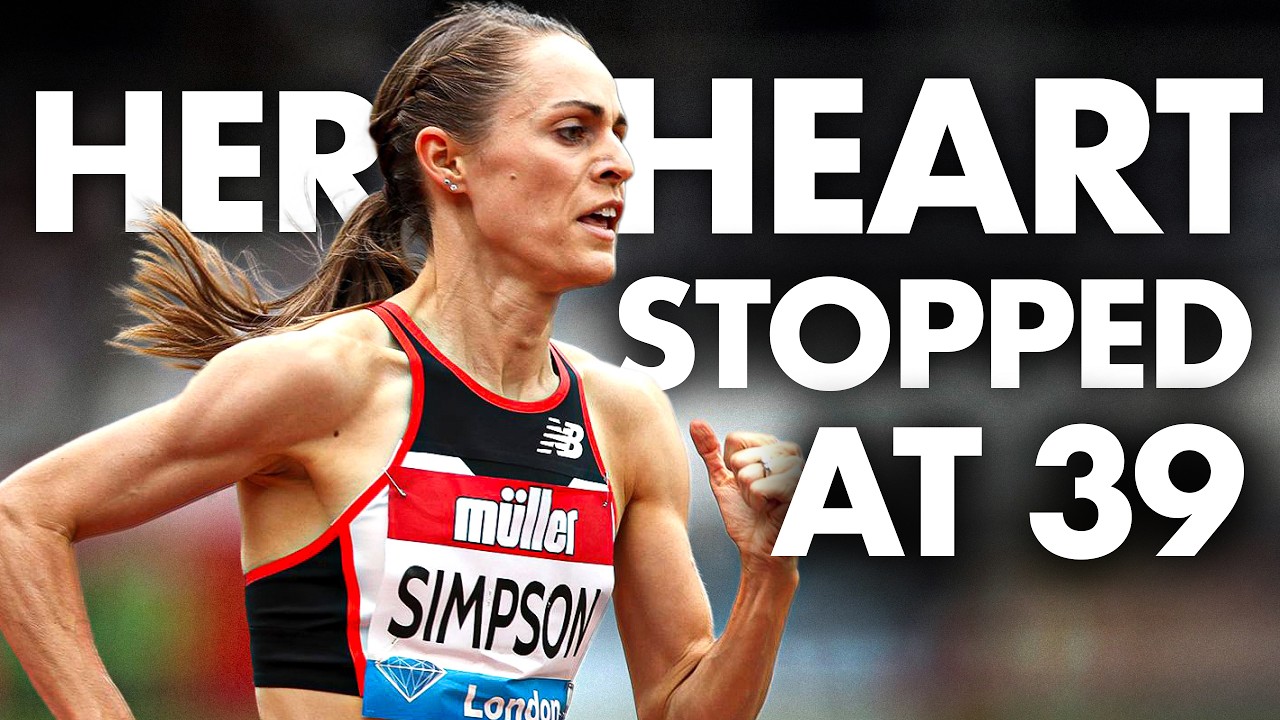
Jenny Simpson, widely regarded as the most accomplished women's 1500-meter runner in history, suffered a sudden cardiac arrest at age 39 during a community race after pacing amateur runners. The incident was caused by Arrhythmogenic Right Ventricular Cardiomyopathy (ARVC), a rare inherited genetic condition where healthy heart muscle is replaced by fatty tissue that disrupts electrical signals; while running did not cause the disease, it revealed its presence under extreme physical stress. Bystanders, including her boss Joey Pointer and his wife Ivy who carried an AED for their son with a congenital heart condition, immediately administered CPR and delivered multiple shocks before she was transported to Duke Hospital. There, she endured repeated cardiac arrests, spent five days in the ICU on life support with a breathing tube and heart-lung bypass, and remained heavily sedated yet mentally engaged, often resetting her memory loop every thirty minutes while insisting on participating in her own care.
Following her survival, Simpson faces a difficult medical reality: due to heart dilation and the risks of arrhythmia when her heart rate increases, she will likely never run again. This diagnosis has triggered an identity crisis, as she had viewed running not just as a sport but as a "craft" for self-improvement and connection. However, she emphasizes that fear of sudden death often stems from ignorance rather than necessity, noting that while genetics play a role, lifestyle choices and early detection methods like calcium scoring offer significant agency in preventing heart disease. She advocates for courage over fear, highlighting that one in ten out-of-hospital cardiac arrests result in death simply because bystanders hesitate to act, and she now promotes emergency preparedness and early screening for rare heart conditions.
Beyond the physical trauma, Simpson addresses the profound emotional and spiritual challenges of her experience, separating her athletic performance from her identity as a person of faith. She found stability in the belief that her worth extends far beyond her running career or singular moments of praise, allowing her to express gratitude even while grieving the loss of her specific outlet for movement. Drawing on her family's mantra that "Behringers do hard things," she reframes traumatic events as neutral opportunities for growth that require letting go of rigid self-concepts, asserting that hardship and uncertainty are universal human experiences where one is never alone. She concludes that it is never too late to heal or grow, noting that grief and gratitude can coexist, and that facing difficult situations builds resilience, proving that enduring the fight is worthwhile and that repeated exposure to adversity improves one's ability to overcome future challenges.
Read the full video transcript
I pushed myself to the limit with no
fear that my body wasn't capable of it
and couldn't handle it. And it was
capable. It did handle it until it
didn't. [music]
>> Jenny Simpson, considered the most
accomplished women's 1500 meter runner
in history.
>> In the hospital after collapsing in a
track event,
>> my heart just completely stopped. Chest
compressions [music] and the AD, they
saved my life. Like I had a 1 in 10
chance of [music] surviving period. It
was so dark and it was so violent and it
lasted for so long. Like I was so
determined. I was not going to slip
away. It is unlikely I'll ever be able
to return to running.
>> Wow.
>> I really want to encourage people to
resist the temptation to adopt fear.
Like fear is just [music] not the
answer.
>> After you regain consciousness, one of
the first things you said was like, did
I win the race and what was my time?
>> Yeah. [laughter]
You being this longtime elite champion
in track and field, so decorated, you
have retired from professional running.
You took this job as chief running
officer at Fleet Feet. Uh you
temporarily relocated to North Carolina.
I guess that's where their headquarters
is,
>> right?
>> Uh and in an effort to stay plugged into
the running community, which is kind of
your job, right? Your chief running. So,
it's like you have to show up at the
community runs and all of this stuff. As
far as I understand it,
>> you showed up at a local kind of like
mile race to pace the amateurs.
>> Uh, and and this was two months ago.
This was in June. And you collapsed.
>> You uh had no pulse. You were
resuscitated with CPR and rushed to the
hospital.
>> Uh, this was big news in the running
world.
Um there was a lot of press about that
incident,
the next day and the day after and maybe
a couple days after that about like how
your recovery was going
>> and and and of course like lots of
outpouring of support from the writing
community etc. But then the press stops.
Like I searched today. I was like
>> after about June 18th, there really
isn't anything that has been written
>> about what happened or how you're doing.
>> And I know that you really haven't
spoken publicly about what has happened.
Uh so I'm really honored that you've
given me this opportunity to kind of
share from your perspective what went
down and um how you're doing and you
know what happened. Uh, so what did
happen?
>> Yeah, June 16th, just like you said, I
went to a a mile a community mile race.
Um, and I I finished the race and and
paced some girls uh around the track in
a mile. Um, and I finished there's
there's there's pictures from the day,
uh, which is like actually really
wonderful for me. Um, I'll get to this
in in a minute, but I don't remember
anything from that Tuesday. So, it's
helpful for me to have these pictures,
but there's pictures of me. You don't
remember the entire day?
>> Totally lost the whole day. Yeah. Um,
and I'm chatting with people after the
race is over, so I was I was fine. Um,
but I'm on the infield and what's been
told to me is that I was chatting with
somebody and said, "Hey, I need a
minute. Like, I don't feel very well."
And then I collapsed. And so, I went
into sudden cardiac arrest.
39 years of being healthy and active.
And like not just healthy, like I've
pushed my body to the most extreme limit
I'm capable of. Um but on June 16th, my
the electricity in my heart got um
interrupted and my heart just completely
stopped. And I mean, thank these people
and thank God that they were there. um
bystanders at the race, including u my
boss who hired me at Fleet Feet, Joey
Pointer, and his wife um Ivy, who end up
being really critical in the story. But
um them along with several others just
identified right away. They knew what
was going on and so they started chest
compressions and it's just amazing. So
um I'll pause for a moment. Um my my
boss and his wife, they have a son, his
name is Liam, and he has a heart
condition. and he was born with a
congenital heart condition. And so years
ago, they bought an AED for his track
team to carry around wherever Liam is
going. Um or the team is going uh just
in case in the off chance that something
happened to his heart. They've known his
whole life he'll have to have heart
surgery at some point.
So Joey ran to the car cuz they had an
AED, a portable AED, and uh ran back and
chest compressions and the AD um they
saved my life.
>> Wow. So Liam was there.
>> Short of that, it could have been a very
different situation.
>> One in 10 cardiac arrests that happen
outside of a hospital do not survive. I
mean, if you take away any other
variable, like I had a 1 in 10 chance of
surviving, period. Um, and then what
what continued to happen was my heart
continued to go into these really
dangerous arhythmias. So I was shocked
several times on the field. I had CPR
for over 20 minutes. They loaded me up
into the ambulance and I was shocked at
least three more times in the ambulance
just to like get a pulse back. Um cuz my
heart just kept kept stopping. The
electricity in my heart kept stopping.
>> They take me to the hospital. Uh I went
into cardiac arrest again at the
hospital. So I my heart just I mean I
don't really know exactly how to explain
it except that it was just kind of a
runaway train, right? like you you have
the sudden cardiac arrest, they get a
pulse back, but as a result, I had such
an incredible shock to my heart. The
rest of my heart was also like not
coming back online.
>> Um and and so those repeated injuries to
my heart just made the circumstances
like spiral worse and worse. So they get
a pulse back. I was on life support. I
was at Rex Hospital
and in the night the right ventricle of
my heart is and I I can explain like has
a disease but the left ventricle of my
heart was also just not pumping hard
enough and I was going into advanced
heart failure. Um and this was you know
early early mornings then or hours the
next morning.
So they got me packed up and
lifellighted me to Duke. Um and Duke is
just an incredible place just totally um
spe you know specializes in hearts
>> and I was so lucky that I was that if
this was going to happen first of all
all the chain of events all the dominoes
of like the people doing the right thing
at the right time I had incredibly high
quality CPR EMS arrived you know shortly
there was an ad all those factors but
then also the fact that I was in the
research triangle and so close to a
hospital like Duke um that could respond
to such an extreme same circumstance.
Yeah. I mean, it was several days. They
didn't know if I was going to survive.
>> Wow.
>> And then I'm in the ICU for several um
for several days there at Duke.
>> And are you in like an induced coma
during this period of time? Like like
was there any were you conscious at all
or No.
>> So I don't remember anything from
that whole Tuesday until June 21st. So,
I go into the ICU and I wasn't in an
induced coma. Yeah. Five days. So, I
wasn't in an induced coma, but I was I'm
I'm laughing and there's a reason. I was
heavily sedated. Um, and and you know,
had a breathing tube, was on life
support the whole time I was in the ICU,
had a balloon pumping my heart for me.
But I'm laughing because like everyone
around was like, you were so animated.
Like, I was I was awake. I was
communicating. Like I was very insistent
that I wanted to be involved in the
process of saving saving my own life.
>> Wow.
>> To the point that one of the ICU nurses
finally went and got a whiteboard. She I
mean this is not I've been told this is
not typical. Um but she went and got a
whiteboard and I my husband said 22 out
of 24 hours a day I was like writing and
and and being involved like telling them
you know why am I here? How can I help?
These are my doctors. I mean, and I
don't remember any of this because, you
know, I'm I'm heavily sedated. I'm on
all these drugs that don't allow me to
retain memories. Um, and so I would go
through this loop of not understanding
where I was, trying to understand, but
then immediately jumping in and trying
to help, and then also, oh, I just I
just love this cuz I just kept telling
him they were doing an amazing job.
[laughter] Like, and I kept telling
them, you know, we have pictures,
>> but I would reset about every 30 days.
>> Yeah. Like a temporary dementia or
something. Exactly. Your memory isn't
isn't locked in.
>> And my husband was funny. He's like,
"You were surprisingly consistent. Like
you just go through the same the same
rhythm every 30 minutes, every 40
minutes or so." Um, and they would tell
me, they're like, "You're an athlete.
You have to understand like rest is good
for you. You have to rest. You have to
rest." Um, but I just, man, the fight
was so intense in me that I I wanted to
be in it with everybody.
From what I understand also, I read that
uh after you regained consciousness, um
one of the first things you said was
like, did I win the race and what was my
time?
>> Yeah. [laughter]
>> Yeah. So, I
>> that says a lot.
>> I also went into this with a bit of like
a trash talk rivalry with my boss, Joey.
And so, I knew he and I like he kept
saying he was going to beat me in this
race. Uh, and I wanted to be sure that
that didn't happen despite my my
condition.
>> Did you beat him?
>> Heck yeah. Of course.
>> Of [laughter] course. Right. All right.
Wow. Okay. So,
pulse stops. You're going in and out of,
you know, all of these sort of uh
cardiovascular events.
>> Yeah.
>> But doctors are trying to figure it out.
>> Was there a moment where I mean, if your
pulses stopped, like is there a did you
have like a near-death experience? Like
was there an interior experience of like
I'm headed out or is it all just a blank
slate?
>> It's been one of the trickiest things
for me to navigate in these early weeks.
I know from the account that's told to
me of like what I was saying and what I
was doing and that I was I was
technically awake um and and interacting
with people but I don't remember any of
it. But those five days, I absolutely
had my own experience
that has some overlap to what's been
told to me. But it was it was a singular
oneperson kind of inbody experience in
body out of body. I don't know what's
actually accurate or right. But one of
the reasons it's been really challenging
is because
I mean up to this moment I I I hope what
I've shared with you has reflected like
I love being in things with people and
in that experience
I I wasn't alone but no one can no one
can like I can't share it with anyone in
the sense that like everybody else had
this five days and I had a very very
dark and hard and violent fight that
everyone else in the room can't say
like, "Oh, yeah, we we remember that,
too."
>> And that's been really hard. Um,
>> yeah. I It's funny cuz like it was so
dark and it was so violent.
It and it lasted for so long. Like Rich,
that's the thing that like in my body I
feel I still feel is like it just I just
kept thinking like how much longer. I
mean I'm glad I spent years as a
marathon even though I wasn't very good
at it because like the marathon is also
that way. I just kept thinking like this
is so long and I kept waiting for it to
like dial down. And it's tough because
it's kind of like a dream, right? It's
like a dream where you you can kind of
explain it but there's no way I could
put in words that like makes total
sense. Um but I knew I wasn't alone.
Like that was like a really strong
feeling. It's like I knew I wasn't
alone. I knew that something else was
happening to help me kind of navigate
through the darkness. And
I kept thinking like I have it felt like
a puzzle. It felt like I was in this
like really really dark blacked out room
and I had to solve to get out of this
space. Um, and
in time, I think
I really intend to to spend some some
intentional time really reflecting and
try to understand what I experienced
better and understand it more. I think
there's more for me to remember and go
back to, return to. Um, and with that
it's
it's yeah, it's just it was it was
really awful. It was really awful.
>> A knowingness like not a concrete um
visual. You hear these accounts of, you
know, I I could see myself in the
surgical theater. I was hovering above
and I could tell you exactly what the
surgeons were saying when I was filleted
open and all of that. So, it wasn't it
wasn't that it wasn't the white light at
the end of the tunnel,
>> but it was a sense of being held that
you weren't alone.
>> The struggle part is interesting, like
this idea that it was on you to solve
it.
>> Yeah. Yeah. I I think what I have hard
time with now is if I was to imagine
what like a near-death experience would
be and especially as a person of faith
and and and
someone that has been really thoughtful
and reflective on my own life and my own
work, I could come up with an idea of
what I think it should be like. And it
was very inconsistent with what I would
think fighting for my life would look
like and feel like and be like. And in a
way I'm grateful because I feel like it
is then it's it feels very real to me.
Like this is a very real experience cuz
it's outside of what my expectation
would have been. But you also feel like
your understanding of the world has
betrayed you now too because now I have
something very new and and really
dissonant to sit with and figure out
>> in terms of how you thought about like
the nature of reality versus what you
experienced. Is that what you mean by
that
>> for today? I think so.
>> Yeah.
>> You know, I mean I'm still figuring out
refcting on it
>> like eight weeks ago.
>> I know. I know. I think just in culture,
we all have this idea that there's like
there's this peace
when you struggle to a certain degree,
you reach peace. And I didn't reach
that. I mean, I I struggled the whole
way. And it was really hard the whole
way.
>> And and I just kept recommitting to it.
>> I was not going to slip away. Like, I
was so determined. I was not going to
just let go. And
I'm like I'm proud of that, but I'm also
and I'm I'm I'm
also didn't have complete control over
it, too. I mean, that's frightening,
right? It's like you you coll I I
collapsed at a track meet and my
incredible strength had to be met with
mercy. I mean, the strength of other
people was my in was my unconditional
mercy. I mean, you can't I'm an athlete.
I always think like I can be the tough
one. Like, I can survive it. I can be
hard to beat. I can be the one. But
that's also like something I'm wrestling
with is like I had to have other people
step in otherwise I wouldn't be here. My
own fight would not have been enough. I
mean it took me to a limit I never knew
before June 16th. Um so it took 100% of
me but it had to also be met with the
mercy of other people.
It's not dissimilar
to the experience of an individual
athlete. Like there is like it's on you
when you tow the line and you're in the
race, but you don't get there without
all of the people that you know made
that happen for you. But this is a
deeper level of recognizing that or
vulnerability that you're literally your
life is in the hands of other people and
a surrender of control like you you
trying to assert control like I'm
directing this. I am not you know I'm
not going to live in this dark box like
I'm I'm make I'm finding the you know
the trapoor out of this or whatever.
>> Yes. But
>> you can't do it alone and it's kind of
up to these other people uh and how well
they're doing their job. something that
I I don't have an answer for.
>> And it's really up to God, you know,
basically. [snorts]
>> Yeah.
>> And that's that's a that's a
confrontation with surrender also. Like
how deep is your surrender? How how how
convicted are you in your faith and and
in your belief?
>> Exactly. And in that, one of the things
that has been confusing to me and like I
said, you know, you have this like idea
of what something like this might be
like and then it shattered. you know, I
had people who really love me and have
loved me a long time in that room and
and coaching me through, you know, every
30 minutes, you know, my loops of where
am I, what happened to me, how can I
help, you guys are doing a great job.
You know, I I I had my husband, I had my
family, I had um colleagues that love me
and care about me. There's only two
voices that I remember while I was in
those 5 days in the ICU. And so so I so
I'm going to jump forward. When I was in
the step down, which is just um I was
recovering, I was doing better. So
they'd take me to a different room in
the hospital um out of the ICU. Uh and
while I was in the step down, a couple
of different people that had been at the
ICU came down and visited me. And there
were two of them. Uh one was my one of
my nurses, her name is Claire, and the
other one was a male nurse's name is
Dwight. And when they walked in the room
and started speaking, I mean, it was
Rich, it was amazing. I was like, I know
you like we were together. I mean, I
know your voice. I know who you are. And
it was
I said to Claire, I said, "You made me
feel so safe." And she started crying
and she said, "That's what you wrote on
the whiteboard to me when we were
together." I kept, you know, going
through saying
>> um but their voices like those were the
two people that broke through that I
heard
>> and
um I mean I'll be they will be part of
my like spiritual belief and life
forever because their voices like met me
in a really really dark place. But I
don't know why it was them and like not
not my parents or my husband or um or
like the you know another doctor or
something. Um it wasn't a voice that I
knew and I recognized but it's now a
voice that is intimately attached to my
sense of having survived um that that
darkness. It'll be with me forever.
>> You use the word shattered. I think
maybe you even said it twice. I'm not
sure. Um, what was Shattered
Specifically though?
>> I just have I I I have a journey ahead
of me to reconstruct
like and and we'll get to this too, like
what is my work and what is my purpose?
But also
just like I don't know, I'm not going to
have a perfect answer for this, but like
the way that people show up for you in
your life and being available to receive
like what what breaks through and what's
there for you, it just was in a way that
was so unexpected to me. And my
understanding of like what a neardeath
struggle is like was
it was just so different from what I
might have expected or what culture has
taught us to expect.
Yeah, I'm I'm back. I feel like there's
some sense of how my my faith and my
belief has been built that is still
incredibly relevant. I mean, I have
accumulated life experience to reach the
point I'm at that is [clears throat] not
invalidated by what I've been through,
but now I have this like really big like
cornerstone to add. I don't know. Oh, it
just feels like, you know, if I've been
building an understanding of why we're
here and what I need to accomplish while
I'm here, it's like a really, really,
really big heavy block got laid between
June 16th and June 21st. And I'm still
kind of
>> You're trying to figure it out. Yeah.
Trying to understand what that is.
>> Yeah.
>> This episode is brought to you by Birch.
I can just feel [music] it. Here's an
honest question for you. When did you
last upgrade your mattress? We replace
our phones every couple years, our
running shoes every few hundred miles.
But the thing we spend a third of our
lives on, a decade, 15 years. Given how
essential sleep is to well-being, that
math strikes [music] me as backwards.
I've been sleeping on a birch mattress
for about 5 years now. And [music] it
taught me what I've been tolerating
before. sleeping hot, waking up stiff,
blaming everything except the slab of
synthetic foam underneath me. Birch, on
the other hand, is built from [music]
actual materials. Organic cotton,
natural latex, responsibly sourced, all
engineered to breathe [music] and no
polyurethane foams, no fiberglass, none
of that questionable offging. [music]
And they give you 120 nights on your own
bed to see how your body responds. It's
all risk-f free. Your sleep is the
foundation [music] of everything else.
So, the upgrade is overdue. I want all
my listeners to enjoy a deep, restful
night's sleep with a new mattress
[music] from Birch. Go to
birchliving.com/richroll
for 27% off [music] sitewide. That's
birch.com/richroll
and get 27% off sitewide.
This episode is brought to you by
Element right here in black cherry salt.
I'm deep in a fall training block right
now, which is the biggest sustained
running volume that I've attempted since
my back surgery. [music] And here's the
thing that nobody tells you about
rebuilding endurance at almost 60. Hold
on one second.
The margins get thinner. When I under
fuel or underhydrate, I don't just feel
it on the run. I feel it for the rest of
the day. A little bit of a headache,
some brain fog, a 3:00 fade. It's not a
mystery. Often it's as simple as
inadequate [music]
electrolytes, which is why Element lives
in my home gym. It's a zero sugar
electrolyte drink mix and carbonated
drink with sodium, potassium, magnesium,
and none of the sugar or dodgy
ingredients that typically you find in
these sports [music] drinks. So, if
you're training for anything this fall,
this is a lowcost experiment with a high
hit rate. Get a free 8count sample pack
of Element's most popular drink mix
flavors with any purchase at
drinklement.com/rich
roll. Find your favorite flavor or share
it with a friend.
So what is the if you had to distill
down
the visceral experience that you had in
a way that you want somebody who's
listening or watching to this to
understand that is contrary to what the
kind of cultural messaging or you know
is around these sorts of things like
what is that
or is it too soon?
I do think this will continue to reveal
and continue to unfold and I'll continue
to understand. I there's a couple of
things. First of all, I'm I'm sure
you've talked about it. I've I've
learned about it and thought about it in
my life. Returning to the beginner
mindset, right? It's like beginning
beginning a new can be a really powerful
thing. Um but but you don't return to an
immature child. you re you begin again
with the experiences and the maturation
and the emotional intelligence of a
person that has a history. And so, so
that's that's one thing is it's like
when I say shattered and rebuilding and
all of those things, it's like I I want
to be thoughtful about the precious time
where you you have the different
constituent pieces and you build it back
up, but with the understanding, the
knowledge of a person that's 39 and has
had lots of life experience and not
starting from zero. But then also on
just like a really practical level, if
there was one thing I hope to project
into the world as a result of this
experience and you know I I told you
about like kind of that shock of of and
I don't even know that that humble is
the right word. It's not humble but like
the shock of reality of like you can't
save yourself. I I was diagnosed with a
rare heart disease. I have it's called
ARVC arhythmogenic right ventricular
cardiammyopathy.
We didn't know that I had this disease.
It's an inherited disease. It progresses
over a long period of time. And at 39,
it progressed long enough that it
interrupted the electrical pulse in my
heart and I had a cardiac arrest.
It is very unlikely, anyone listening to
this, it is very unlikely that you have
this disease. Like
it is not my mission moving forward to
help people understand how to know if
they have this disease. It's very
unlikely and it's hard to know. It's
hard to catch. But it is more likely
that you will find yourself in a
situation to help somebody that can't
help themselves. And part of my chosen
responsibility moving forward, I
believe, will be empowering people to
step into courage and out of fear and
help people when they need it. One of
the reasons that one in 10 people with
cardiac arrest outside of a hospital
don't survive is because people are
afraid to step in and deliver CPR. M
[clears throat]
>> and delivering CPR, having AEDs, like I
don't know that like we know the
solution on how to save many of these
lives. The biggest barrier is is fear
and and people thinking, well, I'm not
trained or I don't know. And instead of
stepping into a scary situation with
courage, they lean back and wait for
somebody else. And for me,
I wouldn't have made it if there weren't
people of just incredible courage that
stepped in and and and it's not about
like, oh, am I a person that has a
disease that could be vulnerable to a
cardiac arrest or whatever whatever
other fears you dream up. It's more I
think it's more important to say, am I a
person that would step in with courage
if somebody else needed me?
>> Yeah. So it seemed like it's rearranged
your sense of priorities like you know
you just you basically like you know ran
into a brick wall and all your plans for
the future now have to be you know
recalibrated like you know this is the
identity confronting piece like you you
thought you were this person and we're
living a certain life this thing happens
you're assem you're reassembling the
pieces you are appropriately and I think
you know in a very healthy way like not
looking at how quickly can I go back and
be that person I was before? But perhaps
this is an opportunity for growth and
evolution and and transformation like
who can I become? Who is the better
person that I can become because of this
in a a very serviceoriented way like I
can be this
>> source of education and information
around this condition and
>> you know you're only two months after
that. I think it's, you know, you're
correct, like this will evolve over time
because right now you're still very
much, I'm sure, like sitting in the in
in the trauma of the whole thing. Like
>> it's completely rearranged your life.
>> Can I tell you one of the most
traumatizing things about the whole
event was
>> in my career I have brought I mean my
racing has brought so many people so
much joy and that is that has been one
of the huge rewards for me. Like I love
that people collectively celebrate
because of the work that I put out into
the world. And now because we can watch
it on YouTube and we can watch, you
know, replays. Like my dad still sits at
his computer and like rewatches my races
and it just
>> Well, on YouTube there's like race
highlights. You can watch videos and
it's like they somebody has cut together
like all of your races from, you know,
all the way back. It looks like you're
in like, you know, junior high school or
something.
>> Yeah. And it's it's that I don't even
before June 16th. I don't even know that
I understood or appreciated how much I
got from that, how much I enjoyed that
like my work made other people happy.
One of the ways that I was really
consistent in the hospital was um I
would I would wake up and one of the
things that I would ask over and over is
like why is everyone so sad? Like why is
everyone so upset? And you know I'm in a
hospital. I'm in an ICU. I have a
breathing tube in.
But man, it's been really, really,
really hard for me to see in my family
and my boss and in people that care
about me, like see how traumatized and
how hurt and how hard this has been for
them. Um,
yeah, that's been really hard for me.
>> I don't want to be at the center of
their pain.
>> Yeah.
There's a another
layer on top of all of this that um
perhaps complicates everything because
>> there's a certain punditry out there
around uh endurance athletes and runners
and cardiovascular risk. You know, this
is a this is part of like a larger
discourse that's been going on for a
very long time. It began when Jim Fix uh
who wrote like the primer about running
in like 1972 dropped dead of a heart
attack when he was out on a run and I
think he was 52 years old. Um and that
became kind of an alarm signal like
maybe all this running isn't so good.
And you know there's been examples over
the years of athletes dying prematurely
due to a variety of conditions. I think
there's a reductive kind of perspective
on this that it's always one certain
thing and enlarged heart and like you
really shouldn't run that much and all
that kind of thing.
>> But there's a variety of things that can
happen. I mean, you may have just
accumulated a certain amount of plaque
over the years and because you're super
fit and lean and all of that, um, you're
under the assumption that like you're a
healthy person and not aware like like
cardiovascular disease, you know, takes
place over decades before you reach that
point where some piece of plaque breaks
loose blockage, right? Um but even
within that there is like hypertrophic
cardiomyopathy
and that is less rare than what you
experienced. I think there's something
like a 25% risk where there's a genetic
thickening of the heart muscle. I'm
looking at my notes because I wrote this
down. I wanted to get it right. And this
is usually what is the um kind of cause
of sudden cardiac arrest in younger
athletes. When you see somebody who
prematurely, you know, h has an event
like this. I mean, I had Timothy
O'Donnell in here, Iron Man triathlete,
like, you know, he suffered a widow
maker like out on the course. Um, I
think that was probably a traditional uh
kind of cardiac event of accumulated
plaque.
>> The HCM is what you see in very young
people where it's very shocking, you
know, that suddenly something like this
could happen to this very fit person.
How does that make sense?
>> But ARVC, arhythmic right ventricular
cardiomyopathy, right? This is what this
is called is very rare and it's a
condition in which healthy heart muscle
is gradually replaced by like scar-like
fatty and fibrous tissue.
>> Yeah.
>> And it's there's no symptoms to any of
these things like they call it a
widowmaker. Like people are walking
around thinking they're fine.
>> And you talked about the importance of
>> you know CPR and proximity to care and
all of that. like the timing of all of
this, like how quickly can you get,
>> you know, treated.
>> But I think the real work is in early
screening. Like, you know, you don't
nobody's going in for their calcium, you
know, score test until they're like in
their, you know, mid to late 40s or
whatever. Uh and now with all of the
kind of advances in technology, a big
exciting piece of that is like early
testing and early screening because
>> cardiac issues, you know, take so long
to develop. We can identify these things
sooner and develop, you know, protocols
to prevent these kinds of things from
happening. I mean, cardiovascular
disease is the number one killer. Yeah.
>> In America and very much driven by by
like lifestyle decisions.
>> I want to correct one thing you said. I
mean because it takes so long to develop
is actually why it's so difficult to
screen at a younger age because they
have to be able to see some of the
damage in your heart to identify at
least with ARVC in order to identify
that this is a condition that you have.
>> But this is the rare genetic rare you
know what I mean like Jim Fix I would
imagine that he dropped dead prematurely
because prior to being this running
lunatic
>> he you know weighed 210 lbs and smoked
two packs of cigarettes a day. like I'm
sure he was accumulating pack, you know,
plaque for many years and then you get
fit and you think it's not an issue
anymore that you've overcome any kind of
risk and that's just not necessarily
true,
>> right? Screening is part of the answer
for sure and emergency preparedness is
part of the issue or is part of the
solution. I mean, one of the things
about emergency preparedness is like we
know what to do. It's just a matter of
like people being present to be there
first of all, right? I mean, when you
have a cardiac event and you're alone,
that's the most dangerous um situation.
And so, someone else being there and
having the resources and understanding
and knowing what to do. ARVC in
particular. Um I'm so glad you brought
this up because one of my immediate like
concerns when I was in I mean I was
still in a hospital bed when I was
starting to worry about this was like I
don't want kids to think that running is
dangerous. Like there's going to be a
narrative around this like oh well you
know this is what happens if you're
runners and like all the
>> you know kind of like gym rat people are
going to be like this is why you
shouldn't run you know
>> running did not cause my disease it's
inherited. I have a a genetic so I'll
speak specifically to to my condition of
ARVC. I inherited it. I've had it my
whole life. Running didn't cause it but
it revealed it. How ARVC works is that
as your your muscle your your heart has
kind of two major functions. One is as a
muscle and and and as it pumps as a
muscle and the other is the electrical
part of it the electricity. So as my
heart would work out, work hard, dilate
and and and um break down like any
muscle right you break down muscle and
then you rebuild. when it rebuilds, I
have a genetic mutation that
specifically in the right ventricle of
my heart, it rebuilds with a tissue that
doesn't properly conduct electricity.
So, I don't know that like medically
it's actually technically scar tissue,
but essentially for the sake of expl
explaining, you know, the electrical
pulse goes through your heart and you
have these lines of scar tissue over
time that your muscle breaks down, it
rebuilds with the wrong material. it
breaks down. It rebuilds with the wrong
material and eventually that electrical
current hit a spot in my heart um that
didn't properly conduct electricity and
that's why my heart stopped. Now, as a
result of my heart stopping then I had a
traumatic injury that actually hurt the
muscle. So, I had a combined problem of
you know the muscle and the electricity
both kind of like that was the runaway
train right
>> and that injury prevented the electrical
circuit to like properly fire. It's more
about like the the strength and again I
want to be very clear like I'm not a
cardiologist
like [laughter]
>> but the strength and the ability of my
heart to pump right so the stren so it
was your heart is really stunned but you
got to pump blood strong enough to reach
into your lungs oxygenate come out of
your lungs go back into your heart and
pump out into the rest of your body. So
that pump being strong is one part of
the miracle of our heart and then the
electrical pulse is another another
component of the miracle of our heart.
And so those two things working together
um ARVC messes up uh the electrical part
and this is what I want to share.
my foundational health and the fact that
I was such had such a strong heart and
had such a strong fighting spirit like
all of my years in sport. I love how my
cardiologist put it. Dr. Sun told me in
like a moment of like real truth cuz I
said to him, you know, I thought I was
such a healthy person and then I wake up
in the hospital and realize like what
happened [laughter]
>> like what, you know, and and he said, oh
my gosh, like you are healthy like
you're healthier than the doctors that
are working on you. He said,
>> "I would hope so." [laughter]
>> He said, "You thought your whole life
that you were training for the Olympic
Games, but you've been training your
whole life for June 16th." He said,
"Your body and your fighting spirit, you
needed every bit of it to survive."
So, I I understand the confusion and how
there can be fear and like, "Oh my
goodness, how can you have these healthy
healthy people that have these heart
incidents?"
We don't we don't always know like
perfectly what curve balls are are in
our life's path or just like how we're
constructed imperfectly, but
foundational health and running and
being, you know, exercising and eating
well will always give you a a better
fighting chance when you do have a
medical event that occurs.
>> To be super clear about this, uh you
were born with ARVC. Mhm.
>> Running didn't
cause you to have it. You already had
it.
>> Uh, is it true or not true that all the
running helped bring expression to it?
Like if somebody wasn't a runner or
super fit or pushing their body so hard,
would they live their lives asymptomatic
>> or how does that like how does that
work?
>> So, this is part of kind of the mystery
of it. Um, a part of it is because it's
rare and another part of it is because
most people, like the vast majority of
people that we can study and see that
have this, we know because they had a
cardiac arrest event. And most of the
people that have that don't survive for
us to then watch how they do in life.
So, it's a difficult thing to to know.
And and
>> and how many of those people that don't
survive were athletes?
>> Exactly. Exactly.
>> That stat must be sitting around
somewhere.
>> Yeah. And so what is important um
about all of this,
what was told to me by this incredible
team of cardiologists is like they're
shocked that I didn't have a cardiac
arrest earlier in life. [snorts] Like
they're amazed that I was pushing my
body as hard as I was and that I only
had a you know I it it expressed itself
to this degree at 39. like there are so
there's so much we don't know and the
progression of the disease doesn't have
like we don't have dialed in like a
perfect idea of um this might not be
like the perfect analogy again I'm not a
cardiologist but when I was an athlete I
always thought about like if you have a
bone injury there's kind of a schedule
it heals on right like we understand
like so so many weeks you know you have
a grade one stress reaction or you have
a broken bone like these things more or
less with some margin of error heal on a
schedule you have Achilles tendonitis
and who knows I mean three years later
you could still be doing all the right
treatments and all this stuff and still
have this nagging tendonitis with the
condition that I have we just don't it
doesn't it doesn't progress on a
schedule that we have dialed in and we
know and so um so yeah there's there's
more to understand and more to learn and
me having survived will be an
opportunity for um for my cardiology
team to to track me and and learn
>> because it's genetically linked is there
not some kind of genetic marker that you
can test for.
>> There is the genetic marker that shows
up in people. My understanding is it's
like 40 to 60% of people that are
identified with ARVC, they can find the
genetic marker. Um, and I was
genetically tested as well as my my my
parents and they didn't they didn't find
the genetic marker that they're aware
of.
>> Oh, interesting.
>> Really good. So had you like if part of
your message is like okay everyone like
go get tested like [laughter]
like if you were one of those people
hearing yourself you would go get tested
and it would be like I'm good.
>> Exactly. Right.
>> Which is why I mean first of all there's
so like there's so much still for us to
learn and that's a good thing. That's
exciting. There's really, really smart
people working on this stuff and every
year more people with huge health risks
are surviving for us to study and
understand and I'm one of them now. Um,
so there's so much more for us to learn.
But yes, you you're understanding now
what is informing my plea for people to
still care a lot about emergency
response because you can do all the
right things. I mean, I was an Olympic
athlete for decades and and I had
incredible access to health care um and
took advantage of it. I mean, I I had an
incredible medical team and I'm grateful
for all of them and they did wonderful
work to help me optimize in my career
and and this was still waiting for me in
my future. Um, and what saved me was
having an incredibly healthy and strong
body and spirit and and first responders
This episode is sponsored by Seed. The
supplement market has a very big trust
me problem. [music]
Everybody is sciencebacked, but only
about 16% of supplements are ever
clinically tested. So that phrase
sciencebacked is essentially
meaningless. It's marketing decoration.
But here's how you fix that. You run the
study, which is exactly what Seed did.
In fact, they just conducted the largest
clinical trial ever done on a probiotic
for bloating and gas. [music] 350 men
and women 6 weeks on the exact product
I've taken daily for years. DSO1 daily
symbiotic seeds 24 strain probiotic and
prebiotic. Within one week, people were
less bothered by bloating through their
day. By four weeks, it was clinically
shown to reduce [music] gas. by six
weeks improved regularity and sustained
relief and the mechanism holds up. DSO1
actually survives your digestive tract
and then it increases beneficial
lactobacillus
17fold and strengthens [music]
the gut barrier. Right now, for all of
you guys, the listeners, and the viewers
of the show, Seed is offering an
exclusive 25% [music] off your first
order of DSo1 Daily Symbiotic when you
enter the special promo code Rich Roll
25
at checkout.
This episode is sponsored by BetterHelp,
which is why I'm [music] going to cross
my legs right now and lean back into my
therapist posture. BetterHelp surveyed a
couple thousand Americans this year and
shockingly 85% said [music] getting
support is a wise thing to do, but 74%
felt like society still quietly
discourages it. That gap is nuts. Like
we believe in the importance of getting
help while simultaneously being
discouraged to seek it out. Well, you do
not have to wait for a crisis to talk to
somebody. Therapy can just be a place to
slow down and work through [music]
what's been building up before it feels
unmanageable. And BetterHelp makes all
of that super easy with a starting
[music] point that's an easy lift. You
just answer a few questions, they handle
the matching, [music] and you're
connected with a fully licensed
therapist who works under a strict code
of conduct. If the fit isn't right, you
switch any time. And with over 30,000
therapists, that's a lot, it served
[music] more than 6 million people.
That's even more with a 4.9 out of five
average from over 1.7 million reviews.
The point is, don't let stigma stand in
the way of support. Start therapy with
BetterHelp. Sign up and get 10% off at
betterhelp.com/richroll.
That's betterhp.com/richroll.
I love the outdoors, but I'll admit,
ever since I started driving my Rivian,
I find myself making even more time to
just hop in and [music] take it to
places where I can live real
experiences. I was recently able to
drive an R2 with R.J. Scrange, the
founder and CEO of Rivian, and we talked
about how this is no accident. How how
does that how does that idea of like how
are we creating this, you know,
completely seamless
connection with the outdoors through a
car [music] that, you know, by
definition sort of has to seal you off
from the outdoors like and how do the
design decisions inform, you [music]
know, that perspective?
>> If you're in this car, you should feel
like if you want to go somewhere and
explore a hike or stay out a little
later, it's there. It's just again a
little nudge to say it's okay to
explore.
>> Yeah.
>> Seek out the unknown. The front trunk
has a drain plug in it. In the rear, the
glass dropping in this car is a really
nice feature cuz it allows you to throw
a surfboard in the back or you can
easily put your gear in the back. So,
it's just all these little things that
are, you know, that yes, they're
features and they're on their own.
They're maybe not the whole story, but
you put them all together as a meal. It
should feel like a product that's just
built for someone that wants to go live,
you know, a full adventurous life.
To watch the rest of our conversation
and learn all about the R2 and the
places it can take you, go to
stories.revian.com/rich.
I think this does put you in a really
interesting and potentially powerful uh
position
to do some real education around this. I
think there is a lot of confus I'm
confused. It's like I'm old enough. I
remember when Len Len Bias the
basketball player like you know died in
the middle of the game and you know
there's cocaine involved in like these
all these things are you know like
they're not
>> it's they're all unique you know
experiences but when you kind of
collectively like think about athletes
that are like dying in the midst of you
know participating in their sport it
does raise alarm bells and it's like
what you know like what are we doing
that's causing that and how can we avoid
that and it does get kind of in the
running and endurance context it gets it
gets translated into like don't push
yourself so hard you know or this could
happen to you and I think that's wrong
but there is you know appropriate
cautions also and like what are those
and what does that mean and if you're a
young person you know
>> who is worried about this like how
should you be thinking about it
>> yeah I really want to encourage people
to resist the temptation to adopt fear
fear like fear is just not the answer to
be afraid that I have something that I
don't know about. Honestly, Rich, for 39
years, the ignorance was bliss. Like it
was beautiful. I got an incredible
[clears throat] career and and I I
pushed myself to the limit with no fear
that my body wasn't capable of it and
couldn't handle it. And it did handle
it. It was capable. It did handle it
until it didn't. And and but you just
don't you just don't know who and when
our bodies are imperfect. And that's
often I mean that's what makes us each
individuals and really special and if we
love each other it's like that emergency
response piece is just always going to
be relevant and always is going to be
important. Um I want to be somebody that
can help that can step in and that knows
if somebody goes down I know how to
start. And that's that's another thing
is like especially in a public setting
like help is more advanced more expert
help is probably on its way very likely
especially in like a race or or sport
setting but man those few critical
minutes between me hitting the ground
and EMS arriving you those people they
saved my life. I want to be very clear
they saved my life but they also
preserve my quality of life. you know,
the the emergency response is not just
about like having somebody live on to
have another birthday, but it's also
like my brain had oxygen to it and my
liver and my kidneys and my organs and
my lungs. I mean, there's so many other
pieces that become incredibly vulnerable
just minutes after your heart stops. Um,
and and so preserve just stepping in and
doing anything. Hands only uh chest
compressions can preserve somebody's
somebody's brain and and organs.
>> Yeah. the crisis response uh aspect of
it is super important. Uh but I think
for the average person uh the real kind
of public service announcement or like
[laughter] the more you know you know
thing is you probably don't have what
Jenny has and and energy like you know
like being anxious about that is
probably wasted energy. Hopefully
screening and testing will improve like
this is one area where like AI actually
could you know really work wonders.
>> Totally. And also the really public um
you know the the sports it's it's a it's
a public emergency event and it's really
confusing for every one of those that
>> because these are the fittest people and
like these are the people who aren't
this isn't supposed to happen to them
you know like at any time let alone when
they're super young. But my but my point
would be like they're in a field of
hundreds and hundreds of athletes that
are also
totally well pushing their bodies super
hard. You know, we're we're highlighting
something that is very unlikely and very
unusual and in the case that it does
happen or something, you know. Yeah.
>> Yeah. And so that's why I want people to
resist the fear that this is going to
happen to them. But the real issue to
kind of double down on this point is
that again heart disease is the number
one killer.
>> Yes.
>> You know this is how most people die.
>> It starts early in life with your
dietary habits and your relationship
with physical fitness and movement. And
you know, again, being an older person,
I grew up in a time where it was just,
you know, my grandfather who was captain
of the University of Michigan swim team
in like 1929 and like was,
>> you know, he got fourth at Olympic
trials and didn't make it, but you know,
he was competing against Johnny Weiss
Mueller like like in that like but he
>> he was an outstanding athlete in his day
and dropped dead from a widowmaker when
he was like 54, right? And this was very
traumatic for my mother. And that got
translated to me as heart disease runs
in our family.
>> Wow.
>> Like there is a genetic piece to that. I
don't know whether that's evidence-based
or not. Uh but that's how I, you know, I
internalized this
>> narrative and I
>> like most young people dismissed it and
ate whatever [clears throat] I wanted
>> and you know got into swimming and
because I was training four or five
hours a day like does it really matter
what you eat? like I'm burning so many
calories uh you know with a lack of
understanding that it actually does
matter what you eat and you know went
into a phase of my life where I was very
unhealthy and had a reckoning and change
these lifestyle habits and learned a lot
more about heart health
>> and this appreciation for the fact that
like plaque buildup you know takes place
over decades and you can have like a an
epiphany moment like me but it doesn't
make all that plaque that you
accumulated over all those years go away
>> and our lifestyle habits do matter. So
the idea that you're just genetically
wired to like succumb to this really
isn't true. Like people have much more
agency over whether or not they're going
to suffer from, you know, one of these
types of events and to take your
lifestyle habits seriously because you
can sidestep this if you act
appropriately. And a big piece in that
is the early detection, like getting the
calcium score, the full body scan or
whatever the tests are now that are
accurate in terms of like really
assessing where you're at. And fear
comes into play. Like people don't want
to do that. Like I don't I'm young. Like
I don't need to do that. Like all I'm
going to if I find out like I don't want
to know if like something's bad. I just
because I want to continue to eat the
way that I want to eat and like I'm
fine. And people are for the most part
asymptomatic until suddenly they're not
and then they're in a situation like you
and there's an emergency response
>> involved and getting
>> regular uh blood work done. Now it's not
just about like LDL and total
cholesterol, but like know what your apo
is. Like this is the marker that is
going to really be the truth teller and
and where you're at. And knowledge is
power. or if you know what that is, then
you know what steps to take
appropriately to get it in range if it
happens to not be in range.
>> I want to completely agree with you and
also build on maybe correct something I
said earlier. So I said earlier, you
know, the the ignorance was bliss,
right? I got to be 39 years and push my
body and have no idea that this this uh
quiet worry was was there the whole time
or this risk was there the whole time.
My cardiologist said this and I love it.
I wrote it down. and I have it next to
my computer at home. The intervention is
more powerful than the ignorance.
Now that we know that I have this, I'm
on medication. I had a surgery and I
have a pacemaker and a defibrill now.
>> So you see this there's this scar on
your
>> scar. Yeah. And the lifestyle. I chose
for myself a life of incredibly healthy,
clean eating and and exercise and and
also just like being a joyful, happy
person, walking in the sunshine and and
and doing all those things to build a
really healthy and wholesome life.
That's part of the intervention, right?
is making those choices throughout your
life.
>> Knowing what you're facing and and
knowing and then choosing along the way
a lifestyle that supports health is
critical. I mean it that is the ball
game, right? is is is making those
choices and then along the way as
medicine and science helps us to do that
more and more. The interventions are
going to make us better and better and
better and again like not so that I can
live to be 120 but so that the quality
of my life you know is is as robust and
as lifegiving as possible like that's
what I really hope for myself and for
people is is abundant life. And what do
you uh expect in terms of your future
relationship with running? Is it too
early to say? What are the doctors
telling you? What does that look like?
>> Yeah, this is a really important and
really tough part of what is coming for
me. Um
right now the the cardiologists have one
picture of my heart. So I went in, I get
a cardiac MRI. um it's kind of a long
and uncomfortable process to have this
image taken and they they have one a few
weeks after um after my cardiac arrest
and so they can look at that and say
okay this is where your disease is today
and this is the condition of your heart
today in 6 months I'll have another one
and in 6 months I'll have another one
and they'll start to build a trend of
like this is how your heart is and and
how the disease of your heart is is
either progressing or regressing or or
>> or or whatever the case maybe. So, we
have a lot to learn. I want that to be
the first thing. It's like we don't know
everything now. And and I'm so grateful
I'm at Duke because these are people on
the cutting edge, you know, using the
latest understanding of of heart health
to guide my path forward. But because of
the disease that I have and because it's
progressed to the point that it did
cause a cardiac arrest, when your heart
rate goes up, um your heart dilates and
it gets bigger in order to pump more
blood volume. Um
that happening exposes more of that
dysfunctional tissue um for for me.
[clears throat]
>> And as a result of that, it's it's it's
dangerous for me to elevate my heart to
get my heart rate up above. I mean,
there's no hard line, right? But like
the higher my heart rate goes, um I'm
just making myself more vulnerable to
what would be like an a a heart
arhythmia.
>> Yeah.
>> Um
>> and so
it is unlikely I'll ever be able to
return to running.
>> Wow. That's heavy. That's that's heavy.
>> I mean, your whole life has been about
elevating your heart rate.
>> I mean, honestly, Rich, there's a part
of me that's like, who cares about
running? I mean, just not being able to
like be the first one up the stairs or
be the one up.
>> For you to be able to say that.
[laughter]
>> I mean, I can't I'm sure it's hard for
you to say that, but also that's
remarkable, you know, that that gets at
the heart of like the identity piece.
Like, if your your identity you have a
healthy relationship with
uh your attachment to this person who is
a runner,
>> it's the craft and I got to choose it,
which was just so amazing. like I got to
choose it. And it's been such a teacher.
It's been the place that I've struggled.
It's been the place that I've succeeded.
It's when I'm working on
when I'm working on my craft, I'm
working on myself. And
I just I just don't want to I don't want
to choose another craft. [laughter]
>> Yeah. Well Well, I look at it like this.
Running has been a very good teacher,
but there are other teachers out there
in the world. And I think you've learned
what you needed to learn from running.
And God, the universe, you know, your
higher power, however, you know, an
individual kind of qualifies their
relationship with the ineffable has
decided that uh you need to accelerate
your growth curve and in order to do
that, we need to give you another
teacher. you know, like you've you've
you graduated from that class and now
you're in uh a different school and
you're being given uh new lessons for
life that are intended to accelerate
like your growth and your evolution.
Like you have now entered a new realm
where you know, as Alexi would say,
you're in a GOP state, you know, like
you're in the in between. You're like
being dissolved and prepared for
something new and you don't quite know
what that is yet. Um, and it's
uncomfortable and confusing and you're
trying to make sense of what happened to
you and why and all that stuff. Uh, but
I'm confident because you're so mentally
tough and you're so grounded in your,
you know, kind of relationship with what
happened that you're going to emerge
from this. Uh, you know, really powerful
in a new way that you probably can't
predict or imagine right now.
It is an an enormous
amount of uncertainty for sure. And
yeah, I you know, I I some I think about
some of the things that I've said in the
past and like how perfect they are for
now. Like I think it's it's so important
to learn from other people, but you also
can learn from your younger self. And
one of those things is like when I was
getting ready to retire, I kept saying
like I want to exhaust every ounce of
talent. like I want no talent left when
I run that last mile. And
I kind of in a funny way felt like I
achieved it because I I did all the
things that I could.
>> You did that. Yeah.
>> Yeah. I did everything that I I I could
accomplish. In fact, I even said when I
finished on the track in the mile, I
said, "I've learned everything there is
for me to learn here." And I moved on to
the marathon. And then I was good at it,
but not good enough to to stay a pro.
and and I knew what it would take if I
stayed five more years and developed and
it just like my will and my talent was
like in the most beautiful way it was
exhausted and I was ready to be done and
now I look back on that and I think oh
my gosh what incredible piece I have
that this didn't happen in 2021 or it
didn't happen you know when I was young
I don't know just that I I even
articulated like I got everything out of
this I could have and I'm ready to step
away but back to knowing yourself and
learning from your younger self. Like I
don't know, we're we're we're such
complicated and interesting indivi as
individuals, each person. And as much as
it's good to have I I think it's amazing
to have role models. I've had incredible
role models. Um but I've always tried to
be careful to not confuse a role model
with a template. Like that's not the
version of who I'm supposed to be. you
can you can pick and learn and and see
what's what's right for you and for your
path. And I think the same is true when
you reflect on your own learnings and
your own path. So, I have this
[laughter] I was actually talking to
Alexi about this. I have this notes uh
section in my phone where I it's titled
um how to live with yourself. And it's
like a message to me like the only way
I'm going to survive living with me all
the time is if I really get to know her.
if I really know her and care about her
and I'm interested in her thoughts and
who she is. And so when I have sometimes
it's dumb stuff, but sometimes it's like
actually like meaningful, insightful
things, but I just keep this running
notes of of things that are interesting
about [laughter] about myself. And it
sounds it sounds really kind of
self-centered, but but my interest in my
own self and my own journey and what my
inner thoughts are that I don't
necessarily share out to to my partner
or the world or whatever, it helps me
know me. I spent a lot of time in those
notes recently because I feel kind of
lost. I feel like I'm in a place to kind
of reconstruct,
but it's not it's not starting from
zero. like I have this beautiful
document that I accidentally started
like 10 years ago. [laughter]
Um
that reminds me of like how careful and
thoughtful and maybe [clears throat] not
careful but like how thoughtful and how
much I've learned along the way. And I
go back and I revisit stuff and I think
oh that was that's like a nugget of gold
for me from me
>> that I I had forgotten about or it had
been buried or it needs to resurface
again. Yeah, I don't think that you
should be in a hurry, you know. I think
it's about getting comfortable in the
murkiness of the whole thing and not
being in a hurry to know what your next
thing is or what that trajectory is
going to look like and just allow
yourself to be present and marinate in
this, you know, gopike chrysalis that
you're in right now. But I think your
intuition
to turn to that notes app like the idea
of like I need to get to I want to get
to know myself
is a beautiful instinct and it's almost
like um
like what in mindfulness they would call
like loving kindness. You know what I
mean? Like you're honoring yourself like
oh like I'm this person let me get to
know like it's a there's something
nourishing about that.
>> Yeah.
>> That doesn't necessarily have an end
point. It's a cultivation of a, you
know, a more intimacy with who you are
and then ultimately that will translate
into something, but it doesn't have to
be today or tomorrow.
>> What you were saying about the
uncertainty,
I mean it it's the obstacle is the
journey, right?
um the the the work never ends because
your life
for me
>> it's not about like okay okay I'm go I'm
working towards this destination where
now I know who I am and I know what I'm
doing and I'm this person and like I do
this
>> there is no I mean I for me anyway so
far no true enlightenment yet
>> I mean it's it's all kind of a journey
>> um but there's
>> but something happened you know in that
intensive care situation you know that
is worthy of continuing to investigate.
>> Yeah. And I appreciate you you
encouraging me to take time because
you're totally right. You can I'm
sensing that you can see how I struggle
and wrestle with myself both this
understanding on one end of like
>> win slowly do it over a long period of
time. And I really struggle with
gentleness with myself because because
I'm an A student, right? Like I want to
get it right every time and I don't
learn a lot. Strive. Exactly. And you've
always had a blueprint for your life and
you always woke up in the morning kind
of like knowing what [laughter] you were
going to do, you know, and like now it's
like I don't know what I'm supposed to
be doing now, you know?
>> But like what an amazing
>> opportunity you've been given like like
appreciate the expansiveness of that.
>> I don't think I would have ever put down
running. I would have never let it go. I
I mean I took a job as chief running
officer.
>> You were the universe did you a favor.
They they did it for you.
>> It in some in a lot of ways it cleared
my desk like I have a lot of space
>> and I think I will get to I know I know
I will get to a place where I'm
>> eager about that opportunity and like
and I am I mean I have moments where I
think oh gosh there's so much space now
on my desk to see like what other things
are going to captivate my energy and my
time and that that inner fire. Um,
[clears throat] and
but it's also right now tangled with
grief.
>> Yeah. And that's that's appropriate and
beautifully human, of course.
>> Yeah.
>> How could there not be, you know?
>> But allowing yourself to feel that, you
know, and not being in a hurry to, you
know, like be done with it. Oh, I also
want to say like I've I've been talking
to a psychologist and I'm just a real
big proponent I of of of having help
mental mental um
mental toughness isn't just something
that like you figure out. There's things
that you practice that you relearn every
single day in doing it and and
having a sense of self and security and
who you are stepping out of bed and
launching into that day. I think that's
a practice.
>> Yeah. There's these videos on your
Instagram of you like on podcasts like
you're calling races and commentating
like diamond league stuff and all like
does that feel like weird like like that
has to be like different now if you
watch those or you step into like that
role as like this authority on running
and you're talking about elite track and
field in the aftermath of what just
happened
>> being the first of all I haven't done
any of that since but
>> the most fun part is to be the athlete
like I got do the best job for for as
many years as possible. And I'm I was
already a little bit in that transition
fog space, like figuring out um what
comes next. And so some race
commentating was a part of that. Um but
but that actually makes me think you you
you made me think of something else.
Like watching people run or have my
husband go out on a run since June 16th,
it's not because I'm a saint. I'm just
being totally honest. It doesn't upset
me. It doesn't because I know how great
running is like I know what it gave to
me and and so to
that joy hasn't been hasn't doesn't feel
mixed with the grief at least up to this
point it hasn't felt mixed with the
grief that when my husband went my
husband was training for Leadville so he
was going to run Leadville and um then I
had my sensational crazy event and and
he's he's now deferred to next year um
[clears throat] but I want him to go
run. I want him to have adventures. I
want him, you know, it's
>> Yeah. For those for those that don't
know, your husband is very accomplished
run. He's like a 28 marathoner. Yep.
Yeah. He's he's a really good a really
good runner. And
oh man, not being able to run with him
will be really hard.
>> Uh
we've been married for almost 16 years
and for us the run is like there's no
phones. You don't have to look at each
other. You can talk the whole way. You
can be quiet the whole way. like that
was just like a really precious way for
us to relate to each other. So, we'll
have to find that new
is isn't it amaz I I think it's amazing
like having deep conversations with
somebody when you're when your heart is
pumping when you feel like you're in
movement you your brain can kind of sort
things out and you don't have to look at
the person like it's so nice [laughter]
you can be so much more honest
>> and avoidant at the same time.
>> Exactly. It's the perfect combination
and there's no distractions and you're
in God's creation and beauty is around
you and like I just feel so open when my
my body is moving and I'm in a place
that is bigger and more wonderful than
my little tiny little point on the
universe. And so I I I will find I will
find a way to have that experience
without running. But man, running was
such a good way to have that experience.
Yeah, you'll find different ways to do
that.
>> Yeah. And for him to launch out and do
it and to to to
drive down Boulder and see people
running on the creek path and stuff like
I just think
>> and not feel a twinge of resentment or
>> I don't regret. I don't I really don't.
I mean part of it is I packed so much
into 39 years. I mean, I've had
>> honestly I think any weather in any,
you know, hungry or fed or tired or not
or bad weather or good weather. Um,
>> I've I've I've been through it all. I
mean, here I've run on every single
continent. I've, you know, I mean, I've
gotten to do so much.
>> Seven.
>> Yeah. So, I've gotten to do so much. So,
I do feel like I've packed in multiple
lifetimes in 39 years. But here's like
[laughter] you're going to have to
attention seuite at fleet fee. I think
your your title, you know, CRO, chief
running officer is now it has to be CNR,
like chief non-running officer or
[laughter] something like how does that
work?
>> Yeah, but the rewards of having run and
the lessons of having been a runner,
right? I know you're joking, but like
here's maybe I mean we're unpacking some
of this in real time. I mean, maybe this
is one of the big things is that I shift
from being the experiencer and the
learner to more of the teacher. I've
coached before and and I've I've I mean,
I love talking to people about running
and I love getting people like energized
about like it's terrible for the first
month, but just do it and it'll be
amazing. And there's so many other parts
of your life that get better when when
you become a runner or become a cyclist
or or or whatever. Yeah. Kind of sport
of choice. Um, I mean, I've never met
anyone that started running and got into
it and said, "Oh, my life fell apart."
Like, their life always gets better. And
so, I love I love encouraging
>> unless they get so obsessed that they
end up divorced. [laughter] And, you
know, there
stories. No, it gets better. It gets
better. But, yeah. And so, so all of
that is all still true and it's all
still lessons I've learned over time and
and and that purpose and that joy and
that confidence that you get from being
a runner, I still have to share.
You don't get to be as good as you are
without being like obsessive.
>> I Yeah. I say like it's it's a lopsided
life opposed to a balanced life. Like
you just you I have never had a balanced
life and I don't want one [laughter]
>> like a different kind.
>> We're sort of punished because there's
this cultural imperative that we're
supposed to be balanced, you know, and
then we walk around feeling bad because
we're obsessing about certain things and
going allin.
>> Yeah.
>> But there's no shortcut to greatness.
It's like if you are striving for
something, you know, really astonishing,
like your life is going to be out of
balance. I'm sorry. It just is.
>> 100%. That is that has just been the
only experience I have had. I don't know
another way up the mountain that doesn't
require at least that element.
>> So, what is that process for you?
Setting aside the physical training
aspect of it from like a a mindset, you
know, mental game perspective.
>> I learned through through my process
like it's so important to know who you
are and like know how you're wired.
There's there's I've seen so many
different athletes over years like
there's there's different paths to the
mountaintop, right? And like you just
have to know what drives you, what is
going to get you up every day. I'm
definitely like a list and check off
type of person. I'm a routine. I'm a
ritual. I'm a rhythm person. And so I
used to say I was like kind of joking
lately like I'm going into my monklike
state. like I'm going into this like
period of building up to a a season of
time that will probably be 2 or 3 months
in the summer where everything else is
second and I have this criteria that I
expect out of myself. You know this, you
know, this pretty simple, right? Like a
checklist of like these are the things
I'm going to accomplish every single
day. Um and I I I won't compromise. And
that rigidity I think is really like
difficult for some personalities and it
was right for me
>> as a sort of confidencebuilding exercise
so that when you are lining up for the
race like you know that you did
everything that you promised yourself
you would do to be prepared.
>> Yeah. And I felt [clears throat] like I
bring evidence to my confidence. Like
that's why like the checklist thing was
important to me. It was like I could
reflect back and had I I lit I like
literally had like stacks of paper of
like the weightlifting sessions, the
ancillary, you know, stretching
recovery, that kind of stuff, my
workouts. Like I like to keep things
kind of analog on paper
>> because then I can like physically hold
the work that I did and think
>> I don't I'm not coming to the the trials
or my my um rustbuster race, you know,
first race of the season. I'm not coming
with belief. I'm coming with evidence
and the evidence informs the belief and
that that was really powerful for me.
>> What makes you so good? Why why do you
think that [laughter] you had this, you
know, insane professional? I mean, you
were pro for like 14 years, right? Three
Olympics, Olympic medalist, American
record holder. Uh I think you won the
the um
>> Fifth Avenue Mile like eight times or
something like that. uh 231 marathoner
when you stepped into that world and
then you've had some adventures etc. I
mean your your resume is insane.
>> Uh but I suspect that everybody at the
elite level trains equally hard like
what is your strength or differentiator
that uh you think allowed you to
distinguish yourself in the way that you
did?
>> First of all, I don't totally know but
I'll give you the best. appreciate the
the honesty of that cuz this is a
question I ask a lot of elite athletes
and it's always interesting. I almost
ask it because like I want to gauge
>> like how different athletes answer this
question.
>> Yeah.
>> Because athletes are doers. They're not
always the best at understanding like
how they do what they do.
>> Yeah. Yeah. Agreed. Although I I do
reflect a lot on my work and and care a
lot about like if this is the thing I'm
going to put out into the world, what is
it saying? So, so I do think a lot about
it. Coach Papovich said years ago and I
just heard it and it stuck with me
forever is win slowly. And that like I
don't know the dissonance in that and
how to understand that just like really
stuck with me. And that's
>> what does that mean?
>> So to me win slowly and I don't know if
this is how he meant it but to me it's
like you have to do a lot right over
time and not a single race or like me
being good at at championships has very
little to do with that day. It has so
much to do the will to win exists in who
you are and how you express that in your
work for a thousand days, right? Leading
into the one day. So I I've heard my
whole career and we all hear it, you
know, I just wanted it more than someone
else. I as an athlete just wholly
resisted that that temptation to think
that I would show up on one day and want
it more than another person. Especially
because the more you get to know your
competitors, the more you understand
like what they are sacrificing to be
here. And I just don't know that I
wanted to rely on that math that
[laughter] I would just want it more on
one day. So I thought I'm going to want
it more for 100 days or 500 days or a
thousand days. That's interesting.
>> And stacking that up just really
mattered. And and then over time the the
reason I was better than another person
was a thousand reasons, not one reason.
Now, in addition to that, and in
cooperation with that, um I do think I'm
a really mentally tough person, a
mentally strong person.
>> I don't know that it's that like I'm
more mentally tough. I think the
challenges I I just have an ability to
like turn that dial down.
>> I never felt like I had to exist on the
track without doubt. Um, I just knew I
have to carry it with me and the belief
has to be way bigger, which is then what
led me to like, okay, I want to have
evidence. Like, I want to have evidence.
So, when I hold this stack of paper that
says for a four-year cycle, I did all
the things I committed to,
>> not in full perfection, right? like I
miss things or stuff that you can't
predict or that you let yourself down on
a day or two, but there are a lot more
days that I I showed up. Yeah.
>> And and I hold that stack and I think
>> this is a lot heavier than my fear.
>> Where does that mental toughness come
from? Is it how you were raised or, you
know, what was it like when you were
younger? Like how did you cultivate
that?
>> Uh [sighs] that's such a good question.
Um,
I I was raised really well. I have
incredible parents. They don't know much
about running. They don't They don't I
mean, they care about athletic family,
right?
>> Not at all. Not at all. I'm the only
real dedicated athlete in my family of
of either side that I that I'm aware of
that I know of. So, I don't want to
mischaracterize my home. Like, I have
two wonderful parents. They're still
married. They raised three great kids.
My sister went in the military. My
brother's a pastor and I'm an Olympian.
So, they did something right.
>> Um, what I look back on my childhood in
particular and think they did right was
two really major things.
>> I didn't grow up in a happy home. My
house wasn't particularly joyful or
happy. There was a lot of stress, a lot
of anger. Um, but my parents were
committed. They were committed to each
other. They were committed to us. And so
I was raised with a view of what it
looks like to
stay committed to something when it's
miserable.
>> And I've reflected on that at times in
my life and thought, God, that is like
so unfair [laughter] to be a kid that
has to to live in four walls that are so
unhappy and then project out into the
world that things are fine. But this is
not a unique story. This is not special
or unique to me. And in the midst of
that, now I can look back and say what
an incredible example of commitment my
parents showed me in the absence of like
total just blissful happiness and joy.
>> That's super interesting to me. The idea
that you would say on the one hand like
I was raised really well and then a
moment later say it was not a happy
home. like reconciling those two truths
>> and then in the context of that finding
something to latch on to that you
realized early you had potential and
going all in on that. Like was that on
some level like a a way to kind of
protect yourself like create a cocoon uh
like a safe place outside of the
unhappiness within the four walls of
your home or like a way out or a
different path for you?
That's that leads like beautifully into
the second thing they did really well.
They put other really good people in our
lives. My parents didn't shelter us like
this is the way the world should be and
not have us out exposed to other homes
and other people and other this is this
is why living in community is so
powerful I think particularly for kids
like the old adage it takes a village
like give your kids a village because
you won't get everything right but
someone around you will show your kid a
different way. And and it's powerful to
have options as a kid and and to be able
to look and say,"Well, not every home is
like this and I can choose something
different." And so my parents had really
really amazing people in our lives and
then gave those people permission and
freedom to help parent us.
>> Oh, interesting. [snorts]
>> And so that was really powerful for me.
Some of those people are still, oh,
well, all of those people are still huge
mentors in my life and very few of them
have anything to do with running. M um
so I don't know that I had like a cocoon
or a safe place but I had safe people
and when you have safe people that you
don't have to I didn't want to project
out into the world that my house was
unhappy but I had people that I could
tell and could talk to and it wasn't
like shocking or sensational but it was
like yeah I I get it and I'm here with
you and this isn't the only option
forever and that was a a real lifeline
for me.
Florida, right? You grew up in Florida.
Yeah. [laughter]
>> Yeah.
>> A village in Florida. Yeah.
>> What part of Florida?
>> Central Florida.
>> I went to Avita High School.
>> One of those people was my high school
coach. And that's one of the powerful
things about sport is like
>> it's good to teach character and values
in school and all that kind of stuff,
but like when kids show up and they want
to be there,
>> like that's when they're powerfully open
to receive lessons about character and
life and so forth. And so that was that
was sports for me. Um what I didn't want
to hear at home or wasn't you know
totally open to in math class.
[laughter]
Um I was open and and wanted to learn
like there's a reason kids will show up
on time to a sports practice and you
have to drag them and not every kid with
sports, but you know what I mean. I mean
the the kids that choose into it and and
this is what draws them. They're just
they're just more willing to show up and
get it right and that's where they
learn. What is your relationship between
being an internally motivated person uh
with uh kind of external results, you
know, outcomes versus process? Like are
you somebody who is racing against other
people and thinking about podiums? Are
you just trying to extract the best
performance out of yourself? Like what
is the animating kind of energy behind
your mindset with respect to running?
Yeah, I love this question because I
project and the story that I tell myself
and this is also true because you know
you reinforce within your own internal
dialogue like I want to bring out the
best in myself. I want to bring out the
best in myself when I'm working out when
I'm working on my craft. Like I think of
running as like this is this is the
great craft I've been given in my life.
I'm working on myself like how am I
going to be a better person having gone
through the the valleys and the mountain
tops, right? Like how is this this
perseverance creates character and and
how is this going to make me better? But
at the same time, then I get on the
track and it doesn't even have to be uh
competition. It can just be practice and
all of that's like out the window. Like
I just want to be the person next to me.
>> [laughter]
>> your whole face just like lit up when
you started talking about that. Like
your entire like disposition changed.
>> Yeah. I just love I love making it so
hard for someone else to keep up.
>> Uh and [laughter] I find that in my
>> What does that do for you? Like what are
you getting out of that?
>> I don't know. I don't know. There's just
there's something in there that like I
there's there's a fire.
>> It's a yes and you know. It's not it's
not one or the other.
>> Exactly. And that's that's I think the
most intellectually honest way for me to
tell you what motivates me because it is
true. I do want to see the best in
myself. And
>> you're not at your level unless you're,
you know, a a ferocious tiger.
>> Exactly. I don't know that like that on
its own can be enough. You also have to
be a killer. Like [clears throat] you
have to get on the track and be like I
this is not about me not getting caught
or me not getting, you know, killed by
the saber-tooth tiger. It's about me
beating the tiger.
How do you uh keep your identity in
check? Like you talked about like the
hundred like for 100 days on like like
not putting too much weight on any
individual race or performance
>> but there is this sense like okay like
I'm Jenny and I'm a runner and this is
who I am and every time you're at like
you know once a year when you're at that
year's like biggest competition where
the cleague lights are on etc and it's
being televised there is a sense of your
identity is kind of on the chopping
block uh And in order to have longevity
in your career, you have to hold that
loosely while also, you know, you're
also buying into this in order to be
able to perform.
>> This is not just a philosophy for me.
This is something I have lived because
in 2015,
I was a world champion, a silver
medalist. Um, I had I was number one in
the world in 2014. And I there's just so
many layers and so many levels that you
have to get through whether it's the US
trials and then you go to the to the
diamond league races and then you go to
the world championships and there's a
first round and then there's a second
round and you survive you survive in
advance and you make it to the final and
then I'm in the final in China 2015 and
800 meters in or 600 meters in somebody
stepped on my shoe and my shoe comes off
and I was in like perfect position. I
was in incredible shape. Um, I mean, I
still get chills thinking about that
race because of what might have been.
And it's like the people I wanted to
beat that [clears throat] day. Like
that's what kills me. It's not
necessarily that my work didn't get to
be shown to the world. It's more like
there were people I was ready to to beat
that I really wanted to beat.
>> And so your question to me like takes me
immediately back to that moment because
I finished the race. I was second to
last. I had to beat one person, right?
[laughter] Um,
>> but nobody's going to begrudge. you
didn't have a shoe, you know? So, it's
like it's not like, oh, like, wow, she
really flailed, you know?
>> My my foot got totally eaten up cuz the
track like they put down new surface and
so the track is like super super grippy.
The flesh on the bottom of my foot was
like totally torn apart cuz I did I did
finish. I I wanted to finish. It was an
ego thing. Like I wanted to finish the
race. Um but I finish and then um I I'll
never forget it. Of the good and the bad
that I've had walked through in my life,
this is one of those moments that lives
in me forever. I can like close my eyes
and transport back to it. But I finished
the race and then I walked, you know,
150 m to the other side of the track to
go pick up my shoe and my spike. Um, and
I knew like this is my moment to figure
out how I feel about this because in the
next 60 seconds I go into a mix zone
with media people and this will be, you
know, they're going to ask. They're
going to ask and this is this is now
>> like I I I don't know. I'm I'm not I'm
[laughter] like more in the moment in my
head and not explaining it well, but I
just knew like you have to decide how
you feel about it in 60 seconds. Like
you got to go pick up your shoe and and
then you will have to react to this
experience.
>> And
I think these are the the powerful
moments where you have for me for me
this is my this is how I walk through
it. I was like this is when it's so
powerful to separate like my my running
is my work and it's the medium through
which I become the person I am. It is
not the person that I am. How I speak to
these cameras in 60 seconds like that's
going to be the person that I am. And
I'm I'm a person of faith I believe and
a God who loves us. And when you're in a
moment like that you think what the hell
[laughter]
what the heck? Like what am I supposed
to do with this now? Um, but having an
an identity that you believe is
meaningful and and and lasts beyond this
life is, I think, what kept my two feet
on the ground and helped me like calm
down, gather myself, and walk into the
mix zone and say, I'm still really
grateful. Like, the work that I've done
is all still worthy. It was all still
worth it. And I'll be back in two weeks
and and race again. Um, but man, that
was that was a really tough that was a
really tough moment. M. So, who is the
Jenny beyond race race results? You
know, like who like who is the person
outside of the job?
>> Oh man, she's still becoming, I guess. I
mean, I I'm curious. I like to learn.
And I just love loving people. Like
that's something that's really core and
central to who I am is, you know, when
you're an athlete, you get so much um
individual like glory and praise. And
it's awesome. Like I wouldn't trade it.
I'm I'm not ashamed or shy about how fun
it is to be in a stadium and like
they're cheering for me. Like I'm the
one that won today.
>> Running with the flag and like that
[laughter] whole thing. Yeah. [gasps]
>> I mean that's really fun. But then I I
hope what I've shown in my career is
that then the greater work is like who
can you reflect that on? Who can you
spread that light on to and who can you
share it with? Um and that makes my work
feel so much more meaningful than like
the singular moment of praise. It's like
oh who can I bring in, you know, you
cast this light into the world and who
can you who can you bring into into that
light?
Maybe a a a nice way to kind of land
this plane is to I know it's so early,
but if you could share some reflections
from what you experienced
that might be helpful to someone out
there who's having a similar kind of
setback or is struggling in life or
maybe is injured right now and is
beating themselves up. And you know,
it's difficult when
something derails your life or sidelines
you uh in a way that you didn't expect
and prevents you from operating as usual
or being able to do the things that make
you feel like you.
>> Yeah. If you haven't been there, it's
coming. I mean, everyone will experience
it in life. That's one thing. That is
that's that's one reflection is that
hardship,
uncertainty,
transition,
confusion, and identity. Like
that's the human experience. And and I
don't know that there's anyone that I
can think of that hasn't walked through
a season of that. So, so the most
important thing is you are not alone.
You are not alone and in community with
others. You can learn from others.
I've been down into a dark hole and
someone else has been down here and
found the way out. Find that person that
can help you find the way out. I, you
know, I describe like being in this
really dark place and you said
beautifully. I haven't I haven't used
this word before, but I might adopt it
now. Like looking for the trap door. I
mean, even in my circumstance, I didn't
find it alone. And and now kind of
navigating the future that informs
moving forward, right? is like I
shouldn't do this alone. I know that I
shouldn't just work on this problem
alone and then emerge like fully
enlightened and know exactly what the
answer is, but instead to kind of
stumble forward and and meet people that
love me along the way that are willing
to take one step and then another step.
Um so that's that's a big that's a big
part. Um,
and
there are things that take a really long
time
and and even if it takes too long,
you're not too late.
Too late just doesn't exist if you're
still on this side of the grave and
you're breathing and you're loving and
you're in the world. Um, I mean, one of
the things that I think I've just
I think I've thought about a lot is like
all the things the people I love, the
things that I love to do. I'm just so
grateful it's not too late. It it might
take me a long time to get to certain
points or to get to um certain
realizations or certain forgiveness or
those sorts of things, but I still have
time to do it. And too long does not
mean it's too late.
the grief that you're experiencing can
cohabitate with the deeper sense of
gratitude. You know, like those those
two things are are kind of existing in
tandem within you. I'm just struck with
how poised and mature you are about all
of this because it happened so recently.
like maybe I would have expected it in
somebody who's you know a year or two
you know down the road from having
weathered this but it was literally two
months ago and the fact that you're able
to you know recognize this as you know
something profound and as an opportunity
tells me and like what I would like to
express to the audience is that this is
something my wife says all the time like
everything that happens to you is like
neutral until you apply your perspective
and you have agency over that
perspective and no one would
>> begrudge you for you know going through
the what is it this the you know the
seven stages of you know like there's
anger and there's denial and there's
grief and all of that to finally arrive
at some place of acceptance and you're
in already this place of acceptance and
you're flirting with gratitude as you as
you are kind of also experiencing grief
that when these intervening events
happen that you know, kind of really
upend your whole idea of like who you
thought you were or what you were going
to do, how you identify, etc. That, you
know, as callous as it kind of might
seem and insensitive, like they are
opportunities. And if you look at it
like well this is
>> everything is designed for your growth
you know and as uncomfortable or as
confronting as it might be like there
always is that sliver of opportunity
like you can leverage this and use this
to you know continue to evolve and it
requires you to let go of all of these
ideas that you have been harboring about
who you think you are and all that kind
of stuff and realize like oh yeah
everything's way more uncertain
>> and we're just operating like well the
sun comes up in the morning and this is
what I do and all of that and we're not
appreciating the fragility of life and
the unpredictability of, you know, kind
of true reality.
>> When I was in the hospital that first
night and they really didn't know if I
was going to make it, um my my boss
stayed with me overnight, which is like
unbelievable, right? Like I mean, I
started working five months before. I
mean, I I knew him and his wife well,
but not like sit by my bedside if I
don't make it through the night.
>> And [laughter] right after you beat him.
>> And right after Exactly. Exactly.
Exactly.
>> And he told me that I had told him
before that, and this is true, our
family, we have this mantra. My nieces,
they know it. Um, Behringers do hard
things. My maiden name is Behringer. Um,
and you know, all the way back to what I
was talking about, my house was a hard
place to live in, but we have this
mantra like Behringer do hard things.
And so that's what Joey told me. He was
there in the hospital with me. I'm
fighting for my life and I'm confused
and I'm afraid and fighting the
sedation. And he just kept reminding me
like Behringers do hard things.
When you do hard things, you get better
at doing hard things. It is that simple.
if you make it through, if you do
something hard. And I look back and I
think all the training, it was all a
lesson in how to how to keep fighting. I
mean, when my cardiologist said to me,
you thought you were training for the
Olympics, but you were training for June
16th.
It's it's the fight and the spirit and
the endurance as much as it was a
healthy body. And
if you're going through a hard time,
it is worth the fight. It is hard, but
it is worth it. And you will get better
at it. That is part of the learning is
like hard things built on hard things.
You get better at getting through hard
things.
>> I think you stuck the landing.
[laughter]
I think that's a a beautiful and
appropriate um place to stop for today.
But thank you. That was
really amazing and I appreciate your
openness in in sharing, you know, what I
just I can't even begin to fathom has
been, you know, such a a a difficult
experience for you and your family and
the people that you care about and uh I
appreciate you trusting me with helping
you tell it.
>> I'm alive and thank you. I I really
appreciate you um having me here.
>> Yeah. Awesome. Thanks, Jenny.
Peace. [laughter] Thanks.