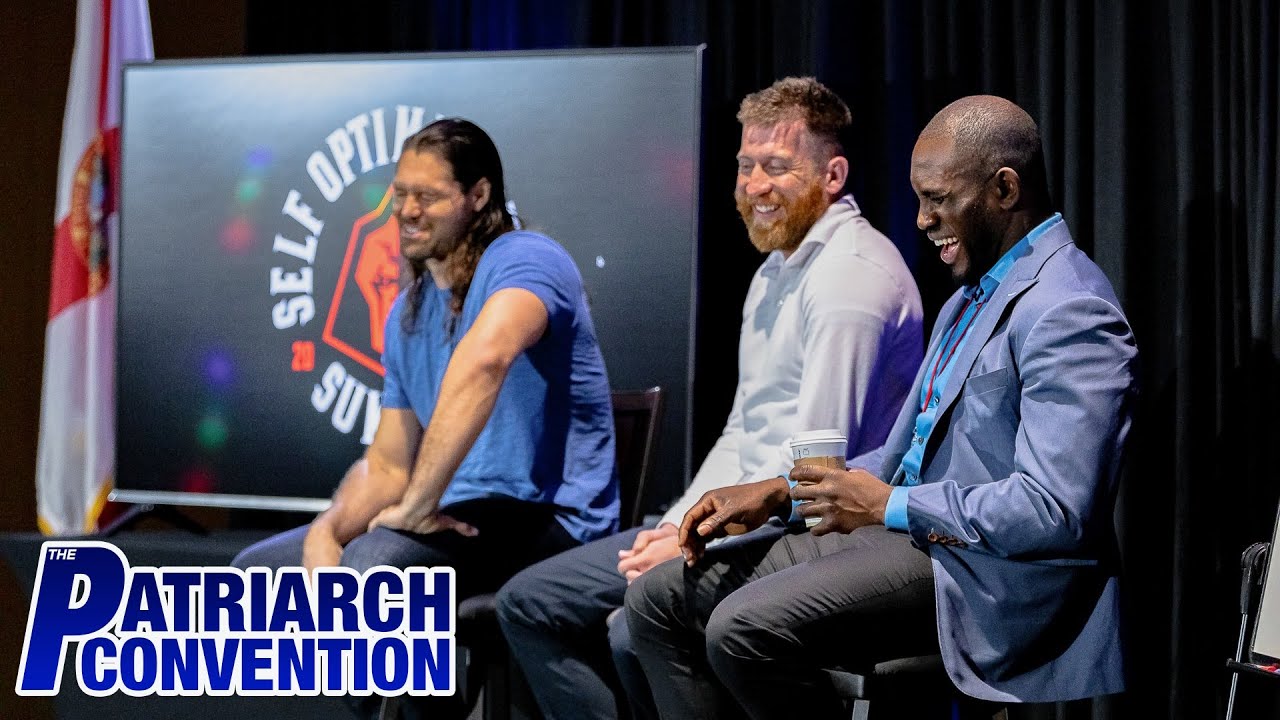
Video summary
The panel featuring Tanner Guzy, AJ Cortez, and Ed Lattimore explores the concept of men's self-optimization across three interconnected domains: physicality, personal branding, and style grooming, emphasizing that intentionality is a transferable skill rather than one confined to specific areas. The speakers argue that mastering an arena with immediate feedback, such as fitness or appearance, creates a virtuous cycle where individuals can eventually shift into maintenance mode while applying those refined skills to new challenges like business or fatherhood. This holistic approach prevents the chaotic spiral caused by unclear priorities and helps men stabilize their energy by establishing clear roles within families, allowing them to avoid perpetually reacting to past mistakes instead of focusing on future growth.
Practical strategies for achieving these goals include adopting a disciplined system over mere habits, where actions are oriented toward specific outcomes like weight loss or muscle definition rather than relying solely on external validation such as buying new clothes. For instance, those facing metabolic plateaus after prolonged dieting are advised to reverse their approach by eating at maintenance calories and increasing training volume before resuming cuts, while also prioritizing progressive resistance over high-rep endurance work for visible abdominal definition. Similarly, motivation is best sustained by setting concrete strength standards that make progress tangible and by aligning workout environments with one's personality, ensuring competitive individuals thrive in team settings rather than isolating themselves during solitary cardio sessions.
Overcoming internal barriers like imposter syndrome requires reframing negative self-talk to recognize existing successes and understanding that true confidence stems from how one responds to risk rather than avoiding failure entirely. The speakers highlight the importance of projecting authority authentically, which involves balancing audience expectations with personal genuineness to avoid appearing as a "poser," particularly for professionals seeking respect in their niches. This presence is cultivated through visualization techniques during physical training and by maintaining authoritative body language that avoids excessive cooperativeness mistaken for weakness, ultimately encouraging men to take necessary ground without fear of being perceived as difficult or vulnerable.
Read the full video transcript
what he represents is patriarchy
we're here to do work as men as
patriarchs
there's nothing more natural than being
a father
welcome back to the 21 convention
special patriarch edition of orlando
florida 2019.
the next presentation here is actually
not a speech it's a workshop
we've added workshops into the event
that are private and exclusive for you
guys
this one happens to be in the
conferences conference conference room
itself
it's going to be starring the one and
only tanner guzy aj cortez and ed
lattimore
all returning speakers veteran in
tanner's case to this conference to the
21 convention
they're going to be talking to you guys
about the three ps of stop top of
optimization
and an upcoming summit they have later
this year without further ado please
help me welcome
aj cortez tanner guzzy and ed lattimore
to the stage
okay so now that all feels like nice and
official let's again just
enjoy this right because it is a
workshop it's not a presentation
but i want to give you guys a little bit
of a background as far as
why we're doing this why we wanted to
work together for a workshop especially
because these two basically came down
for
this you know it's not like you guys are
speaking right
um we've all interacted with each other
quite a bit on twitter
uh both what you guys see but then also
quite a bit behind the scenes
and it was february of last year that i
first reached out to you guys right
yeah yeah and we talked about if if
there was something that we could do
because we realize that the things that
we focus on are so complementary
and we've also realized that so much of
what's really cool about our corner of
the internet and especially our corner
of twitter
is that it's not just guys who are at
the bottom trying to get to where they
like themselves or why people like them
and again there needs to be help for men
who are like that there's nothing wrong
with
with being in that spot and trying to to
get to a better position
but a lot of times men kind of stall out
there where
they're not terrible they don't hate
themselves therefore they think that
they've arrived and that that's kind of
it that's as far as they need to climb
the three of us are very much more
interested in this idea of becoming the
best versions of ourselves of optimizing
who we are
and we all focus on different arenas
within that that are very complementary
so alexander obviously being a master
when it comes to physicality fitness
and everything that's related to that i
will be talking about and i'll be happy
to answer you guys questions about
presentation and presence so whether
that's style or the way that you
communicate the way that you speak the
language you use
body language all those types of things
and then ed is obviously the master of
personal branding
and so we're going to be diving in with
that but like we said before i mean
we don't want to just do another
presentation we want to answer questions
for you guys
so do us a favor and tell us
before we kind of turn it over to you
tell us um
where you're from and tell us your name
and then we'll kind of dive dive into
questions from there so you guys want to
say anything before we
jump in no no you did a great job okay
sweet so who wants to start who can we
help out with one of those three arenas
okay
okay sorry my name is jeff i'm from
massachusetts awesome
and i was planning on asking tanner
privately but since uh this seems like a
good opportunity
i feel like my personal look is uh
boring
uh not enough fun lacks any edge i wear
a lot of like business casual
i think i need a new haircut okay stuff
like that kind of stuff so
what would you suggest for someone like
me who um you know i live a pretty
straight lifestyle like nothing out of
control
and uh i just feel like it's boring why
do you
want more edge or more personality
what's what's the
itch that doing that will scratch for
you
i don't know it just feels like an area
i'm lacking like i said um
i think one of uh my weaknesses and
relationships is that it might be a
little bit boring
okay so so it's more about
i guess is it more about the way that
you present yourself to other people
or is it more about the way that you see
yourself and you don't like that the man
that you see in the mirror looks boring
and safe uh
i have to say uh it's external i'll
admit it's external i don't care
personally
okay so it is more about you presenting
yourself to other people a certain way
than necessarily how you see yourself
correct okay interesting okay there are
a lot of things
you can do with this i would assume
based on what you told me that you
probably fall more within like the
refined archetype right
and so there's a lot of the tradition
and everything that goes with that
one of the easiest ways to be able to do
that is like you said
play with your haircut because there are
a lot of things that are limited within
a dress code and you guys can both kind
of attest to this
that you can still fall within the
guidelines and the expectations of
what's required within a dress code
but by changing your posture by changing
your body language even by
like getting some combat experience by
changing your grooming or those kind of
things like it adds more of an edge
to who you are and the way that you
carry yourself and the way that you look
and so
none of that is necessarily a quick fix
although i would say having a haircut
that has a little bit more discipline
and i'll be blunt with you the fact that
you're starting to recede a little bit
if you just get rid of all of it and you
go totally clean shaven
that's going to add a whole lot more
edge than anything else that you can do
the other thing that i would say is
dialing in and tightening up your fit a
little bit but it's not like you need to
necessarily be dressing where you have
more color or bolder patterns or you
need to add accessories or anything else
because it sounds like what you're after
is uniqueness through more dominance as
far as like that edge of masculinity as
opposed to the playfulness of
i'm fun or i'm an interesting character
is that is that a fair assumption
yes okay yeah so i would say start by
changing your hair adding that as far as
your grooming put on
put on more size wear things that are a
little bit slimmer that will accentuate
the size you already have on and then
start to carry yourself and even act
with a little bit more authority and
that will come across
in your presentation a lot more than
just necessarily going and buying a
whole new wardrobe or accessorizing or
anything else like that
does that help it does you think i
should completely
remove the hair try it right try it i
mean it always grows back
you know and if you don't like it then
there's still plenty of other things you
can do with it being short and it's not
like yours is so far gone
it's really not that it's like dude you
should have gotten rid of that a long
time because it's not that
but there is an edge that comes with
that that
you really can't get in a lot of other
ways
thank you cool okay guys who's next who
wants some help
besides them that's fantastic
haley whiteboard
my name is david is that coming through
just speak up a little bit for us yeah
okay my name's david i'm from
jacksonville um
i've been working uh i've lost about 30
pounds recently and i've been working
really hard
at losing that last like five pounds of
fat i don't really see
i have a i i'm struggling to um
bring my abs through and to really like
show the show much more definition with
muscle i'm getting results but it's
taken me like
four months to lose a small bit of fat
and so i'm struggling to get to go that
last mile
so what are what are my options here how
long have you been dieting for
say it again how long have you been
dieting for
pretty strictly for about six months you
need to take a diet break
so when you're talking about changing
body composition this goes for
obviously everybody the human body is
not linear
so it doesn't operate obviously a
straight line where you're going to have
you can create weight loss for
a period of time which you've probably
hit like for the plateau point where
like i can't get rid of the last bit of
fat
what happens is as you diet for long
periods of time is that your metabolism
will slowly
down regulate itself over and over and
over again
so what what that basically means is as
your body keeps dropping fat and your
calorie deprived states you're under you
start like dieting is basically
controlled starvation you're under
eating
you're under eating you're under eating
your metabolism keeps making little
drops
and that makes a little drop and you
won't notice this but you'll
slowly reduce the amount of fidgeting
that you do you'll take a few less steps
a day
you'll be a little less energetic and
over time you can have a metabolic
maladaptation happen you're starting
metallic metabolism let's say it's
2500 calories at the beginning it could
be 1800 calories
six months later and then dieting
becomes very difficult because then
you're eating
there's a very very small amount of food
if this is let's say your first time
ever dieting hardcore and you're trying
to physically remake yourself
you've hit the limit point for about how
long you can diet hard
what you need to do from this stage on
is take three months eat at maintenance
increase your training volume so just
basically just train like a bodybuilder
sets and reps heavy weight moderate
weight light weight
get in the gym as many days a week as
you can do it for three months eat at
maintenance
and then start dieting again so you've
been you've dyed it down this way
and now we're going to reverse diet you
back up to a normal metabolism
like i said about three months and then
at that three month mark then you'll
diet
back down again and that time you'll
probably get that
last bit of fat off of you but you'll be
in a much better place metabolically
the other factor with this um when it
comes to this revealing abdominal
definition or just muscle definition in
general
the bigger a muscle is the more
definition there is to reveal
uh for those guys this is like an either
or scenario for those guys who naturally
have abs
they already know this because if they
get leaner it's like oh abs if you don't
actually have abs
you need to treat your abs like a more
basic treatment like any other muscle we
have to hypertrophy them
and get them thicker stronger and that
means training them progressively with
progressive resistance that means doing
stuff like weighted crunches uh weighted
twist movements
doing things that really challenge the
muscle to actually work and express
strength
uh a lot of times what guys do is they
sort of go for those like the reps where
it's like i'm gonna do this like 500
reps
something like that that essentially
just endurance training it's not getting
the muscle
to be any more prominent so you have to
increase the loading
increase the frequency of how often you
train them let's say three four days a
week
and then obviously doing this in
conjunction with the overall training
you're doing
do that for three months then start
dining again you'll have a much
different body
this time around so i have a follow-up
for that good
by going back up to maintenance should
he be going up to what the
current maintenance is when his
metabolism drops or
okay not going back up to what
maintenance would have been otherwise
so hopefully you've been if you've been
tracking your calories like this is why
you have to use numbers for this kind of
stuff because otherwise it's all shot in
the dark
if let's say you start at 2700 calories
and now you're down to like 2
000 you'd shoot back up to let's say
like 2500 so this is what a reverse diet
is like you don't
immediately add on 800 calories somehow
your diet
you add in like 300 for a month you add
in another 300
then you add in 200. so then you have
this you know sort of pyramid elevation
happening oh perfect um and that's how
you can avoid basically
like the fear of the fat gain like if
the fat comes back that's how you make
that not happen
so it's not like a case where you diet
hard and then this like i said a
thousand calories more
like yeah that will yield fat gain if
you do it slowly though you won't have
that happen because you're titrating
um the effect that way
feel free to answer the question good
yeah um
oh uh my instinct is to just continue
cutting calories
and cut down start eating six seven
hundred a day and do that for a while
that's the the
in cling that's always in the back of my
mind is that definitively a bad idea
yes great that's basically that that's
basically girl dieting
that that's that's what chicks will do
or it's like i need to lose weight fast
so they just starve themselves for like
a month
and they lose weight fast and they get
hungry and like emotional
and they're probably under fucked and
then they eat their feelings and they go
back up and wait
so like there's this human instinct if
you just like keep starving yourself i
guess like it will just keep working
what will happen is you'll see the
surface get like soft small looking
and still won't have abs and then
metabolically you're willing to play
you'll be in a place where your training
will basically be doing nothing it'll
just be
like eating up muscle um and that's how
people serve that's how people sometimes
will diet themselves down to like a
skinny fat
state where like they die they dieted
for too long
yeah like i said like dieting is not
something you can do you know forever
cool okay guys who's next
who's up
so i uh like to play tennis so that's
one way that gives me a good cardio
and the second thing which i like to do
is you know i should actually do more
of is weight training but the question i
have or you know the challenge i am
facing is basically
i uh lose motivation you know i mean at
the
beginning of the year january i'm
motivated to work out in the
gym three or four times a year but at
certain point of time i you know i'm in
midway through the year i start losing
motivation towards
working out in the gym but tennis is
something which i'm you know
particularly
uh i carry it on because it's more fun
it's social thing for me
but what can i do some tips you can give
me to sort of maintain my motivation
on weight training i always call this
motivation games
um you know like on the psychological
side i could tell you to like dive into
your identity and like you know what is
your vision of yourself
and that could go on forever from the
external motivational side
there's two factors you need to say if
you're going to do something you want to
commit to it
setting a goal like a concrete goal
around what it is you're doing
that is cliched but it does work you
know very often times as a man
you know as men like we all there's
things we want to do i'd like to improve
this part myself
if you're not putting pressure on
yourself where you have to keep yourself
accountable
it's probably not going to happen it's
very nice to idolize and think that
i'm internally driven and i don't need
motivation everybody needs motivation on
some level
you know even your internal motivation
is like your internal drive is
motivation enough
so creating a goal around your training
that could be like something substantial
working out with a partner not getting
like someone to train with you you know
whether it's personal trainer or a buddy
that's very motivating because you know
bros you have to be very cliche when you
have a bro there that's you know
watching your progress you're watching
his progress
again like you get that um you know sort
of that fire going in you
yeah the other factor that this goes
into like this is the details of it
depending upon how you're training if
it's not that effective
it's very easy to become demotivated
from lack of results and that's
something i see with a lot of older guys
where they're
still training how they learn to train
20 years ago in high school
um you know or you know whatever it was
like yeah let's say in college maybe
and so you're doing these workouts and
it's kind of working it's kind of not
working you know maybe you're doing like
damn like let's say three by five
training which doesn't do anything for a
lot of people
um and you're expecting like this
outcome to have happen and it's not
happening
it's like you know what like i'm not
really feeling this now yeah had you
trained effectively you might have
gotten
much greater results it's like you know
what i like doing this and it's working
so i will continue on doing
it so like i mean the lack of motivation
that i've seen in most people
you know like i said it's either from
lack of pressure or what they're doing
just isn't working
if you're getting a return on something
there's usually an instinct to want to
keep doing it because
it's substantial you can see it if it's
not happening at all like yeah anyone
will want to quit something they feel
like they're making no real progress
yeah how fun would it be to play tennis
if you sucked at it
right i mean you wouldn't keep doing it
if you didn't enjoy it and it's the same
thing in the weight room where
the better you get at it the more you
enjoy going and then it's i mean
i don't i'm certainly not at these guys
level but i don't have to motivate
myself to go to the gym i hate days when
i don't get to go anymore because i
enjoy it that much
i assume that's the same for you guys
too absolutely
and and today i would add like uh just
from what i can see
just from what i can see uh back here
like you don't look
particularly like jacked or anything so
my first thought is okay when you say
you you stop keeping your motivation
three or four months in it might be a
little earlier or
like what he's saying what you're doing
is not that effective and that can
be the first thing i hear is like i like
tennis but weightlifting has kind of
given me an issue
is okay well tennis is the got this
social component
there's a competitive component and you
need to make the workouts work with your
personality
like you know for me when i stop now i'm
going to talk about boxing my my bad
right
when i when i stopped fighting the
hardest thing for me to do to switch
over
to training was to find a way to
get that that feeling of incremental
improvement because like in the gym i
can feel okay i worked my warm myself
out
i feel like i'm a little more
coordinated how can i translate that
feeling
into the gym well i started tracking uh
body fat and
that's one of the reasons why i started
while i started paying i paid
to go to a gym that has access to a an
in-body scanner so i could see and track
what i was doing
and then it turned into a competitive
game for me and on top of that the other
thing was like just going to the weight
room was f and boring for me man
like being in that place in that fitness
environment there were guys to talk to
and interact with
so the motivation is not i mean the
results are a big part of the daily part
is you have to play to your personality
if you're a social guard your athletic
experience has come through
competition and team sport you're
probably
going to hate the weight room when you
first get started
you're definitely going to hate running
and
like you know i'm not telling you to do
cardio or not but
those are solitary improvements in your
fitness and that's not
what you've gotten used to so you got to
find a way to recapture that whether
it's you know
join and i'm telling you dude i go to
this place here i am like like quite
literally a professional athlete
and they're freaking old ladies in there
sometimes working out
are guys that have never competed in
life but you know what it is it's the
social component for me it's like
getting back in the boxing gym
i'm not i'm not willing to put the
investment in like a boxing gym anymore
but that was very important to me when i
got out of it once i figured that out it
it turned into
uh you know i'm going there waking up at
five in the morning
and getting in there and then i'm gonna
work out you know again
because not just because the trigger for
what's enjoyable has changed is now i'm
getting into the training
so yeah work with your personality and
like he said man
track your goal whether it be you know
okay man i put up my arms a little
bigger um
three pounds heavier in the morning not
at night
those kind of things you know you you
follow those enough to bring motivation
yeah you just got me thinking about this
ed since obviously but you were you
were our legitimate professional athlete
and i've been watching you train
you know sort of like your instagram
you're hitting like certain strength
goals doing certain things
yeah and that's something that this
actually speaks to the psychology of
like you know masculinity
what are your standards that you have
for yourself across your life like
are you even thinking those terms like
if you were to go through like different
categories of being where you have like
your professional life your
familial life you know your personal
life you know tennis whatever
do you have certain standards that you
hold yourself to there are defined
standards
yeah that's something like with strength
training that's like very the metaphor
is very simple direct
if you want to get in the gym and start
training and motivate yourself let's set
some strength standards
yeah and like i've i've talked about
many times on the email list where if
you can hit certain markers which is
with body weight
with dumbbells with a barbell with
bodyweight strength that gives you
something to work towards
and it's definable and you can reverse
engineer that goal
and then now when you're in the gym it's
not just an arbitrary i'm here to work
out
yeah i'm here i'm here to train chest
like no i'm actually working towards
something
if you hit that goal let's say you're
you have you find your happy
median point well then now you know you
need to maintain that
and you've also taught yourself how to
systemize uh process towards a goal
you'll pick something work it backwards
and then you can carry over in other
areas your life
i think that's the thing that's why i
harp on the physical side
so often for men is that if you are in a
place where you're trying to figure out
like
how you want to develop yourself what
what standard are you holding this up to
where the standards and that's a big
question for a lot of areas for the
weight room that's pretty simple
yeah what do you squat what do you bench
what do you deadlift
how many pulses can you do how many
push-ups can you do can you do dips
these are very basic things and once you
train at them and you're able to do them
you reveal that capability in yourself
you realize
okay like on a very basic but very
profound level
if i set my mind to something and apply
myself with action
with physical force and i execute i can
actually bring that to being i can make
it happen so change is possible
if i have a standard that i follow well
then you know what
what else can i apply standard to and
then you start improving in
other areas yeah exactly you create your
own term momentum that way which is
drive
i do have a great inputs by the way so
i'm gonna take a lot of takeaways i'll
apply that the suppose social the
competitive spirit
but i do have a follow-up question so
personally my goals are to lose at least
you know five to about
eight more pounds and become more leaner
you know
right now probably when i last checked i
was at 14 body fat
bring it down to about 10 percent and
pack some muscles right so
i've heard a little bit about
intermittent uh you know fasting
what's your take on that does it help i
mean two meals a day with intermittent
fasting you know i mean
that's what i heard some of the you know
youtubers talk about that
so let's go first there's lots of uh
roll with that so i mean for all you
guys you know to make a general
it's entirely possible to gain muscle
and lose body fat at the same time
that's totally if you're brand new yeah
that's so it
that's totally doable if you've if you
haven't trained in a long time let's say
it's been five years since you took the
gym seriously
if let's say yeah you're just overweight
you know you know it
and you want to start training again
having the more body fat you have on you
it actually gives you a metabolic
advantage because you can keep gaining
muscle for a while
because the basically calories towards
the muscle gain will come from the
excess body fat
now if you've been training for five
years that like you're not gonna have
that happen like it's gonna be more bulk
cut comp scenario if you are a relative
beginner though
yeah you can get bigger and get leaner
at the same time
now where does intermittent fasting play
into that intermittent fasting is
not optimal for muscle gain so like for
yourself if you're already playing
tennis you already have a cardiovascular
base
i would i personally wouldn't recommend
that you could do it and you might get
leaner but the likelihood of you being
more muscular it's pretty low
you're going to be kind of a skinnier
version of yourself with you know no
real
you know substantial muscle um you know
what would be you know more advantageous
in this basic would be to
eat like an additional three meals a day
high protein diet
lift three or four times a week and eat
at maintenance
you know that's the other factor for
someone that's um you know sort of like
that in that in between zone if you eat
at maintenance calories but you increase
your protein intake to about one gram
per pound of body weight or more
you're going to gain muscle mass that's
been clinically substantially proven
many
many many many times over um
like and that's an issue for most people
in general you know for a lot of guys
they just undereat protein
if you're on a high protein diet and
you're lifting weights
and you're not gaining any muscle mass
either you're lifting terrible or you're
lying about your diet like it's kind of
like so it's always impossible for that
to not work i've never
gotta hear your hormones check yeah or
you know maybe your testosterone is like
in the tank that could that could be it
so that was me yeah yeah so i mean
that's another factor to that so
you know intermittent fasting i would
deem it like i airmen fast but i'm
pretty happy with like my physique right
now relative to what i do which is
ballet
where i can only be so big for it
because otherwise you can't spin because
you're too heavy
um i use intermittent fasting to
maintain my body
weight by that percentage and i can
drive that down you know but if i decide
like hey man i want to get up to 220
i wouldn't be in run fasting i'd be
eating three to six
small meals a day and training to you
know get bigger
um and do it that way so you yeah i mean
like the metaphor there like you always
pick sort of the dietary model that is
most effective for your specific goal
if the goal is to get like leaner with
muscles that's going to be sort of like
that traditional like
what i call a recomposition diet if the
goal is literally just to lose body fat
yeah that'd be your man fasting and if
the goal is to obviously gain weight
do what bro science has proven works a
million times over
small protein-rich meals and go lift
yeah
and and i'm going to add to that as a
our resident
bro science kind of apprentice
doing a lot of experimentation on myself
lately and one of the big things that
i've switched to is intermittent fasting
here's what i'll say about intermittent
fasting one
you absolutely need to get your
maintenance
calories are slightly below
10 percent is uh you know it's what's
popular i guess and that seems to work
if i think about
my numbers and what i am yeah i'm
putting away about 1800 calories in my
if window
most times here's the thing you're gonna
be surprised how relatively difficult it
is to
get 18 to 2200 calories in
in a in a six to eight hour window if
you're doing it correctly
like not eating garbage i mean eating
good lean
food it's going to be a challenge can it
be done if you have the lifestyle for it
i i you know
i can eat whenever i want to so it
wasn't really
an issue once i figured out how much i
needed to put away
but if you can do it i i found and
there's another thing you know
from what when i looked at in the
science i guess your body
goes into a slightly ketogenic state
after you haven't been
you've haven't consumed anything for you
know i think it's
12 hours maybe 14 or whatever and that's
what a real benefit comes in so what i
would do is i would
intermittent fast at the the 14 or 15
hour mark
i'd go do after already my weight lifted
in the morning
i'd go and do an afternoon cardio
session and i got more out of the cardio
because my body was primarily
burning fat or so i'm assuming you know
and at least the results show so we can
we can go with that
so iaf will lower body fat as far as
keeping muscle goes
it's funny uh because i have two things
to show
one where i wasn't doing intermittent
fasting and eating clean and one where i
was
and my muscle gain was like
nil i didn't lose any i didn't gain any
but the body fat dropped on iaf when i
was when i was spacing it out and
training though today
oh man i must have gained in one month i
think my body fat percentage dropped
almost three
percentage points and i gained eight
pounds of muscle
and that's in and that's from eating
about 2400 calories a day
all clean mostly protein and and really
just
you know living in the gym so the tl dr
to sum that up
yeah if you if you want to lose body fat
and you're content with where your
muscle mass is right now i
you're not going to be disappointed if
you don't suddenly you know come out
looking like papa or something
yeah uh if for sure
and on top of that from and this is un
related directly to the question but the
mental clarity you get not
from like some magical chemical change
that happens so apparently that happens
but because of you not having to worry
about meals
uh is is really that's worth the wait
and and goal to me so
there's actually a good point there
about you know when you gain more muscle
mass eating
you know the meals so there's something
called positive nitrogen balance in the
body and basically means that when you
are consuming protein regularly
your body has enough amino acids to
continuously be building muscle
if you're not eating protein regularly
you'll be in a negative nitrogen balance
um that's the reason why again
bodybuilders will eat around the clock
where it's like that seems like a lot of
work like yeah it actually is a lot of
work but your body can basically build
muscle continuously 24 7.
if you're only eating one meal a day
like your your gains will be pretty
marginal
and there's also the fact that factor of
what ed pointed out where
trying to eat like 2 000 calories within
eight hours is actually like really
really hard
if it's not if it's not terrible food um
like i the only way that i'm able to do
it like i have to i'll have to use
protein shakes because otherwise it's
like
it sounds cool like oh i get to eat
these great huge meals if you eat like a
really big meal
you're not hungry again for six hours
let's say four six hours like oh i'm at
the end of my
window but then i need to eat another
huge meal and then like try it and to
add to that correct me if i'm wrong but
like
i think you get into a problem because
the protein
shakes somehow have an effect on your
insulin levels
uh so it makes it harder to burn fat if
you're going to get that
get that with protein shake the the
thing with protein protein is
protein is highly thermogenic so
basically it takes about
for every household phrases for every
100 calories of protein you ingest
your body will absorb about 70 calories
of usable energy from that so protein
like the thermogenic value protein's
like 20 to 30 percent like this the act
of digesting it actually burns calories
but that's also why if you eat like i
mean okay your your your indian supreme
steak
eat chicken let's just let's just
pretend
jesus all right let's let's pretend you
were sick and eat chicken
um i lived india six months so nothing
but love let's pretend like you're
sticky chicken and you're really full of
eating the chicken
uh that's gonna take a while to digest
so like dairy
completely plant-based okay that's
actually
okay that's actually perfect because if
you eat a plant-based diet your fiber
intakes can be pretty high you'll stay
full really long time
so i mean like now that i know all this
about you like i wouldn't recommend
intermittent fasting for you but you
probably end up really under eating
and like i said you just end up like
skinny fat indian so which you probably
want to avoid
here sir so i want to come back and add
on to his question a little bit and talk
about
goals and motivation i have one goal and
let's lose 100 pounds
but i don't think about it like ever and
it's i'm
almost entirely habit driven did the
sunrise i go to the gym
did someone say my shirt fits like a
tent then i go buy a new shirt
and that's literally that's like
everything is a habit
and i'm wondering if i'm just missing an
opportunity to go harder faster better
think to to use the cliche that's
floating around the internet right now
it's just useful but it's turned into a
cliche are you going to tell them to
tell us on this
no but
no one's talking about it man now uh
you need a system instead of a habit
there's just there's no way around that
because you know or not even
it sounds like even a habit of making
sure i hear this right
that you you have the goal to lose the
weight
yeah but you only work
on it when someone notices or some
situation arises that
points out you need to lose the weight
that's the problem right let me say it a
little differently so i came up with the
idea that i needed to lose the weight
and i just structured the habit and said
okay i'm gonna do lifting three days a
week cardio four days a week
the other four and boom boom and then
gone okay
is it working to the point of where i'm
blowing up my body we talked about that
um and so uh you know it's it's that's
really kind of the question is
is i'm not revisiting the habit i just
structured it and i'm executing the
system and i'm not thinking about it at
all
and so i'm trying to figure out how
often should i be thinking about what it
is i'm doing intentionally
in those sorts of things exactly
this is this is a good thing that's a
good question this is a good expression
because like
this is the like the dilemma between
like systems versus goals
like do you set goals or you create a
system this has always been my argument
that
if you're going to create a system a
system has to be oriented towards
something
you don't create a system arbitrarily
that is like by definition if you just
do arbitrary actions it's not a system
so a system has to produce some kind of
specific effect
or outcome now taking that into account
how often do you want to revisit the
goal that you create the system for
you in your case because we talked you
know the other yesterday where it's like
you've had some
health ramifications from doing things
where you're doing this is where
comparing you know the goal
versus the system you created versus
like the time frame you're doing on
that's where it's useful because then if
you are overextending yourself or if
you're underperforming
you now have some sort of set of metrics
you can follow
um if you're just surface blindly
following yourself through the process
this is where guys will take themselves
off a cliff because they never
you know took a step back and considered
like okay like where am i actually going
this is this actually
directed do i have like north star in
place or it's taking me towards that
goal
or is am i going sideways i'm actually
you know ending up in a spot where like
i've actually now negatively impacted my
health now i have to
solve that problem you know so a system
so every system is going to have those
sort of like features and faults built
into it where
you'll have to course correct it every
so often
so like obviously it's very effective in
the sense you've created these this
habitualization that
it's working like it is yeah but isn't
working too well
there is such a thing so yeah from
stanford like what do you do with that
this is where if whatever goal you set
for yourself whatever system you create
you always want to revisit it i'd say
like i'm gonna say weekly but like
monthly
every so often have you know some sort
of number in place let's say for weight
loss like you know your body weight's
going down
okay like that's going down am i
plateauing how's my health feel like
this is like where i get into biomarkers
to people like there's certain
biomarkers you should all pay attention
to as men
yeah very things going well great if
you're losing weight though let's say
like your libido's dropping and you're
feeling weak in the gym
okay maybe we need to take a step back
you're like you have your sleep is
negatively impacted
that's something to examine and then we
can compare that with the data we have
something from the habits
uh yeah like you know there's a little
complication to that but that's also how
you're able to maintain progress
long long term you know you know oreo
had been a place where i've seen this
happen for people they're very
overweight where they try to lose body
fat
and it works but the way to lose body
fat
uh you know dramatically and the way to
be healthy long term those are two
different things
you know it's not the same system so
okay thank you for translating my
question into the system no problem much
better way of phrasing it thank you
right here how do we get someone out
there
oh you already got one okay sorry dude
sorry dude hey guys we've had some great
examples talking about fitness
the gym and applying that to become a
better version of ourselves
the three of you have a lot of skill
mastery outside of the gym
as well how do you take the discipline
that you structure your routines and
apply it to your personal branding
apply it to your style and do that on a
weekly basis
you know that where we're essentially
lifting weights one day we might be
doing cardio the other day
how can you help men and fathers have a
better routine in that area and
basically
not skip leg day you want to start with
personal branding
uh sure so so one of the things that
anyone who's followed me over the past
two years
sometimes even surprises me how much
growth has occurred without a change
in the uh the input of work the the
output is
increased and the input stayed the same
and one of the things
that i think has well too they work in
tandem
uh one i never forget
why i'm in this position at all like why
anyone even cares that i'm up here right
i never forget that and i'm always
grateful and i can always go out of my
way to remember that each day i mean if
my girlfriend was here she would tell
you that
on a at least five times a week if not
seven days a week i'm talking about how
much of a good day it is and for a
practical
application standpoint to your question
this
allows you to always
be aware and intent and have a sort of
intention of whatever you're going to do
but not from a negative standpoint like
what i what i thought his question was
earlier using
the link here i thought he was asking
like how do i stay
uh committed and had to to perform my
actions with intention
and have it turns out that you know that
was the case but here
uh thinking about that and using it the
idea for me doing that is i want to stay
aware
of everything that i've done so i do
keep the work consistent so i do
continue to do what i've
i've done and continue to have a
positive
connection with it and i guess i did you
know kind of walk into
the next thing which is i act with
intention every day and it's easy to do
that because i don't
i don't feel like what i'm doing is
works what i found is a very enjoyable
way to exist i get to i tell people all
the time now
i'm i'm fortunate and that i get to make
a living being myself
just just straight up me for better or
worse you know
something good happens something bad
happens i'm grateful that people
care for whatever reason right and i can
go
and talk about that and teach from that
and use that so i remember the positive
impact that i'm having and how it's
helped my life and i think if you can do
that with any habit
then then the habit becomes a system and
it becomes
really easy for you to just
do it but even once
when it gets to that point you still got
to step back and go man
i'm happy that i can do this i'm happy
that i'm here
i'm happy that i have you know like like
you were saying i'm not a father
you know tanner so i'll give his his uh
perspective on that but if i was a
father you know every every day i
remember that i'm i'm so grateful to
have a healthy
kid that i get to rear and deliver my
values to and that kind of thing and
then at that it just becomes easy it
puts everything in a positive way
for me i've found that intentionality is
not domain dependent
unless we make it that way and it's it's
a waste if we make it domain dependent
where you get really good at something
in the gym or you get very
good at being intentional in your work
and then you don't because you have
these actions that you do that are
intentional
but underlying those actions are the
principles and there's the whys and the
hows and all these other things
and it's a waste if we just keep this in
one arena that we're really good at
being intentional
and then we don't take those same
principles and apply them to different
actions
within different arenas that's one of
the reasons why the three of us wanted
to talk together is because
we found in our own lives that that
intentionality is not domain dependent
i became a better father when i started
going to the gym
and i became a better businessman when i
became a better father and i
all these things if you're good at if
you make intentionality a skill set
then you get to apply that skill set to
every other arena in your life that
matters and so
one of the reasons why we wanted to work
together is because we can work with you
guys and even as we're trying to answer
these questions now is helping you see
that
if you are intentional and you develop
that skill set in one arena that matters
then it's like we were just answering
over here you get good at being
intentional
and if you're good at being intentional
then you want to do it more you enjoy it
more you don't have to motivate yourself
to do it anymore
you find yourself doing it in all these
different arenas and so that's when you
really start to win that's when you get
to this level of optimization
and so get really good at being being
intentional
do it in arenas where you get really
quick good feedback like fitness or
appearance or something else
and then the other thing is also
recognize when you're able to go from
this building mode
into maintenance mode like for example
with style i don't think about what i'm
putting on every day
any more than you guys do because i've
developed
i've gotten myself the level i want to
be and i get to be on maintenance mode
when i come to an event like this
then i have to think about it a little
bit further just like if you're getting
ready for a fight
or if you're getting ready for a
performance or a show then you have to
tweak your diet a little bit more but
maintenance mode
is infinitely easier you still get to
maintain all those benefits
and then take that skill of being
intentional and apply it to the next
arena
so it's this virtuous cycle of getting
better and better at more and more
things
while still maintaining what you're
already good at and that's how you start
to self-optimize
so i'm gonna add to this a bit so my dad
he's a
he's a doctor and he didn't become a
doctor until he was 47.
so he's like pretty late in life he
backs back we went back to school 40
40 47 graduate 47 so he's but he's in a
60s now he's been positioned for
you know something about like 16 years
roughly
so something i always picked up about my
father is that he
has always had a very clear division of
priority in what he does
with his life and i've never seen him
half-ass anything
ever at all but he also
does not do too many things so you know
from a parenting standpoint one of the
things
i've seen working with parents is that i
don't know what your situation is with
you know your you your spouse your wife
your kids whatever
you know what that division of labor is
but when you have clear
let's say gender roles clear roles what
the father does clear roles what the
mother does
you have a division of labor where you
know who's taking care of what with kids
that allows you to focus your energy
better those things that are priorities
to your role and what you're trying to
take care of yeah what i've the case
the situation i've seen working with
parents is that people they'll
they never have these conversations with
their spouse whether they're together
divorced
and then it becomes a sort of mess where
everyone's trying to take care of
everything
or no one's taking care of anything and
then you fall into the state of
perpetual
you fall to the same perpetual reaction
to your own reactions
and then at that point trying to focus
your energy
focus it where you're basically trying
to keep up
with your own bad habits that were
catalyzed you know let's say years ago
and you know how do you even create a
system out of that and then like that's
why i collection of this like
it's just pure case like it's like the
mess of a life it's like well what
should i start working on
yeah you sure like mental review i'm
like well everything kind of sucks right
now so
yeah then you hit that point you're like
well what's the priority then
oh jeez you're like okay let me figure
myself out but then you
you trying to figure that out for
yourself also it's like well you know i
need to figure that out with my wife or
ex-wife whatever situation is
oh damn there's another conversation i
have to have
you know how can you avoid all that
since that's a lot to solve you figure
out what's important to you what you
need to be doing
and then you make sure that you do only
those three things each day and yeah
obviously there's still going to be
things that come up in fatherhood where
like you're going to have to solve
problems
you don't expect to have to solve that's
going to happen but now you're working
from place to stability
and you have a defined role you have to
find roles that you're playing
and you're not trying to fix your own
problems while fixing your kids problems
or fixing your wife's problems
while fixing your marriage's problems
which are affecting your kids problems
yeah like what like that's like so he
talks about the the virtuous cycle you
have the psycho
virtue you also have the cycle of this
pure chaos
yeah and that's all of your mistakes and
lack of focus and lack of attention
compounded on itself
so obviously getting from here to there
yes that does take time
you know where do i think that starts
for a lot of guys
start doing push-ups you know like
seriously because if you do only one
thing consistently each day
at least you have that stability with
consistency and it's really hard to
argue that
dropping down the morning and doing
three sets to failure well at least
you're doing something the same way each
day
since there's nothing else in your life
that you are doing the same except being
consistently inconsistent with
everything else
hopefully that made sense awesome okay
we had one over here
okay okay i stole the mic sorry
um come on
i'm curious to know what you gentlemen
see as you work with
men who are building a brand or
improving their appearance or
physicality
that are common and destructive
uh mistakes or mindset errors that they
make you know the
proverbial one step back that we should
all be
thinking about wanting to avoid going
forward
i'll go first man people like
forget that they have a valuable
perspective i'm always tell people
to tell your story because like i i
could
say something one thousand times and
they could have heard it a thousand
other times you know combined
and it's how you say it and whether it
be because of how you look or a specific
experience or maybe they just caught on
the right their time
what you say has an impact and and
prompts
positive change in behavior and so what
i see is people say oh you know no one's
going to care what i have to say no one
cares about my experiences whatever that
side or the other
and i'm like dude you you have to get
rid of that mindset you
become valuable partly because
you start believing you are valuable
you know impostor syndrome is what
happens when people give you value and
you don't believe you have it
and then you run around thinking like oh
who cares you know everyone's like well
no we really care we want to hear it but
you don't believe us you don't
so you can't even deliver a great
message
i mean like like right now i mean
whether you guys are bored as hell
or having a great time i know what i'm
saying is great right
and i'm going to walk away feeling like
i shared something positive
and something constructed from my life
and i see that every person i work with
like everyone from from teaching them
how to tweet
to present themselves better or
overcoming something in their individual
lives
people consistently consistently
underestimate and undervalue themselves
i see that exact same thing when it
comes to style and presence and
presentation most of the men that i work
with one-on-one
they diminish themselves they know that
they don't dress
or carry themselves or speak in a way
that's
poor or mousy or bad they just get to
this point of being a safe neutral
and they have a desire to get into the
territory of being something stronger
whether that's adding more edge to their
look or anything else but there's a fear
of the risk
of trying and failing and it's the it's
the flip side of the coin of this
imposter syndrome
where maybe people won't expect
something of me that i don't expect
that i don't expect to myself i'm not
capable of it so that's where that
imposter syndrome comes in
and the other side of it is and at the
same time
they're also not going to see me try
something and fail at it
they're just going to see me as being
effortless but
not masterful and it's like we we desire
effortlessness more than we desire
mastery because there's not there's not
risk that comes with that
and so it's this i see those as two
sides of the same coin and
it's really helping men get enough
confidence to be willing to take more
risk whether that's with their branding
whether that's with their physicality
their presentation anything else
and recognize that you are capable of
handling that risk and even if you make
a mistake and you fail
the way that you respond to that risk is
where your your confidence should come
from that's where your power that's
where your self-esteem should come from
as opposed to the fact that you never
fail therefore
somehow that makes you a better person
yeah it's a weird inverse of where our
values should come from
this this is a simple thing but the
negative self-talk
so everyone has a story about themselves
that you reinforce in the course of your
life
you have yourself you have your beliefs
you have the things you say to yourself
you have that conversation you have with
your mind
that destructive mind you have that sort
of you converse with
um you know and it takes many forms it
could be sort of like it could be a
gremlin it can be a sort of devil it can
just be
what your father said to you when you're
growing up the way you dealt with your
mother
but this sort of reinforces these
conversations we have where
you know from the very beginning we sort
of set ourselves up to fail because
we're framing our language and stuff
away that's
it's negative um yeah i mean it could be
something very basic like i wanna go to
the gym
yeah i'm just gonna pick on you because
i love indian people
my girlfriend's indian so whatever um
yeah so i've worked a lot i love indian
clients and they'll have this belief
they have where it's like
oh you know i want to get bigger one get
stronger but i'm just like i'm a skinny
indian
like brown boy like kind of bullshit and
like like like bro
like look at how you're talking to
yourself yeah
style guys the techie thing like i work
a lot of tech guys where it's like
you know it's so like the dorky look
they wear a backpack they dress like
they're still in college and they were
they dressed shitty in middle school and
they've been dressing crappy for 20
years
it's like this doesn't doesn't have to
be who you are
the rest of your life you have this
image that you've created about yourself
that
you know this is who i am and this is
just how it is and you know i can't can
i improve this much from this point
i'm like let's back up like do you
approach every area of your life this
way
no usually they have something where
they've actually accomplished some level
of um success okay what was your
attitude towards that
and usually it's a bit of a different
attitude they were determined they want
to do this they believe themselves
all right is that that way of conversing
with yourself is that something that
could be carried over somewhere else
a different part of your life and
usually it is
and if you're starting from nothing
that's a bit of a different conversation
you know maybe that's just let's just
start with a physical because you have
nothing else you've
done if you're an older gym and though
your father you've done things that
you're good at you had kids you have a
son you have a daughter
you're probably doing something right
you can be proud of so can you take that
can you take that positivity and can you
reframe how you speak to yourself that
way
you probably can yeah and that's where i
i see the big change in mindset comes
from because you're starting to change
how you write your story
as you live your life daily and that's
kind of what ed does daily where every
day is a good day
it'd be hard for someone to come to his
life and make him feel bad because he
already has
a way he writes his story the way he
writes his tweets where
it's positive it's uplifting so
all right we got time for one more come
on there you go yeah
these guys are waiting well oh snap
through the clock
surprise all right so my name is
jeremiah i'm from
tulsa oklahoma um
i'm a chiropractor i got a bunch of kids
as well but i would like to
uh one things i'd like to do is have a
little bit better
presence when i'm when i'm at work
dealing with patients
also be able to get a little more
respect from my family members
so i was going to ask what uh with the
realms of
branding style and fitness what things
do you
would you suggest that i emphasize in my
life
why would you say your presence lacks
uh you know i think that honestly i'll
rephrase it because i'm curious about
something
okay uh how do you see yourself
like how do you want to be seen as a
better way because saying that lacks it
like
you may feel like your presence is
lacking but maybe it's not so i'm
curious how like where the phrase is how
do you want to be seen
how do you think you should be seeing
and why and how you want to be seen will
not be
how people are seeing you that's what we
want to look at how do you want to see
i'd like to be seen as an authority like
when i got out of school i grew a beard
so that i could look five ten years
older commend a little bit better
respect
that type of thing sometimes i feel like
like i'd like to have the authority in
that interaction
and sometimes it's there a lot of times
it isn't though do you feel like you've
earned the authority
like are you an authority within your
business yeah okay
so it's not a matter of mastery or
competence it's a matter of
communication of that competence right
okay
okay um yeah the first thing
you know okay so i'll i'll hit this and
we'll do this quick just from a style
perspective but one of the things that i
teach guys from that perspective is
you need to understand how an authority
within your particular field is
perceived by who your niche is by who
your audience is
because an authority that is a doctor
he's going to have a lab coat an
authority in the military is going to
wear certain clothes and be perceived a
certain way an authority who's a teacher
over small children
there are different ways that we expect
authority to look
within different fields and that will be
different with you as a chiropractor it
will be different with you being in
oklahoma than if you were in la
and it's going to be different even
based on how you differentiate yourself
from your competition within your field
and within your city
and so trying to pinpoint what authority
looks like
and then finding a way that you can
communicate that while still being
authentic to you because if
you do it at the expense of what you
feel authoritative in
then that's when you feel like you're
playing dress up and that's when you
feel like you're a poser and it kills
all that credibility it kills all that
authority
so it has to be a balance of both what
the tribe what your audience sees and
expects authority to look with
and what you see so that when you see
yourself in the mirror you see a man
that's worth that authority
you're killing that imposter syndrome
yourself so from a style perspective
those are the two things that we would
need to look at
and what i would do if you were a client
is we would actually like get down into
the nitty gritty of what that actually
looks like
and come up with the solution together
so from a style perspective that's how
we would build that
yeah we have about one minute left so
i'm gonna talk to you afterward
since i actually have a lot to say about
this question yeah
the short version would be yeah this
goes from the physical
standpoint just myself um
when you're training in the gym you have
to visualize what you're turning into
and there is such a thing as training
yeah i mean you're not doing exotic
exercises but when you're doing
something
like a bench press you're doing
something like upper body movement
you're training shoulders
you want to visualize power within
yourself where you can express that
and that's something that you know
combative stuff brings out where it's
like you have to just hit this back you
have to hit it hard
and there's a level of aggression and
level of intent with that so if you're
if i was training in the gym
i'd be asking like you know you want to
improve your presence you want people to
take you more seriously
let's take this seriously right now i
want you to apply intense focus to this
and have good posture during these
farmers walks and walk upright
and when you grip this grip it with
authority i mean this is what training
does for you because it allows you to
take these qualities
that you want to live out you can
actively apply it to what you're
literally moving
to how you're moving that's why you know
that's why
when we see someone that's like a
warrior when we see someone it's like a
navy seal
when we see someone that we know has
physically
gotten their body and mentality into a
state we know there's something there
that they've done
that's mental and physical you know and
like with the physicals we usually focus
on
you know like why do guys like to bench
press because men like having big chests
why do men's like
why is a man like having big chests or
shoulders
it does because well women like it if
you're a guy with shoulders do men take
you more seriously
yeah they do if you've got huge arms or
do you get you know no
looks from people yeah you do is that
shallow
on one level it is by another level it's
because we know that perception
appearance is
powerful power so yeah that's yeah let's
talk afterwards
after okay guys so we're out of time but
one of the things that we want to talk
to you guys about
unless you wanted to answer something
really oh no i was going to give you
like a real quick thing and i'll talk
after
right so
[Laughter]
yes you're excused so one of the things
that comes with
uh being respected and having that
authority in our presence
if you look at every single one of the
the speakers here and what i love
you know you can tell kind of by
definition because
we're the ones that put our faces out
there and take the attack
we're not afraid to be disliked and i
find a lot of guys
who have problems projecting authority
and
gaining respect there you probably play
nice
at the very least play more
cooperatively
then it sometimes would be beneficial
for you to get
what you need and where you need to go
and so people
you know it's unfortunate but we take
kindness as weakness
and a lot of times that causes everyone
like if you feel that way
in work and home uh and
likely somewhere social even though you
didn't talk about that you know what
we're working on
if you feel that way you you almost
certainly give ground
too easily about what you what you know
from
the the respect that you are from the
training you got for work
and and the bunch of kids and the family
put together from what you know and you
likely you know probably give a little
too much ground i could be completely
wrong but my first intuitive i'm gonna
shoot out an answer before we gotta go
uh analysis is that
so don't be afraid to be uh the bad guy
so i love that you finished off that way
because this ties in perfectly too
you guys have noticed that we've had to
do quite a bit of back and forth
and we've been able to answer some
things relatively specifically but
we've also had to answer quite a bit in
platitudes or kind of general ideas
because
each one of your situations and
scenarios is very different
which is why we originally came up with
the idea of doing this
self-optimization summit because we know
from our own experience that just being
able to talk about things in general
doesn't always it can get trapped in
this world of theory as opposed to
actually turning into transformation and
actually becoming a better version
so what we're doing is we're putting on
a summit or it's actually more of
it's more of a lived-in experience we're
doing it the week of november 4th
through november 10th we're doing it at
a house in hollywood we've got
about a dozen spots and you guys are
gonna get to come
spend six days with us so you'll be
working out with the three of us having
alexander help you out every morning
with workouts you'll be going through
very specific stuff related to style and
body language
we'll be talking about personal branding
whether that's online or even how you
brand yourself in relationship to who
you're working
yeah who you who you're with at work or
anything else and we may even be able to
do a little bit of combat training you
may have to spar all three of us
so if you guys are interested in
learning more about that come up and
talk to one of the three of us we'll
give you some more details
and uh yeah we expect this to fill up
relatively quickly that's why we wanted
to
talk about this with you guys first
because we know that you're kind of the
man you're the kind of men who have
already put skin in the game you've
already put your money where your mouths
are and
you're really interested in not just
thinking about this theoretically but
actually applying something so
if you're interested come talk to us
about it especially before we do
kind of our own big initial announcement
but thank you guys for being here with
us we know there were some other great
workshop options
awesome you made it back so thank you
guys for your time yeah
all right thank you
what he represents is patriarchy
we're here to do work as men as
patriarchs
there's nothing more natural than being
a father