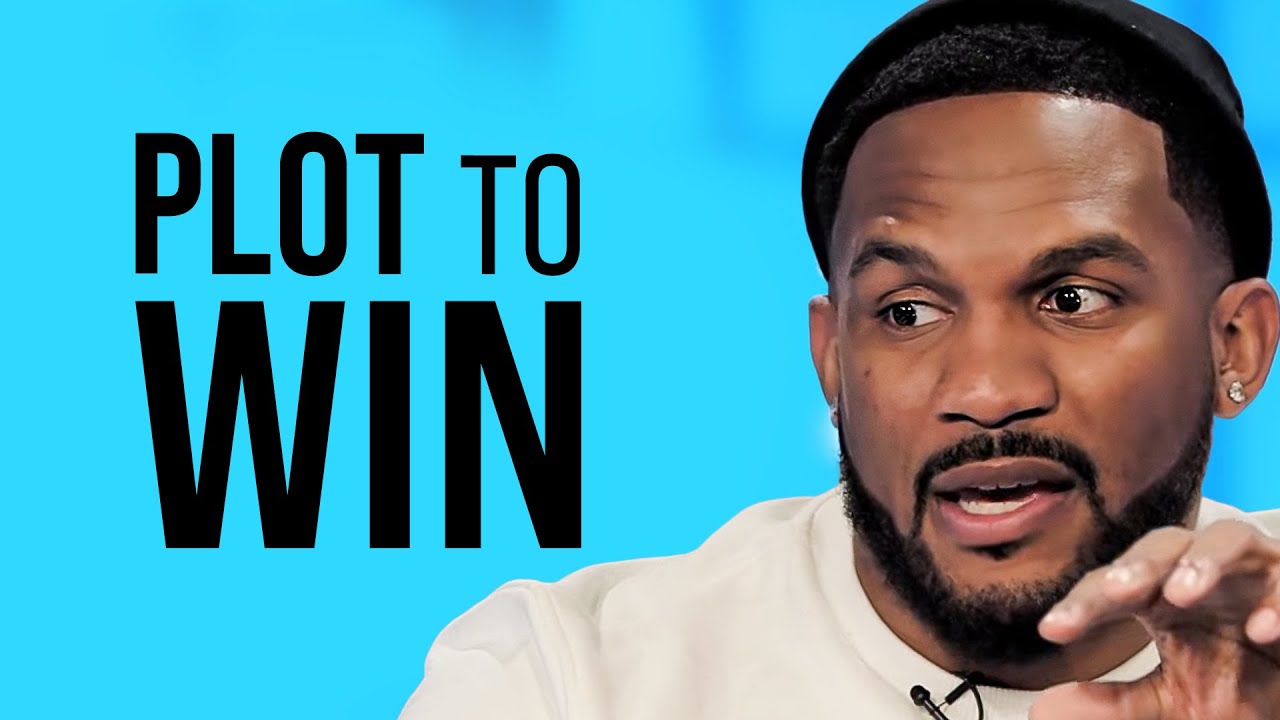
Self-made Man Explains How You Must Think to Win | Everette Taylor on Impact Theory
Watch on YouTubeVideo summary
Everett Taylor, a serial entrepreneur and philanthropist recognized for his rise from homelessness to building four multi-million dollar companies before age 30, emphasizes that success is not an overnight phenomenon but requires relentless dedication and genuine desire. He argues that social media often creates a distorted perception of wealth by showcasing only the final results while hiding the extensive work behind them. Taylor shares his personal journey, which included witnessing murder at seven, selling drugs by twelve, and living in his car by seventeen. A pivotal moment occurred when someone smashed his window while he was homeless, stripping away his ability to "fake it" with material possessions like Jordans or Rocawear clothes. This experience forced him to stop pretending and embrace the harsh reality of his situation, shifting his focus from maintaining appearances to finding practical solutions for survival and growth. Taylor attributes much of his success to learning directly from unconventional sources, including street hustlers who he views as natural entrepreneurs with high emotional intelligence (EQ). He draws parallels between drug dealing and running a business, noting that both require managing complex marketplaces, understanding blind spots, discerning the intentions of others—such as distinguishing undercover cops from college students—and maintaining strong relationships within a crew. Despite learning these skills in difficult environments, Taylor did not succumb to crime but instead extracted valuable lessons on sales goals, people management, and risk assessment. He believes that while talent may be "god-given," skill acquisition is possible through exposure to diverse cultures, travel, and the internet resources available today. His philosophy centers on showing others that they can achieve extraordinary things regardless of their background by modeling success with individuals who have overcome similar hardships. The core of Taylor's business strategy involves immersing himself in his target audience rather than relying solely on theoretical research or social media validation. He advocates for a step-by-step approach where one learns the industry vocabulary, identifies specific problems within that culture, and collaborates to develop solutions before launching a product. For instance, when entering the comic book market with ArtX, he deliberately delayed an official launch for a year to deepen his knowledge of the space and avoid misrepresenting himself or delivering subpar work just to capture revenue quickly. Taylor stresses that one must love the process of learning itself rather than viewing it merely as a means to create content for Instagram posts. He warns against rushing into ventures without sufficient preparation, suggesting that leaving money on the table temporarily is better than building a flawed business based on insecurity or lack of expertise. Beyond business tactics, Taylor identifies confronting mental health issues like depression and anxiety as one of the most impactful changes individuals can make to improve their lives. Despite his public success and accolades from outlets like Forbes and Fortune, he admits to suffering severe depression while juggling three companies and working twenty-hour days. This period led to isolation, strained family relationships, and a loss of self-worth until he sought help and began speaking openly about his struggles. He shares anecdotes of meeting large men who were grappling with suicidal thoughts, illustrating that mental health challenges affect people across all demographics regardless of their outward appearance or status. By normalizing conversations around depression and anxiety, Taylor aims to break the stigma that prevents individuals from seeking support, ultimately transforming these personal battles into a mission to help others find peace through financial freedom and genuine connection.
Read the full video transcript
At the end of the day, man, you really
got to want it. You got to really want
it. And I think the problem is is now
with social media, before
[snorts]
when I was growing up, I didn't see all
these examples of people having cool
cars or doing cool [ __ ] all the time,
like, right? And now with social media,
[music]
I don't care if you're in like, you
know, in the [ __ ] middle of nowhere,
you can log on to Instagram [music] and
see just this whole world of experiences
and things. The problem is it's like,
"Oh, well, these people have it, so I
should be able to have it." And it's
just like, man, you don't see
[music]
the work that goes behind this, man. I
started my first marketing job at 14.
I'm 10 years into entrepreneurship. It
wasn't until the past few years where I
started really getting recognition
[music] for it, right? And so, people
don't see all that it takes to even get
to that point, and that's the problem.
And so, they think it's supposed to be
[music] this this overnight thing. It
goes, "Oh, I started a LLC. Give me
money."
No, that's not how it works.
[music]
Hey, everybody. Welcome to Impact
Theory. Today's guest went from homeless
to building four multi-million dollar
companies before the age of 30. He was
named by The Root as one of the top 100
most influential African Americans, and
in 2018 alone, he was named to Forbes 30
under 30 list. Grew his company Milicent
by 40%. Grew his other company PopSocial
by 600%. Landed on the cover of Cosign
Magazine. Launched both ArtX and ETN
Enterprises. Was a key partner in the
launch of Zoe Saldana's media company
Bese. Won the Power of Influence Award
from BPRSL
and was recognized by the city of Los
Angeles for his achievements and
influence on African-American culture. A
truly extraordinary string of
accomplishments for anyone, but really
inspiring coming from someone who
witnessed his first murder at the age of
seven, was selling drugs by the age of
12, and was homeless by 17. His
incredible rise out of hardship has been
profiled by prestigious outlets like the
BBC, and he's been called a marketing
genius by both Forbes and Fortune. He's
also a national brand ambassador for
NASA's startup initiative, and he's
worked as a digital influencer for some
of the biggest brands on the planet,
including Amazon, Google, Disney,
Toyota, American Express, and many, many
more. So, please help me in welcoming
the serial entrepreneur and
philanthropist who has proven it does
not matter where you start. It only
matters where you want to go. Everett
Taylor.
[applause]
How you doing?
I'm good, man. Thanks for having me.
Yeah, thanks for being here.
Welcome, welcome. I like the fit.
Well, thank you, sir.
Thank you very much, man. So, in
watching your interviews, there's always
high style going on. So, you know, you
got to keep it crispy over here.
Oh, yeah, man. I love it. I love it.
So, a little birdie told me that
relentless is your word.
Yeah, I have it on my wrist right here.
Nice.
I actually have a retina painting with
relentless as well, so
Yes.
It's kind of a mantra.
That's that's amazing. The painting's
really cool, by the way.
Thank you.
That word to me really does seem to sum
up what you've accomplished. It's pretty
extraordinary to go from homeless to
where you've gotten today.
Yeah.
How has being relentless helped? What
does that mean to you exactly?
Yeah, so for me,
um
I think life is just a you know, have
you seen the movie Deadpool?
Of course.
Of co- course. So,
uh Deadpool in that movie, he says
something about how you have like these
brief moments of kind of peace until
like the next accident happens, right?
Um and that's just life in general. You
know, it's never going to be complete
smooth sailing. One of the things that
I've noticed about a lot of people is
that they let the hardships and the
things that happen in their life,
failure, stop them from, like Aleah
says, you know, dust yourself off and
try again, right? And for me, I've just
never let
anything or anybody prevent me from
achieving what I want to achieve.
So, I've always had this relentless
mentality. And if you say I can't do
something, if I fail, if I, you know,
mess up, it just motivates me even more.
I just become even more hungry. And so,
I've always just had this, you know,
relentless mentality. I don't take, you
know, no for an answer. I don't take
failure or accept failure at all. And
it's just always been kind of in my
heart to not give up.
I love that. There was a moment in your
story that you've referenced a few times
that really made me think of this. I
want to know what you did specifically.
I want you to take us back to that
moment. You're living in your car.
Yeah.
Somebody smashes your window. And this
is back in Virginia, right?
Back in Virginia, yeah.
Yeah.
Smash your window, take all your stuff,
and now not only are you minus your
stuff, but you have a hole in your
window in the winter.
Right.
How did you react that moment?
Well, okay. So,
it was one thing being homeless, but
there's another thing having everything
taken away from you, right? So, you
know, I worked throughout my teen years,
so I had Jordans, I had like cool
clothes, Rocawear, all this stuff that
kids aren't wearing anymore, right? And
um
you know, for me, like I was literally
living out of my car. And so, even
though I was homeless, I was still
trying to uphold the appearance of
everything being okay.
When that moment happened, it was like,
"Whoa, this is rock bottom." Because now
all my clothes are gone. All the cool
shoes, all the things that were material
um that, you know, I tried to fake it
until I figured things out were gone
now. And not only that,
all the the the elements. So, now rain
and snow and all these things can get in
the car. So, it was like mildewy and
smelly. And so, I smelled, right? And
so, for me in that moment, I understood
that wow, this is I thought things were
bad, but things are really really bad at
this point. And now I can't pretend
anymore. I just have to really embrace
this. I think a lot of times when we're
going through things, we kind of
try to figure out how we're going to
finesse our way into people not knowing
that things are things are wrong instead
of just saying, "This is my life. This
is real now." You know, and so now I had
to go to school
smelly. I couldn't front anymore. You
know, it it wasn't just No Shave
November. I didn't have fresh clothes
and fresh kicks. And so, I really
[snorts] just had to embrace it. I think
for a while in the beginning, I really
just tried to pretend for so long. And
then at that moment, it was like, "No,
this is this is real."
Mhm.
And so, when you say embrace it, what
what do you mean first of all? And then
second, how does embracing it help you?
Is it that you're no longer spending
emotional and intellectual cycles in
something pointless? Or what does that
look like?
embracing it meaning means like, "Okay,
I actually have to find a solution to
this problem, right?" So, I think a lot
of times in life, we try to kind of put
band-aids on our problems or issues. And
and instead of for instance, the
Instagram era, right? Instead of
actually being successful or like moving
out of our mom's basement or whatever,
we put so much energy and time into the
presentation of not looking like that's
the situation instead of putting the
energy and time into actually
finding a solution to that issue. And
so, at that point, it was like, "Okay,
I've been putting a lot of time and
effort trying to pretend things are good
instead of actually trying to find
solutions. And then that's when I
started to do everything I needed to do
to try to make money and just really
when I say embrace it's not necessarily
like accept it for what it is. It's
almost like okay, this is real. I need
to figure this out.
Yeah, I think that's really powerful. I
was just talking the other day about
something very similar about you have to
first accept your reality. Accept the
truth of where you are. And once you
accept the truth of where you are, then
you're not wasting the cycles on that.
Then you can switch over into a
solution-oriented mindset, which sounds
like exactly what you were doing. So how
did you begin to strategize your way out
of that? You were I mean at that point
pretty young. I don't think you'd ever
done anything truly entrepreneurial.
No.
Um so without any role models to chase,
like how did you begin to put those
pieces together?
Honestly, it was just learning from
people on the street. Right? So you kind
of take in your surroundings, you take
in the people around you, you see how
they're making money. And I just didn't
like begging people for money. And so I
respected the guys that were like
figuring out hustles, right? And so for
instance, there was a Amoco right down
the street from me. And so I would go
there and I would wash windshields and
make money. Just try to save up enough
money to just be in a motel for the
night. And I mean like the nastiest
motel, but for me it was just taking in
my environment, seeing how other people
hustle, how I can do it better. Um
someone taught me how to play drums on
buckets and things like that. And so,
you know, I just tried to do any type of
hustle
that I could to to kind of make things
happen. And you kind of learn like a
lifestyle. Like oh, I'm going to school
dirty. No, go to the gas station, go use
the bathroom, use the soap in there, use
the paper towels in there, clean
yourself up. You figured out ways to
kind of hustle. Like the way I
discovered tech was that I used to go
into the I never went to the library and
I'm like, "Whoa, this place is open till
8:00 and it's warm and it has computers
and internet? What?" Who never No one
told me about this. And so, I just
started to learn how others were moving
and kind of adapted throughout.
Mhm. It's really interesting and it's
really interesting to watch you in
retrospect begin to put the pieces
together to be a voracious learner. Um
and one thing that you've talked about
learning from that is one of my favorite
subjects ever is that and let's piss
some people off here really fast. Drug
dealers are extraordinary entrepreneurs.
Right.
And so, my wife and I have a philosophy.
So, I talked about it in your intro. It
doesn't matter where you start from. It
just matters who you want to become, the
price you're willing to pay to get there
and I find that most people are not
willing to pay the price of
Right.
really hustling, really figuring things
out. Um but we put out on the street
that we would hire people even if they
had a criminal record. And so, we ended
up having a line around the building for
people who were trying to interview.
This is back at Quest. And it was crazy,
man. Some of the most extraordinary
people that I met with criminal
backgrounds, ex-gang members, former
drug dealers. We had one guy that just
told me straight-up like, "Oh, I was
trying to get this job as a front for my
drug money." And I was like, "That's
actually really clever." I was kind of
impressed. [laughter]
And so, he and I ended up getting really
close and and he's gone on to do
extraordinary things.
Um but when he was breaking down for me
what a drug dealer has to do, to pay
attention to like to know where the
cameras in the neighborhood point, to
know where the blind spots are, to know
what undercover
um
cops are around based on the cars they
drive and everything. I mean, it's just
really extraordinary when he was talking
to me about how he didn't call them
employees, but like how he dealt with
his crew and I was like, "Dude, I'm
like, you're a better entrepreneur
naturally than I am by far, but I've
done more because I've taken a an
approach that is far more scalable
because essentially what you're selling
is risk. But talk to me about that
because you both learn from them, but
didn't succumb. You didn't go back to
it. So, I want to understand like how
you begin to tease out knowledge from
people that are very unconventional
without just going, "Well, it's what I
see, so it's what I'm going to do."
Right. So, my supplier, that was the
first COO that I ever met. Like,
literally, like being a drug dealer is
like being a chief operating officer.
The things that they have to be aware
of, the type of all the types of people
that they're dealing with and things
like that. And you you you got to
realize that, you know, it's almost like
a
two-sided, you know, marketplace in the
sense of like dealing with, you know,
people who are supplying you with that,
the person that's supplying you. Like,
it's it's, you know, two different sides
to it. And so, it's really impressive.
And at the time, I didn't realize the
things that I was kind of taking in and
and and kind of learning.
Um, you know, you have sales goals. You
know, you have to
learn people skills. You have to be able
to discern,
you know, different situations. I talk
about my time being homeless and my time
selling drugs. It's like, those are the
times where I really developed my
emotional intelligence. Because you you
get to meet people from all different
walks of life. People think the only
people that were buying drugs were from
the hood. Like, no. Like, it was like
VCU students, Virginia Commonwealth
University. Sorry, VCU. But like,
college students, like, all different
types of people were coming around and
you would see like, you know, and you
have to be able to discern for that.
It's like, "Yo, this guy that looks like
he's not shouldn't be in our
neighborhood."
Is this guy undercover cop? Is this guy
college student? We had all different
like methods to, you know, trying to
figure those types of things out. Um,
but for me,
it provided a source of inspiration. And
a lot of people feel uncomfortable with
that. But,
I grew up not having anything, you know?
And so, to see these guys with the nice
jewelry, the nice cars, the newest
Jordans, and things like that. Not
saying that they were spending their
money on the right things, but it showed
me that
my family and a lot of people around me
had just accepted a certain level of
mediocrity that was generational.
And so for me, I looked at them as wow,
if you have the motivation
to do something for yourself and make
something of it. There's a lot of drug
dealers. There's not a lot of drug
dealers that are making real money,
right? It takes a certain like,
you know,
je ne sais quoi, like, you know, to to
get to a point where you become a boss,
right? And so for me, it showed me how
you can separate yourself from the pack
and and really run things the way that
it should be.
Yeah. That sentence will go down in my
memory as one of the most fascinating je
ne sais quoi regarding uh drug dealers
and what makes
[laughter]
But the thing is it's really true. And
to your point about people get
uncomfortable talking about it, I've
never quite understood why. So my thing
is learn from anyone that has something
to teach you, and that was the thing
that so uh it's hard to fear that which
you love. So in in having so many
employees that really were ride or die
for um Lisa and I when we were building
Quest, it was like you you just you
really fall in love with who they are as
people. And so and that's how I got to
know so much about their real story, not
the sort of PR story, but like really
what what went down. Right. And in in
loving them as much as we did for who
they were, then we could really open
ourselves to what that story is and to
the some of the extraordinary beats and
moments. And so that time coupled with
um some big brothering that I had done
for a kid in in um South Central Los
Angeles really is why we did Impact
Theory for the very reason that you
said, you know, there's a lot of people
that are in this, but there's very few
people that really learn from what
they're going through.
And so I'm looking at these people, and
it's their mindset that's holding them
back. Right. And it that we weren't
encountering incredibly smart people, we
were, but the people that they had to
model after weren't the right people.
They weren't making the right moves.
They weren't investing their money in an
intelligent fashion, all of that, but it
was all that they knew. And so, what I
find really interesting is the inner
city and poverty specifically break most
of the people that that it touches.
Right.
But every now and then, you get an
Everett Taylor who it seems to propel
them forward. It's like they're fighting
so hard against that thing that they
overshoot. Um which is really
interesting. So, how do you think of
that beginning? Is it Is it something
that you think has now really worked for
you, or is it something that no, I'd be
even farther ahead if I hadn't had that?
It's the rose that grew from concrete,
right? It's like no matter how
terrible a situation is, no matter how
bad it is,
there's still going to be a rose that
grows from that concrete, and I feel
like I was that, right? No matter what
my situation was, I was built for this.
I was not going to let myself fail,
right? And I have that mentality, and I
understand that now that I grew from
that concrete, I'm starting to plant my
seeds, and there's more roses growing,
right? And so, that's why it's so
important to be on a show like this.
It's important that you're doing what
you're doing with Impact Theory because
you know, we're planting seeds, man.
We're planting seeds in places that
people like, "Man,
shit'll never grow here, right?" And
we're like, "No, it can."
You know, cuz there's a lot of people
out there that have the heart, that have
the talent, that have the ability. They
just have to see that someone else can
do it. And And that's, you know, that's
important.
Yeah, for sure. I always said that
I think the next Einstein is going to be
discovered somewhere in Compton, so
where we were working at the time. And I
was just like
the problem is they don't believe they
can do anything with their lives. And so
our mission became those seeds, right?
Like how do you plant those seeds? What
is that? What is that mindset that you
have that you can pass on? So if you
knew, I mean you do know, so you've got
this potential generation. They've got
extraordinary things to offer, but most
of them never will because they're not
going to encounter the seed that you're
going to give them. What is in that
seed? Like if that kid is watching right
now, he's in a library right now. What
do you want that person to understand
that will allow them to build your
mindset?
Right.
I remember being in a library
and I discovered Mark Zuckerberg and
I've told this story
um a hundred times. The part I haven't
talked about often
um and I don't know why is that when I
discovered Mark Zuckerberg, yes, I was
inspired to be an entrepreneur and be in
tech, but I said
I can't do that. I'm not some white kid
from the northeast with a Harvard
education. I can't do that.
But you know who I discovered?
Q.
Rest in peace. Q from WorldStarHipHop.
Now, however you may feel about
WorldStar, right? Q was a guy that
looked like me, from the hood,
no formal education, no background in
tech or the digital space, and he built
this super viral profitable website.
And at that moment I said, "Oh,
I can do it, too." You have to be able
to show people that there's other
options and that's what spreading seeds
is all about, showing people that they
can actually do something different, you
know?
What do you think is your trait that is
the most useful thing in terms of making
you successful?
The most useful thing um
I think emotional intelligence.
I think I have a god given ability to
understand people.
What makes them tick?
What motivates them, you know, what they
desire, how they feel about things, and
it helps me build world-class products
and world-class services,
and it helps me understand what
companies to build. You know, everyone
asked me what is like my secret sauce of
marketing. The whole thing with
marketing is like you can teach anybody
how to do SEO or do like an Instagram ad
or whatever. What's that special What's
that special sauce, right? What's that
special thing? And I think it's my
ability to truly understand people,
right? Um, at their core.
Um, that has helped me really be
successful.
All right, Mr. Understand People at
Their Core. Since you just scared poor
Jimmy back in, you know, hardship land,
because you said that your talent is god
given. There's nothing you can do about
that. He's convinced that he has no god
given talent.
That he is just hopelessly average.
Right.
What do you think about skill
acquisition? Are there things that
people can learn? And if so, how do they
go about it?
Well, actually, I think emotional
intelligence is something that you can
work on.
Okay.
Right? So, for me, it's it's opening
your mind and opening yourself to
people. I think a lot of people, they
are ignorant. They are like rejecting
change. Travel.
Get out of your comfort zone. Meet
people from all different types of
backgrounds. If you want to build a
product or service or company that you
want to build at scale, and your friends
are only the homies that you've been
hanging out with since, you know, middle
school,
probably should meet some more people.
Get to know them. Travel the world, you
know? And even if you don't have the
resources to travel, the internet. Learn
about different cultures. Learn about
different people.
All right. So, he's there in the
library, sitting in front of the
computer, ready to type into the prompt.
What website does he go to? What does he
search?
Well, it depends on what you're what
you're trying to work on. I think what's
so special about the internet now is
really anything you want to do you can
learn. Like if you want to learn how to
code, if you want to be a developer, you
want to build software, you want to
build apps, you can literally go on
YouTube and learn how to code. And so
what I would tell that person is
what do you want to do?
Tell me anything. What do you want to
do? Right?
Now
there's resources and there's things
online that can help you build yourself
into whatever that is. So I think that
that kid at the end of the day he has to
have that kind of just
I got to make this happen. Right? Here's
the thing, no one can teach you that. No
one can No one No one can go I can you
know they say what? You can bring a
horse to water but you can't make them
drink it or whatever. I'm probably
[ __ ] it up. But um
but yeah, you can't do that. And that's
the one thing I've learned through my
time mentoring people, through giving
people advice. I feel like we all have
that friend that is always hitting us up
for advice and they never [ __ ] takes
our advice. It's annoying, right? And so
at the end of the day
that person has to take that last leap.
You're at that computer, you tell me
what you want to do, I tell you this is
how you search, this is this is how you
find those resources.
Now you got to actually go and learn.
Yeah, so one of the deepest um
distresses that I have in my life is
that I can't want it for people.
Right.
Um because there are people that I love
very much that like you said they come
seeking advice, you give them very clear
instruction. Do this, you will get this
result. Do that, you will get that
result and you will end up here. And
they never take that first step. Um
either because like you said they're
resistant to change or whatever, but
they they never do.
Right.
Um
I heard a an amazing phrase one time to
your point about you can lead a horse to
water but you can't make them drink and
he said um don't worry about leading the
horse to water or making them drink,
just try try make them thirsty.
Mhm. And I thought, well, that is really
powerful. And so, then the question
becomes, how do you make someone
thirsty? And your life is a very
intriguing glimpse into, I think, what
the answer is here. You said once that
you used to think what was driving you
was a desire to get out of poverty and
to take care of your family, but you
said, I'm more driven now than ever, and
I took care of my family a long time
ago. So, what drives you? Why are you so
thirsty now?
You know, for me, it's
it's interesting, uh because that it
changes with time. I am inspired by
helping people. If I can make money,
too,
damn, that's cool, too, right? But, the
thing that really gets me out of bed
right now is
my ability to help people. I don't need
any more money. I don't need any more
material things. You know as well as I
know, that [ __ ] gets old, right? And, um
you know, it feels good temporarily, but
it doesn't really hold any weight or
substance. And so, the thing that I feel
like our legacy is how do we affect as
many people as possible in the most
genuine and impactful way, right? And
for me, that is what drives me today.
Define impact in that scenario. Like,
um
in what way do you want to touch people?
Well, it depends. You know, everything
is everything is different. The The
biggest thing that I want to do is help
people get to their place of peace.
Okay.
Getting to their place of peace for a
lot of people,
financial freedom is a big part of that.
I tell people all the time, money
doesn't make you happy, but it sure as
hell helps you find peace. Because if
you're in a space where you're
constantly worrying about money, how are
you going to focus on what keeps you at
peace, right? And so, for me, is really
getting to that core of what people are
passionate about, what brings them
peace, and in financial freedom.
Let's talk about passion for a second. I
think that's really, really an
interesting topic. I think there's a lot
of misconceptions about what passions
are, how they're created. What do you
say to the kid that comes up to you and
says, "I don't know what I want to do
with my life. You're lucky because you
have a passion, but I don't have a
passion."
Right.
And I get this all the time and there's
this sense of desperation. It's like
talking to somebody who's drowning.
Right.
Um [snorts] what do you say to people in
that position?
I don't think you can just put so much
pressure on yourself.
I think
like this is a marathon. This is not a
sprint, right? You never know when that
moment is going to happen in your life
where you you find that passion or you
figure it out. The fun part is just
trying a bunch of stuff. Like when you
get to a point where you could just try
a bunch of stuff, it's like, "Hey, sit
down, make a list.
I'm interested in all these different
things, right? Okay, I'm interested in
these top five things. Now,
how can I do something that not only am
I passionate about with one of these top
five things, but also make at least
enough money to just get by?
Now what I want to get into is you seem
extraordinarily good at taking something
that's sort of big and amorphous
and putting some structure to it and
then going step by step to figure out
what you need.
Right.
I'm guessing the first time that you
built tech was for that company. So how
you approach
learning?
Like
So to just frame the question a little
bit. For me, I'm always trying to learn
the vocabulary of the industry I'm going
into so that when I read about it, which
ultimately is my goal to go read and be
well versed and just begin to sort of
put shape to the thing. Um I I just
write down the words that I don't know
and I go look them up meticulously. I'm
not trying to like finish an article or
anything. I'm trying to learn the
vocabulary.
Right.
Do you have sort of an entry-level step
or a way that you think about
you know, really getting a foothold?
Yeah, you know, it's so interesting.
I was recently thinking about
how every company of mine
has started and pretty much they all
start the same way.
Whether I consciously or subconsciously
subconsciously do this, I immerse myself
within the target audience of that
product or service, right? I see a lot
of people that want to try to do
something
and they don't talk to people. They're
like, "Oh, I think this is cool." And so
they just start working on it. And the
best way to learn is from other people,
especially the people that you're trying
to serve these products or these
services to, right? And so for me, like
I said, consciously or subconsciously,
I've always immersed myself into that
target audience, that culture, those
people,
um, and learn from them. Have
conversations with them. Find out what
they hate, what they love, right? And
that was extremely important. And when
you start to immerse yourself within
this, right? You're going to want to do
more research. For like art,
being a young black guy in the in the
art space,
[ __ ] doesn't happen, right? There's not
There's not a lot of us. Like the
youngest art collector that I know
outside of myself is Jesse Williams on
like Grey's Anatomy. He's 37, right? You
know, so he's like eight eight years on
me. So it's not a lot of people that I
know. And I'm like, "Yo, why is that,
right?" And so then I start to do my
research and I start to learn why things
are the way they are. So it's like,
"Wow, I put myself in the space.
I'm starting to identify problems. Now I
want to research why these problems are
problems and then figure out ways that I
can tackle these problems, right? And so
it's just like this step-by-step
process. And then when I think I find a
solution to those problems, I go back to
that target audience and I start saying,
"How do you guys feel about this?
Or try this out. What do you think about
this? It's such a collaborative
experience. It's not just about you
getting on the internet and just
researching things. I think it's about
talking to people and really bringing
different, you know, minds into the mix.
At the end of the day, man, you really
got to want it. You got to really want
it. And I think the problem is is now
with social media before
[snorts]
when I was growing up, I didn't see all
these examples of people having cool
cars or doing cool [ __ ] all the time,
like, right? And now with social media,
I don't care if you're in like, you
know,
in the [ __ ] middle of nowhere, you
can log on to Instagram and see just
this whole world of experiences and
things. The problem is it's like, oh,
well, these people have it, so I should
be able to have it. And it's just like,
man, you don't see the work that goes
behind this, man. I started my first
marketing job before 18. I'm 10 years
into entrepreneurship. It wasn't until
the past few years where I started
really getting recognition for it,
right? And so, people don't see all that
it takes to even get to that point. And
that's the problem. And so, they think
it's supposed to be this this overnight
thing. They go, "Oh, I started LLC. Give
me money."
Right.
No, that's not how it works.
Can we talk about something else?
Yeah.
So, my thing with that is I actually
love the I don't know what I'm doing and
I have to figure this out. Like, that
actual process.
Right.
And
because of that, I'll win over and over
and over because I can go into a new
space and fall in love. Like, oh, oh,
yeah, like, I guess now in this weird
world, which I'm still not used to,
people are paying attention to what I
do. But,
I just love the process of going in and
figuring something out.
Right.
And if that's your mentality, if what
you're trying to do is acquire skills so
with that you are capable of something,
like, I think people acquire skills to
check a box.
Right.
like it was in high school or college
you're going to be tested and you either
pass or you fail. No, this is like you
can add value to somebody's life and
thusly build an app and and make a lot
of money.
Right.
Um or you can't add value to people's
lives because you don't have a skill set
that's usable or desired, and you're
stuck. But, if you love the very
process, not like the thought of, "Oh,
this is going to make a cool Instagram
post." But, like if you love the the
process, then then you've really got
something. So, I've recently gone into
the comic book market. Long story why,
but I find myself in this place where
historically I had a passion, but I
didn't know anything about the industry.
And it's there's half of it that plays
to my strengths, and the other half that
just is a succubus on my weekend my
weaknesses. [laughter] And so, it's
like, "Whoa, I really have to face every
insecurity that I have, every lack of
skill." It's like, "And I have to figure
it out, or I have to outsource it to
somebody, or whatever." And going into
this side
and being able to fall in love with
that, and then I'm in a position where I
can monetize my content, but I forget to
even record the content cuz I'm so
focused on learning. And if people could
like I I do feel a little bad because
when you grow up with something, it it
occupies a part of your mind this is
this is real.
And because I grew up with I didn't get
social media until I was like in my late
30s. So, it was like, "Eh, I didn't
really It's not real to me. It's a
tool." Right, it's a marketing tool.
It's an ability to touch somebody's
life. Like, all of that [ __ ] is amazing.
But, I'm not thinking, "Oh, how's this
going to make a cool post?"
And I think that's a big shift that if
people could make that, then they would
just go about learning.
Dude, you got to love it. You really got
to love it. So,
I got ahead of myself and and I had this
idea for ArtX, which was formerly called
Art Noir when I was going to launch it
last summer. So, almost getting to a
year year now. I was like, "Oh, I'm
launching this in a couple weeks."
It still hasn't like officially like we
have like a community right now and all
that, but it hasn't officially launched.
Cuz you know what? I said to myself, I
was like, "Dude, I don't know as much as
I should."
So, I took a step back, and I said, "I
I'm so glad I did not launch that
company then
cuz you know, you get excited and all
that and I know so I took a year of
learning.
I just took a year to learn. Just learn
the space, get to know people, figure
things out cuz even though I had been in
the space for a little while I was more
intentional about it. Before it was,
"Okay, I'm just here cuz I love art and
so I've been meeting these people and
learning about this and this is what's
needed." But then I said "No, I want to
be intentional
about doing this." And so I shifted my
energy, I shifted my time, and I really
got into it and it's also something that
I love to do, right? And so yeah, did I
miss out on revenue, did I miss out on,
you know, making more money in 2018 and
all this other stuff? Yeah, of course,
yeah. But at the end of the day
I'm going to launch a much more
successful business when I do launch it.
And it's because I took the time to
learn.
And I just think that people are in such
a rush
to have something, especially money.
Money is like, "Ooh, I got to get more
money." But it's like if you launch
something that's piss-poor or shitty.
Even at a point where I had accomplished
so many things, I almost did it, right?
We're not perfect. I'm not perfect. You
know, I still [ __ ] up all the time, man.
I [ __ ] up earlier today. Like I was came
here at the wrong time, right? So we we
mess up constantly, but it's it's
identifying that and saying, "Wait, let
me take a step back and let me do this
the right way."
You sent a tweet about that I think late
last year and you talked about um
basically that whole notion of
you know, hey, if you don't know where
something is going to go, you might be
leaving money on the table, but you're
better off leaving the money on the
table and walking away knowing that
you're not misrepresenting yourself and
doing a bad job of it of of quoting the
the tweet, but it was that idea. And I
thought that's actually really powerful
and that's a really important message to
get out there. Like yes, you could grab
the brass ring right now, um but it's
probably going to end up being a lot
smaller than what you could have
accomplished if you'd been willing to
take the step back, focus on something
other than the money, focus on value,
focus on knowledge. Uh and I thought
that was a really really important
message.
Where can people find you online?
Just my name, man. Everett, e v e r e t
t e.
Um it's that on Twitter, Instagram,
Snapchat for you guys who still use it.
And um yeah, man. Uh my website's
everettaylor.com.
Um yeah, man. Just reach out. I'm a
pretty like personable person, so yeah.
Normally I end the interview by asking
what's the impact you want to have on
the world, but I think you answered that
with the peace
answer. So I'll ask you something a
little bit different. What's one change
that people could make in their life
that would have the biggest impact on
improving their life?
Confronting mental health.
Oh, [ __ ]
Like it's it's
it's honestly been something that has
absolutely changed my life.
Now you got to go into detail.
Oh, yeah, for sure. Um
taking a few years back, I was VP of
marketing of a company called Qualaroo.
Um we had also um co-founded a company
called Growth Hackers, and I was working
on my marketing firm. So I'm juggling
three companies. I'm working
20
hours a day, something crazy. I just
wouldn't
enjoy life at all. And I had gotten to
this crazy
deep depression. Like
I hated myself.
I didn't like my life. I got separated
from my family because I was so focused.
It's just like, you know, and it got to
a point where I've never actually
admitted this on camera.
Um
you ever like miss that call from your
mom or you miss and then it turns into a
week and then it turns into and then you
start to feel this like anxiety because
you know it's been so long since you
talked to that person and it literally
be like a month and I wouldn't have
talked to my mom, you know, and it's
it's because I [ __ ] I don't know what to
say. Like I've literally been so
stressed out and you just isolate
yourself and I was
in such
an awful place and and it's juxtaposed
by people singing your praises.
It is the weirdest phenomenon in life
when you're a public figure to have
people saying how great you are and you
[ __ ] feel awful.
And
it got to a breaking point where
my work started to suffer.
You know, my relationship started to to
break and I just said, you know what?
What is this? What what you know, I got
to figure this out. I grew up in a place
where depression was not I don't even
know if I knew what the word depression
was like outside of like the [ __ ] DMX
album The Great Depression. Like I don't
know if I
ever really knew what depression was and
um
you know, it's taking me taking that
initiative to like I need help. This is
what I'm dealing with. This is what I'm
feeling and I need to figure this out
and it saved my life. I don't know what
would have happened to me. Right? The
thoughts that were crossing my mind, the
ways that I was feeling and um I think
a lot of times the thing that's stopping
us from being the person that we truly
want to be is ourselves. It's usually
ourselves and I think being able to
identify mental health, depression,
anxiety, all these things that we're
dealing with
and say that we want to make a change
and we humble ourselves to want to make
that change is one of the biggest
barriers that one can break through.
Wow, man. That was really, really
powerful. Thank you so much for sharing.
be all somber at the end, but yeah.
That was so perfect and you have no idea
how much that drives me. Um I think that
that it's a real, real issue and when I
say that I'm terrified by the depression
and anxiety and suicide that I see um
it's it's really scary and I I always
thought that my role in the public
sphere was going to be the business guy.
I always thought that I would help
people build their businesses.
And what I have become is the mindset
guy, which I was me, mindset was a tool
for me to get good at business.
Um
and now I'll be, you know, at an event
or something and
the I always use this example because it
um it was so striking.
Guys, big, yolked. Because of my
background in fitness, I get a lot of um
followers that are fitness. So he's
probably 6'2", 230. I mean, just a big
dude.
And walking down the hall, grabs me,
pulls me aside and he just bursts into
tears and he's like, "I want to kill
myself." Like first words.
And I was just like, "Fuck." Like this
is not the guy anybody would ever
imagine is grappling with depression.
Right.
And and he is. And so, you know, having
things like that happen over and over
and over, um
you really start to think about people
have to talk about it.
Right.
You know what I mean? And so, I've
certainly started being super open about
my anxiety, which for a while was
crippling.
Right.
Um cuz you're right. Like that's
that's the breakthrough. Being able to
talk about it, being able to confront
it, not let it get somewhere cuz you're
embarrassed, you know what I mean? It's
It's
Yeah, man.
Thank you for everything.
This is really really awesome.
Yeah, of course, man.
Guys, if you haven't already, be sure to
subscribe. And until next time, my
friends, be legendary. Take care.
Hey,
[applause]
that's good.
Thank you.
That was amazing. Thank you, man. I
appreciate it.
As I started doing everything that I
love, there was a surge of power, a
surge of confidence. I wasn't insecure
anymore because the emotion that had the
most dominance in my thought process and
in my heart process
was actually being paid attention to.