Video summary
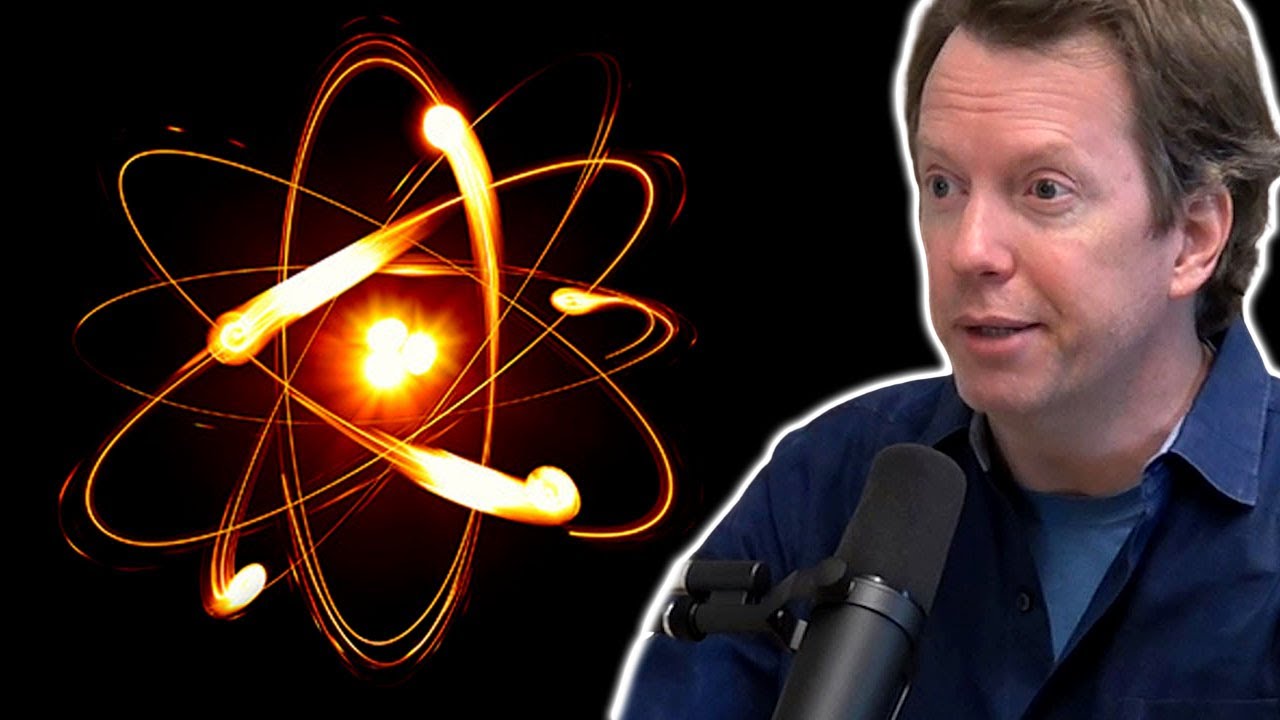
The concept of the atom traces its linguistic roots to ancient Greece, yet it was chemists in the 1800s who first provided experimental evidence for their existence through the study of tin oxides. By observing that two different types of tin oxide contained exactly twice as much oxygen in one form compared to the other, rather than arbitrary ratios like 1.5 times, John Dalton proposed a hypothesis: matter is composed of discrete units where specific combinations exist, such as one atom of tin with one or two atoms of oxygen. While this chemical evidence quickly convinced the scientific community that atoms were real entities, physicists took significantly longer to accept them; notably, Ludwig Boltzmann faced immense personal and professional hardship in Germany because he championed atomic theory at a time when it was unpopular there, despite its acceptance in England. As understanding deepened around the turn of the last century, specifically near 1900, the definition of an atom evolved from being considered the ultimate building block to recognizing that it could be broken down further by physicists like Ernest Rutherford and his colleagues. The modern visualization of the atom resembles a miniature solar system, featuring a dense central nucleus surrounded by orbiting electrons. This structure reveals that nearly all the mass of an atom is concentrated in the nucleus, which consists of protons and neutrons; these particles are approximately 1,800 times heavier than electrons. Consequently, while the heavy nucleus provides weight, it is the much lighter electrons that determine how atoms interact chemically and conduct electricity when systems flow with current. The behavior of these lightweight electrons represents a fundamental shift from classical mechanics to quantum mechanics, marking one of the most significant challenges in physics history. In this framework, scientists can model the position or velocity of particles, but doing so for an electron requires abandoning deterministic predictions found in classical physics. The transition highlights that while atoms were once thought to be indivisible units representing elements like hydrogen, tin, oxygen, and carbon, they are now understood as complex systems where quantum rules govern the behavior of subatomic components. This realization transformed the atom from a static philosophical concept into a dynamic system governed by probabilistic laws rather than fixed trajectories.
Read the full video transcript
what is an atom and what is an electron
sure this all came together you know in
a few years around the turn of the last
century right around the year 1900 Adams
predated then of course the word atom
goes back to the ancient Greeks but it
was the chemists in the 1800s that
really first got experimental evidence
for atoms they realized you know that
there were two different types of tin
oxide and in these two different types
of tin oxide there was exactly twice as
much oxygen in one type as the other and
like why is that why is it all why is it
never 1.5 times as much right and so
Dalton said well it's because there are
10 atoms and oxygen atoms and one form
of tin oxide is one atom of tin and one
atom of oxygen and the other is one atom
obtained and two atoms of oxygen and on
the basis of this is you know
speculation a theory right a hypothesis
but then on the basis of that you make
other predictions and the chemists
became quickly convinced that atoms were
real the physicists took a lot longer to
catch on but eventually they did and I
mean Boltzmann who believed in atoms was
God he had a really tough time his whole
life because he worked in Germany where
atoms were not popular they were popular
in England but not in Germany and there
in general the idea of atoms is it's the
most the smallest building block or the
universe for for them that's the kind of
how the Greek idea but the chemists in
the 1800's jumped the gun a little bit
so these days in atom is the smallest
building block of a chemical element
right hydrogen tin oxygen carbon
whatever but we know that atoms can be
broken up further than that and that's
what physicists discovered in the early
1900's Rutherford especially and and his
colleagues so the atom that we think
about now the cartoon is that picture
you you always seen of a little nucleus
and then electrons orbiting it like a
little solar system and we now know the
nucleus is made of protons and neutrons
so the weight of the atom the mass is
almost all in its nucleus protons and
neutrons or something like 1,800 times
as heavy as electrons are electrons are
much lighter but they're because they're
lighter they give all the light
to the atoms so when atoms get together
combine chemically when electricity
flows through a system it's all the
electrons that are doing all the work
and where quantum mechanics steps in as
you mentioned with position or velocity
with classical mechanics and quantum
mechanics is modeling the behavior of
the electron I mean you can model the
behavior of anything but the electron
because that's where the fun is the
electron was it was the biggest
challenge right from the start yeah
you