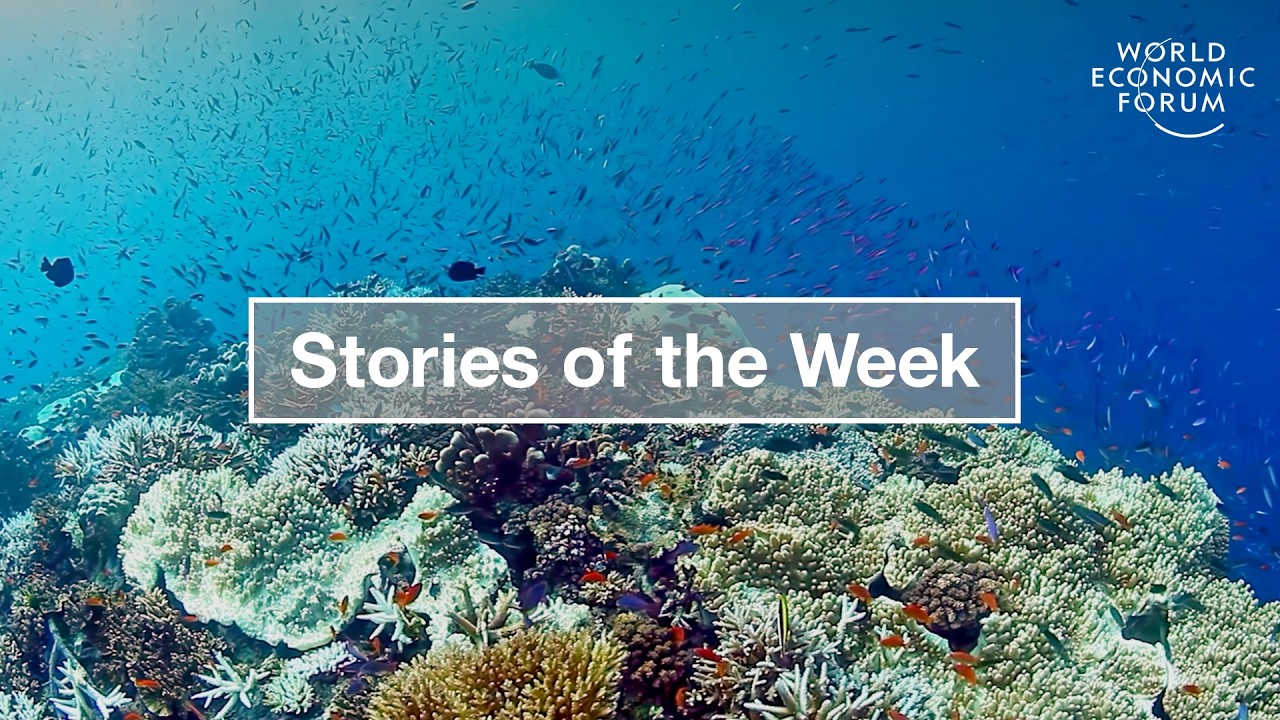
Saving Coral Reefs & Are We Ready For El Nino? | WEF | Stories of the Week
Watch on YouTubeVideo summary
El Niño events vary in intensity every time they occur, yet there is a critical two-month window before their onset that offers humanity a unique opportunity to prepare for systemic climate risks. While current scientific evidence does not confirm an increase or decrease in the frequency of El Niño in a warming world, these phenomena are increasingly developing on top of already elevated global temperatures. Rather than fearing the unknown, experts argue we should view this predictable pattern as a chance to strengthen multi-sectoral coordination and identify vulnerable populations before disasters strike. By effectively translating meteorological forecasts into early actions through robust institutions and local empowerment, the world can significantly improve its resilience against these recurring climate challenges.
The urgency of action is perhaps nowhere more evident than in the plight of coral reefs, which face a grim projection where 70 to 90% could disappear globally due to ongoing climate change. Researchers have moved beyond traditional but ineffective restoration methods like concrete blocks or metal rebar, realizing that these structures fail to provide the natural foundation corals require for survival and growth. Instead, scientists are adopting a more nuanced approach akin to "coral whispering," focusing on understanding exactly what degraded marine ecosystems need to recover. This decade is identified as the final window of opportunity for ecosystem restoration, making it imperative to invest heavily in ocean health before irreversible damage occurs.
Addressing these environmental crises requires a unified effort involving governments establishing regulatory frameworks and private sectors allocating budgets specifically for climate and nature risk management within catastrophe insurance pools like CAT boxes. At the same time, scientists must develop scalable solutions that can be rapidly deployed across different regions to maximize impact. This collaborative approach extends beyond just saving reefs; it involves lifting entire communities above the resistance of environmental degradation, much like raising a boat out of water to eliminate drag and protect fish communication systems from industrial noise pollution. Ultimately, overcoming the resilience divide depends on sustained support for infrastructure that includes strong warning systems and preparatory activities designed to empower every community facing climate threats.
Read the full video transcript
[music]
>> Every single El Niño is a little bit
different. But the time window around 2
months, I think it's one of the unique
climate elements that allow us 2 months
[music] in advance to prepare. And that
is where we need to focus our uh
attention.
Today, there is no scientific evidence
that we have more or less El Niño in a
warming world.
>> [music]
>> That is uh not yet proved. But what we
know is that El Niño, that is
characterized by warming temperatures,
is developing on top of a warming world.
>> [music]
>> The world has an opportunity to think in
terms of systemic risks associated with
a climate pattern that we know very
well, and we know it very well in
advance. So, there are many ingredients
here that we should take as an
opportunity instead of recreating not
[music] having had the right answers on
time.
Strengthen [music]
the multi-sectoral coordination because
that allows you to understand who will
be more affected,
>> [music]
>> identify those that are more vulnerable,
and empower the local election, and then
translate the forecast that comes from
the meteorological community
>> [music]
>> into impacts and early action. So, if we
can put all of this into a real plan, I
think that the world will be much better
prepared.
>> [music]
>> We need to work together to make sure
that we can overcome [music]
that a resilience divide with the proper
support and also with the proper
sustainable support. It's not just once,
it's [music] just to build all the
infrastructure from meteorological
warnings, [music] from strong
institutions, and from preparatory
activities to make sure that we empower
all the communities.
>> If we look at today's climate change
projections, we're talking about 70 to
90% of the reefs will be [music] gone
globally.
Then I spent [music] 8
in the lab trying to understand what's
happening in the water and if there's
anything that we can do to restore
degraded marine [music] ecosystems.
After the 2014 episode, we realized that
the traditional methods like concrete
blocks or metal rebar
>> [music]
>> simply don't give coral the foundation
that it needs. So, we were almost like a
coral whisperer trying to understand
what coral really needs. And what they
need is actually very simple.
>> [music]
>> At this moment in time, we're still in
the window of ecosystem restoration.
This decade is the best time for us to
invest in the ocean and nature.
We need the support from the government
to set up the right regulatory
frameworks. We need the support from the
private sector [music] to put in the
budget to manage climate and nature risk
and put it into cat box. At the same
time, we also need the scientists
[music] to come up with solution that is
scalable and deployable.
>> [music]
[music]
>> It's about [music] reducing the drag.
Since we lift the boat, we have no more
resistance. So, we are not pushing the
water. We are above the water.
Fish communicate [music]
with ultrasounds. So, when you have the
engines of the boats covering that, they
disturb these communication
of the fish,
>> [music]
>> and that affect the reproduction.
>> Mhm.