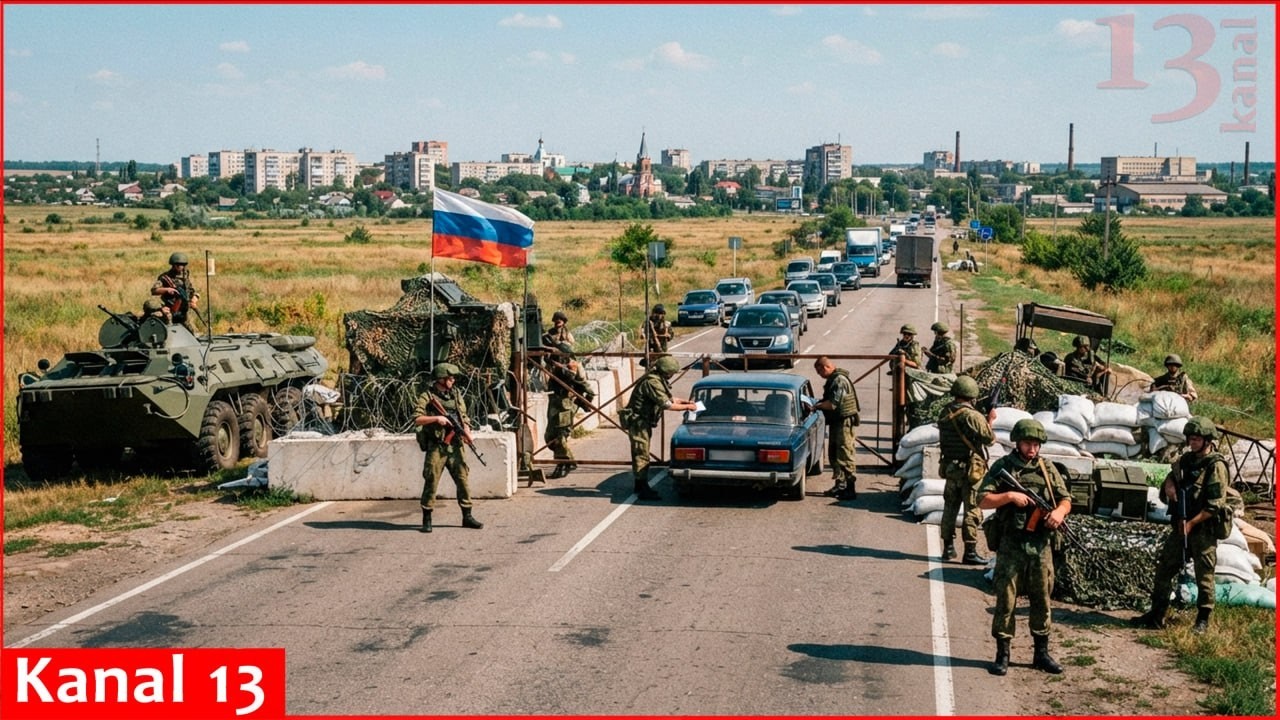
Russians created several new control zones near the Ukrainian border; new attack threat
Watch on YouTubeVideo summary
Recent military developments along the Ukrainian border have seen Russian forces establish several new control zones, particularly within the South Slobozhansky direction. According to Viktor Tregubov, a spokesman for the Joint Forces Group who made these announcements during a recent telethon broadcast, there has been a slight decrease in activity over the last few days compared to the intense week prior. Despite this temporary lull, active attacks continue in key areas such as Lyman and Yuzhno-Slobodansky, where enemy forces are striving to consolidate their positions or exploit weaknesses in Ukrainian defenses along the border line.
In specific tactical maneuvers, Russian occupiers attempted a direct advance toward Lyman while simultaneously trying to penetrate gaps in defensive lines near Ilinivka and Chasiv Yar. Monitoring projects like Deep State have confirmed these advances, noting that troops moved forward in both Chasiv Yar within the Donetsk region's Bakhmut district and near Ilinivka in the Kramatorsk district of the same region. Although Russian efforts to break through or create small control zones were initially successful enough to establish a foothold, Tregubov emphasized that these breakthrough attempts have ultimately been thwarted by Ukrainian resistance, preventing significant strategic gains for the enemy at this stage.
Beyond immediate border skirmishes, analysts are observing broader patterns suggesting preparation for future offensive operations against Ukraine's fortress belt in the Donetsk region. The Institute for the Study of War has noted a repetition of air denial campaigns previously conducted during the summer and fall of 2025 to pave the way for offensives near Pokrovsk and Huliaipole, with similar strategies now being applied to target Sloviansk and Kramatorsk in 2026. These cities form the northern edge of the fortress belt, indicating that Russian forces are utilizing air power to strike targets deep behind front lines in an effort to influence upcoming military operations against these critical urban centers.
Read the full video transcript
Over the past few weeks, Russian
occupiers have established several small
control zones near the Ukrainian border
in the South Slobozhansky direction.
This was announced by Viktor Tregubov,
spokesman for the Joint Forces Group,
during a telethon broadcast. Activity
has decreased slightly in the last few
days. But this is a short-term issue as
it was quite high during the week. This
was especially true in the Lyman and
Yuzhno-Slobodansky directions, where the
enemy is continuing its active attacks,
he said. Tregubov noted that in the
Lyman direction, the enemy attempted to
advance directly toward Lyman,
attempting to consolidate its position
there. He added that in the case of
Yuzhno-Slobodansky, the Russians
attempted to penetrate and find some
cracks in the Ukrainian forces' defenses
along the border, creating small control
zones there. The Joint Forces spokesman
emphasized that in both cases, [music]
enemy attempts to break through have
been thwarted. He added that at the same
time, several new Russian control zones
have emerged in the South Slobozhansky
area in recent weeks. Earlier, the
monitoring project Deep State reported
that Russian occupiers had advanced in
Chasiv Yar in the Donetsk region.
Analysts noted that the enemy had also
advanced near Ilinivka. As is known,
Ilinivka is a village in the Kramatorsk
district of the Donetsk region, and
Chasiv Yar is a city in the Bakhmut
district of the same region. As
previously reported, the Institute for
the Study of War noted that Russian
occupiers are repeating certain aspects
of their air denial campaign in
preparation for offensive operations
against the fortress belt in the Donetsk
region. It was conducted in the summer
and fall of 2025 and paved the way for
an offensive in late 2025 in the
Pokrovsk and Huliaipole areas. This
involved using air power to strike
targets in the immediate rear behind the
front lines with the goal of influencing
the course of military operations in the
near [music] future. Thus, ISW believes
that in 2026, the Russian army will once
again conduct a similar campaign, this
time targeting Sloviansk and Kramatorsk.
These cities form the northern edge of
Ukraine's fortress belt [music] in the
Donetsk region.
>> [music]