Video summary
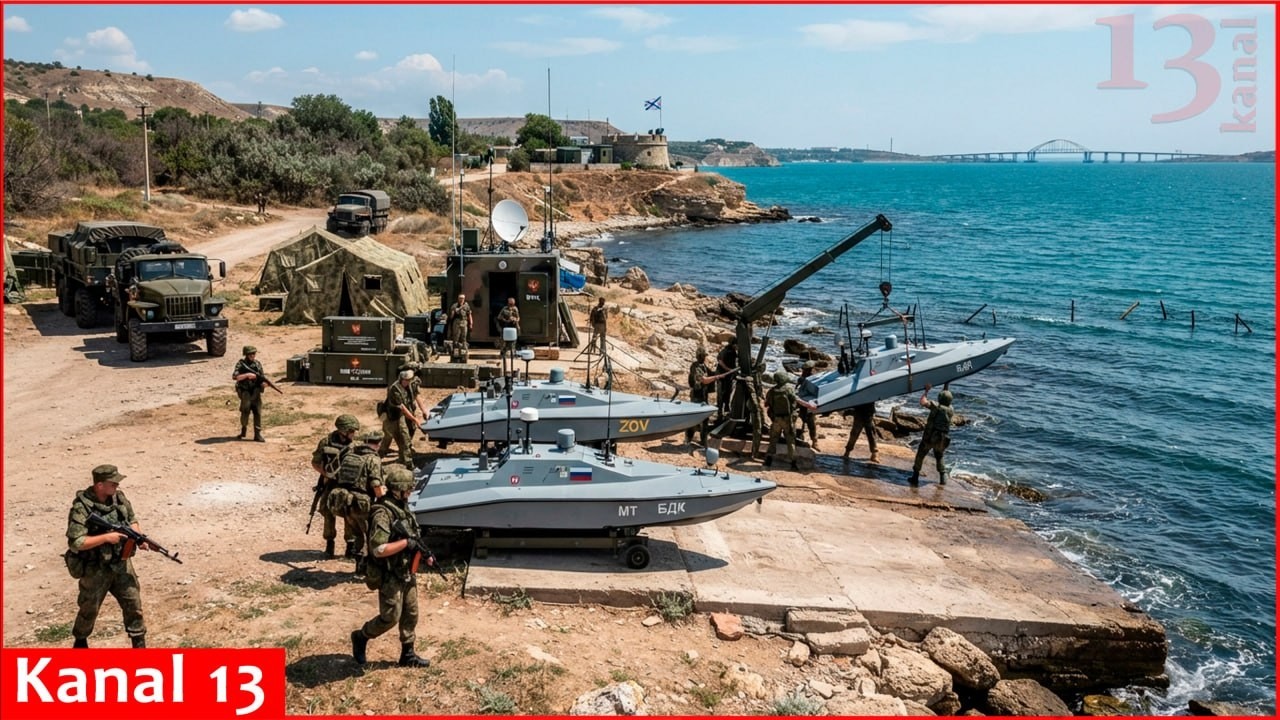
Russian forces stationed in the temporarily occupied Crimea are currently constructing specialized boat houses along the shores of Lake Donuzlav near Novoozerne, specifically designed to store uncrewed surface vessels. Open-source intelligence analysts from Cyber Baroshno have identified this new infrastructure, interpreting it as a clear signal that Russia is preparing for a broader deployment of naval drones within its full-scale invasion of Ukraine. Although the active combat use of these maritime drones remains limited at present, the physical construction of storage facilities suggests a strategic shift toward expanding uncrewed maritime capabilities in the region.
This development comes shortly after Ukrainian defense intelligence released detailed information on August 25th regarding most of Russia's naval drone models and their operational roles. The cataloged vessels are utilized for a wide array of tasks, including reconnaissance, patrolling, mine sweeping, and launching strikes against ships and coastal targets, as well as serving as platforms for FPV drones. In response to these preparations, Ukraine executed a strategic long-range strike campaign during the summer of 2026, targeting key Russian economic and military infrastructure across Crimea and beyond. Through coordinated operations, Ukrainian forces systematically degraded Russian capabilities by striking oil refineries, air defense systems, radar arrays, and drone launch pads, including S-300/S-400 batteries and Bastion missile sites.
The intensity of this campaign was evident over forty relentless days between late June and early August, during which Ukraine launched sweeping strikes to paralyze Russian oil refining and arms production while neutralizing shadow fleet vessels in the Black Sea and Sea of Azov. These efforts successfully hit critical economic targets, such as dual-use Wildberries logistics centers located over 1,700 kilometers away in Ekaterinburg, and ignited eleven of Russia's largest oil refineries with strikes reaching a record distance of 2,500 kilometers into the interior. The resulting widespread fuel shortages and emergency rationing nationwide have significantly pressured Moscow toward peace negotiations while simultaneously diminishing Russia's ability to strike Ukraine from the Crimean peninsula.
Beyond these deep strategic economic blows, Ukraine's campaign relied heavily on middle-range strike drones to dismantle Russian supply chains and air defenses, a tactic that proved most effective across occupied Crimea. By exploiting gaps in Russian defenses created through persistent strikes, Ukrainian forces were able to target missile and drone launch sites more effectively. Air defense expert Tomas Nagy from Globsec described this approach as "passive air defense," emphasizing the strategy of hardening one's own assets while mobilizing resources to strike the opponent's capabilities and create vulnerabilities. Ultimately, the best course of action for Ukraine is to continue targeting Russian production capacity as much as possible to sustain this momentum.
Read the full video transcript
Russian forces in temporarily occupied
Crimea are constructing specialized boat
houses on the shores of Lake Donuzlav
near the settlement of Novoozerne to
store uncrewed surface vessels.
Open-source intelligence group Cyber
Baroshno identified the new
infrastructure, noting that while active
combat deployment of these naval drones
by Russian forces remains limited, the
construction points to preparations for
a wider rollout of uncrewed maritime
capabilities in Russia's full-scale
invasion of Ukraine. The development
follows information released by
Ukrainian defense intelligence on August
25th detailing most of Russia's naval
drone models. According to the Defense
Intelligence Agency, the cataloged
uncrewed vessels cover a broad range of
operational roles, including
reconnaissance, patrolling, mine
sweeping, strikes against ships and
coastal targets, and serving as launch
platforms for FPV drones. During the
summer of 2026, Ukraine executed a
strategic long-range strike campaign
targeting key Russian economic and
military infrastructure in temporarily
occupied Crimea and beyond. Under a
series of coordinated operations,
>> [music]
>> Ukrainian strike networks systematically
degraded Russia's capabilities by
striking oil refineries, air defense
systems, radar tracking arrays, and
drone launch pads, including S-300/S-400
batteries, Bastion missile launch sites,
and Shahed storage depots across the
Crimean Peninsula. Recall, across 40
relentless days and nights between late
June and early August, Ukraine launched
a sweeping long-range campaign to
paralyze Russian oil refining,
arms production, and neutralize shadow
fleet vessels in the Black Sea and Sea
of Azov, all to pressure Moscow toward
peace. Strikes hit key economic targets,
feeding the Kremlin's war chest, sending
dual-use Wildberries logistics centers
over 1,700
km away in Ekaterinburg up in smoke. 11
of Russia's largest oil refineries were
also set ablaze with hits reaching a
record 2,500 km into the interior,
causing widespread fuel shortages and
emergency rationing nationwide. However,
Ukraine strikes are also delivering a
major blow to Russia's ability to strike
Ukraine from Crimea and hold onto the
peninsula. Beyond deep strategic
economic strikes, Ukraine's campaign
relied heavily on middle strike drones
to dismantle Russian supply chains and
air defenses. Nowhere was this more
evident than across temporarily occupied
Crimea. Thanks to Ukrainian efforts to
hit Russian air defenses, they have been
able to exploit gaps better and strike
missile and drone launch sites. It is
what Tomas Nagy, an air defense expert
and analyst at Globsec, called passive
air defense, which means that you harden
everything that you can harden. You
mobilize whatever you can mobilize, and
yes, you strike the capabilities of the
other side to create vulnerabilities.
And the best that the Ukrainians can do
is to try to Russian production
capacity as much as possible.