Roomba vs Autonomous Vehicles: Vision not Lidar is the Future for Robotics - iRobot CEO | AI Clip
Watch on YouTubeVideo summary
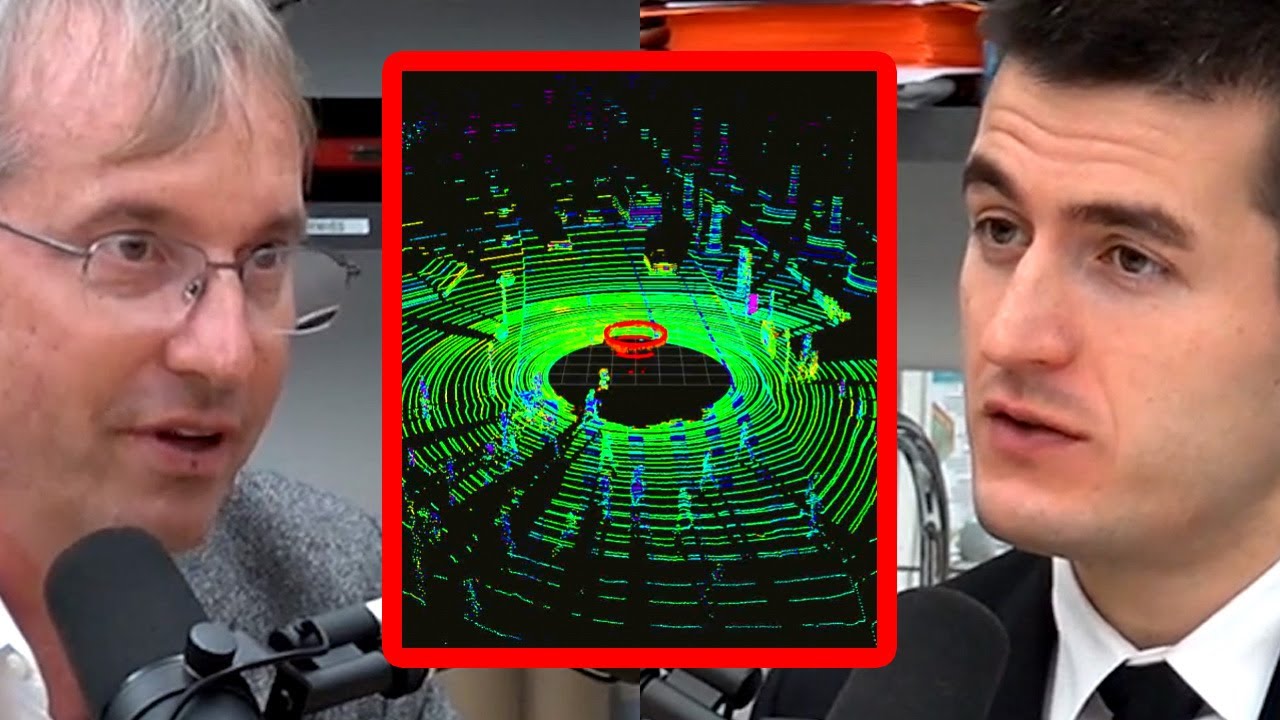
In a discussion regarding the future of robotics and automation, iRobot's CEO draws parallels between the challenges faced in home environments with Roomba vacuums and those encountered by autonomous vehicles (AVs). While acknowledging that AVs are currently the only other industry where automation significantly impacts daily life alongside domestic robots, the conversation centers on the technological debate surrounding sensor modalities. Elon Musk is cited for his famous assertion that LiDAR serves merely as a crutch, arguing instead that computer vision utilizing cheap camera sensors represents the long-term solution. This perspective aligns with the CEO's own views, suggesting that visual systems will ultimately dominate environmental understanding in both sectors. The core of the argument lies in comparing the distinct operational environments and safety profiles of these two technologies. The iRobot environment is described as significantly more complex from a visual standpoint than the structured world of automobiles; unlike paved roads with clear lane markings, home floors present an infinite variety of patterns, colors, surface textures, obstacles like stairs, and uneven terrain such as t-shirts scattered on the ground. Despite this higher degree of environmental variability which makes perception difficult for robots, the safety criticality is far lower because these devices are lightweight and slow-moving; a collision with a foot results in minor inconvenience rather than catastrophic harm. Conversely, autonomous vehicles face an inverse problem where their environments are highly structured but the stakes for failure are exponentially higher due to speed and weight. The CEO emphasizes that while LiDAR might serve as a useful backup sensor or be integrated into AV systems alongside cameras, it should not be considered primary. Instead, he asserts with reservation-free confidence that vision is the future for autonomous vehicles as well. He suggests that even if LiDAR were included in an AV setup, its role would likely be secondary to visual processing, which provides a much higher level of environmental understanding necessary for navigating complex scenarios without relying solely on distance-measuring lasers. Ultimately, the dialogue concludes that there is a tremendous overlap between the problems solved by robot vacuums and autonomous vehicles regarding perception tools and sensor applications. The consensus emerging from this comparison is that computer vision will supersede LiDAR as the primary method for environmental awareness in robotics. While acknowledging that adding a cheap LiDAR unit could be acceptable as a redundant safety measure, the prevailing belief is that visual systems alone offer the most robust path forward for both domestic and automotive automation industries. This shift underscores a broader industry trend where cost-effective camera-based solutions are expected to replace or reduce reliance on expensive active sensing technologies like LiDAR in favor of advanced algorithmic processing capabilities.
Read the full video transcript
[Music]
another industry in which I would say
the only other industry in which their
truck there is automation actually
touching people's lives today is
autonomous vehicles mmm-hmm
what the vision each is described of
using computer vision and using cheap
camera sensors that's there's a debate
on that of lidar versus computer vision
and sort of the Elon Musk famously said
that lidar is a crutch that really in
camera in the long term camera only is
the right solution which echoes some of
the ideas you're expressing of course
the domain in terms of its safety
criticality is different but what do you
think about that approach in the
autonomous vehicle space and in general
do you see a connection between the
incredible real-world challenges you
have to solve in the home with Roomba
and I saw a demonstration of some of
them corner cases literally and
autonomous vehicles so there's
absolutely a tremendous overlap between
both the problems you know a robot
vacuum and a Thomas vehicle are trying
to solve and the tools and the types of
sensors that are being applied in the
pursuit of the solutions in my world my
environment is actually much harder than
the environment and automobiles we don't
have roads we have t-shirts we have
steps we have a near infinite number of
patterns and colors and surface textures
on the floor especially from a visual
perspective so yeah well looks it's
really tough is an infinitely variable
on the other hand safety is way easier
on the inside my robots they're not very
heavy they're not very fast if they bump
into your foot you think it's funny
and you know and and autonomous vehicles
kind of have the inverse problem and so
that for me saying vision is the future
I can say that without reservation for
autonomous vehicles I think I believe
what you nan saying about the future is
ultimately going to be vision maybe if
we put a cheap lighter on there and as a
backup sensor it might not be the worst
idea in the world so the something so
much higher take so much higher that's
much more careful thinking through how
far away that feature is right right and
but I think that the primary
environmental understanding sensor is
going to be a visual system
you