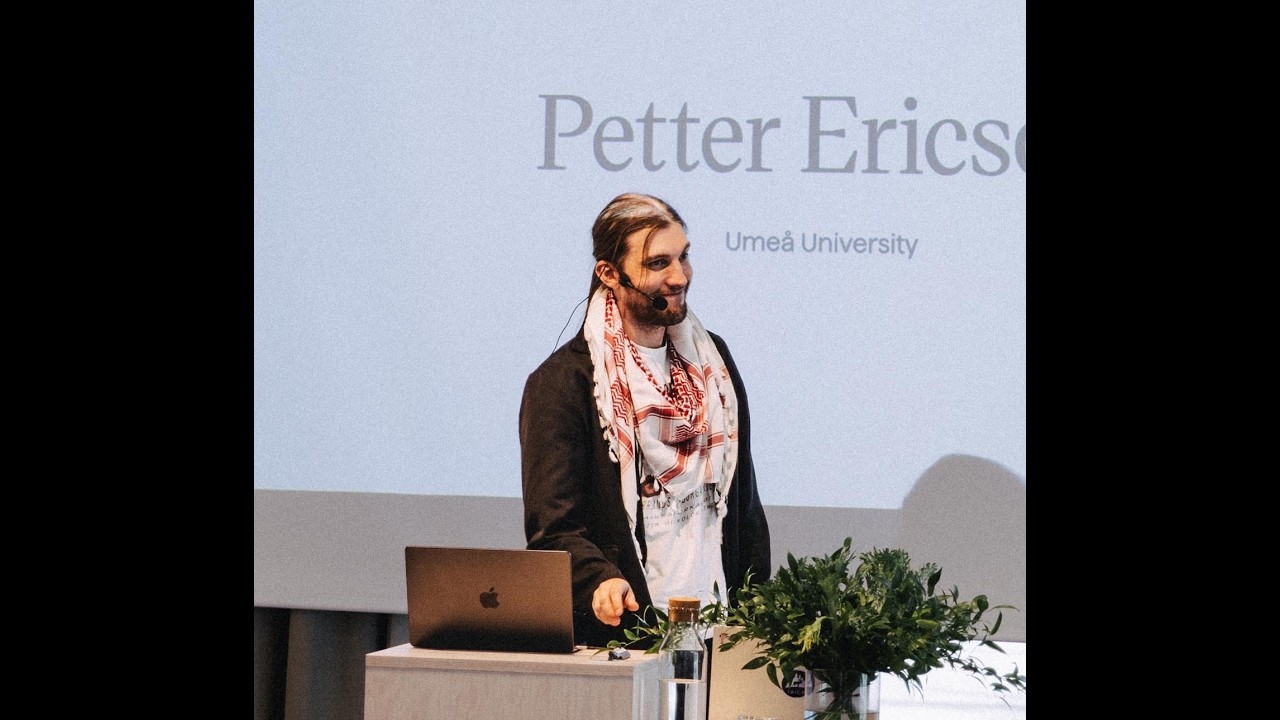
Video summary
The video begins by illustrating the rapid integration of artificial intelligence into daily professional life through a humorous anecdote about AI agents attending a meeting alongside humans, highlighting both the efficiency gains and the loss of human connection. The speaker notes that while organizations across various sectors are actively adopting AI to address critical challenges like an aging workforce and the need for productivity boosts, there is a significant gap in how employees utilize these tools. Many professionals feel overwhelmed by new terminology such as "shadow AI," which refers to unauthorized tool usage, or "AI shame," the anxiety of not understanding colleagues' AI discussions. This transition is described as simultaneously fast-paced and slow-moving, creating an environment where management struggles with compliance while workers fear job displacement, leading to a quiet but pervasive anxiety about whether advanced algorithms will eventually replace human roles entirely.
To clarify these concerns, the presentation delves into the technical definitions of AI, arguing that it is not a magical consciousness but rather a social-technical system constructed by humans and relying on massive, uncurated datasets. The speaker emphasizes that while Large Language Models (LLMs) are currently prominent, they are inherently inefficient for many tasks because they function probabilistically by predicting the next token rather than truly understanding concepts. A key distinction is drawn between different types of AI systems: some act as tools that humans control to enhance their capabilities, while others manage human labor in ways that can be counterproductive, such as prompting employees to work at odd hours or lacking necessary tact. The argument is made that AI should not be viewed as a monolithic entity but as a collection of specific technologies with varying degrees of reliability and purpose, requiring users to understand their underlying mechanics rather than attributing human-like intelligence to them.
Finally, the core discussion shifts to redefining what constitutes "work" in this new era, asserting that work is more than just completing tasks; it is a social activity involving interaction, learning, autonomy, and moral accountability. The speaker introduces the concepts of "Kentar" and "reverse Kentar" to describe two distinct relationships with technology: one where humans use machines to amplify their own agency, and another where machines drive humans, turning them into weak links in an automated chain. Automation is criticized for halting the learning process that occurs when humans perform tasks, thereby stripping workplaces of their relational value. The conclusion reinforces that human workers possess unique senses and independent minds capable of spotting errors and maintaining ethical safeguards, which machines cannot replicate. Ultimately, the message is that AI must be understood as a constructed tool that complements rather than replaces the essential social and moral dimensions of human labor.
Read the full video transcript
Hi. Hi everyone. So good to see so many
of you here. So I'm Christine and I just
want to start by sharing a little story
from my working life. Just before
summer, I was having a meeting, an
online meeting with around 10 people
from different organizations from five
countries. Uh some couldn't make the
meeting, so they kindly sent their AI
note-taking assistance to the meeting.
So there we were uh in the online
meeting, 10 boxes filled with actual
humans and three boxes filled with AI
agents
and we don't really know each other. So
I want to you know break the ice a bit.
So I ask everyone a question. So it's
soon summer. What's your favorite flavor
of ice cream?
And you know the mood changes, people
light up. You have childhood memories
popping up. There's some alliances
forming between those who love pistio
and those who hate it. And where can you
find the best ice cream in the city that
you're from? So each and everyone shares
their favorite ice cream. And then we
look at the three empty boxes kind of
with the agents. Should we try to ask
them? Uh maybe not.
So here they are our agent our AI
colleagues and they are excellent
noteakers but they have never
experienced the joy of ice cream. So how
do we work with these guys?
At AI Sweden where I run we uh where I
uh work we run labor market union
council where we check the trends what's
happening at AI in the workplace in
Sweden. And from our last report uh this
fall we could see that AI is really
actively in the workplace in mo almost
every industry in every knowledge
intensive sector from finance to legal
to marketing. Everyone is working either
alongside AI or with AI
and AI is really transforming the
workplace in that way. And we may hate
AI, we may love AI, but deep down we
also know that we actually need AI.
I was at a big international forum in
RIA this uh spring and there the OECD
and the World Economic Forum pointed out
that there are two quite big challenges
for Europe as a continent. We are old in
Europe. We're an aging population. So
we're going to have a large of the part
of the workforce are going to retire in
the next 10 to 15 years. So the poor
bastards that are left behind in the
workplace, they're going to need to have
smart and automated tools enabled just
to maintain the welfare state for the
rest of us. And then we have the
productivity challenge. Europe has the
potential to raise our GDP with 8% if we
really can take advantage of the AI
productivity boost. It's just that that
productivity boost is not going to
happen if we have lots of professionals
out there who have excellent tools but
they don't know how to use them. So
that's also a huge challenge for us.
So whether you like AI or not, AI skills
are hot. It's projected to be one of the
top three most wanted skills in the
labor market in the coming four to five
years.
But now you work with AI, right? So you
have a new type of vocabulary
popping up and I want to see if you're
familiar with it and have you
experienced it. First of all, we have
the term shadow AI.
So shadow AI means that you're using
unapproved AI tools at at the at your
job under under your radar just to get
the work done. Now, I don't want to
expose any of you, but please raise your
hand if you know of someone who has used
shadow AI in the workplace.
Ah, well, you see, good. And then
there's another term, AI shame.
AI shame is when you're nodding along in
a meeting while silently panicking
inside because you have no clue what AI
tool your colleague is talking about.
Raise of hand if you have experienced AI
shame.
I work with AI. I have AI shame every
day.
Still can't keep up.
So the truth is everyone is scrambling a
bit right now and employees are
struggling to keep up. Some of them feel
like they are lagging behind while
others are this is great give us more
tools and they're shouting this to their
leadership. Meanwhile you have
management teams that are stuck in some
kind of virtual game of email tennis
watching emails bounce back and forth
between IT and legal
fighting over compliance and security
issues.
So this shift is fast and at the same
time it's so slow.
And under underneath all of this is a
very quiet individual anxiety. Is AI
getting so good that it might actually
take my job.
Truths are being upended every month as
AI advances. We used to say that
leadership and management that's purely
human domains. That's too complex. And
AI cannot handle that. Until recently,
there was an experiment right here in
Sweden in Stockholm where the AI company
and labs started a small cafe and tried
to put a generative AI as a leader, a
manager of this place.
It turned out to be quite good at it
actually, not too badly in terms of
arranging permits and emailing with with
authorities. Uh but as one of Andablab's
uh employees told me when I was uh
talking to them, uh this leader also did
lack a bit of human touch and tact
because it kept emailing its employees
about we need to order more barista milk
at 2:00 a.m. or 3:00 a.m. in the
morning,
which wasn't really good for for work
morale.
So dear all, we are in for quite a ride.
working life is being redefined and
today I am thrilled to introduce three
exceptional speakers to share their
different perspectives on this shift and
together we'll explore how will AI
reshape decision making human work and
creativity
first welcome up on stage Peter hello
please join us
>> hello and you can hear me lovely
>> let me tell me let Let me tell if I can
just get the page out
the audience a little bit about you. So
Petra is a staff scientist at the AI
policy lab which is hosted by the
department of computing science at UMIO
University. He has been in other words
on a very long train ride to get here.
Um his research focuses on the interplay
between technology, society and
politics.
Take it away Pepe.
>> Thank you. Uh yes hello everyone and
yeah thank you for the introduction uh
and yeah my as mentioned I'm a staff
scientist at AI polic lab up in northern
Sweden um and thank you to media
evolution and to the organizers for
inviting me and to sort of giving the
introduction to the topic let's say um
and as mentioned I'm an academic I'm a
researcher I work at the university and
as a good academic I like definitions
um So I'd like to start let's see here
that's the one first and then next one
is definitions. Yes. Uh so I'd like to
start to dissect a little bit about what
we are talking about because we're
talking about redefining
work and we're re and in the age of AI
right so we're talking about definitions
and definitions of work but it's also
good to define what we're talking about
when we talk about AI
um because that is also a bit more of my
field of expertise
um another tricky thing about AI is that
there isn't really a clear definition uh
as such and definitely not if you look
at sort of more general usage but even
within the field itself it is very sort
of up in the air let's say what is AI
what isn't AI what technology we're
talking about what's the research field
that we're talking about um and instead
sort of when you are in the field of AI
and you're actually interested in
something specific you're talking about
those specific things you're talking
about machine learning you're talking
large language models, you're talking
about expert systems or neural networks
or agent-based modeling or what have
you. Uh because then you at least are
talking about something where you're
more or less sure about what is the
technical uh and sort of theoretical
features that you're agreeing on here.
Um and AI as such artificial
intelligence it's what may be called a
floating signifier or an empty
signifier. Um,
which is it is a term which is being
used for all sorts of reasons to to
indicate all sorts of different things
and it takes on meaning depending on
sort of its discursive function in the
moment rather than being uh uh a
referent that that that refers to
something out in the world, right? Um,
and that discursive function in general
when it comes to AI is funding. uh it is
a very good term for getting more
research funding, getting more uh
company funding and so on. Uh for being
more specific about what you're actually
doing, less good term, but we can talk
about sort of the the
let's see here uh different components
of the word, right? So it is artificial
intelligence.
So what does it mean for AI to be
artificial? Well, of course, any AI
system is so technical. It involves both
technical components and humans. But the
key part about the technical components
is that they are constructed by someone.
They are understandable. They have uh a
material basis. Uh someone has thought
through what they're doing or at least
maybe they've built it thoughtlessly,
but there is some thought behind
building building it. uh AI is not the
sort of magical consciousness expanding
thing that that it tends to again maybe
get used as as a discursive function. Um
and sort of
it is also uh the artificial of it as I
said is a social technical system. All
AI systems involve humans in some way.
Uh it can be
more or less going in and out of the
system like in the self-driving cars
where you have a crew of always
available uh human drivers who can sort
of step in and help the car coming out
of tricky situations. Uh and in others
other systems it is more remote. So for
uh large models for example in chatbots
it is mostly in the embodied labor of
the technical system. it is humans that
have produced the data that have uh done
the reinforcement learning and ended up
with some system which you're then
interacting with. Uh and then we have
the sort of other type of system where
the AI is the kind of background of the
thing where you have for example uh
warehouse workers or delivery drivers
who are being managed by AI as in this
this coffee shop. Um
but there is always this always this
combination of human uh and
some kind of artificial system often
computational.
Um
and again I want to stress this nothing
about AI is magical. It is often well
understood why they produce the kinds of
specific outputs that you do. Even
though that the in this specific case it
might be hard to like it might be un
unintuitive or obscure or even
impossible to trace the particular the
particulars of why a specific input gave
a specific output.
So that about artificial so what about
intelligence? Well, while the fortunes
of AI has kind of waxed and went several
times in the year, uh there is kind of a
core research subject of AI uh which can
be summarized as the study of human
intelligence using artificial means. So
that is kind of without at its at its
smallest uh core during the AI winters
of of the 60s and 70s and then later in
in the 90s and 2000s as well there was
always researchers working on AI and
that was their research subject that was
looking at human intelligence
uh using artificial means and
that is we presume that there's some
intelligence that we're studying right
So what is this intelligence?
It is an inherent quality of human minds
or human brains which is generic. There
is something which can do a lot of
different things. It is involved in
different faculties and different skills
that we have. Uh it is somewhat stable.
You can be more or less intelligent is
the the underlying idea here. Uh and it
is then expressed through all of these
other things like language, like math,
like spatial reasoning.
uh chess for example um pro problem
solving, music, everything like that.
That is the the the the idea here is
that there is some core feature of human
brains uh which is expressed through all
of these things. Um and by sort of
looking at how well you're doing in
language, in chess, in math, you get
some information about this underlying
quality of intelligence, right?
Um,
and just to sort of put myself out there
a little bit, I am somewhat uh a skeptic
of the usefulness of this term. I know a
bit too many people that are really
great at one of these skills and really
garbage at one of the other ones. uh
that I don't think that there is very
much use in trying to find this one
factor that kind of supposedly explains
uh some underlying one-dimensional value
of how well your brain works. That's not
really my impression of how brains
actually sort of function in society. Um
but leaving that aside, there is at
least this idea that most human brains
can do a certain things to a greater or
less extent and that there is a link
between various different capabilities.
Uh and that the link sort of goes that
if you're good at language, you're also
good at math, right? In general as a as
a on a population level, right? Um and
there is kind of a risk of re reversal
here um where we mistake the kind of
particular capacity that we claim that
in humans uh signify a broader cap
capability for thought or consciousness
of reasoning and so on as something that
does the same for computers. So we say
uh if if a person is is good at skill X
that means that they are likely to also
be good at skill Y right. That doesn't
mean that a machine that performs well
at say chess or math is something that
is even capable of that other skill. We
have calculators which are really great
at math but they don't play chess that
well and they don't do language that
well. Um
and moreover there is a a a risk of
uh confusion
where we look at something performing a
skill that we usually associate with an
underlying human mind and expect that
mind to be there also when we see the
the the sort of behavior from something
else. Uh humans are great at seeing
minds. We have pet rocks.
people pack bond with their uh wi with
their uh like pet robots and their
vacuum cleaners and whatnot. We are
great at pack bonding. That also goes
for AI, but that tricks us because we
think that uh because the AI has this
particular capability that brings with
it all of these other things.
So
artificial intelligence
are not just LLMs as well. That's also
an important thing to remember that the
field is much much bigger than LLMs.
What we talk about when we talk about
introducing AI in the workplace, that's
not just LLM, not just chat bots, not
just generative AI. Uh it is all kinds
of algorithmic systems. Um
that can have different features, right?
So is all these different constructed
systems. Um but an important feature or
an important case right now is LLM and
LLM have certain common features all of
them
uh they are built on massive uncurable
uncurable data sets. The size of an LLM
uh all in order to be sort of useful
useful as an LLM requires the amount of
data that is impossible for you in
curation to sort of go through. it is
simply they they need you need that much
data and so you will need to get for
example all of the internet or all of
whatever uh and that means that all of
that data is then compressed in your LLM
so you have all of that there right um
LLMs are also very inefficient as
mechanisms
uh
calculating 1 plus 1 in an LM uses a lot
more data
lot more energy and and and resources is
than just typing it on a calculator.
Same for almost all tasks. I say almost
because large language models are models
of language. So for tasks where they act
as language models, that is predicting
the next token.
It's very good. We're good at that. But
for many other tasks, they are highly
inefficient.
Um and they are also inherently because
of their sort of probabilistic nature uh
quite unreliable for those tasks because
they are predicting the next to the next
token and there is no real way of
constraining them to uh only keeping to
uh some particular uh set of outputs,
right? Um
or rather you can do that but then you
have built a system that could output
the thing itself, right? There's some
some some ways you can do that, but then
you need more assistant than that. And
they perform linguistic fluency. Um
that is they seem to have linguistic
fluency which again is this one of these
core skills that we associate with
underlying cognitive capacity. Um,
and there is kind of a wrinkle in this,
right? Because LM as models of language
as predicting the next token, that's not
the typical use case anymore. Instead,
we are piggybacking on the the uh the
language facility, right, of what is the
next token
uh to perform all of these other tasks
like addition or like search or like
summarization or uh translation or
whatever, right? Uh we're piggybacking
on the language
next token prediction in order to
perform all these other tasks. uh but
they are still working. The the what
what the language model itself is still
doing is precisely
uh predicting the next token. That is
all it does, right? Um
so uh
so that is kind of what AI is. And does
AI actually perform work? Well, what is
work? Well, let's that that is also a
fraud term, right? What is what is work?
Uh and it is also a ter term that has
multiple diff different and competing
definitions that are I would say is more
well- definfined than AI, but still some
uh some work in there. Um but let's see
here. Oh, you missed one. Um,
three characteristics of work in general
is that it something that results in
output.
It performs something. It does something
that takes effort and what isn't there
is because I sent the slides too late is
that it's usually compensated is an
economic activity is usually work. Um,
and
work is something that takes work. uh
something that a human does by spending
energy and time and other resources to
achieve and it is compensated. So what
does redefining work in the age of AI
actually mean? Well, what when is the
age of AI? Is that now? Are we talking
about what AI is doing in the workplace
right now? Uh well, in that case we have
all of these different uh like current
uh impacts of AI as in uh replacing
managers for example. uh as in uh
helping with some tasks and really
really hindering others uh impacting
with spam and so on. But then there is
also the question of maybe we're not
actually uh in the age of AI quite yet.
It can improve the we can have growth of
uh what you say 8% over however many
years. Uh that's in the future, right?
And how does that work? what what kind
of work would that AI do, right? How
does that fit into uh this this idea of
work as taking effort for example and
and doing uh uh
things um so
I'd like to sort of uh quote Corey
doctor a little bit or at least
reference him a bit uh as because he
takes from automation the theory and
talks about two groups of workers
interacting with AI with AI those who
really really like it in and sort of use
it to speed up tasks and whatnot. And
then you have uh the ones that are sort
of subject to AI and are seeing their uh
work cues being overloaded and so on. Uh
what what he called the these two groups
are Kentars and reverse Kentars. So the
the Kentar is the human mind on a
machine body. So someone who can use
tools, decides over tools to run faster,
longer for and better. Whereas the
reverse caner is a machine head that
drives the human because in a human
machine system in that configuration the
human is the weak link and the machine
will try to drive the human as fast as
possible as hard as possible.
And that is something that uh goes for
AI but also in general for for for
automation over in factors and so on. So
let's go back to sort of what is human
work.
Um because human work is never just
completing tasks, right? You can get as
many tasks as you want. Uh
but just completing the tasks is not uh
the work, right? Because you uh work is
also a social activity where people
interact with their uh colleagues and
customers and other people. You build up
these social relationships in the
workplace and outside of it. Uh you
develop skills by doing things. You
learn more about the systems you
interact with. Um
and humans in the workplace also have
some level maybe not a lot but some
level of autonomy and moral
accountability. You are responsible for
the things you do at work and you're
also responsible for keeping keeping an
eye on your workmates to make to hold
them accountable and their uh maybe
keeping track of what is this decision.
Does that really make sense? Okay. So
for to to take one example uh on the
from Goththingberg the placement of
children that was a big scandal a number
of years ago uh a human worker involved
in or human workers involved in that
process did raise the alarm and say that
hello these kids in Maya maybe they
shouldn't go to school on the other side
of the river that doesn't make sense and
so humans involved in work processes
have these safeguards these independent
minds that can work um
through the uh through the work process.
So
how are we talking about redefining work
then in the age of AI? Well uh I have
sort of skipped a number of things so
I'm sorry about that. Uh things took
longer than I expected. uh but basically
when you're talking about automation and
AI in the work in the workplace uh it is
always the case that the people who are
actually doing the work are the one that
knows the area best. They have minds,
they have eyes, they have senses to know
what is actually going on in the
workplace that a manager uh might not
have. Um when you're automating a task,
that means that there's no longer a
human involved in that task that can
learn from it, right? Uh automation
stops learning.
Uh the workplace is not just a place
where uh tasks get done. A workplace is
much more than that. It is a social and
relational space where uh people are
learning from each other. people are
communicating communicating with with
each other and people are accountable to
each other. Um work is always more than
tasks which is important to keep in mind
when you're introducing AI and AI lastly
is again not magic. It is a specific
constructed tool that we can understand
and see how it was made and what it
does. So I think that's
the last one. Thank you.