Video summary
The final video in this series focuses on the impact of reimagined learning spaces, specifically addressing how we determine if design changes are effective. The core argument is that the desired outcomes for students—such as becoming independent learners with developed mindsets and skills—must drive both the creation of physical environments and the professional development of educators. To measure success, the speaker proposes using the original "design drivers," which define what students should become, as metrics for evaluation. This approach allows schools to assess whether redesigned spaces successfully foster collaboration, content understanding, and other key dispositions, moving beyond simple aesthetics to functional capability that supports diverse learning experiences.
Evaluating these impacts can be achieved through a dual approach combining formalized methods with organic observation. On one hand, standardized surveys and structured evaluations provide data on student attitudes, perceptions, and behavioral shifts regarding the classroom environment. On the other hand, teachers act as ethnographers who make real-time observations while learning occurs, capturing how space influences engagement tendencies. This includes analyzing whether students are more likely to participate in collaborative activities or engage deeply with content because of specific design elements. The goal is to understand nuanced behaviors and determine if the space literally translates into better teaching outcomes and deeper learning achievements compared to traditional setups.
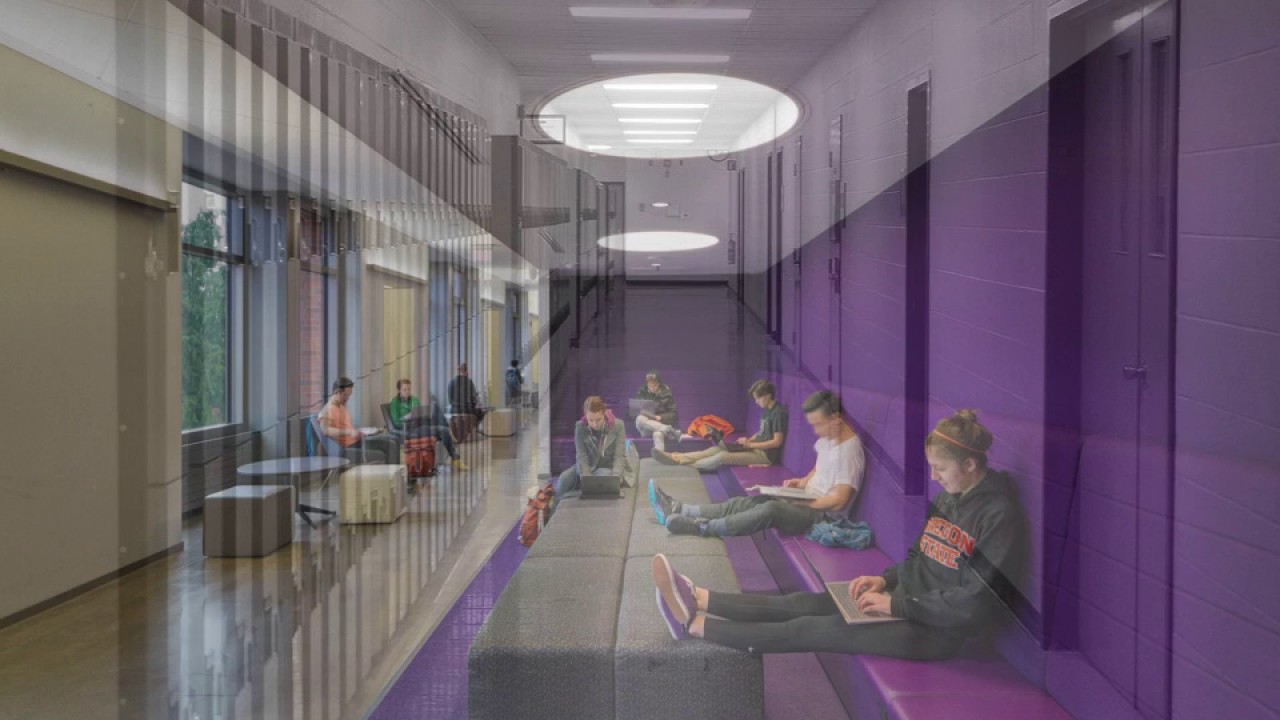
The presentation illustrates these concepts with practical examples, such as transforming a standard math classroom into an inviting, organized, and highly functional space using minimal investment and time. It also explores the potential of repurging underutilized areas like hallways, which constitute a significant portion of school real estate, by converting them into collaborative gathering spaces that still maintain necessary safety egress routes. Furthermore, the video highlights the importance of natural daylight and culturally appropriate color choices in design. By treating school environments with the same creative freedom as playgrounds—designing for capacity rather than specific functions—educators can create flexible spaces where students discover new ways to interact and learn, ultimately fostering a culture where anything is possible.
Read the full video transcript
welcome to the k12 online conference my
name is David jigs I'm talking about
reimagining the spaces in which we learn
this is the fourth and final video of
the series
I've talked previously about mindset
about landscape and about the process of
creating spaces the final video I want
to talk about impact and how we know
what we do is good so just to review a
little bit this is actually parallels
what I talked about but it's from the
learning spaces collaboratory what do we
want students to become in other words
what what's the outcome of a learning
experience that we that we define again
we talked about that being part of the
process coming from discovery and
actually being defined within the
definition period of the design process
so that coming out of our going into
special design we have a clear picture
of the student experience and how that
is defined and how that will potentially
impact and will impact actually the
design of spaces so what experiences are
required to do that we know that that
one of the goals of a change in space is
to create teachers that are educator
designers ethnographers and have a more
capable mindset and lens to how space
impacts learning in how space can be
used in the design of learning
experiences the final question of course
comes in is if we believe we have a
certain experience that's desired we
know that we craft experiences that
manifest that what kind of spaces are
capable of supporting that so that's
really where we've been we follow that
up with with this sort of a challenge
and to your to your thought process
changes in spaces support different
teaching and learning opportunities more
frequently and effectively and then the
end that's what we're looking for right
we're looking for a greater wider range
of capability to create experiences that
expose kids different kind of spaces
that can support content and there's the
development of content understanding the
skills the development of mindsets all
leading to dispositions of independent
learner so you know the question becomes
as we go through the process there's
opportunities for reflection there's
opportunities for evaluation and
opportunities to understand
if we know what we're doing is good and
so the question becomes this how do we
know that this is actually better than
what we have now and what would you
measure to to accomplish that and
understand and develop an answer to that
question you know like anything that's a
complex question in education how do you
evaluate a single factor or single
variable in the wide range of variables
that contribute to learning you know
it's the same kind of question with
technology how do you evaluate the
impact of technology on the outcome of
learning and so spaces suffer not suffer
but are engaged in the same way with
that question how do you he makes
changes in spaces how does that
literally translate into a nuanced
understanding of their impact on on what
learning has accomplished or what
teaching and teaching is accomplished in
terms of the outcomes of learning so the
question is what would you measure and
what I'm going to do is make a case for
going back to your original framework
the design drivers each you just develop
during your process those five to ten
six seven eight kinds of ideas about
learning and what you want kids to be as
learners and if those drivers are
designed to build space and inform
instruction and inform the design of
experiences perhaps even design or an
influence professional development then
I would like to suggest that should be
likewise used as as metrics for
evaluating spatial redesign so if in
your design drivers your experience that
you wanted as kids to be collaborative
learners then there's an opportunity to
design spaces for collaboration help
teachers understand collaboration and
how to structure that in the experience
and that might be a professional
development question but if the space is
if you want learners to be collaborative
and spaces are designed to support that
why not evaluate the spaces in the
context of collaboration and all the
rest of those drivers so that's the
importance of design drivers right there
are a community-based inclusive
exploration and in a declaration of what
learning should look like but they also
inform space design
experience design and they give you an
idea of what you should evaluate so
there's a couple ways to do that one you
can have a standardized kind of approach
with formal kinds of surveys and
evaluations and observations and then
there can be a very organic kind of
approach where where teachers are in
class in in making observations as
learning is occurring in those spaces
and those redesigned experiences and
there's ways to capture all that with
technology but you know I'm gonna offer
you a you know it's sort of a two prong
approach where there's formalized kinds
of opportunities for evaluating what
you're doing but also you know organic
Institute kinds of experiences that
allow teachers to become the
ethnographers and evaluators and so when
you look at that you may say well you
know there's attitudes you know we can
look at attitudes how students feel and
what they perceive and believe about the
classroom space or any learning space
now the furniture or the design is
influences perception so we can look at
attitudes we can look at experiences we
can look at shifts okay so those are
three interesting ways in which to take
a look at evaluation both from a
standardized and in a organic kind of
way in terms of shifts however the
spaces being disruptive to their
learning how students are more likely
less likely to how are you more likely
to less likely to so we're looking at
ways in which which look at tendencies
of behavior in the shifts and how are
you more likely to do this or less
likely to do this because of your space
design are you more likely to engage in
collaborative activities or not if you
could focus in on teachers as well if
are you more likely to design learning
experiences that involve collaboration
or less likely you based on the space
design so there's ways to do that and so
you know how we know this is good when
we take a look at you know this
particular classroom it's a math
classroom this is this is some from some
of the work that was done by the third
teacher Plus in San Francisco and I'll
give you a link to this in just a second
but this is a math classroom with 36
kids in it and you you know what happens
when you invest two days to redesign
with one thousand dollars you get
something like that
which is a much more capable space much
more inviting much more functional and
much more organized and probably much
more effective but again you have to go
through and evaluate that and take a
look at that so if you're interested in
learning more about that there's three
videos online this is the link I'll
leave it up here for a second so you can
you can actually watch a design process
in in that goes from on a Friday to a
Sunday literally and reshapes is space
for $1000 a great display of of
interesting design experiences that the
designers used to reshape this but also
a wide range of practical strategies
that you can use to rethink classrooms
excuse me so that's the first case you
can you can then have a very traditional
classroom that looks like this you know
and this won't surprise anybody with a
teacher desk from their classroom in
rows of desks but then you can go engage
in a process where you change one
classroom and then the next year go to
maybe five to six classrooms and then
you learn enough to go to scale and you
may create something that looks like
this the same kind of space with a much
different kind of feel the teacher
leaning against a writable wall that's
idea page with the Steelcase
implementation of verb tables that allow
a lot of this space to be reshaped very
quickly and as in response to the needs
of learners it's colorful it's an
interesting space because it provides
kids with options right and teachers
with options and that's what we're
looking for here you can take that you
can take a some of the work Canon Design
did when I worked with Canon this is a
informal space in the private school and
the independence going in the West and
this space was not used by students at
all you can tell it's it's not the most
attractive space but then you can take
with with it with you know the
combination of some great discovery work
and some design drivers add then they
talk about how informal spaces can be
used and learning you can take that and
shift that into something like this
and that's the same exact space actually
so you're talking about some high design
here are some really intriguing kinds of
options in a space that now offers that
can really different invitation and
learning and it has different
capabilities far for students all
predicated in the fact that there's an
intelligent process that defines talks
to everyone defines design drivers and
then goes through an ideation process
and the prototyping process that leads
to ultimately a final solution for the
design of space and how it how that
space can now support new conditions for
learning you're all familiar with
hallways and this is your typical
hallway you know lockers and when you
consider that that corridor space makes
up 35% of the real estate in most
schools you know we want to start
thinking about ways in which we can we
can rethink with what takes place in
these areas that's a significant one
third of the space right and then takes
that spaces or that you know in schools
you're talking about in an order in the
amount of space that's a sign that just
transporting kids from period to period
this is from Oregon State and you can
take and it's not the same hallway but
you can get the idea that always have
the opportunity to support different
kinds of engagement this is a tremendous
informal space you know if that this
collaboration or the soft seating area
is recessed away from the main hallway
and that is to provide still in the
hallway egress routes one of the things
you have to be concerned with and
hallway design is that and what what you
need to ask really is is sit down with a
local fire marshal and figure out what
you can and can't do with hallways
because first and foremost they cannot
be blocked certainly for egress during
emergencies or transport the people
during emergencies so in most places
that furniture you see the left may or
may not be allowed but that's why that
that area is recessed back okay to
provide still use of that cut of that
space but provide a clear and consistent
path for people to move through the
space in case of emergency you know
there's there's a great degree of
daylight there you see the windows
coming in extremely important you want
to take advantage solve of day lighting
that's available in your building it's
probably the most valuable resource and
space redesign is what considering the
relationship of how much day lighting
you have
in maximizing the amount of daylight
that comes into classrooms and learning
spaces there's a direct relationship
between between how well kids learn in
schools and day letting you see some
really nice colors there right colors
you have to think about very consciously
they have a cultural bias certainly get
to understand that if you're in a
culturally diverse school colors mean
different things at different cultures
you also have to think about age
appropriateness the colors that work for
adolescents don't necessary work for for
younger children and vice versa so you
can take that example hallway and here's
another design from can design this is
Carrie Busey Elementary in Champaign
Illinois where there's no more hallway
space really that you can see in the
hallway space has reshaped into a common
shared space you can still move through
it right you can still transport kids
through it but now the classrooms are
connected into this main central
gathering space that can be used for a
lot of different kinds of learning
experiences and they do science
typically out there and you see that
there's opportunities for the teachers
to open closed walls so the classroom
can become more expansive as a result of
using that informal space so what we
want to do is is you know the impact now
is is literally about having teachers
and giving teachers the capability to
design with a water palette at the end
of the day teachers design experiences
for kids and help create kinds of
learning experiences and additional
addition of spaces to that program more
capable spaces allows teachers to design
with with more flexibility and
creativity so the one one thing that I
want to I want to end with sort of is
this slide and this is I used to be
fascinated by playground design when I
when I worked in the architecture firm
and so it always asked architects why
are you are you adding tree stumps into
into playgrounds what are the kids do
with those and they would come back and
smile and they would say well we don't
know how the kids are gonna use them but
they wouldn't they came back and said
but we know what they're going to use
them so what the architects were doing
was designing for capacity designing for
kids to be able to be creative and use
the space in their own way they didn't
know how those tree stumps were going to
be you
but they did in fact know that they
would be used and when you go back and
do what's called post occupants they
work when you go back into the space and
see how people use the space you would
see that that the kids who would have
designed eight to ten games around those
tree stumps so one of the things that
you want to think about is when you in
value eight the impact of spaces is that
there's ways to look at space you can
take your drivers evaluate your drivers
both in a formalized kind of survey work
but also helping teachers understand
when they're in classrooms to take
observations very organic way you know
that's gonna give you a picture of how
well you're going to do but in a lot of
cases you know over time your spaces are
gone going to present new opportunities
that you might not even imagined that
become part of part of your new culture
of space how do how do the spaces that
you create become catalyst for different
kinds of ways in which people see
learning and engage in learning and
interact with each other to become
learners that's where the really
intriguing component comes in when you
create spaces that have the identity of
a playground work where we don't know
exactly what's going to happen but you
know something's gonna happen it's
probably gonna be good so that in mind
you know we talked in this series about
mind sets in terms of how we shape our
lens about how we see spaces we talked
about the landscape of spaces emergent
spaces both in school and outside of
school and how those blend with
potential new directions and learning
and we talked about at length that those
directions and the fact that they do
indeed have spatial consequences we went
through a video three was about a
process a way to engage and when you
when you have the opportunity to design
spaces how much you proceed in in a way
that takes you to a logical and
effective and productive end and then
finally that this video was about impact
and what does it all mean for kids and
for their learning and for teachers
really for the entire school community
and in the end the final thing and I
want to share this is from will
Richardson a friend of mine certainly
this is the this is the point of where
we should get to is that every classroom
where every space that we have in school
should be spaces where kids prove
anything is possible
basis so that mine has been my pleasure
to be with you thank you for k-12 online
conference for for having me being
keynote you can learn more at David
Jake's designs com that's David Chicks
designs com if you're interested there's
lots of resources for for you there and
I just want to say thank you for your
time and your attention and again the
opportunity to help you with understand
learning spaces in a more effective way
for you thank you