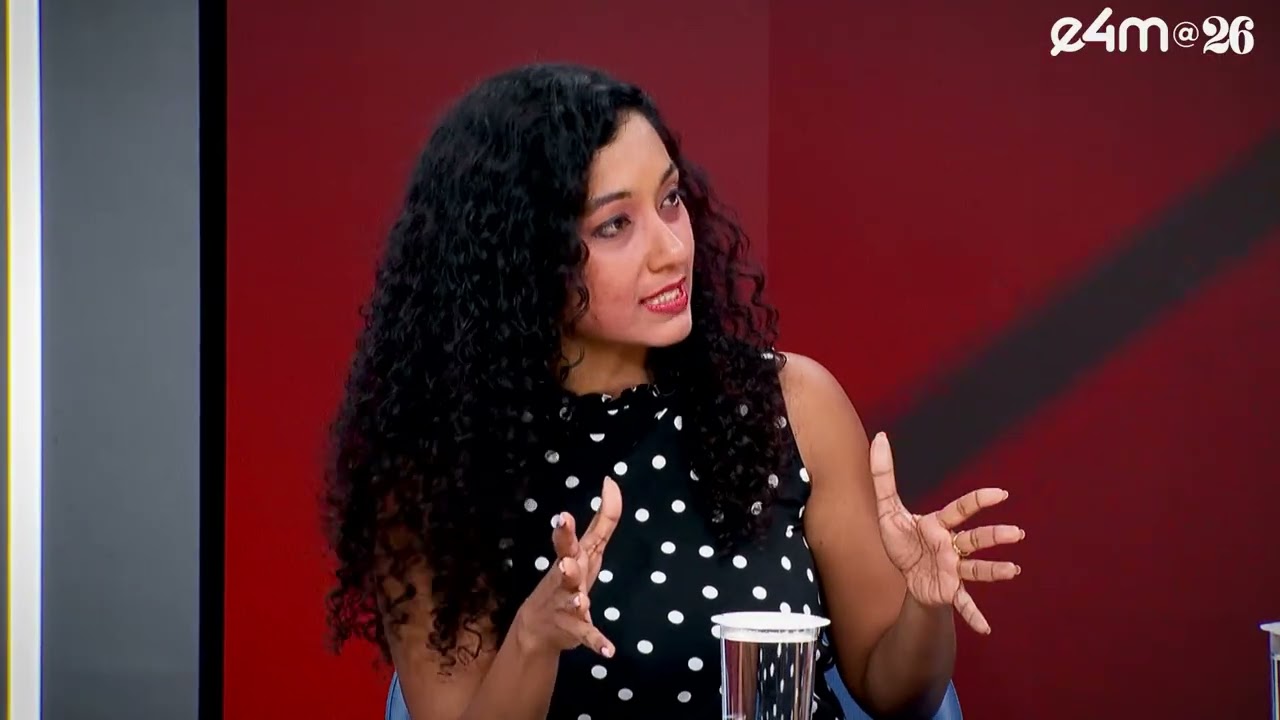
Rahul Kanwal on Rebuilding NDTV, Revenue Pressure & the Future of News
Watch on YouTubeVideo summary
Rahul Kanwal, now serving as the CEO and Editor-in-Chief of NDTV, views his role not merely as a leadership transition but as a critical opportunity to rebuild a trusted media institution for a new India. Having previously led business ventures at India Today Group where he successfully pivoted a print magazine into a multimedia powerhouse with significant revenue growth, Kanwal emphasizes that modern journalism must balance credibility and editorial integrity with financial viability. He acknowledges the intense scrutiny NDTV faces but frames the current challenges as a chance to infuse the brand with fresh purpose and energy, aiming to create a marquee news organization that commands pride both domestically and internationally.
A central theme of his leadership philosophy is the rejection of ideological polarization in favor of a "big tent" approach that embraces diverse shades of opinion. Kanwal argues that true journalism requires reporters to report what they see on the ground rather than adhering to scripts dictated from an air-conditioned studio, ensuring that the newsroom remains a space for genuine debate rather than propaganda. This commitment to independence is particularly evident in his handling of recent protests, where he defended NDTV's presence amidst criticism by asserting that their duty was to amplify the voices of protesters while also reporting on any antagonistic elements, thereby maintaining a balanced perspective that avoids picking sides between the government, students, or police.
To ensure long-term sustainability in an era of shrinking attention spans and declining search traffic, Kanwal is spearheading the creation of an "NDTV multiverse" that extends beyond traditional television into digital platforms, lifestyle content, and global broadcasting. He highlights NDTV's unique position as a "digital-first" organization with strong direct audience engagement, distinguishing it from competitors reliant on algorithmic discovery. While he is open to leveraging AI for backend efficiency and automation, he firmly opposes the use of AI anchors, believing that human connection is essential for maintaining trust. His strategic vision includes building robust communities through events and specialized content, aiming to establish NDTV as India's global voice before the industry faces a "Google zero" scenario where search engines no longer drive traffic.
The path to profitability remains Kanwal's ultimate litmus test, with a realistic acknowledgment that rebuilding the brand will take time and requires careful financial management amidst flawed media economics. He addresses concerns about layoffs in the sector by noting that NDTV is starting from a lower base compared to larger competitors but is actively building sales machines in international markets and digital sectors to diversify revenue streams. Despite rumors of the network's demise, Kanwal remains confident that NDTV's deep-rooted connection with audiences will allow it to thrive, provided the organization continues to deliver accurate, relevant, and impactful journalism when it matters most.
Read the full video transcript
Now for decades at a stretch, NDTV was
an outlier in the TV news ecosystem. A
network which shunned the foxification
of news when noisy debates had no place.
Now then in 2022, it had underwent a
massive transformation when the Adani
group took it over and then subsequent
expansion too under a new editor and
last year we saw Rahul Kaval take over
the reams of NDTV as the CEO and
editor-inchief.
Right now we are in his studio and for a
change he's the one being interviewed.
>> Thank you so much Rahul for joining us.
>> Uh this is a very intimidating role
reversal. I'm ordinarily used to being
the one asking questions. So yeah thank
you for being here. It's fantastic to
have all of you over here with us.
>> Thank you Rahul. Thank you so much for
>> so Exchange for media has sent the ent
arsenal of editors for you.
>> It's like a chakrau [laughter] that you
doing trapped right in the middle of it.
Yes. Uh Rahul u you made the transition
from newsroom leadership to the CEO's
office. How has that uh transition
really changed the way you think about
journalism?
>> So Rohil this hasn't been new in my
personal journey honestly about 3 years
ago I became executive director of
business today while I was at the India
today group. That was an editorial and
P&L responsibility where I was
responsible for building out business
today's pivot from being a largely
magazine first print brand into a
multimedia brand. Uh we did BTTV, we did
live stock markets, we did YouTube,
digital, social, the entire gamut of the
kind of 360 multiverse that we're now
trying to do at NDV at a much bigger
level. And we also grew the revenue
lines more than 5x off uh where I
inherited the base ad business today
from. So this is a reality that you have
to deal with. You need to run a news
business which is credible which is
legitimate which does the news in the
way that it needs to do the news and you
also need to ensure that you are
financially viable and independent.
>> Now in industry circles you are being
referred to as the kro kilar for taking
over NDTV at a time when it was going
through existing revenue pressures. How
are you perceiving it? What went wrong?
And how soon do you see you can get it
back to the road to profitability?
>> You know, NDTV is Nita one of India's
most marquee media brands. And when
internationally people think of uh
Indian news, the one brand that comes
most often to their minds is NDTV. Uh
this is as true in the United States as
it is in Africa, in Europe, in Asia and
of course uh in India as well. So this
is not really uh katra in the way that
you position it because this is at the
core a very deeply trusted media
institution. Yes, you're right. As uh
the ownership changed and it went
through a management transformation, uh
the brand was in a position where the
road ahead had to be charted. I thought
of that as a great opportunity uh to
rebuild a new NDTV for a new India to
give this brand passion to give it
purpose to give it energy to give it
ideas and if and we're just one year uh
into this new journey if a few years
from now we've been able to succeed in
building a new NDTV for a new India a
marquee media news organization that
many in India and abroad are proud of I
think it's an opportunity worth taking
it's Katra you know worth embarking upon
because you know there's no point if
there are hundred reasons why NDTV might
have failed there just very few uh which
can help it succeed the question is can
you find the levers can you do what is
required to be done in this age of AI in
the kind of fragmented attention reality
spans that we're seeing to ensure that
it stays credible it stays relevant and
it grows that is the challenge I think
it's a huge professional challenge all
and I'm very grateful to the management
of the Anani group for thinking me
worthy of this opportunity for giving me
this chance to go out and build this new
NDV and we've just started so it'll take
some more time and I think the results
will speak for themselves.
Thank you very much.
Social YouTube.
Social
YouTube,
social
YouTube
number one.
You know talking about editorial
integrity now you know NDTV was forever
considered as that last passion of
independent journalism. M is it still a
people's channel? And the case in point
is when the neat protest happened,
nationwide protest there. Uh a lot of
the student population um they alleged
that the mainstream media including NDTV
u showed more of the political angles
and uh demanding accountability from the
government or showing students demands.
Uh what is your response to that
criticism? Nita NDTV was arguably the
only mainstream media organization which
had a battery of its top anchors,
editors, reporters deployed at Janta
Mantar covering that protest non-stop.
You know our managing editor Shivar went
there, Padma Jooshi was there, Sucharata
Kukriti, Suhel from Hindi channel,
Ankitiagi was there like the entire
galaxy Vishnu Shom was there day after
day. So the entire galaxy of NDTV talent
was out on the ground covering that
protest. It is but natural that uh
protesters will have concerns and those
are legitimate. Mainstream media hasn't
done a fantastic job of conducting
itself and that is the reality. You
can't run away from that. If you call
these students uh goons etc uh then
obviously people out in the streets
won't like you. But I was determined to
ensure that we were out in the streets
with the protesters listening to their
voice, ensuring that their voice is
heard and amplified to our audience.
Whether we did this well enough, did we
do enough? Could we have done more?
Those are legitimate questions. You
can't run away from them. But it's not
as if we were trying to protesters or
demonize them or just try and find fault
with them. There were also certain
antisocial elements who had crept in and
were antagonizing the police. that is
also a reality. Some of that data has
come out as well. I think that's as much
a part of the story. You carry the voice
of the protesters. You also show uh if
the protesters or some protesters attack
the police. I think this is what
journalism is. It's not about picking a
side. It's not about whether you're left
or right. Uh whether uh you to just what
the government says or blindly believe
everything the students say. I think the
whole job of journalism is to look at
what's being said. applying your own
brain, looking at the story as it is
before your eyes and reporting both
sides of it, which is what we tried to
do uh as best as we could. And that's
what we'll do in every such opportunity
that comes along.
Yes.
Left right
Congress. This
Mainstream media.
Foreviphage.
students.
certific
No,
producers
[snorts]
mainstream media.
police. Yeah.
Um so related to this um what is the
toughest challenge in uh leading a
legacy news brand according to you?
The key is relevance and mind space. You
know, as uh we live in
the attention economy where attention
spans are becoming shorter and shorter
like Instagram, reels, how do you
capture mind space and attention? And it
is very easy to capture attention if you
are in one corner. If you're extreme,
right, you call the students goons,
there will be a certain population you
appeal to. If you are fully on the side
of the students and you think the
government is the worst thing, it's the
worst government in the world. It's the
most horrible thing that's happened to
India. If you project that image as many
people do, then again you'll have a very
core constituency of loyal believers.
How do you find space in the middle? I
believe India's democracy
>> uh thrives in the middle. This is where
our democratic values live. They
breathe. I think of NDTV as a big tent
of ideas, of opinion, of shades. This is
not one Moses leading the way and
showing people the path. This is not
about what I think. This is about
different editors, different
journalists, different shades of
opinion. I don't have to agree with
everything each one of anchors or
editors says. You have to give people
shades of opinion. Pankage may have a
different take at Sama for media on a
story. Anita may look at it differently.
Roel may look at it differently. You
have to be able to appreciate different
points of view. You can't say this is
the only point of view. I know in some
networks that's how it works that the
editor and chief says this is my line on
the story and expects all reporters to
follow exactly that line. I think that
is wrong. I think that uh reporters need
to report what they're seeing around
them. It should not be dictated from
somebody sitting in an AC studio
dictating and determining what their
reporters and anchors will say. And I
think anchors and editors should be
allowed to voice their own thoughts
without being dictated by a central
commander. This is the line. this is the
WhatsApp group and now this is what you
must say. I think that's wrong. That's
not journalism. That's propaganda.
>> At the risk of making it sound like a
monolith, the younger generation think
that the traditional media has failed
them and the independent uh digital
platforms are the way forward. uh now in
in this case also considering the kind
of adoption digital has you know how
everybody's flocking to digital would
you say your main priority and your main
competition is battling with the digital
platforms as opposed to your other
contemporaries on TV
>> Nita NDTV has been digital first long
before I got here
>> right
>> long before other newsrooms were even
thinking of apps this is the OG of
>> India's digital ecosystem they have one
one of India's best news apps if not one
of the world's best news apps their uh
Google domain authority is very deep
into the Google Google algorithm which
is why when you're looking for stories
you know the first brand the keyword
that pops up is NDTV which is nothing to
do with us at this moment this is the
work that the fabulous battery of
journalists editors producers over three
decades have done this is thanks to
their effort uh that this is India's
digital OG so other platforms are coming
to terms with this digital reality. Now,
NDTV was digital first, even in terms of
revenue. We make more money on the
digital side than we do on television.
And therefore, this is not something
that scares us. NDTV is and has been
forever digital first. It's a change
we're embracing wholeheartedly. And
ultimately, even on these digital
platforms, people will go to handles or
pages or channels that they connect
with. Ultimately when there's so much
algorithmic pushes um do people trust
your brand? NDTV digital has amongst the
highest percentages of people coming
directly on the homepage.
>> Okay.
>> In the companies that I've known just a
very small fraction of your daily
readership comes directly to the brand.
Most of it came earlier through Google
search and discover. NDTV is the one
Indian news organization which gets
people directly on the homepage. that's
the connect it has with its audiences
and uh we're trying to build on that.
You're trying to build on that. You're
trying to grow that and that's the
effort that's currently underway. So I
think I'm hugely excited by the changes
uh the digital frontiers present for
news organizations. I know that there is
a lot of upheaval at this moment. Many
will potentially fall by the wayside but
I am quite certain that the one brand
that will be standing once uh the ruins
are being counted will be NDTV.
>> [clears throat]
[snorts]
>> News
teams. Hindi
languages
weekend.
forgiven.
audience.
Instagram.
YouTube
lifeline,
healthcare, anti-aging, wellness
launch. Launchpad,
career progression, upskilling,
NDV, good times, lifestyle,
entertainment, films,
luxury,
automate.
pillars
community
there's a perception you know when I
interact with industry folks they say
that NDTV isn't making enough impact
editorially what would you say on that
>> you know people are entitled to think
whatever they want. What somebody else
working in some other newsroom thinks
frankly is of no concern to me. What is
far more important is whether those who
are in the news ecosystem, those who we
are reporting on or more importantly uh
those who are watching us whether they
feel we are making an impact or not.
when our teams were in Chennai covering
uh the swearing in of Vijay uh or when
we were in Bangalore when the leadership
transition happened there were dozens of
people coming over to Shivar Viraa
Vasuda Wu Gopal saying oh we saw you on
NDTV can we get a photograph that is
impact what those people think that
matters to me what some person sitting
in some newsroom thinks of us is
inconsequential uh that is real impact
I'd gone during the Bihar elections to
uh you know these very impoverished
parts of Bihar beyond Kishan Ganch there
people came up and said
interview uh Native India
this is in places like Kish and this is
ND India and we just about started and
I'm hardly even coming on air and
anchoring
that is how deeply penetrated the idea
of NDTV is these aren't this is not a
normal news brand these are four magical
letters Roel NDTV
What some jealous competitor sitting in
a rival newsroom thinks of our editorial
impact is completely inconsequential.
What those who matter from the white
house in Washington to Kartavhan in New
Delhi to the corridors of power in
Chennai, Rajasthan, West Bengal and to
the streets villages of India what they
think of our editorial impact that is
what I'm concerned about. Rivals are
welcome to think whatever they want.
>> You know connecting editorial impact to
also revenue. I want to understand
you've announced the slate of new
ventures which is from auto lifestyle u
datadriven journalism all of that I want
to understand how are you prioritizing
in such a way that you're not spreading
out your resources too thin when there
is revenue pressure already and how will
you make sure that your core journalism
is not sacrificed when you know advance
into all of these uh different platforms
>> so the first thing that we're trying to
do is strengthen the core of our
journalism invest in storytelling
in Hindi in English
on our regional channels in business
news that is core and that is most
important that's what takes up the bulk
of our resources that takes up the bulk
of our energy and effort and that is
more important than anything else but
given the fact that linear television is
under pressure and that is uh headwind
you can't deny
>> and given the fact that AI is eating up
a lot of Google search and discover
traffic and that again is a reality that
you can't deny how do you build a
sustainable
business which keeps in uh mind these
realities.
It is there that I think Nita that we
need to build up an NDTV multiverse. So
we've got NDTV world. I think this is my
biggest passion project.
>> It's our it it defines the scale of our
ambition.
>> India doesn't have a global media brand.
India doesn't have the equivalent of a
CNN or an Aljazer or a TRT or even a
CGTN.
There is only one Indian media brand
that is capable of being India's voice
to the world and the world's window to
India that is NDTV.
When you travel abroad,
wherever you go, Europe, Africa, the
Middle East, America, they know of NDTV.
and you currently have the resources,
you have the wherewithal, you have the
ambition and the appetite to build out
India's media window to the rest of the
world. That's what we're building on. It
also makes uh sense from a business
perspective because whatever eyeballs
you get uh they're all international.
So, it's dollar denominated. It's not in
Indian rupees. That's the advantage in
terms of building that out. But outside
of uh just the revenue that comes with
it, this signals the ambition and the
determination of the new NDTV to build a
global media platform. It won't happen
in one year. It may not even happen in
two. It'll take time. But that is
something that we're committed to. You
know having you know this is almost one
sixth of uh humanity.
And therefore what do these people
think? What's happening inside India?
What does the diaspora think? How is the
world looking at India? How is India
looking at the world? This is a central
idea to what we're hoping to build in
any TV and we're taking steps in that
direction. We're not going headlong and
you know booking all the investments in
the first few months. We're doing it
step by step by and by. But this is very
important. Similarly, NTV good times um
movies, entertainment, lifestyle. We had
a fantastic show called Band Baja Bride
which was how Sabisachi became
Sabisachi. I mean he was on Band Baja
Bride. was on the jury of uh the NDTV
art awards recently and he says I hope
you know I said of course I do but he
said I hope you know that I used to do
band baja bride and that's how people
got to know of uh the legend of
sabisachi we're bringing that back
there's highway on my plate the food
awards uh the the idea nita is to build
strong communities
they can be big communities they can be
small they can be small like golf they
can be even smaller niche like art and
photography but these are important
communities
News organizations need to build strong
communities because you're not going to
get anything from Google search and
discover. You have to have some value
proposition that brings people to you.
That is very very important.
Anika Aker Anviksha uh is inquiry. It's
thought, it's dialogue, it's
deliberation. We'll take Anviksha to uh
Dubai, we'll take it to Europe, we'll
take it to America, we'll take it to New
Zealand, we'll take it to Australia and
we'll talk about what India is doing
globally and how the world is looking at
India and yes, we will make money. But
it's also about thought, it's about
leadership, it's about ideas, it's about
deliberation. So there are different
things that you can do to make money
through legitimate means. I think that
is important at the core. I mean if you
wanted to get a pure play CEO, you can
find somebody who comes from a sales
background. You got somebody who comes
from a journalism background. My job is
to ensure the news stays clean and I
will do as much as I can to the best of
my ability to ensure it stays that way.
>> Right. I I I want to quickly ask two
quick questions because uh time I don't
want to miss any question. One is 16
months almost and um how do you rate
your outcomes?
>> Certificate that is meaningless. I mean
what would you say are your biggest
highs and lows if you have to say?
>> I think the high is that NDTV matters.
NDTV has mind space. It's being spoken
of. Uh nobody can deny
the strength that they're seeing in the
brand. The vitality that they're seeing
in the brand, the ideas, the coverage of
news, the coverage of elections, the
coverage of budget Davos. In some ways
because of problems beyond any
professional's control had fallen off
people's mind space right the fact that
you've penetrated mind space that people
are looking at you engaging with you
caring about what you do that I think is
most important everything else is
building on it all of what I just
mentioned Rohil the art awards the
photography awards the food awards or
even the coverage that we do we did an
India Japan summit recently these are
things that take time to build
You know the Indian day conclave for
example wasn't built in one day. Year
after year when you do what you do
people get some confidence in your
team's ability to pull it off. That's
when it really becomes a big deal. We
did golf for example last year with
PGTI. Um we probably didn't make as much
money as we could have or should have on
that IP. That's because people didn't
know yeah maybe 20 years ago ND used to
do golf. Can they do it now? Are they
capable of pulling it off? It is when
they see that they start to believe. My
job is to ensure that they like what
they see. Once they have faith in your
ability to deliver, everything else
follows. You build the content, you
deliver like we did the business
leadership awards this year. Uh the
who's who of corporate India was there,
the finance minister was there. Once
you've seen that, next year when our
teams go out and say we're back again
with the business leadership awards,
people will take that much more
seriously. This year
and it's true, it's legitimate. I mean,
how can you take away those concerns?
Those are real concerns. Therefore, I
say it's not what I say, it's what team
NDTV does and people will form their
opinion not on the basis of what our
critics on as say, but on the basis of
what they see.
You spoke about uh India today and
that's a company that you worked with
for several years and recently they laid
off about 120 employees and this is one
of those firms which is not seeing red
in their balance sheets yet now with uh
declining TV news viewership mounting
losses are such layoffs going to be a
reality across TV channels soon is that
happening at NDTV
>> I can't comment on what India today has
done uh that newsroom is very dear to me
I've spent
two plus decades over there. From the
promoters to the drivers to the
housekeeping staff, these are people
who've been part of my family and part
of my ecosystem. I care for them very
deeply and I uh am very close to them
emotionally even now. It's very sad that
they had to let some people go. I can't
comment on that at all. It's a decision
that the management has to take. The
difference with NDTV at this time Nita
is that um we're coming from a low base
given how big this brand is uh in
revenue NDTV really fallen off the cliff
for the TV channels whether it's in
Hindi or English or business as we build
our editorial muscle as we build our
sales machine we can what we're trying
to do is win business back win back what
is legitimate legitimately uh worthy of
being with NDTV the other big media
brands
are making much more money at this time
because they have stronger muscles. Like
we didn't have a connected TV team. We
didn't have a YouTube sales team. We
didn't have an international sales
channel. So as we build that sales
machine out, you start monetizing the
presence of those uh you know sales
resources in these functions. So that's
that's how it's growing. But yes, you're
absolutely right. Times are tough. uh
media economics are deeply flawed not
just in India but internationally and
the jobs uh of people in management in
any of these organizations is to be
extremely careful about how they spend
money what they spend on to try and
ensure that each rupee that is spent is
stretched as much as is possible that it
delivers the maximum possible return on
investment
>> and that we're able to chart out a
viable path to profitability at the
earliest possible. We'll do this the
right way. We'll put in the hard yards
to try and make it happen and we will
work towards ensuring that we're
financially independent and viable.
>> But realistically, how many years are
you giving yourself for this turnaround?
>> You know, that's an internal
conversation and uh I realized that we
I'll ultimately be judged as chief
executive not by what I say in this
interview but by the financial returns
our organization delivers quarter after
quarter in the quarters ahead. That is
the ultimate litmos test. It's a test
that I am uh committed to deliver on and
we're working extremely hard across a
whole bunch of ideas, some of which
we've discussed and some of which we
haven't to try and build out alternate
revenue streams.
>> It's not about blackmail that if you
want this interview, pay me money. If
you don't pay me, I won't do this.
That's not the way to do it. There are
proper ways of making money legitimately
by building out these kind of uh
ecosystems that I spoke about,
communities that I spoke about, IPs that
I spoke of. That's how you build your
business.
Prof.
talented professionals.
anchor
equal playing field
level playing field.
for
camera.
>> [snorts]
>> I
So, um, Rahul, tell me, is there
anything that bothers you the most? What
is that thing that bothers you as editor
and CEO of NDTV the most? I think the
fact that uh AI is playing the kind of
role that it is Roel and that Google
search and discover traffic is coming
down almost week after week not just
month on month uh is a huge concern for
all digital news publishers. NDTV is
luckier than most in the sense that we
have a lot of direct uh traffic that
comes straight to the page whether it's
our homepage or it's uh the app and a
lot of people come directly and engage
with the website but that's not that's
not something that we take for granted.
the fact that there is a massive
downturn in uh Google search traffic and
discover traffic and that this is
upending all notions of uh you know the
digital business as we know it that's of
concern. So moving to build the kind of
multiverse that I described earlier with
speed and purpose so that before you get
to a Google zero world, you've built out
a multiverse which can sustain you
because when algorithms decide where
brands go or where news goes or where
users go, the only thing a media
organization has is trust. It has
credibility. It has the belief of its
consumers that bring those consumers
back to the brand's homepage or app.
that is all that you have building that
is uh what is of um you know immense
important importance to us I know it's
like time is running out we're heading
towards Google zero we're trying to
rebuild all that we're trying to build
uh and we're trying to do it really
quickly so before we get to a Google
zero world what have you got which can
last in a Google zero scenario
okayredility
News.
Uh, news processes, text, graphic,
editing,
Finance, HR, legal,
anchor.
[laughter]
Mhm.
Morning
machine.
Philosophically, ideologically, I'm
opposed to AI anchors. I believe that
there's a lot of use for AI at the back
end in news processes, production,
graphics, uh automation, finance, HR,
legal. So that's where we're using AI,
you know, on the app, creating more
content, etc. But then you you want to
see Pankage faces. If you see a Shivar,
you know about him. You know what he
does, you know what kind of food he
eats, what he likes, what he doesn't
like. you know his biases, you know his
strengths and you process it keeping him
in mind. Same is the case with say soil
take anybody padma. You want to feel
human beings. You don't want to be
talking to a machine when you're
consuming the news and that is really
important. So your the ultimate person
who delivers and presents the news has
to be human. I think that is very
important. A human connection with your
audience is extremely important. AI has
a lot of use. The use is largely at the
back end. M
>> the moment you have fake anchors and AI
anchors presenting the news, you've lost
your connection to the audience. Then
what's the difference between your
marquee media brand and somebody else?
It's ultimately just a machine that's
talking. You've programmed a machine,
some kid sitting in some school,
university, he can program another
machine. What's the difference?
>> I I I think it's a bad idea.
>> So we will never see a Rahul Kawal AI
avar on screen.
>> We're [laughter] not even seeing you
anchor the main show. I mean so [snorts]
I mean are you coming back
>> ro you know this is a question that I
get asked very often are you
>> do you miss because there's so much news
happening do you really miss
>> you know this is a conscious call that I
took Rohill because you can't be coach
of the team and captain and want to bat
yourself the moment an editor-inchief is
also anchoring a daily prime time show a
lot of the energy of the newsroom
>> gets concentrated around trying to make
that person's show shine
>> you have to ultimately make a choice
Do you want to be uh on the field or do
you be you want to be off it? And you
have to be okay with letting other
brands outshine you. Let them become
bigger. I think one of the best things
about Prano Royoy was the fact that he
was comfortable with the stardom of
Rajep Barka and Orno and everybody else
in that fantastic newsroom back then
that he was okay with other people being
more famous with him. Same is the case
with Mr. Arun Puri. uh the fact that you
had Punka, you had Prabhu Chavla,
Shakhar Gupta, you I don't want to take
any one odd name, but he that was a
legion of stars. It's a galaxy of
editorial talent and they're okay with
it. You got people I try and hire people
who are much smarter than me. It's one
of the things that I'm most determined
to do. You have to get people across
functions who are smarter than you. They
are better than you and they add value
to what you do. That's how you build
something of value. If you try and if
you are insecure and you're constantly
trying to hire people who are less
competent than you are, you'll never be
able to build a great institution. And
if you see all the people that we've
seen recently,
>> uh whether it is a Ragaval at network
18, whether it is an Arun Puri at India
today or it is Dr. Poyoi at NDV, they
were comfortable in their skin. They
were okay with others outshining them.
>> I think that is very important. I can't
be in the middle of this interview, any
other review, sales review, uh, board
meeting, etc., and running away to try
and record an interview for my prime
time show. That's not fair. You're not
doing justice to your audience. You're
not doing because it takes a lot of
effort. It takes research. It takes
practice. It takes thinking. What are
you thinking about? Are you thinking
about your show tonight? What you're
going to say? Or are you thinking about
uh what we're doing with the app? Are
you thinking about what you're doing
with the website? you're thinking about
what we're doing in Nepal or what we're
going to do at the World Summit in
October.
>> So you have to be you have to be very
clear in your head and this is not
something new. I was um 27 years old. I
used to anchor the 9:00 p.m. news and
aching
to talk and do photos etc etc. I gave
that up when I got the opportunity to
run headlines today. I just gave it up.
And many people
Head
newsmire
stories guide shape.
you know from that same CEO lens you
know ratings have been suspended uh do
you think that is going to further
impact the revenues of news channels
considering the festive season also the
new TV uh rating policy opens the door
for uh multiple rating agencies.
>> Do you think that is a good idea? The
ele the monopoly should be eliminated.
>> The rating system, Nita, as you know
well and you report on this closely is
deeply flawed and a lot of the critique
that is directed towards Bark and
towards the way ratings are collected
and presented uh is valid. But there is
one mechanism. The election commission
has limitations. the process is not as
fair as it should be. But we saw in the
bipoles recently, we saw in Chennai,
we've seen elsewhere when people make up
their minds, results are visible and uh
the vote talks. I think this is
extremely important that there has to be
some mechanism
>> which allows for us to determine who's
watching how much.
>> Mhm.
>> You can't say that there is no bark
>> and that there is no alternate either.
>> Mhm. And there is so much delusion and
ego in newsrooms that everyone is
convinced that they're the best. You
speak to any of the anchors or editors
or editors and chief of other
organizations,
there has to be some yard stick which
determines who is being watched by how
many people and it has to be a yard
stick you don't control. So I am very
keen that the Bach rating system comes
back at the earliest possible. M
>> I'm also keen that there be multiple
sources of ratings. It shouldn't just be
one. So the government has encouraged
other players to come on board and I
think the more players we have the
better because if you're doing well on
one it can be called a fluke but if
there three or four rating mechanisms
and NDTV is doing really well on all and
you can feel how NDTV is doing you can
see it in the data then it's probably
you and everyone else we'll have to
accept that yeah there's something
happening here. So we want ratings to
come back. It's like fighting an
election and not knowing whether you won
because you worked hard you know your
people went out your pana promotes and
brutar this that and you really tried
very hard and then they won't tell you
who won I think that's terrible we want
elections to be held fairly freely and
we want to know who won so we want
similarly for ratings to come back it's
very important because NDTV at this
moment is being priced at last year's
ratings which is very unfair because
it's grown a lot since then
>> to what extent has it grown how much has
it grown we know only once ratings come
back. So, we're keen that ratings come
back and we're looking forward to this
issue getting resolved as quickly as
possible so people can see what's
happening.
Nice
influencers.
influencity.
market
influenc
mainstream
medals,
likes, subscribers.
balance.
Good sense.
interview.
You're just slipping towards extremes.
When you joined NDTV, it was famously
said by someone, you know, I know that
NDTV is now dead. What do you make of
those comments? You know, I don't think
any one person can determine whether
NDTV lives or dies. You know, for three
decades, a legion of fabulous
journalists, editors, anchors,
producers, videographers have worked on
building this brand. The connect it has
with audiences in India internationally
is very deep. It is the work that we
will do that will determine how this
brand stands, thrives, and heads into
the future. I know that there are people
in multiple newsrooms that would like
nothing better than for NDTV to die
because an NDV which is alive, an NDTV
which is kicking, an NDTV which is
breaking news in Davos during the budget
uh during elections is their worst
nightmare. You don't want a competition
and you know who can compete with you.
You know who can beat you? You know who
can outthink you. And naturally if I
have a competitor I'm really worried
about. I'd like that competitor to die.
It's the most obvious instinctive human
reaction. And that's fine. I mean I
don't think anybody can kill NDTV. The
idea of NDTV is an idea that's very
deeply rooted in the fabric of the minds
of our consumers. My responsibility is
to keep that idea alive to build on it
to give it a manifestation in its new
aftar which people connect with they
like they watch they appreciate and
that's what we're working towards and
that is what will determine Roel whether
NDTV lives thrives or dies and no one
person's like or dislike
>> has anything to do with that now
>> news8 India has a tagline dish
republic bharat says nam and ndtb India
recently rebranded itself to Bharatka
Vishwas. Uh and of course overall you're
come getting a new face. Uh tell me what
editorial standards and measurable
outcomes do you have to determine that
uh the channel and the network has
actually earned Batka Vishwas and it's
not just a rebranding process around the
tagline.
>> It's very important for indie TV to be a
big tent of ideas of thought of shades
of opinion. It's not just one particular
ideology or one point of view that
prevails. That to me is very important.
If there's something good that is
happening, you should be able to
appreciate it. If something is going
wrong, you should be fearless and able
to question it.
>> The idea that you've already taken a
side like there are certain anchors or
news organizations where you don't even
turn up their audio because you already
know what they're going to say. It's so
predictable. I think that's wrong. There
has to be a certain amount of thought
applied to every issue,
>> every topic
>> which is where your views emerge from
which is what shapes your report arch.
That is very important when things are
going wrong
>> in our country abroad. When
>> uh there's a fire that is burning and
you're confused, you don't know what's
happening. You know what is the platform
that you turn to?
>> Mhm. If that is NDTV, then we've earned
your trust because that is what really
matters to us at NDTV. That when you
don't know what's happening, you know,
you're hearing different points of view
even on Instagram, on X, everywhere.
You're hearing a particular point of
view. You want the full picture. You
want to know what's right. You want to
know what's wrong. You want the full 360
perspective. That's when you come to
NDTV. That's why the new NDTV uh tagline
is Bhat Kaveshwas. So, we've done two
things. Nita, we won dropped the 24/7
suffix to NDTV. It's just NDTV
>> because when NDTV was launched a couple
of decades ago, that time live
television news was a big thing.
>> Now it's all uh on people's phones,
right? You're you're watching TV, you
could be on the app, you could be
digital, you could be social, you could
be on our LinkedIn, you could be on our
Instagram. Anyway, it's just one NDTV.
>> So the idea is that it's just one brand,
one identity, one thought. And that's
why it's just NDTV. It's no longer NDTV
24/7. That's one idea. The other is that
the moto for the channel is when it
really matters. You know, when you when
there's elections or there's budget or
something really big, there's big
breaking news. Where do you go? There's
so much synthetic AIdriven
>> content generated by AI engines.
>> You read that, it looks good, it's well
written, but is it true?
>> Is there meaning? Is there purpose?
>> So where do you go at that time? Our
hope is audiences will come to us when
it really matters. And therefore, that's
the idea that we're pushing out NDTV
when it really matters. Come watch us.
Be with us. Be on our app. Come to our
website, watch us on TV,
>> see us on Instagram, wherever. Because
when it really matters, India turns to
NDTV. That's the idea.
>> Fantastic. Thank you so much Rahul for
speaking to all of us and patiently
asking answering all the questions.
>> Thank you. Thank you. Nice having you.
Thank you.
>> Thank you so much.
>> [laughter]