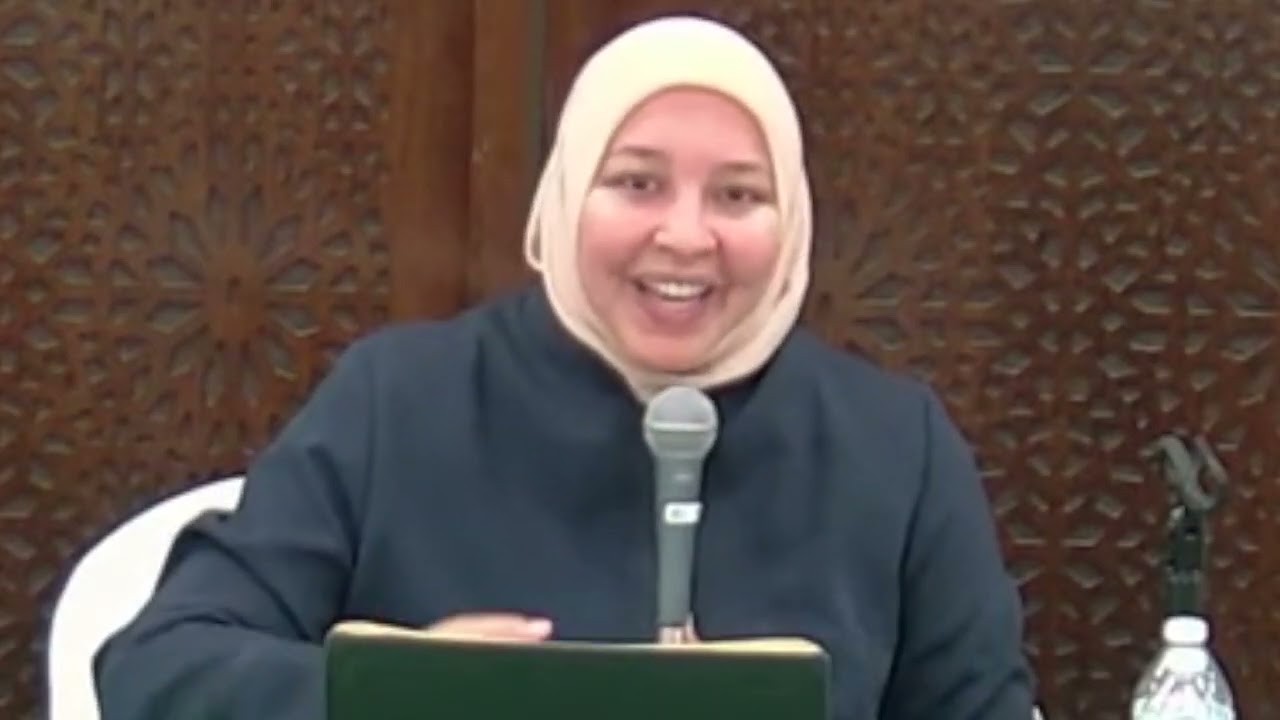
Q&A: Avoiding Divorce in a Mismatched Marriage: My Spouse & Me Are Incompatible | Dr. Rania Awaad
Watch on YouTubeVideo summary
The core message of the discussion revolves around navigating marriages where significant incompatibilities exist between spouses. The speaker emphasizes that no two individuals are ever identical, regardless of their shared background, culture, or tribe, meaning some level of mismatch is inevitable in every relationship. While acknowledging that working through these differences is challenging, particularly when one partner is unwilling to try, the most crucial factor for survival is mutual willingness to make an effort. The speaker argues that arrogance, which manifests as blaming the other person entirely, is a major obstacle, whereas humility—admitting that both parties contribute to the problems and are willing to compromise—is essential for resolving conflicts.
To address these deep-seated issues, the video advocates for professional marriage counseling rather than relying solely on family intervention or untrained religious figures like imams. Although seeking help from one's own family is mentioned in Islamic tradition, families often lack neutrality and may inadvertently worsen the situation due to their own biases or unresolved baggage. The speaker clarifies that while many imams are respected community leaders, they are typically not trained as clinical marriage counselors, much like a plumber cannot fix a car engine. Therefore, couples need a neutral third party who understands both psychological counseling techniques and Islamic cultural nuances to facilitate a constructive dialogue aimed at salvaging the marriage rather than simply ending it.
The ultimate goal of this counseling process is to foster an environment where both partners can admit their own shortcomings and meet in the middle through mercy and compromise. The speaker encourages couples to view marriage as a continuous journey of adjustment, where saying "no" to one's own desires for the sake of the relationship is a form of love and mercy. By engaging with a qualified professional who respects Islamic values, couples can gain clarity on their specific dynamics and develop strategies to work together effectively. The video concludes by reinforcing that seeking such specialized help is not a sign of failure but a proactive step toward preserving the family unit when internal efforts and informal support systems are no longer sufficient.
Read the full video transcript
The question is uh a sister's asking if
somebody's already been married for some
period of time and there's a lot of
mismatches in this couple and they want
to continue it. It's definitely going to
be hard cuz there's different there's
differences, but the most important
thing you just said to me now is both
have a willingness to try. The harder
thing is when one is willing to work and
the other isn't. Even worse when neither
one of them sees that there's a problem
in the first place. Subhan Allah. But
anyhow, let's take this your your
question directly, which is that there's
a mismatch in the marriage and which is
like I said, we are not there's no
husband wife pair that's ever going to
be a cookie cutter template of the other
one. Even if you come from the same
background, even if you come from the
same social, economic, cultural, uh,
religious, even if it's the same cast or
family group, even if it's for the same
tribe, I mean, at the end of the day,
one family, one household's culture
literally is different than the
household next to it. the neighbor right
next to it. So there's no way you're
going to be an exact replica ever of
each other. And if there are too many
mismatches then but they want to work it
out then alhamdulillah now we have where
we want what this is now humility.
Humility is to say we're having trouble.
We're struggling.
Arrogance is to say I'm fine. You're the
problem. [laughter]
Which happens all the time in couples.
There's a lot of like you ask a couple
what's happening. He he he or she she
she
and the reality is it's a every road is
a two-way street.
So it's both of you actually. And as we
said at the beginning so much of
marriage is compromise and so much of
marriage is Oh baby does not like what I
said. Okay. [laughter]
I said no. [laughter]
So much of marriage is compromised and
so much of marriage is literally mercy.
So part of this is and I encourage you I
did mention of premarital counseling and
that's for couples before they even get
married. However,
the from marriage onwards it's marriage
counseling and ideally it would be with
somebody who if not Muslim themselves
then at least fully understands and is
respectful of Muslim cultures because
the goal of this is not to get divorced.
That's not the point. The easy way out
is to say everybody go their way. No,
the harder and more important thing is
to say if we can salvage this, what does
it take? And it often takes a lot of
compromise and it often takes a lot of
humility to say I'm doing things that
need to change. You're doing things that
need to change. Let's try to meet at
least somewhere in the middle. Do you
see what I'm saying? I encourage this
heavily. And people will say, well, I'll
just talk to the imam. I cannot tell you
how many imam trainings I've done,
alhamdulillah, in which our dear imams
say, "But I am not trained in marriage
counseling." [snorts]
In fact, I have problems in my own
household. Subhan Allah. They're not
trained. Your imams are not trained in
marriage counseling. With all respect,
just like you're not going to take your
car to your plumber, and you're not
going to have call up your mechanic when
your sink backs up, right? Everyone has
their disciplines and what they're
trained in doing and what they're not
trained in. And by the way, I don't know
your imams. I heard that there's like
five of them. May Allah bless them all.
May Allah bless them all. But my
understanding is I don't think any of
them are actual marriage counselors. And
it's not just your masid. It's every
masid with the rare exception that you
have someone who's dual trained who did
both counseling and uh Sharia. Okay. And
I I feel like I have to give all these
disclaimers. And my husband is an imam.
I have no issues with imams. Okay. Mah
[laughter]
like she's bashing the imams. I'm
married to one. Okay. Mah bless him.
Alhamdulillah. The reality is everyone
has their own disciplines. Does that
make sense? All right. The other thing I
want to say is counseling has always
been part of our Islamic tradition. It
has always been there. It has always
been part of our tradition. Many people
will start with the family. And the
Quran specifically talks about that if
there is a concern or issue, you bring
one from her family and one from his
family. Right? If that can work,
alhamdulillah.
But sometimes the families as you know
make it worse. They mean well but they
don't know how necessarily or there's
some other baggage that's causing there
to be you know not clarity. This is why
the idea of counseling is to bring a
neutral
third party to listen and they have no
investment in the story. So I'm
listening to this side. Okay. Listening
to this side. Okay. And now the goal is
to try to actually make this work.
That's the point of the counseling that
they're neutral third party. So I could
spend the next hour and I'm not going to
do that to you talking about counseling
in the Islamic tradition and how it's
been part and parcel of our tradition.
This is why we have now Muslim
counseling centers because it's so part
of our Islamic tradition but we've lost
it along the way. So I encourage people
as best as they can. They can't make it
work together with each other and they
always get stuck. Right? Then you can
try friends and family potentially
intervening. And if you get stuck there,
this is your sign that you do need to
have a professional help you in the
counseling process.
Does that help a little bit? Yes.
Inshallah. Okay, other questions maybe
on this side.