Video summary
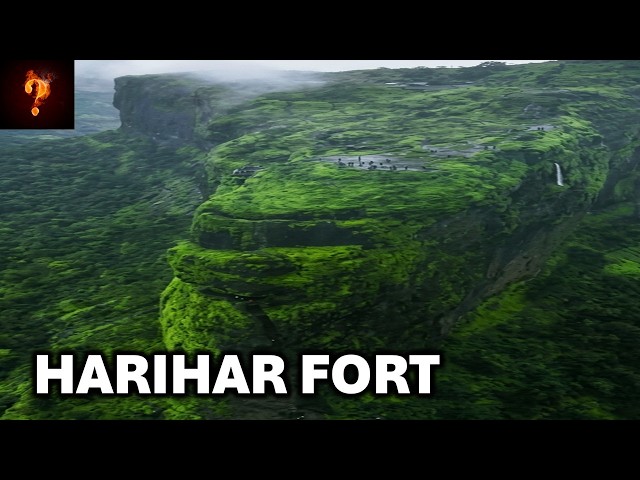
The video explores several ancient fortifications around the world, such as Sigiraa in Sri Lanka and Harihar Fort in India, suggesting they were likely built by a lost civilization rather than the later groups currently credited with their construction. These sites exhibit architectural precision that defies modern academic explanations, particularly regarding structures carved directly into rock faces without visible support braces or mortar. The narrator argues that while erosion has damaged some features like staircases, other stone blocks remain in remarkably perfect condition, indicating they were built much more recently than the original site but by a culture possessing advanced masonry skills far beyond what is attributed to their historical timeline.
Further examples include Hakeburg in Turkey and Lohagad in India, which are presented as evidence of a highly capable prehistoric society that utilized gravity-defying stonework and integrated seamlessly with natural landscapes. The video references legends of ancient giants associated with these ruins across continents like South America and Easter Island, proposing that these stories point to the same advanced builders responsible for sites like the Great Pyramid. The narrator contends that the sheer volume of earth moved at sites like Herodium, creating massive artificial hills, would have been an unimaginable feat for primitive tools, implying a level of engineering mastery that has been systematically suppressed or ignored by mainstream historians.
The core thesis presented is that these magnificent structures are not merely reinhabited ruins but original constructions from a time and civilization far older than permitted timelines allow. The narrator suggests that the lack of valid explanations for how these feats were achieved, combined with the absence of appropriate tools in surviving records, points to an elaborate conspiracy designed to obscure the true history of humanity. By attributing these wonders to incapable groups within narrow historical windows, authorities allegedly conceal the existence of a lost world that once flourished on Earth, leaving behind relics that hold secrets about our origins and identity waiting to be uncovered.
Ultimately, the video concludes that sites like Lohagad, with their mortarless precision and strategic placement high above sea level, are strong candidates for being pre-flood ruins that have been successfully hidden in plain sight. The narrator emphasizes that the mystery surrounding these structures has been deliberately quashed to maintain a faulty narrative, preventing the public from appreciating the true depth of ancient human achievement. As more study is needed to establish their true age and origins, the speaker invites viewers to consider the possibility that these anomalies are proof of a profound, hidden chapter in human history that challenges our current understanding of who we are and where we came from.
Read the full video transcript
We have previously covered the
astonishing ancient fort known as
Sigiraa that can be found within Sri
Lanka. An ancient sanctuary once
constructed a top an enormous geological
feature. Such an incredible feat in
architectural engineering is clearly
[music] testament to our distant
ancestors past capabilities. With an
entire ancient settlement once
constructed around its base, this
ancient fort provided such high levels
of security, it would have been an
obvious choice for reinhabitation.
These reinhabitations, as [music]
mentioned before, would have allowed for
these ancient people to have prospered
and thus successfully leave their mark
[music] upon history. However, these
more modern lodgers have been attributed
as the builders of said sites regardless
of any explanation as to how remaining
absent. Another of these intriguing
forts is known as Harihar Fort found
within India. This ancient fort also
displays many of the telltale signs we
often look for to indicate whether an
ancient ruin is [music] actually far
older than modern academia are claiming
with a staircase once effortlessly and
precisely cut into the sheer rock face.
Intriguingly absent a support brace that
was once also [music] attached to the
rock face at top the fort. numerous
caverns once carved out of the formation
along with a number of ancient stone
structures that although we feel were
also left by lost civilization were
possibly left by a later inhabitation
than the original construction. This
hypothesis [music]
being based upon the levels of erosion
witnessed upon the stairways compared to
the much better condition of these
surviving mortarless structures [music]
at top. Indeed, although the stairway
has all but eroded away in some areas
and experienced heavy erosion everywhere
else, the stone structures found a top
the fort due to their considerably
better condition, we feel were seemingly
built [music] much more recently, yet
still containing a level of build
precision our more recent ancestors were
lacking. Regardless of the extreme
erosion present at the fort along with
the precision ancient masonry found at
top. According to academia, Harihar fort
was built during the pancage pancharia
period a mere 400 years ago. Who built
these astonishing ancient forts within
ancient India? When were they built? How
did they build them? With so many
unexplained anomalies along with the
vast array of academic contradictions,
we find Harihar Fort highly compelling.
Hakeburgg, meaning fortress of Hake, is
an ancient once fortified ruin found
within the GPar district of the Van
province in Turkeykey's eastern Anatolia
region. It was used by Urashian kings as
a fortress during the 8th century BC.
According to academia and Armenian
folklore, the fortress was built by
Hake, the legendary founder of the
Armenian nation. [music] It was situated
close to the site where he slew the
invading Babylonian king Bell, who
according to said legends [music] was in
fact an ancient giant. Hake and his
people had migrated south toward the
warmer lands. There they discovered a
wicked giant known as Belle. Bel tried
to impose his tyranny upon Hake's
people, but Hake refused to submit. Hake
eventually rose up and defeated Belle in
what has become known as the Battle of
Giants. However, what is intriguing
regarding this story is the fact that
the sites mentioned are actually ruins
left by the same highly advanced and
thus highly capable lost civilization
responsible for many of the exquisitely
stonebuilt sites [music] which dot the
many continents of Earth. Additionally,
the fact that ancient giants are again
mentioned surrounding such ruins could
be seen as a compelling lead. Easter
Island, Guatemala, the Amazon, Peru,
South America, the list goes on. All
with their own intriguing tales of
ancient giants, either once inhabiting
said sites or in some cases noted as
being responsible for their
construction.
Much of the ancient site is now
extremely eroded. Yet, in many areas,
such as KavuPe, a number of remarkably
refined stone blocks are still to be
found. Presumably once foundation
stones, these blocks still retaining
their extraordinary machinedike
appearance. These blocks were so
perfectly carved, we can only replicate
such levels of accuracy using modern-day
technologies. The question is, how did a
civilization so far back within known
history create so many stones cast to
the same degree of precision? What's
more, these masterfully and mysteriously
created stones are seemingly placed upon
an even older site, one clearly of an
even greater antiquity.
Were these newer stone blocks actually
robbed stonework from another area of
the structure? These blocks then used by
a later civilization to build upon these
ruins. Are we actually looking upon two
lost ancient civilizations work in
ascending order [music]
rather like what we have postulated
later covered the enormous skeletal
blocks of the great pyramid? Were these
sites actually the work of a lost
civilization of ancient giants? Or are
all these separate accounts of the same
beings found all over the world a mere
coincidence? With so many sites and
legends attached thereof telling the
same thing, it is only a matter of time
before the truth is proven beyond doubt.
Many of the most astonishing feats of
ancient engineering are often avoided by
historians with many historical research
materials absent their existence [music]
due to their unexplainable origins. The
reason for this should be obvious for
when one gazes upon such relics
instantly [music]
struck with wonder. A curiosity as to
how something of such incredible size or
skill could have been created by the
individuals these sites are often
claimed as the work of.
This is one of the main thesis [music]
of the channel. For not only are these
sites largely ignored and thus [music]
overlooked regardless of being
historically important structures,
clear yet suppressed evidence [music]
that a civilization far more capable
than any currently recorded within
permitted timelines once flourished on
Earth. Relics with a very different
origin and indeed history.
We believe that such structures were
instead rediscovered by the many
academically acclaimed builders. And
this is often argued as being supported
[music] by empirical archaeological
evidence. However, the archaeology
merely proves inhabitation, not
construction, with a record of
construction never found within any of
these academically claimed cultures
surviving records. merely having
reinhabited such structures for
strategic motivations
and in doing so left their own
archaeological footprint. Subsequently
concealing an unknown aspect [music] of
human history, one which came to an
abrupt end and one such site largely
unknown by the greater world
is [music] known as the Herodium.
What makes this structure so incredible
[music] is not the small arrangement of
stone structures within the center of
the build, but the earthwork itself.
[music]
The entire site's footprint, and indeed,
the volume of earth utilized in the
making [music] of this ancient earthwork
was of gigantic proportions. a seemingly
pyramid-sized volume of earth used in
the building of what can only be
described [music] as a respectablysized
hill made by the hands of ancient man.
Once one inspects this site from the
air, its huge size becomes apparent and
the incredible feat this once was an
undertaking, if in fact constructed with
primitive tools, would have been a task
of unimaginable hardship. Thousands of
tons of earth were at some point quaried
and then transported [music] to this
spot, subsequently creating an
incredible wellsheltered inhabitation
with an intimidating incline on all
sides.
Many similar [music] earthworks can be
found throughout the United Kingdom with
the biggest pyramid in Europe known as
Silbury Hill.
Mysteriously made completely of chalk.
Yet this little mentioned site dwarfs
Silbury Hill by some measure. The
question is how old is Herodium? Who
made it? How did they accomplish such a
feat? It is undoubtedly highly
compelling.
There are many astounding ancient
wonders still to be found scattered all
over India. many of which I have long
decrieded are merely claimed as that of
another's creation and accomplishments.
[music]
These academic alibis, as I often point
out, lacking any substantive proof for
such declarations [music] to have ever
been made officially.
Neither a valid explanation as to how
[music] these achieved nor types of
tools ever located which they must have
utilized in creating them. Yet, I feel
most crucial of all, lacking [music] any
demonstrable proof exhibited or even
conceptualized as to how our more
recent, more primitive [music] ancestors
accomplish such feats. Often overlooked,
sometimes ignored, yet it never [music]
provided all in favor of the official
yet clearly faulty narrative.
This lack of [music] an explanation as
if at all a cruel trick provided to the
masses by [music] the exact same
individuals whom are tasked and funded
to provide just this. It is as mentioned
in reality an elaborate conspiracy in
and of itself. [music] One created to
obscure the true story of these ancient
achievements. A hidden world just
waiting for us to unravel. to tell us a
far greater, far more profound and
indeed far deeper story of our past,
[music] but even possessing secrets.
Secrets etched into their very being,
their aesthetic and original [music]
purpose of design. A message left for
the time when we have the eyes to see
[music] it. One which may finally reveal
to us all once and for all just [music]
who we are and where we came from.
And our [music] next site of intrigue is
of no exception. Known as Lohagad or the
Iron [music] Fortress, it is located
over 1,000 m above sea level and some 3
km from [music] the once inexplicably
yet perfectly sculpted Baja Cave system.
it unarguably yet another [music]
feather in the cap of this now lost yet
once worldgoing civilization which
although many would indeed [music] still
persist in claiming their works a mere
thousand years old. Lohagad, for
example, although handed down through
varying dynasties within [music] this
tiny window of the studied ages, shares
all these same hallmarks, which alas,
due to this tale told by the victor, yet
another longlost ruin [music]
successfully hidden in plain sight.
The entire structure constructed without
the use of mortar with perfectly [music]
placed yet seemingly random cut blocks
creating a borderline polygon finish
which like [music] that of the many
ancient fortresses I have found and
shared here upon our channel [music]
throughout ancient Peru for example.
also exhibiting the same uncanny mastery
of these ancient builders in
effortlessly incorporating the builds
into the surrounding environment,
ingeniously utilizing natural mountain
faces and [music] hillsides to their
strategic advantage.
This mastery of gravity and indeed
stonemasonry [music] is an enigma which
had long baffled all who had encountered
these structures. This healthy curiosity
remained [music] until very recently
into the modern age, as for some
possibly insidious [music] reason,
subsequently and systematically pinned
to civilizations found only within a
permitted timeline of events attributed
[music] to known yet nearly always
clearly incapable groups of ancestors.
Thus, the true mystery surrounding how
they have survived [music] so long, how
old they could really be, or indeed how
they were once constructed, for one
reason or another, the powers that be,
have endeavored to keep this truth
hidden, to quash the mystery and
curiosity therein. Thus, they are mostly
never realized nor truly appreciated
[music] for what they really are.
Who built Lohagod? When did [music] they
build it? How did they build it? Is it
as the characteristics and similarities
presented with its hardto-reach [music]
yet strategically placed location, its
mind-boggling accuracy, and its
naturally blending construction method,
[music]
all proof of a pre flood ruin?
More study into its possible true age
and prehistoric origins is surely needed
to fully establish [music] just who
built this place. I will keep you posted
on any further developments.
It is a possible pre flood ruin which I
find highly compelling.