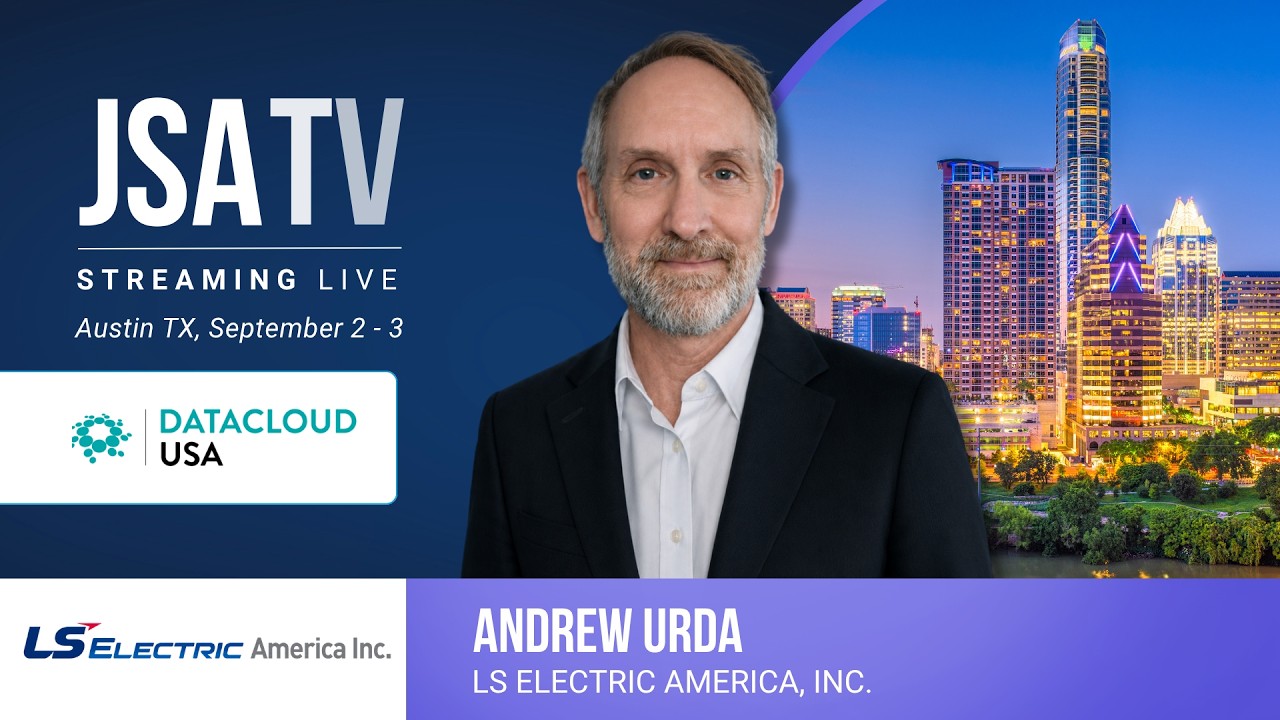
Powering the Future of Data Centers: DC Power, Microgrids and U.S. Expansion | LS Electric
Watch on YouTubeVideo summary
The rapid expansion of data centers across the United States is creating a critical shortage of power infrastructure, as utility companies struggle to build new facilities fast enough to meet demand. This bottleneck is exacerbated by long waiting periods for high-voltage transformers, which can stretch up to five years, prompting a surge in global supply chains where manufacturers from Asia and Europe compete with domestic producers. To address this gap, LS Electric is significantly expanding its production capabilities within the U.S., including new facilities in Bastrop, Texas, and Enoch, Utah, to manufacture medium and low voltage switchgear locally. The company reports substantial growth, with revenue in the United States expected to double this year based on strong booked orders, highlighting a shift toward domestic manufacturing to support the nation's digital infrastructure needs.
Beyond physical expansion, there is a pressing need to address public concerns and misinformation regarding the environmental impact of data centers, particularly concerning water usage, air pollution, and reliance on backup diesel generators. The interviewee emphasizes that while these issues are often exaggerated, effective communication and education are essential to calm community tensions and foster trust between technology companies and local residents. Furthermore, the conversation underscores a strategic imperative for the United States to maintain its leadership in innovation by building infrastructure domestically rather than relying on foreign-made technologies. This sentiment is reinforced by the efforts of sister company LS Cable, which is investing hundreds of millions of dollars to construct cable factories in the southeastern U.S., ensuring that critical communication and power cables are produced within the country.
The future of digital infrastructure hinges on two transformative developments: the adoption of direct current (DC) power systems and the widespread implementation of microgrids. As companies like Nvidia introduce high-power DC server racks for artificial intelligence, switching from alternating current to direct current offers significant efficiency gains by reducing energy losses by approximately 30%. LS Electric demonstrates this advantage through its own operations, where a facility powered by a solar array using DC technology achieves an impressive 98% efficiency rate and occupies 30% less physical space than equivalent AC systems. Additionally, the industry is moving toward "behind-the-meter" solutions where large-scale computing firms build their own power plants utilizing renewable sources like solar and wind, as well as exploring gas and potentially nuclear energy, thereby strengthening the grid rather than straining it.
Ultimately, the convergence of DC power efficiency and distributed microgrid technology represents a winning combination that will define the next generation of data centers. By relying on localized, distributed energy sources instead of massive centralized power plants transmitted over long high-voltage lines, the industry can create a more resilient and sustainable energy backbone for both the U.S. and the global market. This approach is particularly vital given the increasing harshness of natural weather events that frequently cause prolonged outages in regions like Texas, Indiana, and Chicago. As the nation races to keep pace with international competitors in the AI technology sector, investing in these advanced infrastructure solutions will be crucial for maintaining American leadership and ensuring reliable power for the future economy.
Read the full video transcript
Welcome to JSA TV, where we
cover the latest news,
trends and
innovations in the field of
digital infrastructure. We bring you
live coverage from the
"Data Cloud
USA" conference in the heart of
beautiful Austin. Joining me
today is Andrew Yorda
, Vice President of
Corporate Strategic Marketing
at LS Electric. Thank you for
joining me, Andrew
.
It is my pleasure.
Thank you for inviting me.
Welcome to the program.
Thank you.
Okay, let's begin our conversation.
What solutions
will have the greatest impact
on the growth of energy challenges
in industries?
I think if you look
at the industry, especially
data centers, you'll find
that everyone is struggling to
get power, and
utility companies
can't build or
expand as quickly as
needed. There are
high-voltage transformers with
waiting periods of up to two,
three, or even five years.
Therefore, I believe the
biggest challenge lies in getting the
right materials to the
sites. certainly. exactly
.
Something resembling a "
gold rush" has begun. There are many
people from
different industries who have moved from building
circuit boards to building circuit
boards for
electrical switches and other
related equipment.
In this exhibition, you will find
transformer companies from all
over the world. There are
companies from Asia and Europe
, and of course from the United States
. But I think that's the
crucial point. What we are
currently doing is expanding
our production here in Texas,
in the beautiful city of Bastrop,
which is
about 30 minutes away. We
build cast circuit breakers and
pneumatic circuit breakers. We are also
expanding our factory in
Enoch, Utah,
which is about 3
hours from Las Vegas.
We will manufacture
medium
and low voltage switchgear equipment there.
Although most of
our products currently come
from South Korean factories
, we
have a tremendous capacity to
build and ship metal
medium voltage switchgear
in record time
. So, this is our area of expertise
, and we have been.
We are experiencing significant growth
. Last year,
we generated about three-
quarters of a billion dollars in the
United States, and we
will double that figure this
year, and expect even
stronger growth next year
based on
booked orders.
This is extremely exciting.
yes it is.
Your company has a lot of
work in progress.
Yes, of course. We are
too.
Tell me a little about
how digital infrastructure companies build
trust to become
better
long-term partners in the communities they
operate in.
Yes, I ask this question
because it is very relevant. At
today’s event, I did not see them
because I arrived early, but
my colleagues told me that there were
protesters against
AI data centers who do
not want to
create more
billionaires. I think we have a
lot of
misinformation
about energy
and water consumption, air pollution and
things like that.
So I think a
lot of effort is needed to calm things down
and talk to
people and explain that, in
fact, if you set up a
data center properly
, especially with the
new designs and technologies
coming up, and I'll talk
more about that in another question, it's not really that
bad
. I mean, people get upset about
data centers using
backup power sources
like diesel generators,
but hospitals
and other critical care facilities have been
using them for 50 years
or more. It releases
more pollutants into the air
than
data centers in general in
this country. So I think we just
need
better education and an attempt to
understand. Unfortunately,
people become
very divided in their opinions; they
hate something and do not
want to listen to the
facts. So I hope that
sober minds will prevail,
because ultimately we are
in an
AI technology race with China, and
their government is backing them
100% or 200% to build
massive power generation
and invest a lot of
effort in
AI. One of the advantages of the
United States is that we have
always been pioneers of
American knowledge and innovation. We need to
think about that
and keep moving forward, because I'm
tired of seeing things
that are invented in the United States
made elsewhere.
We need to build in the United States
.
On that point, as I
mentioned, I am very happy to be
working for a company that invests
in infrastructure
within the United States
. I also need
to quickly promote
our sister company,
LS Cable. They are
spending hundreds of millions
of dollars to build
cable factories in the
southeastern United States
. Cables are
important because they
carry communications
and also power in
many industries,
not just
data centers. Okay
.
But for
data centers, what people don't realize
is that the cloud
and data are our means of
communication today. We no longer
use
analog lines to contact
people over the phone
like we did
when I was a child. Yes,
everything is done via
the cloud and your
mobile phone, right? Okay
. Now turning
to
digital infrastructure as a whole and where we are
headed, what is the
main factor that will determine the
future of
digital infrastructure in
your opinion?
There are two factors. I'm
really excited, this is one of my
favorite topics. So,
interrupt me if I
talk for too long
. However,
the future lies in what
Nvidia and
other companies do, as they
will introduce
high-power DC server racks for
artificial intelligence.
This requires that the
power supplying these
servers be
direct current. Therefore, by
switching to
direct current, you will
gain many real
positive advantages
. This is
actually related to
education about the future direction of
data centers
, and also the
future of
microgrids, because
since energy companies cannot
keep up with demand
in general, and
data centers as well, what is happening
now is working "behind the
grid" or "behind the meter
," excuse me. Therefore,
ultra-
large-scale computing companies and others are building
their own power plants. They are
using
solar, wind and
gas power, and there is talk
about miniature nuclear reactors
, which is
interesting. I hope that the
use of
nuclear fusion energy will begin
soon. We are getting closer to that
. This is great,
and it means that these companies
will be investing in their
own energy sources. This will not
affect the
local power grid. In
fact, it will
strengthen it. In short, regarding
direct current (DC),
its advantages lie in its efficiency
compared to
alternating current (AC), as it saves
about 30% of the losses when
using
DC. We
already operate a factory in
Korea that manufactures
variable frequency drives. We have a
solar array
that feeds a continuous power distribution unit
(DCE house)
containing a solid-state transformer and
vacuum circuit breakers, and
it feeds the
entire facility. Not just the
production line, but the lighting and everything else
. The efficiency of
that facility reaches 98%. I have
always told people that
efficiency would improve by
10 to 15%,
but we already run a
factory at 98% efficiency
using
direct current. In
addition, a DC power unit
connected to the
solar array and located
outside the factory
powers everything. Its physical footprint is
30% smaller than if the system
operated on alternating current.
So, if you look at
high efficiency
and space, you'll find it's a
winning combination, which is why so
many
ultra-scale data center companies and others are
so interested in this
. I am very pleased to say
that LS, as you know
, we are on our way to having a
marketable product for that
market.
But more importantly,
I think we will see a
global increase in the spread of
microgrids, and
this will allow us
to have a strong
energy backbone in this country
and globally,
because we will rely on
distributed energy rather
than huge power plants
that transmit power via
high-voltage lines.
So, I think that between
these two things, and given
that our network is over
100 years old, it
needs to be updated.
I think they know a
little about that here in
Texas. I think they
may have encountered some
minor problems in the
past, don't you think?
This is also happening in Chicago
. Recently in
Indiana, there were
outages due to a
severe storm that lasted for more than
two weeks, and I believe a
few dozen people are still
waiting for the
electricity to be restored. So,
nature is very harsh
these days. We still have a
long way to go. It's
great to hear that LS is
on the
right track to help us
get there.
Andrew, thank you for coming
to the program. You are a
wealth of knowledge, and
we would be delighted to host you again
next time
.
Thank you very much. And
to the viewers, thank you
for watching. Stay
curious, stay in
touch, and we wish you
enjoyable communication.
I'm sorry.
Welcome.