Pioneer Wisdom: Seeds for Resilient, Productive Landscapes
Watch on YouTubeVideo summary
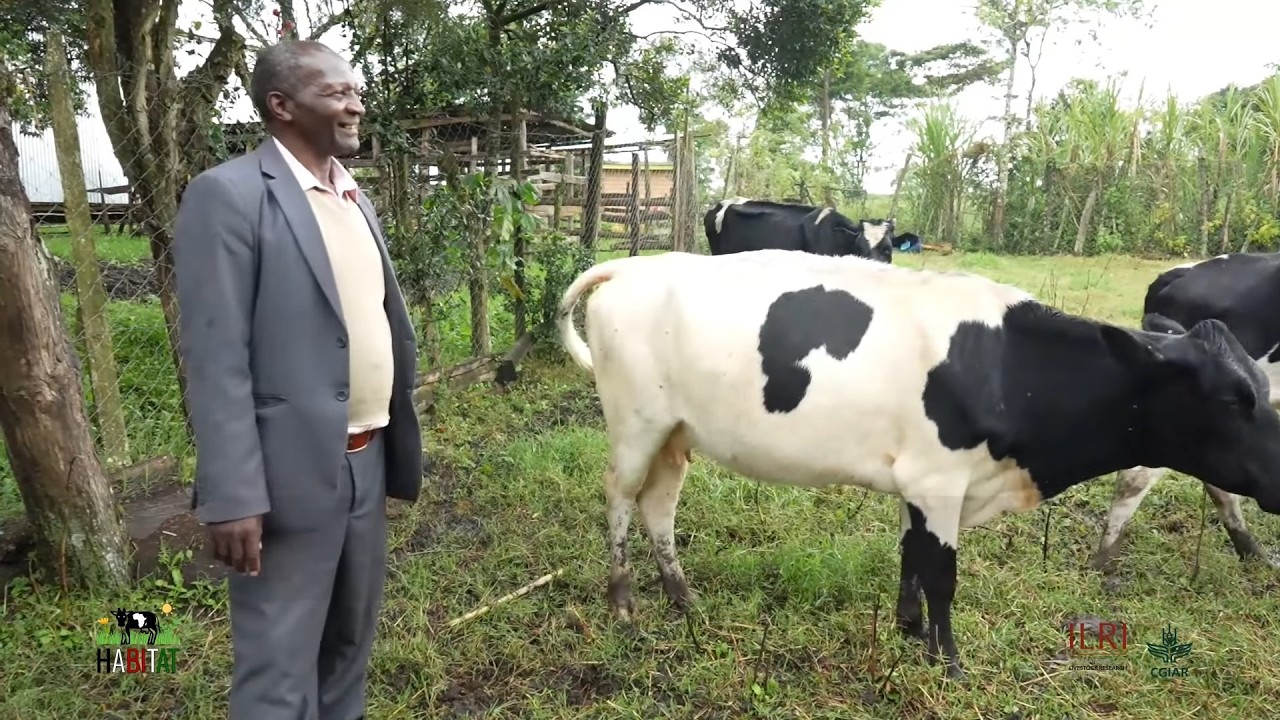
In a quiet hillside in Lulusk village, Bomit County, Kenya, over 100 dairy farmers gathered for an unconventional training session that relied entirely on peer-to-peer learning rather than outside experts or lecture halls. This gathering of equals centered around "pioneer farmers," experienced locals like Joseph Bet and his wife Juliana, who had transformed their ten-acre farm into a productive enterprise after more than thirty years of innovation. Instead of relying on demonstration farms far away, these pioneers shared practical knowledge directly from their own working lands, teaching neighbors how to manage paddocks, produce nutritious fodder crops like silage during unpredictable dry seasons, and utilize feeds such as lucerne and sweet potato vines.
The approach championed by Joseph Bet is built on the simple yet powerful principle that farmers trust what they can see with their own eyes, leading to a learning environment where questions are asked freely in local languages and ideas are exchanged openly. Attendees like Caroline Tanui and Jacqueline Kil reported significant gains from observing these practices firsthand, acquiring specific skills such as silage storage methods, understanding the protein content of feed plants, mastering artificial insemination techniques, and improving livestock breeds by separating calves effectively. By witnessing successful implementation on a neighbor's farm, participants gained confidence to adopt new strategies like paddocking, which ensures consistent grass availability for their animals while adhering to best management practices they observed in action.
Supported by the International Livestock Research Institute through the Habitat Project, this model has evolved into a transformative extension strategy that is reshaping how agricultural support reaches farming communities across Bomit County since 2022. The initiative has facilitated more than twenty-five farmer-led field days and reached nearly one thousand people during six specific events in May alone, proving to be an eye-opener for both the pioneer farmers and the official extension officers who now recognize its effectiveness. This partnership with local organizations like Hil demonstrates a new era of support where experienced locals lead the conversation, fostering deep trust within communities that traditional top-down methods often struggle to achieve.
Ultimately, as climate change intensifies pressure on smallholder farming systems, this experience-based model offers a vital lesson: sustainable solutions do not always need to travel from distant research stations but can spread effectively from one farm to another through trusted neighbors. By empowering pioneer farmers to test practical solutions and share their successes locally, the program has inspired lasting changes that ripple across entire communities rather than just isolated plots of land. This shift towards peer-to-peer knowledge exchange ensures that agricultural innovations are not only accessible but also deeply rooted in local context, building resilience against environmental challenges while maintaining high productivity for dairy enterprises throughout the region.
Read the full video transcript
On a quiet hillside of Lulusk village,
Bomit County, Kenya, more than 100 dairy
farmers gathered with one purpose, to
learn from one another.
This was no ordinary training with no
demonstration farms, no lecture halls,
and no outside experts leading the
conversation. This was a gathering of
equals where farmers learned simply by
listening to the quiet brilliance of
their neighbors referred to as pioneer
farmers.
[music]
One of these pioneer farmers is Joseph
Bet. After more than 30 years, Joseph
[music] and his wife Juliana have
eventually transformed the family's
10acre farm into a productive dairy
enterprise. But I would like them to
come see what I have done and also
emulate the same in their farms.
>> Today their cattle graze on carefully
managed paddocks while nutritious fodder
crops, silage and homemixed feeds keep
their animals productive throughout the
year even during the increasingly long
and unpredictable dry seasons.
Joseph is one of the experienced farmers
also known as pioneer farmers who test
practical solutions on their own farms
before sharing what works with their
neighbors.
>> Told them how to plant grass. We have
told them how to make hay. We have also
told them how to make silage, how to
plant other uh nutritious feeds like the
like the lausan, like the sweet potato
fines and many others.
The pioneer farmers approach is simple
yet powerful. Farmers trust what [music]
they can see. They ask questions,
exchange ideas and learn in their own
language.
The farmers are so much interested in
learning from other farmers and they
really see from their own observation
because this is done at the farm level
and the farmers are really seeing what
the other farmers or the lead farmers
are able to do in their farms.
>> For farmers attending the field day,
seeing these practices on a working farm
made all the difference. Among them were
Caroline Tanui and Jacqueline Kil.
The things I learned from other farmers
are silage storage, protein content in
feed plants like lucern and desmodium
and artificial insemination AI.
>> I learned about feeding, taking care of
cows, separating the calves and
improving livestock breeds.
So I encourage them to go do pocking
because when they do pocking they have a
lot of advantages. One they'll do what
is told.
Secondly they will have grass for their
livestock.
The impact of these field days [music]
goes beyond individual farms. The
pioneer farmer approach is changing how
agricultural extension reaches farming
communities across Bullet County.
>> [music]
>> We have partners like Hil which have
come in with a a new model of extension
support using our pioneer farmers. Well,
this new strategy becoming an eye opener
for majority of our extension officers
and us as accounting at large.
Supported by the International Livestock
Research Institute, ILRI, through the
Habitat Project, the Pioneer Farmers
conducted six farmer field days in their
farms across the county, reaching nearly
1,000 people in May 2026.
Together with county partners, ILRY has
now supported more than 25 farmer-led
field days since 2022.
As climate change places increasing
pressure on small holder farming, one
lesson is becoming clear. Sometimes the
best ideas do not always travel from
research stations to farms. They can
travel from one farm to the next where
experience is shared and trust has been
built with pioneer farmers inspiring
lasting change across entire
communities.