Orienting With the Word Storyteller - Joyce Peachey Lind | Anabaptist Mennonite Biblical Seminary
Watch on YouTubeVideo summary
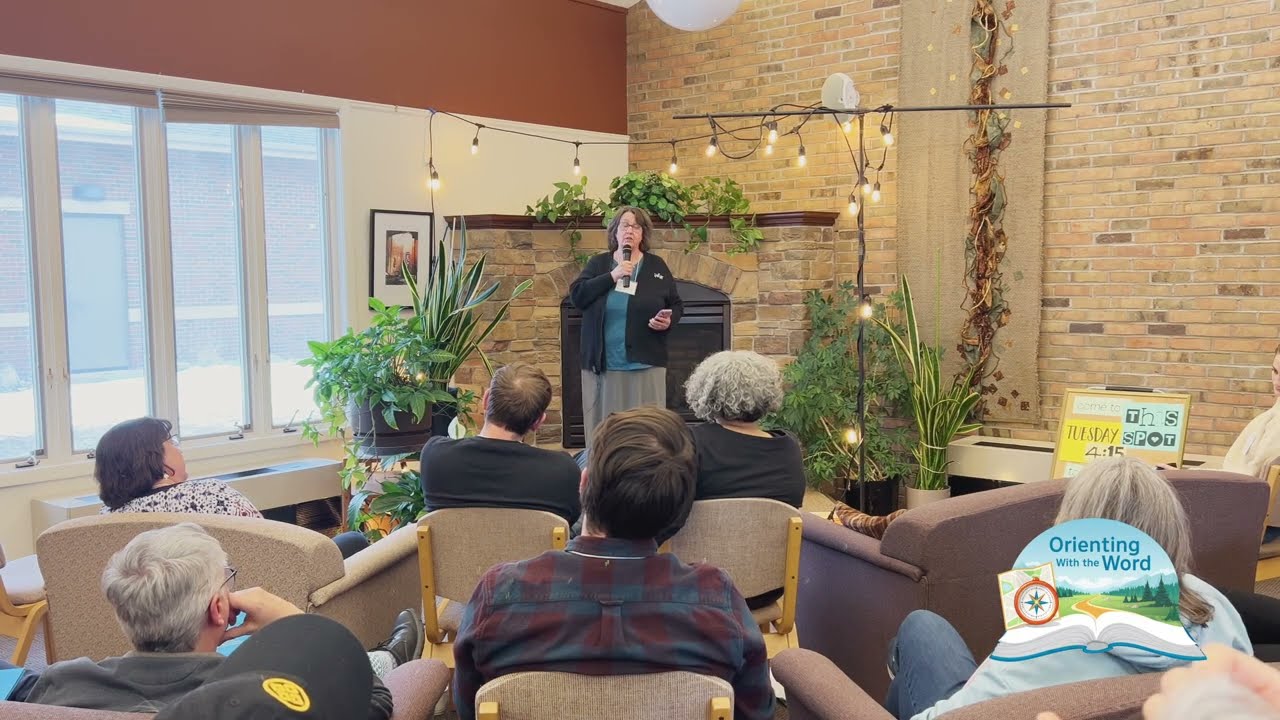
Joyce Peachey Lind shares her experience of adapting the "Orienting with the Word" method for elementary school children at Eastern Mennonite Elementary School. Instead of leading Bible studies within a congregation, she worked directly with groups of fifteen to twenty students seated in circles, creating an inclusive environment where every voice was welcomed and acknowledged. The process began with low-bar questions that allowed participants to share simple thoughts or pass if they wished, ensuring no one felt pressured while fostering a sense of safety. To further engage the children, Lind assigned rotating roles such as ringing a singing bowl, which gave students ownership over the circle's rhythm and made them feel like active partners in the learning process rather than passive listeners.
The core impact of this approach was observed through how deeply the children connected with biblical narratives and their own lives. Students began to identify personally with stories they had read or acted out, such as a third-grade boy recognizing his father as an example of welcoming foreigners from Psalm 104, or a classmate named Samuel eagerly taking on that specific role during a reenactment of the story of Saul and David. These moments of identification demonstrated that the texts were not distant historical accounts but living stories relevant to their experiences. Furthermore, this method provided a secure space for children to explore complex theological concepts about God's nature by imagining what might grow within His kingdom, moving from concrete answers like vegetables or even poison ivy to deeper spiritual virtues such as love, joy, and peace.
Lind also highlights the value of allowing children to ask honest questions without fear of judgment, noting that some students did not attend church regularly yet still engaged deeply with biblical themes. One notable example involved a serious inquiry from a third grader about whether Santa Claus and the Easter Bunny appear in the Bible, which Lind treated as a valid opportunity for discussion rather than dismissing it. This openness extended to kindergarten classes where children initially offered literal or even negative answers regarding what grows in God's kingdom before being guided toward more abstract spiritual concepts. Through these interactions, Lind realized that seemingly unconventional responses, like poison ivy growing in the garden of God, were not foolish but worthy topics for contemplation about how difficult realities might coexist with divine presence.
Ultimately, Joyce Peachey Lind concludes that orienting children with the word offers a unique framework where every student feels heard and valued regardless of their background or initial willingness to speak. The practice transformed Bible study from a rigid instruction into a dynamic exploration where students could find themselves in ancient texts and articulate their understanding of God's character through safe, guided inquiry. By validating both simple questions and imaginative answers, the method helped children develop a nuanced view of faith that accommodates doubt, curiosity, and personal experience without compromising spiritual depth. This approach not only encouraged participation but also modeled how to handle difficult topics with grace, leaving educators like Lind reflecting on their own understanding of God's kingdom in light of these honest conversations.
Read the full video transcript
My name is Joyce Peachy Lind and I live
in Harrisonenburg, Virginia. And instead
of uh doing orienting with the word in
congregations in a congregation, I
worked with children at an elementary
school. Um I'm used to be a teacher at
Eastern Menanite Elementary School and
some of my um former colleagues are
still there. And so I presented this
idea. Um I had heard about orienting
with the word and I said, "Melinda, hey,
could I do this with children?" and she
said sure cuz it's Melinda right
um and so I am just going to tell you a
little bit about my experience um and
three things that um that I learned um
we would begin each time um it was
groups of 15 children 15 to 20 children
in a circle and I would start out with a
low bar question like tell me something
you had for breakfast or what is what is
something that you hope for and we would
go around the circle. Um people could
pass if they wanted often this got old
but they wanted to pass so that we would
come back around again and you know then
they could then then they could talk.
But um which took a long time with 15
children. But um beforehand I had always
chosen a different child to be the
person who would ring the singing bowl
and I would sort of say now I'll tell
you when you need to ring that and that
was of course the coveted position to do
and they would always ask me when I came
in can I ring the singing bowl and um so
they were a part of the circle and and
different children would take turns
doing that and what I loved about circle
process which they were used to and they
know about it um they had experienced it
before. But in what I felt um it was
kind of new for me is that it gave every
voice every voice was welcomed and it
gave a chance for everyone to be heard
and noticed even if they passed we
stopped and acknowledged them. And I I
saw as we went on how important that was
because children who didn't speak at
first by the fifth or sixth time were
starting to share even just a couple
words. Um, so that was the first thing I
um experienced and appreciated about
doing orienting with with the word. I
also heard children identifying with the
stories. And here's two examples.
I don't remember which psalm I want to
say 104, but that could be wrong. Um, I
was reading something about
uh welcoming welcoming the stranger or
welcoming a foreigner and then I sort of
stopped. This was third grade. And I
said, "Do you know what that word
means?" And a couple of them said no.
And so then I described what a foreigner
is. Someone who has lived somewhere else
and is now living in the country and in
our country or a different place. U so
they've come from another country. And
um
this third grade boy said, "Oh, like my
dad." And I went, "Yes." Because yeah,
he found himself in the story. um or his
family in the story. And then the other
thing we did was in second grade we um
acted out the story of the anointing,
not nearly with all the details. Um
and Samuel, there was a Sam in our class
and so Samuel wanted to be Samuel. Oh
my. And that was great fun. But when we
went around three or four weeks later to
you know what is something you remember
about doing these Bible studies and
everyone said when Samuel was Samuel. So
that was very important. Um so in this
process I heard children identify with
the stories um that we read and I the
third thing that I appreciated about it
is that it helped children imagine and
explore who God is in a safe
environment.
When we started the very first session,
I let them ask questions. First, we went
around and said, you know, just say what
you know about the Bible or something
you know about the Bible. Some children,
it's a Menanite school, but there are
many children who um do not attend
church or maybe come from another faith.
Um so there were variety of of of
responses. Um, and then I said, "If you
have a question about the Bible," and so
third grade had a had a wonderful array
of questions, including um, "Are Santa
and the Easter Bunny in the Bible?"
So, I said, "Hm, let me get back with
you on that." And I don't recall exactly
how I answered that question, but I I
mean, the the child was dead serious and
I thought, "Well, what a great question.
we talk about
>> those things at those times of year and
they're all kind of mixed together,
especially if you don't go to church.
So, um I thought it was great that he
could ask that question in that setting.
Um and my favorite story, and I've said
it, sorry if you've heard this before,
but in kindergarten, I mean, as you can
imagine, kindergarten, um I wasn't sure
if this was going to be appropriate for
their level. Um,
and we had talked about the kings and
sort of went on the I I did my own
variation of the theme that everyone
else did. So, I started in the Old
Testament and stayed there and then
talked about earthly kings and then got
to the New Testament. We started talking
about Jesus and parables and what is
God's kingdom like. And in kindergarten,
um I think I phrased the question
and I sort of was doing a teacher thing
which was trying to get them to say, you
know, a particular answer. Um sort of
not on purpose, but I found myself
reflecting on that later. Um
but what I think we read the parable of
the mustard seed perhaps and what do you
think might be growing in God's kingdom?
So
child one maybe
vegetables maybe. So we were getting
concrete things and then dear John Luca
said poison ivy. I think poison ivy
might grow. And then of course going
around the circle everyone else wanted
to do poison ivy. Um so then I rephrased
the question and said well what might
God besides re I don't remember what I
said something about what might be
growing inside of you. what might God
want to grow inside of you? And you
know, then they gave the right answers.
Love and joy and hope and peace. So I
was processing this with Naomi
afterwards. Um where is she? I don't
know where she is. There she is. And she
asked me this wonderful question. She we
have we had someone who who talked with
us and Naomi was the person who talked
with us per talked with me periodically
um like well you know what maybe there
is poison ivy in God's garden. And so I
started thinking about, okay, in God's
kingdom, what might poison ivy be? And
what maybe that wasn't a dumb answer.
Maybe that really is something to ponder
and think about. And so there are days
when I ponder, is there poison ivy
growing in God's kingdom? And what am I
going to do about it?